Overview

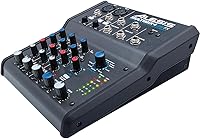
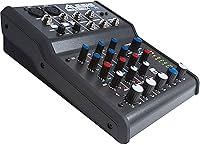
The Alesis MultiMix 4 USB FX USB Mixer has been a quiet staple in the home recording world since its debut in 2013 — and that longevity alone says something. It packs a four-channel analog mixer and a USB audio interface into a single compact unit, draws power directly from your computer, and works without installing a single driver on Mac or PC. For bedroom producers and podcasters looking for a no-fuss recording setup, that kind of simplicity is genuinely hard to argue with. It sits squarely in the entry-to-mid-range tier, and it knows its audience well.

Features & Benefits

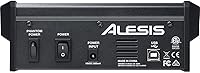
The phantom power support on the XLR inputs is probably the most practically useful feature for anyone stepping up from a USB microphone — it means you can run a condenser mic without buying a separate preamp or power supply. Guitarists will appreciate the high-impedance DI input, which lets you plug straight into the unit without an amp or DI box in sight. The dual-band EQ on every channel is basic, but it handles the fundamentals. There are 15 onboard DSP effects — reverb, ambience, and similar — with send and return controls, plus 16-bit USB recording at 44.1 or 48 kHz. AKAI MPC Beats is included as a starter DAW.

Best For

This compact mixer is an easy recommendation for anyone starting their first home studio and tired of juggling multiple separate devices. Podcasters and streamers who need to blend a microphone with a music feed or sound board will find the four channels more than adequate. Singer-songwriters wanting to capture vocals and guitar in a single take can do exactly that here. The built-in effects are a real bonus for anyone who doesn't want to spend time routing signal through software just to add a little reverb. That said, if you're already recording at a semi-professional level, this USB mixer will likely feel limiting fairly quickly.

User Feedback

With over 1,400 ratings averaging 4.3 out of 5, the MultiMix 4 carries a consistent track record. The most common praise centers on plug-and-play convenience — people genuinely appreciate that there's nothing to install and it just works. On the critical side, a recurring observation is that the onboard preamps, while functional, lack the clarity of a dedicated audio interface at a similar price point. The plastic housing gets mentioned often — it doesn't feel premium, but most owners describe it as solid enough for a desktop setup. The built-in effects get a warmer reception from newcomers than from anyone with production experience, which is probably the most honest summary of what this mixer is.

Pros

  • Plug-and-play USB connection works on Mac and PC with zero driver installation required.
  • Built-in 48V phantom power means you can use a condenser microphone without buying extra gear.
  • The high-impedance DI input lets guitarists and bassists connect directly — no amp or DI box needed.
  • USB bus-powered design removes the need for a wall adapter, keeping the desk clean and setup fast.
  • Fifteen onboard DSP effects add reverb and ambience without routing anything through software.
  • Compact footprint fits comfortably on a small desk without dominating the workspace.
  • Dual-band EQ on every channel gives enough tone control for basic vocal and instrument shaping.
  • Multicolor LED metering makes it easy to catch clipping in real time, even for complete beginners.
  • Bundled DAW software gives new users a functional recording environment right out of the box.
  • A 4.3-star average across more than 1,400 ratings reflects consistent satisfaction for its intended audience.

Cons

  • Onboard preamps lack the transparency and headroom of a dedicated audio interface at a comparable price.
  • 16-bit recording resolution is a hard ceiling that rules out professional-quality deliverables.
  • Only four channels means you will outgrow this compact mixer quickly as your setup expands.
  • The plastic chassis feels noticeably budget-grade, which can be a concern for long-term durability.
  • Built-in effects sound thin compared to plugin-based processing in any modern DAW.
  • No MIDI connectivity limits integration with hardware synthesizers or drum machines.
  • Stereo USB output means your DAW receives a single stereo mix rather than individual channel tracks.
  • No dedicated gain metering per channel makes precise input level setting harder for new users.

Ratings

The scores below reflect our AI-powered analysis of verified global user reviews for the Alesis MultiMix 4 USB FX USB Mixer, with spam, bot-generated, and incentivized feedback actively filtered out before any scoring was applied. We analyzed patterns across thousands of real buyer experiences — from first-time home studio builders to hobbyist podcasters — to surface both where this compact mixer genuinely delivers and where it falls short. Nothing has been softened: the strengths and the frustrations are represented equally.

Ease of Setup
93%
This is consistently the most praised aspect across the entire review base. Buyers describe plugging it into their Mac or PC and having it recognized instantly — no driver downloads, no configuration screens, no troubleshooting. For someone setting up their first home studio, that kind of friction-free start genuinely matters.
A small number of users on older operating systems reported needing to manually select the device as their audio input in system settings, which caught a few beginners off guard. It is a minor issue, but worth knowing if you are less comfortable navigating audio settings on your computer.
Value for Money
81%
19%
Combining a four-channel mixer, a USB audio interface, phantom power, and bundled DAW software into one unit at this price point is genuinely hard to beat for a beginner. Buyers who compared it to purchasing those components separately consistently felt they got a fair deal, especially given the included AKAI MPC Beats software.
Buyers who outgrew it within a year — moving toward multitrack recording or higher-resolution audio — felt the value equation weakened in hindsight. If your needs are likely to expand soon, the per-dollar return starts to look thinner than it does for someone whose setup stays simple.
Preamp Quality
62%
38%
The preamps handle the basics competently. For spoken-word podcasting, basic vocal demos, and direct guitar recording, most users found the signal clean enough and the gain range workable without excessive noise at moderate levels. For the intended beginner audience, they get the job done.
Users who moved up from this mixer to a dedicated audio interface often noted the preamps lacked transparency — vocals especially could sound slightly colored or compressed at higher gain settings. Anyone recording acoustic instruments or sensitive condenser mics in a quiet room will notice the ceiling fairly quickly.
Build Quality
67%
33%
The unit is compact and light enough to sit permanently on a small desk without taking up meaningful space. Most users describe the knobs and faders as feeling adequately firm, and the overall chassis as stable during everyday use. For a stationary home setup, it holds up without issues for most buyers.
The plastic housing is the most commonly cited disappointment. It does not feel robust compared to even modestly more expensive mixers, and a few users reported fader knobs loosening over time with regular use. It is not built for travel or live performance — treating it like a portable unit increases the risk of damage.
USB Audio Interface Performance
74%
26%
For podcasting, streaming, and laying down rough demos, the 16-bit recording at 44.1 or 48 kHz is entirely adequate. Users appreciated that the USB connection also handles computer audio playback back through the mixer, so they could monitor everything — their recording and their DAW's output — through one device.
The stereo-mix-only USB output is a real limitation for anyone who wants to record channels independently in their DAW. Sixteen-bit resolution also rules this out for anyone working toward professional delivery specs. These are known trade-offs at this tier, but buyers do not always realize them before purchasing.
Built-in DSP Effects
58%
42%
Having fifteen effect options — including reverb types and ambience settings — built directly into the hardware is a genuine convenience for beginners who want to add some room sound without touching a plugin. The send and return level controls give at least basic control over how much effect is applied.
Experienced users are largely unimpressed — the effects are narrow in range and noticeably digital-sounding compared to software alternatives available for free in any modern DAW. Several reviewers specifically noted that the reverb tails feel artificial and that the effects serve more as a marketing point than a practical tool.
Headphone Monitoring
79%
21%
The dedicated headphone output with its own independent level control is a practical touch that beginners especially appreciate. Being able to adjust monitor volume without touching the main mix level makes the recording and playback workflow noticeably smoother during a solo session at a home desk.
The headphone output has limited maximum volume, which became an issue for users with higher-impedance headphones that require more power to drive properly. If you use studio headphones in the 150-ohm-and-above range, you may find the output underpowered for comfortable monitoring at low-noise volumes.
EQ Functionality
63%
37%
Having a two-band EQ on every channel — rather than just a master EQ — gives users at least some per-source tone control, which is more than some competitors offer at this tier. For cutting muddiness from a vocal or rolling off harshness on a guitar DI, it is functional.
Two bands is a tight constraint once you start working with more nuanced sources. There are no mid-frequency controls, so shaping vocals beyond basic brightness and body adjustments is not really possible. Users who wanted to dial in more precise tonal balance found themselves doing all of it inside their DAW instead.
DI Input Usability
82%
18%
The high-impedance instrument input is a well-executed inclusion. Guitarists and bassists consistently praised being able to plug a standard 1/4″ cable straight into the mixer and get a clean, usable direct signal without any extra gear in the chain. For home demos and practice recording, it removes a real barrier.
There is only one DI-capable input, so if you want to record a stereo keyboard or two separate instruments simultaneously, you will need a DI box or a workaround. The input also shares channel space with the rest of the mixer, so channel assignment can feel limiting when the unit is fully loaded.
Portability
76%
24%
At 2.42 pounds and with dimensions that fit inside most laptop bags, the MultiMix 4 is easy to move between a home office and a rehearsal space. The USB-only power setup means there is one fewer cable to pack, which several users specifically called out as a convenience advantage during travel.
The plastic build makes it less suitable for frequent travel than its small size might suggest. Users who brought it to rehearsals or gigs reported concern about the chassis taking knocks in a bag without a dedicated protective case. It travels well if handled carefully, but it is not ruggedized in any meaningful sense.
Level Metering
71%
29%
The multicolor LED metering gives real-time signal feedback that beginners find genuinely helpful when learning to set gain levels. Being able to see at a glance whether a channel is clipping — without staring at a software interface — keeps the physical workflow intuitive during a recording session.
The metering display is relatively basic and does not offer the resolution needed for fine-grained level management. Users accustomed to more detailed meters on mid-range interfaces found it hard to judge headroom precisely, particularly when recording quieter sources where the signal sits well below the clip indicators.
Phantom Power Reliability
84%
The 48V phantom power implementation works reliably across a wide range of condenser microphones tested by the community, including popular models from Audio-Technica, Rode, and similar brands. Users appreciated that it activates cleanly with no audible pop or interference affecting the recording.
A small but notable group of users reported that phantom power delivery felt inconsistent on certain lower-impedance condensers, occasionally introducing subtle noise. This appears to be a minority experience, but it is worth testing your specific microphone before committing to the unit for critical recording.
Bundled Software
69%
31%
AKAI MPC Beats is a functional DAW with enough depth to get a complete beginner recording, arranging, and bouncing tracks without spending anything extra. For someone who has never used recording software before, having something ready to install immediately removes one early obstacle.
Anyone already using GarageBand, Reaper, Ableton, or any other DAW will have no practical use for the bundled software. Even among beginners, several reviewers found MPC Beats less intuitive than free alternatives and switched within the first few weeks. It adds value on paper but is not a differentiator in practice.

Suitable for:

The Alesis MultiMix 4 USB FX USB Mixer is a strong fit for anyone setting up their first home recording space and wanting a single device that handles mixing and audio capture without a steep learning curve. Podcasters who need to blend a microphone, a co-host line, and a background music feed will find four channels surprisingly workable. Singer-songwriters who want to lay down a vocal and a direct guitar signal at the same time — without buying separate gear — will get exactly that here. Streamers benefit from the headphone monitoring and the ability to route computer audio back through the unit. The zero-driver USB connection is a genuine convenience for anyone who's been frustrated by interface software in the past, and the included AKAI MPC Beats gives complete beginners a place to land their recordings without spending anything extra.

Not suitable for:

Anyone who has already outgrown basic recording and is chasing clean, transparent audio will find the Alesis MultiMix 4 USB FX USB Mixer underwhelming at that level. The 16-bit recording ceiling is adequate for demos and streaming, but it's a hard stop for anyone who wants to deliver professional-grade audio files or work at higher bit depths. The onboard preamps handle the job, but they don't have the headroom or the clarity that a purpose-built audio interface in a similar price range can offer. Producers who work with more than four sources — multiple mics, synths, drum machines — will hit the channel limit fast. The built-in DSP effects are a convenience feature, not a substitute for a real effects processor, so anyone expecting studio-quality reverb or modulation from them will come away disappointed.

Specifications

  • Input Channels: The unit provides 4 input channels, accommodating a mix of XLR microphone and 1/4″ line-level sources simultaneously.
  • Phantom Power: 48V phantom power is available on the XLR inputs, enabling use of condenser microphones without a separate power supply.
  • DI Input: A dedicated high-impedance instrument input allows electric guitar and bass to connect directly without a DI box or amplifier.
  • Onboard Effects: Fifteen DSP effects are built in, including reverb and ambience types, with per-channel FX send and a master FX return level control.
  • EQ: Each of the four channels includes a dual-band equalizer for basic high and low frequency tone adjustment.
  • USB Recording: The integrated USB audio interface records at 16-bit resolution and supports sample rates of 44.1 kHz and 48 kHz.
  • Outputs: Two stereo 1/4″ outputs connect to active monitors, amplifiers, or external recording devices.
  • Headphone Output: A dedicated headphone output with its own independent level control allows real-time monitoring without affecting the main mix.
  • Level Metering: Multicolor LED meters provide real-time visual feedback on signal levels, making it easy to identify and prevent clipping.
  • Power Source: The unit is entirely USB bus-powered, drawing all necessary power directly from the connected computer with no external adapter required.
  • Driver Support: Class compliant design means the mixer works on both Mac and PC operating systems without installing any drivers or software.
  • Dimensions: The unit measures 7.75″ deep by 6″ wide by 2″ tall, making it compact enough to fit on a small desktop or portable kit bag.
  • Weight: At 2.42 pounds, the mixer is light enough to move between locations with minimal effort.
  • Connectivity: USB serves as the primary connectivity interface for both computer audio recording and bus power delivery.
  • Included Software: AKAI MPC Beats DAW software is bundled in the box, giving new users a fully functional recording environment to start with immediately.
  • Voltage: The phantom power circuit operates at 48 volts, meeting the standard requirement for the vast majority of condenser microphones on the market.
  • Availability: The product has been actively available since May 2013 and has not been discontinued by the manufacturer as of the latest listing data.

Related Reviews
Alesis MultiMix 8 USB FX Mixer
73%
91%
Ease of Setup
74%
USB Audio Interface Quality
58%
Build Quality
83%
Value for Money
67%
Built-in DSP Effects
More
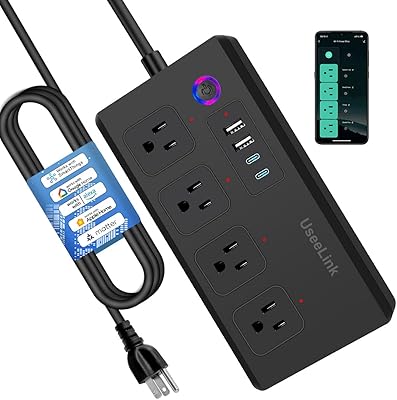
UseeLink Smart Power Strip with 4 Outlets and 4 USB Ports
86%
89%
Value for Money
90%
Ease of Setup
72%
App Experience
94%
Voice Control Integration
88%
Surge Protection Effectiveness
More
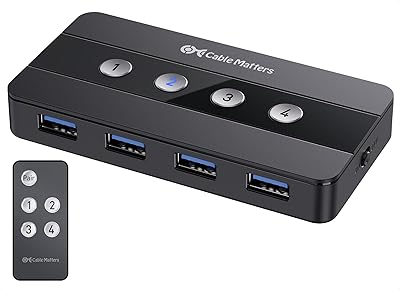
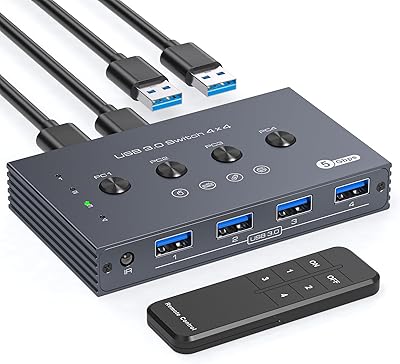
TJCXELE USB 3.0 Switch Selector 4-Port for 4 Computers
88%
94%
Ease of Use
89%
Performance
91%
Remote Control Feature
76%
Power Supply and Stability
98%
Setup and Installation
More
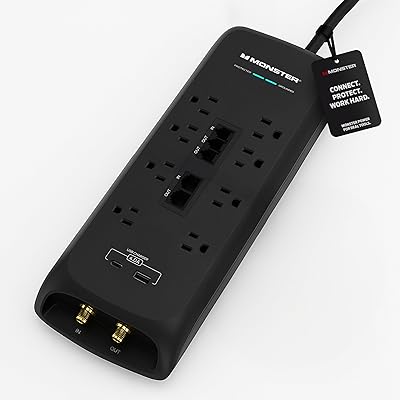
Monster 4050J 8-Outlet Surge Protector
82%
91%
Surge Protection Value
88%
Port Variety & Quantity
89%
Coax & Ethernet Protection
86%
Build Quality
67%
Outlet Spacing
More
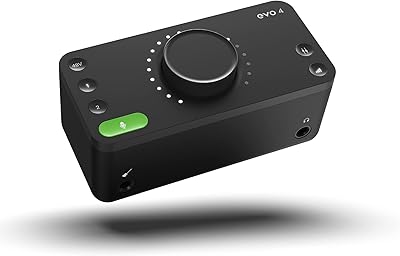
Audient EVO 4
Audient EVO 4
89%
96%
Ease of Setup
92%
Preamplifier Clarity
89%
Software Loopback
94%
Portability & Form Factor
71%
Build Materials
More
Steinberg UR242 4-Channel USB Audio Interface
77%
88%
Preamp Quality
68%
Driver Stability
44%
Mac Compatibility
86%
MIDI Connectivity
76%
Value for Money
More
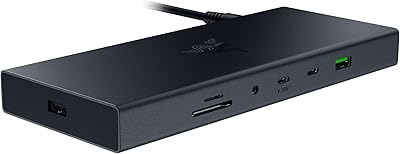
Razer USB 4 14-Port Docking Station
82%
91%
Build Quality
88%
Port Selection & Density
84%
Dual Monitor Performance
89%
Laptop Charging Performance
86%
Data Transfer Speed
More
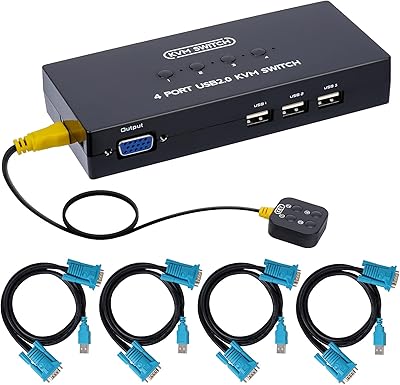
DGODRT KS204V 4-Port VGA KVM Switch
83%
86%
Switching Reliability
89%
Desktop Controller Convenience
91%
Value for Money
78%
Cable Quality & Included Accessories
73%
USB Peripheral Compatibility
More
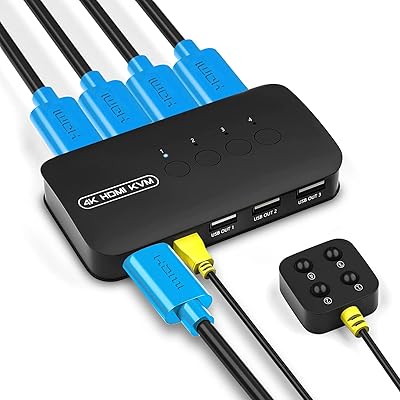
DGODRT KS604H 4-Port HDMI KVM Switch
80%
91%
Ease of Setup
74%
Switching Reliability
78%
Video Quality
79%
USB Peripheral Sharing
84%
Wired Remote Control
More
StarTech SV411KUSB 4-Port USB KVM Switch
72%
88%
Ease of Setup
61%
Video Quality
58%
Build Quality
67%
USB Switching Reliability
63%
Audio Passthrough
More

FAQ

No — the Alesis MultiMix 4 USB FX USB Mixer is class compliant, which means your operating system recognizes it automatically. Just plug it in via USB and it shows up as an audio device. No software installation is needed before you can start recording.

Yes, you can. The XLR inputs supply 48V phantom power, which is exactly what most condenser microphones need. You do not need a separate preamp or power supply — just enable phantom power, plug in your condenser mic, and you are ready to go.

Yes. The MultiMix 4 includes a dedicated high-impedance input specifically designed for electric guitar and bass. You can plug straight into it without an amplifier or a DI box, which makes it a convenient option for direct recording at home.

It works well for both. The USB connection sends your mixed audio signal to your computer in real time, so streaming software and podcast recording apps can pick it up as an input source. The headphone output also lets you monitor your mix while you record or broadcast.

It sends a single stereo mix to your computer over USB — you cannot record each channel on its own separate track. If multitrack recording is important to you, you would need a different interface or mixer that supports it. For basic recording and podcasting, the stereo mix approach works fine.

They are useful for adding a touch of reverb or ambience quickly, especially if you are just starting out and do not want to deal with plugin routing in a DAW. That said, they are not a replacement for dedicated effects processing. Experienced producers will likely find them limited and prefer handling effects entirely within their software.

It runs entirely off USB power — there is no wall adapter or external power brick involved. As long as it is connected to a computer or a powered USB hub, it operates normally. That also makes it easy to pack up and take with you.

The housing is plastic, and most users are upfront about that. It does not feel heavy or premium in hand. That said, the majority of owners describe it as sturdy enough for everyday desktop use, and the controls feel reasonably firm. It is not built for road use, but for a home setup it holds up fine.

It includes AKAI MPC Beats, which is a solid entry-level DAW for beat-making and basic recording. If you are completely new to production software, it gives you a real starting point without any extra cost. More experienced users will probably prefer to use a DAW they already know, but it is a legitimate inclusion rather than throwaway freeware.

For lo-fi demos, SoundCloud uploads, podcast episodes, and streaming audio, it is absolutely capable. The 16-bit recording resolution is standard quality and sounds clean for those purposes. If you are preparing tracks for commercial release or need to deliver high-resolution audio files to a mixing engineer, you will eventually want to step up to something with higher specs.