Overview

The Alesis MultiMix 8 USB FX Mixer has been quietly holding its ground in the entry-to-mid market since 2010 — a lifespan that says something real about its reliability. It pulls double duty as an analog mixing desk and a USB audio interface in one compact unit, which is genuinely useful for anyone tired of juggling separate gear. Build quality is mid-tier — the chassis is plastic and lightweight — so don't expect it to survive heavy touring. Still, with over 1,400 buyer ratings averaging 4.3 stars, it has earned a loyal following among home studio beginners and semi-pro live sound users alike.
Features & Benefits

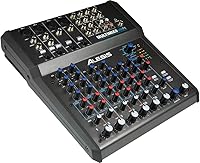
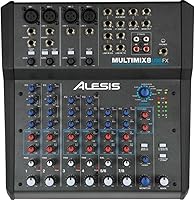
The MultiMix 8 packs a capable feature set into a small footprint. Eight channels cover most small-session needs: XLR inputs with 48V phantom power handle condenser microphones, while a dedicated high-impedance input lets you plug in a guitar or bass directly — no DI box required. The 15 onboard DSP effects cover reverb, delay, and chorus; they won't replace a quality software plugin, but they're handy for live monitoring or quick rehearsals. The USB interface is class-compliant, meaning it works plug-and-play on Mac and PC at 16-bit, 44.1/48 kHz with zero driver installation. AKAI MPC Beats is bundled in as a welcome bonus for new producers.

Best For

This compact mixer suits a specific kind of user really well. If you're a podcaster, singer-songwriter, or bedroom producer who wants one box to handle mics, instruments, and a computer connection, it covers that ground reliably. Guitarists and bassists recording direct will appreciate the built-in high-impedance input, and small bands running a low-key acoustic gig can lean on it as a portable front-of-house solution. Streamers or content creators routing multiple sources into a single USB feed will also find it practical. Where it falls short is for anyone expecting serious multitrack recording — that's a workflow this desk simply wasn't designed to support.

User Feedback

Buyers consistently highlight how fast this USB mixing desk gets up and running — plug it into a Mac or Windows machine and it's recognized instantly, no driver downloads needed. That ease of setup is the most repeated praise. The sharpest criticism centers on one real limitation: the USB output captures only a stereo mix-down, not separate tracks, which catches anyone expecting DAW-style multitrack control off guard. Some owners also flag the plastic housing as a durability concern for units that travel regularly. The built-in effects draw mixed reactions — serviceable live, but not something most producers will rely on during a proper recording session.

Pros

  • Works instantly on Mac and PC with zero driver installation — just plug in and record.
  • Combines an analog mixer and audio interface in one unit, saving both money and desk space.
  • 48V phantom power supports condenser microphones right out of the box.
  • The built-in DI input lets guitarists and bassists record direct without any extra equipment.
  • Fifteen onboard DSP effects cover live monitoring needs without requiring outboard gear.
  • Multicolor LED metering gives clear, real-time visual feedback on signal levels.
  • Independent headphone output with its own level control makes monitoring flexible and practical.
  • High-pass filters on XLR channels help clean up low-end rumble quickly during a session.
  • The MultiMix 8 has been on the market since 2010, which speaks to its proven, stable design.
  • Bundled AKAI MPC Beats gives new producers a free DAW starting point right out of the box.

Cons

  • USB recording captures only a stereo mix-down — individual channel tracking in a DAW is not possible.
  • The plastic chassis feels noticeably lightweight and may not hold up well under regular travel or gigging.
  • Built-in DSP effects are functional but thin-sounding compared to any decent software plugin.
  • Sweepable mid EQ is available only on channels 1 and 2, leaving other channels with more limited tone shaping.
  • No dedicated sends for external hardware effects units, limiting signal chain flexibility.
  • Eight channels can feel restrictive quickly if your sessions grow or you add more inputs over time.
  • The unit requires an AC adapter — there is no bus-power option for fully portable, cable-free use.
  • Headphone output quality is adequate but unlikely to satisfy users with higher-impedance studio headphones.

Ratings

The scores below reflect our AI-driven analysis of verified buyer reviews for the Alesis MultiMix 8 USB FX Mixer, sourced globally and filtered to remove incentivized, duplicate, and bot-generated feedback. Each category is scored to honestly reflect both the genuine strengths that keep this compact mixer popular and the recurring pain points that real users report after extended use.

Ease of Setup
91%
Buyers consistently describe an out-of-the-box experience that takes minutes, not hours. The class-compliant USB connection is recognized instantly on both Mac and Windows without hunting for drivers, which is a real confidence booster for first-time mixer owners getting ready for a podcast session or band rehearsal.
A small number of users on older operating systems reported occasional recognition hiccups, and the printed quick-start documentation is thin enough that total beginners may need to supplement it with online tutorials to understand signal routing concepts.
USB Audio Interface Quality
74%
26%
For home recording at 16-bit, 44.1 or 48 kHz, the USB interface delivers clean, usable audio that satisfies podcasters, streamers, and casual home recordists. The plug-and-play reliability across operating systems earns consistent praise and removes a frustrating variable from the recording process.
The hard ceiling here is the stereo mix-down limitation — what you hear in the room is what gets sent to the computer, with no way to separate individual channels in post. For anyone expecting multitrack flexibility, this is a genuine dealbreaker that catches a surprising number of buyers off guard after purchase.
Build Quality
58%
42%
At 2.1 pounds, the lightweight plastic chassis makes the MultiMix 8 easy to move between a home studio desk and a rehearsal room without any strain. The knobs and faders feel adequately responsive for everyday home use and general operation.
Users who gig semi-regularly flag real concerns about the long-term resilience of the plastic housing under road conditions. Several reviewers noted that the unit feels noticeably less substantial than similarly priced competitors, and a few reported wear on faders and channel strips after a year or more of daily use.
Value for Money
83%
Combining an eight-channel analog mixer, a USB audio interface, phantom power, a DI input, and onboard effects in one unit at this price tier is objectively a lot of hardware for the investment. For beginners building a first home studio on a tight budget, the MultiMix 8 removes the need to buy several separate pieces of gear.
Value perception drops noticeably for buyers who discover the stereo-only USB limitation post-purchase, since that single constraint significantly narrows the use case. Users who eventually outgrow the desk often feel they would have spent their money differently had they understood the recording workflow limitations from the start.
Built-in DSP Effects
67%
33%
Having 15 onboard effects — reverb, delay, chorus, and more — available without opening a laptop is genuinely convenient during live rehearsals or small gigs where simplicity matters. Singers monitoring through headphones during a home session appreciate the added depth a touch of reverb provides without needing a software plugin loaded.
Producers who spend time in a DAW regularly find the effects thin and somewhat dated-sounding compared to modern software. The DSP quality is functional rather than inspiring, and most users with any studio experience tend to bypass the onboard effects entirely in favor of plugins once they are tracking in a recording application.
Channel Layout & Routing
72%
28%
Eight channels cover the practical needs of solo artists, small podcasting setups, and compact band rehearsals comfortably. The inclusion of both XLR and line-level inputs alongside a dedicated DI instrument input gives the layout genuine versatility without requiring adapters or splitters for typical use cases.
Routing flexibility is limited compared to what more advanced mixers in adjacent price brackets offer. The sweepable mid EQ is only available on channels 1 and 2, which frustrates users who want more tonal control across the full channel strip, especially when mixing multiple vocalists or instruments simultaneously.
EQ & Tone Shaping
63%
37%
The switchable high-pass filters on XLR channels are a practical touch that helps users quickly clean up low-end rumble from mic stands or room noise, which is useful in untreated home studio environments. Channels 1 and 2 benefit from the sweepable mid, giving those inputs a meaningful tonal range for voice or lead instrument work.
Outside of channels 1 and 2, the EQ options are fairly basic and do not offer much surgical control. Users mixing a full small band often wish for more consistent EQ tools across all channels, and the absence of any parametric or semi-parametric control beyond the first two channels is a recurring complaint from intermediate-level users.
Headphone Monitoring
76%
24%
The independent headphone output with its own dedicated level knob is a thoughtful inclusion that allows comfortable in-ear monitoring during recording without affecting the main mix going to speakers. Home recording vocalists and podcasters frequently mention this as a feature they use every single session.
The headphone amplifier output is adequate for standard consumer headphones but struggles to drive higher-impedance studio cans with enough volume and clarity. Users with professional headphones rated above 150 ohms often report a noticeably weak or flat-sounding monitoring experience through this output.
Phantom Power Performance
81%
19%
The 48V phantom power supply performs reliably and opens up the mixer to a wide range of condenser microphones without needing a separate preamp or power source. Home studio users recording vocals with affordable large-diaphragm condensers note clean, stable power delivery that does not introduce noticeable noise.
Phantom power is applied globally to the XLR inputs rather than per channel, which limits flexibility when mixing ribbon microphones — which can be damaged by phantom power — alongside condensers in the same session. This is a design constraint that more experienced engineers will find frustrating in mixed-mic scenarios.
Portability
78%
22%
Weighing just over two pounds and occupying a modest footprint on a desk or table, this USB mixing desk is genuinely easy to pack into a bag and take to a rehearsal space, a friend's home studio, or a small acoustic gig. The compact dimensions mean it does not dominate a small workspace or home office setup.
The AC adapter power requirement is a portability constraint that battery-powered or bus-powered alternatives do not share. Without a dedicated carry case — which is not included — the exposed knobs and faders are also somewhat vulnerable to damage during casual transport.
Driver Stability & Compatibility
88%
The class-compliant design means the mixer requires no manufacturer drivers, which translates to a remarkably stable experience across macOS and Windows versions over the years. Long-term owners report that operating system updates rarely disrupt functionality, which is a meaningful reliability advantage over driver-dependent alternatives.
Compatibility with mobile platforms such as iPad or Android is not officially supported, which limits use for creators who prefer tablet-based recording setups. A small number of users also report that certain DAW configurations require manual selection of the device as the active input source, which can briefly confuse newer users.
Level Metering
71%
29%
The multicolor LED metering gives a clear, real-time read on signal levels that helps users avoid clipping without constantly watching a software meter on screen. For live use especially, having immediate visual feedback on the hardware itself is a practical advantage when managing multiple inputs simultaneously.
The metering resolution is relatively coarse compared to dedicated studio interfaces, offering fewer LED segments than some buyers expect for precise gain staging. Users doing critical recording work often prefer to rely on their DAW meters rather than the hardware display for accurate headroom management.
Bundled Software
66%
34%
The inclusion of AKAI MPC Beats provides a real, functional DAW for producers and beatmakers who do not already own recording software. For a first-time home studio builder, having a usable application included removes one additional purchase from the startup cost.
MPC Beats is purpose-built for beat production rather than general audio recording or podcasting, so its usefulness varies significantly by workflow. Users who already own a DAW such as GarageBand, Reaper, or Ableton will have little reason to use the bundled software at all, making it a neutral factor for the majority of buyers.
Long-term Durability
54%
46%
The fact that this mixer has remained in production and continued selling since 2010 suggests the design is stable and that replacement units and support have remained accessible over many years. Owners who use it primarily in a fixed home studio environment generally report years of reliable, trouble-free operation.
Buyers who use the unit in semi-professional gigging contexts report wear on the plastic housing, fader channels, and knobs at a faster rate than expected. Several long-term reviewers describe a unit that works fine functionally but looks and feels noticeably worn within two to three years of regular, moderate use.

Suitable for:

The Alesis MultiMix 8 USB FX Mixer is a practical pick for anyone who wants a single, no-fuss box that handles both live mixing and basic computer recording without a steep learning curve. Podcasters recording multiple guests, singer-songwriters tracking vocals and guitar at home, and small bands running casual rehearsals will all find it fits naturally into their workflow. Guitarists and bassists in particular get a quiet win here — the built-in high-impedance DI input means one fewer piece of gear to carry. Content creators and streamers who need to blend several audio sources into a clean USB feed to their computer will also find this compact mixer punches above its price. If your sessions are straightforward and you value quick setup over deep routing control, this desk is genuinely well-suited to the job.
Not suitable for:

Anyone expecting to record individual tracks separately in a DAW should know upfront that the Alesis MultiMix 8 USB FX Mixer sends only a stereo mix-down over USB — you cannot capture each channel independently, which is a hard stop for serious multitrack production. Producers who rely on pristine effects processing will also find the onboard DSP underwhelming compared to modern software plugins; it works live, but it is not a studio tool. The plastic housing is lightweight enough to raise durability questions for musicians who gig regularly and travel with gear, so road warriors should weigh that carefully. Professional sound engineers or anyone running larger venues will quickly outgrow the eight-channel limit and the relatively basic EQ options. If your work demands individual channel recording, heavier build quality, or more sophisticated signal routing, this USB mixing desk is not the right fit.
Specifications

  • Brand & Model: Manufactured by Alesis under the model designation MultiMix 8 USB FX.
  • Channels: Provides 8 input channels to accommodate microphones, line-level sources, and instruments simultaneously.
  • XLR Inputs: Equipped with XLR mic inputs featuring 48V phantom power to support condenser microphones without a separate power supply.
  • DI Input: Includes a dedicated high-impedance instrument input for connecting electric guitar or bass directly without an external DI box.
  • USB Interface: Onboard USB audio interface records and plays back at 16-bit resolution and supports sample rates of 44.1 kHz and 48 kHz.
  • Driver Support: Class-compliant design works plug-and-play on both Mac and PC operating systems with no driver installation required.
  • Built-in Effects: Offers 15 onboard DSP effects including reverb, delay, and chorus, accessible via pre- and post-EQ FX send controls.
  • EQ Controls: Channels 1 and 2 include a three-band EQ with a sweepable mid frequency; all XLR channels feature a switchable high-pass filter.
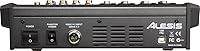
  • Outputs: Features separate 1/4″ main and monitor outputs for connecting to PA speakers, active monitors, or recording devices independently.
  • Headphone Output: Dedicated headphone output with its own independent level control allows monitoring without affecting the main mix.
  • Level Metering: Multicolor LED meters provide real-time visual feedback on signal levels to help prevent clipping during recording or live use.
  • Dimensions: The unit measures 12.5″ deep by 11.2″ wide by 3.5″ tall, making it compact enough for a small desk or portable setup.
  • Weight: Weighs 2.1 pounds, keeping it light enough to carry to rehearsals or small gigs without significant added load.
  • Power Source: Powered via an AC adapter (electric); there is no bus-power or battery option for fully cable-free portability.
  • Chassis Material: Housing is constructed from plastic, which keeps the weight low but may be less resilient under heavy daily road use.
  • Bundled Software: Includes a license for AKAI Professional MPC Beats, a DAW application suited for beat production and basic recording workflows.
  • USB Recording: The USB output transmits a stereo mix-down only; individual channel recording into a DAW is not supported by this interface.
  • Market Availability: First made available on August 22, 2010, and remains in active production as of the time of this writing.

Related Reviews
Alesis MultiMix 4 USB FX USB Mixer
74%
93%
Ease of Setup
81%
Value for Money
62%
Preamp Quality
67%
Build Quality
74%
USB Audio Interface Performance
More
HHSOET 8 Outlet Recessed Power Strip with USB-C and USB-A Ports
88%
94%
Surge Protection
89%
Ease of Installation
88%
Charging Speed
91%
Design & Space-Saving
87%
Build Quality
More
Monster 4050J 8-Outlet Surge Protector
82%
91%
Surge Protection Value
88%
Port Variety & Quantity
89%
Coax & Ethernet Protection
86%
Build Quality
67%
Outlet Spacing
More
EPOS Sennheiser PC 8 USB Stereo Headset
77%
96%
Ease of Setup
83%
Microphone Clarity
67%
Comfort & Fit
78%
Build Quality
62%
Sound Quality
More
AMD FX-8370 Black Edition Desktop Processor
73%
83%
Multi-Threaded Performance
86%
Clock Speed & Turbo Performance
88%
Overclocking Capability
54%
Thermal Management
89%
Platform Compatibility
More
ART USBMix6 Six-Channel USB Audio Mixer
73%
93%
Ease of Setup
71%
USB Recording Quality
67%
Preamp Performance
62%
Build Quality
78%
Value for Money
More
Alesis IO2 Express USB Audio Interface
71%
91%
Ease of Setup
74%
Audio Quality
62%
Preamp Performance
58%
Build Quality
78%
Value for Money
More
Alto Professional ZMX122FX 8-Channel Audio Mixer
75%
84%
Value for Money
67%
Build Quality
71%
Preamp Quality
88%
Ease of Setup
76%
Onboard Effects
More
BESTEK 8-Outlet 4-USB Port Surge Protector
84%
93%
Outlet Layout & Spacing
78%
Surge Protection Reliability
82%
USB Charging Performance
88%
Build Quality & Materials
91%
Power Cord Length
More
ART USBMix4 4-Channel USB Audio Mixer
74%
93%
Ease of Setup
78%
Value for Money
71%
Audio Signal Quality
67%
Build Quality
58%
Phantom Power Implementation
More

FAQ

No, the Alesis MultiMix 8 USB FX Mixer is class-compliant, which means both Mac and Windows recognize it automatically the moment you plug it in via USB. You can be recording within minutes of opening the box, no downloads required.

Unfortunately, no. The USB connection sends a single stereo mix-down to your computer, not individual channel feeds. If you need to record each input as a separate track, you would need a different interface that supports multitrack USB or Thunderbolt output. This is probably the most important limitation to understand before buying.

Yes, the compact mixer includes a dedicated high-impedance instrument input specifically designed for electric guitar and bass. You can plug straight in using a standard instrument cable and get a clean signal without any extra hardware.

The phantom power supply covers the XLR inputs, but it is typically a global switch rather than individually assignable per channel on this desk. If you are mixing phantom-powered condenser mics with ribbon microphones, which can be damaged by phantom power, you should take care to check your signal chain before enabling it.

They are practical for live monitoring and rehearsal situations where you want a bit of reverb or delay in the headphone mix. For serious studio recordings, most producers end up relying on software plugins inside their DAW instead, since the onboard DSP effects are functional but fairly basic in character. Think of them as a convenience feature rather than a studio tool.

Yes, and this is actually one of the more practical use cases for this USB mixing desk. You can blend multiple microphones, a music source, or other inputs on the hardware, then send the combined stereo mix to your streaming software or podcast recording app over USB.

It depends on the type of gigging. For casual use — moving it between your home and a friend's rehearsal space — the plastic chassis holds up fine. For frequent touring or situations where the gear gets knocked around, the lightweight construction may be a concern over time. Most users treat it as a home and light-duty live tool rather than a road-hardened unit.

MPC Beats is a free DAW included as a bundle that focuses mainly on beat-making and basic recording. It is a decent starting point if you are new to production software and do not already have a DAW. That said, it is a bonus rather than a core reason to buy the mixer — most users eventually migrate to a more full-featured DAW as their skills grow.

Yes. The MultiMix 8 has a dedicated headphone output with its own level control that operates independently from the main and monitor outputs. You can listen through headphones while your main mix goes to speakers or a PA at the same time, which is genuinely useful for live and studio situations.

The USB interface is designed primarily for Mac and PC. Connecting to an iPad or Android device may require an appropriate USB adapter, and compatibility is not officially guaranteed by Alesis for mobile platforms. If mobile recording is a priority, it is worth checking Alesis support documentation or user reports specific to your device before purchasing.