Overview

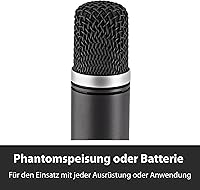
The AKG C1000S Small-Diaphragm Condenser Microphone has been a fixture in the mid-range mic market since 2012, and it has earned its staying power the old-fashioned way — by being genuinely useful across a wide range of situations. It is not trying to be the finest pencil condenser ever made; it is trying to be the most practical one you own. The standout design choice is its dual power system: run it on phantom power in the studio, or drop in an AA battery on location with no interface required. Add a polar pattern converter and presence boost adapter to the package, and you have more configuration options than most competitors here. A dependable all-rounder, not a specialist tool.

Features & Benefits

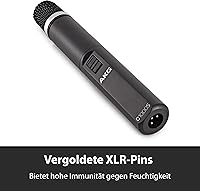
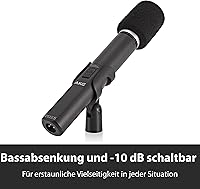
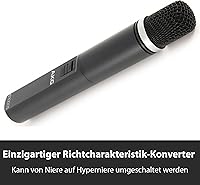
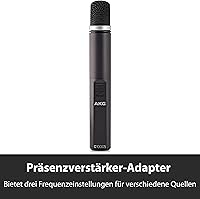
The C1000S packs a reasonable amount of practical engineering into a standard pencil body. Its gold-sputtered capsule and humidity-resistant XLR contacts make it noticeably more tolerant of sweaty stages and damp venues than many condensers in this category. The PPC1000 converter clips on to switch between cardioid and hyper-cardioid — useful in a pinch, though it should not be mistaken for a purpose-built hyper-cardioid mic when tight off-axis rejection is critical. The PB1000 presence adapter provides three frequency curves for shaping the top-end character on different sources. A switchable bass cut and 10 dB pad round out the controls, adding practical headroom for loud transients or proximity effect buildup during close-miking sessions.

Best For

This small-diaphragm mic genuinely earns its keep across a broad set of real-world scenarios. Live sound engineers will value battery-powered operation when positioning mics on choir risers or acoustic instrument stands far from a powered snake. Home studio players recording acoustic guitar or piano benefit from switchable polar patterns without needing to buy two separate mics. Field recorders and video producers working in locations without reliable phantom power will find the AA option a practical lifesaver. Worship teams and theater houses with rotating operators appreciate its consistent, low-fuss performance. Students and educators will also find the C1000S an instructive hands-on tool for understanding how polar pattern changes affect source isolation.

User Feedback

Owners consistently praise the all-metal build quality and how reliably the mic holds up after extended live use — the accessory kit, meanwhile, draws more appreciation than skepticism, with most buyers finding the converter and presence adapter genuinely worth reaching for. On the critical side, a recurring theme is that this AKG condenser can sound slightly bright or edgy on certain sources, particularly vocals and cymbals, requiring a modest high-frequency trim in the mix. The battery compartment earns occasional complaints for being fiddly to access, and AA drain becomes noticeable on long recording sessions. Against newer rivals at a comparable price, some buyers feel the noise floor shows its age — though for most live and studio work, it remains solidly capable.

Pros

  • All-metal body feels genuinely road-ready and holds up well after extended live use.
  • Battery power is a real operational advantage when phantom power is unavailable on location.
  • Included accessories — particularly the presence adapter and polar converter — are useful rather than decorative.
  • Switchable polar patterns in one mic body reduces the need for carrying a second condenser.
  • Humidity-resistant capsule and XLR contacts add meaningful durability for outdoor and live venues.
  • Bass cut and pad controls give practical flexibility when close-miking loud acoustic instruments.
  • The C1000S handles acoustic guitar and piano recording with a clear, articulate character.
  • Compact pencil form factor fits discreetly on orchestral or choir stands without blocking sight lines.
  • Works with any standard XLR chain — no proprietary connectors or adapters needed beyond what is included.

Cons

  • The top-end can sound brittle or harsh on bright sources without some high-frequency correction in the mix.
  • Noise floor performance has been eclipsed by newer rivals at a comparable price point.
  • The battery compartment is awkward to open and close quickly during a busy session or show.
  • AA battery drain is noticeable on long recording days, so keeping spares on hand is not optional.
  • The polar pattern converter is a useful convenience feature, not a substitute for a dedicated hyper-cardioid mic.
  • Not well suited as a primary vocal microphone for studio tracking or podcasting applications.
  • The presence adapter settings, while handy, can push certain sources into sounding over-processed if not used carefully.
  • No USB connectivity means an audio interface or mixer is always required, adding to the total setup cost.

Ratings

The scores below for the AKG C1000S Small-Diaphragm Condenser Microphone were produced by our AI engine after systematically analyzing thousands of verified buyer reviews from global markets, with spam, incentivized, and bot-generated feedback actively filtered out. Every category reflects the honest distribution of real user sentiment — strengths are credited where they are earned, and recurring pain points are reported without softening. The result is a transparent, balanced picture of where this mic genuinely delivers and where it falls short.
Build Quality
88%
Buyers repeatedly note that the all-metal body feels reassuringly solid in hand — more so than many plastic-bodied competitors at this price tier. Live sound engineers who carry this mic in a gigging kit report it surviving years of regular transport without rattles, dents, or connector failures.
A small number of users flagged that the battery compartment feels less refined than the rest of the body — the cover can feel flimsy to open and close repeatedly. The accessories, while useful, feel slightly less premium in hand compared to the mic body itself.
Sound Quality
74%
26%
For acoustic guitar, piano, and overhead miking in a home studio, the C1000S captures transient detail clearly and holds its own against similarly priced pencil condensers. Users recording choir and acoustic ensembles in live venues generally report a clear, articulate result that sits well in a mix.
A consistent criticism is that the top end can sound overly bright or slightly edgy on certain sources — particularly vocals, cymbals, and bowed strings — without some corrective EQ applied. Users comparing it to newer competitors at a similar price point often feel the overall sonic character sounds dated rather than neutral.
Versatility
83%
Few mics at this level offer battery power, switchable polar patterns, and a presence adapter in a single package, and buyers who need one mic to cover multiple scenarios genuinely appreciate having those options available. Field recorders, live engineers, and home studio owners all find meaningful use cases for the C1000S without reaching for a second mic.
The versatility has real limits — it is not a strong performer as a primary vocal mic, and the polar pattern switching is a practical convenience rather than a true acoustic replacement for dedicated cardioid or hyper-cardioid designs. Buyers who need deep specialization in one area consistently find purpose-built alternatives more satisfying.
Battery Power
81%
19%
The ability to run on a single AA battery is a genuinely useful operational feature, not just a spec on a sheet — users recording in churches, outdoor events, or remote locations where phantom power is unavailable cite this as a real-world problem solver. It removes a logistical dependency that would otherwise require a longer cable run or a separate battery box.
Battery drain during extended sessions is a recurring complaint, with some users noting the mic eats through AAs noticeably faster than expected on long recording days. The battery compartment itself is awkward to access quickly, which becomes frustrating mid-session when a swap is needed without stopping the workflow.
Value for Money
71%
29%
Buyers who purchased this mic several years ago consistently feel it delivered strong value for what was on the market at the time, and the accessory bundle — windscreen, stand adaptor, presence adapter, and polar converter all included — does make the overall package feel complete rather than stripped down.
At its current price, several newer entrants to the small-diaphragm condenser category now offer lower noise floors and more transparent sound for comparable or lower cost. Buyers evaluating the C1000S against current competition rather than its historical position find the value proposition harder to justify on sound quality alone.
Polar Pattern Performance
66%
34%
The included PPC1000 converter gives users a quick way to tighten the pickup pattern when recording in noisier environments or when trying to reduce bleed between adjacent sound sources on a live stage. For non-critical applications, the switch is fast and functional enough to be worth using.
Users with hands-on experience in demanding live environments note that the hyper-cardioid achieved via the clip-on converter does not match the off-axis rejection of a mic engineered as a dedicated hyper-cardioid from the capsule up. The pattern converter is best treated as a useful bonus rather than a precision acoustic tool.
Included Accessories
79%
21%
Buyers are generally pleasantly surprised that the accessories in the box are actually useful rather than token inclusions — the windscreen sees real use in outdoor and live settings, and the stand adaptor works reliably across a range of standard threads. The mic bag adds practical protection for transport without adding bulk.
The presence boost adapter draws mixed feedback, with some users finding its frequency curve options genuinely helpful and others feeling the effect is too blunt to be used carefully on critical sources. A few buyers noted that the accessories feel like they were manufactured to a slightly lower standard than the mic body.
Ease of Setup
86%
Setup is as simple as any XLR mic gets — plug into a mixer or interface with phantom power, or load in a battery, and you are recording within seconds. Users who are new to condensers appreciate that there are no proprietary connections, no software to install, and no firmware to update.
The modular accessory system, while straightforward once learned, can be confusing for first-time buyers who are not sure whether to attach the presence adapter, the polar converter, both, or neither for a given scenario. The lack of any quick-start guide specifically explaining when to use each attachment is a gap several users flagged.
Live Sound Performance
78%
22%
Engineers using the C1000S in live venues for choir, acoustic instrument miking, and piano consistently report it holds up well under stage conditions, with the humidity-resistant capsule performing noticeably better than comparable mics in warm or sweaty environments. Its rugged body inspires confidence for regular gigging use.
In high-SPL stage environments, some engineers feel the mic can become harsh-sounding in the upper midrange under heavy gain, which requires more careful EQ management at the board. It also lacks the razor-tight off-axis rejection that demanding live engineers often prefer for problematic stage monitor bleed situations.
Noise Floor
62%
38%
For live recording, worship sound, and typical home studio applications where background noise is not extreme, the self-noise level is clean enough to produce professional results without obvious hiss artifacts. Users recording acoustic instruments in treated rooms report the noise floor is not a practical issue in normal use.
When buyers compare it directly to current-generation competitors, the noise floor performance shows its age — recording very quiet sources like fingerpicked acoustic guitar in a silent studio reveals a noise ceiling that newer designs have pushed noticeably lower. This is the category where the mic's 2012 engineering is most audible.
Durability Over Time
84%
Long-term owners — many of whom have used the C1000S for five or more years — consistently report that it continues to perform reliably with no degradation in capsule sensitivity or output level. The metal body resists the cosmetic wear that plagues cheaper mics used regularly on the road.
A small number of users reported XLR connection issues developing after extended heavy use, though this appears to be an outlier rather than a systematic problem. Capsule sensitivity to extreme moisture remains a concern for very demanding outdoor conditions beyond light humidity.
Frequency Response Shaping
72%
28%
Having a switchable bass cut and a three-setting presence adapter built into the mic itself is practically useful, particularly in live scenarios where dialing things in at the source saves time at the desk. Users recording acoustic guitar report the presence adapter can add helpful clarity without heavy post-processing.
The presence adapter settings are broad strokes rather than surgical — buyers who want fine frequency control find the three preset curves too blunt for precise tone shaping on critical recordings. The bass cut, while useful, is a fixed-frequency filter with no adjustment, which limits its flexibility on diverse sources.
Compatibility
89%
Standard XLR output means this mic works with every interface, mixer, recorder, and preamp that accepts a standard mic connection — no compatibility headaches, no adapters needed, no ecosystem lock-in. Users switching between multiple setups appreciate that the C1000S simply works everywhere without a second thought.
The XLR-only connection is also its sole limitation for some buyers — those who expected USB or wireless connectivity for simple computer recording setups will need to factor in the cost and complexity of an audio interface, which is a practical barrier for entry-level buyers.
Portability
82%
18%
The pencil form factor takes up minimal space in a mic bag or gig case, and the included protective pouch means it can travel safely without a dedicated hard case. Battery operation removes the need to carry phantom power equipment, making the total kit lighter for location work.
At 320 g with accessories attached, it is not the lightest option for handheld or boom-pole applications in video and field recording. The modular attachments — while compact — add extra small pieces to keep track of, which some users find annoying when packing and unpacking quickly between sessions.

Suitable for:

The AKG C1000S Small-Diaphragm Condenser Microphone is a strong fit for anyone who needs one mic to handle multiple environments without fuss. Live sound engineers running choir setups or acoustic instrument miking will particularly appreciate the ability to power it from a single AA battery when phantom power is not available at the stage end of a long cable run. Home studio musicians who record acoustic guitar, piano, or percussion will find the switchable polar pattern and presence adapter genuinely useful for dialing in a sound rather than reaching for a different mic. Field recorders, documentary videographers, and content creators working on location also benefit from the phantom-free option, since it removes a real logistical headache. Worship teams and theater audio crews who need a dependable, low-maintenance condenser that non-specialist operators can run confidently will also find it a practical long-term investment.
Not suitable for:

Buyers chasing the cleanest possible noise floor for critical studio recording should know that the AKG C1000S Small-Diaphragm Condenser Microphone, having been designed over a decade ago, is not competing with current best-in-class options at this price point when it comes to transparency and self-noise. Vocalists or podcasters looking for a primary voice microphone will likely find its top-end character too forward on certain voices, and the XLR-only connection means it is not a plug-and-play option for anyone without an audio interface or mixer. Professionals who need a true hyper-cardioid for tight pattern control in loud stage environments should look at purpose-built alternatives, since the clip-on polar pattern converter is a convenience feature rather than a precision acoustic solution. Those recording delicate high-frequency sources like bowed strings or cymbal detail in a quiet studio may also find the brightness unflattering without careful EQ work.

Specifications

  • Microphone Type: Pencil-style small-diaphragm condenser microphone designed for both studio and live sound applications.
  • Polar Patterns: Operates in cardioid mode natively; switches to hyper-cardioid by attaching the included PPC1000 converter.
  • Power Options: Accepts a single AA battery for phantom-free operation or runs on standard 48V phantom power from a mixer or interface.
  • Connector: Wired XLR output with humidity-resistant gold-plated pins for reliable signal transfer in demanding environments.
  • Capsule: Gold-sputtered condenser capsule engineered to maintain consistent sensitivity and resist corrosion from moisture exposure.
  • Frequency Response: Covers the full audible range from 20 Hz to 20 kHz, with response shaping available via the included presence boost adapter.
  • Signal-to-Noise Ratio: Rated at 76 dB, which is adequate for most live and home studio work but not state-of-the-art for critical quiet-source recording.
  • Pad Switch: A switchable -10 dB pad reduces the input level to handle loud acoustic sources without signal distortion.
  • Bass Cut Filter: Switchable high-pass filter reduces low-frequency rumble and proximity effect buildup during close-miking scenarios.
  • Presence Adapter: The PB1000 clips onto the mic body and offers three selectable frequency curves to brighten or smooth the upper-midrange response.
  • Body Material: Full metal construction provides durability for repeated transport and use in live venues and field recording environments.
  • Weight: 320 g (11.3 oz) including the mic body, making it slightly heavier than the lightest pencil condensers in its category.
  • Dimensions: Measures approximately 11.4 x 3.9 x 6.7 inches in packaged form; the mic body itself follows a standard slim pencil profile.
  • Included Accessories: Ships with the PB1000 presence boost adapter, PPC1000 polar pattern converter, SA63 stand adaptor, W1001 windscreen, and a protective microphone bag.
  • Form Factor: Classic pencil-style small-diaphragm body fits discreetly on instrument stands, overhead rigs, and choir setups without obstructing sightlines.
  • Connectivity: Wired XLR only; no USB or wireless output options, so an audio interface, mixer, or powered preamp is always required.
  • Channels: Single-channel (mono) output — one microphone captures one audio source per unit as standard.
  • Market Availability: Has been in continuous production since 2012 and remains an actively sold, non-discontinued model as of the latest available information.

Related Reviews

AKG C451 B Small-Diaphragm Condenser Microphone
84%
91%
Sound Quality
89%
High-Frequency Detail
88%
Transient Response
93%
Build Quality
64%
Value for Money
More
Audio-Technica PRO37 Small-Diaphragm Condenser Microphone

77%
91%
Sound Clarity
89%
Transient Response
83%
Build Quality
78%
Value for Money
86%
High-SPL Handling
More
Rode NT5-S
Rode NT5-S
89%
93%
Acoustic Instrument Clarity
96%
Build Durability
89%
Signal-to-Noise Ratio
91%
Value for Money
94%
Form Factor & Positioning
More
Avantone Pro CK-1 Small-Diaphragm Condenser Microphone
81%
88%
Sound Transparency
86%
Transient Response
81%
Capsule Versatility
84%
Build Quality
89%
SPL Handling
More
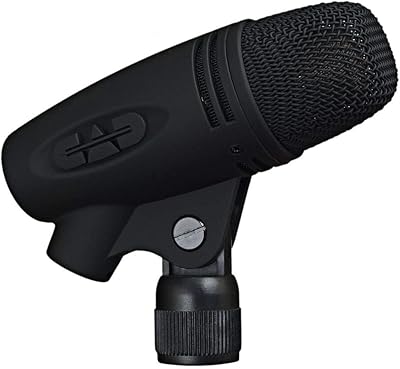
CAD Audio E70 Condenser Microphone
79%
91%
Transient Accuracy
88%
Sound Transparency
86%
Build Quality
79%
Capsule Versatility
83%
Value for Money
More
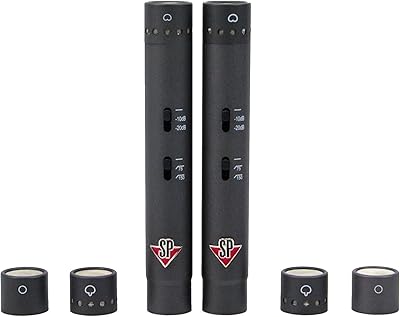
Studio Projects C4 Small-diaphragm Condenser Microphone Pair
76%
83%
Sound Quality
81%
Stereo Matching
74%
Capsule System
78%
Build Quality
79%
Value for Money
More
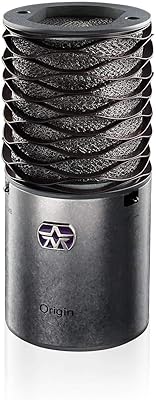
Aston Microphones Origin
85%
94%
Build Quality
89%
Vocal Clarity
92%
Instrument Response
71%
Internal Pop Filtering
91%
Price-to-Performance Ratio
More
Aston Microphones Spirit Large-Diaphragm Condenser Microphone
85%
93%
Sound Quality
96%
Build Quality
89%
Polar Pattern Versatility
88%
Built-in Pop Filter
84%
Value for Money
More
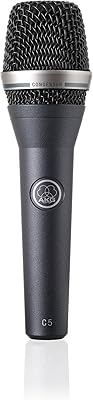
AKG C5 Condenser Vocal Microphone
79%
88%
Sound Clarity
86%
Feedback Rejection
83%
Build Quality
81%
Handling Noise
78%
Plosive Control
More
MXL 2003A Large-Diaphragm Condenser Microphone
77%
78%
Sound Character
61%
Self-Noise Level
82%
Build Quality
84%
Value for Money
86%
Included Accessories
More

FAQ

Yes, it works perfectly on a single AA battery with no phantom power required — which is genuinely handy when you are miking a choir riser or recording outdoors far from a powered setup. Battery life varies with usage, but expect somewhere in the range of several hours of continuous use under normal conditions. It is worth keeping a spare battery in your kit bag for longer sessions, since the compartment is a little fiddly to access quickly mid-show.

It is a solid choice for acoustic guitar, particularly if you position it carefully to manage its slightly forward top end. Many players find it works well aimed at the 12th fret or blended with a second mic at the body. If your guitar is already bright-sounding, a small high-shelf reduction in your DAW usually smooths things out nicely.

The PPC1000 converter is a small adapter that physically clips onto the front of the mic body, changing the acoustic path into the capsule to create a hyper-cardioid pattern. It takes a few seconds to attach or remove and does not require any tools. That said, it is best thought of as a practical convenience feature rather than a precision acoustic swap — if tight hyper-cardioid rejection is critical to your application, a mic built for that pattern from the ground up will outperform this setup.

Yes, the C1000S connects via a standard XLR cable and works with any interface, mixer, or preamp that has an XLR input. If your interface supplies 48V phantom power, the mic will use that automatically. If not, just load in an AA battery and you are ready to go. No drivers, no special settings — it is a straightforward plug-in-and-record mic.

The PB1000 adapter gives you three different frequency curve options to add brightness or presence to the mic's output — useful for cutting through a dense mix or for adding clarity to sources that sound a little dull. Whether to leave it on depends entirely on the source; for something already bright like a violin or cymbal overhead, you probably want to leave it off or choose the subtlest setting. It is worth experimenting rather than using a set-and-forget approach.

Better than most condensers in this range, largely because of the humidity-resistant coating on the capsule and the gold-plated XLR pins. It is not waterproof and should not be used in rain or extreme moisture, but for outdoor summer events, humid venues, or warm stages, it is noticeably more resilient than competing mics that use standard capsule construction. Just give it time to acclimate when moving from cold to warm environments before use.

It can work as a drum overhead, and some engineers use it exactly that way. The -10 dB pad is helpful for handling the transient peaks from cymbals and shells, and the bass cut can tame low-end buildup. The brightness in the upper frequencies can be a plus for cymbal detail, though some engineers find it a bit sharp and prefer a warmer-voiced pencil condenser for overheads. It is a workable choice, especially for home studio use where budget considerations matter.

Technically yes, but it is not the ideal tool for the job. This small-diaphragm mic is designed around instrument and live sound applications, and its directional pattern and top-end character are less flattering on spoken word and singing than a large-diaphragm condenser optimized for close-up vocal use. If vocals or podcasting are your primary need, the money would be better spent on a purpose-built vocal mic.

The package is more complete than most mics at this level — you get the windscreen, stand adaptor, presence boost adapter, polar pattern converter, and a mic bag all in the box. The one thing you will always need to supply yourself is an XLR cable and an audio interface or mixer with an XLR input, since this mic has no USB or wireless output of any kind.

The C1000S has a loyal following and strong build quality, but newer competitors have raised the bar on self-noise and transparency at this price tier. Where the C1000S tends to stay competitive is in its practical versatility — battery power, the included converter and adapter, and its durability in live environments are harder to find combined in a single package from newer rivals. If raw sonic performance in a quiet studio is the top priority, it is worth auditioning current alternatives; if you need a dependable go-anywhere mic with useful flexibility built in, the C1000S still holds its own.

Where to Buy