Overview

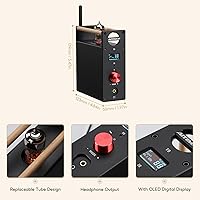
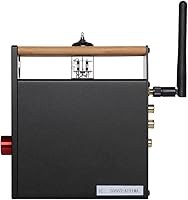
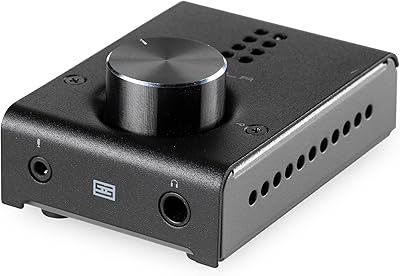
The AIYIMA T8 Tube Preamplifier Headphone Amp sits at an interesting crossroads in desktop audio — affordable enough for casual listeners, yet thoughtfully built for those who genuinely care about how music sounds. At the heart of it is a 6N3 vacuum tube, which adds that familiar analog warmth that purely digital setups tend to lack. The all-aluminum enclosure feels surprisingly solid for the price, and the compact footprint means it won't dominate a desk. This is aimed squarely at budget-conscious headphone enthusiasts who want to step into tube audio without committing to a serious financial outlay.
Features & Benefits

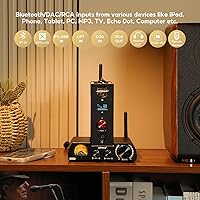
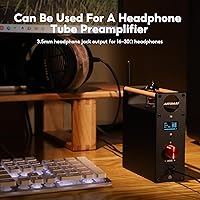
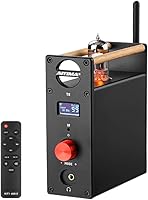
What makes the T8 genuinely practical is the range of ways you can feed audio into it. Bluetooth 5.0 with APT-X handles wireless streaming with noticeably low latency, which matters if you are watching video alongside just listening. Plug it into a PC via USB and you get a proper DAC capable of handling up to 192kHz — a real step above onboard audio. The headphone output is rated for 16 to 300 ohms, covering everything from casual consumer cans to more demanding semi-pro headphones. Independent treble and bass gain controls let you dial in the sound rather than accepting a fixed tonal character.

Best For

This desktop headphone amp makes the most sense for listeners building a proper headphone rig on a tight budget. It pairs especially well with mid-impedance headphones — the Sennheiser HD 600 family, Beyerdynamic DT 990, and similar 150 to 300 ohm cans are natural fits. PC and streaming users who juggle multiple audio sources will appreciate how easy it is to switch inputs without rerouting cables. The T8 also works as a preamp for passive speakers if a power amplifier sits downstream, giving it flexibility beyond pure headphone use. Newcomers to tube audio will find it a low-risk way to hear what the fuss is about.

User Feedback

Buyers consistently praise build quality above expectations for the price — the aluminum shell and weighted knobs feel more substantial than the cost would suggest. Bluetooth connectivity earns positive marks for pairing speed and general reliability. On the critical side, users with sensitive in-ear monitors report a faint background hiss, which is worth knowing if IEMs are your primary listening tool. The remote is functional but some find it a touch plasticky. Tube rolling is a popular topic in owner communities; swapping the stock 6N3 for a compatible alternative like the GE5670 is frequently cited as a noticeable improvement in clarity and soundstage depth.

Pros

  • Aluminum alloy build feels genuinely premium and well-weighted for the price point.
  • Drives 150 to 300 ohm headphones confidently without strain or obvious clipping.
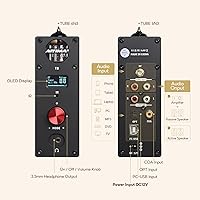
  • Five input options cover Bluetooth, USB, RCA, coaxial, and optical in a single compact unit.
  • APT-X and APT-X LL Bluetooth support keeps wireless latency low enough for video watching.
  • Independent treble and bass gain controls let you adjust tonal character without extra EQ hardware.
  • USB DAC is plug-and-play on Windows and Mac with no driver installation required.
  • The 6N3 tube is swappable, opening up a genuine upgrade path through affordable tube rolling.
  • Compact footprint fits naturally on a crowded desk without dominating the workspace.
  • Remote control adds real convenience for volume adjustments during laid-back listening sessions.
  • Warm midrange character makes this tube preamp particularly enjoyable for vocals and acoustic music.

Cons

  • Audible background hiss makes the T8 a poor pairing with sensitive in-ear monitors.
  • The remote requires near-direct line of sight and feels noticeably cheap compared to the main unit.
  • Treble and bass gain knobs have no center detents, making it hard to return to a neutral setting reliably.
  • Input cycling is sequential, so switching between non-adjacent sources requires stepping through all inputs.
  • Stock 6N3 tube is functional but noticeably outperformed once swapped, which adds an unplanned extra cost.
  • External power brick and short cable can create cable management headaches depending on desk layout.
  • Bluetooth range drops off quickly through walls, limiting use to same-room sources only.
  • Upper frequency detail feels slightly soft compared to dedicated DAC units at a similar price.

Ratings

The AIYIMA T8 Tube Preamplifier Headphone Amp has been scored by our AI engine after processing verified buyer reviews from global markets, with spam, bot-generated, and incentivized submissions actively filtered out. The scores below reflect the honest consensus of real desktop audio users — from casual listeners to entry-level audiophiles — and neither overstate the strengths nor soften the genuine pain points.
Sound Quality
83%
The 6N3 tube imparts a noticeably warm, slightly rounded character that many listeners find immediately pleasing compared to a straight solid-state signal path. Midrange feels more textured, and at moderate listening volumes the overall presentation is cohesive and easy on the ears for long sessions.
The tube coloration, while appealing to most, can mask fine detail retrieval that transparency-focused listeners expect. At higher gain settings some users note a softness in transient attack that makes the sound feel slightly veiled rather than open.
Build Quality
88%
The full aluminum alloy enclosure is one of the first things buyers comment on — it feels dense and purposeful on the desk, not hollow or plasticky. Volume and gain knobs have decent resistance and the overall fit and finish punches well above what the price tag would suggest.
A few buyers noted that the tube socket fit can be slightly loose on some units, creating minor anxiety when nudging the desk. The underside rubber feet are functional but thin, and the unit can creep on smoother desk surfaces over time.
Bluetooth Performance
81%
19%
APT-X and APT-X LL support makes a real difference for wireless listeners — pairing is quick, the signal holds steady across a typical room, and latency is low enough to watch video without obvious lip-sync drift. Most users were satisfied with daily wireless use.
Range drops off noticeably through walls, so this is effectively a same-room Bluetooth device. A small number of users reported occasional dropouts when multiple wireless devices were active nearby, suggesting the antenna could be more robust.
DAC Performance
79%
21%
Plugging this into a PC via USB is a meaningful upgrade over typical onboard audio. The 192kHz ceiling and clean signal path make streaming and local FLAC playback sound more resolved, and the plug-and-play compatibility with Windows and Mac removes any driver headaches.
The DAC stage is competent rather than exceptional — seasoned listeners comparing it directly to dedicated DAC units in a similar price bracket may find it slightly grainy in the upper frequencies. It is better than your motherboard but is not the last word in digital conversion.
Headphone Compatibility
82%
18%
The rated 16 to 300 ohm range genuinely covers a wide sweep of headphones, and real-world reports of pairing with 150 to 250 ohm cans like the Sennheiser HD 600 or Beyerdynamic DT 990 are largely positive — enough drive, no obvious clipping at reasonable volumes.
Sensitive in-ear monitors are a mismatch. Users plugging in IEMs with sensitivity above 100dB reported a persistent background hiss that is distracting in quiet passages. This unit is really designed for over-ear headphones, not earphones.
Noise Floor
61%
39%
With mid to high impedance headphones in the 150 to 300 ohm range the noise floor stays largely inaudible during normal listening, and most buyers using the T8 as intended never raised the issue as a serious complaint.
This is the most polarizing aspect of the T8. Users with sensitive IEMs or low-impedance earphones under 32 ohms encounter an audible hiss that does not disappear even at low volume settings. It is a structural limitation of the tube design at this price point rather than a defect.
Input Versatility
91%
Five distinct input options — Bluetooth, RCA, USB, coaxial, and optical — mean this unit can sit at the center of a multi-source desktop setup without a separate switcher. Moving between a TV, a laptop, and a phone is genuinely convenient in daily use.
Input switching relies on a single button cycle, so jumping between non-adjacent sources means cycling through all inputs in sequence. A direct source-select shortcut on the remote would have made this more practical for users juggling three or more sources regularly.
Tube Rolling Potential
77%
23%
The 6N3 socket accepts a useful range of compatible tubes including the GE5670, 2C51, and 396A variants. Community feedback consistently reports that swapping the stock tube for a quality NOS alternative noticeably opens up the soundstage and improves treble clarity.
For newcomers to tube audio the rolling process involves sourcing compatible tubes independently, understanding pin compatibility, and accepting that results vary by tube sample. The stock tube is adequate but the upgrade path, while real, requires research that first-time buyers may not be ready for.
Value for Money
86%
At its price point the T8 offers a combination of inputs, a real tube stage, a functional DAC, and a remote that would cost considerably more in separate components. Buyers regularly express surprise at how complete the package feels for the asking price.
As a direct competitor to other budget Chinese tube preamps the T8 is not alone, and a small number of buyers who had compared multiple units felt the sonic performance difference over cheaper rivals was marginal. The value proposition is strong but not unchallenged.
Remote Control
63%
37%
Having a remote at all in this category is appreciated — it covers volume, input switching, and power, which is enough for a typical desktop session without getting up from a couch or reaching across a desk repeatedly.
The remote itself feels lightweight and budget-grade compared to the main unit, and infrared range requires relatively direct line of sight. Several users reported inconsistent responsiveness, needing to point the remote quite precisely for reliable operation.
Tonal Controls
74%
26%
Independent treble and bass gain adjustments give listeners a meaningful degree of tonal shaping that is absent on most competing units at this price. For headphones that need a slight bass lift or treble trim it is a useful hands-on control.
The adjustments are analog and do not have detent positions, making it difficult to return to a neutral setting by feel alone. Users who prefer a flat reference starting point found it frustrating to reliably re-center both controls after experimenting.
Setup & Ease of Use
84%
Out of the box the T8 is genuinely plug-and-play for USB and Bluetooth use — no drivers required on modern operating systems and Bluetooth pairing takes under a minute. Most buyers had audio playing within minutes of opening the box.
The manual is thin and translated, so some of the finer points around coaxial and optical input configuration are not clearly explained. Users new to preamps occasionally needed to rely on community forums to understand gain staging correctly.
Desktop Footprint
89%
The compact dimensions mean the T8 sits comfortably beside a monitor without eating into desk real estate. The slightly elevated tube housing looks intentionally architectural rather than accidental, and several buyers mentioned it draws positive comments from visitors.
The power brick is external and the cable is not particularly long, which can create minor cable management annoyances depending on desk layout and where the nearest outlet sits. It is a minor inconvenience but worth noting for tidy desk setups.

Suitable for:

The AIYIMA T8 Tube Preamplifier Headphone Amp is a strong match for desktop listeners who want to step away from the clinical sound of onboard audio without spending serious money or dedicating half a desk to the effort. If you own a pair of mid-impedance headphones — think Sennheiser HD 600, Beyerdynamic DT 990, or anything in the 150 to 300 ohm range — this tube preamp has enough output to drive them properly while adding the kind of tonal warmth that makes long listening sessions more enjoyable. PC and Mac users who juggle multiple audio sources will appreciate having Bluetooth, USB, optical, and coaxial inputs all on one box, removing the need for a separate switcher or DAC. It also works well as a preamp stage ahead of a power amplifier if you have passive bookshelf speakers on the desk alongside headphones. Anyone who is curious about tube audio but not ready to commit to a dedicated high-end rig will find the T8 a low-risk, genuinely rewarding entry point — especially given the option to experiment with tube rolling down the line.
Not suitable for:

The T8 is not the right call if your primary listening tools are sensitive in-ear monitors or low-impedance earphones. The noise floor at that end of the impedance spectrum produces an audible background hiss that no amount of volume adjustment fixes, and buyers who have tried it with high-sensitivity IEMs consistently come away frustrated. This desktop headphone amp is also not built for listeners who prioritize analytical transparency and fine detail retrieval above all else — the 6N3 tube stage adds coloration by design, and if you want a ruler-flat, clinical reference sound, a neutral solid-state unit would serve you better. Buyers expecting audiophile-grade DAC performance on par with dedicated converter boxes at a similar price will likely find the USB DAC stage competent but not exceptional. The remote control, while functional, feels budget-grade and requires careful aim to register reliably, which may bother users who expect a more polished accessory experience. Finally, if you live in a space where your audio source is in a different room, the Bluetooth range limitations will be a recurring annoyance.

Specifications

  • Tube Type: The unit uses a 6N3 dual-triode vacuum tube and accepts compatible drop-in replacements including 6H3, 2C51, 396A, GE5670, and GE5657 variants.
  • Bluetooth Version: Bluetooth 5.0 is supported with APT-X and APT-X LL codecs for low-latency, high-fidelity wireless audio transmission.
  • Audio Inputs: Five inputs are available: Bluetooth 5.0, RCA stereo, PC-USB, coaxial digital, and optical digital (TOSLINK).
  • Audio Outputs: Output options include a 3.5mm headphone jack and a stereo RCA line output for connection to powered or passive speaker amplifiers.
  • Headphone Impedance: The headphone output is rated for headphones with impedance between 16 and 300 ohms, covering the majority of consumer and semi-professional over-ear headphones.
  • Max Headphone Power: Maximum headphone output power is 120mW measured at 32 ohms.
  • USB DAC Resolution: The PC-USB DAC input supports sampling rates up to 192kHz and is compatible with Windows 10, Windows XP, and macOS without additional drivers.
  • Frequency Response: Audio frequency response is rated at 20Hz to 20kHz with a tolerance of plus or minus 0.5dB across the full range.
  • Signal-to-Noise Ratio: SNR is specified at 108dB for the RCA output and 106dB for the headphone output under standard operating conditions.
  • Distortion (THD): Total harmonic distortion is rated at 0.2% on the RCA output and 0.003% on the headphone output.
  • Input Sensitivity: Input sensitivity is rated at 2V, which is compatible with standard line-level sources from laptops, streaming devices, and disc players.
  • Tonal Controls: Independent analog gain adjustment controls for treble and bass are provided on the front panel for user-configurable tonal shaping.
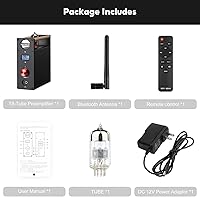
  • Power Supply: The unit operates on DC 12V and includes a compatible power adapter in the box; there is no built-in battery.
  • Shell Material: The outer enclosure is machined from all-aluminum alloy, giving the unit a solid, heat-dissipating construction.
  • Dimensions: Physical dimensions are 4.84 x 1.97 x 5.47 inches (length x width x height), making it compact enough for a typical desktop setup.
  • Weight: The unit weighs 2.07 pounds, reflecting the density of the aluminum enclosure and internal components.
  • Control Methods: The unit can be operated via touch-sensitive controls on the unit itself or through the included infrared remote control.
  • PCB Construction: Internal circuitry uses a heavy gold-plated PCB, which improves solder joint reliability and signal path conductivity over standard boards.

Related Reviews
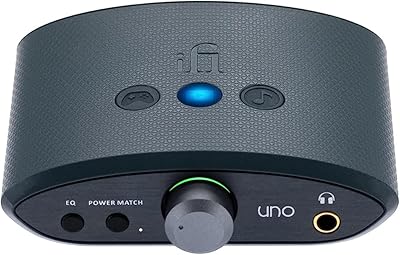
iFi uno DAC & Headphone AMP
85%
91%
Sound Quality
89%
Value for Money
87%
Portability
82%
Setup & Installation
88%
Build Quality
More
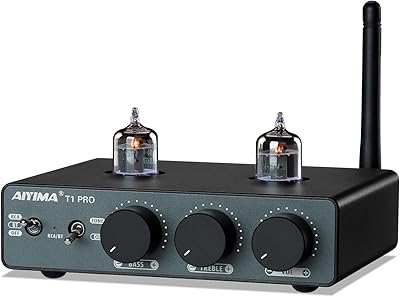
AIYIMA T1 Pro Tube Preamplifier
78%
83%
Sound Warmth & Tube Character
67%
Bluetooth Reliability
78%
Build Quality & Fit/Finish
81%
12V Trigger Functionality
72%
Tone Control Usefulness
More
ATMOSURE Air Tube Headphones FC12-A
81%
88%
EMF Protection Effectiveness
85%
Comfort and Fit
77%
Sound Quality
90%
Portability and Storage
82%
Microphone Performance
More
Schiit Fulla E
Schiit Fulla E
84%
88%
Audio Output Quality
91%
Microphone Quality
93%
Ease of Setup
82%
Noise Floor & Signal Cleanliness
78%
Build Quality & Durability
More
Fosi Audio K7
Fosi Audio K7
84%
91%
Build Quality
88%
Sound Quality
87%
Amplifier Power
93%
Connectivity & Inputs
89%
Output Options
More
FiiO KA5
FiiO KA5
82%
93%
Audio Quality
91%
Balanced Output Performance
89%
Noise Floor & Interference
92%
IEM Compatibility
88%
Value for Money
More
AIYIMA DAC-A2
AIYIMA DAC-A2
77%
83%
Sound Clarity Improvement
79%
Tone Controls (Bass & Treble)
86%
Input Versatility
74%
Headphone Amplifier Performance
53%
Build Quality & Materials
More
Bolanle PH400
Bolanle PH400
80%
88%
Value for Money
71%
Build Quality
67%
Audio Clarity
93%
Output Flexibility
91%
Independent Volume Control
More
Moukey MHAMP1
Moukey MHAMP1
79%
84%
Build Quality
81%
Signal Clarity
88%
Value for Money
91%
Ease of Use
86%
Portability
More
eSynic ESY233 Portable Headphone Amplifier
81%
83%
Sound Quality Improvement
79%
Bass Boost Performance
77%
Build Quality
61%
Noise Floor & Hiss
86%
Battery Life
More

FAQ

Yes, it handles those very well. The headphone output is rated for impedances up to 300 ohms, and the HD 600 at 300 ohms sits right at the top of that range with enough output to reach comfortable listening volumes. Most users pairing it with the HD 6xx family report a warm, full-bodied result that suits that headphone's character nicely.

Yes, the USB input is plug-and-play on Windows 10, Windows XP, and macOS — no driver installation needed. You just plug it in, set it as the default audio output in your system settings, and it starts working. It supports up to 192kHz sampling rate over USB, which is more than enough for any standard audio file format.

Honestly, probably not. Sensitive IEMs, especially those with impedance below 32 ohms, tend to reveal a background hiss on this unit that is largely inaudible with over-ear headphones but quite noticeable through earphones. This is a known characteristic of budget tube designs and not a defect, but it does make the T8 a poor match for IEM users.

For same-room use it is generally reliable, and pairing with phones and laptops is quick. APT-X support helps keep audio quality up during wireless playback. That said, range through walls is limited, so if your phone or computer is in another room you may encounter dropouts. Think of it as a desktop Bluetooth device rather than a whole-home wireless receiver.

Tube rolling means swapping the stock 6N3 vacuum tube for a compatible alternative, and it is a popular mod in the T8 owner community. Tubes like the GE5670 or NOS 2C51 variants are commonly recommended and can meaningfully open up the soundstage and smooth out the treble compared to the stock tube. It is worth trying if you want to get more out of the unit, but it does involve a small additional cost and some research to find a compatible, quality replacement.

It can work as a preamp stage feeding a separate power amplifier, which in turn drives passive speakers — but it cannot drive passive speakers directly on its own. The RCA output sends a line-level signal, so you still need a power amp in the chain. If you already have a power amplifier, the T8 slots in cleanly as the preamp and volume control stage.

The remote uses infrared, so it needs a reasonably clear line of sight to the front of the unit to register commands. It covers the essentials — volume, input switching, and power — which is convenient for desktop use. The build quality of the remote is noticeably below that of the main unit, and some users find they need to point it fairly directly to get consistent responses. It works, but keep your expectations calibrated.

The 6N3 tube does get warm during operation, as all vacuum tubes do, but it runs at a lower temperature than larger tube types. Under normal desktop conditions it is not a burn risk if touched briefly, though you would not want to keep your finger on it. Just make sure the area around the tube is not covered and has reasonable airflow, and it will be fine.

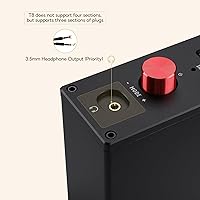
The headphone jack is designed to take priority when a plug is inserted, which means plugging in headphones will cut the signal to the RCA outputs on most units. This is a common circuit design choice rather than a defect. If you want to run both simultaneously — say, headphones and powered speakers — this unit is not set up for that without modification.

In practical listening the differences are subtle, and most users will not hear a meaningful gap between optical and coaxial. Some experienced listeners report that USB can sound marginally warmer due to the onboard DAC processing, while optical tends to feel slightly cleaner in the treble. These are small differences and are unlikely to be the deciding factor in how you connect your source — just use whichever cable type your device supports most conveniently.

Where to Buy