


Overview
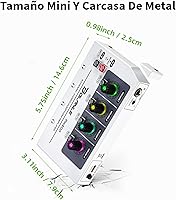
The Bolanle PH400 is a compact headphone distribution amp that punches well above its price bracket for anyone running a home studio, rehearsal space, or small live setup. Built entirely from metal and measuring just 5.75 x 3.11 x 0.98 inches, it's surprisingly solid for what it costs. This headphone amp arrived on the scene in late 2023 and has quietly built a decent reputation, sitting at 4.3 stars across a growing pool of reviews. It competes with a handful of similar budget-tier splitter amps, but the all-metal chassis gives it a more substantial feel than most rivals at this price point.
Features & Benefits
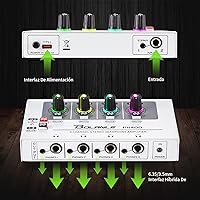
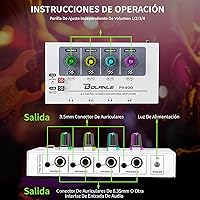
What makes the PH400 stand out from a plain passive splitter is the combination of eight output jacks — four 3.5mm and four 6.35mm — meaning you can plug in a mix of headphone types without hunting for adapters. Each of the four channels has its own independent volume knob, so nobody has to fight over the same level. There's also a mono/stereo toggle that guitarists will appreciate when monitoring a single instrument channel. A dedicated 12V DC power supply keeps the output stable, and the mute button lets you kill all outputs instantly without yanking any cables. The LED lights on the knobs are cosmetic, but they do add a bit of personality.
Best For
This distribution amp is a natural fit for small band rehearsals where everyone wants their own headphone feed from the same mix. It's equally useful in a home studio when a producer and vocalist both need monitoring during a take — having separate level control means no awkward compromises. Guitarists doing silent practice will find the mono/stereo switch genuinely handy. Podcasters and content creators who just need a reliable headphone splitter with per-person volume will get what they need here without overcomplicating things. If you're looking at rack-mounted units with more features, this headphone amp isn't trying to compete — it's squarely aimed at buyers who want straightforward functionality at an accessible price.
User Feedback
Buyers who've picked up the PH400 tend to appreciate two things most: the convenience of having both jack sizes in one unit, and the per-channel volume knobs that actually work as advertised. In darker practice rooms, a few reviewers mention the glowing buttons as a genuinely useful visual cue. On the critical side, some users raise fair questions about long-term durability — at this price, the internal components aren't going to match what you'd find in a professional unit. A handful of buyers have noted occasional background hiss at higher gain levels, which is a known trade-off with budget amps. The power supply and connector fit seem solid for most, though a few mention loose jack feel over time.
Pros
- Eight output jacks cover both 3.5mm and 6.35mm headphones — no adapters needed.
- Four independent volume knobs let every listener set their own level, which passive splitters simply cannot do.
- The all-metal chassis feels noticeably more solid than competing plastic units at this price.
- A dedicated 12V power supply keeps output stable even with all channels in use simultaneously.
- The global mute button cuts all outputs instantly without unplugging a single headphone.
- Compact enough at under an inch thick to fit easily into any gear bag alongside other kit.
- The mono/stereo toggle is a quietly useful feature that guitarists practicing silent will actually use.
- Setup takes minutes — plug in the power, connect a source, and it works without any configuration.
- Compatible with virtually any device that has a standard headphone output jack.
- At its price point, the feature set is genuinely difficult to match with comparable alternatives.
Cons
- Headphone jacks can loosen noticeably with frequent plug-and-unplug cycles over time.
- Background hiss becomes audible at higher volume levels — not ideal for quiet or critical listening environments.
- The included power adapter feels like a cost-cut component, and a failure there disables the entire unit.
- No per-channel mute option means you have to silence everyone or no one.
- The LED lights on the knobs cannot be turned off, which some users find distracting in neutral studio environments.
- There is no input gain control, so a very weak or very hot source signal limits the useful volume range.
- Requires a wall outlet nearby — battery power is not an option, reducing flexibility in some spaces.
- The user manual is thin and leaves mono/stereo switch behavior poorly explained for newcomers.
- No expansion or daisy-chain support means four listeners is a hard ceiling without buying a second unit.
Ratings
The Bolanle PH400 has been evaluated by our AI rating system after analyzing verified buyer reviews from around the world, with spam, bot-generated, and incentivized feedback actively filtered out. What you see below reflects a genuinely balanced picture — where this compact distribution amp earns real praise and where it falls short of expectations. Both strengths and frustrations are represented transparently across every category.
Value for Money
Build Quality
Audio Clarity
Output Flexibility
Independent Volume Control
Ease of Setup
Mono/Stereo Switch
Port Count and Variety
Power Supply Reliability
LED Lighting
Mute Functionality
Portability and Size
Connector and Jack Quality
Compatibility
Suitable for:
The Bolanle PH400 is a practical pick for musicians, hobbyists, and small-team creators who need to share a single audio source across multiple listeners without complicated gear. A four-piece band running silent rehearsals, for example, can plug everyone in simultaneously — with each player dialing their own level rather than compromising on a shared setting. Home studio owners who need to monitor alongside a vocalist or collaborator will find this distribution amp covers that use case cleanly and without fuss. Guitarists practicing at home with a mono signal will also appreciate the stereo/mono toggle, which prevents the signal from sitting uncomfortably in just one ear. Podcasters or content creators who simply need reliable, individual-level headphone feeds for two or more participants will get exactly what they need here, without paying for rack-mounted features they'll never use. If your goal is basic, dependable headphone distribution on a sensible budget, this unit is genuinely hard to argue against.
Not suitable for:
The Bolanle PH400 is not the right tool for buyers expecting professional-grade audio transparency or long-haul durability under heavy daily use. Audiophiles or engineers relying on high-impedance reference headphones for critical mixing will likely find the noise floor and output quality fall short of what serious work demands. The unit is wired-only with no digital connectivity, so anyone integrating it into a modern setup that includes USB audio routing or wireless monitoring needs will hit a hard wall quickly. If you need more than four simultaneous listeners and want a single expandable solution, this amp offers no daisy-chain capability. The power supply and jack connectors are also the most vulnerable components, and buyers who plan to pack and unpack this distribution amp repeatedly on the road should expect to see wear on those parts faster than they might hope. Essentially, if your needs go beyond casual practice or basic home recording, this unit will feel limiting sooner rather than later.
Specifications
- Dimensions: The unit measures 5.75 x 3.11 x 0.98 inches, making it slim enough to sit flat on a desk or fit inside a gear bag without taking up meaningful space.
- Weight: At 12.3 ounces, the amp is light enough to carry to rehearsals without adding noticeable bulk to a equipment load-out.
- Material: The outer chassis is constructed entirely from metal, giving the unit a more solid feel than the plastic-bodied alternatives common at this price tier.
- Output Jacks: Eight total output jacks are provided: four 3.5mm (1/8-inch) and four 6.35mm (1/4-inch), allowing mixed headphone types to connect simultaneously without adapters.
- Input Channels: The amp features four independent output channels, each with its own dedicated volume knob for per-listener level control.
- Signal Modes: A physical toggle switch allows the user to select between mono and stereo signal routing, useful when the source is a single-channel instrument output.
- Power Input: The unit requires a dedicated DC 12V 2A power supply, which is included in the box, and does not support USB bus power.
- Frequency Response: The stated frequency response extends up to 20 kHz, covering the standard audible range for typical monitoring and practice applications.
- Sensitivity: Output sensitivity is rated at 100 dB, suitable for driving most consumer and semi-professional headphones at adequate listening levels.
- Impedance: Output impedance is rated at 10,000 Ohm, which should be considered when pairing with high-impedance reference headphones requiring more demanding drive capability.
- LED Feature: Each volume knob button is backlit with a breathing LED that cycles through seven colors, providing visual feedback during level adjustments.
- Mute Control: A single mute button silences all output channels simultaneously without requiring any headphones to be physically disconnected.
- Connectivity: The unit is wired-only with no Bluetooth, Wi-Fi, or USB audio interface capability; signal input and output rely entirely on standard analog jacks.
- Compatible Sources: Any audio source with a 3.5mm or 6.35mm headphone output jack — including smartphones, mixers, audio interfaces, and guitar processors — can serve as an input.
- In the Box: The package includes the PH400 amplifier unit, one DC 12V 2A power adapter, and a printed user manual.
- Water Resistance: The unit carries no water resistance rating and should be kept away from moisture, liquids, and humid environments to avoid damage.
- Model Number: The official model designation is PH400, manufactured and sold under the Bolanle brand.
- Release Date: The product was first made available in October 2023, making it a relatively recent addition to the budget headphone amp category.
Related Reviews