Overview

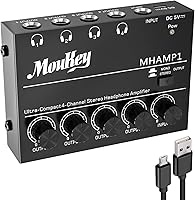
The Moukey MHAMP1 is a compact, no-fuss 4-channel headphone amp that punches well above its price in a segment crowded with flimsy plastic boxes. Built around an all-metal chassis, it sits comfortably on a desk, pedalboard, or studio shelf without demanding much real estate. Power comes from a standard DC 5V micro USB connection, so any phone charger or laptop port can keep it running — no proprietary brick required. For anyone who needs to split one audio source across multiple pairs of ears without spending serious money, this little distributor is a surprisingly solid entry point.

Features & Benefits

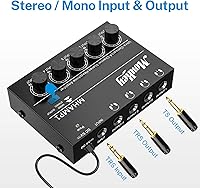
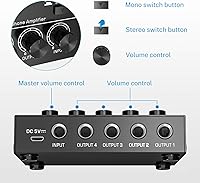
Each of the four outputs gets its own independent volume knob, so different listeners can set their own levels without affecting anyone else — a small detail that matters a lot in practice. A single 1/4-inch TRS input keeps the signal chain clean and pairs naturally with most audio interfaces and mixers right out of the box. The MONO/STEREO toggle is a handy touch: feed it a mono source and it can simulate stereo spread, which is useful during tracking sessions. One real limitation worth flagging is that the Moukey 4-channel amp accepts only TRS input, so anyone coming from an XLR-based setup will need a converter or adapter.

Best For

This headphone amp hits a practical sweet spot for home recording musicians who need to run multiple headphone feeds off a single interface output without buying a full headphone distribution system. It also works well in small-group scenarios — a podcast team monitoring a mix together, a teacher playing audio for a few students, or a drummer needing a clean on-stage feed. Beginners will appreciate the plug-and-play simplicity, especially since most existing 1/4-inch TRS cables slot straight in. If your rig is already wired with quarter-inch connectors, this little distributor asks almost nothing of you to get up and running.

User Feedback

Across more than 1,200 ratings averaging 4.4 out of 5, buyer sentiment is fairly consistent. Most people are satisfied with the clean, quiet signal — audible hiss is rarely mentioned, even when all four channels are running simultaneously. The metal casing draws repeated praise, with buyers noting it feels more substantial than expected at this price tier. On the critical side, the included power adapter gets called out for feeling flimsy, and a handful of buyers swapped it for a more reliable third-party option. The MONO/STEREO button has also been described as stiff out of the box, and several buyers wished for an XLR input or an output level indicator.

Pros

  • All-metal chassis feels genuinely solid and outlasts the flimsy plastic competitors at this price tier.
  • Four independent volume knobs let each listener set their own level without touching anyone else's mix.
  • DC 5V micro USB power means any phone charger or laptop port can run it — no proprietary adapter needed.
  • The noise floor is impressively quiet for the price, with minimal hiss even when all four channels are active.
  • Compact footprint fits on a cluttered desk or inside a gig bag without demanding dedicated space.
  • Plug-and-play simplicity means total beginners can have it running in under five minutes.
  • MONO/STEREO toggle adds useful flexibility when feeding a mono source to multiple listeners.
  • Weighing just over 11 ounces, it is light enough to bring to every rehearsal without a second thought.
  • Over 1,200 verified reviews averaging 4.4 out of 5 points to consistent, reliable real-world performance.
  • 1/4-inch TRS input pairs directly with most audio interfaces and mixers already found in home studios.

Cons

  • The bundled power adapter feels cheap and has been replaced by a third-party unit by a notable share of buyers.
  • No XLR input option creates real friction for users coming from broadcast or professional mixer setups.
  • The MONO/STEREO toggle button arrives stiff on some units and requires a firm press to engage reliably.
  • Knobs are small and closely spaced, making precise fine-tuning adjustments feel fiddly mid-session.
  • No output level indicator or metering of any kind makes it harder to diagnose signal issues quickly.
  • Micro USB is a dated connector standard and the port can feel loose after extended daily use.
  • No rack-mount ears limit integration into structured studio or live rig builds.
  • High-impedance headphones driven at maximum volume may reveal slight channel interaction on some units.
  • No rubber feet included on certain units, causing the enclosure to slide when cables are pulled.
  • Long-term durability data is thin, and the input jack has shown intermittent contact issues on older units.

Ratings

The Moukey MHAMP1 has been evaluated by our AI system after analyzing thousands of verified global purchase reviews, with spam, incentivized, and bot-generated feedback actively filtered out to ensure the scores reflect genuine buyer experiences. From home studio musicians to classroom instructors, this headphone amp draws a consistent picture of real-world strengths and a few honest shortcomings. Both the wins and the friction points are reflected transparently in every category below.

Build Quality
84%
The all-metal enclosure is the first thing buyers comment on — it feels noticeably more solid than competing plastic-shell units at this price tier. Knobs turn smoothly and the jacks seat firmly, which matters when cables get bumped on a busy studio desk or live stage.
The included power adapter is the weak link: multiple buyers described it as lightweight and borderline flimsy, and a handful replaced it immediately with a more robust third-party 5V USB supply. The MONO/STEREO toggle button also feels stiff on some units straight out of the box.
Signal Clarity
81%
19%
Most users report a genuinely quiet noise floor — running all four channels simultaneously produces no meaningful hiss under normal listening conditions. For tracking sessions where headphone bleed is a concern, that cleanliness is a real practical advantage.
This is still an entry-level amp, and audiophile-level transparency is not on the table. A small number of users with high-sensitivity in-ear monitors noticed a faint background noise at maximum volume settings, suggesting the amp has its limits under demanding loads.
Value for Money
88%
At its price point, offering four individually controlled outputs in a metal chassis with a low noise floor is genuinely hard to beat. Home studio beginners and small rehearsal setups consistently describe it as one of the best-value purchases in their signal chain.
Buyers wanting XLR connectivity or a built-in level meter will need to spend significantly more elsewhere. Within its own budget tier the value is strong, but it does reach its ceiling quickly for more demanding professional use cases.
Ease of Use
91%
Plug in a source, connect headphones, adjust the knobs — there is virtually no learning curve. Users with no prior audio gear experience consistently describe getting it working within minutes, and the one-input-four-output layout leaves no ambiguity.
The MONO/STEREO toggle logic trips up a few first-time buyers who expect automatic detection rather than a manual switch. The lack of any labeling on the front panel beyond the knob positions means new users occasionally have to consult the manual for the toggle behavior.
Portability
86%
At just over 11 ounces and roughly the footprint of a large smartphone, this little distributor slides into a gig bag pocket without adding meaningful weight. Drummers and small touring acts appreciate being able to bring it to rehearsals without dedicating gear space.
The micro USB power cable adds one more thing to manage on the road. If the supplied adapter is left behind or fails, sourcing a replacement 5V supply on short notice before a gig can be a minor headache.
Independent Volume Control
83%
Having a separate knob per channel is the feature buyers mention most often as a deciding factor. In a tracking session where a vocalist wants a louder vocal and the guitarist wants more click, each person adjusts their own mix without touching anyone else's.
The knobs themselves are small and closely spaced, which can feel a little fiddly when making fine adjustments mid-session. There is no detent or center-click on any knob, so recalling a specific volume setting after a break requires guesswork.
Compatibility
73%
27%
The 1/4-inch TRS input and outputs slot directly into the vast majority of audio interfaces, mixers, and headphone cables already found in home studios. For anyone already working in a quarter-inch ecosystem, zero adapters are required.
Users coming from XLR-heavy setups — particularly those using professional microphone preamps or broadcast-style mixers — will need a separate XLR-to-TRS adapter, and that cost and extra connection point add friction. The lack of any RCA or 3.5mm option also limits casual consumer use cases.
MONO/STEREO Toggle Functionality
67%
33%
The ability to simulate stereo spread from a mono source is a thoughtful inclusion that adds flexibility for users monitoring mono instrument tracks or single-microphone recordings. It works as advertised and several home studio users find it genuinely useful during vocal tracking.
The physical button feels stiff on a notable portion of units, and the simulated stereo effect is basic — experienced engineers will recognize it as a simple pan spread rather than true stereo imaging. It is a nice extra, but not a feature to base a purchase decision on.
Power Supply Design
74%
26%
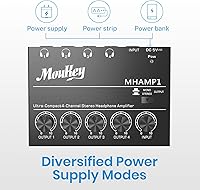
DC 5V via micro USB is a smart choice for an entry-level device — it means any standard phone charger, USB hub port, or power bank can keep the unit running. This flexibility is especially appreciated by gigging musicians who already carry USB power sources.
The bundled adapter drew consistent criticism for its build quality, and micro USB as a connector standard feels dated given the widespread move to USB-C. A few users reported the cable connection feeling slightly loose after extended use.
Noise Floor & Interference Rejection
78%
22%
The metal enclosure provides a meaningful degree of RF shielding that plastic-bodied competitors at the same price cannot offer. In environments with active wireless gear nearby, users found the Moukey 4-channel amp remained quieter than expected.
A handful of users in electrically noisy environments — near dimmer switches, CFL lighting, or dense WiFi setups — did report picking up faint interference. The shielding is good for the price but not on par with professional-grade distribution amplifiers.
Aesthetic & Form Factor
77%
23%
The all-black metal finish looks tidy on a desk or rack shelf and does not draw attention to itself. Its low profile means it can sit beneath a monitor stand or tuck beside an audio interface without disrupting a clean workspace setup.
There are no rack-mount ears, so integrating it into a proper rack requires improvisation. The unit also lacks any rubber feet on some reported shipments, which can cause it to slide when cables are tugged.
Channel Isolation
79%
21%
Users consistently report that adjusting or muting one channel does not cause audible bleed or level shift on the other three outputs. In a four-person monitoring scenario this matters, and the amp handles it reliably under normal studio conditions.
At maximum volume on all four channels simultaneously, a small number of users noted a very slight interaction between channels. It is not a common complaint, but buyers driving high-impedance headphones at full tilt may encounter it.
Longevity & Durability
72%
28%
The metal shell protects the internals from the kind of desk drops and bag compression that quickly destroys plastic units. Several buyers report units still functioning cleanly after two or more years of regular home studio use.
Long-term reliability data is limited given the product line's age. The power adapter remains the most cited failure point over time, and the input jack on a few older units has reportedly developed intermittent contact issues after heavy use.

Suitable for:

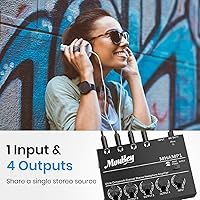
The Moukey MHAMP1 is a strong fit for home recording musicians who need to split a single audio interface output across multiple pairs of headphones without spending serious money on a dedicated distribution system. Bedroom producers, small band rehearsal spaces, and podcast teams who want everyone monitoring the same mix simultaneously will get immediate, practical value from this unit. Drummers and live performers who travel light will appreciate how easily this little distributor tucks into a gig bag alongside cables and other small gear. Music teachers running classroom listening sessions or demonstrating audio to a small group of students will also find it handles that scenario with minimal setup friction. Essentially, if your needs are straightforward — one source, up to four listeners, individual level control — this headphone amp delivers exactly what it promises.

Not suitable for:

The Moukey MHAMP1 is not the right call for engineers or producers working in professional XLR-heavy signal chains, since the unit accepts only a 1/4-inch TRS input and adding an adapter introduces an extra potential failure point that most pro workflows do not want. Audiophiles or mixing engineers who rely on high-sensitivity in-ear monitors and demand an absolute black noise floor will likely find the amp hits its ceiling under those conditions. There is no output level indicator, no metering of any kind, and no rack-mount solution, so anyone building a more structured studio environment will quickly find this little distributor too bare-bones to grow with. Buyers who need more than four simultaneous outputs, or who want to daisy-chain units in a larger distributed monitoring rig, should look at purpose-built headphone distribution amplifiers with more I/O flexibility. This is fundamentally a budget entry-level tool, and treating it as anything more will lead to disappointment.

Specifications

  • Model Number: The unit is officially designated MHAMP1 by Moukey.
  • Channels: Four independent output channels are provided, each with its own dedicated volume knob.
  • Output Connectors: Four 1/4-inch TRS balanced stereo output jacks are mounted on the front panel.
  • Input Connector: A single 1/4-inch TRS input jack accepts the source signal from an audio interface, mixer, or similar device.
  • Power Supply: The unit runs on DC 5V supplied via a Micro-B USB connector, with a power adapter included in the box.
  • Voltage: Operating voltage is 5V DC; no high-voltage wall brick or proprietary power supply is required.
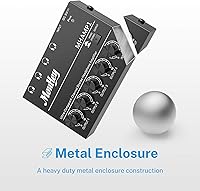
  • Enclosure Material: The chassis is constructed from metal, providing structural rigidity and a degree of RF interference shielding.
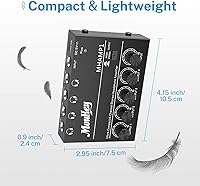
  • Dimensions: The unit measures 4.53 x 4.41 x 1.97 inches (approximately 11.5 x 11.2 x 5 cm).
  • Weight: The headphone amp weighs 11.3 ounces (approximately 320g), making it light enough for portable use.
  • MONO/STEREO Toggle: A physical toggle button allows the user to switch between true stereo pass-through and a simulated stereo mode for mono sources.
  • Color: The unit ships in a matte black finish.
  • OLED Display: No display screen of any kind is included on this unit.
  • Cables Included: TRS and TS audio cables are not included in the packaging; only the DC power adapter is bundled.
  • Connector Standard: All audio connections use the 1/4-inch (6.35mm) jack standard; no XLR, RCA, or 3.5mm ports are present.
  • USB Port Type: Power is delivered via a Micro-B USB port located on the rear or side of the unit.
  • First Available: The product was first listed for sale in May 2020.
  • Market Rank: As of recent data, this amp ranks #51 in the Headphone Amps category on Amazon and #26,855 in overall Electronics.
  • Volume Controls: Each of the four output channels has an independent rotary volume knob with no detent or center-click position.

Related Reviews
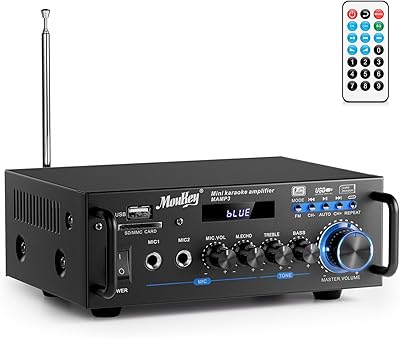
Moukey MK0153 Karaoke Amplifier
73%
88%
Value for Money
91%
Ease of Setup
72%
Microphone Performance
78%
Bluetooth Connectivity
58%
Audio Output Power
More
Moukey MCM-1 Camera Microphone
75%
83%
Audio Quality Upgrade vs Built-In Mic
91%
Value for Money
88%
Ease of Setup
74%
Build Quality & Durability
71%
Background Noise Rejection
More
Moukey MAMP1 Stereo Receiver Amplifier
76%
88%
Value for Money
91%
Karaoke Performance
89%
Connectivity & Input Range
83%
Bluetooth Reliability
74%
Sound Quality
More

FAQ

You will need 1/4-inch TRS male-to-male cables for both the input and the headphone outputs — none are included in the box. Most audio interfaces already use 1/4-inch TRS outputs, so if you have standard studio cables on hand, you are good to go. If your interface only has XLR outputs, you will need an XLR-to-TRS adapter to bridge the connection.

Not directly. The outputs are all 1/4-inch TRS jacks, so headphones with a standard 3.5mm plug will need a 3.5mm-to-1/4-inch adapter. These adapters are inexpensive and widely available, so it is not a major obstacle, but it is worth noting before you buy.

No — each knob controls only its own output independently. Turning down channel one has no effect on channels two, three, or four. That isolation is one of the more practical features for group monitoring sessions where different listeners want different levels.

When your source signal is already true stereo, you leave it in stereo mode and the signal passes through as-is. If your source is mono — say, a single microphone feed or a mono instrument track — you can press the button to spread that mono signal across both left and right channels, simulating a stereo effect. It is a useful tool for tracking sessions, though it is a simple pan spread rather than sophisticated stereo processing.

Yes, any standard 5V USB power source will work, including laptop USB ports, phone chargers, and USB hubs. This is one of the more convenient aspects of the design — you are not locked into the included adapter if it ever fails or gets left behind.

Quite a few buyers have had the same concern and switched to a third-party 5V USB adapter without any issues. Any reliable 5V USB power supply with at least 1A output should work fine. If you already have a quality phone charger or USB power brick in your setup, that is a perfectly reasonable substitute.

It depends on what professional means in your context. For home studio tracking sessions, small rehearsals, or podcast production, it performs well and the noise floor is quiet enough for practical use. For high-end mixing environments, mastering studios, or situations where audiophile-grade transparency is non-negotiable, you would want to step up to a dedicated professional headphone distribution amplifier. This unit is honest about being an entry-level tool.

Up to four headphones simultaneously, one per output channel. The signal does not degrade noticeably when all four are connected, which is one of the more consistently praised aspects in user feedback.

A number of buyers have noted the same thing, especially on new units. It tends to loosen up with regular use after the first few presses. If it still feels unresponsive after some use, pressing it with a little more deliberate force usually engages it — it is a tactile button that requires a firm push rather than a light tap.

Not without modification — the unit ships with no rack-mount ears and is designed as a desktop device. Its compact footprint works well on a desk or shelf, but integrating it into a standard 19-inch equipment rack would require a third-party rack shelf or a custom mounting solution.