
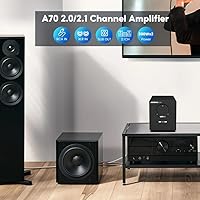
Overview

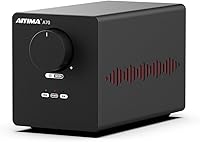
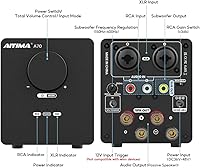
The AIYIMA A70 enters a crowded market of TPA3255-based desktop amplifiers, but it brings something genuinely uncommon at this price: a Post-Filter Feedback loop baked into a Class D design. Most budget-to-mid amps skip this circuit refinement entirely. Built around Texas Instruments' well-regarded TPA3255 chip, this stereo amp keeps a surprisingly compact footprint — small enough to sit beside a monitor without dominating the desk. It ships with a 48V GaN power adapter included, which matters because sourcing a quality supply separately adds cost and hassle. The presence of a balanced XLR input is another detail that stands out; that kind of connectivity usually belongs to considerably more expensive gear.

Features & Benefits

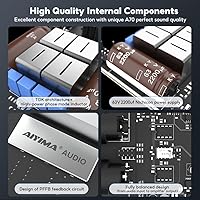
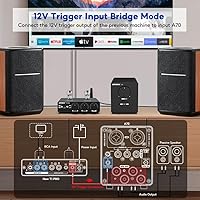
The headline feature here is PFFB — and while that sounds like jargon, the practical effect is straightforward: the amplifier circuit monitors its own output after the filter stage and corrects errors in real time, reducing distortion and making the amp behave more predictably regardless of what speakers you connect. Beyond that, the six-layer PCB construction improves electrical isolation in ways you can actually hear — a quieter noise floor and cleaner channel separation. The 12V trigger input is genuinely useful if your setup has multiple components, letting everything power on from a single source command. The variable subwoofer output, with its adjustable low-pass cutoff, makes building a 2.1 system straightforward rather than an engineering afterthought.

Best For

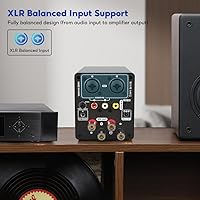
This Class D desktop amp is a strong fit for listeners pairing compact bookshelf speakers with a DAC or preamp that has an XLR output — the balanced signal path keeps the noise floor genuinely low. It also works well for anyone wanting to expand into a 2.1 setup without buying a separate crossover or processor; the built-in subwoofer output handles that cleanly. If your source component outputs a 12V trigger, the automation integration is a real quality-of-life upgrade. It is less ideal for large rooms or high-volume listening where headroom becomes the limiting factor. This is a technically capable choice for the desk or a secondary room system, not a living-room powerhouse.

User Feedback

Owners of the A70 amplifier tend to praise its low noise floor right out of the box — particularly those upgrading from entry-level gear who notice an immediate improvement in clarity. The included GaN power supply also gets consistent positive mentions; it runs cool and feels well-built rather than like a tacked-on accessory. On the critical side, some users find the rear-panel connector layout a bit cramped when routing multiple cables behind a desk. A handful note that output power, while adequate for efficient bookshelf speakers, starts to feel limited with harder-to-drive loads. Long-term reliability reports skew positive, though the pool of long-term owners remains relatively small given the product launched in early 2024.

Pros

  • Balanced XLR input provides a genuinely quieter signal path, rare at this price tier.
  • The PFFB circuit keeps distortion low and performance consistent across different speaker impedances.
  • Bundled GaN power supply runs cool and saves you from hunting down a quality 48V adapter separately.
  • Variable subwoofer output with selectable crossover range makes 2.1 integration practical and straightforward.
  • Noise floor is impressively black, even with high-sensitivity speakers that expose amp flaws quickly.
  • The RCA gain boost switch is a smart fix for low-output sources without needing an extra preamp stage.
  • Solid chassis with upgraded speaker terminals that handle thicker cable gauges without loosening over time.
  • 12V trigger input works reliably for automating power-on in multi-component setups.
  • Six-layer PCB construction contributes to cleaner channel separation compared to budget single-layer designs.
  • Compact footprint sits easily on a crowded desk without needing its own dedicated surface space.

Cons

  • Volume headroom runs short when driving inefficient or low-sensitivity speakers at higher output levels.
  • Rear connector spacing is tight; bulky XLR plugs and RCA cables compete for room uncomfortably.
  • Rear-panel filter range switch is awkward to reach once the amp is positioned in a typical desk setup.
  • Some units exhibit faint high-frequency whine from the power supply under load in very quiet rooms.
  • Subwoofer output level is tied to the main volume knob, limiting independent sub level adjustment.
  • Front panel volume knob feel does not match the overall build quality of the chassis.
  • The trigger input setup process is underdocumented and trips up users unfamiliar with 12V automation.
  • Unit-to-unit consistency appears variable, with some buyers reporting noise floor differences between samples.
  • No mid-point option on the RCA gain switch — the jump from base to 3dB boost is all-or-nothing.
  • Limited published measurement data makes direct technical comparisons to competing PFFB designs difficult.

Ratings

The AIYIMA A70 has been evaluated by our AI rating system after analyzing verified buyer reviews from global markets, with spam, bot-generated, and incentivized feedback actively filtered out. Scores reflect the honest distribution of real user experiences — strengths and frustrations alike — to give you a clear, unbiased picture of what this stereo amp actually delivers in daily use.

Sound Quality
88%
Users consistently describe a clean, detailed sound that punches well above expectations for a Class D desktop amp. The low noise floor is especially appreciated during quiet passages, where competing amps at this tier often introduce audible hiss. Listeners pairing it with efficient bookshelf speakers report a natural, well-controlled presentation.
A small but vocal group finds the sound slightly analytical or dry compared to warmer tube-adjacent designs, which can be fatiguing over long sessions. Those driving less efficient speakers sometimes feel the upper volume range lacks the last bit of authority needed for a fully satisfying listen.
PFFB Implementation
86%
Among buyers who understand what post-filter feedback actually does, the reception is genuinely enthusiastic. The amp holds its composure across a range of speaker impedances without the tonal shift that plagues simpler Class D designs. Reviewers upgrading from standard TPA3255 builds notice the difference in low-level resolution.
For buyers unfamiliar with the technology, the benefit is largely invisible and taken on faith. A few technically inclined users wish AIYIMA had published more detailed measurement data to back up the implementation, making direct comparisons to other PFFB designs harder to verify independently.
Build Quality
82%
18%
The chassis feels solid and purposeful for a compact desktop unit — heavier than expected, which most users interpret as a sign of quality. The upgraded speaker terminals draw specific praise for being robust enough to handle thicker cable gauges without stripping.
Some users point out that the front panel controls feel slightly plasticky relative to the overall build, and the volume knob has a looseness that does not match the rest of the unit. A few reports mention minor cosmetic inconsistencies in the finish on units received from overseas shipping.
XLR Balanced Input
91%
The inclusion of a true balanced XLR input at this price tier is the feature most often cited in positive reviews as the deciding purchase factor. Users with XLR-equipped DACs or preamps report a noticeably quieter signal path, which directly benefits anyone working in a desktop environment with multiple electronic devices nearby.
The XLR input occupies only one of the available inputs, so users with multiple sources need a switcher or preamp upstream. A couple of reviewers noted they initially received no sound through XLR due to a grounding quirk with their specific DAC, though the issue was resolved by adjusting cable configuration.
Subwoofer Output & 2.1 Integration
83%
The variable low-pass filter output is one of the more practical implementations in this category. Users building 2.1 desktop systems appreciate being able to dial in the crossover point to match their subwoofer without external processing gear. The two selectable filter ranges give genuine flexibility for both music and home theater use cases.
The subwoofer output level is tied to the main volume control, which some users find limiting when trying to set a fixed sub level independently. A handful of buyers also report that the lowest filter settings can introduce a slight bleed of upper frequencies on certain subwoofer pairings.
12V Trigger Input
78%
22%
Users with integrated home theater setups consider this a genuinely useful addition that simplifies the power-on chain. When connected to a compatible processor or receiver, the amp wakes up automatically — a small but appreciated convenience that saves the amp from being orphaned in a partially automated system.
The trigger functionality is straightforward but lacks configuration options. Users who want delayed triggering or who connect it to sources with non-standard 12V implementations have reported inconsistent behavior, and the manual offers limited troubleshooting guidance for edge cases.
Included GaN Power Supply
87%
The bundled 48V GaN adapter is consistently praised as a quality inclusion rather than a throwaway accessory. It runs cool even during extended sessions and its compact form factor does not hog multiple outlets on a power strip. Buyers note that sourcing an equivalent supply separately would add meaningful cost.
A small number of users received units where the power supply emitted a faint high-frequency whine under load, which was audible in very quiet rooms. Replacing the supply resolved it in most cases, but it does introduce a sourcing challenge since the bundled unit is not a standard off-the-shelf item.
RCA Input & Gain Switch
74%
26%
The 3dB gain boost switch on the RCA input is a thoughtful touch for users with low-output sources like certain CD players or budget DACs. It meaningfully expands the usable volume range and reduces the need to run the volume knob at extremes, where channel imbalance can sometimes emerge.
At higher gain settings with sensitive speakers, a faint background hiss becomes detectable in quiet listening environments. Users with already-strong RCA sources may find the switch unnecessary, and there is no middle-ground option between the base gain and the full 3dB boost.
Noise Floor
89%
This is one of the most frequently praised aspects by buyers coming from entry-level or Bluetooth-based amplifiers. The background silence during music playback is immediately noticeable, and users with high-sensitivity speakers — the kind that expose every flaw in an amp — report being pleasantly surprised by how black the background stays.
A small percentage of units appear to have unit-to-unit variation in noise floor performance, with some buyers reporting faint channel-dependent hiss that others do not experience. Whether this reflects production tolerances or system-level interference from their specific setups is difficult to determine from reviews alone.
Value for Money
84%
For buyers who researched the TPA3255 chip market before purchasing, the A70 amplifier represents a well-priced entry point into PFFB-equipped Class D amplification. The inclusion of XLR inputs, subwoofer output, trigger input, and a quality power supply in a single package is hard to match at this tier without spending significantly more.
Users who purchased without understanding the technology sometimes feel the price is steep relative to simpler TPA3255 amps available for considerably less. The value proposition is strongest for buyers who specifically need the connectivity features — those who do not may find cheaper alternatives perform comparably for basic stereo use.
Power Output & Headroom
67%
33%
For typical desktop bookshelf speakers in a near-field setup, the available power is more than sufficient. Users running 4-ohm or 6-ohm speakers in rooms up to around 150 square feet report no issues reaching satisfying listening volumes with plenty of headroom remaining.
The amp begins to show its limits with power-hungry floor-standing speakers or in larger rooms where high SPL levels are needed. Several reviewers note that the volume control starts to compress the dynamics at the upper end of its travel, which is a ceiling that more demanding listeners will hit.
Connectivity Layout
69%
31%
The rear panel offers a genuinely versatile set of connections for a unit this size. Having both XLR and RCA inputs, speaker binding posts, and a dedicated subwoofer output on the same compact chassis means most desktop systems can be fully connected without additional adapters.
The physical spacing between rear connectors is tight, particularly when using bulkier XLR plugs alongside RCA cables simultaneously. Users with rigid or thick cables find the layout frustrating, and the proximity of the power input to the audio connectors is a pain point during initial setup behind a desk.
Ease of Setup
81%
19%
Most users have the amp up and running within minutes of unboxing, and the front panel controls are intuitive enough that the manual is rarely needed for basic stereo use. The subwoofer integration is especially praised for being plug-and-play friendly compared to multi-component crossover setups.
The trigger input setup requires reading the manual carefully, and users unfamiliar with 12V trigger systems occasionally connect it incorrectly on the first attempt. The subwoofer output filter range switch, located on the rear panel, is awkward to access once the unit is positioned in a typical desk setup.
Heat Management
85%
Class D efficiency means this amp runs noticeably cooler than AB-class alternatives, and long listening sessions produce only mild warmth on the top panel. Users who leave the amp powered on for extended periods report no thermal throttling or unexpected shutdowns.
In very warm environments or enclosed cabinet installations, a small number of users report the chassis becoming uncomfortably warm after several hours, suggesting ventilation matters more than the cool-running reputation implies. The lack of any active cooling means placement in open air is advisable for heavy-use scenarios.

Suitable for:

The AIYIMA A70 is a strong match for desktop listeners who have already invested in a decent DAC or preamp with balanced XLR outputs and want an amplifier that can actually take advantage of that signal path. If you are running a pair of efficient bookshelf speakers in a near-field setup — think a home office, a music production desk, or a compact listening nook — this stereo amp fits naturally into that kind of system without requiring workarounds. Buyers who want to build a 2.1 setup without purchasing a separate crossover will find the built-in variable subwoofer output genuinely practical rather than a checkbox feature. The 12V trigger input also makes this a sensible choice for anyone running a slightly more automated source chain, where having the amp power on and off with the rest of the system is a real quality-of-life improvement. It also suits buyers who have done their research on the TPA3255 chip and specifically want the PFFB variant — the improvement in load independence and low-level distortion is meaningful for listeners who prioritize technical performance over brand prestige.

Not suitable for:

The AIYIMA A70 is not the right tool for driving large, power-hungry floor-standing speakers or filling a sizable living room with sound. The available headroom, while comfortable for near-field bookshelf use, starts to compress at high volume levels with demanding loads, and buyers expecting the amp to double as a main system driver in a mid-sized or large room will likely be disappointed. If your listening chain is entirely RCA-based and you have no interest in XLR connectivity, subwoofer integration, or trigger automation, you are paying for features you will never use — and there are simpler, cheaper TPA3255 amps that handle basic stereo duty just as competently. Listeners who prefer a warmer, more colored sound signature may also find the A70 amplifier a bit neutral and analytical for long casual listening sessions. Finally, buyers who are not comfortable with a degree of setup tinkering — particularly around the rear-panel filter switches and trigger wiring — may find the experience less plug-and-play than expected.

Specifications

  • Amplifier Chip: The unit is built around the Texas Instruments TPA3255, a high-performance Class D chip widely used in audiophile-grade desktop amplifiers.
  • Topology: Class D amplification with a Post-Filter Feedback (PFFB) loop, which reduces output distortion and minimizes load dependency across varying speaker impedances.
  • PCB Construction: The amplifier board uses a six-layer PCB design, while the tone control board uses a four-layer PCB, both aimed at improving electrical isolation and signal purity.
  • Analog Inputs: Accepts both balanced XLR stereo input and unbalanced RCA stereo input, allowing connection to a wide range of source components.
  • Speaker Outputs: Features two sets of upgraded binding post speaker terminals suitable for standard 2-channel stereo configurations with bookshelf or compact floor-standing speakers.
  • Subwoofer Output: Includes a dedicated RCA subwoofer output with a variable low-pass filter, offering two selectable cutoff ranges: 20–150Hz and 20–600Hz.
  • Trigger Input: Equipped with a 12V trigger input that allows the amplifier to power on and off automatically in sync with a compatible source component or processor.
  • RCA Gain Switch: A front-panel switch adds 3dB of gain to the RCA input path, useful for boosting signal from low-output sources without requiring an external preamp.
  • SINAD: Measured signal-to-noise-and-distortion ratio of 96dB, indicating strong linearity and low distortion relative to competing Class D designs at this price tier.
  • SNR: Signal-to-noise ratio of 116dB, contributing to the noticeably black background that users report when pairing the amp with sensitive bookshelf speakers.
  • Supply Voltage: Operates exclusively at 48V DC; both minimum and maximum supply voltage are rated at 48V, with no support for variable voltage input.
  • Power Supply: Ships with a 48V 5A GaN (gallium nitride) power adapter included in the box, eliminating the need to source a separate supply.
  • Dimensions: The chassis measures 5.74 inches long by 3.15 inches wide by 3.74 inches tall, making it well-suited for desktop placement alongside monitors or shelf systems.
  • Weight: The unit weighs 2.43 pounds, reflecting a solid but manageable build that feels more substantial than entry-level Class D competitors.
  • Manufacturer: Designed and sold by AIYIMA, a Chinese audio brand known for producing budget-to-mid-range Class D amplifiers and DAC products.
  • Model Number: The official model designation is A70, distinguishing it from other amplifiers in the AIYIMA lineup such as the A07 and A08 series.
  • First Available: This model was first made available for purchase in March 2024, making it a relatively recent release with a still-growing base of long-term user feedback.
  • Input Impedance: The XLR balanced input provides common-mode noise rejection, making it particularly effective at reducing interference in electrically noisy desktop environments.

Related Reviews
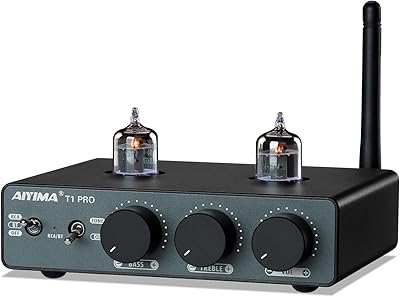
AIYIMA T1 PRO Tube Preamp
86%
94%
Sound Quality
89%
Bluetooth Performance
86%
Build Quality
88%
Ease of Use
91%
Connectivity Options
More
AIYIMA T9
AIYIMA T9
77%
83%
Sound Quality
88%
Value for Money
91%
Connectivity & Input Variety
67%
Bluetooth Performance
74%
Build Quality & Materials
More
AIYIMA T3 PRO Phono Preamp
87%
88%
Sound Quality
91%
Build Quality
85%
Ease of Use
90%
Setup & Installation
89%
Gain Control Functionality
More
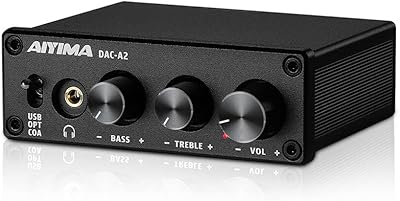
AIYIMA DAC-A2
AIYIMA DAC-A2
77%
83%
Sound Clarity Improvement
79%
Tone Controls (Bass & Treble)
86%
Input Versatility
74%
Headphone Amplifier Performance
53%
Build Quality & Materials
More
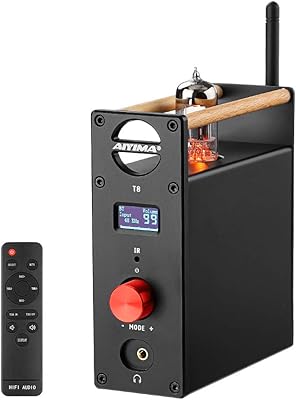
AIYIMA T8 6N3 Digital Tube Preamplifier
85%
91%
Sound Quality
88%
Bluetooth Connectivity
85%
Build Quality
94%
Ease of Setup
87%
Versatility of Inputs
More
AIYIMA A01 100W + 100W TPA3116 Stereo Amplifier
85%
88%
Sound Quality
91%
Ease of Setup
93%
Value for Money
85%
Bass Performance
87%
Treble Clarity
More
AIYIMA A3001
AIYIMA A3001
78%
91%
Value for Money
84%
Audio Performance
53%
Power Output Accuracy
93%
Ease of Setup
79%
Low-Pass Filter Usability
More
AIYIMA S400 Bookshelf Speakers
74%
72%
Sound Quality
54%
Bass Performance
67%
Treble & High-Frequency Response
88%
Connectivity & Input Options
79%
Bluetooth Performance
More

FAQ

You can absolutely use it with just RCA — the XLR input is there if your DAC or preamp supports balanced output, but it is entirely optional. The RCA input works fine, and the built-in gain switch helps if your source signal is on the weak side.

PFFB stands for Post-Filter Feedback, which is a circuit design where the amplifier monitors its own output after the output filter and corrects any errors in real time. In plain terms, it means lower distortion and more consistent sound regardless of what speakers you plug in. Whether you can hear the difference depends on your system and ears, but measurements confirm it is not just marketing language.

It depends on the sensitivity and impedance of the speakers. For efficient floor-standers in a small-to-medium room it can work, but this amp is genuinely optimized for bookshelf speakers in near-field or compact setups. Demanding, low-sensitivity floor-standers will likely hit the headroom ceiling before you reach satisfying volume levels.

No separate crossover is needed. The subwoofer output has a built-in variable low-pass filter with two selectable frequency ranges, so you can dial in the crossover point to match your sub directly from the amp. Just connect it to an active subwoofer with an RCA input and adjust the cutoff to blend with your main speakers.

It is straightforward if your source component has a 12V trigger output, which many AV receivers and processors do. You connect a 3.5mm mono cable from the trigger output on your source to the trigger input on the amp, and the amp will power on and off automatically. If you have never used trigger connections before, it is worth reading the manual section carefully since miswiring it is a common first-attempt mistake.

Not significantly under normal conditions. Class D amplifiers are far more efficient than Class A or AB designs, so most of the power drawn from the supply goes to the speakers rather than being lost as heat. The chassis gets mildly warm after a few hours but nothing that should concern you in an open desktop environment.

The A70 amplifier has a single set of speaker output terminals per channel, so it is designed for one pair of speakers at a time. Running two pairs in parallel is technically possible but not recommended, as it lowers the combined impedance and can push the amp into territory it was not rated for.

This is a commonly noted observation rather than an isolated defect. The volume control on this stereo amp has a slightly looser feel than the chassis build quality would suggest, and it is a recurring mention in user reviews. It does not appear to affect audio performance, but if the feel bothers you it is worth noting before purchase.

The bundled GaN adapter is a switching power supply, and most switching supplies accept a wide input voltage range (typically 100–240V), making them compatible with international mains voltage. That said, you should verify the input voltage specification printed on the adapter label before plugging it into a non-US outlet, and you may need a plug adapter depending on your region.

The main differentiator is the PFFB implementation, which most competing TPA3255 amps in this price range do not include. You also get XLR balanced input and a variable subwoofer output, both of which are uncommon at this tier. If you do not need those features, there are simpler TPA3255 options available for less money that perform comparably for basic stereo use.