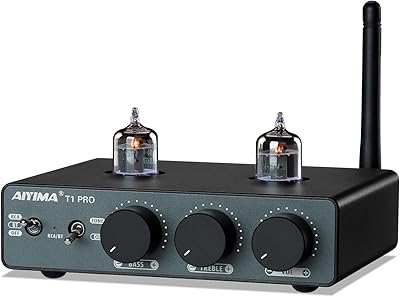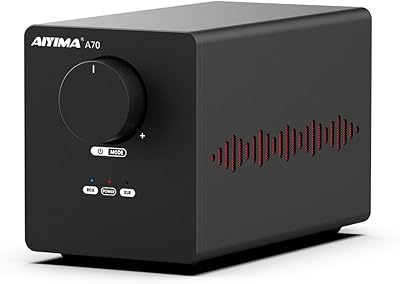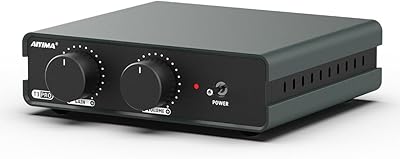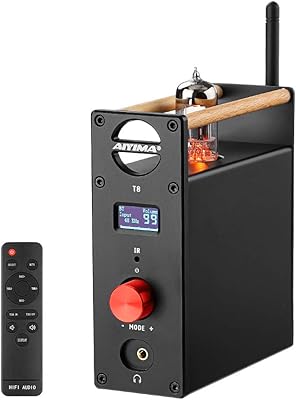

Overview

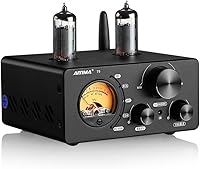
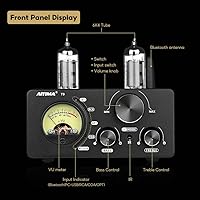
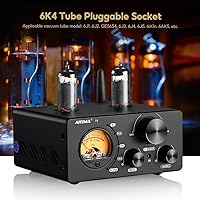
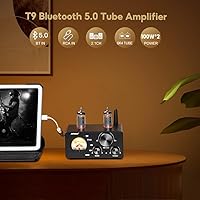
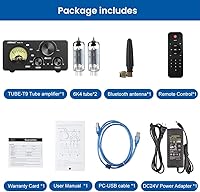
The AIYIMA T9 is a compact desktop amplifier that pairs a Class D power stage with a vacuum tube DAC — an unusual combination at this price point that gives the unit real appeal for listeners stepping up from basic setups. It handles both 2.0 and 2.1 configurations, so adding a subwoofer later is straightforward. The power adapter is included out of the box, which sounds minor but is a genuine convenience many competing units skip. Visually, the VU meter and glowing tubes give it a retro desktop presence that feels more considered than typical budget electronics. It is squarely aimed at hobbyists, not professional installations.

Features & Benefits

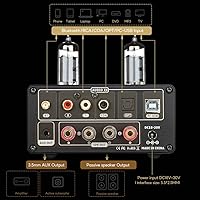
The T9 punches above its class when it comes to connectivity. Bluetooth 5.2, optical, coaxial, USB-PC, and stereo RCA inputs mean you can switch between a phone, TV, and computer without rewiring anything. The optical and coaxial paths handle 24-bit/192kHz audio, which is genuinely useful for high-res files. The pair of Jan 5725 tubes in the signal chain take the edge off digital recordings without turning everything syrupy. Independent treble and bass knobs give ±6dB of adjustment, enough to tune for room acoustics or speaker character. There is also a 3.5mm output for connecting an active subwoofer if you want more low-end weight.

Best For

This desktop amplifier makes most sense for PC listeners who want to replace a DAC and amplifier with a single, tidy unit. If you are building your first real hi-fi setup and working with a limited budget, the input variety alone saves you from buying separate gear. It also suits anyone juggling several source devices — a TV, CD player, and laptop can all stay connected simultaneously. The output is more than adequate for small and medium rooms; near-field listening on a desktop is where this tube amp genuinely shines. If you already own reference-grade speakers and a resolving source, you may hear its limits fairly quickly.

User Feedback

Owner opinions are largely positive, with warm, full-bodied sound being the most repeated compliment — many describe it as a noticeable improvement over budget receivers. The tube glow and needle movement earn praise too, adding small daily pleasures to a desktop setup. That said, a few consistent criticisms are worth knowing. Bluetooth pairing can be finicky with certain Android devices, and the included power adapter reportedly runs warm after long sessions. The remote control is convenient but some users report inconsistent responsiveness. Owners with high-sensitivity speakers have also noted an audible noise floor at higher gain settings — a fair limitation to flag for this price tier.

Pros

  • Combines a DAC, tube stage, and amplifier in one compact box at an accessible price point.
  • Five distinct inputs mean virtually every common source device stays permanently connected.
  • The tube stage adds genuine warmth that reduces listening fatigue during long desktop sessions.
  • Optical and coaxial inputs support 24-bit/192kHz, covering high-resolution audio sources properly.
  • VU meter and tube glow make this desktop amplifier visually distinctive on any desk setup.
  • Supports 2.1 configuration with a dedicated subwoofer output for easy low-end expansion later.
  • Class D design keeps the chassis cool and silent even during hours of continuous use.
  • Independent bass and treble controls are practical for tuning to a room or speaker character.
  • Power adapter is included in the box, removing a common friction point for budget amp buyers.
  • Compact footprint fits comfortably behind a monitor without dominating desk real estate.

Cons

  • Bluetooth connection drops and pairing failures occur with certain Android and laptop devices.
  • The supplied power adapter runs noticeably warm after extended listening sessions.
  • Remote control requires precise aiming and repeated presses to register commands reliably.
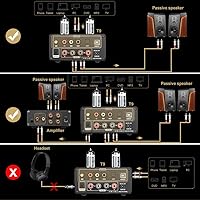
  • No headphone output — the 3.5mm jack is exclusively for an active subwoofer connection.
  • Noise floor is audible with high-sensitivity speakers at higher gain settings.
  • Knobs feel slightly loose with minor rotational wobble that more tactile users will notice.
  • USB-PC input is capped at 24-bit/96kHz, below the resolution ceiling of the optical and coaxial inputs.
  • Manual translation quality is poor, leaving subwoofer setup steps unclear for new users.
  • Subwoofer output level is fixed, requiring manual level adjustment directly on the subwoofer itself.

Ratings

The AIYIMA T9 has been evaluated by our AI rating system after analyzing thousands of verified global user reviews, with spam, bot-generated, and incentivized feedback actively filtered out. Scores reflect a genuine cross-section of buyer experiences — from first-time hi-fi builders to more seasoned desktop listeners — and both the standout strengths and the real-world frustrations are transparently represented in every category below.

Sound Quality
83%
The warm, analog character produced by the tube stage consistently surprises listeners expecting generic digital flatness. Users frequently describe vocal reproduction as natural and full-bodied, and acoustic tracks in particular benefit from the smoothed high frequencies during extended desktop listening sessions.
Listeners coming from higher-resolving amplifiers notice a slight softness in transient detail that the tube stage introduces. At higher volume levels, a modest noise floor becomes audible — manageable for most rooms, but noticeable when paired with efficient or high-sensitivity speakers.
Value for Money
88%
Getting a DAC, a tube stage, Bluetooth, and a multi-input amplifier in a single box at this price tier is genuinely hard to match. Most buyers who previously ran a separate DAC and receiver report meaningful cost savings without feeling they sacrificed core functionality.
The included accessories — particularly the remote and power adapter — feel budget-grade relative to the main unit, which slightly undercuts the overall package. Buyers expecting premium fit and finish throughout may find those peripheral items disappointing against the unit itself.
Connectivity & Input Variety
91%
Five distinct inputs covering Bluetooth 5.2, optical, coaxial, USB-PC, and RCA mean the T9 handles almost any source device without adapters or workarounds. Users with TVs, computers, phones, and CD players all connected simultaneously find input switching practical and reliable.
The USB-PC input tops out at 24-bit/96kHz, which is a step below the 192kHz ceiling available on optical and coaxial. For most listeners this is irrelevant, but buyers specifically targeting high-resolution USB playback from a computer may find it a subtle limitation.
Bluetooth Performance
67%
33%
For casual wireless listening from a phone or tablet, Bluetooth 5.2 delivers clean, low-latency audio that is a clear improvement over older Bluetooth standards. Short-range pairing in a desktop environment generally works reliably when the source device is within a few feet.
A recurring complaint across reviews involves connection drops and pairing failures with specific Android devices and some laptops. The issue is inconsistent — some users report zero problems, others face repeated reconnection attempts — making it a genuine roll-of-the-dice depending on your device ecosystem.
Build Quality & Materials
74%
26%
The chassis feels solid for a desktop unit at this price, with a metal enclosure that resists flex and doesn't rattle during operation. The VU meter needle movement is smooth, and the overall assembly inspires more confidence than typical plastic-shell competitors in the same bracket.
Knob feel is adequate but not refined — there is slight rotational wobble on the treble and bass controls that more tactile users will notice. The tube protective cage, while functional, has a utilitarian quality that suggests cost-cutting rather than deliberate industrial design.
Ease of Setup
89%
Unboxing to first sound takes under ten minutes for most users. The power adapter is included, input labeling is clear, and speaker terminal connections are standard binding posts that accept bare wire or banana plugs without tools.
The manual is brief and partially translated from Chinese, leaving some users uncertain about the 2.1 subwoofer output configuration. A few buyers needed to consult online forums to correctly set up the 3.5mm AUX output for an active subwoofer.
Tone Control Effectiveness
78%
22%
The ±6dB range on the treble and bass knobs covers enough ground to compensate for bright bookshelf speakers or rooms with boomy acoustics. Users who prefer a V-shaped sound signature or want to tame harsh recordings find the controls genuinely useful on a daily basis.
The adjustment range, while practical, stops well short of what a dedicated equalizer offers. There is no midrange control, and the interaction between the two knobs at extreme positions can introduce a slight harshness that requires careful dialing to avoid.
Thermal Management
63%
37%
The Class D amplifier stage runs remarkably cool even during extended sessions, and the overall chassis temperature during normal use stays well within comfortable handling range. Passive cooling without a fan keeps the unit whisper-quiet mechanically.
The supplied external power adapter is the thermal weak point — multiple owners report it becoming noticeably warm to hot after two or more hours of continuous use. While no failures have been widely reported, it is a detail worth monitoring, especially in warm ambient environments.
Remote Control
61%
39%
Having any remote at this price point is a bonus, and for basic volume and input switching from a couch or bed it performs the essential job. Users who primarily do casual listening at fixed distances generally have no major complaints.
Responsiveness is inconsistent — several reviewers note the remote requires precise aiming and multiple presses to register commands reliably. IR range is shorter than expected, and the button feedback is soft enough that it is not always clear whether an input has been accepted.
Aesthetic Design
86%
The VU meter and visible tube glow give this desktop amplifier a retro character that is genuinely attractive on a desk. Buyers who care about their setup looking interesting, not just functional, consistently mention the aesthetics as a purchase highlight.
The visual appeal is somewhat undermined by the utilitarian power brick and basic remote sitting alongside it. The front panel layout is clean but the engraving quality and knob caps feel a tier below the overall visual impression the meter and tubes create.
High-Resolution Audio Performance
77%
23%
Optical and coaxial inputs accepting 24-bit/192kHz signals mean the unit can resolve the full bandwidth of hi-res FLAC and streaming sources from a compatible transport. Users feeding it from a quality optical source report noticeably improved clarity compared to Bluetooth playback.
The tube stage introduces a degree of coloration that purists argue works against strict transparency at high resolutions. If analytical accuracy is the goal, the warmth added by the signal path may feel counterproductive with already-well-recorded reference material.
Desktop Footprint & Portability
82%
18%
At just over three pounds and compact enough to fit comfortably behind a monitor, this tube amp avoids consuming the desk real estate that older integrated amplifiers demand. Moving it between a home office desk and a living room shelf requires no special effort.
The external power brick adds clutter that the compact chassis itself avoids, requiring a second cable run and extra outlet space. Users on very tidy minimal desks find the adapter placement an ongoing organizational nuisance.
Subwoofer Integration
72%
28%
The 3.5mm AUX output for an active subwoofer works cleanly in practice, letting users extend low-frequency output without investing in a separate crossover. Owners who added a compact powered sub to a 2.1 setup report the integration is straightforward and audibly effective.
The output level from the 3.5mm jack is fixed, which means subwoofer volume can only be adjusted from the subwoofer itself. Users without a level control on their sub may find balancing the bass output relative to the main speakers takes more trial and error than expected.
Long-Term Reliability
69%
31%
The majority of owners who have used the unit daily for six months or more report no hardware failures or degradation in sound. The vacuum tubes used are a widely available type, which reduces long-term maintenance cost if replacement becomes necessary.
The sample pool of very long-term (two-year-plus) reviews is still limited, making it difficult to assess tube lifespan confidently under heavy use. The warm-running power adapter remains the component most flagged as a potential long-term concern by buyers tracking their units carefully.

Suitable for:

The AIYIMA T9 is a strong fit for anyone building their first real desktop audio setup and wanting to consolidate a DAC and amplifier into a single, affordable unit. If your current situation involves a laptop or PC feeding sound directly into powered computer speakers, this tube amp offers a meaningful and immediately noticeable upgrade path. It is particularly well-suited to listeners who have accumulated multiple source devices — a TV, a phone, a CD player, a computer — and are tired of swapping cables or compromising on which device stays connected. The warm, tube-influenced sound signature also appeals to people who find modern digital audio fatiguing over long listening sessions, making it a good choice for remote workers who have music running most of the day. Anyone furnishing a home office or bedroom setup who also cares about how their gear looks will appreciate the VU meter and tube glow as genuine aesthetic bonuses rather than pure gimmicks.

Not suitable for:

Buyers who already own high-sensitivity or high-end speakers should approach the AIYIMA T9 with realistic expectations — at elevated gain settings, the noise floor becomes audible enough to be a persistent annoyance with revealing speaker systems. It is also not the right choice for someone whose primary or exclusive listening method is Bluetooth, since the wireless connection has documented reliability issues with certain Android devices and laptops that no firmware update has fully resolved. Listeners who prioritize strict analytical accuracy and transparency in their amplifier will find the tube stage coloration works against those goals, regardless of how pleasant that coloration may sound to others. The unit also lacks a headphone output — the 3.5mm jack routes to a subwoofer only — so headphone listeners will need a separate solution entirely. Finally, anyone expecting professional-grade accessories to match the main unit will be let down by the remote control and power adapter, both of which feel several tiers below the quality of the chassis itself.

Specifications

  • Output Power: Delivers 100W per channel into a 4Ω load, providing ample headroom for small to medium room listening at realistic volumes.
  • Amplifier Class: Uses a Class D topology, which runs efficiently with minimal heat output compared to traditional Class A or Class AB designs.
  • Vacuum Tubes: Two Jan 5725 tubes are installed in the signal path to add warmth and reduce digital harshness without heavily coloring the sound.
  • Channels: Supports both 2.0 stereo and 2.1 stereo-plus-subwoofer configurations, selectable depending on the connected speaker setup.
  • Bluetooth: Bluetooth 5.2 provides stable short-range wireless connectivity with audio streamed at up to 24-bit/48kHz resolution.
  • Digital Inputs: Optical (TosLink) and coaxial S/PDIF inputs both accept signals up to 24-bit/192kHz, suitable for high-resolution audio sources.
  • USB-PC Input: The USB-PC input supports plug-and-play operation on Windows XP through Windows 10, macOS, and Linux with a maximum resolution of 24-bit/96kHz.
  • Analog Input: A stereo RCA input accepts line-level analog signals from sources such as CD players, turntable preamps, or TV analog outputs.
  • Subwoofer Output: A 3.5mm AUX output carries a fixed-level signal to an active subwoofer, enabling a 2.1 setup without additional hardware.
  • Tone Controls: Independent treble and bass rotary knobs each offer a ±6dB adjustment range for basic room and speaker compensation.
  • Frequency Response: Rated from 20Hz to 20kHz within ±1dB, covering the full range of human hearing with good measured consistency.
  • Signal-to-Noise Ratio: SNR is rated at 98dB or higher, meaning background noise stays well below the music signal under normal listening conditions.
  • Total Harmonic Distortion: THD is specified at 0.07%, indicating a clean output signal with very low audible coloration from the amplifier stage itself.
  • Speaker Impedance: Compatible with passive speakers rated between 3Ω and 8Ω, covering the vast majority of bookshelf and floor-standing speaker models.
  • Power Supply: Operates on a DC input between 18V and 30V; a 24V DC power adapter is included in the box.
  • Dimensions: The main chassis measures 4.53″ in length by 3.86″ in width, making it compact enough for most desktop environments.
  • Weight: The unit weighs 3.06 pounds without the power adapter, light enough to reposition easily between desk and shelf setups.
  • Display: A VU meter on the front panel provides a real-time visual indication of output level with a backlit needle display.

Related Reviews

Occiam T9 Wireless Earbuds
87%
95%
Battery Life
87%
Sound Quality
82%
Build Quality
88%
Comfort & Fit
90%
Waterproof Performance
More
Samsung T9 Portable SSD 2TB
89%
93%
Performance
89%
Build Quality & Durability
91%
Data Transfer Speed
88%
Cooling & Thermal Management
85%
Compatibility
More
AIYIMA T1 PRO Tube Preamp
86%
94%
Sound Quality
89%
Bluetooth Performance
86%
Build Quality
88%
Ease of Use
91%
Connectivity Options
More
Samsung T9 Portable SSD 4TB
87%
92%
Transfer Speed
89%
Build Quality
88%
Portability
90%
Compatibility
85%
Durability
More
SAMSUNG T9 Portable SSD 1TB
89%
92%
Performance
89%
Durability
80%
Thermal Management
91%
Compatibility
85%
Ease of Use
More
AIYIMA A70
AIYIMA A70
82%
88%
Sound Quality
86%
PFFB Implementation
82%
Build Quality
91%
XLR Balanced Input
83%
Subwoofer Output & 2.1 Integration
More
AIYIMA T3 PRO Phono Preamp
87%
88%
Sound Quality
91%
Build Quality
85%
Ease of Use
90%
Setup & Installation
89%
Gain Control Functionality
More
Voice Caddie T9 Golf GPS Watch
85%
89%
Performance Tracking
91%
Accuracy of Course Data
88%
Ease of Use
72%
Battery Life
85%
Display Quality
More
AIYIMA T8 6N3 Digital Tube Preamplifier
85%
91%
Sound Quality
88%
Bluetooth Connectivity
85%
Build Quality
94%
Ease of Setup
87%
Versatility of Inputs
More
AIYIMA DAC-A2
AIYIMA DAC-A2
77%
83%
Sound Clarity Improvement
79%
Tone Controls (Bass & Treble)
86%
Input Versatility
74%
Headphone Amplifier Performance
53%
Build Quality & Materials
More

FAQ

Not directly, no. The AIYIMA T9 has a line-level RCA input, but it does not include a phono preamp stage. You will need a separate phono preamp between your turntable and the RCA input for it to work properly.

No, that 3.5mm jack is wired exclusively as a subwoofer output, not a headphone output. Running headphones through it will not produce correct audio and may cause damage. If headphone listening is important to you, you will need a separate headphone amplifier.

Several owners have noted the external power brick becomes noticeably warm after a couple of hours of use. It has not been widely reported as a failure point, but it is worth keeping it in an open, ventilated spot rather than tucking it behind furniture where heat can build up.

Yes, 8Ω is well within the supported impedance range of 3Ω to 8Ω, so common bookshelf speakers from brands like Klipsch, Polk, or ELAC will connect and operate without any issues.

In most cases, no. The USB-PC input is designed to work as a plug-and-play USB audio device on Windows 7 through Windows 10, as well as macOS and Linux. A small number of users on older Windows versions have occasionally needed a driver, but on Windows 10 it typically shows up automatically.

For most users in a standard desktop setup, Bluetooth 5.2 works well enough for casual listening. That said, a notable number of reviewers have experienced intermittent connection drops specifically with Android phones and some laptops. If wireless is your primary input and you cannot tolerate occasional pairing issues, it is worth keeping a wired optical or USB backup in mind.

Absolutely. The 3.5mm AUX output on the back is always available, so you can run stereo speakers now and plug in an active subwoofer whenever you are ready to expand. Just keep in mind the output level is fixed, so you will adjust the subwoofer volume from the subwoofer itself.

Jan 5725 tubes are a robust and widely available type, and under normal desktop use they are generally rated for thousands of hours of operation. Realistically, most users will get several years of daily use before any degradation becomes noticeable. When they do eventually need replacing, the tubes are inexpensive and easy to source.

It is handy for basic tasks like volume adjustment and input switching, but owners are fairly split on its reliability. The IR range is shorter than most TV remotes, and it sometimes requires a few button presses to register. Think of it as a convenience feature rather than a precision tool.

It will work, but keep in mind that high-sensitivity speakers — anything above roughly 90dB — will reveal the noise floor more easily, especially at higher gain settings. A few users with efficient speakers have reported a faint background hiss at higher volume levels. For average-sensitivity bookshelf speakers in the 85–88dB range, this is rarely an issue.