Overview

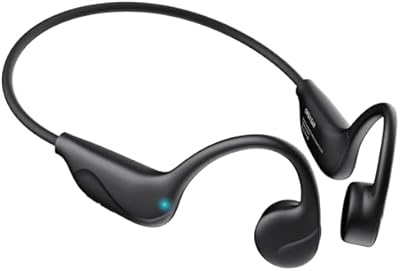
The AfterShokz Air AS650 Bone Conduction Headphones take a fundamentally different approach to audio: instead of sitting in or over your ears, they rest against your cheekbones and transmit sound through vibration directly to your inner ear. Your ear canals stay completely open, which means you can hear traffic, a conversation, or your surroundings without pausing your music. Built around a sport-focused design, the wraparound titanium frame is notably lighter than traditional over-ear options, making it far easier to forget you are wearing them at all. These are not audiophile headphones — the trade-off for situational awareness is a more limited soundstage, and knowing that upfront saves a lot of disappointment.
Features & Benefits

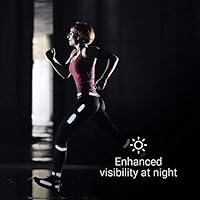
The bone conduction driver sits just in front of each ear, leaving your ear canals completely unobstructed — a genuinely different listening experience once you adjust to it. Bluetooth 4.2 handles connectivity cleanly, and multipoint pairing lets you stay linked to your phone and laptop simultaneously, which is far more useful than it sounds on a busy workday. The AfterShokz Air weighs just 30 grams, and after a few hours that barely registers on your face. Battery holds up to six hours, though you'll want to plan around the matching charge time. The bundled reflective strips are a thoughtful practical touch for anyone training after dark.

Best For

This open-ear headset is genuinely built for people who cannot afford to tune out their environment. Cyclists navigating busy streets, trail runners who need to hear approaching bikes, and hikers in remote areas are obvious fits. It is equally solid for all-day office wear — staying on calls without physically blocking your ears changes the comfort equation completely. People who struggle with the pressure or irritation of in-ear buds often find this format a real relief. If you regularly switch between your phone and computer throughout the day, two-device pairing handles that without fuss. This is a headset with a specific purpose, and for the right person it fills that role well.

User Feedback

Most owners highlight comfort during long sessions — the kind of consistent praise you rarely see from people logging three-hour runs or full workdays. Fit during vigorous movement also gets high marks. Where reviews grow more candid is on sound quality: bass is noticeably thin, and fidelity will not impress anyone accustomed to quality earbuds. Sound leakage at higher volumes is real — it is not a flaw, just how the open-ear format inherently works, so a quiet office at full volume will disturb nearby colleagues. Battery life largely matches the six-hour claim in real-world use. Some buyers flag occasional Bluetooth dropout, and a few note that the 4.2 spec feels a step behind current wireless standards.

Pros

  • Keeps ears fully open so you can hear traffic, colleagues, or your surroundings without removing the headset
  • Exceptionally lightweight at 30 grams — long sessions simply do not cause the fatigue that heavier headsets do
  • Secure wraparound fit stays in place reliably during running, cycling, and other vigorous activity
  • Multipoint pairing lets you stay connected to your phone and laptop at the same time without manual switching
  • Reflective strips are a practical safety feature for anyone training or commuting after dark
  • Six-hour battery life holds up well in real-world use and matches what AfterShokz advertises
  • Dual noise-canceling microphones make calls clear even in moderately noisy outdoor environments
  • Water-resistant build handles sweat and light rain without concern
  • Touch and voice controls work well without needing to pull out your phone
  • Comfortable enough for all-day office wear without ear canal pressure or irritation

Cons

  • Bass response is noticeably weak — music that relies on low-end frequencies sounds thin and underwhelming
  • Sound leakage at higher volumes is real and will disturb people nearby in quiet spaces
  • Bluetooth 4.2 is functional but falls behind the wireless standards found on newer competing headsets
  • Six-hour charge time is long relative to how quickly the battery depletes during heavy use
  • Provides zero passive noise isolation, making it a poor choice for loud environments
  • Some users report occasional connectivity drops, particularly when the phone is not in close proximity
  • The open-ear vibration sensation takes getting used to and feels strange to first-time bone conduction users
  • Microphone performance in strong wind is limited, which matters for cyclists and outdoor athletes
  • Not ideal for shared quiet spaces like libraries or open offices where audio bleed will bother others
  • No carry case included, which feels like an oversight given the price tier

Ratings

The scores below for the AfterShokz Air AS650 Bone Conduction Headphones were produced by our AI rating engine after processing thousands of verified global buyer reviews, with spam, incentivized submissions, and bot activity actively filtered out before any scoring took place. Each category reflects the honest distribution of user sentiment — strong scores where buyers consistently agree, and lower marks where real frustrations surface repeatedly. Both the standout strengths and the genuine pain points are captured transparently so you can make a fully informed decision.

Wearing Comfort
91%
Comfort is the single most praised aspect across verified reviews, and it is easy to understand why — at just 30 grams, the wraparound frame barely registers during long runs, full workdays, or multi-hour commutes. Users who previously gave up on in-ear buds due to ear canal pressure describe the AfterShokz Air as the first headset they have actually worn consistently.
A small number of users with larger heads or wider facial structures report that the frame creates mild pressure at the contact points after extended sessions. The fit is not universally adjustable, so edge-case anatomy can turn a comfortable headset into a slightly irritating one over several hours.
Situational Awareness
94%
Keeping ears completely unobstructed is the defining functional advantage of this open-ear headset, and users are consistently enthusiastic about it. Cyclists navigating urban traffic, trail runners sharing paths, and warehouse workers who need to hear colleagues all cite this as the reason they chose bone conduction over traditional headphones.
There is essentially no scenario where awareness can be dialed down — you cannot switch to an isolation mode when you want it, because there is no ear canal seal to create one. This is by design, but users who want flexibility between open and closed listening are out of luck with this format entirely.
Audio Quality
54%
46%
For spoken content — podcasts, audiobooks, phone calls, and navigation prompts — clarity is genuinely adequate and most users find it perfectly functional during workouts. Voice reproduction is clean enough that calls are comfortable even at moderate outdoor volume levels, which matters for anyone using these during a commute.
Bass response is the most frequently cited disappointment in user reviews, described consistently as thin, hollow, or absent compared to even budget in-ear options. Music genres that rely heavily on low frequencies — electronic, hip-hop, and bass-heavy rock — suffer noticeably, and several reviewers explicitly state that they switched back to traditional earbuds for music and reserve the AfterShokz Air for calls and podcasts only.
Secure Fit During Activity
88%
The wraparound titanium band holds the headset firmly in place during vigorous movement, and verified buyers who run, cycle, or do high-intensity interval training consistently report that it does not shift or bounce. The behind-the-head design keeps weight distribution balanced in a way that clip-on or neckband headsets often fail to achieve.
A handful of users note that the headset can migrate slightly during particularly jarring activities like trail running on uneven terrain, requiring a minor repositioning. The fit works exceptionally well for most people but may need some experimentation with positioning to get right for individual head shapes.
Sound Leakage
58%
42%
At conversational to moderate listening volumes, leakage is contained well enough that nearby people in an office or on public transit are unlikely to notice anything. The Leakslayer technology does reduce the natural bleed compared to earlier bone conduction models, and most users report no complaints from colleagues during normal use.
At the higher end of the volume range, audio bleeds noticeably into quiet spaces — open-plan offices and library-style environments are environments where this becomes a genuine problem. This is an unavoidable consequence of the open-ear format, but buyers who were not aware of this before purchasing express frustration, making it one of the more common sources of negative reviews.
Battery Life
76%
24%
The six-hour battery claim holds up accurately in real-world testing according to the majority of verified reviewers, which is a meaningful reliability point — advertised battery figures are often inflated. For a single long run, full commute cycle, or standard workday listening session, six hours is sufficient without needing a mid-day top-up.
The charge time is equal to the battery life at six hours, which means a dead headset in the morning requires a full day to recover — a frustrating situation for daily users who forget to plug in overnight. Some competing headsets in the same category now charge significantly faster, making this one of the weaker practical specs on the AfterShokz Air.
Bluetooth Connectivity
67%
33%
Multipoint pairing — staying connected to a phone and laptop simultaneously — is one of the most praised functional features among office and hybrid workers, saving repeated manual reconnections throughout the day. Initial pairing is straightforward and follows a standard process that most users complete without referencing the manual.
Bluetooth 4.2 is the underlying standard, and tech-savvy buyers note that this trails behind the 5.0 and 5.3 implementations now common on newer headsets at similar price points. Several verified reviewers also flag intermittent dropout when the source device is in a bag or pocket, particularly in environments with heavy wireless interference.
Microphone Quality
71%
29%
For indoor calls and voice assistant use, the dual microphones perform well enough that call recipients consistently report the speaker sounds clear. Office workers and remote employees who take frequent calls describe the microphone as reliable for daily professional use without needing a dedicated headset.
Wind noise is the most common complaint — at any meaningful outdoor speed, particularly while cycling, the microphones pick up significant interference that makes calls difficult to follow on the other end. This is a real limitation for athletes and commuters who want to take calls while moving outdoors.
Build Quality
79%
21%
The titanium core frame feels premium relative to the overall weight and holds its shape well even after months of daily use, according to long-term owners. The wraparound band withstands the kind of casual mechanical stress that comes with being tossed into a gym bag regularly without showing obvious wear.
The charging port and its magnetic connector attract some durability concerns over longer ownership periods, with a subset of reviewers noting that the magnetic connection becomes less reliable after repeated use in sweaty conditions. The overall build is solid but not exceptional for the price bracket it occupies.
Water Resistance
74%
26%
Sweat resistance in real workout conditions is consistently described as reliable — intense gym sessions, humid summer runs, and light rain have not caused issues for the majority of verified long-term users. The water-resistant rating is one less thing to worry about during everyday athletic use.
The water-resistant rating does not extend to submersion or sustained heavy rain, and a handful of users who assumed otherwise report moisture-related failures. The lack of a formal IP rating number makes it harder to assess exactly where the limits are, which creates occasional uncertainty for buyers who train in wetter climates.
Value for Money
63%
37%
For the specific use case of safe, open-ear audio during outdoor sports and long-wear daily use, the AfterShokz Air delivers on its core promise reliably, and users who bought it for those exact reasons tend to feel the purchase was justified. The comfort and awareness benefits are genuinely functional, not theoretical.
At its original retail price point, buyers with broader expectations — particularly around audio quality, charging speed, or wireless generation — frequently feel underserved compared to what competing products offer. The price-to-performance equation is most favorable for the narrow use case it was designed for and less compelling for general-purpose buyers.
Ease of Use
83%
Controls are intuitive after minimal familiarization, and voice assistant integration works reliably enough for common commands like skipping tracks or checking battery status without reaching for a phone. The multipoint pairing setup, while slightly involved the first time, is a one-time process most users navigate easily.
The touch controls can be accidentally triggered during exercise when adjusting the headset's position on the face, which occasionally pauses playback or activates voice assistant unintentionally. A small number of users also find the volume button placement slightly awkward to locate by touch alone during activity.
Portability
77%
23%
At 30 grams and with a slim wraparound profile, the AfterShokz Air takes up very little space in a gym bag, jacket pocket, or backpack pouch. Users who commute between home, office, and gym specifically mention that it does not add noticeable bulk to their daily carry.
There is no included carry case, which feels like a meaningful omission at this price tier — the exposed frame can get scuffed or tangled with other items in a bag without protection. A rigid case or even a soft pouch would significantly improve the daily portability experience and reduce wear over time.

Suitable for:

The AfterShokz Air AS650 Bone Conduction Headphones are purpose-built for anyone whose safety or comfort depends on keeping their ears open to the world around them. Cyclists commuting through city traffic, trail runners sharing paths with other users, and hikers in areas where awareness matters will find the open-ear format genuinely practical rather than just a novelty. Remote workers and office employees who spend long stretches on calls will appreciate being able to wear these bone conduction headphones for hours without the fatigue or pressure that in-ear buds tend to cause. People who have never gotten along with earbuds — whether due to ear canal shape, sensitivity, or simple discomfort — often find this wraparound format a genuine relief. Commuters who toggle between a phone and a laptop throughout the day will also get real mileage out of the two-device pairing, cutting down on the constant reconnecting that makes single-device headphones frustrating in hybrid-work routines.

Not suitable for:

The AfterShokz Air AS650 Bone Conduction Headphones are a poor fit for anyone who buys headphones primarily for sound quality. Bass is noticeably thin, dynamic range is limited compared to even mid-range traditional earbuds, and the listening experience at higher volumes can bleed audibly into a quiet room — that is a structural reality of the open-ear format, not a manufacturing defect. If you want to block out a noisy environment — a loud gym, an open office, a busy train — these will not help; there is no passive isolation whatsoever, and no active noise cancellation for listening. Audiophiles, podcast enthusiasts who want immersive sound, or anyone used to the bass response of quality in-ear monitors will likely find the audio output disappointing at this price point. Buyers who prioritize cutting-edge wireless specs may also take issue with Bluetooth 4.2, which is functional but trails behind what newer headsets in this category now offer.

Specifications

  • Driver Type: Audio is delivered via bone conduction transducers that vibrate against the cheekbones, bypassing the ear canal entirely.
  • Wireless Standard: The headset uses Bluetooth 4.2 for wireless connectivity, supporting stable pairing within standard operating range.
  • Multipoint Pairing: Simultaneous connection to up to two Bluetooth-enabled devices is supported, allowing easy switching between a phone and a computer.
  • Battery Life: Continuous playback runs up to 6 hours on a full charge under normal listening conditions.
  • Charge Time: A full recharge from empty takes approximately 6 hours using the included magnetic charging cable.
  • Weight: The headset weighs 30 grams, making it roughly 20% lighter than the AfterShokz Titanium model.
  • Frame Material: The wraparound headband is constructed with a titanium core wrapped in a flexible, skin-friendly material for durability and comfort.
  • Ear Placement: The transducers sit just in front of the ear on the cheekbone, leaving the ear canals completely open and unobstructed.
  • Water Resistance: The headset carries a water-resistant rating suitable for sweat and light rain, but is not rated for submersion.
  • Microphones: Dual noise-canceling microphones are built in to support clearer voice pickup during calls in moderately noisy environments.
  • Controls: Playback and call management can be handled via touch buttons on the device or through compatible voice assistant commands.
  • Compatibility: The headset pairs with iOS and Android smartphones, tablets, and Bluetooth-enabled Mac and PC computers.
  • Reflective Strips: Adhesive reflective strips are included in the box, designed to be visible from over 500 feet away under direct light at night.
  • Sound Leakage: AfterShokz Leakslayer technology is incorporated to reduce the natural audio bleed inherent to the open-ear bone conduction format.
  • Form Factor: The headset uses a behind-the-head wraparound band design that keeps the unit secure during physical activity.
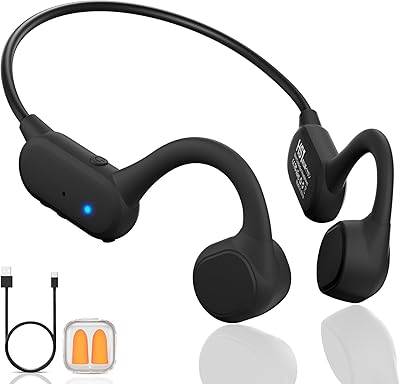
  • Included Components: The retail package includes the headset, a magnetic charging cable, adhesive reflective strips, and basic documentation.
  • Item Dimensions: Packaged dimensions measure approximately 6.61 x 5.31 x 2.48 inches.
  • Audio Technology: PremiumPitch technology is used to widen the dynamic range and improve perceived bass response within the constraints of bone conduction.

Related Reviews
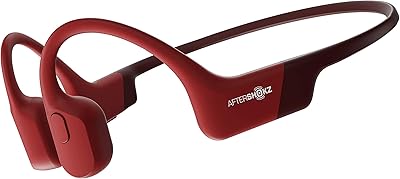
AfterShokz Aeropex Open-Ear Bone Conduction Headphones
78%
93%
Comfort & Wearability
96%
Situational Awareness
61%
Sound Quality
54%
Sound Leakage
84%
Build Quality & Durability
More
Raycon Bone Conduction Headphones RBB842
74%
91%
Water Resistance
93%
Situational Awareness
87%
Battery Life
63%
Audio Quality
82%
Fit & Stability
More
Nanajorwa X7 Bone Conduction Headphones
78%
83%
Comfort & Fit
61%
Sound Quality
72%
Battery Life
91%
Ambient Awareness
69%
Build Quality
More
Cevinily HS1 Bone Conduction Headphones
78%
91%
Wearing Comfort
89%
Situational Awareness
86%
Battery Life
84%
Water Resistance
61%
Sound Quality
More
Enerair A20 Bone Conduction Headphones
73%
84%
Value for Money
81%
Comfort & Fit
63%
Sound Quality
88%
Water & Sweat Resistance
76%
Battery Life
More
Shokz OpenRun
Shokz OpenRun
82%
97%
Situational Awareness
93%
Fit and Comfort
88%
Water and Sweat Resistance
84%
Battery Life
92%
Quick Charging Capability
More
IFECCO X25 Bone Conduction Headphones
78%
91%
Value for Money
84%
Comfort & Fit
58%
Sound Quality
86%
Battery Life
79%
Bluetooth Connectivity
More
Ogogrs K08 Bone Conduction Open-Ear Headphones
70%
81%
Comfort & Fit
58%
Sound Quality
83%
Battery Life
88%
Situational Awareness
52%
Microphone Quality
More
Qyzue S27 Bone Conduction Headphones
79%
91%
Comfort & Wearability
88%
Fit & Stability
86%
Battery Life
67%
Sound Quality
83%
Bluetooth Connectivity
More
PSIER X11 Bone Conduction Headphones
77%
88%
Comfort & Wearability
84%
Secure Fit During Activity
61%
Sound Quality
93%
Open-Ear Situational Awareness
52%
Sound Leakage
More

FAQ

Instead of pushing sound waves into your ear canal, the transducers press gently against your cheekbones and send vibrations directly to your inner ear. Most people adjust within a few minutes, though the sensation feels a little unusual at first. After a short while, the majority of users stop noticing it entirely.

The sound is clear enough for podcasts, calls, and casual music listening, but it does not compare to a quality pair of in-ear headphones. Bass in particular is noticeably limited — that is a fundamental constraint of how bone conduction works, not a defect in this specific model. If accurate audio reproduction matters to you, these are probably not the right choice.

At moderate volumes, sound leakage is minimal and not a practical issue. At higher volumes, some audio will be audible to people sitting close to you in a quiet environment. This is a trade-off built into the open-ear format — it affects all bone conduction headsets to varying degrees, not just this one.

Yes, this is genuinely one of the strongest use cases for this open-ear headset. Because your ears are never blocked, you can hear approaching cars, cyclists, or pedestrians clearly while still listening to music or taking a call. That awareness can make a real safety difference on busy roads or shared paths.

The wraparound titanium frame keeps the headset stable during running, cycling, and other vigorous movement. Most users report that it stays firmly in place without adjustment even on longer sessions. The lightweight build also means you are unlikely to feel it shifting around the way heavier headsets sometimes do.

Yes, multipoint pairing allows these bone conduction headphones to stay linked to two Bluetooth devices simultaneously. In practice, this means you can take a phone call without manually disconnecting from your computer first, which is genuinely useful if you work from home or switch between devices throughout the day.

The six-hour battery life holds up reasonably well in real-world use and typically matches the advertised figure. For most daily use cases — a commute, a gym session, a long run — that is plenty. The catch is that the charge time is also six hours, so if you forget to plug it in overnight, you may not have a full charge ready by morning.

Yes, the headset is water-resistant and handles sweat and light rain without issue in typical use. It is not rated for submersion or heavy downpours, so you would want to be more cautious in genuinely wet conditions. For standard outdoor workouts and gym sessions, it holds up fine.

Pairing follows the standard Bluetooth process: hold the volume-up button until you hear a tone and the LED flashes red and blue, then select the device from your Bluetooth settings. If you are adding a second device via multipoint, put the headset into pairing mode again with the first device already connected and pair the second one the same way.

They are a practical addition for anyone who trains or commutes in low-light conditions. The strips adhere to bikes, helmets, shoes, or clothing and are designed to be visible from well over 500 feet away when light hits them directly. During daylight they blend into gear without looking out of place, so there is no real downside to using them.