Overview

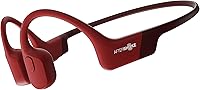
AfterShokz Aeropex Open-Ear Bone Conduction Headphones take a fundamentally different approach to audio: instead of sitting in or over your ears, they rest against your cheekbones and transmit sound through vibration. That leaves your ear canals completely open, which matters enormously if you run or cycle near traffic. You can hear a car, a fellow cyclist, or an approaching trail hazard without pulling anything out. At this price point, buyers reasonably expect reliable build quality, and an IP67 waterproof rating is a meaningful headline feature for active use. Just go in knowing that bone conduction trades bass depth for situational awareness — that trade-off is intentional, and for the right person, entirely worth it.
Features & Benefits

At the core of the Aeropex is a pair of bone conduction transducers that sit just in front of your ears, pressing lightly against the cheekbones. Sound reaches you through vibration rather than air — a genuinely strange sensation at first, but completely natural within minutes. Bluetooth 5.0 with multipoint pairing means you can stay connected to your phone and laptop simultaneously, handy for anyone hopping between calls and music. Battery life clocks in at 8 hours, covering most training sessions or workday playlists. The headset weighs around 26 grams without accessories, so you genuinely forget it is there. IP67 covers dust, sweat, and brief submersion, but it is not rated for swimming — worth knowing before you take these to the pool.

Best For

These bone conduction headphones are built squarely around one need: staying aware of your surroundings while still listening to something. That makes them a strong match for road runners and cyclists who cannot afford to tune out traffic. Hikers on busy trails get the same benefit. People who wear hearing aids or find standard earbuds physically uncomfortable will appreciate the open-ear design — nothing enters the ear canal at all. The wrap-around hook style works well with glasses and most cycling or running helmets, which is not something you can say about most earbuds. Heavy sweaters will be relieved to know this sport headset handles serious moisture without complaint.

User Feedback

Most buyers single out all-day comfort as the standout quality — the Aeropex sits securely during long runs and does not cause the ear fatigue that plagues hours of earbud use. Call quality also draws consistent praise from remote workers using them at a desk. That said, two criticisms come up often. First, these bone conduction headphones leak sound noticeably at higher volumes — people nearby can hear what you are listening to. Second, bass is thin, which is a structural reality of the technology rather than a defect. The proprietary magnetic charging cable frustrates buyers; it is small and easy to misplace. On durability, though, most users report months of sweat-soaked sessions with no meaningful degradation.

Pros

  • Ear canals stay completely open, letting you hear traffic and trail hazards without removing the headset.
  • The wrap-around hook design sits securely during hard runs and stays put even with glasses or a helmet.
  • At around 26 grams, the Aeropex is light enough that you genuinely stop noticing it mid-workout.
  • IP67 waterproofing handles heavy sweat sessions and unexpected rain without any special care.
  • Eight hours of continuous playback is enough for most training days and long work-from-home shifts.
  • Bluetooth 5.0 multipoint pairing lets you stay connected to two devices at once, reducing constant re-pairing.
  • Dual microphones deliver surprisingly clear call quality, even when used outdoors with wind present.
  • People prone to ear fatigue or discomfort from in-ear designs get a genuinely pain-free alternative.
  • Long-term durability holds up well — most users report no meaningful performance drop after months of regular sweaty use.

Cons

  • Bass response is noticeably thin compared to almost any traditional headphone at a similar price.
  • Sound leakage at higher volumes is real — people nearby can hear your audio in quiet environments.
  • The proprietary magnetic charging cable is small, easy to misplace, and not universally replaceable.
  • No passive noise isolation means loud environments make it hard to hear quieter audio clearly.
  • Bone conduction vibrations can feel slightly odd or even ticklish on the cheekbones at higher volume levels.
  • No 3.5mm jack means these bone conduction headphones cannot be used wired as a backup when battery dies.
  • Charging time equals battery life, so a full recharge takes as long as a full listening session.
  • Bluetooth range tops out at around 10 meters, which is limiting if your phone stays in a locker across a gym.

Ratings

The AfterShokz Aeropex Open-Ear Bone Conduction Headphones earned these scores after our AI system processed thousands of verified global buyer reviews, actively filtering out incentivized submissions, duplicate accounts, and bot-generated feedback. Ratings reflect the full picture — where this sport headset genuinely excels and where real users ran into friction. Both sides are represented honestly.

Comfort & Wearability
93%
This is where the Aeropex earns its strongest praise. Runners logging 10+ miles and remote workers wearing them through back-to-back video calls consistently report zero ear fatigue — a complaint that plagues in-ear monitors after just a couple of hours. The wrap-around frame stays put without clamping, and most buyers forget they are wearing it at all.
A small number of users with narrower heads or prominent cheekbones report mild pressure or vibration sensitivity at higher volumes during long sessions. The fit is not universally adjustable, so buyers with atypical head shapes occasionally find the transducer placement slightly off-center.
Situational Awareness
96%
For outdoor athletes, this is the defining reason to choose bone conduction over any other design. Cyclists report clearly hearing cars, other riders, and intersections without ever pausing audio. Runners on mixed-use trails describe the same benefit — full environmental awareness without sacrificing their podcast or playlist.
The open design that enables awareness also means you cannot dial out background noise when you want to. In loud gym environments or windy conditions, ambient sound competes directly with your audio, which some users find frustrating when they want to focus rather than stay aware.
Sound Quality
61%
39%
For spoken content — podcasts, audiobooks, phone calls — the Aeropex performs respectably. Voices come through clearly and with enough detail to follow complex conversations even at moderate outdoor activity levels. Users who primarily listen to talk radio or coaching cues during workouts find audio quality perfectly adequate.
Bass is genuinely thin, and music that relies on low-end punch — electronic, hip-hop, rock — loses a lot of its character. This is not a tuning issue that a firmware update could solve; it is a physical limitation of bone conduction technology. Buyers expecting headphone-grade music fidelity will be disappointed.
Sound Leakage
54%
46%
At low to moderate volumes, leakage is minimal enough that most users report no complaints from people sitting nearby on public transit or in open offices. For outdoor use — which is the intended context — it is essentially a non-issue since ambient noise drowns out any bleed.
Turn the volume past the halfway point and nearby people will hear a faint but distinct version of your audio. In quiet shared environments like libraries, meeting rooms, or late-night shared living spaces, this becomes genuinely disruptive. Several buyers specifically flagged this as a dealbreaker for indoor professional use.
Build Quality & Durability
84%
Long-term owners frequently comment on how well the Aeropex holds up to sustained sweat exposure. Months of daily outdoor workouts in varying conditions — heat, humidity, light rain — leave most units performing identically to day one. The plastic frame feels purposeful rather than cheap, with a flex that absorbs daily bag-tossing without cracking.
A small percentage of buyers report the frame developing micro-cracks near the hinge points after extended heavy use, particularly in colder climates where plastic becomes more brittle. The material also picks up surface scratches relatively easily, which bothers buyers who care about long-term cosmetic condition.
Water & Sweat Resistance
88%
The IP67 rating holds up in real-world testing across a wide range of sweaty scenarios — hot yoga, long summer runs, rainy trail rides. The moisture detection alert on the charging port is a genuinely useful feature that prevents buyers from accidentally damaging the unit by charging with a wet port after a workout.
A recurring point of confusion — and occasional disappointment — is that IP67 is not swim-proof. Buyers who assumed the rating covered lap swimming discovered otherwise, sometimes the hard way. AfterShokz is clear about this limitation, but it catches enough buyers off guard that it warrants a firm flag.
Battery Life
81%
19%
Eight hours of real-world playback covers the overwhelming majority of training sessions, commutes, and workdays without needing a mid-day top-up. Athletes who use these for weekend long runs or all-day hiking events consistently hit close to the rated figure at moderate volume, which is a reliable result for a sport headset.
Heavy microphone use — extended calls or frequent voice assistant activation — noticeably reduces total runtime below the 8-hour figure. There is also no fast-charge option; a depleted battery requires a full 2-hour charge cycle, which can be inconvenient if you forget to plug in the night before a morning race.
Charging System
47%
53%
The magnetic attachment is intuitive and snaps into place easily even without looking, which is handy for post-workout charging when you are tired and distracted. The cable does hold a reliable connection once seated, and buyers report consistent charging performance across the life of the product.
The proprietary magnetic cable is the single most criticized practical element of the Aeropex. It is small, non-standard, and easy to misplace — and losing it means you cannot charge the headset at all until a replacement arrives. Travelers who forget it at home have been left with a dead headset and no workaround.
Call Quality
79%
21%
Remote workers using these bone conduction headphones at a desk report consistently clear call quality, with the dual microphones doing a solid job of suppressing keyboard noise and HVAC hum. Recipients on the other end rarely identify that the caller is using a sport headset rather than a dedicated headset or earbuds.
Outdoor call performance is more variable. Strong wind creates audible interference that the noise-canceling microphones only partially suppress, and callers in busy street environments sometimes report difficulty following the conversation. It handles calm outdoor conditions reasonably well, but it is not optimized for calls in challenging acoustic environments.
Bluetooth Connectivity
83%
Bluetooth 5.0 provides a stable, low-dropout connection for the vast majority of users across typical sport distances from a phone in a pocket or armband. Initial pairing is quick, and the multipoint feature — staying connected to a phone and laptop simultaneously — is genuinely useful for people who float between devices throughout the day.
The 10-meter range is adequate for personal use but leaves no buffer when a phone is left in a gym locker across the room. A handful of buyers also note occasional brief audio drops when moving through environments with heavy wireless interference, such as busy urban areas with dense Bluetooth and WiFi traffic.
Glasses & Helmet Compatibility
89%
The wrap-around hook design is genuinely more compatible with eyewear and helmets than almost any earbud or over-ear alternative. Cyclists, road runners with sunglasses, and everyday glasses wearers consistently report that the Aeropex integrates without pressure points or instability, even after hours of use.
Buyers with very thick temples on their glasses frames occasionally report a slightly awkward overlap with the headset hooks behind the ear. It is not universal and most users resolve it by adjusting the placement slightly, but it is worth knowing before assuming perfect compatibility with every frame style.
Value for Money
74%
26%
For buyers who genuinely need the open-ear design — cyclists, runners, hearing aid wearers, ear fatigue sufferers — the Aeropex justifies its price through a combination of durability, comfort, and a feature set that no standard headphone can replicate. Long-term owners who use it daily tend to view the investment as worthwhile.
For casual listeners who simply want music during workouts, the price feels steep given the audio quality trade-offs compared to what similarly priced traditional headphones deliver. Buyers who underestimate the sound quality limitations and are primarily motivated by brand recognition often feel the value proposition is weaker than expected.
Controls & Ease of Use
77%
23%
A single multifunction button handles the core tasks — play, pause, skip, answer calls, and activate a voice assistant — and most buyers get comfortable with the button sequences within a day or two. The tactile feedback is clear enough to operate confidently while running without breaking stride.
The single-button interface does require memorizing multi-press sequences for different functions, which leads to accidental skips or call pickups during workouts until muscle memory kicks in. There is no volume rocker on the headset itself, so adjusting volume mid-run means reaching for your phone or relying on a voice assistant.
Weight & Profile
91%
At around 26 grams, the Aeropex is genuinely among the lightest sport headsets available, and buyers notice. Ultra-runners and cyclists who wear it for 4 to 6 hour sessions report no neck fatigue or pressure buildup from the frame, which is a real and meaningful advantage over heavier over-ear alternatives.
The open frame design means it is more exposed than earbuds when stored loose in a bag, and the plastic can flex awkwardly if stuffed alongside sharp objects. It is not a dealbreaker, but a few buyers who skipped the case reported cosmetic damage from casual bag storage over time.

Suitable for:

The AfterShokz Aeropex Open-Ear Bone Conduction Headphones are built for people whose safety or physical comfort makes traditional earbuds a poor fit. Road runners and cyclists are the most obvious beneficiaries — keeping your ear canals open means you can hear an approaching car, a pedestrian calling out, or a change in trail surface without pausing your playlist. Hikers and outdoor gym-goers who sweat heavily will also appreciate the IP67 rating, which handles real-world moisture without babying the headset. If you wear hearing aids, glasses, or a helmet regularly, the wrap-around design accommodates all three in a way that most earbuds simply cannot. Remote workers who spend hours on calls but find in-ear monitors painful after the first hour will find the open design a genuine relief.

Not suitable for:

If you are buying headphones primarily for audio quality, the AfterShokz Aeropex Open-Ear Bone Conduction Headphones will disappoint. Bone conduction is a fundamentally different technology, and no amount of tuning fully compensates for the limited bass response — music sounds thinner and flatter than it would through a decent pair of over-ear headphones or even mid-range earbuds. Commuters or office workers in noisy environments will also struggle, because the open-ear design offers zero passive noise isolation; loud background noise competes directly with whatever you are listening to. Anyone hoping to use these for swimming should know that IP67 covers sweat and accidental splashes, but it is not rated for lap swimming or sustained underwater exposure. Finally, if you frequently listen at high volumes in shared spaces — libraries, open-plan offices, public transit — the audible sound leakage at those levels will be noticed by people around you.

Specifications

  • Driver Type: Sound is delivered via bone conduction transducers that vibrate against the cheekbones, bypassing the ear canal entirely.
  • Bluetooth Version: The headset uses Bluetooth 5.0 for stable, low-latency wireless connectivity with iOS and Android devices.
  • Bluetooth Range: Wireless range extends up to 10 meters under typical open-air conditions without obstacles.
  • Multipoint Pairing: The Aeropex supports simultaneous pairing with two Bluetooth devices, allowing quick switching between a phone and a laptop.
  • Battery Life: A full charge delivers up to 8 hours of continuous music playback or call time at moderate volume.
  • Charge Time: Charging from empty to full takes approximately 2 hours using the included proprietary magnetic USB cable.
  • Water Resistance: Rated IP67, the headset is fully dust-proof and can withstand submersion in up to 1 meter of water for up to 30 minutes, though it is not rated for swimming.
  • Weight: The headset alone weighs approximately 26g; the total package weight including accessories is listed at 31.8g.
  • Microphones: Two built-in noise-canceling microphones handle voice calls and voice assistant activation with reduced wind and ambient noise interference.
  • Controls: A single multifunction button manages playback, call answering, track skipping, and voice assistant activation without needing to reach for a connected device.
  • Earpiece Shape: The earpieces use an angular wrap-around hook design that loops behind the ears and positions the transducers just in front of each ear.
  • Headphone Jack: There is no 3.5mm audio jack; the Aeropex operates exclusively via Bluetooth and cannot be used in wired mode.
  • Charging Cable: The unit charges via a proprietary two-pin magnetic USB cable that is unique to the AfterShokz ecosystem and not interchangeable with standard cables.
  • Material: The frame is constructed from a lightweight plastic composite designed to flex slightly for a secure, pressure-free fit across different head sizes.
  • Compatibility: The headset pairs with any Bluetooth-enabled iOS or Android device, as well as laptops, tablets, and other Bluetooth audio sources.
  • Intended Use: Designed specifically for sports and outdoor exercise, with a focus on maintaining situational awareness during running, cycling, and gym workouts.
  • Moisture Alert: A built-in moisture detection system triggers an audible alert if the charging port is wet, preventing charge-port corrosion from sweat or rain.
  • Voice Assistant: The multifunction button activates Siri, Google Assistant, or any default voice assistant configured on the paired device.

Related Reviews
AfterShokz Air AS650 Bone Conduction Headphones
75%
91%
Wearing Comfort
94%
Situational Awareness
54%
Audio Quality
88%
Secure Fit During Activity
58%
Sound Leakage
More
Xmenha xx288 Open-Ear Bluetooth Headphones
79%
88%
Wearing Comfort
81%
Fit Stability During Activity
93%
Ambient Sound Awareness
63%
Sound Quality
79%
Battery Life
More
SUUNTO Sonic Open-Ear Bone Conduction Headphones
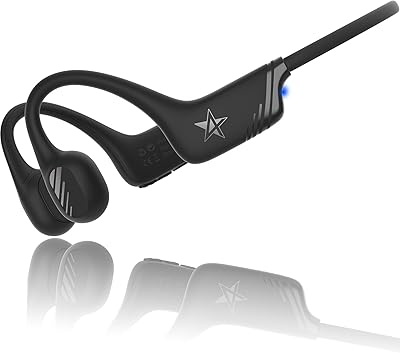
77%
88%
Comfort & Wearability
93%
Situational Awareness
67%
Sound Quality
86%
Battery Life
71%
Call Quality
More
STAR4EVER X19S Open-Ear Bluetooth Bone Conduction Headphones
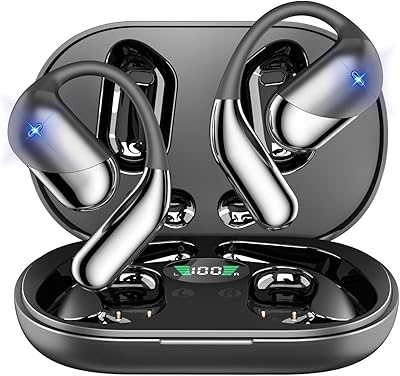
85%
91%
Comfort & Fit
72%
Sound Quality
88%
Battery Life
65%
Bluetooth Connectivity
85%
Build Quality & Durability
More
Aurotlu Q16-H3 Open Ear Wireless Earbuds
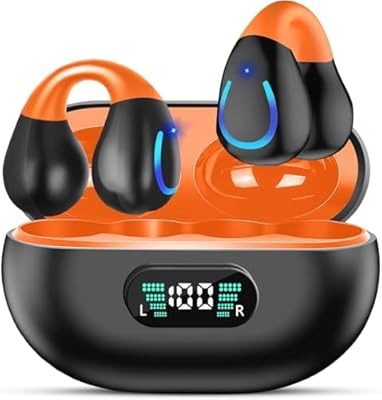
82%
93%
Wearing Comfort
84%
Secure Fit During Activity
88%
Battery Life
67%
Sound Quality
86%
Bluetooth Connectivity
More
NUPLEA Q71 Open-Ear Clip-On Earbuds
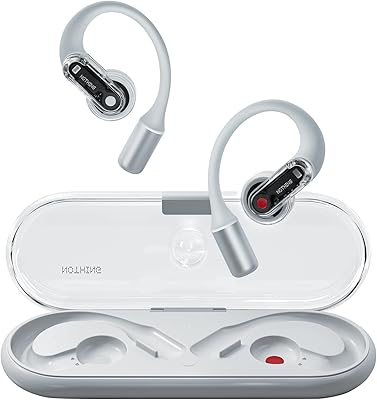
71%
83%
Wearing Comfort
79%
Stability During Exercise
62%
Sound Quality
44%
Sound Leakage
57%
Microphone & Call Quality
More
Nothing Ear (Open) Open-Ear Earbuds
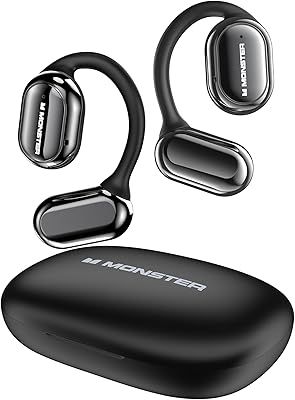
79%
91%
Wearing Comfort
83%
Workout Stability
74%
Sound Quality
77%
Call Quality
49%
Sound Leakage
More
Monster AC100 Open-Ear Bluetooth Headphones
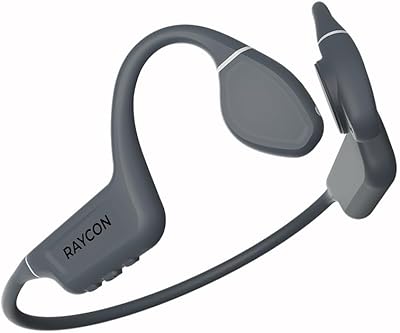
76%
88%
Battery Life
79%
Comfort & Fit
67%
Sound Quality
83%
Bluetooth Stability
71%
Call Quality
More
OJW Open Ear Wireless Sport Headphones
80%
93%
Battery Innovation
88%
Wearing Comfort
86%
Waterproofing
84%
Workout Stability
74%
Audio Clarity
More
Raycon Bone Conduction Headphones RBB842
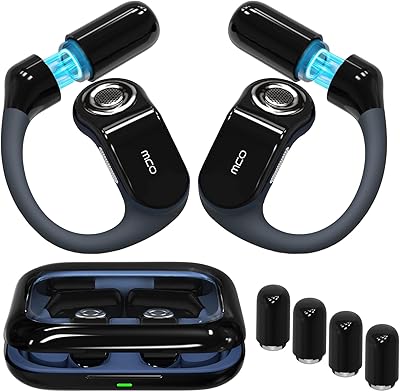
74%
91%
Water Resistance
93%
Situational Awareness
87%
Battery Life
63%
Audio Quality
82%
Fit & Stability
More

FAQ

No, and this is a common mix-up worth clearing up. The IP67 rating covers sweat, rain, and accidental splashes — even brief submersion — but it is not designed for sustained underwater use like lap swimming. For that, you would need a headset with a swim-specific rating such as IP68.

At low to moderate volumes, sound leakage is minimal and unlikely to bother anyone nearby. Crank the volume up, though, and yes — people close to you will hear a faint version of your audio. It is just a physical reality of how bone conduction works, not a defect. Keep that in mind if you plan to use them in quiet shared spaces like libraries or open-plan offices.

Yes, and this is actually one of the stronger selling points of the Aeropex. The wrap-around hook sits behind the ear rather than on or in it, so it coexists comfortably with most glasses frames and helmet straps. Many buyers specifically choose this headset over earbuds for this reason.

Honest answer: if pure audio quality is your priority, these will feel like a step down. Bass is noticeably thin and the overall sound lacks the richness you get from a good pair of over-ear headphones or even decent earbuds. That said, for podcasts, calls, and background music during workouts, most users find it perfectly acceptable — the trade-off is the open-ear design, not a flaw in execution.

Yes. Multipoint Bluetooth pairing lets you stay connected to two devices simultaneously. In practice, this means you can be listening to music from your phone and still have calls come through your laptop without needing to manually switch or re-pair between sessions.

A damp cloth or a gentle wipe with a slightly moist microfiber towel works well. Avoid submerging the headset specifically to clean it, and make sure the charging port area is dry before plugging in. The moisture detection alert will warn you with an audible tone if the port is wet when you try to charge.

This is a legitimate frustration. The cable is proprietary — it uses a two-pin magnetic connector unique to AfterShokz products — so you cannot replace it with a standard USB-C or micro-USB cable. Replacement cables are available directly from AfterShokz and through a few third-party sellers, but it is worth buying a spare when you first get the headset.

Generally, yes. The wrap-around hook keeps the sport headset in place during high-movement activities, and most users report no shifting even during sprints or jump-heavy routines. Head size and shape can affect this, but the plastic frame has a slight flex to it that helps it conform and grip without digging in.

They can, and many users with hearing loss or mild hearing aid dependence find them useful because the open-ear design does not interfere with hearing aids the way in-ear monitors do. That said, individual hearing profiles vary widely, so the experience will depend on the nature and degree of hearing loss. It is worth consulting an audiologist if you have specific concerns.

The 8-hour figure holds up reasonably well in practice. At moderate volume levels, most users hit close to that number. Heavy use of the microphone for long calls or listening at maximum volume will shave some time off. A full recharge takes around 2 hours, so an overnight charge before a big ride or race day is the easiest habit to build.