Overview

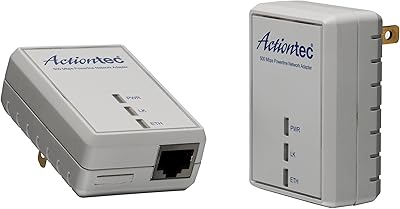
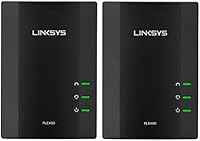
The Linksys PLEK400 Powerline Network Adapter Kit is a practical solution for anyone tired of fighting with spotty Wi-Fi in hard-to-reach corners of their home. The idea behind powerline networking is straightforward: plug one adapter near your router, connect the other in a distant room, and your home's existing electrical wiring carries the network signal between them. No drilling, no cables snaking through walls. This HomePlug AV adapter ships with both units included, so you are ready to use it immediately — a genuine advantage for people who just want something that works without a steep learning curve.
Features & Benefits

Each adapter in this powerline adapter kit has a single Ethernet port, keeping things simple — one device per unit, whether that is a desktop PC, a smart TV, or a game console. The HomePlug AV standard carries a theoretical ceiling of 200Mbps, though real-world speeds will vary based on your home's wiring. Pairing the two units is quick: plug them both in, press the sync button on each, and they find each other in seconds. There is no software to install and no router settings to reconfigure. The compact, wall-mounted design works with any existing router brand, adding flexibility without adding clutter.

Best For

This powerline adapter kit makes the most sense for homes where Wi-Fi simply cannot reach — a basement media room, a bedroom at the far end of the house, or a home office cut off by thick concrete walls. Desktop PC users and console gamers will appreciate having a steady, wired-style connection without running cables through ceilings. It also suits households where wireless congestion is already an issue, since offloading a bandwidth-hungry device onto a separate wired path frees up airspace for phones and laptops. Non-technical users will find setup approachable, though anyone in an older home with aging electrical circuits should set realistic expectations beforehand.

User Feedback

Buyers of the PLEK400 most commonly praise the ease of setup and the noticeable improvement in connection stability over Wi-Fi. For everyday tasks — streaming video, browsing, or light online gaming — it tends to deliver. Speed, however, is where opinions split. The 200Mbps rating is a theoretical maximum, and actual throughput can fall considerably short, particularly in homes with older or multi-circuit wiring. Some users have flagged interference when an adapter shares an outlet circuit with a large appliance like a refrigerator. Most buyers, though, treat these as understandable limitations rather than serious flaws, and those with modest bandwidth needs generally walk away content.

Pros

  • Setup takes minutes with no software, no configuration, and no technical knowledge required.
  • Uses your home's existing electrical wiring, so there is zero drilling or cable fishing involved.
  • Works with any router brand already in your home without requiring any changes to network settings.
  • The PLEK400 ships as a complete two-adapter kit, ready to deploy straight out of the box.
  • Delivers a noticeably steadier connection than Wi-Fi for streaming and casual online gaming.
  • Compact wall-plug design keeps both adapters unobtrusive and out of the way.
  • Effectively solves dead-zone problems in rooms that no Wi-Fi extender could reliably reach.
  • Offloading one wired device can reduce wireless congestion and improve speeds for other users in the home.

Cons

  • Real-world throughput often falls well short of the 200Mbps rated ceiling, sometimes by a wide margin.
  • Each adapter has only one Ethernet port, so connecting multiple devices in the same room requires an additional switch.
  • Performance varies unpredictably depending on the age, layout, and condition of your home's electrical wiring.
  • Adapters placed on the same circuit as large appliances can suffer interference and inconsistent speeds.
  • Older homes with outdated or multi-phase electrical systems may see particularly disappointing results.
  • Not suitable for bandwidth-intensive tasks like large file transfers or high-speed network backups.
  • No built-in quality-of-service controls to prioritize traffic between connected devices.
  • Units must share the same electrical circuit for best results, which is not always possible depending on outlet placement.

Ratings

Our AI rating engine analyzed thousands of verified global user reviews for the Linksys PLEK400 Powerline Network Adapter Kit, applying spam filters and removing suspected bot-generated or incentivized submissions before calculating each category score. The result is a transparent, balanced snapshot of real-world performance that reflects both what buyers consistently praise and the pain points that surface repeatedly across genuine accounts. No category has been softened or inflated — every score is grounded in what real users actually experienced.

Ease of Setup
89%
Most users report being up and running within five minutes, with no software downloads or router access required. You plug one adapter near your router, connect it with an Ethernet cable, plug the second in a distant room, press sync on both, and the network is live. For non-technical households, this near-instant process is a genuine relief.
A small number of users report that the sync process occasionally fails on the first attempt, requiring an unplug-and-retry cycle. Those who expected a guided app-based setup were sometimes surprised by the minimal documentation included in the box.
Speed Performance
58%
42%
When conditions align — both adapters on the same circuit with clean, modern wiring — the PLEK400 delivers speeds fast enough for HD video streaming, video calls, and standard web browsing without noticeable lag. Users in newer homes consistently report better throughput than those using wireless extenders placed in the same dead-zone spots.
The 200Mbps headline figure misleads a meaningful number of buyers; actual measured speeds in many homes land between 30Mbps and 80Mbps, and sometimes lower in properties with older circuits. Users attempting large file transfers or 4K network streaming frequently find real-world bandwidth falls well short of their expectations.
Connection Stability
76%
24%
Where this powerline adapter kit really earns its keep is in replacing a jittery Wi-Fi signal in a far bedroom or basement with something far more predictable. Gamers and remote workers who moved a device onto the PLEK400 frequently note that dropped connections and mid-session disconnects became rare or disappeared entirely.
Stability is not guaranteed across all homes, and users whose adapters share a circuit with a refrigerator, washing machine, or air conditioning unit report intermittent drop-outs that correlate with when those appliances cycle on. A portion of buyers in homes with split-phase or complex wiring describe inconsistent performance that varies noticeably by time of day.
Value for Money
67%
33%
For users who just want reliable video streaming or stable web browsing in a room their router cannot reach, this HomePlug AV adapter delivers that outcome at a reasonable price without requiring professional installation or new infrastructure. The two-adapter kit represents a complete, ready-to-use solution with no hidden accessories needed for basic deployment.
Power users and those in older homes often feel the value proposition weakens when real throughput lags significantly behind what a newer, faster standard could provide at a comparable price point. Buyers who end up needing a network switch to connect multiple devices in the target room face an additional cost the kit does not anticipate.
Interference Resistance
54%
46%
In homes where adapters are placed on clean, dedicated circuits away from large appliances, interference is rarely a concern. Users who tested several outlet combinations before settling on their final placement often report significantly more stable performance than those who simply plugged in at the nearest available socket.
This is one of the most consistent pain points in user reviews: motors and compressors in nearby appliances generate electrical noise that competes directly with the powerline signal, and these adapters have limited built-in filtering to compensate. Users who cannot avoid placing an adapter near kitchen or laundry appliances frequently experience the worst throughput and most frustrating drop-outs.
Build Quality
72%
28%
The adapters feel solid for their price tier — the casing is firm, does not creak, and the Ethernet port clicks in securely. Long-term users report that both units hold up well even when left plugged in continuously for months, with no widespread reports of overheating under normal operating conditions.
The plastic housing feels functional rather than premium, and a few buyers have noted that the direct-outlet plug puts downward stress on older or loose wall sockets over time. There are no indicator lights that clearly distinguish between a healthy connection and a degraded one, which makes troubleshooting less intuitive.
Compatibility
84%
The HomePlug AV standard means this powerline adapter kit works alongside virtually any router brand without requiring configuration changes, which most users appreciate immediately. Buyers upgrading from older networking gear or running a mix of wired and wireless devices found it slotted into their existing setup without conflicts.
Compatibility has one notable ceiling: it only pairs reliably with other HomePlug AV devices, so mixing it with adapters from a different powerline standard requires buying matching units. Users expecting the adapters to serve as a wireless access point or hub will also be disappointed, as these units are strictly wired-only.
Port Configuration
61%
39%
For users connecting a single device — a desktop in a home office, a smart TV in the living room, or a game console in a basement — having one dedicated Ethernet port per adapter is all they need, and the clean single-connection setup keeps things straightforward and tidy.
The single-port limitation frustrates users in households where multiple devices in one room need a wired connection, as adding a second device requires purchasing a separate network switch. Compared to multi-port powerline adapters available at similar price points, this kit's one-port-per-unit design leaves noticeably less room to grow.
Range & Coverage
69%
31%
In most standard homes, the signal travels surprisingly well through the wiring — users report reliable connections between floors and across the length of a typical single-family home without significant degradation. For the majority of everyday dead-zone scenarios, the distance coverage proves more than adequate.
Range becomes a real issue when the two adapters land on different electrical circuits, which is common in larger homes or properties with multiple breaker panels. The combination of long wiring runs and circuit crossings can reduce throughput to near-unusable levels for anything beyond basic browsing.
Latency Performance
73%
27%
Console gamers who switched from Wi-Fi extenders to this powerline adapter kit consistently report lower and more stable ping times, translating directly into fewer lag spikes during online matches. The wired-over-powerline path avoids the retransmission overhead that wireless connections accumulate in signal-weak areas, making latency noticeably more predictable.
Latency is not as low or consistent as a direct Ethernet run, and users in homes with noisy wiring occasionally see jitter spikes that make latency-sensitive applications like competitive gaming or real-time video conferencing less comfortable. These spikes tend to coincide with electrical load changes elsewhere in the home.
Expandability
71%
29%
Users who need coverage in a third or fourth room appreciate that the HomePlug AV standard supports adding compatible adapters to the same network, allowing the setup to grow incrementally without replacing existing hardware. New units pair quickly using the same sync-button method as the original setup.
Total available bandwidth is shared across all adapters on the network, so adding more units does not increase throughput and can, in practice, reduce the speed available to each individual connection. Users looking for a truly scalable high-bandwidth solution will eventually outgrow what this HomePlug AV platform can realistically deliver.
Form Factor
78%
22%
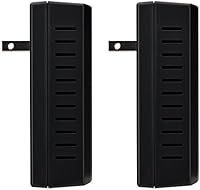
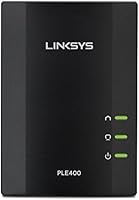
The compact, direct-outlet form factor keeps things tidy — no power bricks dangling from the wall, no extra cables running across the floor just to power the adapter itself. The all-black design is neutral enough to blend into most home interiors without drawing attention.
The direct wall-plug design does not work well with recessed outlets, and several users report that the adapter's physical footprint blocks the second socket entirely in some dual-outlet configurations. There is no pass-through outlet on this model, meaning you permanently sacrifice one socket in every room where you install a unit.
Wiring Dependency
52%
48%
For buyers in newer homes or recently renovated properties, the dependency on home wiring is rarely a concern — the circuits are typically clean and consistent enough that the adapters perform predictably. In these environments, the technology largely delivers on its core promise without any extra troubleshooting steps.
This is the most unpredictable variable tied to the entire product, and it is the one buyers have no control over. Users in homes built before the 1980s, properties with aluminum wiring, or places where the electrical panel has been unevenly extended report a highly variable experience where performance can range from acceptable to genuinely unusable.

Suitable for:

The Linksys PLEK400 Powerline Network Adapter Kit is a strong fit for anyone whose home has a room or two where Wi-Fi simply gives up — think a basement den, a bedroom at the end of a long hallway, or a garage workshop separated from the router by thick walls. It is especially well-suited to desktop PC users and console gamers who need a stable, low-latency connection but cannot realistically run a long Ethernet cable through ceilings or around doorframes. Renters benefit too, since the whole setup requires nothing more than two free wall outlets and takes less than five minutes. Non-technical users will find the pairing process forgiving, and because it works alongside any existing router, there is no need to overhaul anything already in place. For households where one bandwidth-heavy device is dragging down the whole wireless network, offloading it onto this powerline path can noticeably improve Wi-Fi quality for everyone else in the home.
Not suitable for:

The Linksys PLEK400 Powerline Network Adapter Kit is not the right call for anyone expecting speeds anywhere close to the 200Mbps theoretical maximum, particularly in homes with older electrical wiring, multiple breaker circuits, or wiring that dates back several decades. Users who need to connect more than one device per room will quickly run into a hard limit, since each adapter provides only a single Ethernet port with no built-in switch functionality. It is also a poor choice for anyone whose nearest outlet sits on the same circuit as a refrigerator, washing machine, or other power-hungry appliance, as interference from those devices can degrade throughput significantly. Anyone planning to use it for large file transfers, 4K video editing workflows, or high-speed NAS backups should look at a more capable solution, as real-world bandwidth is rarely sufficient for those demands. Finally, users in apartments or multi-unit buildings with shared electrical infrastructure may find performance unpredictable or even unreliable.
Specifications

  • Technology Standard: Operates on the HomePlug AV standard, which is designed to transmit network data through a home's existing electrical wiring.
  • Max Data Rate: Supports a theoretical maximum data transfer rate of 200Mbps; actual speeds will be lower in real-world conditions.
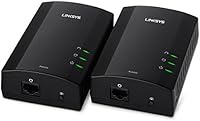
  • Ethernet Ports: Each adapter includes one standard Ethernet port, allowing a single wired device to be connected per unit.
  • Data Protocol: Uses the Ethernet data link protocol for communication between connected devices and the network.
  • Transmission Medium: Network data travels through the home's existing electrical wiring rather than through dedicated network cabling or radio frequencies.
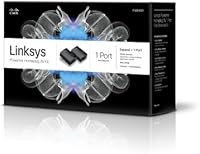
  • Kit Contents: The kit includes two powerline adapters, providing everything needed to establish a basic powerline network connection out of the box.
  • Setup Method: Initial pairing is completed by plugging both adapters into wall outlets and pressing the sync button on each unit.
  • Plug Type: Each adapter mounts directly into a standard wall outlet with no external power brick or mounting hardware required.
  • Compatible Devices: Works with any Ethernet-enabled device including desktop computers, smart TVs, game consoles, and network media players.
  • Router Compatibility: Compatible with any router brand or model that uses a standard Ethernet connection, requiring no changes to existing network settings.
  • Item Weight: The full kit weighs approximately 1.16 pounds, encompassing both adapter units and packaging.
  • Color: Both adapters are finished in black, giving them a neutral appearance that blends into most home environments.
  • Manufacturer: Designed and manufactured by Linksys, a networking hardware brand with a long history in home and small-business connectivity products.
  • UPC: The primary Universal Product Code for this kit is 745883594283.
  • Software Required: No driver installation or companion software is required; the adapters function as plug-and-play hardware on any operating system.

Related Reviews

Netgear XAVB5001 Powerline Network Adapter Kit
70%
88%
Ease of Setup
51%
Real-World Speed Performance
73%
Connection Stability
58%
Electrical Outlet Compatibility
67%
Value for Money
More
Netgear XETB1001 Powerline Network Adapter Kit
68%
88%
Ease of Setup
51%
Real-World Speed
67%
Connection Stability
58%
Value for Money
74%
Compatibility
More
Actiontec PWR511K01 500Mbps Powerline Network Adapter Kit
67%
88%
Ease of Setup
61%
Real-World Speed Performance
74%
Connection Stability
53%
Build Quality & Durability
67%
Value for Money
More
D-Link Powerline AV Network Adapter Kit DHP-307AV
81%
83%
Performance
90%
Ease of Setup
78%
Reliability
70%
Speed Consistency
88%
Security (Encryption)
More
NETGEAR Powerline Adapter Kit PLP2000-100PAS
74%
91%
Ease of Setup
67%
Real-World Speed Performance
78%
Network Reliability & Stability
74%
Build Quality & Durability
88%
Pass-Through Outlet Design
More
Actiontec PWR514K01 Powerline Network Adapter Kit
73%
91%
Ease of Setup
88%
Multi-Device Connectivity
57%
Real-World Throughput
74%
Connection Stability
69%
Value for Money
More
Zyxel PLA5456 AV2000 Powerline Adapter Kit
74%
91%
Ease of Setup
67%
Real-World Throughput
74%
Network Stability
61%
Hardware Reliability
88%
Port Configuration
More
TP-Link TL-PA411KIT Powerline Network Adapter Kit
78%
94%
Ease of Setup
61%
Real-World Speed Performance
83%
Build Quality & Durability
88%
Compatibility
91%
Physical Footprint
More
NETGEAR XAVB2501 Powerline AV+ 200 Adapter Kit
73%
91%
Ease of Setup
58%
Real-World Speed
72%
Connection Stability
54%
Long-Term Reliability
83%
Compatibility
More
Comtrend PG-9182PT Powerline Adapter Kit
75%
71%
Real-World Speed
88%
Setup & Ease of Use
58%
Wiring Compatibility
91%
Pass-Through Outlet
74%
Connection Stability
More

FAQ

It can, but results are genuinely unpredictable in older homes. The Linksys PLEK400 Powerline Network Adapter Kit relies on the quality and layout of your existing electrical wiring, and homes built several decades ago often have circuits that introduce more signal loss. You may still get a usable connection for streaming or browsing, but do not expect top-tier throughput. If your home has been partially rewired at some point, performance tends to be better.
Almost certainly not in day-to-day use. The 200Mbps figure is a theoretical ceiling under ideal lab conditions, and real-world speeds depend heavily on your home's wiring quality, the distance between the two adapters, and what else is running on that circuit. Most users see a fraction of that number, though for streaming video or casual browsing, the actual throughput is usually more than enough.

Not directly, since each adapter only has one Ethernet port. If you need to wire up several devices in the same room, you would need to plug an inexpensive network switch into the adapter's Ethernet port and then connect your devices to the switch. It adds a small extra cost but solves the problem cleanly.

Ideally, yes. Powerline adapters work best when both units share the same electrical circuit, and performance drops noticeably when they are on separate circuits. In practice, many homes have multiple circuits, so it is worth testing a few different outlet combinations to find the pair that gives you the best result.

It can. Large appliances generate electrical noise on the circuit, and that noise interferes with the signal this HomePlug AV adapter uses to carry your network data. If you can plug the adapter into an outlet on a different circuit from those appliances, performance will almost always be more consistent. Avoid using a power strip or surge protector with the adapter as well, since those can dampen the signal further.

It is genuinely straightforward. Plug one adapter into a wall outlet near your router and connect them with an Ethernet cable, plug the second adapter into any outlet in the room you want to cover, then press the sync button on each unit. That is essentially it. There is no software to install, no app to configure, and no router settings to touch.

Yes, the HomePlug AV standard supports more than two adapters on the same network. You can purchase compatible HomePlug AV adapters and add them to the existing setup, extending coverage to further rooms. Just keep in mind that adding more adapters does not increase total available bandwidth; they all share the same underlying throughput.

For casual online gaming, it works well. The main advantage over Wi-Fi is connection stability — fewer dropped packets and more consistent ping rather than raw speed. Competitive gamers who need the absolute lowest possible latency may still prefer a direct Ethernet run to the router, but for the vast majority of gaming scenarios, the PLEK400 is a solid and practical middle ground.

A Wi-Fi extender rebroadcasts your wireless signal to push it further, but you are still on Wi-Fi with all its variability. This powerline adapter kit gives the connected device a wired Ethernet connection, which is inherently more stable and less prone to interference from neighboring networks or thick walls. The trade-off is that it only serves devices you physically plug in, whereas a Wi-Fi extender covers any wireless device in range.

Yes, this is one of its real strengths for renters. You are not drilling holes, running cable through walls, or making any permanent changes. As long as you have two accessible wall outlets — one near your router and one in the room you want to reach — you can set it up and take it with you when you move out.

Where to Buy