Overview

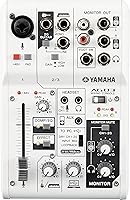
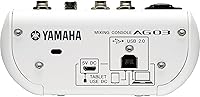
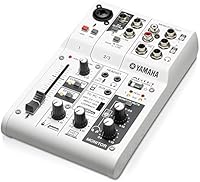
The Yamaha AG03 3-Channel USB Mixer is one of those rare pieces of gear that punches well above its size. Yamaha has been building professional audio equipment for decades, and that heritage shows up in this compact mixer in ways you notice quickly — cleaner preamps, sturdier knobs, a more confident signal chain. It connects to your computer over USB, so there are no drivers needed and no complicated setup rituals. It also supplies 48V phantom power, which means you can plug in a condenser microphone — the kind that needs external voltage to work — without buying a separate power supply. For a mid-range price, the build quality genuinely surprises.

Features & Benefits

With three channels to work with, the AG03 lets you route a microphone, an instrument, and a playback source at the same time — handy when you want background music under your voice without juggling two separate apps. The USB 2.0 connection handles both audio transfer and power delivery from your computer, so there is one less cable in your life. The whole unit measures roughly 8 by 5 inches and weighs under 2 lbs, which means it actually fits on a crowded desk rather than dominating it. Yamaha's preamp circuitry is worth calling out specifically — at this price tier, the signal clarity is noticeably better than what you get from most generic budget interfaces.

Best For

The AG03 is genuinely well-suited to a specific kind of buyer: someone stepping up from a basic USB microphone who wants more control without drowning in technical complexity. Solo podcasters and voice-over artists will appreciate having a dedicated gain knob and a clean signal path to their recording software. Live streamers who need to monitor their own voice in real time while managing game audio will find the layout intuitive. It also works nicely for a musician tracking acoustic guitar or vocals in a bedroom. Remote workers and educators who spend hours on video calls often find the improvement in audio clarity — compared to a built-in laptop mic — immediately noticeable to everyone on the call.

User Feedback

With over 3,000 ratings and a 4.6-star average, this USB audio mixer has clearly earned some genuine loyalty. Buyers consistently mention warmth and clarity in the audio as highlights — not marketing terms they read somewhere, but things they actually noticed after switching from cheaper gear. Setup gets praised repeatedly: plug it in, and your operating system recognizes it without any driver installation. On the critical side, a recurring comment from longer-term owners is that the knobs and faders can feel less durable than expected after a year or two of daily use. And if your setup ever grows — say you add a second mic or a guest — three channels runs out fast.

Pros

  • Plug-and-play USB setup works immediately on modern operating systems — no driver installation required.
  • Built-in 48V phantom power lets you use professional condenser microphones without any extra equipment.
  • Yamaha preamp quality delivers noticeably cleaner, warmer audio than most budget-tier alternatives.
  • At under 2 lbs and smaller than a hardcover book, it fits easily on any desk setup.
  • Over 3,000 Amazon ratings averaging 4.6 stars reflects genuine, sustained buyer satisfaction.
  • Handles mic, instrument, and playback audio simultaneously across its three channels.
  • Real-time headphone monitoring is a practical advantage for streamers and podcasters.
  • Pairs well with high-demand dynamic mics like the Shure SM7B, which need strong preamp gain.
  • Has remained in production and available since 2015, signaling solid long-term manufacturer support.
  • Yamaha brand reputation gives first-time buyers genuine confidence in build and sound quality.

Cons

  • Three channels is a hard ceiling — adding a co-host or extra source immediately exhausts your inputs.
  • Only one USB 2.0 port means no flexibility for expanding connectivity or multi-device setups.
  • Knobs and faders have shown durability issues in reviews from buyers using it daily over a year or more.
  • No wireless or battery option makes it permanently desk-bound and dependent on a nearby computer.
  • Not ideal for multi-track recording — all audio routes through a single stereo USB stream.
  • Limited onboard effects and processing compared to similarly priced dedicated audio interfaces.
  • The corded power dependency can be inconvenient if your workspace has tight cable management constraints.
  • Buyers who outgrow it quickly may feel the cost-to-lifespan ratio was not as strong as expected.

Ratings

The scores below are generated by AI after analyzing thousands of verified global buyer reviews for the Yamaha AG03 3-Channel USB Mixer, with spam, bot activity, and incentivized feedback actively filtered out. Each category reflects a genuine synthesis of real-world usage patterns — from daily streaming setups to bedroom recording sessions — with both standout strengths and honest pain points transparently accounted for.

Audio Quality
91%
Buyers consistently describe the preamp as punching well above its price tier — voices come through with warmth and clarity that genuinely surprised first-time owners upgrading from basic USB mics. Streamers and podcasters in particular note that their audience immediately noticed the improvement.
At higher gain settings, some users report a faint noise floor becoming audible, particularly when paired with low-sensitivity dynamic microphones. It is not a dealbreaker, but in quiet recording environments it can be noticeable.
Ease of Setup
94%
The plug-and-play experience is one of the most praised aspects across thousands of reviews — connect the USB cable, select it as your audio device, and you are recording within minutes. No driver installation, no configuration wizards, no frustration.
A small number of users on older operating systems or niche Linux distributions have reported recognition issues, though these cases appear to be the exception rather than the rule. The out-of-box experience on modern Windows and macOS is reliably smooth.
Build Quality
72%
28%
The overall chassis feels sturdy for a compact desktop unit, and the knob layout is logically organized without feeling cheap on first contact. For a device sitting on a desk all day, it holds up well in the short to medium term.
Longer-term owners — those using it daily for a year or more — have repeatedly flagged that the knobs and faders develop looseness or inconsistency over time. This is the most frequently cited durability complaint and does bring the score down meaningfully.
Value for Money
88%
For the combination of Yamaha preamp quality, built-in phantom power, and plug-and-play convenience, most buyers feel the mid-range price point is fair and well-justified. The brand credibility alone reassures many first-time buyers that they are getting something that will actually last.
Buyers who quickly outgrow the three-channel limit may feel the cost-to-lifespan ratio was shorter than expected, essentially paying mid-range prices for a unit they replace within a year as their setup expands.
Phantom Power
89%
Having 48V phantom power built in is a genuine practical win — it means podcasters and home studio users can plug in a condenser microphone without buying a separate power supply or a more expensive interface. For the target audience, this feature alone justifies a lot of the purchase decision.
Phantom power is only available on the single XLR input channel, so users hoping to run two condenser mics simultaneously are out of luck. There is also no toggle to switch it off independently without powering down the whole unit on some firmware versions.
Channel Count
61%
39%
For a solo creator — one microphone, one instrument or line source, and a playback feed — three channels covers the basic workflow without any issues. It is exactly the right amount for the use case it was designed around.
Three channels is genuinely restrictive the moment your setup grows at all. Adding a co-host, a second instrument, or a sound effects board instantly exhausts your inputs, and a significant portion of long-term owners cite this as the primary reason they eventually moved on to a different unit.
Headphone Monitoring
84%
The direct hardware monitoring path means you hear your own voice and mixed audio in near real-time through the headphone output — a feature streamers and podcasters rely on heavily to catch audio issues live rather than in post.
The headphone output volume can feel limited at the upper end of its range when driving higher-impedance headphones. Users with demanding over-ear studio headphones have reported needing a separate headphone amplifier to get adequate listening levels.
Portability
81%
19%
At under 2 lbs and roughly the size of a hardcover paperback, the AG03 moves around a desk or between workspaces without any fuss. Content creators who switch between a home office and another location find it easy to pack.
The corded-only power design means portability is limited to wherever a computer with a USB port is available — there is no battery option and no standalone operation, which restricts how truly mobile the setup can be.
Software Compatibility
92%
Broad compatibility across recording, streaming, and communication platforms is a consistent highlight — OBS, Audacity, GarageBand, Zoom, Streamlabs, and similar tools all recognize it instantly as a standard USB audio device without any additional configuration.
Because it presents as a single stereo USB stream rather than individual channel outputs, users who want multi-track recording — editing each channel separately after a session — will hit a hard limitation that no software workaround can fully resolve.
Mic Preamp Gain
78%
22%
The preamp provides enough clean gain to handle most condenser microphones without issue, and the gain knob offers reasonable control over the input level. Paired with a condenser mic, most users land in a comfortable range quickly.
Users who own high-gain-hungry dynamic microphones like the Shure SM7B often find the preamp gain range a little tight, requiring the knob at or near maximum and sometimes introducing noise. Adding a preamp booster helps but adds cost and complexity.
Noise Floor
74%
26%
Under normal operating conditions — moderate gain, a standard condenser or dynamic mic — the background noise level is low enough that it simply does not register as a problem for most podcasters and streamers.
Push the gain harder, particularly with low-output dynamic mics, and a hiss becomes audible in quiet passages. Users recording in acoustically treated spaces or producing audio for professional broadcast contexts may find this aspect underwhelming.
Design & Layout
86%
The physical layout is clean and intuitive — knobs are sensibly spaced, labels are legible, and the overall panel design does not overwhelm someone new to mixing. First-time mixer buyers specifically call out how approachable the front panel feels compared to alternatives.
The unit offers no visual metering of any kind — no LED level indicators or clip lights — which means beginners learning to set gain levels properly have to rely entirely on software meters, making the learning curve for gain staging a little steeper than it needs to be.
Long-Term Reliability
67%
33%
The AG03 has been on the market continuously since 2015 without being discontinued, and many buyers report using it without incident for one to two years of regular use. The brand history adds confidence that replacement parts and support are accessible.
The durability complaints about physical controls are consistent enough across reviews to take seriously — this is not an isolated report from one or two buyers but a recurring pattern among heavy daily users. For professional or broadcast-grade reliability expectations, the build tolerance falls short.
Streaming Performance
93%
For live streaming specifically, the combination of low-latency headphone monitoring, clean USB audio output, and simple channel layout makes this USB audio mixer one of the more dependable options at its price point. Twitch and YouTube streamers in particular report it holding up reliably across long sessions.
The lack of onboard sound effects, loopback audio controls, or dedicated stream-mix bus — features some competing units offer — means streamers who want more advanced scene management will eventually want to upgrade or supplement with software solutions.

Suitable for:

The Yamaha AG03 3-Channel USB Mixer is an excellent fit for anyone taking their first serious step into better audio without wanting to spend weeks learning complicated gear. Solo podcasters and voice-over artists will feel right at home — the layout is simple enough that you can focus on your content rather than your equipment. Live streamers on platforms like Twitch or YouTube benefit from the real-time headphone monitoring, which lets you hear exactly what your audience hears while you are broadcasting. Bedroom musicians recording vocals or acoustic guitar will also get solid results, especially if they already own or plan to buy a condenser microphone that needs phantom power to operate. Remote workers and educators who spend long hours on video calls will notice an immediate, obvious improvement in how they sound to others. Essentially, if your current setup is a basic USB mic plugged straight into a laptop, this compact mixer is a logical and well-priced next move.

Not suitable for:

The Yamaha AG03 3-Channel USB Mixer is not the right tool if your setup is already growing beyond a single mic and a couple of sources. Three channels sounds workable in theory, but in practice it fills up fast — add a second microphone for a co-host, an instrument, and a soundboard, and you are already out of inputs. Serious home studio producers who need multiple simultaneous recording tracks, dedicated instrument channels, or complex routing will find the AG03 too limiting and should be looking at a proper multi-channel audio interface instead. The corded-only power design also means this is a desk-bound piece of gear, not something you would bring to a gig or use without a nearby computer. Long-term daily users have also flagged that the physical knobs and faders show wear over time, so buyers expecting years of heavy professional use may want to factor that in or consider a more robust alternative at a higher price point.

Specifications

  • Brand: Manufactured by Yamaha, a Japanese audio and musical instrument company with decades of professional audio engineering experience.
  • Model: The model designation is AG03, part of Yamaha's AG-series line of USB mixing consoles designed for content creators and home studio users.
  • Channels: Features 3 input channels, allowing simultaneous connection of a microphone, a line or instrument source, and a secondary audio input.
  • Dimensions: The unit measures 7.95 x 5.08 x 2.48 inches (LxWxH), making it compact enough to sit comfortably on a standard desk without occupying excessive space.
  • Weight: Weighs approximately 1.76 lbs (0.8 kg), light enough to move between workspaces without hassle.
  • USB Connectivity: Equipped with one USB 2.0 port that simultaneously handles audio data transfer and draws power directly from the connected computer.
  • Phantom Power: Provides 48V phantom power on the microphone input channel, enabling compatibility with condenser microphones that require external voltage to operate.
  • Power Source: Powered exclusively via corded electric connection through USB, with no battery or standalone power adapter option included.
  • Voltage: Operates at 48 volts to supply phantom power to compatible condenser microphones connected to the XLR input.
  • Platform Support: Functions as a plug-and-play USB audio device on modern Windows and macOS operating systems without requiring third-party driver installation.
  • Audio Interface: Acts as a built-in USB audio interface, routing mixed audio directly to recording or streaming software on a connected computer.
  • Headphone Out: Includes a dedicated headphone output for real-time monitoring, allowing users to hear their mixed audio with minimal latency during recording or live streaming.
  • Availability: First listed for sale in April 2015 and has remained in continuous production, with the manufacturer confirming it has not been discontinued.
  • Amazon Rating: Holds a 4.6 out of 5 star rating based on over 3,254 customer ratings on Amazon as of the time of this review.
  • BSR DJ Mixers: Ranked #1,177 in the DJ Mixers category on Amazon, reflecting consistent and sustained sales performance over time.

Related Reviews
ikuai 3.5″ USB 3.0 Hard Drive Enclosure
80%
93%
Ease of Setup
71%
Build Quality
62%
Cable Quality & Reliability
88%
Drive Compatibility
74%
Data Transfer Speed
More
CALIONLTD USB Outdoor Power Strip with 3 Outlets and 3 USB Ports
85%
87%
Overall Performance
91%
Durability
84%
Ease of Use
92%
Waterproofing & Weather Resistance
89%
Safety Features (Surge Protection & Overload)
More
ART USBMix6 Six-Channel USB Audio Mixer
73%
93%
Ease of Setup
71%
USB Recording Quality
67%
Preamp Performance
62%
Build Quality
78%
Value for Money
More
KCEVE KC-303X Triple Monitor KVM Switch
78%
88%
Setup & Installation
83%
Video Signal Quality
79%
Switching Speed & Reliability
71%
Remote Controller
81%
USB Peripheral Performance
More
Steinberg UR22 MkII USB Audio Interface
78%
88%
Preamp Quality
91%
Build Quality
86%
Ease of Setup
83%
Value for Money
87%
Noise Floor
More
ART USBMix4 4-Channel USB Audio Mixer
74%
93%
Ease of Setup
78%
Value for Money
71%
Audio Signal Quality
67%
Build Quality
58%
Phantom Power Implementation
More
ySky 512GB Dual-Interface USB-C Flash Drive
78%
78%
Transfer Speed
91%
Dual Connector Design
88%
Build Quality
86%
iPhone 15 Compatibility
93%
Portability
More
LG SC9S 3.1.3-Channel Soundbar
78%
88%
Dolby Atmos Performance
91%
Dialogue Clarity
93%
LG TV Integration
74%
Wireless Subwoofer Quality
82%
AI Room Calibration
More
UGREEN USB 3.0 Switch 15705
79%
93%
Ease of Setup
88%
Switching Reliability
91%
Remote Controller Convenience
58%
Wireless Device Compatibility
86%
Port Selection & Layout
More
StarTech PEXUSB3S3GE USB 3.0 PCIe Card
75%
83%
Ease of Installation
78%
USB Port Performance
57%
Ethernet Reliability
61%
Build Quality
68%
Value for Money
More

FAQ

Yes, the AG03 is recognized automatically by macOS as a standard USB audio device, so there is nothing extra to download or install. You plug it in, select it as your audio input in your system settings or recording software, and you are ready to go.

Phantom power is a small electrical voltage that some microphones — specifically condenser mics — need in order to work at all. If you own or plan to buy a condenser microphone, you will need a mixer or interface that supplies it. The AG03 provides 48V phantom power on its XLR mic input, so those microphones will work with it right out of the box. If you only use a dynamic mic like a Shure SM58 or SM7B, you do not need phantom power, but it does not hurt to have it available.

Yes, the SM7B connects via XLR and works with the AG03. Keep in mind that the SM7B is a demanding dynamic microphone that needs a fair amount of gain — you may need to push the gain knob fairly high, and some users add a preamp booster like a Cloudlifter in between to get more headroom. It is a workable combo, and many streamers use exactly this pairing.

It is genuinely well-suited for that use case. The real-time headphone monitoring means you hear your own voice and any mixed audio as your audience would, which helps you catch issues during a stream rather than after the fact. The three-channel layout covers the typical streaming scenario — your mic, a music or sound effects source, and system playback.

Not easily. The AG03 has one dedicated XLR microphone input with phantom power, and the other channels are designed for line-level or instrument sources rather than a second microphone. If you regularly record with a co-host or need two mic inputs, this mixer will feel limiting and you should consider a unit with at least four channels.

This is a fair concern that comes up in longer-term owner reviews. For occasional or moderate use, the build quality holds up well. However, users who treat it as a daily-use production tool have reported that the physical controls can feel looser or less precise after a year or two of heavy use. It is solid for its price tier, but it is not built to the same tolerance as professional broadcast equipment.

Yes, since the AG03 shows up as a standard USB audio interface on your computer, any recording or streaming software that lets you choose an input device will recognize it. OBS, Audacity, GarageBand, Adobe Audition, and similar applications all work without any special configuration.

The AG03 draws its power through USB from a computer, so it cannot operate fully as a standalone mixer the way a battery-powered or mains-powered mixer can. It is designed specifically as a USB-connected device, so a computer or at minimum a powered USB hub needs to be part of the chain.

It records as a single stereo USB audio stream, meaning your recording software receives one mixed stereo output rather than individual tracks per channel. If you need to record each channel on a separate track — for example, to edit a voice and a guitar independently after recording — you would need a dedicated multi-track audio interface instead.

The AG03 offers direct hardware monitoring through its headphone output, which routes the signal before it passes through your computer. This means the monitoring latency is extremely low and should not be noticeable during recording or streaming. Latency from your recording software is a separate issue and depends on your computer and buffer settings, but the direct monitoring path on this compact mixer is essentially real-time.