Overview

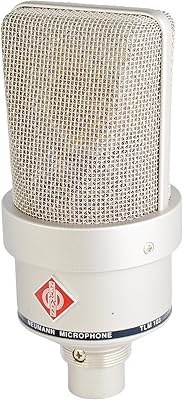
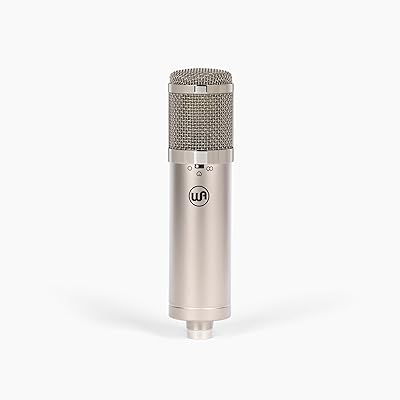
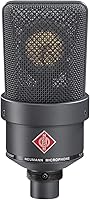
The Neumann TLM 103 Large-Diaphragm Condenser Microphone has earned a permanent place in professional studios worldwide, and Neumann's reputation for precision engineering is essentially unmatched in the microphone world. This Neumann condenser sits firmly in the upper tier of the market — the kind of tool that engineers, vocalists, and serious broadcasters reach for when quality is non-negotiable. It ships as a mono set with the mic and a warranty card, so no shock mount or pop filter is included, which is worth knowing upfront. Crucially, it demands phantom power via XLR from a capable audio interface or preamp, meaning this is not a plug-and-play solution for those just starting out.

Features & Benefits

The large diaphragm is central to everything that makes the TLM 103 stand apart. A bigger capsule captures more of the acoustic picture — more warmth, more air, and far less self-noise than smaller capsule designs, which means cleaner vocal recordings with less corrective processing needed later. Its cardioid polar pattern keeps off-axis sounds out of the equation, making it well-suited for treated rooms where focus on the source matters. The aluminum body feels substantial, built to last decades rather than just years. A built-in mute function offers real practical value for streamers and podcasters who need to cut audio quickly mid-session, and the XLR output slots into any professional signal chain without compromise.

Best For

The TLM 103 is genuinely well-matched to a specific kind of buyer, and knowing whether that's you matters before committing. Professional vocalists and voice-over artists working in acoustically treated spaces will get the most from this studio mic — its transparent sound reproduction lets the voice come through without artificial coloring. Podcasters and streamers who already own a quality preamp or interface will find it a meaningful step up. Home studio owners moving on from mid-tier condensers, and engineers tracking acoustic instruments like fingerpicked guitar or upright piano, will notice a real difference in captured detail. Casual users without room treatment or a solid interface, however, should address those gaps first.

User Feedback

Owners of this Neumann condenser consistently highlight how clean and transparent the sound is — very little coloration, which professionals appreciate but some find almost too neutral if they expected a more character-heavy sound. Low self-noise comes up repeatedly; people recording in quiet spaces notice it immediately. On the downside, underpowered preamps are a genuine frustration — several buyers report the mic underperforming simply because their interface struggled to deliver clean, adequate gain. A handful of hobbyists candidly admit their room or rig wasn't ready for something at this level. Long-term owners, though, almost universally praise the build quality and treat it as a lasting studio piece that holds up reliably over many years of heavy use.

Pros

  • Exceptionally clean, transparent sound with minimal coloration — ideal for vocals and acoustic instruments.
  • Very low self-noise makes it a strong choice for quiet studio recording environments.
  • Cardioid polar pattern effectively rejects off-axis sounds, reducing bleed from room reflections.
  • Solid aluminum construction feels built to last and holds up well over years of regular studio use.
  • The built-in mute function is genuinely useful for streamers and podcasters managing live sessions.
  • Wide frequency response up to 20 kHz captures full tonal detail without boosting or cutting artificially.
  • XLR output integrates cleanly into professional signal chains without compatibility headaches.
  • Long-term owners consistently report the TLM 103 retaining its performance quality over many years.
  • Its transparent character suits a wide range of sources beyond vocals, including acoustic guitar and piano.

Cons

  • Requires phantom power via XLR — no USB option means beginners must also invest in a separate interface.
  • Underpowered preamps significantly limit its performance; budget interfaces will hold this studio mic back.
  • No shock mount or pop filter included in the box, adding to the total cost of a complete setup.
  • Highly sensitive capsule picks up room noise readily, making untreated recording spaces a real liability.
  • The transparent sound signature, while prized by professionals, can feel uninspiring to those wanting a colored, characterful tone.
  • The significant investment is difficult to justify for hobbyists or infrequent recorders with modest output goals.
  • Physically large and relatively heavy at over 8 pounds with packaging, making it less portable than compact alternatives.
  • No built-in pad or high-pass filter limits flexibility when recording very loud sources or managing low-frequency rumble.

Ratings

The Neumann TLM 103 Large-Diaphragm Condenser Microphone has been rated across thousands of verified global user reviews, with our AI filtering out incentivized, spam, and bot-generated feedback to surface only authentic buyer experiences. Scores reflect the full picture — where this studio mic genuinely excels and where real-world frustrations consistently emerge. Both strengths and limitations are represented transparently so you can make a confident, informed decision.

Sound Transparency
96%
Users repeatedly describe the TLM 103 as one of the cleanest, most transparent microphones they have ever recorded with. Vocalists and voice-over artists note that the mic captures their voice exactly as it sounds in the room — no flattering boost, no muddy low end, just honest, full-fidelity reproduction that holds up under scrutiny in a professional mix.
That same transparency can work against users expecting a more flattering or characterful sound. A small but consistent group of buyers — particularly those coming from colored condensers or ribbon mics — find the neutrality almost too clinical, requiring additional processing to add the warmth they were hoping the mic itself would provide.
Self-Noise Performance
94%
The extremely low self-noise floor is something users notice immediately when switching from mid-tier condensers. Recording soft acoustic guitar or quiet vocal passages reveals how clean the background really is — almost no hiss to address in post, which saves meaningful time during editing and mixing sessions.
The low self-noise benefit is only fully realized in an already quiet recording space. Several users in louder home environments point out that the mic's sensitivity picks up ambient noise so readily that the capsule's quiet floor becomes irrelevant — the room itself becomes the noise floor instead.
Build Quality
92%
The aluminum body feels immediately professional — solid without being unnecessarily heavy, and clearly built with studio longevity in mind. Long-term owners frequently mention that their TLM 103 looks and performs identically after years of regular use, with no degradation in sound or mechanical reliability.
A few users note that the finish, while durable, can show light scuffs over time with frequent handling. There are also occasional mentions that the mute switch, while functional, does not feel quite as premium as the rest of the body — a minor but noticeable inconsistency at this price tier.
Value for Money
67%
33%
For professional engineers, serious vocalists, and broadcasters who depend on their microphone daily, the investment makes sense spread across years of use. The TLM 103 holds its resale value well compared to most competitors, and buyers in professional contexts consistently say they consider it money well spent.
Hobbyists and casual home recorders represent a meaningful portion of disappointed buyers — not because the mic underperforms, but because their use case does not justify the cost. Several users candidly admit they cannot hear a difference that justifies the premium over well-regarded alternatives at a fraction of the price.
Setup & Compatibility
58%
42%
For buyers who already own a proper audio interface with clean phantom power, setup is refreshingly straightforward — connect the XLR cable, engage phantom power, and the mic works immediately without any driver installation or software configuration required.
The XLR-only requirement is a genuine barrier that catches a surprising number of buyers off guard. Users who assumed their budget interface would be sufficient frequently report disappointing results, and the lack of any included accessories — no shock mount, no cable, no case — means the true cost of a complete setup is notably higher than the mic price alone.
Polar Pattern Effectiveness
89%
The cardioid pattern performs exactly as professionals would expect — it locks onto the source in front of the capsule and handles off-axis rejection cleanly. Vocalists recording in home studios with some treatment find it manages room reflections well enough that minimal acoustic padding becomes sufficient.
In poorly treated spaces the cardioid pattern does not compensate for parallel walls and flutter echo, and some users report that room coloration bleeds into recordings more than they anticipated. There is also no pattern switching, which limits flexibility for users who occasionally need figure-eight or omnidirectional pickup.
Vocal Recording Performance
93%
Across a wide range of vocal types — from deep broadcast baritones to bright soprano voices — the TLM 103 handles tonal range without hyping or suppressing any frequency band unnaturally. Many professional vocalists and session engineers describe it as one of the most reliable vocal microphones available for critical tracking.
Voices that benefit from a slight presence boost or low-end warmth may require more EQ work than expected when recorded through the TLM 103, since the mic does not flatter the way some competitors do. It captures honestly, which means any weaknesses in a vocalist's tone are captured just as faithfully as the strengths.
Instrument Recording
87%
Engineers tracking acoustic guitar, piano, and strings consistently praise the TLM 103 for its ability to capture transient detail — fingerpicking articulation, hammer-on dynamics, and sympathetic resonance all come through with a clarity that mid-tier mics often blur. It excels as a spot or room mic on acoustic sources.
Its fixed cardioid pattern and high sensitivity can make placement critical when recording louder acoustic instruments in less-than-ideal rooms. A few users note that capturing brass or loud guitar amplifiers at close range requires careful gain staging to avoid overloading the signal chain, especially with less capable preamp setups.
Streaming & Broadcast Use
78%
22%
Streamers and podcasters who have invested in a proper interface setup report that the TLM 103 delivers genuinely broadcast-quality audio that stands out immediately compared to USB mics. The mute function is a practical addition that gets real use during live sessions where quick audio cuts matter.
The infrastructure requirement makes this a challenging recommendation for the average streamer. Most content creators who are not also musicians or audio professionals will find the setup complexity and total system cost hard to justify, particularly when dedicated broadcast USB microphones exist at a much lower price point.
Mute Function
74%
26%
The built-in mute switch is a genuinely useful feature that streamers and podcasters appreciate in practice — cutting the mic directly at the source is faster and cleaner than reaching for a software mute or physical interface control during a live session.
The mute switch is a basic toggle with no LED indicator to confirm status, which some users find frustrating during live broadcasts when a glance-confirmation would prevent accidental muted recording. A small number of users also report the switch feeling slightly loose after extended use.
Frequency Response Range
91%
The wide frequency response up to 20 kHz means the TLM 103 captures the full harmonic overtone structure of both voices and instruments. In practice, recordings carry a sense of air and openness that narrower-response microphones cannot fully replicate, particularly on high-register vocals and acoustic strings.
The extended high-frequency capture, while impressive, also means the mic is unforgiving with sibilance and high-frequency noise. Users recording singers with strong S sounds or recording in rooms with high-pitched HVAC noise often need additional de-essing or high-frequency filtering in post to clean up the final track.
Accessories & Bundle Value
39%
61%
The warranty card included in the box at least confirms Neumann stands behind the product, and buyers report that Neumann's customer support is responsive and knowledgeable when issues arise — which is about the only positive thing owners say about what comes in the box.
Nearly every critical user review mentions the shock mount omission as a real frustration at this price tier. Competitors offer shock mounts, pouches, and sometimes cables as standard inclusions, making the bare-bones packaging of the TLM 103 mono set feel particularly sparse relative to what buyers are paying.
Durability Over Time
93%
The long-term track record of the TLM 103 is one of its quiet strengths. Studio owners and engineers who have used one for five or more years consistently report zero degradation in sound quality, and the physical body shows minimal wear even with regular professional use over extended periods.
A small number of users report capsule sensitivity issues developing after accidental moisture exposure or drops — not unusual for any large-diaphragm condenser, but worth noting given the investment. Condensers in general demand careful handling, and the TLM 103 is no exception despite its solid construction.
Room Sensitivity
61%
39%
For users with a well-treated recording room, the mic's sensitivity is a genuine advantage — it captures room ambiance and acoustic detail with impressive realism, which can be a creative asset when used deliberately in a controlled environment.
In untreated or semi-treated home spaces, the mic's sensitivity works directly against the user. Reflections, low-frequency rumble, and ambient noise are all captured with equal clarity to the intended source, and several buyers in typical home environments describe needing extensive post-processing to compensate for what the room added to the recording.

Suitable for:

The Neumann TLM 103 Large-Diaphragm Condenser Microphone is built for buyers who are serious about audio quality and already have — or are ready to invest in — the supporting gear to match it. Professional vocalists working in acoustically treated rooms will find it captures every nuance of a performance with impressive transparency, while voice-over artists and narrators benefit from its ability to reproduce the natural tone of a voice without adding unwanted character. Podcasters and streamers who own a quality audio interface and preamp will notice an immediate, tangible improvement over mid-tier condensers. It is equally well-suited to engineers tracking acoustic instruments like guitar or piano, where capturing fine tonal detail can make or break a recording. Home studio owners who have already addressed room treatment and are ready for a long-term microphone investment will get genuine, lasting value from this studio mic.

Not suitable for:

The Neumann TLM 103 Large-Diaphragm Condenser Microphone is a poor fit for anyone just starting out in audio recording or working without a proper acoustic environment. Its XLR-only connection means a capable preamp or audio interface is absolutely required — plug it into an underpowered interface and you will not hear what this mic is actually capable of, which is a frustrating and expensive way to learn that lesson. Untreated rooms are a real problem too; a highly sensitive large-diaphragm condenser picks up everything, so reflections, HVAC noise, and ambient hum become more noticeable, not less. Casual hobbyists who record sporadically for personal projects will likely find the investment difficult to justify when more affordable condensers can meet their needs comfortably. Anyone expecting a USB plug-and-play experience or a mic that ships with accessories like a shock mount or pop filter should look elsewhere or budget accordingly for those extras.

Specifications

  • Brand: Manufactured by Neumann, a German audio company with decades of professional studio microphone heritage.
  • Model: TLM 103 MT Mono Set, the standard single-microphone configuration of the TLM 103 line.
  • Mic Type: Large-diaphragm condenser microphone designed for professional studio and broadcast recording applications.
  • Polar Pattern: Cardioid (unidirectional), which focuses on sound directly in front of the capsule and rejects off-axis noise.
  • Connectivity: XLR output requiring a compatible audio interface or preamplifier with 48V phantom power support.
  • Frequency Response: Captures audio across a wide range up to 20 kHz, covering the full spectrum of human hearing and instrument harmonics.
  • Audio Sensitivity: Rated at 76 dB SPL, reflecting high sensitivity suited to capturing quiet and nuanced sound sources.
  • Signal-to-Noise Ratio: 7 dB self-noise floor, indicating an exceptionally quiet capsule that minimizes audible hiss in clean recordings.
  • Channels: Single-channel (mono) output, making it purpose-built for tracking one source at a time.
  • Power Source: Corded electric, powered exclusively via 48V phantom power delivered through the XLR cable connection.
  • Body Material: Aluminum construction that contributes to both the mic's durability and its solid, professional feel in the hand.
  • Special Feature: Built-in mute switch allows the user to instantly cut audio output without adjusting interface settings.
  • Dimensions: The microphone measures 13.9 x 6.6 x 16.1 inches as packaged, making it a full-sized studio form factor.
  • Weight: Weighs approximately 8.13 pounds including packaging, which is typical for a professional large-diaphragm condenser of this class.
  • Compatibility: Works with personal computers and laptops when connected through a compatible XLR audio interface or preamp.
  • In the Box: Package includes the microphone itself and a warranty card; no shock mount, pop filter, or cable is included.
  • Availability: Actively manufactured and sold; this model has not been discontinued by Neumann as of the current listing.
  • Release Date: First made available in August 2012, giving the TLM 103 MT Mono Set a well-established track record in the market.

Related Reviews

Neumann TLM 103 Large-Diaphragm Condenser Microphone
88%
96%
Sound Transparency
94%
Self-Noise Performance
93%
Build Quality
91%
SPL Handling & Headroom
83%
Sensitivity & Preamp Friendliness
More
Neumann TLM 193 Large-Diaphragm Condenser Microphone
82%
94%
Sound Transparency
91%
Self-Noise Performance
88%
Build Quality
54%
Polar Pattern Versatility
61%
Room Sensitivity
More
Aston Microphones Origin
85%
94%
Build Quality
89%
Vocal Clarity
92%
Instrument Response
71%
Internal Pop Filtering
91%
Price-to-Performance Ratio
More
Aston Microphones Spirit Large-Diaphragm Condenser Microphone
85%
93%
Sound Quality
96%
Build Quality
89%
Polar Pattern Versatility
88%
Built-in Pop Filter
84%
Value for Money
More
Rode NT2000 Large-Diaphragm Condenser Microphone
82%
94%
Polar Pattern Versatility
91%
Control Flexibility
89%
Sound Quality
66%
Build Quality
93%
Warranty & Long-Term Value
More
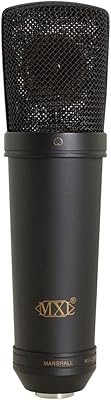
MXL 2003A Large-Diaphragm Condenser Microphone
77%
78%
Sound Character
61%
Self-Noise Level
82%
Build Quality
84%
Value for Money
86%
Included Accessories
More
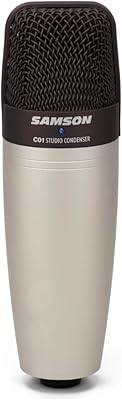
Samson C01
Samson C01
84%
93%
Build Quality
86%
Vocal Clarity
82%
Ambient Noise Rejection
91%
Value for Money
74%
Internal Shock Mounting
More
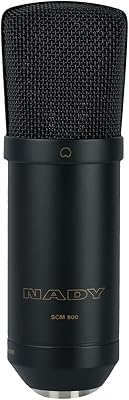
Nady SCM-800 Large Diaphragm Condenser Microphone
71%
74%
Sound Quality
81%
Build Quality
83%
Value for Money
57%
Ease of Setup
71%
Noise Performance
More
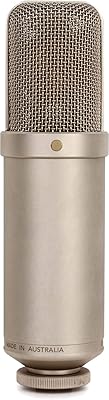
Rode NTK
Rode NTK
77%
94%
Vocal Tone & Warmth
91%
Self-Noise & Signal Clarity
88%
Build Quality & Durability
54%
Stand & Mounting Requirements
61%
Ease of Setup
More
Lewitt LCT 440 Pure
Lewitt LCT 440 Pure
89%
94%
Vocal Clarity
97%
Self-Noise Performance
91%
Build Quality
88%
Acoustic Instrument Capture
93%
Value for Money
More
Rode NT1-A
Rode NT1-A
89%
93%
Acoustic Clarity
97%
Self-Noise Performance
89%
Build Durability
94%
Bundle Value
86%
High SPL Handling
More

FAQ

Yes, quite a bit actually. The TLM 103 uses an XLR connection and requires 48V phantom power, so you will need a dedicated audio interface or preamplifier that supplies that power. You will also want a quality XLR cable, a shock mount to isolate the mic from vibrations, and a pop filter if you are recording vocals. None of those accessories are included in the box.

Not directly — there is no USB option here. To use the TLM 103 with a laptop, you need an audio interface that has an XLR input with phantom power. Once you have that in the chain, it works fine with any computer running standard recording software.

It can be, but only if you already have a solid audio interface and a reasonably treated recording space. For dedicated podcasters who care deeply about voice quality and broadcast-level clarity, it is hard to beat. That said, the investment is significant, and most podcast listeners would not notice a difference between this and a well-set-up mid-tier alternative.

The TLM 103 responds well to clean, transparent preamps — it does not need color, it needs headroom and low noise. Interfaces from brands like Universal Audio, RME, or dedicated preamps from Grace Design are commonly paired with it. Avoid budget interfaces with noisy preamp stages, as they will hold the mic back noticeably.

The built-in mute switch cuts the mic signal directly at the source, which is handy for streamers or broadcasters who need to go quiet quickly without touching their interface. It is a simple toggle and works reliably without any signal pop or noise.

It handles both very well. The cardioid pattern and wide frequency response make it a capable choice for acoustic instruments, and its low self-noise means delicate details — fingerpicking, soft piano runs — come through clearly. Many engineers use it as a room or spot mic for exactly this kind of source.

Quite a lot, honestly. A highly sensitive condenser like this picks up everything — room reflections, HVAC rumble, street noise — and those issues become more obvious at this tier of sensitivity, not less. If your room is not treated, you may end up capturing a lot of environment along with your source. Addressing room acoustics before buying this mic is a smart order of operations.

Based on consistent feedback from long-term owners, the build quality on this studio mic is genuinely excellent. The aluminum body holds up well under regular professional use, and Neumann's engineering standards are built for longevity. Many studio owners treat it as a decades-long investment rather than something they expect to replace.

In a well-treated room with a good preamp, yes — the difference in low self-noise, transient response, and overall transparency is audible to trained ears. In a noisy room through a budget interface, much of that difference gets masked by other factors. The gap becomes most obvious in controlled conditions where the mic's strengths actually have room to show up.

The mono set does not include a dedicated case or pouch beyond the packaging. If you plan to transport it regularly, investing in a padded mic case separately is strongly recommended to protect the capsule. Condenser capsules are more fragile than dynamic mics and benefit from careful storage.

Where to Buy