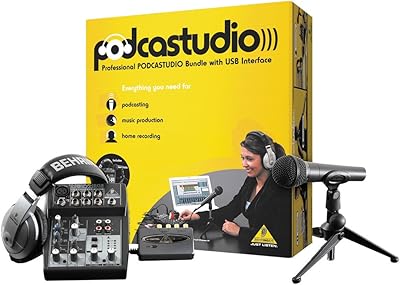
Overview

The Behringer XENYX X1204USB 12-Channel USB Mixer has been quietly holding its ground in the market since the mid-2000s — which tells you something. Plenty of gear comes and goes, but this Behringer mixer keeps showing up in home studios, rehearsal rooms, and modest event spaces because it solves a real problem affordably. At its core, you get 12 inputs routed through a 2-bus stereo architecture, meaning you can connect a handful of mics, line-level sources, and instruments simultaneously without juggling multiple devices. It handles mixing, compression, EQ, basic effects, and USB recording all in one box. That's genuinely useful. Just don't walk in expecting broadcast-grade performance — this is a capable workhorse, not a high-end console.
Features & Benefits

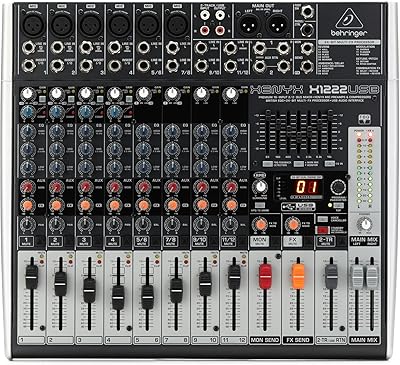
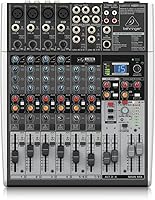
The four XENYX mic preamps are probably the most important thing to understand here. Each one supports phantom power, which means you can plug in condenser microphones — the type most podcasters and home recording enthusiasts prefer — without needing any additional gear. On four of the channels, a single-knob compressor handles dynamic control automatically; if you've ever struggled with vocals jumping all over the fader, this is the feature that quietly fixes that. The British-style 3-band EQ adds warmth rather than clinical precision, which suits most voice and instrument recording well. The built-in USB interface sends a stereo mix straight to your DAW, and bundled software gives beginners something to start recording with immediately.

Best For

The X1204USB hits its stride with a specific kind of buyer. Podcasters and streamers who need more than one or two mic inputs — think interview setups or roundtable discussions — will find the multiple XLR inputs genuinely practical. Small bands using it for rehearsal or low-key live performance benefit from the compact footprint and straightforward layout. Home studio beginners especially stand to gain here: having a mixer and audio interface in a single unit cuts both cost and desk clutter. Community spaces, houses of worship, and small event venues running on tight AV budgets also find it a reliable fit. It's not for professional touring rigs, but for everyday mixing needs, it covers a lot of ground.

User Feedback

Owners consistently highlight how easy to set up this board is, especially those coming from no prior mixing experience. The preamp quality draws genuine praise — most agree the clarity outpaces what cheaper units in this category offer. The onboard compressors also earn goodwill for making vocals sound controlled without any technical knowledge required. On the downside, USB driver compatibility is a real concern: some Windows and macOS users have reported connectivity hiccups, and it's worth checking for driver updates before your first session. The composite plastic chassis draws occasional criticism from buyers expecting something more solid, though long-term owners tend to report years of trouble-free use, suggesting the build is more durable than it initially appears.

Pros

  • Four phantom-powered mic preamps let you connect condenser microphones without any additional gear or adapters.
  • The built-in USB audio interface means beginners can skip buying a separate recording device entirely.
  • One-knob channel compressors make vocal dynamics easy to manage, even with zero engineering experience.
  • The X1204USB has stayed in production since the mid-2000s, a rare signal of genuine market durability.
  • Bundled DAW software and plug-ins give new users a complete starter recording setup straight out of the box.
  • The British-style EQ adds a warm, musical character that flatters vocals and acoustic instruments naturally.
  • At under six pounds with a compact footprint, it fits comfortably on a small desk or tabletop.
  • Long-term owners consistently report years of daily use without major reliability issues despite the plastic construction.

Cons

  • USB driver compatibility with newer Windows and macOS versions has caused real connection problems for a noticeable number of users.
  • The composite plastic chassis feels noticeably less solid than metal-bodied mixers at a comparable price point.
  • USB recording outputs only a stereo mix — no individual channel stems available for multi-track post-session editing.
  • The onboard FX processor is limited enough that most users will eventually reach for external effects hardware or plugins.
  • Bundled software is a genuine entry point but will feel restrictive quickly for anyone serious about music production.
  • Faders and knobs feel functional rather than premium, with a resistance quality that pricier boards clearly improve on.
  • Gain staging can still trip up complete beginners, despite the simplified one-knob compressor controls on each channel.
  • The 2-bus stereo output offers limited routing flexibility for users who need more complex monitor or cue mixes.

Ratings

The scores on this page were generated by an AI system after analyzing thousands of verified global user reviews for the Behringer XENYX X1204USB 12-Channel USB Mixer, with bot-generated, incentivized, and suspicious feedback actively filtered out before any scoring was applied. Every category below reflects real-world buyer experiences — the genuine strengths that keep this board popular alongside the frustrations that surface in daily and long-term use. Nothing has been adjusted to skew the results in a favorable direction.

Value for Money
83%
Buyers consistently note that combining a mixer, audio interface, compressors, effects, and bundled recording software in a single purchase removes the need to stack additional gear. For home studio starters and podcast hosts getting off the ground, the all-in-one proposition is genuinely hard to match at this price tier.
A portion of buyers feel the USB driver instability and plastic chassis quality slightly undercut the perceived value, particularly when comparable metal-bodied units exist at a modest price premium. For users who already own dedicated software and a separate interface, the bundle carries less practical weight in the purchasing decision.
Preamp Quality
78%
22%
The XENYX mic preamps earn consistent praise from users who previously owned entry-level interfaces, with many noting a clear step up in vocal clarity and low-noise performance. For podcasters and home recording artists, the phantom-powered channels handle condenser mics cleanly without the harsh artifacts common on sub-budget alternatives.
Engineers stepping down from professional-grade preamps will notice the noise floor and headroom limitations, particularly when recording in quiet acoustic environments with sensitive microphones. High-gain situations with low-output ribbon mics expose more background hiss than buyers accustomed to boutique preamp performance would accept.
Build Quality
62%
38%
Despite the composite plastic construction, many long-term owners report the unit holds up well under consistent desk use, with knobs and faders remaining stable and functional after years of daily operation. The internal electronics appear more durable than the external housing suggests at first touch.
The plastic chassis is a recurring frustration for buyers who compare it to metal-bodied mixers in the same category, with some describing a hollow feel to the housing that erodes initial confidence. Any drop or rough handling risks damage to the enclosure and the exposed connector area around the XLR inputs.
Ease of Use
86%
First-time mixer owners frequently mention being up and running within an hour, with the channel layout and labeling clear enough to follow without consulting a manual. The one-knob compressors in particular flatten the learning curve on what is normally one of the more technically intimidating aspects of live and studio mixing.
Total beginners can still feel overwhelmed when managing multiple inputs, monitor mixes, and effects routing simultaneously for the first time. The absence of dedicated per-channel mute buttons means users must manually pull faders to silence a channel during live sessions, which can feel clumsy in fast-moving audio environments.
USB Connectivity
58%
42%
When working without driver friction, the built-in USB stereo interface is a clean, convenient solution — connect a cable, select the device in your DAW, and record a polished mix without any additional routing hardware. Latency performance is acceptable for headphone monitoring during standard recording sessions.
Driver compatibility with newer Windows and macOS versions is a documented and persistent problem, with a meaningful portion of users experiencing connectivity issues after operating system updates. Several buyers report spending hours troubleshooting before achieving consistent operation, making this the board's most significant real-world weakness for working musicians and creators.
Sound Quality
76%
24%
The X1204USB delivers a warm, musical output that regularly surprises buyers coming from cheap USB sticks or consumer-grade gear, with clean headroom on vocals and acoustic instruments when levels are properly managed. For rehearsal recordings and podcast masters, the overall mix quality holds up well against the expectations of its intended audience.
The 2-bus stereo output captures everything in a blended mix, limiting sonic flexibility for any meaningful post-production work. Users seeking a transparent, flat reference signal will find the British EQ coloration and stereo summing more opinionated than ideal for analytical listening or work that demands a strictly neutral signal chain.
EQ Performance
74%
26%
The British-style 3-band EQ adds a characteristic warmth to vocals and guitars that many users describe as immediately pleasing without requiring deep knowledge of frequency management. For podcasters and live performance monitoring, it helps each channel sit naturally in the mix without producing harsh or clinical-sounding results.
The 3-band fixed-frequency design offers no mid-sweep or parametric control, limiting its usefulness for precise tonal corrections such as removing a specific room resonance or taming a nasal microphone character. Users who need surgical EQ work must rely entirely on software plugins after recording, which undercuts the all-in-one convenience the board otherwise offers.
Onboard Compression
81%
19%
The one-knob compressors are among the most frequently praised features in user reviews, with many noting how much more polished and controlled vocals sound during live streaming and podcast recording with minimal adjustment. Even users who had never touched a compressor before found them intuitive and immediately effective on the first session.
The simplified design trades fine-grained control for accessibility — attack, release, and ratio values cannot be set independently, which experienced producers will find limiting for precise instrument tracking. Applying compression to instruments like drums or bass can produce an over-compressed, unnatural result when the single knob is pushed past the midpoint.
Effects Processor
67%
33%
Having built-in effects processing at this price tier is a genuine convenience for live performers who want to add light reverb to a vocal channel or a subtle delay to a guitar without connecting external hardware. The 24-bit processing quality keeps effects from sounding thin or digital-harsh in most light-use scenarios.
The effect selection and depth of control are limited enough that most users treat the onboard FX as a temporary convenience rather than a long-term solution. There is no per-channel effects routing, and the overall palette quickly feels restrictive for anyone who spends meaningful time crafting sounds or layering textures creatively.
Software Bundle
71%
29%
For someone building their first home recording setup, the bundled DAW and plug-in package means they can begin recording and editing content without needing to research separate software purchases on day one. Users new to DAW environments typically find the included application sufficient for basic tracking and simple multitrack editing work.
Experienced producers almost universally skip the bundled software in favor of their preferred professional DAWs, making the bundle irrelevant for a meaningful portion of buyers. The included plug-ins, while numerous in count, are not at a quality level that competes with dedicated tools, and the DAW itself lacks the depth needed for serious production work.
Channel Flexibility
73%
27%
With 12 total inputs spanning four XLR mic channels and multiple 1/4″ TRS line inputs, this board handles the simultaneous connection needs of most small-scale setups without complicated routing. Podcasters, small bands, and AV coordinators all find enough flexibility to build a functional signal chain for their specific configuration.
The four-mic-input ceiling becomes a real constraint for users needing five or more microphones simultaneously, such as larger bands or multi-guest shows running six voices. The 2-bus stereo architecture also limits how granularly signals can be routed or isolated for separate monitoring feeds or independent effects sends per channel.
Long-term Durability
77%
23%
A notable number of long-term owners report daily use spanning three to five or more years without hardware failure, which speaks well of the internal electronics despite the plastic outer shell. Fader caps and knobs remain stable and responsive over time in the majority of multi-year user accounts reviewed.
The composite plastic casing shows cosmetic wear — scuffs and occasional stress cracks near high-contact areas — more readily than metal-bodied alternatives. Users who transport the unit regularly report a noticeably shorter lifespan for the chassis and connectors compared to those who keep it permanently in one fixed location.
Setup & Installation
84%
Most users report a smooth initial setup experience, with the unit recognized quickly as an audio device on both Mac and PC in standard configurations. The physical layout of inputs, send controls, and master outputs is logical enough that a first-time user can trace signal flow intuitively within a few minutes of unboxing.
The USB driver installation step introduces the most friction in the setup process, particularly for users on recently updated operating systems where the included driver may be out of date. A consistent subset of buyers spend their first session troubleshooting connectivity rather than recording — a frustrating onboarding experience for a product positioned at beginners.
Portability
69%
31%
At 5.75 pounds with a compact footprint, this Behringer mixer is easy to reposition within a room or carry between nearby locations such as a home office and a dedicated recording space. The modest dimensions mean it does not dominate a small desk or studio table even when connected to multiple sources simultaneously.
The composite plastic body is not designed to withstand the pressure and impact of a gear bag or carry case, making regular transport between venues a genuine risk to the unit's structural integrity. No carrying case or protective accessories are included, leaving mobile users to source their own solutions independently.

Suitable for:

The Behringer XENYX X1204USB 12-Channel USB Mixer is a strong fit for anyone stepping into audio production who needs more connectivity than a simple two-channel interface can offer. Podcasters running multi-guest shows, streamers managing multiple audio sources, and content creators hosting panel discussions will all find the four phantom-powered XLR inputs and easy level controls immediately useful. Home studio beginners benefit especially from the built-in USB audio interface, which removes the need to budget for a separate recording device and lets them get audio into a DAW on day one. Small bands using it for rehearsal monitoring, or musicians wanting a simple way to blend instruments and record rough demos, will find the layout intuitive enough to learn without a manual. Community organizations — churches, school AV clubs, or small event venues — running on modest equipment budgets will also get reliable, repeatable results from this board without needing a trained sound engineer on site.
Not suitable for:

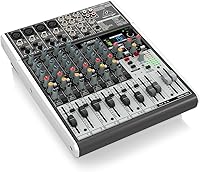
The Behringer XENYX X1204USB 12-Channel USB Mixer is not the right call for anyone who needs a professional-grade, low-noise signal chain for commercial recording, broadcast production, or touring live sound. The composite plastic body is a real consideration for anyone planning to move gear frequently — it is designed for a permanent desk setup, not repeated transport or rough handling. Anyone expecting multi-track USB recording will also be disappointed: the interface only transmits a stereo mix to your computer, not individual channel stems, which limits post-session editing flexibility significantly. Users on recent Windows or macOS versions should do their driver research before buying, as connectivity issues with newer operating systems have been a consistent complaint in user reviews. And if you are an experienced engineer accustomed to precise, surgical EQ control, the warm British-style tone shaping on offer here may feel too broad and musical for technical work.
Specifications

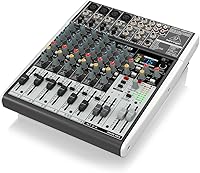
  • Input Channels: The mixer provides 12 total input channels accommodating a combination of microphone and line-level sources simultaneously.
  • Output Bus: Audio is routed through a 2-bus stereo architecture, delivering a left and right main output for speakers or recording.
  • Mic Preamps: Four XENYX microphone preamp channels include 48V phantom power, enabling compatibility with condenser microphones.
  • Compressors: Four input channels each include a dedicated one-knob compressor for simplified dynamic control without manual threshold or ratio adjustment.
  • EQ Type: Every channel features a neo-classic British-style 3-band equalizer designed for warm, musical tonal shaping rather than surgical correction.
  • Effects Processor: A built-in 24-bit multi-FX processor delivers reverb, delay, chorus, and modulation effects usable during live performance or recording.
  • USB Interface: An integrated stereo USB audio interface transmits a two-channel mixed signal directly to a Mac or PC for DAW recording.
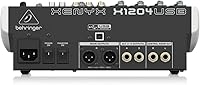
  • Connectors: Input connectivity includes 4 x XLR microphone inputs and 6 x 1/4″ TRS line-level inputs for instruments and other sources.
  • Body Material: The chassis is constructed from composite plastic, keeping overall weight low and suited to permanent desktop or tabletop placement.
  • Dimensions: The unit measures 12.91 x 10.63 x 3.82 inches, making it compact enough for small studio desks and modest AV setups.
  • Weight: At 5.75 pounds, the mixer is light enough to reposition easily on a desk but is not designed for regular transport.
  • Power Source: The unit operates on corded electric power rated at 240V AC and does not support battery or USB bus power operation.
  • Bundled Software: Purchase includes a DAW application along with approximately 150 instrument and effects plug-ins for use with a connected computer.
  • USB Driver: A low-latency USB driver is included to reduce monitoring delay when recording through a connected Windows or Mac computer.
  • Color: The unit is available in a single color option: black with grey channel labeling for clear visual contrast during use.

Related Reviews
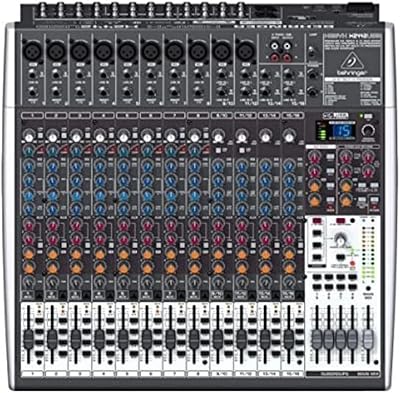
Behringer XENYX X2442USB
80%
91%
Value & Channel Density
84%
Mic Preamps & Headroom
68%
USB Recording Functionality
76%
Routing & Sub-group Matrix
82%
Build Quality & Durability
More
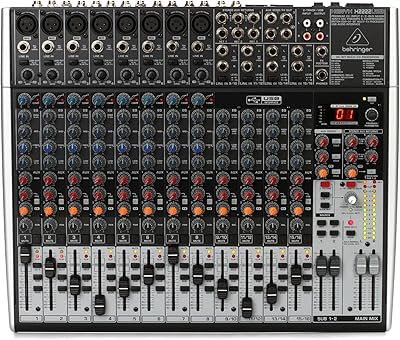
Behringer Xenyx X2222USB
83%
87%
Mic Preamp Performance
91%
One-Knob Compression
93%
Input Flexibility
84%
EQ Musicality
79%
FX Processor Utility
More
Behringer XENYX X1222USB
78%
93%
Value for Money
88%
Ease of Setup
74%
Preamp Performance
82%
Onboard Compression
68%
Build Quality
More
Behringer XENYX 502 Analog Mixer
73%
91%
Value for Money
78%
Mic Preamp Quality
93%
Ease of Setup
11%
Phantom Power
74%
Build & Durability
More
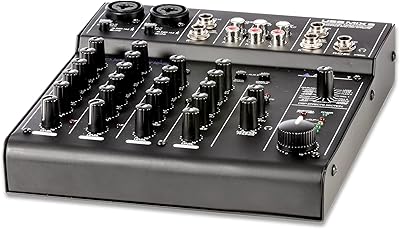
ART USBMix4 4-Channel USB Audio Mixer
74%
93%
Ease of Setup
78%
Value for Money
71%
Audio Signal Quality
67%
Build Quality
58%
Phantom Power Implementation
More
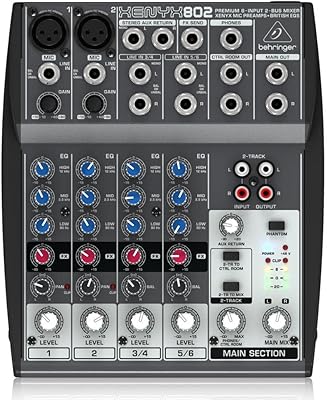
ART USBMix6 Six-Channel USB Audio Mixer
73%
93%
Ease of Setup
71%
USB Recording Quality
67%
Preamp Performance
62%
Build Quality
78%
Value for Money
More
Behringer Xenyx 802 Analog Mixer
75%
86%
Mic Preamp Quality
91%
Value for Money
58%
Build Quality
93%
Ease of Use
54%
Headphone Output
More
HUNIAN A366 12-Outlet Power Strip
80%
93%
Outlet Spacing
91%
Flat Plug Design
58%
USB Charging Speed
78%
Build Quality
81%
Surge Protection
More
Behringer PodcastStudio USB Podcasting Bundle
66%
74%
Value for Money
83%
Ease of Setup
67%
Microphone Quality
58%
Build Quality
72%
Audio Interface
More
ZealSound KM8
ZealSound KM8
76%
88%
Build Quality
74%
Audio Clarity
83%
iPhone & iPad Compatibility
92%
Ease of Setup
67%
Noise Rejection
More

FAQ

Yes — four of the input channels provide 48V phantom power, which condenser mics require to operate. Just enable phantom power on the relevant channel before plugging in your mic, and it will work without any additional gear.

That is one of the main practical advantages of this board. The built-in USB interface sends your stereo mix directly into any DAW on Mac or PC without extra hardware. The one thing to know upfront is that it records a stereo mix rather than individual channel stems, so post-session track isolation is not possible through USB alone.

The X1204USB accommodates up to four microphones simultaneously through its four XLR inputs. The remaining inputs are 1/4″ TRS line-level connections, which are better suited to instruments, keyboards, or other line sources rather than mics.

It's a legitimate concern that comes up consistently in long-term user reviews, so it's worth addressing directly. Some users on newer versions of Windows and macOS have experienced connectivity hiccups after OS updates. Downloading the latest driver from Behringer's official support page before your first session, and checking their forum for your specific OS version, is strongly recommended — do not assume the included driver disc will be current.

It is genuinely well-suited to beginners. The channel layout is logical, the one-knob compressors simplify the most intimidating part of gain staging, and getting a basic mix up and running does not require prior experience. Most first-time users report being able to set up a working signal chain within an hour.

The 24-bit multi-FX processor works in both contexts. You can blend reverb, delay, or modulation effects into a live mix just as easily as a recorded one, using the FX send and return controls to dial in the wet-to-dry balance.

The composite plastic chassis is really designed for stationary desk or tabletop use rather than regular transport. Long-term owners who keep it in one place report solid reliability over years of daily use. If your gear gets moved in and out of bags or cases frequently, a metal-chassis mixer would be a more durable investment.

Behringer includes a full DAW application and around 150 instrument and effects plug-ins in the package. For someone just starting out, it provides everything needed to begin recording right away. Experienced producers will most likely stick with their existing software, but it is a practical bonus rather than just a marketing claim.

It is compatible with both platforms. On most systems the USB interface is class-compliant and recognized automatically, though installing the included low-latency driver — particularly on Windows — is recommended for reliable, low-delay monitoring. Setup is generally straightforward: connect via USB, install the driver, select the mixer as your audio input in your DAW, and you are ready to record.

Yes, and this is one of the use cases it handles well. With four XLR inputs, you can seat up to four guests each on their own microphone, adjust individual channel levels independently, and feed the mixed stereo output directly into your recording software. For two- to four-person formats, it covers the workflow without requiring any advanced routing knowledge.