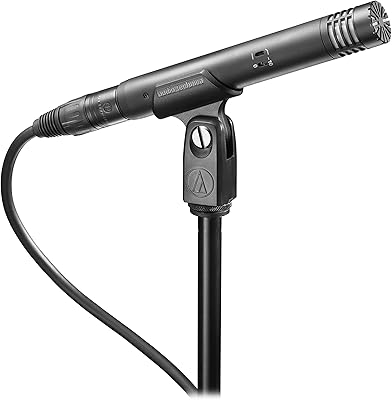
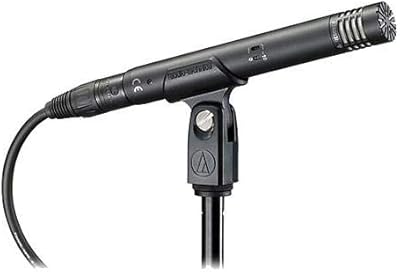
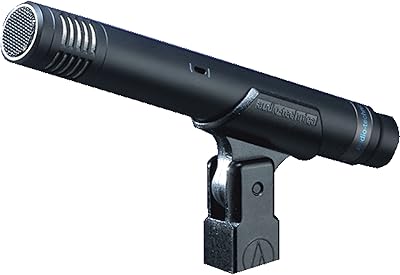
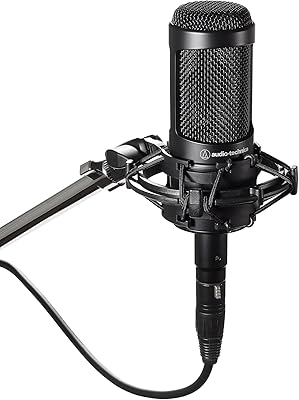
Audio-Technica AT4022 Omnidirectional Condenser Microphone
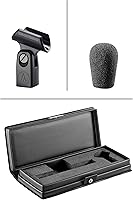
Audio-Technica AT4022 Omnidirectional Condenser Microphone — image 1

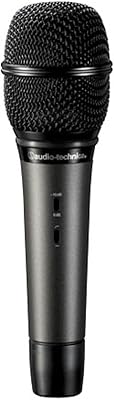
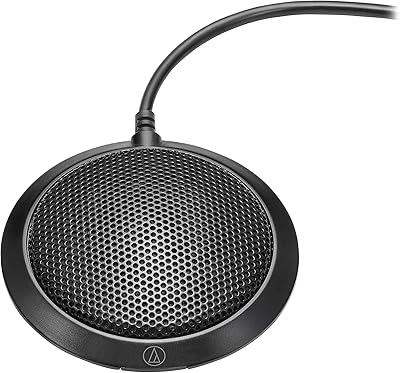
Audio-Technica AT4022 Omnidirectional Condenser Microphone — image 2
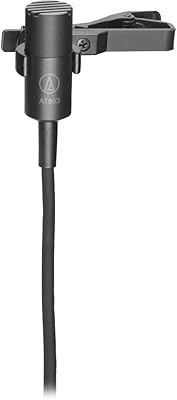
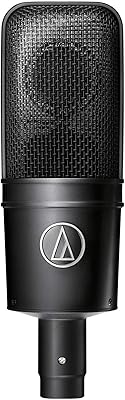
Audio-Technica AT4022 Omnidirectional Condenser Microphone — image 3
82%
18%

Overview

The Audio-Technica AT4022 Omnidirectional Condenser Microphone has been a steady presence in professional audio since 2004 — a run that says something real about its reliability. This isn't a mic that chases trends; it occupies a specific, well-defined niche in ambient, orchestral, field, and studio recording. The all-metal body and XLR-only connectivity place it firmly in prosumer-to-professional territory — you will need a proper interface or console with phantom power to run it. If you are after tight cardioid isolation, look elsewhere. But if capturing the natural character of a room or acoustic space is the goal, the AT4022 was built with exactly that in mind.

Features & Benefits

What sets this omnidirectional condenser apart starts with its polar pattern. Unlike cardioid mics that favor sound from one direction, an omnidirectional design picks up equally from all angles — essential for capturing choir depth, room acoustics, or outdoor ambience. A switchable high-pass filter at 80 Hz lets you roll off low-frequency rumble when the environment calls for it, while the onboard 10 dB pad handles louder sources without clipping. The frequency response stays flat and extended, meaning what goes in comes out accurately with no artificial coloring. Paired with a low self-noise floor and 200-ohm output impedance, this studio mic works cleanly with virtually any professional preamp in the chain.

Best For

This omnidirectional condenser finds its natural home in applications where capturing space is the point. Recording an orchestral ensemble, a grand piano in a live hall, or a choir benefits enormously from a mic that does not favor one spot over another. Field recording professionals — wildlife sound, nature documentary work, environmental audio — will appreciate the honest, uncolored pickup. In broadcast and film, where ambient tracks need to blend without calling attention to themselves, the AT4022 earns its keep. Engineers building stereo A-B pairs for classical sessions also frequently reach for this mic. One honest caveat: if your room sounds rough, this mic will capture that faithfully too.

User Feedback

The available buyer feedback is limited — around ten reviews — so treat the following as directional rather than definitive. That said, the pattern is consistent: owners highlight a naturally open sound that avoids pushing any frequency range forward, something they particularly value on piano and strings. Durability comes up repeatedly; this is not a mic that feels temporary. On the other side, a few users note the omnidirectional pattern demands a treated recording space — it will pick up HVAC hum, room reflections, and background noise without mercy. For those prepared to manage their environment, overall satisfaction is notably strong.

Pros

  • Flat, accurate frequency response captures instruments and environments without artificial coloring or hype.
  • Omnidirectional pattern excels at natural room ambience, making it ideal for orchestral and ensemble work.
  • Low self-noise floor keeps recordings clean, especially on quiet acoustic instruments.
  • The switchable 80 Hz high-pass filter adds real flexibility in noisy or unpredictable recording environments.
  • Onboard 10 dB pad handles louder sources cleanly without requiring external attenuation.
  • Solid all-metal build has held up reliably for users across years of consistent use.
  • 200-ohm output impedance pairs well with a wide range of professional preamps and interfaces.
  • Has remained a relevant, trusted tool in professional workflows for over two decades.
  • Buyers report particular satisfaction with piano and string instrument recordings.

Cons

  • Omnidirectional pattern offers zero off-axis rejection, making it unusable in noisy or untreated spaces.
  • XLR-only connectivity rules out USB interfaces and beginner-friendly plug-and-play setups entirely.
  • Requires phantom power, adding cost and complexity for anyone without an existing signal chain.
  • Very small review pool makes it difficult to assess long-term reliability across a broad range of users.
  • Not suited for solo vocal recording where source isolation and proximity effect are desirable.
  • The boundary-style form factor may not fit standard microphone clips or boom arms without adapters.
  • No carrying case or mount is included, which is a notable omission at this price tier.
  • Demands a well-treated room to perform at its best — revealing environments mercilessly.

Ratings

The scores below were generated by AI after analyzing verified user reviews from buyers worldwide, with spam, bot-submitted, and incentivized feedback actively filtered out. The Audio-Technica AT4022 Omnidirectional Condenser Microphone earned strong marks in areas that matter most to professional and prosumer audio engineers, while the analysis also surfaces the genuine trade-offs and limitations that real buyers have encountered. Both the standout strengths and the honest pain points are reflected transparently in each category.

Sound Accuracy
93%
Buyers working on classical sessions and acoustic instrument recordings consistently describe the sound as refreshingly honest — no pushed highs, no added warmth, just clean and neutral reproduction. Engineers who have used it on grand piano and string quartets note that the AT4022 captures the natural timbre of instruments without any audible coloration introduced by the mic itself.
That same neutrality means the mic will faithfully expose room imperfections, poor preamp noise floors, or any acoustic problems in the recording environment. Users expecting a flattering or forgiving sound character will find it uncompromising, which requires more care during session setup and space treatment.
Build Quality
89%
The all-metal housing feels immediately substantial and professional — several longtime users specifically mention that their unit has held up through years of regular studio and location use without any degradation in performance. It gives the impression of a tool built for decades of service rather than a product with a planned replacement cycle.
The boundary-style form factor is less universally accommodating than a standard cylindrical body, and some users report difficulty finding compatible stand mounts or clips without purchasing additional hardware. The included accessories are minimal, leaving buyers to source appropriate mounting solutions on their own.
Noise Floor
91%
The low self-noise specification is not just a spec-sheet number — users recording delicate acoustic sources like solo violin, harpsichord, or quiet room ambience report clean, virtually silent backgrounds that hold up well in high-resolution digital formats. This is the kind of noise floor that lets a recording breathe without audible hiss pulling attention away from the source.
While the noise floor is genuinely impressive, it also means any noise present in the recording environment becomes more apparent rather than masked. Users in home studios with untreated rooms, HVAC noise, or street ambience report that the mic picks up everything, which can make the low self-noise feel like a double-edged quality in imperfect conditions.
Polar Pattern Utility
78%
22%
For the right application — orchestral recording, choir sessions, A-B stereo pairs, or immersive field recording — the omnidirectional pattern is genuinely difficult to replace. Several users in classical music and broadcast audio workflows describe it as the only logical choice for capturing a natural, full-room sound picture that cardioid mics simply cannot replicate.
The omnidirectional pattern is a narrow use case, and buyers who did not fully research this before purchasing have expressed frustration when they realized it offers no off-axis rejection whatsoever. For interview work, solo podcasting, or any application where source isolation matters, the pattern is a fundamental mismatch that no amount of post-processing can easily correct.
Compatibility
84%
The 200-ohm output impedance and standard XLR connector mean this studio mic slots cleanly into virtually any professional signal chain — mixing consoles, standalone preamps, rack-mounted interfaces, and field recorders all handle it without issue. Engineers moving between studio and location setups report no compatibility headaches across different equipment configurations.
The XLR-only connection with a phantom power requirement is an absolute barrier for anyone using USB-only interfaces or entry-level setups. Buyers who assumed any audio interface would work have found themselves needing to upgrade their hardware before the mic would even power on, which adds unexpected cost to the initial investment.
High-Pass Filter
81%
19%
The switchable 80 Hz filter proves genuinely useful in field scenarios where low-frequency rumble from wind, traffic, or equipment vibration would otherwise muddy a recording. Users doing location sound for film and broadcast mention engaging it as a default habit outdoors, keeping the low end clean without needing to correct it in post.
An 80 Hz cutoff frequency is fairly conservative and will not address mid-bass room modes or some mechanical vibrations that occur above that threshold. Users dealing with HVAC rumble in the 90–120 Hz range or similar environmental noise have found the filter less effective than they hoped in real-world conditions.
10 dB Pad
77%
23%
The onboard pad gives the mic meaningful flexibility when placed near louder acoustic sources — users recording brass ensembles, loud room ambience, or close-miked percussion mention that engaging it keeps the signal clean and avoids overloading even budget-tier preamps with lower headroom. Having it built in saves a cable-chain insert step.
A single fixed pad at 10 dB covers most situations but leaves a gap for users dealing with extremely high SPL sources who might prefer a 20 dB option for additional headroom. In practice, this is a minor limitation for most use cases, but it is worth noting for anyone recording in exceptionally loud environments.
Value for Money
72%
28%
Among professional-grade omnidirectional condensers from established brands, the AT4022 is positioned at a point where the build quality and audio performance hold up against significantly more expensive alternatives used in broadcast and classical recording studios. Engineers who use it as part of a matched pair tend to view the per-unit cost as reasonable given its longevity.
For buyers who are not specifically targeting orchestral, ambient, or field recording work, the value proposition weakens considerably since the omnidirectional pattern limits general-purpose versatility. The sparse accessory package — no mount, no case — also means additional purchases are almost always necessary, which adds to the real-world cost of ownership.
Ease of Setup
68%
32%
For users already working within a professional signal chain, setup is straightforward — XLR cable in, phantom power on, done. Engineers with an established studio or location kit describe it as a plug-and-record experience with no driver installations or software configuration required.
First-time buyers or those coming from USB microphone backgrounds have found the setup experience more involved than expected, particularly around sourcing phantom power, locating compatible mounts, and understanding how room acoustics affect omnidirectional recordings. Without prior experience, the learning curve extends well beyond the microphone itself.
Durability Over Time
88%
Multiple users specifically mention owning their unit for several years with no performance degradation, which is a meaningful data point for a microphone in this price bracket. The metal construction appears to hold up to the rigors of regular transport and repeated studio sessions without developing noise issues or mechanical problems.
The relatively small review pool means long-term failure rates are difficult to assess with statistical confidence. While the available feedback on durability is positive, buyers should note that the sample size is limited and may not represent the full range of real-world durability outcomes across different usage environments.
Frequency Response
92%
The extended and flat frequency response from 20 Hz upward is one of the AT4022's most consistently praised technical attributes. Users recording acoustic piano, orchestral woodwinds, and ambient soundscapes describe the response as capturing the full harmonic picture of a source without any noticeable peaks or dips coloring the tone.
A flat response that extends into the deep low end can actually be a liability in untreated rooms where low-frequency energy builds up at room boundaries. Users without bass trapping or acoustic panels in their recording space sometimes find the low-end capture too generous for practical mixing.
Phantom Power Efficiency
79%
21%
The mic operates cleanly and quietly on standard 48V phantom power without drawing unusual current or causing interference issues on shared preamp channels. Location sound recordists who run multiple mics simultaneously on portable field recorders report stable, consistent performance without power-related noise.
The reliance on phantom power means the mic is completely non-functional if the power supply is unavailable or faulty, with no battery fallback option. This is standard for professional condensers, but it is a practical limitation in unpredictable field conditions where power management becomes an additional consideration.
Portability
74%
26%
At 1.1 pounds and with a compact form factor, the AT4022 is light enough for regular transport in a location kit or field bag. Field recordists and broadcast sound teams who carry it alongside other gear report that its weight does not add meaningful burden during extended location shoots.
The boundary-style dimensions and lack of an included protective case make safe transport more logistically demanding than a standard cylindrical mic with a clip and pouch. Buyers who travel frequently will want to invest in a dedicated hard case or padded bag to protect the capsule and switches during transit.

Suitable for:

The Audio-Technica AT4022 Omnidirectional Condenser Microphone is purpose-built for audio professionals and serious enthusiasts who need accurate, full-room sound capture rather than directional isolation. Orchestral recording engineers, classical music producers, and choral directors will find it particularly well-matched to their work, since the omnidirectional pattern picks up an ensemble's natural depth and spatial character without favoring any single position. Field recordists working on nature documentaries, environmental audio, or location sound will appreciate how honestly it renders an acoustic environment. Studio engineers building spaced stereo pairs for acoustic piano, strings, or room ambience recordings will find this studio mic a dependable and accurate tool. Even broadcast and film audio teams who need transparent ambient tracks that sit naturally in a mix should consider it seriously.

Not suitable for:

Buyers expecting a versatile everyday microphone for podcasting, home streaming, or vocal isolation should look carefully before committing to this one. The omnidirectional polar pattern is a deliberate design choice that captures everything around it — which is a liability, not an asset, if your recording space has background noise, poor acoustics, or unwanted reflections. This is an XLR-only microphone requiring phantom power from an audio interface or mixing console, meaning it is completely incompatible with USB-only setups or plug-and-play workflows. Beginners or hobbyists without a treated room and proper signal chain will likely struggle to get results that justify the investment. If your primary use case involves rejecting off-axis noise — interviews, podcasts, solo vocal tracking — a cardioid or hypercardioid condenser will serve you far better than the AT4022.

Specifications

  • Polar Pattern: The AT4022 uses a true omnidirectional polar pattern, capturing sound evenly from all directions with no off-axis coloration.
  • Connector: Output is via an XLRM-type (XLR) connector, requiring a compatible XLR input on a preamp, interface, or mixing console.
  • Frequency Response: The microphone covers a wide frequency range starting from 20 Hz and extending through the full audible spectrum.
  • Signal-to-Noise Ratio: A signal-to-noise ratio of 77 dB ensures clean, low-noise recordings well-suited to high-resolution digital workflows.
  • Output Impedance: Output impedance is rated at 200 Ohm, providing broad compatibility with professional preamps and audio interfaces.
  • Audio Sensitivity: Sensitivity is rated at 10 dB, reflecting the microphone's ability to convert acoustic pressure into an electrical signal efficiently.
  • High-Pass Filter: A switchable high-pass filter engages at 80 Hz to reduce low-frequency rumble and handling noise during live or field use.
  • Pad Switch: An onboard 10 dB pad allows the microphone to handle higher sound pressure levels without distorting the signal.
  • Power Source: The AT4022 requires phantom power delivered via XLR, with no battery or USB power option available.
  • Build Material: The microphone body is constructed entirely from metal, contributing to its durability and resistance to physical wear over time.
  • Weight: The microphone weighs 1.1 pounds, placing it in a solid, professional-grade weight class without being unwieldy.
  • Dimensions: Physical dimensions measure 10.31″ x 4.49″ x 1.69″, reflecting a boundary-style form factor rather than a traditional cylindrical mic body.
  • Form Factor: The AT4022 is a boundary-style condenser microphone, designed for surface mounting or use in open acoustic environments.
  • Brand: Manufactured by Audio-Technica U.S., a company with a long-standing reputation in professional and broadcast audio equipment.
  • Availability: The product has been commercially available since July 2004, indicating a mature, field-tested design with an established track record.
  • Channels: The microphone is a single-channel (mono) device, outputting one audio signal per unit.
  • Compatibility: Compatible with professional audio devices including preamps, mixing consoles, audio interfaces, amplifiers, and broadcast equipment via XLR.
  • Included Components: The package includes the microphone only; no mount adapter, carrying pouch, or XLR cable is included in the box.

Related Reviews
Audio-Technica ATR4697-USB

74%
93%
Ease of Setup
76%
Voice Clarity
44%
Noise Rejection
61%
Build Quality
78%
Value for Money
More
Audio-Technica AT875R
83%
93%
Sound Rejection
94%
Form Factor & Compactness
88%
Vocal Clarity
82%
Handling Noise Reduction
86%
Build Quality & Durability
More
Audio-Technica AT4041 Cardioid Condenser Microphone
81%
93%
Sound Accuracy
91%
Transient Response
94%
Unit Consistency
34%
Accessories & Packaging
78%
Value for Money
More
Audio-Technica AT4053B Hypercardioid Condenser Microphone
77%
89%
Sound Quality
93%
Off-Axis Rejection
86%
Build Quality
72%
Value for Money
57%
Ease of Setup
More
Audio-Technica AT2010
85%
93%
Vocal Clarity & Articulation
91%
High-Frequency Detail
84%
Feedback Resistance
78%
Handling Noise Suppression
88%
SPL Handling
More
Audio-Technica ATR6550X Condenser Shotgun Microphone
72%
81%
Audio Clarity
78%
Directionality Control
67%
Build Quality
91%
Ease of Setup
83%
Value for Money
More
Audio-Technica AT2035
87%
91%
Audio Transparency
88%
Build Durability
86%
Self-Noise Levels
93%
High SPL Handling
74%
Environmental Isolation
More
Audio-Technica AT2020
81%
92%
Vocal Clarity
94%
Build Durability
96%
Value for Money
83%
Background Noise Rejection
62%
Plosive Management
More
Audio-Technica AT803 Lavalier Condenser Microphone
82%
88%
Audio Clarity
79%
Build Quality
76%
Value for Money
83%
Noise Rejection
91%
Power Flexibility
More
Audio-Technica ATM710 Cardioid Condenser Microphone
78%
86%
Vocal Clarity & Detail
74%
Stage Performance
83%
Build Quality
84%
Handling Noise Rejection
81%
Plosive & Sibilance Control
More

FAQ

Yes, as long as your USB interface has an XLR input with phantom power, you are good to go. The AT4022 uses a standard XLR connector, so any interface with a proper mic preamp and 48V phantom power will work fine. It will not connect to a USB port directly.

It requires standard 48V phantom power, which is the most common type supplied by professional and prosumer audio interfaces, mixers, and preamps. Most dedicated audio interfaces made in the last decade include phantom power — just check that your unit has a +48V switch and you should be set.

Honestly, probably not. The omnidirectional pattern picks up everything around the mic equally, including room noise, HVAC hum, and ambient sounds. For solo voice work — podcasting, voice-over, or vocal tracking — you will generally get cleaner, more focused results from a cardioid condenser in a treated space.

Yes, and it is actually quite well-suited for that purpose. Its omnidirectional pickup is ideal for capturing natural soundscapes and environmental ambience. Just keep in mind that wind can be a real issue outdoors, so a quality windscreen or blimp is strongly recommended to protect the capsule and avoid low-frequency noise.

The pad reduces the microphone's sensitivity by 10 dB, which lets it handle louder sound sources without the capsule or preamp clipping. You would reach for it when recording something particularly loud up close — a brass instrument, a loud speaker cabinet, or a high-SPL ambient environment. For quieter sources like acoustic guitar or room ambience, you will rarely need it.

It is genuinely one of the stronger use cases for this mic. The omnidirectional pattern captures the full resonance of a piano body and the room it sits in, rather than just the hammers or strings directly in front of a cardioid. Many engineers use matched pairs of omnidirectional condensers spaced above or around a grand piano for this very reason.

The high-pass filter rolls off frequencies below 80 Hz, which reduces low-end rumble from traffic, air conditioning, or handling noise. For field recording or live ambient work, switching it on is often a good habit. In a controlled studio environment with clean low-frequency content you want to capture — like a large organ or bass-heavy acoustic instrument — leave it off.

Not forgivingly. Because the omnidirectional pattern captures sound from all directions equally, any noise in your environment gets recorded right along with your intended source. A reflective, noisy, or reverberant space will be obvious in the recording. This is a mic that rewards a good acoustic environment, not one that compensates for a bad one.

As of the available information, it is not discontinued. It has been in continuous production since 2004, which is itself a sign that it has maintained professional relevance over the years. That said, always confirm current availability with the retailer before purchasing, as product lines can change.

No, the box only includes the microphone itself. Given its boundary-style form factor, it does not fit a standard round microphone clip, so you will likely need to source an appropriate mounting solution — either a dedicated boundary surface mount or a compatible adapter — separately before your first recording session.

Where to Buy