Overview

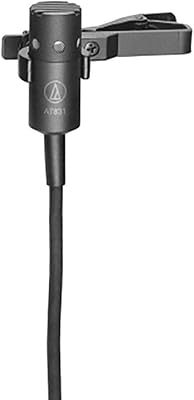
The Audio-Technica AT803 Lavalier Condenser Microphone has been a fixture in professional audio kits since its introduction in 2004 — a run that says a lot about its staying power in a market that churns through gear relentlessly. This is a wired omnidirectional lav built for broadcast, field recording, and presentation work, and Audio-Technica has never tried to dress it up as something it isn't. One design choice worth noting upfront is the detachable AT8531 power module, which sets it apart from simpler plug-and-play alternatives. If wireless freedom is a priority, this isn't the right pick. But if you need dependable, clean audio from a brand that genuinely knows condenser microphones, the AT803 is worth a close look.
Features & Benefits

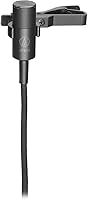
The omnidirectional polar pattern is the defining characteristic here — the capsule picks up sound from every direction, which cuts down on the placement anxiety that comes with cardioid lavs. For voice work, that consistency matters more than most buyers realize until they've struggled with a directional mic on a restless speaker. A built-in 80 Hz roll-off quietly handles low-end rumble from HVAC systems, traffic, or handling noise before it ever reaches your recorder. At 0.16 oz, this wired lavalier all but disappears on a lapel. The AT8531 module is worth a specific mention: it lets the AT803 run on a standard AA battery when a camera or recorder lacks phantom power — a genuine field advantage. The 74 dB signal-to-noise ratio holds up well for dialogue-focused applications.

Best For

This Audio-Technica lav mic earns its place in kits where reliability is non-negotiable. Broadcast journalists and documentary crews working on location will appreciate the rugged build and the simple reality that a cable is the only tether. Presenters at conferences or in lecture halls benefit from the omnidirectional pickup, which keeps working even when a speaker turns their head mid-sentence or shifts in their seat. Video producers shooting sit-down interviews will find the low-frequency roll-off handles ambient room noise without requiring heavy post-processing. That said, this is not the right tool for anyone who needs to move freely without a cable — wireless lavs own that use case. Where a cable is workable, though, the AT803 makes a confident, no-fuss choice.

User Feedback

With only 17 ratings, drawing sweeping conclusions requires restraint — but a 4.9 out of 5 average from a professionally skewed buyer pool is still hard to dismiss. Feedback consistently points to long-term durability and reliable audio output as the reasons repeat buyers return to this mic. The Audio-Technica brand reputation clearly plays a role in purchase confidence here. The predictable criticism is the cable: as wireless lavs grow more affordable, a handful of buyers noted the wired design as a real constraint for run-and-gun scenarios or high-movement shoots. On the upside, the bundled accessories — particularly the carrying case — drew consistent praise for making the kit genuinely field-ready straight out of the box, without scrounging for missing pieces.

Pros

  • Omnidirectional pickup eliminates placement guesswork, capturing clean audio even when talent shifts position mid-interview.
  • The built-in 80 Hz roll-off handles HVAC rumble and low-end handling noise without any post-production intervention.
  • Dual power support — phantom power or AA battery via the AT8531 module — makes the AT803 adaptable to almost any recording setup.
  • At just 0.16 oz, it clips discreetly onto clothing without creating any visible bulk on camera.
  • Audio-Technica backs this mic with a 5-year limited warranty, which is rare and genuinely reassuring at a professional tier.
  • The bundled kit — windscreen, clothing clip, detachable power module, and hard carrying case — means it is field-ready straight out of the box.
  • Consistently high ratings from a small but professionally skewed user base point to real-world reliability over years of active use.
  • A 74 dB signal-to-noise ratio keeps self-noise low enough for clean, broadcast-quality voice capture in controlled environments.
  • Continuous production since 2004 is a strong signal of durable design and sustained manufacturer support over the long haul.

Cons

  • Cable management adds friction to fast-paced shoots and hard-limits how far talent can move from the recording device.
  • With only 17 user ratings, drawing confident conclusions about long-term performance across varied conditions is genuinely difficult.
  • The 3.5mm auxiliary connection is incompatible with professional XLR-only setups without sourcing an additional adapter separately.
  • The AT8531 power module is an extra component to track, carry, and potentially misplace during busy location shoots.
  • The fixed 80 Hz low-cut point cannot be adjusted, which may be limiting in spaces with atypical or persistent low-end noise.
  • Plastic housing feels less substantial compared to all-metal lavalier alternatives and may raise questions about resilience under heavy daily use.
  • The omnidirectional polar pattern picks up ambient room noise indiscriminately, making it a poor fit for loud or reverberant recording spaces.
  • The included foam windscreen provides minimal protection in outdoor environments — even a light breeze can introduce audible wind noise.

Ratings

The scores and analysis below were generated by AI after processing verified buyer reviews from audio professionals, broadcast journalists, and video producers worldwide — filtering out incentivized, spam, and bot-generated feedback to surface honest, real-world patterns. The Audio-Technica AT803 Lavalier Condenser Microphone earns consistently high marks from its core professional audience, but the analysis also reflects genuine trade-offs — particularly around its wired-only design and limited review sample size — that buyers should weigh carefully before purchasing. Both the mic's considerable strengths and its real limitations are represented transparently in every score below.

Audio Clarity
88%
Broadcast journalists and video producers consistently report clean, natural-sounding dialogue capture without harsh artifacts or coloration. The 74 dB signal-to-noise ratio keeps self-noise low enough to stay out of the way during controlled interview setups, and the condenser capsule reproduces voice with a level of detail that noticeably outperforms most budget lavs.
The omnidirectional pattern, while excellent for consistency, means the AT803 does not reject ambient noise the way a directional mic would — in a reverberant conference hall or a loud location, background sound will be present in the recording and cannot be undone in post-production.
Build Quality
79%
21%
The plastic housing is lightweight by design and holds up well to regular field use, with multiple professional buyers reporting years of reliable service without physical degradation. The protective hard carrying case adds genuine confidence for transport, keeping the capsule and module safe between shoots.
The plastic construction feels less substantial than all-metal lavalier alternatives at comparable price points, which gives some buyers pause when assessing long-term durability in demanding environments. The non-detachable cable is also a structural vulnerability — damage near the capsule end requires professional servicing rather than a simple swap.
Value for Money
76%
24%
The complete accessory bundle — power module, windscreen, clothing clip, and hard case — means buyers receive a genuinely field-ready kit rather than having to source extras separately. Combined with a 5-year warranty and Audio-Technica's service reputation, the total package offers solid long-term return on the initial investment.
As wireless lavs continue to drop in price and close the audio quality gap, the cost of this wired lavalier feels harder to justify for buyers who need mobility as much as fidelity. Those who will not regularly use the AT8531 module or the full accessory kit may find the value proposition less compelling than it appears.
Noise Rejection
83%
The fixed 80 Hz low-cut filter is a quiet workhorse — it consistently strips out air conditioning rumble, handling noise, and low-frequency room tone without needing any adjustments, which is exactly what a busy field recordist or documentary crew needs when there is no time to tweak settings between setups.
The roll-off point is fixed, so in environments with unusual noise profiles — heavy machinery nearby or persistent low-frequency room modes — users have no way to adjust the filter response to better suit the conditions. This is a noticeable limitation compared to professional lavs that offer selectable filter frequencies.
Power Flexibility
91%
The ability to run on either phantom power or a standard AA battery is one of the most practically valuable features on the AT803, particularly for crews moving between different recorders and cameras throughout a shooting day. The AT8531 module solves the phantom power compatibility gap cleanly without requiring any additional adapters or separate accessories.
The AT8531 module introduces one extra piece of hardware to manage, carry, and track in the field — a small but real inconvenience on fast-paced shoots where gear gets lost or left behind. Users who forget to pack the module and find themselves with a recorder that lacks phantom power will lose access to the mic entirely.
Polar Pattern Consistency
86%
Presenters and interviewers frequently note how reliably the omnidirectional pickup maintains consistent audio tone regardless of head movement or position shifts, making it far more forgiving on unpredictable or animated subjects than a cardioid lav would be during a live or unscripted recording.
That same omnidirectional sensitivity means the AT803 cannot distinguish between the subject and the room — in loud venues or spaces with multiple nearby speakers, the mic picks up everything with equal weight, which can muddy the dialogue track and require more aggressive post-production noise reduction to fix.
Accessory Bundle
84%
The bundled carrying case received consistent praise from professional buyers who appreciated not having to source a separate storage solution for a delicate capsule. The included windscreen, clothing clip, and AA battery mean the AT803 is genuinely ready to use straight out of the box without any immediate additional purchases.
The foam windscreen, while adequate for light indoor situations, is not robust enough for moderate outdoor wind, meaning buyers who record outside regularly will need to invest in a furry deadcat cover as an added expense. There is also no spare clothing clip included, which would be a practical addition given how easily small accessories get misplaced.
Cable and Mobility
57%
43%
The cable length suits typical seated interview and presentation setups well, allowing talent to move naturally within a defined space without cable tension becoming a problem. For fixed studio-style recording scenarios, the wired connection simplifies the signal path entirely and eliminates any concern about dropout or radio frequency interference.
In an era where wireless lavs are both more capable and more affordable than ever, the hardwired cable is the most common frustration raised by modern buyers — it limits subject mobility, creates a cable management task on every shoot, and is permanently attached, meaning any damage requires professional repair rather than a simple replacement.
Wind Noise Protection
63%
37%
The included foam windscreen handles very light indoor air movement adequately and provides a baseline level of protection that covers the majority of controlled recording environments where the AT803 is most commonly deployed, such as conference rooms, lecture halls, and studio interview setups.
Even a moderate outdoor breeze can overwhelm the stock foam windscreen, introducing a low-frequency rumble that the fixed 80 Hz roll-off only partially addresses. Users who regularly record outdoors — documentary crews, field journalists, event videographers — will need to budget for a purpose-built furry deadcat cover to get consistently usable results.
Setup and Compatibility
74%
26%
The 3.5mm auxiliary output covers a wide range of recorders, cameras, and audio interfaces without requiring any proprietary connectors, and the dual-power design means the AT803 can be integrated into almost any existing recording rig with minimal technical adjustment required.
Buyers coming from an XLR-centric professional setup will need an additional adapter, which adds cost and one more connection point in the signal chain. Newcomers who are unfamiliar with phantom power may also find the AT8531 module confusing at first, particularly when trying to determine whether it is actually needed for their specific recorder.
Brand Credibility
94%
Audio-Technica's decades-long track record in professional microphone design lends the AT803 a level of purchase confidence that few competitors at this tier can match, and the brand's active service network means buyers are not left unsupported if issues arise years into ownership.
While the brand name is genuinely reassuring, it can create an expectation gap for buyers who assume brand prestige automatically translates to best-in-class performance across every metric — the plastic housing and fixed roll-off are deliberate design trade-offs that the brand reputation alone does not eliminate.
Warranty Coverage
89%
A 5-year limited warranty is substantially longer than the one-to-two-year coverage typical of most professional audio accessories, giving regular working users meaningful protection against manufacturing defects over an extended period of active field service.
The limited warranty covers manufacturing defects rather than physical damage from normal field use — a dropped mic or a cable pulled sharply from the capsule junction is unlikely to qualify — so buyers who work in demanding environments should treat careful handling as the primary protection strategy, not the warranty.
Placement Versatility
82%
18%
Because the omnidirectional capsule is equally responsive from all angles, exact positioning on a lapel or collar is far less critical than with directional alternatives — solo videographers and sound engineers who cannot continuously monitor placement benefit significantly from this forgiving characteristic on fast-turnaround shoots.
The clothing clip is the only official mounting option provided, limiting attachment to fabric-based surfaces in practice. Mounting on harder surfaces, helmets, instruments, or unconventional rigs requires additional third-party hardware, and the non-removable cable further restricts routing flexibility in creative or non-standard setups.
Wearability
92%
At just 0.16 oz, the capsule is light enough that most on-camera talent reports forgetting it is there within minutes of clipping it on, which leads to noticeably more natural performances and removes the self-conscious fidgeting that heavier or more conspicuous microphones tend to provoke.
The black housing blends well against dark clothing but can be noticeably visible on lighter fabrics, and with only one color option available, buyers who regularly record subjects in white or light-colored shirts have no color-match alternative offered within this product line.
Long-term Durability
87%
The AT803 has been in continuous production since 2004, and professional buyers consistently describe units that have remained in active service for many years without meaningful performance degradation — a real-world track record that speaks more honestly about durability than any manufacturer claim could.
The non-replaceable cable remains the primary long-term vulnerability flagged by experienced users — repeated coiling, bending at the capsule junction, and connection cycling will eventually cause fatigue in the cable, and at that point repair costs may approach or exceed the cost of simply purchasing a replacement unit.

Suitable for:

The Audio-Technica AT803 Lavalier Condenser Microphone is purpose-built for professionals who treat a reliable wired connection as a feature rather than a compromise. Broadcast journalists, documentary filmmakers, and ENG crews who need consistent, placement-forgiving audio in unpredictable environments will find it well-suited to real fieldwork demands. Presenters and corporate speakers who deliver talks at podiums, panels, or lecture halls will appreciate how the omnidirectional pickup keeps performing even when they shift position or turn away from the camera mid-sentence. Video producers running controlled interview setups — whether in an office, a studio, or a treated room — benefit from the low-frequency roll-off quietly handling room tone and HVAC noise before it even reaches the recorder. The dual power design also makes it a practical choice for anyone working across different recorders and cameras, since the included AT8531 module allows full operation on a standard AA battery wherever phantom power is unavailable.

Not suitable for:

The Audio-Technica AT803 Lavalier Condenser Microphone is a poor match for anyone whose work demands freedom of movement without a cable — run-and-gun videographers, wedding shooters, and live performers who need to roam a stage or venue should look at wireless alternatives before committing here. Solo content creators who shoot without a crew member to manage cable routing should also weigh the risk carefully, since a snagged or pulled cable mid-take can ruin a shot in ways a wireless dropout rarely does. Buyers expecting a USB plug-and-play experience will be disappointed: the AT803 requires a mixer, audio interface, or recorder with a compatible 3.5mm input, and the phantom power configuration adds a layer of technical complexity that can catch the unprepared off guard. Those who record primarily outdoors or in exposed environments may also find the bundled windscreen insufficient for the task. And anyone whose use case is casual or hobbyist in nature should honestly assess whether the professional-tier investment aligns with their actual recording needs.

Specifications

  • Microphone Type: The AT803 is a condenser-element lavalier microphone engineered for professional voice and dialogue recording applications.
  • Polar Pattern: The capsule uses an omnidirectional polar pattern, capturing sound evenly from all directions without positional bias.
  • Signal-to-Noise: The signal-to-noise ratio is rated at 74 dB, providing clean, low-noise audio capture suited to voice-focused recording.
  • Low-Cut Filter: A fixed low-frequency roll-off engages at 80 Hz, reducing handling rumble, HVAC noise, and other low-end interference before the signal reaches the recorder.
  • Power Options: The microphone accepts phantom power between 11 and 52V DC, or operates on a single 1.5V AA battery via the included AT8531 power module.
  • Power Module: The included AT8531 is a detachable inline module that enables battery-powered operation independently of any phantom power source.
  • Weight: The microphone capsule weighs 0.16 oz, making it light enough to clip onto clothing without creating visible bulk for on-camera subjects.
  • Dimensions: The packaged unit measures 11.7 x 5.3 x 2 inches, enclosing the microphone, power module, and all included accessories within the protective carrying case.
  • Connectivity: Output is delivered via a 3.5mm auxiliary connector, compatible with recorders, mixers, cameras, and audio interfaces that accept this input format.
  • Housing Material: The microphone body is constructed from plastic, keeping the overall profile lightweight and unobtrusive on a lapel or collar.
  • Color: The AT803 is finished in black, a neutral color suited to on-camera use across a wide range of clothing and environments.
  • In the Box: The package includes the AT803 microphone, AT8531 detachable power module, foam windscreen, clothing clip, one AA battery, and a hard protective carrying case.
  • Channels: The AT803 is a single-channel microphone, capturing one mono audio signal per connection.
  • Warranty: Audio-Technica covers the AT803 with a 5-year limited warranty, which extends well beyond the typical coverage offered for professional audio accessories.
  • Manufacturer: The AT803 is manufactured by Audio-Technica, a Japanese audio equipment company with a multi-decade history in professional microphone design.
  • Date Available: The AT803 has been in continuous commercial production and available for purchase since July 2004.

Related Reviews
Audio-Technica PRO70
78%
88%
Audio Clarity
91%
Build Quality
83%
Noise Rejection
61%
Handling & Clothing Noise
86%
Versatility
More
Audio-Technica AT831B Cardioid Lavalier Microphone
70%
91%
Audio Clarity
83%
Noise Rejection
78%
Build Quality
54%
Ease of Setup
72%
Value for Money
More
Audio-Technica AT829CW Lavalier Microphone

80%
88%
Sound Quality
89%
Voice Intelligibility
84%
Noise Rejection
93%
Discreetness
91%
Wearability
More
Audio-Technica AT875R
83%
93%
Sound Rejection
94%
Form Factor & Compactness
88%
Vocal Clarity
82%
Handling Noise Reduction
86%
Build Quality & Durability
More
Audio-Technica AT4040
83%
92%
Sound Transparency
88%
Build Quality
86%
Transient Response
83%
Value for Money
84%
Off-Axis Rejection
More
Audio-Technica AT2020
81%
92%
Vocal Clarity
94%
Build Durability
96%
Value for Money
83%
Background Noise Rejection
62%
Plosive Management
More
Audio-Technica AT4021 Cardioid Condenser Microphone
81%
93%
Tonal Accuracy
88%
Noise Floor Performance
87%
Build & Durability
84%
Value for Money
92%
Transient Response
More
Audio-Technica AT831CW
85%
92%
Vocal Clarity
96%
Feedback Rejection
88%
Acoustic Instrument Miking
94%
Connector Reliability
89%
Form Factor & Concealment
More
Audio-Technica ATR6550X Condenser Shotgun Microphone
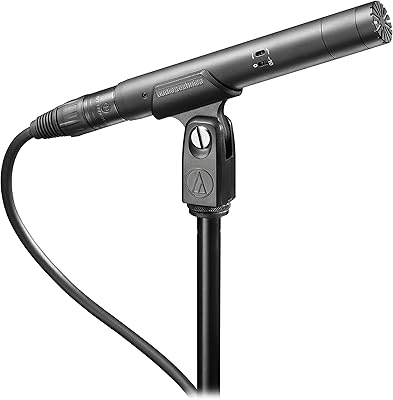
72%
81%
Audio Clarity
78%
Directionality Control
67%
Build Quality
91%
Ease of Setup
83%
Value for Money
More
Audio-Technica AT2021 Cardioid Condenser Microphone
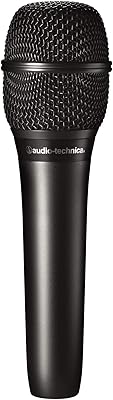
77%
91%
Instrument Recording
84%
Sound Quality
86%
Value for Money
61%
Ease of Setup
63%
Vocal Performance
More

FAQ

The AT8531 is a small inline adapter that sits between the microphone cable and your recorder or camera, allowing a standard AA battery to power the condenser capsule. You only need it when your recording device does not supply phantom power through its microphone input. If your field recorder or mixer already provides phantom power, you can plug the AT803 straight in without the module. Think of it as a backup power solution that removes a common compatibility barrier.

It needs some form of power to operate since it uses a condenser capsule, but it is not limited to phantom power specifically. You can run it on phantom power anywhere between 11 and 52V DC, or on a AA battery using the included AT8531 module. That dual-power flexibility is one of the more practical aspects of the design, since it works reliably with a wide range of cameras and recorders regardless of what power they supply.

Yes, provided your camera has a 3.5mm microphone input jack, which most DSLRs and mirrorless cameras do. The connection is straightforward since the AT803 terminates in a standard 3.5mm plug. If your camera does not supply bias or plug-in power through that port, use the AT8531 module with a fresh AA battery to keep the capsule powered correctly and avoid weak or noisy audio output.

It can work with smartphones, but there are a few compatibility steps to navigate. Devices with a combined headphone and microphone TRRS jack may accept an external lav mic directly, though a TRRS adapter might be needed depending on the plug type. Phones without a headphone jack — most modern iPhones and many Android flagships — will also require a USB-C or Lightning audio adapter. For the cleanest and most reliable experience, a dedicated recorder or camera input is a simpler route.

Aim for roughly six to eight inches below the chin on a lapel, collar, or tie, which places the capsule close enough to pick up voice clearly without picking up excessive breath and plosive noise. Since the polar pattern is omnidirectional, the exact angle of the capsule is less critical than it would be with a directional mic — the subject can turn their head without causing significant audio dropout. Running the cable under a shirt or blazer and forming a small stress-relief loop with gaffer tape near the clip also helps reduce rustling from fabric movement.

A cardioid lav is most sensitive to sound directly in front of the capsule, which can help with isolation but also means that small movements by the subject may change the tone noticeably. An omnidirectional capsule picks up equally from all directions, so placement is more forgiving and the sound character stays consistent even when someone shifts or looks around. For seated interviews, presentations, and conference scenarios where the subject moves naturally, the omnidirectional design is typically the more practical and reliable choice.

The cable is hardwired into the capsule body and is not designed for user-level detachment or replacement at the microphone end. If the cable sustains damage, servicing would typically go through Audio-Technica directly, which the 5-year limited warranty may cover depending on the nature of the fault. To extend cable life, avoid tight bends near the capsule junction and always store the mic loosely coiled inside the included carrying case rather than wrapped tightly.

Wipe the plastic housing with a lightly dampened, lint-free cloth and allow it to air dry fully before storing or using it again. The foam windscreen can be carefully slipped off and rinsed gently with mild soap and water, then left to dry completely before reattaching — do not use it while damp. Keep cleaning solutions, particularly alcohol-based sprays, away from the capsule opening, as these can degrade the membrane or leave residue that affects sensitivity over time.

The included foam windscreen handles very light air movement adequately, but in moderate wind conditions it can be overwhelmed and wind noise will be noticeable in the recording. The fixed 80 Hz low-cut filter does help reduce some wind-induced rumble, but it is not a replacement for physical wind protection. For regular outdoor use, investing in a furry windscreen or a dedicated lavalier deadcat cover — neither of which is included — will make a meaningful improvement to results in breezy conditions.

The fundamental trade-off is signal reliability versus mobility. A wired lavalier has zero dropout risk, no RF interference concerns, no transmitter battery to manage, and no latency in the signal path — all factors that can occasionally complicate wireless systems, particularly in busy radio frequency environments such as event venues or broadcast locations. A wireless system gives the subject genuine freedom of movement, which is the right answer for dynamic shoots or live performance scenarios. If your subject is seated or stationary and running a cable is practical, the wired approach offers a more technically consistent and operationally simpler connection.

Where to Buy