Overview

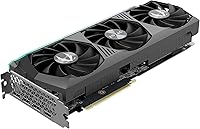
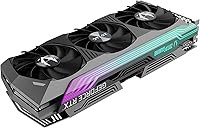
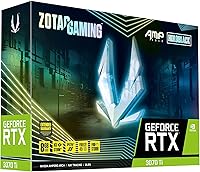
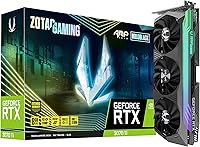
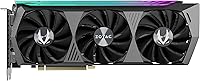
The ZOTAC GeForce RTX 3070 Ti AMP Holo Graphics Card sits at the upper end of ZOTAC's custom RTX 3070 Ti lineup, distinguishing itself from reference designs through its HoloBlack aesthetic, triple-fan cooling, and factory overclock. While the standard RTX 3070 used GDDR6, this ZOTAC RTX 3070 Ti steps up to faster GDDR6X memory at 19 Gbps — a meaningful bandwidth advantage that shows up in memory-intensive workloads. It targets mid-to-high-range builders who want capable 1440p performance without paying flagship prices. At 4K, it holds its own in less demanding titles, but don't expect ultra settings across the board. Honest positioning: this is a strong 1440p card with occasional 4K credentials.
Features & Benefits

The IceStorm 2.0 cooling system is one of the AMP Holo's most practical selling points. Three fans and a substantial heatsink keep thermals in check during extended gaming sessions, while the FREEZE Fan Stop feature lets the card run completely silent at idle — a genuinely appreciated touch for desktop users. The 8GB GDDR6X memory running at 19 Gbps gives this graphics card a bandwidth edge over the base RTX 3070, which matters in high-resolution textures and ray tracing workloads. The factory boost clock of 1830 MHz arrives pre-overclocked out of the box, and DLSS support alongside 2nd Gen Ray Tracing rounds out a feature set that still holds real relevance for modern gaming pipelines.

Best For

This ZOTAC RTX 3070 Ti is an obvious fit for anyone chasing high-refresh 1440p gaming — think 144Hz and above in titles like Cyberpunk 2077 or Hogwarts Legacy with DLSS doing the heavy lifting. Content creators handling light video editing or 3D rendering also stand to benefit from Tensor Core acceleration, though it is not a substitute for a dedicated workstation card. Builders who care about both airflow and appearance will appreciate the 2.5-slot footprint and Spectra 2.0 RGB lighting. One practical warning: at 12.5 inches long and nearly 4 pounds, confirm your case can accommodate it before ordering. Multi-monitor setups and sim racing rigs with four simultaneous screens are well-served by the output configuration.

User Feedback

With a 4.5-star rating across over 565 ratings, most buyers seem genuinely satisfied with what they received. Cooling performance and build quality come up most often in positive comments — people notice that the card runs cool and quiet under load, which is harder to take for granted than it sounds. The lighted backplate earns its share of compliments too. On the downside, a handful of users flag the 12.5-inch length as a real fitment challenge in tighter mid-tower cases, and the 310W power draw means a quality 750W PSU is non-negotiable, not optional. A few buyers raise the question of long-term value against current-gen alternatives, which is a fair concern worth weighing before committing.

Pros

  • IceStorm 2.0 cooling keeps temperatures genuinely low during extended gaming sessions.
  • FREEZE Fan Stop means the card runs completely silent at idle — a real quality-of-life benefit.
  • GDDR6X memory at 19 Gbps gives this ZOTAC RTX 3070 Ti a bandwidth edge over the standard RTX 3070.
  • Factory boost clock of 1830 MHz arrives pre-overclocked, with no extra tuning required.
  • DLSS support meaningfully extends playable performance in supported titles at higher resolutions.
  • Four display outputs make it a practical choice for multi-monitor and sim racing setups.
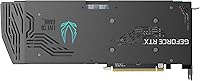
  • The lighted metal backplate adds structural rigidity while looking sharp in windowed cases.
  • PCIE 4.0 interface provides headroom for current and near-future platform compatibility.
  • Ray tracing performance is capable enough to run in many titles without destroying frame rates entirely.
  • Build quality consistently earns praise from buyers — the card feels substantial and well-constructed.

Cons

  • At 12.5 inches long, this graphics card will not fit in many compact or budget mid-tower cases.
  • The 310W TDP demands a quality 750W power supply — older or cheaper PSUs are a genuine risk.
  • 8GB of VRAM is starting to feel tight in some modern titles at high texture settings.
  • No SLI support limits future multi-GPU configurations, though that use case is largely obsolete.
  • The card weighs nearly 4 pounds, which can stress motherboard PCIe slots without a GPU support bracket.
  • At this price tier, newer-generation alternatives exist that offer better efficiency and added features.
  • The 2.5-slot width can crowd adjacent expansion cards in tighter motherboard layouts.
  • Spectra 2.0 RGB requires ZOTAC's own software to control, which some users find limited or cumbersome.
  • No AV1 hardware encode support, which creators on streaming or recording workflows may notice.
  • Long-term driver support for Ampere-generation cards will eventually taper as NVIDIA shifts focus to newer architectures.

Ratings

The scores below were generated by our AI after analyzing verified buyer reviews for the ZOTAC GeForce RTX 3070 Ti AMP Holo Graphics Card from global sources, with spam, bot submissions, and incentivized feedback actively filtered out. Each category reflects an honest synthesis of real user experiences — the wins and the frustrations alike. Where buyers consistently agreed, the scores reflect that consensus; where opinions split, that tension is captured too.
Gaming Performance
88%
Most buyers report genuinely smooth, high-refresh gameplay at 1440p across demanding AAA titles — Cyberpunk 2077, Elden Ring, and Forza Horizon all run well with settings pushed high. DLSS support gives the card an extra buffer of headroom when native frame rates start to dip.
At native 4K without DLSS, performance can become inconsistent in the most GPU-intensive scenes, and a few users expecting 60+ fps ultra settings across the board at 4K have come away disappointed. It is a strong 1440p card first, and a conditional 4K card second.
Cooling Efficiency
91%
The IceStorm 2.0 triple-fan setup earns consistent praise for keeping GPU temperatures stable even during hours-long gaming sessions — most buyers report junction temps well within comfortable ranges. The FREEZE Fan Stop feature is a genuinely appreciated touch, letting the card sit completely silent during lighter desktop tasks.
A small number of users in poorly ventilated cases note that the card runs warmer than expected, though this reflects case airflow limitations more than a fault with the cooling hardware itself. Under extreme ambient temperatures, the fans do spin up noticeably.
Noise Levels
86%
At typical gaming loads, this graphics card stays quiet enough that most buyers say it disappears into the background noise of their setup. The idle fan-stop behavior is particularly praised by users who spend time at the desktop between sessions.
At sustained maximum load — stress tests, extended ray tracing workloads — the fans do become audible, though most describe the sound as a steady hum rather than an aggressive whine. Users with open-air cases or quiet rooms will notice it more than those with enclosed mid-towers.
Build Quality
93%
The physical construction of the AMP Holo is one of the most consistently praised aspects across hundreds of reviews — the card feels dense, solid, and well-assembled, with a metal backplate that reinforces the PCB and adds a premium feel. Buyers upgrading from older or budget-tier cards frequently comment on how substantial it feels in hand.
The card's weight, nearly 4 pounds, is a byproduct of that solid construction and does create real PCIe slot sag without additional support. A built-in or aftermarket GPU bracket is genuinely advisable, which is an extra step some buyers did not anticipate.
Thermal Management
84%
Under sustained gaming loads, the AMP Holo keeps its core temperatures controlled without requiring manual fan curve adjustments — a setup experience most buyers describe as plug-and-play from a thermal standpoint. The heatsink design moves heat away from the core efficiently across a wide surface area.
The 310W TDP means the card does generate meaningful heat into the case, and users with limited case ventilation have noted that surrounding components — including VRMs on nearby motherboard zones — can run warmer as a result. Airflow planning matters more with this card than with lower-TDP alternatives.
Value for Money
74%
26%
When priced competitively against alternatives in its tier, the AMP Holo offers a strong performance-per-dollar argument for 1440p gaming builds, particularly for buyers stepping up from older Turing or Pascal cards who will feel the generational improvement immediately.
With current-gen RTX 40-series cards increasingly accessible, the value calculus has tightened. Some buyers acknowledge they paid a premium for Ampere-generation performance that has since been outpaced, and a few feel the pricing does not fully account for the generational gap relative to newer options.
Ray Tracing Performance
76%
24%
The 2nd Gen Ray Tracing Cores enable hardware-accelerated RT in supported titles, and with DLSS enabled, games like Control or Metro Exodus deliver a noticeably improved visual experience at playable frame rates. For users who want ray tracing as a feature rather than a default, the AMP Holo handles it competently.
Native ray tracing without DLSS is frame-rate expensive at 1440p and borderline impractical at 4K in the most demanding implementations. Buyers expecting to run full RT pipelines at high settings without DLSS as a crutch will find the experience limiting.
VRAM Adequacy
69%
31%
For the majority of current 1440p gaming workloads, 8GB of GDDR6X is sufficient, and the high 19 Gbps bandwidth helps the card handle texture streaming more gracefully than older 8GB configurations running slower memory types.
A growing list of modern titles at high texture settings push past the 8GB ceiling, and a handful of buyers note stuttering or texture pop-in in specific memory-heavy games. Content creators working with large project files or high-resolution assets will feel this constraint more acutely than gamers.
Aesthetics & RGB
88%
The HoloBlack shroud design and Spectra 2.0 RGB lighting — including the lighted metal backplate — consistently draw positive comments from buyers who care about how their build looks. The overall design is polished without veering into gaudy territory.
RGB control depends on ZOTAC's FireStorm software, which some users find less refined and feature-rich than competing ecosystem tools like ASUS Aura Sync or MSI Mystic Light. Integrating it into a multi-brand RGB sync setup can require extra effort.
Display Versatility
92%
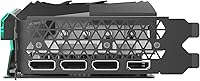
Four simultaneous display outputs — three DisplayPort 1.4a and one HDMI 2.1 — give this card genuine flexibility for sim racing rigs, multi-monitor productivity setups, and home theater configurations alike. HDMI 2.1 support means high-refresh connections to modern TVs without adapters.
The lack of USB-C or Thunderbolt output may inconvenience users with newer monitors that rely on those connections. While DisplayPort covers the vast majority of use cases, it is a small gap worth noting for buyers with specific display requirements.
Case Compatibility
61%
39%
In full-tower and generously sized mid-tower cases, the AMP Holo installs without issue, and most buyers in standard ATX builds report a straightforward fit with clearance to spare around the card.
At 12.5 inches long and 2.5 slots wide, this card is a legitimate fitment challenge in compact mid-tower and micro-ATX cases. Several reviewers specifically flagged that they had to check clearance dimensions carefully, and a few had to reroute cables or remove drive cages to make it work.
Power Efficiency
63%
37%
The card delivers strong performance for its power envelope by Ampere-generation standards, and buyers who already own a quality high-wattage PSU report no issues running the system stably under extended load.
A 310W TDP is one of the higher draws in this performance tier, and compared to newer-generation cards that deliver similar or better performance at substantially lower wattage, efficiency is a clear weak point. Buyers running modest PSUs will need to factor in an upgrade cost.
Software & Driver Stability
81%
19%
The overwhelming majority of buyers report smooth driver installation and stable day-to-day operation with NVIDIA's standard driver stack. Long-term owners generally describe the card as a set-and-forget component in a stable system.
A small number of users have reported isolated driver-related crashes or conflicts following specific NVIDIA driver updates, though these are not specific to this card model and tend to be resolved quickly. ZOTAC's own FireStorm software receives mixed reviews for stability on certain configurations.
Long-Term Reliability
83%
Across the broader pool of ratings, there is a meaningful proportion of buyers who have run the AMP Holo for extended periods without hardware issues, which speaks to the underlying build quality and thermal management holding up over time.
As with any GPU at this power and heat level, long-term reliability is partly a function of case airflow, ambient temperatures, and PSU quality. A handful of buyers report fan bearing noise developing over extended use, which is worth monitoring but does not appear to be a widespread issue.

Suitable for:

The ZOTAC GeForce RTX 3070 Ti AMP Holo Graphics Card is a strong fit for PC gamers who have settled on 1440p as their target resolution and want to push high refresh rates in demanding AAA titles without constant compromises on settings. Builders upgrading from a GTX 10-series or RTX 20-series card will feel the performance jump immediately, and the GDDR6X memory gives it a bandwidth edge that keeps it competitive in texture-heavy scenes where older cards start to struggle. The triple-fan IceStorm 2.0 cooling setup makes it particularly well-suited for longer gaming sessions where thermal consistency matters, and the FREEZE Fan Stop is a quiet bonus for anyone who spends time at the desktop outside of games. Content creators handling video editing timelines or light 3D work will also get real utility from the Tensor Core acceleration and DLSS support. If you run a multi-monitor setup — sim racing rigs, productivity arrays, or just a dual-screen gaming station — the four display outputs handle that without any adapter headaches.
Not suitable for:

Buyers hoping to run the latest GPU-intensive titles at native 4K with maximum settings should temper their expectations, as the ZOTAC GeForce RTX 3070 Ti AMP Holo Graphics Card is not a true 4K card in the way an RTX 3080 or current-gen RTX 40-series option would be. Anyone working with a compact micro-ATX or mini-ITX build needs to measure twice before buying — at 12.5 inches long and sitting at 2.5 slots wide, this card physically will not fit in a lot of smaller enclosures. The 310W power draw also means that budget or older power supplies simply are not adequate; a quality 750W unit is a real requirement, not a suggestion, so factor that into your total cost if an upgrade is needed. Heavy professional workloads like machine learning model training or large-scale 3D rendering will hit the ceiling of 8GB VRAM faster than expected, making this a poor fit for serious workstation use. Finally, buyers drawn primarily by current-gen features like AV1 encoding or frame generation should look at newer architectures instead.
Specifications

  • GPU Architecture: Built on NVIDIA's Ampere architecture, featuring 2nd Gen Ray Tracing Cores and 3rd Gen Tensor Cores for hardware-accelerated ray tracing and AI-based upscaling.
  • VRAM: Equipped with 8GB of GDDR6X memory running at 19 Gbps over a 256-bit bus, offering higher bandwidth than the standard GDDR6-based RTX 3070.
  • Boost Clock: Factory boost clock is set at 1830 MHz, arriving pre-overclocked above the NVIDIA Founders Edition reference specification out of the box.
  • Power Draw: Rated at 310W TDP, requiring a quality 750W power supply as a firm minimum for stable operation under sustained load.
  • Interface: Uses a PCIE 4.0 x16 interface, offering full bandwidth compatibility with current-generation motherboards while remaining backward compatible with PCIE 3.0 slots.
  • Display Outputs: Provides three DisplayPort 1.4a ports and one HDMI 2.1 port, supporting up to four simultaneous displays and a maximum resolution of 7680x4320 (8K).
  • Cooling System: IceStorm 2.0 triple-fan cooling includes a large heatsink and FREEZE Fan Stop technology, which halts all fans completely when the GPU is idle or under light load.
  • Slot Width: Occupies 2.5 expansion slots on the motherboard, which may block adjacent slots depending on case and board layout.
  • Card Dimensions: Measures 12.5 x 4.8 x 2.3 inches (317 x 122 x 58 mm), making it a large card that requires case clearance verification before purchase.
  • Card Weight: Weighs 3.99 pounds (approximately 1.81 kg), which places notable stress on the PCIe slot and may benefit from an aftermarket GPU support bracket.
  • RGB Lighting: Spectra 2.0 RGB lighting covers the shroud and a lighted metal backplate, configurable through ZOTAC's FireStorm software utility.
  • API Support: Fully supports DirectX 12 Ultimate, Vulkan RT API, and OpenGL 4.6, covering all major modern gaming and graphics rendering standards.
  • DLSS Support: Compatible with NVIDIA DLSS (Deep Learning Super Sampling), using Tensor Cores to upscale lower-resolution frames and recover performance in supported titles.
  • SLI Support: SLI multi-GPU configuration is not supported on this card, consistent with NVIDIA's discontinuation of SLI for the Ampere generation.
  • OS Compatibility: Officially supported on Windows 10 64-bit (build 2004 or later), with driver support also available for Windows 11.
  • Max Resolution: Capable of outputting up to 7680x4320 (8K) resolution via DisplayPort 1.4a with DSC compression enabled.
  • Backplate: Includes a lighted metal backplate that reinforces the PCB structurally while contributing to the card's overall HoloBlack visual design.
  • Memory Bus: The 256-bit memory bus width enables the high 19 Gbps GDDR6X bandwidth, giving this card a bandwidth advantage over 128-bit or 192-bit alternatives in its class.

Related Reviews
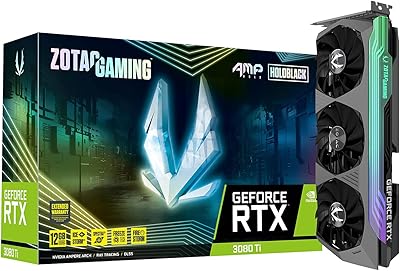
ZOTAC RTX 3080 Ti AMP Holo GPU
79%
93%
Gaming Performance
88%
Cooling Efficiency
84%
Noise Level
86%
Build Quality
61%
Physical Size & Fitment
More
ASUS TUF Gaming NVIDIA GeForce RTX 3070 Ti OC Edition Graphics Card 8GB GDDR6X
87%
92%
Performance
88%
Cooling Efficiency
94%
Build Quality & Durability
90%
Value for Money
76%
Thermals (Under Load)
More
ZOTAC RTX 5060 Ti 8GB Graphics Card
82%
88%
Gaming Performance at 1440p
58%
VRAM Capacity & Future-Proofing
83%
DLSS 4 & AI Feature Effectiveness
86%
Thermal Performance & Cooling
91%
Noise Levels & Idle Behavior
More
ZOTAC Gaming GeForce RTX 4070 Ti AMP AIRO
88%
94%
Gaming Performance
91%
Cooling Efficiency
89%
Ease of Installation
88%
Noise Levels
92%
Build Quality
More
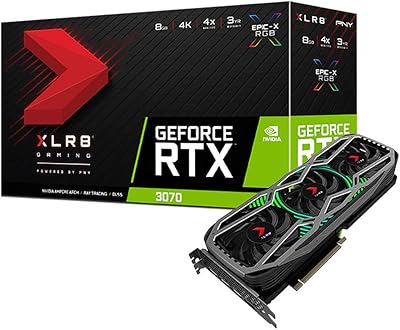
PNY GeForce RTX 3070 8GB Graphics Card
79%
91%
1440p Gaming Performance
88%
Thermal Management
86%
Noise Levels
63%
VRAM Adequacy
78%
Ray Tracing Performance
More
GIGABYTE GeForce RTX 5070 Ti Gaming OC 16G
86%
91%
4K Gaming Performance
89%
Ray Tracing & DLSS 4
93%
Cooling Efficiency
94%
VRAM & Memory Speed
87%
Acoustic Performance
More
Gigabyte AORUS GeForce RTX 3080 Ti Master 12GB Graphics Card
88%
93%
Overall Performance
96%
4K Gaming Experience
91%
Ray Tracing Capabilities
88%
Cooling Efficiency
89%
Build Quality
More
Gigabyte RTX 4060 Ti Eagle OC GPU
82%
83%
Gaming Performance
88%
Thermal Management
84%
Noise Level
86%
DLSS 3 & Frame Generation
61%
VRAM & Memory
More
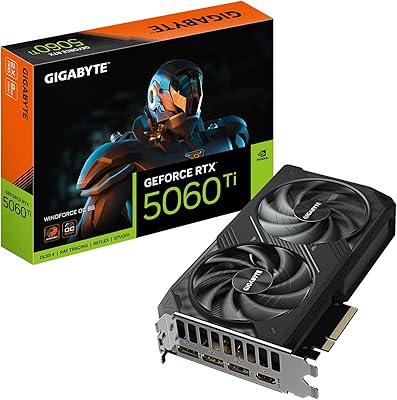
GIGABYTE RTX 5060 Ti 8GB Graphics Card
84%
88%
1440p Gaming Performance
91%
DLSS 4 & AI Upscaling
66%
VRAM Capacity & Adequacy
93%
Thermal Performance & Cooling
86%
Noise Level
More
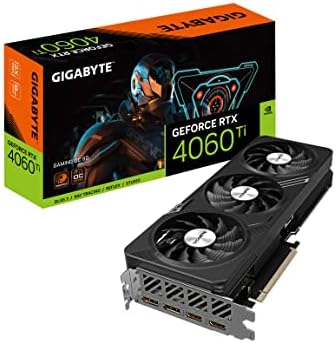
GIGABYTE GeForce RTX 4060 Ti Gaming OC 8GB Graphics Card
86%
92%
Performance
88%
Cooling Efficiency
89%
Value for Money
85%
Build Quality
91%
Ease of Setup
More

FAQ

That depends on your specific case. The card measures 12.5 inches in length, which is on the larger end for an AIB GPU. Most full-tower and many mid-tower cases handle it fine, but you should check your case's maximum GPU length spec before ordering — some mid-towers cap out at 11 or 12 inches, which would make this a no-go.

It is a genuine requirement, not padding. The card draws 310W on its own, and your CPU, drives, and other components add to that. Running this on a 650W unit, especially an older or lower-quality one, risks instability, crashes under load, or shortened PSU lifespan. Stick with a quality 750W or higher.

Most buyers report it stays reasonably quiet during typical gaming. The IceStorm 2.0 system moves enough air to keep temps in check without the fans spinning at aggressive speeds. At idle or light desktop use, the FREEZE Fan Stop kicks in and the card goes completely silent, which is a nice bonus.

Honest answer: 1440p is where this card truly shines. At 4K, you can get playable frame rates in many titles — especially with DLSS enabled — but do not expect to max out every setting in the most demanding games. If 4K at ultra settings in every title is the goal, you would want to look at an RTX 3080 or a current-generation card.

Yes, and then some. The AMP Holo has three DisplayPort 1.4a outputs and one HDMI 2.1 port, so you can run up to four displays simultaneously. It is well-suited for sim racing setups, ultrawide triple-monitor rigs, or productivity arrays.

DLSS uses the Tensor Cores on the GPU to render frames at a lower resolution and then use AI to upscale them to your target resolution. The result is noticeably better performance with image quality that holds up well in most cases. Support varies by title, but hundreds of games now include it — Cyberpunk 2077, Microsoft Flight Simulator, and most major recent releases among them.

It is not strictly required, but at nearly 4 pounds, this graphics card is heavy enough that some degree of PCIe slot sag is likely over time. If your case has a built-in GPU bracket or brace, use it. If not, an inexpensive aftermarket support bracket is worth picking up alongside the card.

It handles both reasonably well. The 3rd Gen Tensor Cores accelerate AI-based tasks, and NVIDIA's NVENC encoder is solid for streaming or export in applications like DaVinci Resolve and Premiere Pro. That said, the 8GB VRAM does set a ceiling — large-format video projects or complex 3D scenes with heavy textures can push up against that limit.

Yes, the Spectra 2.0 RGB — covering both the shroud and the lighted backplate — is controlled through ZOTAC's FireStorm utility. It gives you color and effect options, though the software itself is fairly basic compared to what some other brands offer. If you just want a static color or breathing effect, it does the job without much fuss.

It depends on your budget and priorities. The AMP Holo is a proven Ampere card with solid 1440p credentials, and it can often be found at a meaningful discount compared to current-gen options. What you give up is newer features like AV1 hardware encoding, frame generation (DLSS 3), and better power efficiency. If those features matter to you, stretch the budget. If raw 1440p gaming performance per dollar is the goal, this card still makes a reasonable case for itself.

Where to Buy