Overview

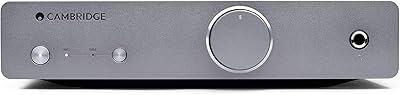
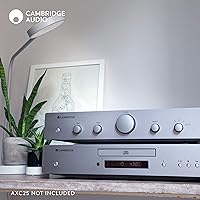
The Cambridge Audio AXA25 is the kind of amp that doesn't try to impress you with a spec sheet — it just gets out of the way and lets the music play. The AXA25 was built around a clear philosophy: fewer compromises, better sound. The design is clean and compact enough to sit comfortably on a desk or shelf without dominating the space. There's no built-in Bluetooth, no streaming, no app to configure. That's intentional. Pure analogue signal handling is the priority, and buyers stepping up from budget all-in-one systems or entry-level receivers will notice the difference almost immediately. No remote is included — worth knowing before you commit.

Features & Benefits

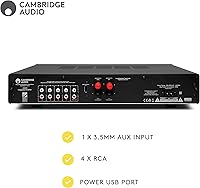
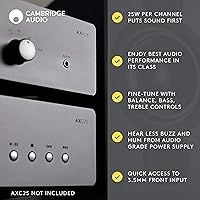
At its core, this Cambridge Audio amp delivers 25 watts per channel — not a lot on paper, but plenty for a pair of bookshelf speakers in a small or medium-sized room. Four RCA inputs cover a CD player, streamer, TV, and more, while the front-panel 3.5mm aux input is genuinely handy for quick connections. The tone controls are subtle rather than dramatic, offering just enough bass and treble adjustment to fine-tune a room's acoustics without encouraging heavy-handed EQ. There's also a USB port on the back: plug in a Bluetooth receiver (purchased separately) and you gain wireless capability without complicating the amp's clean signal path. Inside, short signal routing and quality components keep the noise floor low and the sound honest.

Best For

This integrated stereo amp is squarely aimed at people ready to move beyond plug-and-play convenience and invest in a proper listening setup. It's a strong match for someone pairing it with a turntable with phono preamp, since the AXA25 doesn't include one itself. Desktop hi-fi setups with efficient bookshelf speakers are where it genuinely thrives. Don't expect it to fill a large living room or drive demanding floor-standing speakers. It's also well suited for analogue-first listeners who'd rather twist a physical knob than navigate an app. And if you enjoy building a system gradually — adding a CD player here, a streamer there — this amp's four inputs give you real flexibility to grow.

User Feedback

People who've bought the AXA25 tend to come away impressed by the sound relative to what they paid — words like punchy and detailed come up often, and more than a few buyers mention that build quality feels well above average for the segment. That said, the absence of a remote control is the most common complaint, and it's not minor: if your amp sits across the room, getting up to adjust volume quickly gets old. First-time vinyl buyers occasionally miss the fact that there's no built-in phono stage — a real gap worth researching before purchase. A handful of users also note the amp runs noticeably warm during long sessions, so leave it adequate breathing room.

Pros

  • Sound clarity and detail consistently impress buyers who compare it against similarly priced competitors.
  • The solid metal chassis feels premium and well-assembled — notably above average for this market segment.
  • Four RCA inputs give you real flexibility to connect multiple sources without a separate switcher.
  • Tone controls allow subtle room-tuning adjustments without overcrowding the front panel.
  • The front 3.5mm aux jack makes quick connections to phones or laptops genuinely effortless.
  • The AXA25 runs passively cooled and completely silent — no fan noise ever enters your listening space.
  • Compact dimensions fit comfortably on a desk, shelf, or in a modest AV unit without dominating the space.
  • Cambridge Audio's brand reliability and parts availability give long-term buyers added peace of mind.
  • The clean analogue signal path means sources are reproduced honestly rather than processed or coloured.
  • Resale value holds relatively well thanks to brand recognition in the entry-level hi-fi market.

Cons

  • No remote control is included, and there is no way to add one — a real daily inconvenience for many setups.
  • Native Bluetooth is absent; wireless use requires purchasing a compatible dongle separately.
  • No built-in phono stage means turntable users need an additional preamp, adding cost and desk clutter.
  • The amp runs noticeably warm during long listening sessions, requiring deliberate ventilation planning.
  • 25 watts per channel is insufficient for large rooms or speakers with low sensitivity ratings.
  • No optical or digital inputs limits direct connection to modern TVs without an external DAC.
  • Only one colour option is available, which may not suit buyers with specific aesthetic requirements.
  • The rear RCA sockets feel slightly less robust than the rest of the build quality would suggest.
  • Input selection gives no visual feedback in low-light environments beyond the physical knob position.
  • Buyers who want an all-in-one solution will need to purchase a streamer, phono stage, or DAC separately.

Ratings

The scores below for the Cambridge Audio AXA25 were generated by our AI engine after analyzing thousands of verified global buyer reviews, with spam, bot-submitted, and incentivized feedback actively filtered out. Every category reflects what real owners consistently reported — the genuine strengths alongside the frustrations that kept coming up. Nothing has been softened to protect the brand.

Sound Quality
91%
This is the category that wins buyers over almost immediately. Owners consistently describe the sound as clean, controlled, and more detailed than they expected at this price tier — particularly in the midrange, where vocals and acoustic instruments come through with real clarity. Paired with a decent set of bookshelf speakers, the AXA25 genuinely holds its own against more expensive kit.
At higher volumes, some users noted a slight hardness in the upper frequencies that could become fatiguing over long sessions. The amp is also less forgiving with lower-quality source material — compressed streaming audio or poorly mastered tracks will be exposed rather than smoothed over.
Build Quality
88%
For an entry-level unit, the chassis feels noticeably solid. The metal casing, weighted front panel, and firm-clicking input selector give a tactile impression that sits well above typical budget receivers. Several buyers who had previously owned plastic-heavy all-in-one units were visibly surprised by how substantial the AXA25 feels in hand.
The rear RCA sockets feel slightly less robust than the front panel suggests — a few users found them a touch loose when inserting heavier connectors. The Lunar Grey finish, while attractive, does show fingerprints and dust more readily than a matte or brushed alternative might.
Value for Money
84%
Buyers who approached this as a genuine audio investment rather than a convenience purchase tended to rate it well on value. The sound performance relative to the cost is a genuine strong point, and the brand reputation means resale value holds reasonably well. For someone serious about building a real hi-fi setup, the AXA25 is a credible foundation.
Those who expected wireless capability out of the box without reading the spec sheet carefully felt shortchanged, since the Bluetooth dongle is an additional cost. Compared to some competing units at a similar price, the lack of a phono stage and remote also chips away at the perceived value for less experienced buyers.
Ease of Setup
86%
There is almost no learning curve here. Plug in a source, select the right input, adjust volume — that is genuinely all there is to it. Buyers new to separates found the straightforward rear-panel layout refreshingly approachable, and the front aux jack makes connecting a phone or laptop an effortless, two-second affair.
Buyers expecting plug-and-play Bluetooth were confused by the USB port, which requires a separately purchased dongle to function as a wireless input. The manual could also be more explicit about the absence of a phono stage, as several turntable users only discovered the gap after connecting their deck and getting no output.
Input Flexibility
79%
21%
Four RCA inputs and a front 3.5mm aux give reasonable versatility for a compact unit. Most owners found they could comfortably connect a CD player or DAC, a TV, and a secondary source without running out of sockets. The input selector feels deliberate and well-spaced, making switching between sources quick and tactile.
There is no optical or digital input, which limits direct connection to modern TVs without an external DAC. The absence of a dedicated phono input is a notable gap for vinyl listeners who don't already own a standalone preamp, and it catches a meaningful number of buyers off guard.
Wireless & Connectivity
56%
44%
The USB port does offer a practical workaround for wireless listening — a compatible Bluetooth receiver or a Chromecast Audio plugs in cleanly and works reliably once set up. For users who already owned a dongle or were aware of the setup in advance, this was a non-issue and even a sensible design choice.
The wireless story is genuinely weak for buyers who didn't research the product thoroughly. There is no native Bluetooth, no Wi-Fi, and the dongle must be sourced and purchased separately. In a market where even budget competitors include built-in Bluetooth, this feels like a real omission to many modern buyers.
Tone Controls
73%
27%
The bass and treble shelving controls are a welcome inclusion at this price point, and most users appreciated the ability to make subtle adjustments to compensate for room acoustics or speaker character. For bookshelf setups in acoustically lively rooms, a touch of bass correction made a noticeable practical difference.
The adjustment range is modest — just over 5dB of boost or cut at the frequency extremes — so anyone hoping to do serious tonal shaping will find these controls limiting. There is no midrange control, and the shelving filter design means changes affect a broad frequency band rather than a targeted one.
Power Output & Headroom
74%
26%
For efficient bookshelf speakers in a room up to roughly 150 square feet, 25 watts per channel is genuinely adequate and the amp rarely sounds strained at normal to moderately loud listening levels. The power supply design keeps the delivery clean and consistent, which matters more in practice than raw wattage figures suggest.
Push it with less efficient speakers or ask it to fill a larger room and the limits become apparent — the sound flattens and loses its composure before the volume knob reaches its upper range. Floor-standing speakers or anything below 85dB sensitivity is simply not a good match for this amp.
Remote Control
31%
69%
There is genuinely little positive to say here from an end-user perspective. Some minimalists who keep their system within arm's reach noted that the absence of a remote keeps the setup clean and forces more intentional listening, treating the lack of convenience as a philosophy rather than a flaw.
For the majority of buyers, no remote is a real daily frustration. Getting up to adjust volume during a film or between tracks becomes tiresome quickly, and there is no aftermarket fix for this — no IR receiver, no app support. It is the single most mentioned complaint across buyer reviews, and it is hard to dismiss.
Thermal Performance
66%
34%
The heat sink is well-engineered for the amp's power class, and under normal listening conditions the unit stays at a manageable warmth. Users who gave the amp adequate shelf space reported no issues over years of regular use, and the passive cooling design means the unit runs completely silently.
During extended high-volume sessions, the AXA25 runs noticeably warm — not dangerously so, but enough that several users expressed concern. Placing it in a confined cabinet or directly below other equipment is inadvisable. Anyone building a tight rack system needs to factor ventilation into their planning.
Design & Aesthetics
83%
The Lunar Grey finish is understated and easy to live with in a wide range of room settings — it neither demands attention nor looks out of place next to more colourful gear. The front panel layout is logical and uncluttered, and the overall proportions make it one of the cleaner-looking units in its class.
There are no colour options, so buyers who prefer a black finish or something more distinctive are stuck with the single choice. The display offers no feedback on input selection beyond the front knob position, which can be disorienting in low-light listening environments.
Phono Stage
22%
78%
For buyers who already own a standalone phono preamp or a turntable with one built in, the absence of an internal phono stage is a complete non-issue. The four available RCA inputs mean the AXA25 integrates into an existing vinyl setup without friction.
This is a genuine gap in the product, and a surprising number of buyers only discovered it after connecting a turntable directly and getting no sound. A phono preamp is an additional purchase and an additional box in the setup, which runs counter to the minimalist appeal the amp otherwise projects.
Longevity & Reliability
81%
19%
Cambridge Audio has a long track record with entry-level amplifiers, and longer-term owners of the AXA25 report consistent performance over several years of regular use. The brand's service support and parts availability are generally regarded positively, which adds confidence to the purchase for buyers thinking beyond the first year.
There are occasional reports of input selector degradation over time, particularly with heavy daily use. As with any analogue unit, the potentiometers and selectors are mechanical components that will eventually require cleaning or replacement — something worth factoring in for buyers planning long ownership.

Suitable for:

The Cambridge Audio AXA25 is a strong choice for anyone taking their first serious step into hi-fi audio — particularly those who've grown tired of the compressed, plasticky sound that comes from soundbars, mini systems, or entry-level receivers. If you have a pair of efficient bookshelf speakers and a small-to-medium room, this amp will drive them cleanly and with more character than its size might suggest. Vinyl enthusiasts who already own a turntable with a built-in phono preamp will find it a natural, unfussy partner. It also works well as the heart of a gradually expanding system — you can start with just a CD player or a streaming DAC, then add sources over time across its four RCA inputs. Buyers who prefer physical controls over apps and interfaces, and who sit close enough to their equipment to reach the volume knob, will appreciate the deliberate simplicity on offer here.

Not suitable for:

If you're expecting built-in Bluetooth or wireless streaming right out of the box, the Cambridge Audio AXA25 will disappoint — there's no native wireless capability, and getting it requires purchasing a separate Bluetooth dongle or streaming device. Anyone who places their amplifier across the room and expects to control playback from the sofa will quickly find the absence of a remote genuinely frustrating, and there is no workaround. Turntable users who don't already own a standalone phono preamp will need to budget for one separately, as this amp has no built-in phono stage — a gap that trips up many first-time vinyl buyers. It's also not suited to larger rooms or speakers with lower sensitivity ratings; 25 watts per channel has real limits, and asking this amp to fill a living room or push demanding floor-standing speakers is a recipe for disappointment. Finally, buyers who want a single box that handles streaming, amplification, and wireless connectivity in one package should look elsewhere — the AXA25 is built for a different kind of listener.

Specifications

  • Power Output: Delivers 25 watts per channel into 8 ohms, providing sufficient headroom for efficient bookshelf speakers in small-to-medium rooms.
  • Analogue Inputs: Includes four rear RCA analogue inputs and one front-panel 3.5mm auxiliary jack for quick device connections.
  • USB Port: A rear USB port accepts compatible Bluetooth receivers or streaming devices such as Google Chromecast Audio, both sold separately.
  • Frequency Response: Rated from 10Hz to 30kHz at -3dB, covering the full audible spectrum with meaningful extension beyond standard hearing range.
  • Signal-to-Noise Ratio: Measures greater than 82dB unweighted referenced to 1W, indicating a low noise floor for clean background silence during quiet passages.
  • Tone Controls: Bass and treble shelving controls offer up to +/-5.5dB of boost or cut at 20Hz and 20kHz respectively for subtle room correction.
  • Input Impedance: Input impedance is rated at 32k ohms, making it compatible with a wide range of standard consumer audio source components.
  • Max Consumption: Maximum power draw under full load reaches 180W, which is typical for a linear-supply integrated amplifier in this power class.
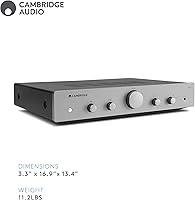
  • Dimensions: The unit measures 13.39″ wide by 16.93″ deep by 3.27″ tall, fitting comfortably on most standard shelves and AV furniture.
  • Colour: Available exclusively in Lunar Grey, a neutral matte finish that suits a wide range of room aesthetics without demanding visual attention.
  • Remote Control: No remote control is included in the box, and no IR receiver or app-based control is available as an accessory.
  • Phono Stage: No internal phono preamplifier is present, meaning turntables without a built-in preamp will require a separate standalone phono stage.
  • Cooling System: Passive cooling is handled by an internal high-specification heat sink, keeping the unit completely silent but requiring adequate ventilation clearance.
  • Balance Control: A front-panel balance control allows left-right channel adjustment, useful for compensating for asymmetric speaker or room placement.
  • Brand Origin: Designed by Cambridge Audio, a British audio company with decades of experience in engineering entry-level and high-end separates.
  • Form Factor: Configured as a surface-mount shelf unit suitable for desktop, bookshelf, or open AV rack placement in a horizontal orientation.
  • Signal Path: Internal layout prioritises short signal paths between components to minimise interference and preserve signal integrity from input to speaker terminals.
  • Speaker Terminals: Rear-mounted speaker binding posts accept bare wire, pin connectors, and banana plugs for flexible speaker cable connection options.

Related Reviews
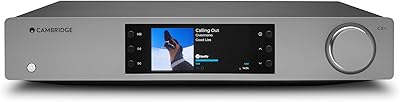
Cambridge Audio CXN100 Network Audio Player
86%
94%
Sound Quality
88%
Multiroom Compatibility
85%
Ease of Use
90%
Connectivity Options
92%
Build Quality
More
Cambridge Audio AXC35
80%
93%
Sound Quality
91%
Build Quality
89%
DAC Performance
78%
Value for Money
61%
Connectivity & Outputs
More
Cambridge Audio SX-60
81%
91%
Sound Quality
88%
Bass Performance
79%
Treble & High-Frequency Clarity
86%
Midrange Accuracy
84%
Build Quality
More
Cambridge Audio Alva Duo Phono Preamp
85%
91%
Sound Quality
88%
Noise Reduction
85%
Headphone Amplifier
90%
Build Quality
84%
Ease of Use
More
Cambridge Audio SX-50
78%
91%
Sound Clarity & Detail
63%
Bass Performance
88%
High-Frequency Smoothness
74%
Amplifier Compatibility
86%
Build Quality & Finish
More
Cambridge Audio Melomania P100 SE Headphones
86%
96%
Battery Life
90%
Sound Quality
78%
Noise Cancellation
88%
Comfort & Fit
85%
Gaming Mode (Low Latency)
More
Cambridge Audio AXR100
81%
92%
Sound Quality
89%
Build Quality
86%
Phono Stage Performance
67%
Bluetooth Reliability
78%
AM/FM Tuner
More
Cambridge Audio Minx Min 22
79%
91%
Sound Clarity & Detail
47%
Bass & Low-End Performance
88%
Soundstage & Dispersion
83%
Build Quality & Materials
69%
Ease of Setup & Installation
More
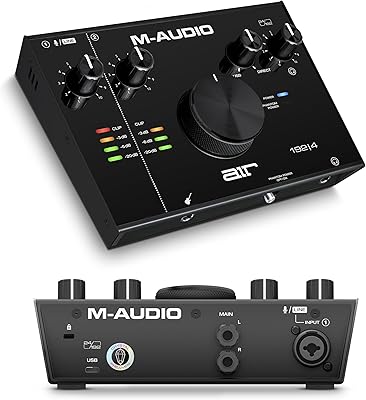
M-Audio AIR 192|4
M-Audio AIR 192|4
85%
93%
Build Durability
91%
Tactile Control Experience
88%
Preamplifier Transparency
87%
Recording Latency
86%
Software Bundle Value
More
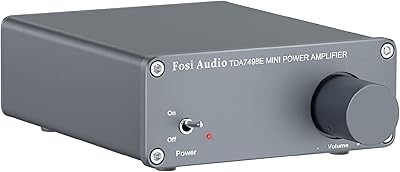
Fosi Audio TDA7498E
Fosi Audio TDA7498E
83%
88%
Sound Quality
93%
Value for Money
71%
Build Quality
74%
Power Output & Headroom
66%
Noise Floor & Background Hiss
More

FAQ

Only if your turntable has a built-in phono preamp — most modern entry-level decks do, but many older or higher-end tables do not. If your turntable outputs a standard line-level signal, you're fine. If not, you'll need a separate phono stage between the deck and the amp, which is an additional purchase to factor in.

No, the Cambridge Audio AXA25 does not include native Bluetooth. However, there is a USB port on the rear panel that can power a compatible Bluetooth receiver dongle or a device like Google Chromecast Audio. Those accessories are sold separately, so wireless capability isn't free — but it is achievable with a modest extra spend.

Honestly, it depends on the room size and your speakers. For a small bedroom, home office, or a living room up to about 150 square feet with efficient bookshelf speakers, it works well. For larger spaces or speakers with low sensitivity ratings, the amp will start to run out of steam before you hit comfortable listening volumes. Be realistic about the room you're putting it in.

Cambridge Audio made a deliberate decision to keep the signal path clean and the price honest, rather than bundling in features that add cost and circuitry. It's a design philosophy choice, not an oversight. That said, it is a genuine daily inconvenience if your amp sits more than a couple of feet away from your listening position — it's worth thinking carefully about your room layout before committing.

Efficient bookshelf speakers with an impedance of 8 ohms and a sensitivity of around 85dB or higher are the ideal match. Brands like Q Acoustics, KEF, Elac, and Wharfedale all make compatible options at various price points. Avoid pairing it with large floor-standing speakers or anything designed for high-power amplification — the AXA25 simply doesn't have the grunt for those.

It runs warm rather than hot — particularly after an extended listening session at moderate-to-high volume. Passive cooling is effective within its design limits, but you should make sure there is reasonable clearance above and around the unit. Avoid placing it inside a sealed cabinet or directly beneath other components that also generate heat.

There is no dedicated subwoofer output, which is a limitation worth knowing. You can connect a subwoofer with speaker-level inputs by running cables from the amp's speaker terminals, but it requires a sub that supports that connection method. It's a workaround, not an ideal native feature.

You can connect a TV via one of the RCA analogue inputs, provided your TV has analogue audio outputs — most modern TVs still include a 3.5mm or RCA output for exactly this purpose. Bear in mind there is no optical or HDMI ARC input, so if your TV only has digital audio outputs, you will need a small external DAC to bridge the gap.

The difference in sound quality is meaningful, especially in terms of stereo separation and dynamic detail. An all-in-one system prioritises convenience and compactness; this integrated stereo amp prioritises audio performance. The trade-off is that you need to source speakers and source components separately, which takes more effort and budget up front — but the listening experience is considerably better for it.

It is genuinely beginner-friendly from an operational standpoint — there's no complex menu system, no firmware to update, and no app to configure. You plug in your sources, select an input, set the volume, and listen. The only knowledge gap that trips people up is the missing phono stage for turntables, so as long as you understand your sources before buying, setup is very approachable.