Overview

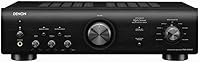
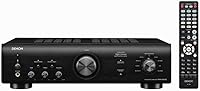
The Denon PMA-600NE is Denon's attempt to bring genuine hi-fi sensibility to listeners ready to graduate from soundbars and budget AV receivers without straying into esoteric audiophile territory. The chassis is slim — just under five inches tall — and sturdy enough that it doesn't rattle when things get loud. At 70 watts per channel into 4 ohms, this integrated amp has enough muscle to drive a wide range of bookshelf and floor-standing speakers without strain. What really sets it apart, though, is Analog Mode: a physical circuit switch that cuts all digital and Bluetooth circuitry out of the signal path entirely, something you rarely find at this price tier.

Features & Benefits

The PMA-600NE packs a surprising amount of functionality into a compact enclosure. A built-in phono preamp means turntable owners can plug in directly — no extra hardware needed. Two optical and one coaxial input feed the onboard DAC, so a CD player, streaming device, or Blu-ray player connects without fuss. Bluetooth handles casual listening from a phone or tablet. Powering everything is Denon's Advanced High Current push-pull circuit, which keeps the output clean and controlled even when you push the volume. The unit weighs a solid 18 pounds, giving it a planted, quality feel without dominating a shelf or swallowing a dedicated listening space.

Best For

This integrated amp earns its place in two kinds of setups: the vinyl lover's desk where streaming from a phone is also part of the routine, and the living room of a listener stepping away from an all-in-one system for the first time. If you've been running a turntable through a cheap receiver, this Denon amplifier is a meaningful upgrade that consolidates sources cleanly. Anyone tired of budgeting separately for a phono stage and DAC will find the all-in-one approach genuinely practical. Less suited to home theater use or buyers who need HDMI — this is purely a two-channel stereo device, and it's better for it.

User Feedback

Across several hundred verified ratings, this integrated amp holds a 4.6-star average — a meaningful signal for audio gear in this price range. Buyers consistently praise the warm, full sound character and the reassuringly solid build. Setup gets high marks too; most found it ready to go within minutes. The criticism that surfaces most often involves the remote: reviewers describe it as basic and occasionally sluggish, and switching between inputs isn't as intuitive as it could be. A handful of buyers also wished for more binding post options. Paired with quality bookshelf speakers, though, real-world performance consistently impresses — especially among listeners upgrading from budget AV receivers.

Pros

  • Warm, well-controlled sound character that works in a wide variety of room sizes and speaker pairings.
  • Built-in phono preamp eliminates the need for a separate turntable stage right out of the box.
  • Onboard DAC handles optical and coaxial sources cleanly without extra hardware in the chain.
  • Analog Mode physically cuts digital circuitry from the signal path — a genuine differentiator at this price.
  • Solid 18-pound chassis feels planted and premium well beyond what the category typically delivers.
  • Bluetooth pairing is fast and stable for casual wireless listening from a phone or tablet.
  • Setup takes under 15 minutes for most users, even those new to integrated amplifiers.
  • The PMA-600NE consolidates four components into one box, saving both money and shelf space.
  • Slim profile fits easily into existing shelving without dominating a rack or a desktop setup.
  • Denon's long manufacturing history provides genuine confidence in long-term reliability.

Cons

  • The included remote feels plasticky and sluggish — front panel controls end up being the more reliable option.
  • No aptX or AAC Bluetooth support limits wireless audio quality for streaming-heavy listeners.
  • Input switching via the remote is poorly implemented and a common frustration among owners.
  • No subwoofer pre-out makes adding a sub to the system unnecessarily complicated.
  • The built-in phono stage only supports MM cartridges — MC users need an outboard solution.
  • No HDMI ARC or TV integration means it cannot serve double duty in a home theater context.
  • Only available in black — limited finish options for buyers trying to match existing equipment.
  • The rear panel labeling is faint and difficult to read in low-light installation conditions.
  • No USB audio input, which some users expected given the otherwise broad digital connectivity.
  • Display feedback is minimal — there is no input name readout to confirm source selection at a glance.

Ratings

The Denon PMA-600NE has been evaluated across hundreds of verified global purchases, with our AI scoring system filtering out incentivized, duplicate, and low-credibility reviews to surface what genuine buyers actually experience. Scores reflect both the consistent strengths and the friction points that real users encounter after weeks or months of ownership. Nothing is smoothed over — where this integrated amp earns praise, the data backs it up, and where it falls short, that shows up too.

Sound Quality
91%
Buyers consistently describe the sound as warm and full-bodied without crossing into muddy territory — a balance that takes a lot of home listening setups years to achieve with separate components. Paired with bookshelf speakers in a small to mid-size room, the output is clean and well-controlled even at higher listening levels.
A handful of critical listeners note the amp leans slightly warm rather than neutral, which may not suit those who prefer a more analytical, transparent presentation. At the very top of the volume range, some users detect a trace of compression with demanding speaker loads.
Build Quality
88%
At 18 pounds for a compact integrated unit, the chassis feels planted and solid — nothing flexes under pressure, and the front panel controls have a satisfying, mechanical feel. Buyers frequently comment that the unit looks and feels more expensive than its category suggests.
A few users noted that the top panel attracts fingerprints and light scratches more readily than expected for a component meant to sit exposed on a shelf. The overall fit of rear panel connectors, while functional, doesn't quite match the premium impression the front panel creates.
Value for Money
83%
Consolidating a phono preamp, DAC, Bluetooth receiver, and power amplifier into one box at this price point represents real savings compared to assembling equivalent separates. For listeners upgrading from a budget AV receiver or an all-in-one system, the jump in audio quality is immediately noticeable.
The market at this price tier has become increasingly competitive, with a few rivals now offering comparable internals or better remote functionality. Buyers who already own a quality external DAC or phono stage will find less incremental value in the bundled features.
Analog Mode
89%
This is one of the features that genuinely differentiates the amp from similarly priced competitors — pressing that button and cutting all digital circuitry out of the chain during a quiet vinyl session is something users describe as a real, audible difference, not just a marketing bullet point.
Because it disables Bluetooth and digital inputs entirely, switching back from Analog Mode requires remembering to re-enable it, which catches casual listeners off guard. A small number of users wanted more granular control — disabling Bluetooth only, for instance, while keeping digital inputs live.
Phono Preamp Quality
79%
21%
Having a decent MM phono stage built in is a legitimate convenience for turntable owners who don't want to budget for a separate unit. For a starter or mid-level turntable, the onboard stage performs capably and removes a piece of cabling complexity from the setup.
Dedicated phono preamp enthusiasts or those running higher-end cartridges will likely find the built-in stage a limiting factor sooner rather than later. It handles standard MM cartridges well but has no MC support, and experienced vinyl listeners tend to replace it with an outboard unit once they've upgraded their turntable.
Bluetooth Performance
74%
26%
Pairing is quick and reliable for most users, and casual streaming from a phone or tablet while the main sources are idle works without hassle. The Bluetooth implementation is stable enough for background listening and daily casual use.
The Bluetooth codec support is limited — there is no aptX or AAC, which means the wireless audio quality ceiling is lower than competing units in the same price range. Listeners who rely heavily on wireless streaming as a primary source are likely to notice the gap compared to a wired connection or a unit with higher-codec support.
DAC Performance
77%
23%
Running a streaming device or CD player through one of the optical inputs delivers noticeably cleaner audio than the analog outputs on most entry-level source components. For buyers who don't already own a standalone DAC, the onboard converter is a meaningful upgrade path.
Against dedicated external DACs in a similar price range, the built-in converter holds its own but doesn't exceed expectations. Listeners with already capable source components may not hear a compelling difference versus bypassing the DAC entirely.
Connectivity & Inputs
81%
19%
Two optical, one coaxial, one phono, and standard line-level inputs cover the typical needs of a multi-source stereo system without requiring a separate switcher. Most buyers found it easy to organize all their sources without running out of sockets.
There is no HDMI ARC, no USB audio input, and no subwoofer pre-out — omissions that don't matter for a pure stereo listener but frustrate buyers who realized after purchase that they wanted to integrate a sub or connect directly to a TV. The input labeling on the rear panel could also be more clearly printed.
Remote Control
58%
42%
The included remote covers the essentials — volume, input selection, and muting — which is enough for a single-device listening setup on a couch a few meters from the unit.
Buyers are consistently underwhelmed by the remote, describing it as plasticky, sluggish in response, and poorly laid out compared to the quality of the amp itself. Input switching via the remote is the most common complaint, with several users noting they default to using the front panel controls instead.
Setup & Ease of Use
92%
Out of the box, most users report having the amp up and running in under 15 minutes — connecting speakers, a source or two, and powering on is genuinely straightforward. The front panel layout is logical, and first-time stereo amp buyers rarely report confusion during initial setup.
The manual, while adequate, doesn't provide much guidance for users new to integrated amps who want to understand the Analog Mode or DAC switching behavior in detail. A few buyers had to seek out third-party guides online before feeling confident switching between source types.
Design & Aesthetics
86%
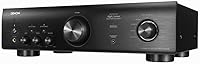
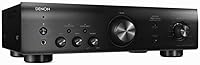
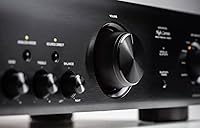
The slim, understated black finish fits comfortably into both modern and traditional living room setups without demanding visual attention. The front panel is clean, with a large volume knob that anchors the layout and gives the unit an air of purpose.
Color options are limited to a single black finish, which may disappoint buyers trying to match silver or wood-toned equipment racks. The display is minimal — there is no input name readout — so identifying which source is active relies entirely on familiarity with the panel layout.
Power & Headroom
84%
70 watts per channel into 4 ohms is genuinely usable power for a broad range of speakers, and in real-world small to medium room listening, buyers report clean output well before the volume control approaches its upper range.
In larger rooms or with speakers that demand more current, the amp can feel somewhat restrained at high listening levels compared to higher-powered competitors. Buyers who plan to run inefficient floor-standing speakers in a large space may find the headroom tighter than expected.
Long-Term Reliability
82%
18%
Denon's track record across the audio industry and the number of multi-year ownership reports in verified reviews both suggest this is not a unit buyers tend to replace due to failure. Several purchasers from the first year of availability report no operational issues after years of regular use.
As with most electronics, a small percentage of buyers have reported early unit failures or channel-balance issues, and the warranty service experience varies by region. Long-term durability data beyond four or five years of ownership is still limited given the product's 2019 release.

Suitable for:

The Denon PMA-600NE is a natural fit for the listener who has outgrown their soundbar or budget AV receiver and wants to invest in a proper two-channel stereo setup without assembling a pile of separate components. If you own a turntable — or plan to buy one — the built-in phono stage means you can plug in directly on day one, skipping the cost and clutter of a standalone preamp. The same logic applies to digital sources: a streaming box, CD player, or Blu-ray machine can connect via optical or coaxial without needing an external DAC to clean up the signal. Bluetooth coverage for casual phone listening rounds things out, so this integrated amp genuinely handles a multi-source household without compromise. It also works well in smaller rooms and desktop setups where a slim chassis and clean aesthetic actually matter, and for the buyer who values brand heritage and long-term reliability over chasing specs on paper, Denon's track record carries real weight.

Not suitable for:

Buyers who primarily use their amplifier as part of a home theater system should look elsewhere — the Denon PMA-600NE has no HDMI ARC, no surround decoding, and no subwoofer pre-out, so integrating it into a TV-centric setup involves real workarounds. If your main listening habit is high-quality wireless streaming, the absence of aptX or AAC Bluetooth means the wireless audio ceiling is noticeably lower than some competitors at a similar price point. Listeners running high-end cartridges on a serious turntable will likely outgrow the built-in MM phono stage fairly quickly and end up budgeting for an outboard preamp anyway, which partially undermines the all-in-one appeal. Anyone who needs to drive large, inefficient floor-standing speakers in a big room may find 70 watts per channel tighter than expected under real listening conditions. And if remote control usability is important to you — say, operating the amp from across the room while seated — the included remote is a consistent weak point that has frustrated enough buyers to be worth flagging before purchase.

Specifications

  • Power Output: Delivers 70W per channel into 4 ohms via a two-channel stereo configuration.
  • Amplifier Circuit: Uses Denon's Advanced High Current (AHC) push-pull circuit design for clean, stable power delivery.
  • Phono Preamp: Built-in MM phono preamplifier supports direct connection of a moving-magnet turntable cartridge.
  • DAC: Integrated digital-to-analog converter processes incoming digital audio from optical and coaxial sources.
  • Digital Inputs: Equipped with two optical (TOSLINK) and one coaxial (S/PDIF) digital audio inputs.
  • Analog Inputs: Includes one dedicated phono input plus additional standard line-level analog inputs for CD players and other sources.
  • Bluetooth: Built-in Bluetooth allows wireless audio streaming from smartphones, tablets, and other compatible devices.
  • Analog Mode: A dedicated Analog Mode physically disengages all digital and Bluetooth circuitry from the signal path when activated.
  • Dimensions: The unit measures 17.1 x 12.1 x 4.76 inches (W x D x H), providing a slim, shelf-friendly profile.
  • Weight: The amplifier weighs 18 pounds, giving it a solid, planted feel typical of quality audio components.
  • Chassis: Enclosed in a vibration-resistant cabinet designed to minimize resonance interference during playback.
  • Remote Control: Ships with a basic infrared remote control that covers volume, input selection, and muting functions.
  • Battery: Requires one AA battery for the remote control, which is included in the box.
  • Availability: First made available in September 2019 and remains an active, non-discontinued product in Denon's lineup.
  • Manufacturer: Designed and sold by Denon, an audio brand with over 100 years of history in consumer and professional audio.
  • Sales Rank: Holds a Best Sellers Rank of approximately #295 in Audio Component Amplifiers on Amazon at time of review.
  • Model Number: Official model designation is PMA-600NE, used for warranty registration and compatibility reference.
  • Finish: Available in a single black finish with clean, minimalist front panel aesthetics.

Related Reviews
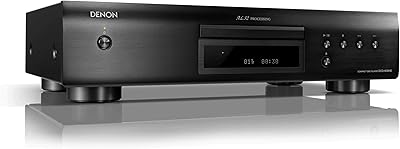
Denon DCD-600NE
Denon DCD-600NE
78%
91%
Sound Quality
78%
Build Quality
88%
Vibration & Interference Control
86%
Pure Direct Mode Effectiveness
84%
AL32 Processing
More
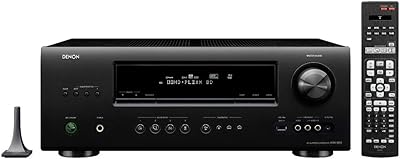
Denon AVR-1612
Denon AVR-1612
67%
84%
Audio Quality
81%
Build Quality
67%
HDMI Connectivity
58%
Ease of Setup
53%
Remote Control
More
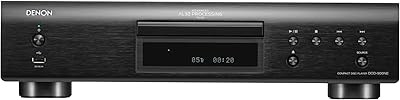
Denon DCD-900NE CD Player
86%
94%
Sound Quality
90%
Build Quality
85%
Connectivity Options
78%
Ease of Use
88%
Vibration Resistance
More
Denon HEOS Amp Wireless Amplifier
86%
91%
Sound Quality
89%
Connectivity Options
94%
Ease of Setup
87%
Multi-Room Performance
78%
App Usability
More
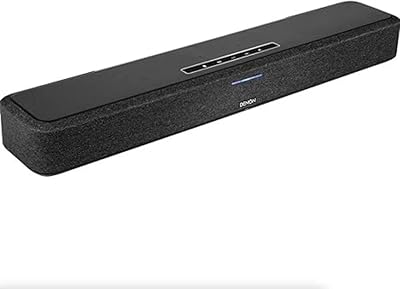
Denon Home 550 Wireless Soundbar
86%
91%
Sound Quality
87%
Ease of Setup
90%
Build Quality
94%
Wireless Connectivity
88%
Alexa Integration
More
Denon PerL Pro True Wireless Earbuds
86%
94%
Sound Quality
90%
Noise Cancellation
88%
Battery Life
85%
Comfort & Fit
87%
Build Quality
More
Denon Home 150 Wireless Smart Speaker

86%
88%
Sound Quality
93%
Ease of Setup
85%
Multi-Room Audio Performance
89%
Voice Control Integration
76%
Connectivity Stability
More
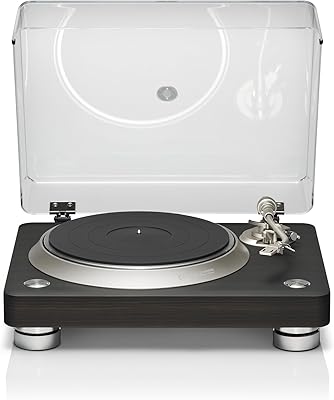
Denon DP-3000NE Fully Automatic Turntable
87%
88%
Ease of Setup
92%
Sound Quality
90%
Build Quality
94%
Automatic Operation
89%
Vibration Control
More
Denon RCD-N12 Bluetooth CD Player
85%
91%
Sound Quality
88%
Ease of Setup
85%
Bluetooth Connectivity
87%
Alexa Integration
90%
Wi-Fi Streaming
More
Denon Home 350
Denon Home 350
80%
91%
Sound Quality
88%
Build Quality
86%
HEOS Multi-Room Performance
93%
AirPlay 2 Integration
61%
App Experience (HEOS App)
More

FAQ

Yes, the built-in MM phono stage handles that connection directly. Just make sure your turntable has a moving-magnet cartridge — if it has a built-in preamp already, plug it into a standard line input instead to avoid double-amplifying the signal.

Analog Mode physically cuts all digital circuitry — including Bluetooth — out of the signal path, so the audio runs through a purely analog chain from input to speaker. Many vinyl listeners activate it during dedicated listening sessions and report a noticeable improvement in clarity and warmth. It is not automatic, so you need to toggle it manually when you want that experience.

Unfortunately, no. The Bluetooth implementation is standard SBC only, which means wireless audio quality is limited compared to units that support higher-quality codecs. For casual background listening it is perfectly adequate, but if wireless streaming is your primary use case, the wired digital inputs will serve you better.

For most bookshelf and moderately efficient floor-standing speakers in a small to medium room, 70 watts per channel is more than sufficient. If your speakers are particularly inefficient — below 87dB sensitivity — or your room is large, you may find the amp working harder than ideal at high volumes. It is best matched with speakers in the 87dB and above sensitivity range.

There is no dedicated subwoofer pre-out on this integrated amp, which is one of its more commonly noted omissions. You can connect a subwoofer that accepts speaker-level inputs by running it in parallel with your main speakers, but it is a workaround rather than an ideal solution.

Input switching from the front panel is straightforward and quick. Via the remote, however, it is less elegant — the remote layout and response speed have been a recurring complaint among owners, and many end up defaulting to the front panel for source changes. It is functional but not polished.

You can, as long as your TV has an optical or coaxial digital audio output — most modern TVs do. Connect the TV's optical out to one of the amp's optical inputs and you have a clean two-channel setup. There is no HDMI ARC support, so that pathway is not available here.

Yes, it supports both 4-ohm and 8-ohm speaker loads. The rated 70W output is specified at 4 ohms; at 8 ohms the power output will be somewhat lower, but the amp remains stable and well-suited to the majority of consumer bookshelf and floor-standing speakers on the market.

Like most Class AB amplifiers, it generates some warmth during use, particularly at higher volume levels. The chassis manages heat adequately under normal listening conditions, but it is worth leaving a few inches of clearance above and around the unit if it is placed in an enclosed cabinet or tight rack space.

For most buyers, the convenience of having a phono stage, DAC, Bluetooth, and amplifier in one unit outweighs what separates might offer at the same combined spend. The trade-off is flexibility — once you want to upgrade just one component, such as the phono stage, you are working around the built-in hardware rather than simply swapping a single box. As a starting point for a serious stereo system, though, it is a genuinely strong foundation.