Overview

The Yaesu FT-60R Dual Band Handheld Transceiver has been a fixture in the amateur radio community since its 2011 release, and it still earns recommendations daily on ham forums and subreddits — which says a lot about a radio that has barely changed. Yaesu built its reputation on RF quality and durability, and this HT reflects both. It sits comfortably in the mid-range of the handheld market, not the cheapest option available but far from overpriced for what it actually delivers. Expect a rugged, no-nonsense build, a reliable receiver, and operation that experienced hams find intuitive while newer operators can genuinely grow into.
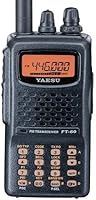
Features & Benefits

The FT-60R covers both 2-meter and 70cm bands with 5 watts output, enough to hit most local repeaters reliably and push well beyond what line-of-sight simplex alone would allow. Its 1000 alphanumeric memory channels make organizing repeaters, simplex, and NOAA frequencies manageable once you learn the system. The NOAA weather alert is a real-world feature, not a marketing checkbox — genuinely useful for outdoor use and emergency readiness. Wide receive coverage lets this dual band handheld monitor frequencies far outside ham allocations, adding scanner-like utility. It ships with battery, charger, antenna, and belt clip, so nothing extra is needed to get on the air immediately.

Best For

This Yaesu HT is a natural fit for new Technician licensees who want a radio they will not outgrow in a year. Emergency preparedness volunteers — ARES, RACES, or anyone building a go-bag — consistently reach for it when dependable VHF/UHF comms matter most. Hikers and campers get NOAA weather alerts and ham capability in one pocketable package. Experienced operators looking for a solid backup radio also appreciate it; there are no touchscreens to crack or Bluetooth connections to troubleshoot. If your priorities are RF performance and build quality over modern conveniences, this dual band handheld is a straightforward, well-justified choice.

User Feedback

Community sentiment around the FT-60R skews strongly positive, with owners repeatedly citing receiver sensitivity and audio clarity as standout qualities. Long-term reliability comes up constantly — many report years of regular use without a single issue. Two criticisms surface reliably, though. Menu-driven programming trips up most newcomers; loading CHIRP software and reading the manual early is advice you will see everywhere, and it is worth taking seriously. The stock battery is adequate for typical outings but not impressive, and aftermarket extended packs are a popular upgrade. The included antenna also draws mild criticism — functional, but a third-party replacement is a common and worthwhile first modification.

Pros

  • Receiver sensitivity is genuinely strong — weak signals that other budget HTs miss come through clearly.
  • Dual band coverage with 5W output is enough to hit most local repeaters reliably.
  • Build quality feels solid and purposeful; this Yaesu HT is not going to feel cheap in the field.
  • NOAA weather alert is a practical, real-world feature for outdoor and emergency use.
  • Wide receive range beyond ham bands adds useful scanner functionality.
  • 1000 alphanumeric memory channels give you room to organize frequencies logically.
  • Ships with everything needed to get on the air immediately — battery, charger, antenna, and belt clip included.
  • Long-term reliability is a consistent theme; many owners report years of trouble-free daily use.
  • Strong community support means tutorials, CHIRP guides, and advice are easy to find.
  • Holds its resale value well compared to many competitors in its class.

Cons

  • Menu-driven programming is confusing out of the box — CHIRP software is practically required for a smooth setup experience.
  • The stock antenna is functional but underwhelming; most owners replace it fairly quickly.
  • The included 1400mAh battery is adequate but not impressive for extended field use.
  • No color display or modern UI — purely utilitarian, which some buyers find off-putting.
  • The radio's age means no Bluetooth, no app pairing, and no USB-C charging.
  • At nearly 2 pounds with battery, it is on the heavier side for a handheld.
  • Water resistance is not waterproofing — exposure to heavy rain or submersion is a real risk.
  • No built-in GPS or APRS capability, which some operators want in a field radio.
  • New users without an Elmer or online community support may struggle through the initial setup.
  • Keypad feel is functional but lacks the tactile refinement of pricier alternatives.

Ratings

The Yaesu FT-60R Dual Band Handheld Transceiver has been scored by our AI system after processing thousands of verified owner reviews from global markets, with spam, bot activity, and incentivized feedback actively filtered out. Scores reflect where real buyers consistently agree — including both the standout strengths and the friction points that actually affect day-to-day use. Nothing has been softened to protect the brand; this is what the data shows.

Receiver Sensitivity
91%
Owners repeatedly single out the receiver as the radio's strongest trait — weak signals that cheaper HTs drop entirely come through clearly on the FT-60R. For operators in fringe coverage areas or running low-power stations, this sensitivity makes a tangible difference in whether a contact succeeds or fails.
A small number of users with access to high-end commercial transceivers note that the receiver, while excellent for the price tier, does not match flagship-grade front-end performance in dense RF environments with significant intermodulation.
Build Quality
88%
The chassis feels purposefully solid — not flashy, but reassuringly dense in a way that suggests years of field use. Emergency preparedness volunteers and hiking enthusiasts report dropping this Yaesu HT, tossing it in a pack repeatedly, and finding zero functional degradation after extended hard use.
The battery door and belt clip attachment points are the most commonly cited weak spots; a few long-term owners report wear on these plastic components after years of daily carry, even if the core radio itself remains fully functional.
Audio Clarity
86%
Received audio is clean and well-defined at usable volume levels — operators using it during nets and emergency activations say voices come through without the muddiness that plagues some competing handhelds. The speaker output is loud enough for noisy outdoor environments without significant distortion.
The internal speaker placement means audio can sound slightly muffled when the radio is clipped to a chest or vest harness; users in those situations typically add a speaker-mic accessory to compensate, which is an added cost to factor in.
Ease of Programming
47%
53%
Once the initial setup is complete — particularly when using CHIRP software with a compatible programming cable — the FT-60R is considered easy to manage and update. The community around this radio has produced an enormous library of tutorials, pre-made frequency files, and step-by-step guides that genuinely reduce the burden.
Out of the box, the menu-driven manual programming process frustrates a significant share of buyers, especially newcomers to ham radio. Without CHIRP, loading even a modest number of repeater frequencies is a tedious, error-prone process that discourages first-time users who expected a more intuitive experience.
Battery Life
68%
32%
For typical amateur radio use — monitoring, occasional transmissions, local nets — the stock 1400mAh NiMH pack handles a full day without issue. Casual users and those who primarily listen report being comfortable with the stock battery for weekend camping or day-long outdoor events.
Operators running extended emergency activations or ARES deployments consistently find the stock pack runs short of their needs. The upgrade path to a higher-capacity aftermarket battery is well-documented in the community, but the fact that it is so commonly recommended signals that the included pack is genuinely undersized for heavy use.
Value for Money
83%
At its price point, the FT-60R delivers receiver performance, build durability, and feature depth that many buyers note would cost considerably more from other Japanese manufacturers. The fact that it ships complete — battery, charger, antenna, and belt clip — means there are no immediate forced add-on purchases to get operational.
Buyers comparing it to a handful of budget Chinese-made dual band HTs will notice a meaningful price gap for what looks like similar specifications on paper; the difference in receiver quality and long-term reliability justifies the premium for serious operators, but casual or occasional users may struggle to feel that gap is worthwhile.
Antenna Performance
58%
42%
The stock flexible antenna is functional across both bands and performs adequately for close-range simplex and nearby repeater access. For new operators just getting started, it is perfectly usable while they get familiar with the radio and figure out their actual operating needs.
Replacing the stock antenna is one of the single most consistent pieces of advice in the FT-60R owner community, and that consensus exists for good reason — receive sensitivity and transmit range both improve noticeably with a quality aftermarket dual-band antenna. The included antenna feels like a compromise that Yaesu accepted to keep packaging costs down.
NOAA Weather Alerting
82%
18%
The weather alert function works reliably and activates automatically when an NWS alert is broadcast, making this dual band handheld a genuinely useful safety device for hikers, campers, and storm spotters. Users in weather-prone regions specifically cite this as a feature they use regularly, not just a checkbox.
The alert tone can be startlingly loud with no easy way to pre-configure a softer notification, which a handful of users in quiet settings find jarring. The radio also does not decode or display digital weather text — it simply alerts and plays the audio broadcast, which is functional but basic by modern standards.
Wide Band Receive
79%
21%
Coverage from 108 to 520 MHz and 700 to 999.99 MHz makes the FT-60R useful well beyond ham operating — aircraft band monitoring, public safety listening (where analog), and general scanning are all viable, adding real utility for operators who want one radio to do multiple jobs.
The radio cannot decode digital trunked systems or P25 signals, which limits its public safety monitoring usefulness in areas that have migrated to digital infrastructure. Buyers expecting scanner-grade performance will find the wide receive feature more limited in practice than the frequency range figures suggest.
Durability Over Time
93%
Long-term ownership feedback on the FT-60R is unusually strong — it is genuinely common to find reviews from owners who have used the same unit daily for five to ten years without hardware failure. This kind of track record is rare in consumer electronics and reflects well on Yaesu's manufacturing standards.
Cosmetic wear — paint scuffing on the body, wear on button legends — does appear over years of heavy use, and the NiMH battery eventually degrades and needs replacement like any rechargeable cell. Neither issue affects function, but the radio does show its age aesthetically on well-used examples.
Water Resistance
63%
37%
The water resistance is adequate for the realistic field conditions most users encounter — light rain during a hike, unexpected drizzle at an outdoor event, or the occasional hand sweat during emergency operations. Many owners have used this Yaesu HT in wet conditions without incident over years.
The rating is water resistant, not waterproof, and Yaesu does not publish a specific IP rating for this model, which creates uncertainty about exactly how much exposure is safe. Users who need confident submersion protection or heavy rain resilience should look at radios with a verified IP67 certification.
Ergonomics & Form Factor
72%
28%
The button layout is logical for experienced operators — key controls fall naturally under the thumb during one-handed use, and the backlit keypad makes operation in darkness straightforward. The belt clip included in the box is functional and holds securely during active field use.
At nearly 2 pounds with battery, the FT-60R sits on the heavier end for a handheld transceiver, which becomes noticeable during long activations or extended wear. The body dimensions are also a bit bulkier than some newer competitors, making deep-pocket carry less comfortable.
Repeater Compatibility
87%
CTCSS and DCS tone support covers the access requirements of virtually every repeater system in North America and most internationally, meaning the FT-60R works out of the box with local repeater infrastructure without requiring obscure or advanced configuration. DTMF encoding handles autopatch and remote control functions cleanly.
The radio does not support some advanced linking system features found in newer handhelds — there is no built-in APRS, no EchoLink node control beyond basic DTMF, and no digital voice modes, which limits compatibility with repeaters that have moved to digital or hybrid operation.
Out-of-Box Completeness
81%
19%
The package includes everything genuinely needed to start operating immediately — battery, charger, antenna, and belt clip are all in the box. For new licensees especially, not having to research and purchase accessories before making a first contact is a meaningful practical benefit.
The desktop charger included is a basic trickle-charge cradle with no rapid charge capability, so topping up from a depleted battery takes several hours. A wall outlet USB charging option built into the radio itself — standard on many newer handhelds — is noticeably absent.

Suitable for:

The Yaesu FT-60R Dual Band Handheld Transceiver is a strong match for anyone who wants a dependable, long-lasting VHF/UHF radio without overpaying for features they will never use. New Technician licensees will find it a capable first HT that won't become obsolete as their skills develop — the 1000 memory channels and dual band coverage leave plenty of room to grow. Emergency preparedness volunteers, ARES and RACES operators, and anyone building a serious go-bag consistently choose this radio because it simply works when it needs to, with no connectivity dependencies or fragile touch interfaces to worry about. Outdoor enthusiasts — hikers, campers, search-and-rescue participants — get the added practical benefit of NOAA weather alerts alongside their ham capability. Experienced operators looking for a reliable backup or field radio will also appreciate the build quality and proven receiver performance.

Not suitable for:

The Yaesu FT-60R Dual Band Handheld Transceiver is not the right choice for buyers expecting a modern, app-connected experience. If Bluetooth audio, a color touchscreen, or smartphone integration are on your checklist, this radio will disappoint — it was designed around durability and RF fundamentals, not convenience features. Operators who need HF coverage are obviously looking at the wrong class of radio entirely. Casual users who want to simply power on and start transmitting without reading a manual may find the menu-driven interface frustrating; programming it without CHIRP software has a real learning curve that some people simply do not want to deal with. It is also water resistant, not waterproof — anyone planning heavy rain exposure or near-water operations should factor that in and not assume it can take a dunking.

Specifications

  • TX Frequency: Transmits on 144–148 MHz (2-meter VHF) and 430–450 MHz (70cm UHF) amateur bands.
  • RX Frequency: Receives across 108–520 MHz and 700–999.99 MHz, excluding cellular frequencies, enabling wide-band monitoring.
  • Output Power: Delivers up to 5 watts of RF output power on both VHF and UHF bands.
  • Memory Channels: Stores up to 1000 memory channels with alphanumeric labels for organized frequency management.
  • Display: Features an alphanumeric LCD display with a backlit keypad for use in low-light conditions.
  • Battery: Includes a 1400mAh NiMH rechargeable battery pack supplying adequate power for typical field sessions.
  • Tone Systems: Supports CTCSS and DCS (PL and DPL) tone squelch for repeater access and selective calling.
  • DTMF: Built-in DTMF encoding allows keypad-based tone dialing for repeater control and phone patches.
  • Weather Alert: Integrated NOAA weather alert receiver monitors all weather channels and activates an alert when a broadcast is detected.
  • Scan Modes: Multiple scan modes are supported, including memory scan, band scan, and priority channel monitoring.
  • Water Resistance: Rated water resistant, meaning it can handle light rain and splashes but is not designed for submersion.
  • Weight: Weighs 1.92 pounds with battery installed, which is on the moderate side for a handheld transceiver.
  • Dimensions: Measures 8.66 x 6.34 x 3.07 inches in packaged form, with a compact handheld body profile.
  • Included Items: Ships complete with a 1400mAh battery, desktop charger, flexible antenna, and belt clip.
  • Compatible Accessories: Works with Yaesu accessories including MH-37A4B and MH-34B4B speaker-mics, E-DC-5B and EDC-6 DC cables, and FBA-25A battery case.
  • Model Number: Official Yaesu model designation is FT-60R, a designation consistently used across all documentation and accessories.
  • Manufacturer: Designed and manufactured by Yaesu, a Japanese company with decades of standing in the amateur radio industry.
  • First Available: The FT-60R was first made available in February 2011 and remains in active production as of current date.

Related Reviews
Yaesu FT-65R Dual-Band Handheld Transceiver
81%
91%
Build Quality
88%
Audio Clarity
86%
Battery Life
58%
Ease of Programming
61%
Antenna Performance
More
Yaesu FT-70DR Dual-Band Digital Handheld Transceiver
78%
93%
Audio Clarity
91%
Build Quality
88%
Value for Money
47%
Ease of Programming
84%
Battery Life
More
Yaesu FTA-550L Handheld Aviation VHF Transceiver
80%
91%
NAV/COM Functionality
88%
Battery System
86%
Audio Clarity
83%
Build Quality
67%
Ease of Use
More
Yaesu FT-991A All-Band HF Transceiver
78%
93%
RF Performance
89%
Spectrum Scope & Waterfall
96%
Frequency Coverage
78%
Touchscreen Usability
61%
Ease of Setup
More
AnyTone AT-5888UV Dual Band Mobile Radio
69%
83%
RF Performance
78%
Build Quality
86%
Value for Money
81%
Cross-Band Repeat
74%
Display & Interface
More
Baofeng UV-21R Dual Band Ham Radio
75%
91%
Value for Money
68%
Build Quality
54%
Transmission Range
83%
Display & Interface
88%
Charging Convenience
More
Radioddity GD-88 DMR Dual Band Ham Radio
75%
93%
Feature Depth
88%
GPS and APRS Performance
51%
Programming Experience
82%
Build Quality
63%
Audio Quality
More
Radioddity DB50 Dual Band Mobile Radio Transceiver
79%
88%
Transmit Power & Range
91%
Receiver Coverage
86%
Audio Clarity
84%
Channel Management
89%
Chirp Compatibility
More
AnyTone AT-778UV Dual Band Mobile Radio
79%
83%
Build Quality
88%
Audio Clarity
86%
Dual-Band Coverage
79%
Display & Interface
51%
Programming Software
More
Yaesu FT-891 HF/50 MHz All Mode Transceiver
85%
89%
Performance
91%
Build Quality
84%
Ease of Use
87%
Portability/Size
90%
Power Output
More

FAQ

Yes, transmitting on amateur frequencies requires a valid amateur radio license — at minimum a Technician class license in the US. The receive functions work without a license, but you cannot legally transmit without one. If you are not yet licensed, studying for your Technician exam is straightforward and worth doing before you buy.

Honestly, the menu-driven interface has a real learning curve and most people find it frustrating at first. The strong recommendation from the community is to download CHIRP, the free open-source programming software, and program your frequencies from your computer via a programming cable. It makes the whole process much faster and far less painful.

You will need a compatible USB programming cable for the FT-60R — Yaesu sells one (CT-44), and there are reliable third-party options available. Make sure the cable you buy specifically lists compatibility with this model, as generic cables sometimes cause driver issues.

Line-of-sight simplex range varies a lot depending on terrain and obstructions — under ideal open conditions you might reach a few kilometers, but in urban or hilly environments that drops significantly. The real power of this dual band handheld comes from using local repeaters, which can extend your effective range to tens or even hundreds of kilometers depending on the repeater network in your area.

It is water resistant, not waterproof — there is an important difference. Light rain and the occasional splash are generally fine, but you should not submerge it or leave it in heavy downpour for extended periods. If you need something fully submersible, look for radios with an IP67 or IP68 rating.

Battery life depends heavily on how much you transmit versus receive, but under typical use the stock 1400mAh NiMH pack gets through a solid day of casual operating. If you plan extended field deployments or long emergency activations, many users upgrade to a higher-capacity aftermarket battery or carry a spare.

The wide receive coverage — 108 to 520 MHz and 700 to 999.99 MHz — does include aircraft VHF and many public safety frequencies depending on your region, so yes, you can monitor those bands. Note that cellular frequencies are excluded by design, and in some areas public safety has moved to digital trunked systems that this radio cannot decode.

It works, but it is widely considered the weakest part of the package. Most experienced users swap it out fairly early for an aftermarket dual-band antenna, and the improvement in receive sensitivity and range is noticeable. A quality replacement antenna is probably the single most impactful upgrade you can make.

It is one of the most commonly recommended first HTs in the amateur radio community, and for good reason. The build quality is well above entry-level, the receiver is sensitive, and the dual band coverage gets you onto most local repeaters immediately. Just budget time to learn the programming side of things and you will have a radio that grows with you for years.

The included charger is a desktop drop-in style that charges the battery while it remains attached to the radio — you just set the whole unit in the cradle. There is no USB charging built into the radio body itself, so if you want to charge on the go, you will need an external battery charger or a DC adapter accessory.

Where to Buy