Overview

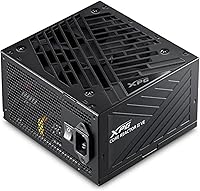
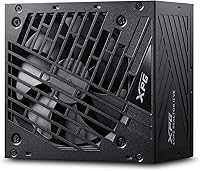
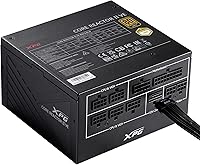
The XPG CORE Reactor II VE 650W PSU enters the mid-range market as a fully modular ATX 3.1 unit aimed squarely at mainstream builders who want modern compliance without over-spending. XPG sits under ADATA's gaming-focused umbrella, which means you get a brand that takes hardware seriously but hasn't built the decades-long reputation of Seasonic or be quiet!. At 650W, this power supply hits a practical sweet spot — enough headroom for an RTX 4060 Ti or RX 7700 XT pairing without bloat. The compact 140x150x86mm chassis helps in tighter cases, and dual Gold certification from both 80 Plus and Cybenetics is a genuinely rare differentiator at this price tier.
Features & Benefits

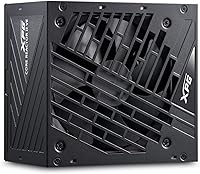
What makes this modular PSU stand out practically starts with its native 12V-2x6 connector, which replaces the older 8-pin adapter workarounds that caused headaches with high-power Ada Lovelace and RDNA 3 graphics cards. The 120mm FDB fan runs quietly under everyday loads — you won't hear it during light gaming or productivity tasks — and only ramps up when the system is genuinely working hard. Full modularity means you only connect the cables you actually need, keeping airflow cleaner inside the case. The protection suite covers overvoltage, undervoltage, overcurrent, short-circuit, and thermal events, so if something goes wrong elsewhere in your system, the PSU isn't going to make it worse.

Best For

This power supply makes the most sense for builders pairing it with mainstream GPU tiers — think RTX 4060, RTX 4070, or RX 7700 class cards — where 650W provides comfortable headroom without unnecessary cost. It's also a smart upgrade path for anyone still running a non-modular or pre-ATX 3.1 unit who doesn't want to jump to 850W just to get a native 12V-2x6 cable. The compact depth works in its favor for mATX and smaller mid-tower cases where PSU clearance is tight. If a quiet system matters — whether that's a home office machine or a living-room build — the near-silent fan behavior under light loads is a genuine selling point.

User Feedback

Buyers broadly report positive experiences with the XPG 650W unit, pointing to stable voltage output, genuinely quiet fan noise, and a tidy modular cable set that makes installation straightforward. The included cable lengths suit most mid-tower builds well, though owners of larger full-tower cases occasionally flag that some runs feel a little short. Brand trust comes up in reviews too — a few buyers mention XPG isn't the first name they'd reach for versus Corsair or Seasonic, but haven't encountered reliability problems. Long-term reports are still limited given the product's relative newness. Overall, this modular PSU earns a solid standing within the competitive 650W Gold segment, especially for builders who prioritize modern connector support and quiet operation.

Pros

  • Native 12V-2x6 connector works directly with current-gen GPUs, no adapters needed.
  • Dual Gold certification from both 80 Plus and Cybenetics is rare at this wattage tier.
  • Fully modular design keeps unused cables out of the case entirely.
  • The 120mm FDB fan stays impressively quiet during everyday and light gaming use.
  • Compact chassis fits comfortably in mATX and smaller mid-tower cases.
  • A comprehensive protection suite guards against overvoltage, short circuits, and overheating.
  • ATX 3.1 compliance means this power supply is ready for transient load spikes from modern GPUs.
  • Buyers consistently report stable voltage delivery and a clean out-of-box cable set.
  • 650W hits the practical sweet spot for mainstream GPU builds without unnecessary cost.
  • Strong Amazon ranking suggests broad buyer confidence within the 650W Gold segment.

Cons

  • XPG lacks the long-established PSU reputation of brands like Seasonic or Corsair, which may concern some buyers.
  • Long-term reliability data is still limited given the product launched in mid-2024.
  • Cable lengths may fall short in full-tower cases with bottom-mounted PSU shrouds.
  • Customer support experience for XPG PSUs is less well-documented than market leaders.
  • No RGB or aesthetic extras for builders who want the PSU to complement a windowed case.
  • 650W leaves little safety margin if you later upgrade to a more power-hungry GPU.
  • The modular cable set does not include a large selection of SATA or Molex runs for accessory-heavy builds.
  • Independent lab reviews and teardown data for this specific unit are not yet widely available.

Ratings

The XPG CORE Reactor II VE 650W PSU has been evaluated by our AI rating system after analyzing verified global buyer reviews, with spam, bot-submitted, and incentivized feedback actively filtered out. Scores reflect both what this power supply genuinely does well and the areas where real users ran into friction. The result is a transparent picture of where this modular PSU earns its place — and where it falls short.
Power Delivery Stability
88%
Buyers consistently report clean, stable voltage rails during gaming sessions and sustained workloads, with no noticeable fluctuations affecting system performance. For mid-range builds running an RTX 4060 or RX 7700-class card, the power delivery holds up reliably under the kind of mixed loads those GPUs generate day to day.
A small number of users note they haven't had independent lab data to confirm ripple performance for this specific unit, which makes it harder to fully validate the subjective stability reports. Those running more demanding overclocked CPUs alongside a power-hungry GPU may want more headroom than 650W allows.
Noise Level
91%
The FDB fan's intelligent control keeps the unit near-silent during everyday tasks, light gaming, and office workloads — builders who put their PC on a desk rather than under it will genuinely notice the difference. Multiple buyers describe the fan as effectively inaudible at idle and during typical gaming sessions at moderate room temperatures.
Under extended heavy load — think prolonged rendering or stress-testing — the fan does spin up audibly, which is expected behavior but worth knowing if you push your system hard for long periods. A handful of users in warmer climates report the fan becoming noticeable sooner than expected during summer months.
ATX 3.1 & Connector Compliance
93%
The native 12V-2x6 connector is one of the most practical reasons to choose this power supply over an older unit, particularly for anyone buying an RTX 40-series or RX 7000-series card where the connection standard was specifically designed to handle transient power spikes cleanly. Builders consistently praise the fact that no dongle or adapter is involved.
ATX 3.1 compliance is table stakes for a PSU released in 2024, so while it's correctly implemented here, it's less of a differentiator than it would have been a year earlier when fewer units in this price range offered it. Buyers replacing an older build may also need to reconsider their full cable setup.
Modular Cable System
84%
Full modularity at this wattage tier means you only install what your build actually needs, which makes cable routing far cleaner and frees up airflow inside the case. Buyers who care about build aesthetics consistently flag this as a meaningful advantage over semi-modular competitors at a similar price point.
Some users with larger full-tower cases find certain cable runs — particularly the PCIe cables — a bit short when the GPU slot sits far from the PSU bay. The cable selection in the box is solid for a standard build, but accessory-heavy setups with multiple storage drives may feel the Molex and SATA count is modest.
Efficiency & Thermals
86%
Holding both 80 Plus Gold and Cybenetics Gold certifications means this unit has been independently tested to run at over 90% efficiency at typical loads, which in practical terms translates to less heat generated inside the case and a modest but real reduction in electricity draw compared to Bronze-rated units over a year of regular use.
The efficiency gains over a single Bronze-rated competitor are real but not dramatic in dollar terms for most home users — we are talking a few dollars per month at best depending on usage patterns and local electricity costs. Buyers expecting transformative electricity savings may find the real-world difference underwhelming.
Build Quality & Materials
79%
21%
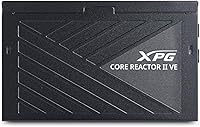
The unit feels solid and well-assembled out of the box, with no loose connectors or obvious quality control issues reported by the majority of buyers. The matte black finish is clean and unobtrusive, fitting naturally into most standard builds without clashing with case aesthetics.
XPG doesn't yet have the years of PSU-specific manufacturing data that Seasonic or Super Flower bring to the table, and without independent teardowns of this exact revision widely available, some buyers remain cautious about internal component quality. The exterior build impression is positive, but it doesn't fully resolve questions about long-term internal component longevity.
Installation Experience
87%
Buyers broadly describe the installation process as straightforward — the fully modular design simplifies routing, the connectors seat firmly, and the included cable set covers a typical mid-range build without requiring any additional purchases. First-time builders in particular appreciate that the 12V-2x6 cable is already there and clearly labeled.
The manual is functional but not particularly detailed, and users who are new to ATX 3.1 connector standards may want to cross-reference XPG's online documentation for clarity on which cable goes where. Cable labels could be more prominent for builders working in low-light case interiors.
Value for Money
83%
At its price point, this modular PSU delivers a combination of ATX 3.1 compliance, full modularity, and dual Gold certification that is genuinely difficult to match from more established brands without spending noticeably more. For a mainstream gaming build, the feature-to-cost ratio is competitive.
The slight brand trust discount that XPG carries compared to Seasonic or Corsair means some buyers feel they are accepting an unknown quantity on reliability, even if the specs look good on paper. If a well-known brand with a longer PSU track record releases a comparable unit at the same price, the value argument weakens.
Form Factor & Fit
89%
The 140mm chassis depth is shorter than many competing 650W units, which is a practical advantage for mATX cases and mid-towers with limited PSU clearance. Builders who have struggled to fit longer PSUs in compact cases will find this unit much easier to work with.
While the depth advantage is real for compact builds, the unit is still a standard ATX height and width, so it won't fit SFX or SFX-L builds. Full-tower users don't gain any particular benefit from the shorter depth, and for them cable length becomes a more relevant concern than the physical chassis size.
Protection Suite
88%
The five-way protection coverage — overvoltage, undervoltage, overcurrent, short-circuit, and over-temperature — gives builders meaningful peace of mind, particularly for a system that might be left running for long periods. For a mid-range build that's also used as a workstation, knowing the PSU won't pass a fault through to a GPU or motherboard matters.
Protection suites are now standard across most PSUs at this tier, so it's less of a differentiator than it once was. Without published test data from independent reviewers showing how quickly and cleanly the protections engage under real fault conditions, the practical effectiveness is harder to verify than the specification list implies.
Cable Quality & Flexibility
76%
24%
The modular cables are well-sleeved and hold their shape reasonably well, making routing manageable during assembly. Buyers generally find the connectors click into place reliably and don't require excessive force, which reduces the risk of accidental damage during installation in tight spaces.
The cables are not flat or ribbon-style, which makes them harder to hide behind a cable management panel in a windowed case compared to some competitors that include flat modular cables as standard. Users building show systems or open-frame rigs may find the cable aesthetics less polished than they'd like.
Brand Trust & Support
67%
33%
XPG as a brand has grown meaningfully in the gaming hardware space, and buyers who have previously used ADATA storage or XPG memory report generally positive support experiences. For a straightforward, problem-free installation, most users will never need to contact support at all.
PSU-specific customer support documentation and community experience for XPG remains thin compared to brands like Corsair or be quiet!, where years of forum posts and support tickets have built a clear picture of how warranty claims and RMA processes are handled. Buyers who have had to claim warranty on a PSU before know how much this matters.
Long-Term Reliability Outlook
71%
29%
The unit launched mid-2024 and has accumulated a meaningful number of positive reviews without a notable pattern of early failures, which is an encouraging early signal for a product in a safety-critical component category. The dual Gold certifications imply efficient thermal management, which generally correlates with longer component lifespan.
Eighteen months on the market is not enough time to make confident statements about long-term durability, and the absence of widely published teardown or lifetime testing data makes it difficult to assess internal component quality objectively. Buyers building a system they plan to run for five or more years may prefer a PSU with a more established reliability history.

Suitable for:

The XPG CORE Reactor II VE 650W PSU is a strong match for mainstream PC builders who want a modern, future-proofed power supply without paying for wattage they'll never use. If you're pairing it with an RTX 4060, RTX 4070, or an AMD RX 7700-class card, 650W gives you comfortable headroom without over-speccing your build. The native 12V-2x6 connector is particularly valuable for anyone buying a current-generation GPU, since it eliminates the adapter cables that have caused problems for some builders using older PSUs. Cable-management enthusiasts will appreciate the fully modular design — only plug in what you need, and your build stays clean. It also suits builders working inside mATX or compact mid-tower cases, where the shorter chassis depth can make a real difference during installation. Finally, if a quiet system matters to you — whether for a home office, a media PC, or just personal preference — the fan's low-noise behavior under typical loads is genuinely useful in day-to-day use.
Not suitable for:

Builders planning a high-end system with a power-hungry GPU like an RTX 4080 Super or RX 7900 XTX should look elsewhere, as this power supply does not offer the headroom those cards demand under sustained loads. The same applies to anyone running dual-GPU workstation setups or heavily overclocked platforms where peak draw can spike well above what 650W safely handles. Users building inside large full-tower cases may also find the included cable lengths on the shorter side, which can create routing challenges when the PSU mounts far from the motherboard tray. If brand pedigree is a deciding factor for you — and for a component as critical as a PSU, that's a fair concern — the XPG CORE Reactor II VE 650W PSU comes from a brand that hasn't yet built the long-term reliability track record that Seasonic, Corsair, or be quiet! have established over many years. Buyers who prioritize a well-documented warranty support experience may find those established names more reassuring for the long haul.
Specifications

  • Wattage: This power supply delivers a continuous 650W output, suitable for mainstream gaming builds with mid-range GPUs.
  • Form Factor: Standard ATX form factor with a compact 140 x 150 x 86mm chassis, fitting most mid-tower and mATX cases.
  • ATX Standard: Fully compliant with Intel's ATX 3.1 design specification, supporting modern transient load handling for current-generation hardware.
  • EPS Standard: Compatible with EPS v2.92, ensuring broad compatibility with current and recent motherboard CPU power connectors.
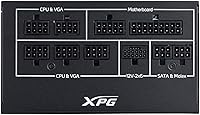
  • GPU Connector: Includes a native 12V-2x6 cable for direct connection to Ada Lovelace and RDNA 3 and 4 graphics cards without adapters.
  • Efficiency Rating: Holds dual Gold certification from both 80 Plus and Cybenetics, confirming at least 90% efficiency at typical loads.
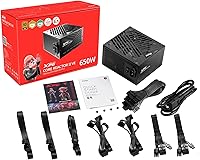
  • Modular Design: Fully modular cabling allows builders to connect only the cables required, reducing clutter and improving internal airflow.
  • Cooling Fan: A 120mm Fluid Dynamic Bearing fan with intelligent speed control keeps noise low under light and moderate system loads.
  • Connector Types: Ships with ATX 24-pin, EPS, PCIe, SATA, and Molex connectors to cover standard component and storage needs.
  • Protections: Includes overvoltage, undervoltage, overcurrent, short-circuit, and over-temperature protection to safeguard connected components.
  • Weight: The unit weighs 5.07 pounds, which is typical for a fully built ATX PSU at this wattage class.
  • Color: Available in a matte black finish that blends with most standard PC chassis interiors.
  • Dimensions: Measures 5.86 x 5.9 x 3.38 inches (approximately 140 x 150 x 86mm), with a shorter depth than many competing 650W units.
  • Brand Lineage: Manufactured by XPG, the gaming and performance-focused sub-brand of ADATA, a Taiwanese storage and memory company founded in 2001.
  • Model Number: The official model identifier is COREREACTORIIVE650G-BKCUS, reflecting the North American market variant of this unit.
  • Market Ranking: Holds a Best Sellers Rank of #185 in the Computer Power Supplies category on Amazon, indicating strong market adoption.
  • Release Date: First became available for purchase in June 2024, making it a relatively recent entry in the ATX 3.1 PSU segment.

Related Reviews

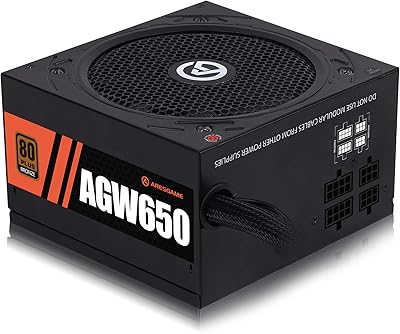
ARESGAME AGW650 650W 80+ Bronze PSU
86%
88%
Energy Efficiency
90%
Cooling Performance
85%
Ease of Installation
87%
Build Quality
92%
Noise Levels
More
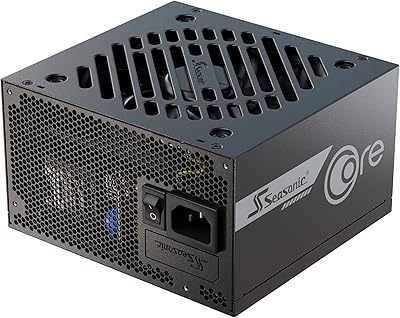
Seasonic CORE GX-650 650W Power Supply
87%
93%
Build Quality & Materials
88%
Cable Quality & Flexibility
91%
Installation Experience
89%
Efficiency & Heat Output
84%
Noise Level & Fan Behavior
More
Intel Core i5-14600KF Desktop Processor
79%
88%
Gaming Performance
91%
Value for Money
84%
Multi-Core Throughput
78%
Overclocking Headroom
67%
Thermal Management
More
Intel Core i9-14900KF 14th Gen Desktop Processor
70%
88%
Gaming Performance
91%
Multitasking & Productivity
54%
Thermal Management
51%
Power Consumption
78%
Overclocking Headroom
More
Intel Core i9-10900 Desktop Processor
75%
91%
Multi-Threaded Performance
78%
Single-Threaded Speed
67%
Thermal Management
74%
Value for Money
48%
Platform Longevity
More
Intel Core i7-9700K Octa-Core Desktop Processor
73%
91%
Gaming Performance
89%
Single-Core Speed
88%
Overclocking Potential
86%
Build Quality & Longevity
74%
Value for Money
More
Intel Core i5-13400F 2.5GHz 10-Core Desktop Processor
87%
88%
Performance
92%
Value for Money
84%
Gaming Performance
89%
Multi-core Efficiency
91%
Ease of Installation
More
Intel Core i5-9500 Desktop Processor
72%
88%
Everyday Performance
81%
Gaming Capability
91%
Thermal Management
58%
Multi-threaded Workloads
83%
Platform Compatibility
More
Intel Core i5-8600 Desktop Processor
71%
83%
Single-Core Performance
61%
Multithreaded Performance
74%
Gaming Performance
71%
Value for Money
88%
Thermal Efficiency
More
Intel Core i9-11900K Desktop Processor
70%
91%
Gaming Performance
93%
Single-Core Speed
67%
Multi-Threaded Performance
54%
Thermal Performance
84%
Overclocking Capability
More

FAQ

Yes, comfortably. An RTX 4070 paired with a modern mid-range CPU like a Ryzen 5 or Core i5 will typically draw well under 500W under gaming load, so this power supply gives you a reasonable buffer. Where you'd want to reconsider is if you're running an RTX 4070 Ti Super or higher, especially with a power-hungry CPU like a Ryzen 9 or Core i9.

It comes with a native 12V-2x6 cable included in the box, so no adapter or separate purchase is needed. This is one of its more practical advantages over older PSUs that require a 16-pin adapter dongle to connect to current-gen GPUs.

Under everyday workloads and moderate gaming, the fan stays very quiet — most users report barely noticing it. It only becomes audible when the system is under sustained heavy load, which is exactly the behavior you want from an intelligent fan controller.

The 140mm depth is shorter than many competing units, which helps in cases where PSU clearance is tighter. That said, always double-check your specific case's PSU length limit before ordering, as some ultra-compact cases have stricter requirements.

Both 80 Plus and Cybenetics independently verified that this unit operates at or above 90% efficiency at typical loads. In practical terms, that means less electricity is wasted as heat compared to a Bronze-rated PSU — over a year of regular gaming use, the difference can add up to a few dollars saved on your electricity bill, and it also keeps thermals slightly lower inside your case.

XPG is ADATA's performance-focused line, and ADATA itself is a well-established Taiwanese hardware manufacturer. That said, XPG doesn't have the same decades-long PSU-specific track record as Seasonic or Corsair. The XPG CORE Reactor II VE 650W PSU is a relatively new product, so long-term reliability data is still building. For a mainstream build, it's a reasonable choice, but buyers who prioritize proven longevity records may prefer an established PSU-specialist brand.
No — and this is important. Modular cable pinouts vary between manufacturers and sometimes between models from the same brand. Using cables from a different PSU can cause serious damage to your components. Always use only the cables that came in the box with this unit.

The protection suite covers short-circuit, overvoltage, undervoltage, overcurrent, and over-temperature events. In practice, if a component fails or draws unexpected power, the PSU is designed to shut down rather than pass damaging current through the rest of your system. It won't protect against every scenario, but it's a solid safety net for typical failure modes.

Several buyers with full-tower cases have noted that some cable runs feel a little short, particularly the PCIe cables depending on where the GPU sits relative to the PSU bay. If you're building in a large enclosure with a bottom-mounted PSU shroud and a high-mounted GPU, it is worth checking cable length specs against your case dimensions before committing.

XPG typically backs its Core Reactor II series with a multi-year warranty, but you should verify the exact terms on XPG's official website or your retailer's listing at the time of purchase, as warranty periods and regional terms can vary. Registering the product with XPG after purchase is generally recommended to ensure your coverage is active.