Overview

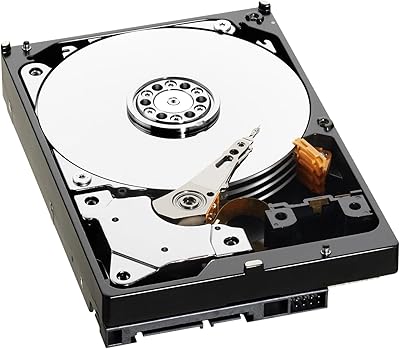
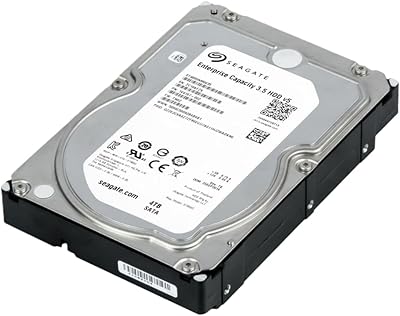
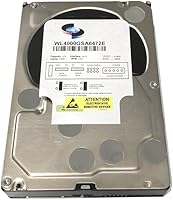
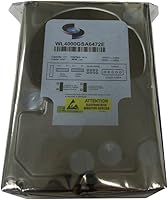
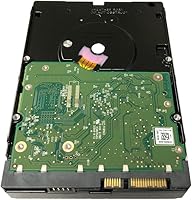
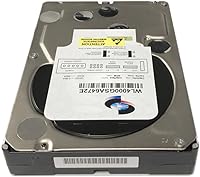
The White Label WL4000GSA6472E 4TB Hard Drive occupies an interesting niche: enterprise-spec mechanical storage sold under a generic brand at a price that undercuts most name-brand alternatives. That trade-off is the whole story here. You get a 4TB SATA HDD with specs borrowed from the commercial server world, but without the Seagate or Western Digital badge — or their support infrastructure. For prosumers and small-business builders who care more about density and duty-cycle ratings than brand loyalty, that can be a reasonable deal. Just go in clear-eyed: this is a spinning-platter drive, not an SSD, so raw speed is not the draw. Storage capacity per dollar is the real pitch.

Features & Benefits

The drive spins at 7200RPM with a 64MB cache, producing respectable sequential throughput for a mechanical HDD — around 171 MB/s sustained according to the spec sheet. The SATA III interface means plug-and-play compatibility with nearly any modern motherboard, NAS enclosure, or RAID controller. One spec worth real attention is the RAFF vibration compensation, an active electronic system that monitors and corrects both linear and rotational vibration in real time. In multi-drive bays, vibration from neighboring disks can quietly degrade performance, so having hardware-level correction built in is a genuine advantage. The dual-processor controller also helps manage concurrent I/O without the drive becoming a bottleneck under mixed workloads.

Best For

This 4TB enterprise HDD makes the most sense in roles where continuous operation and bulk capacity matter more than access speed. It is a natural fit for home NAS builds on platforms like Synology or QNAP, where you are stacking multiple drives and need each one to handle constant read/write cycles without complaint. Small-office RAID arrays, DVR setups, and security camera systems are equally good matches — workloads that demand high duty cycles but not SSD-class latency. As a secondary desktop drive for media archives or large backup volumes it holds up well too. Buyers who require a recognized brand warranty, however, may find the white-label origin a genuine sticking point.

User Feedback

With a 4.2-star average across more than 500 ratings, the WL4000 drive earns its marks through consistent, low-drama operation in NAS and desktop roles. Buyers regularly highlight quiet single-drive operation and easy installation — feedback that suggests most units arrive healthy and perform as advertised. The friction points are predictable: the anonymous branding leaves some owners uneasy about long-term support, and a handful of reviewers mention early failures. Those reports do not cluster into a clear pattern, but with no transparent manufacturing source, batch variation is difficult to rule out entirely. Notably, users running this in multi-drive configurations specifically credit the vibration handling as a noticeable step above cheaper alternatives at a similar price point.

Pros

  • Solid 7200RPM performance delivers respectable sequential speeds for a mechanical drive.
  • 4TB capacity at a mid-range price offers strong value for bulk storage needs.
  • RAFF vibration compensation genuinely helps in multi-drive bays, not just on paper.
  • SATA III compatibility means it drops into nearly any modern system without fuss.
  • Rated for 24/7 continuous operation, making it suitable for always-on workloads.
  • Most buyers report quiet, trouble-free operation straight out of the box.
  • Installation is straightforward — standard 3.5-inch mounting with no surprises.
  • 64MB cache helps smooth out real-world read/write patterns in mixed workloads.
  • Earns a solid 4.2-star average across hundreds of real-world user reviews.
  • Dual-processor controller reduces bottlenecks when handling concurrent I/O requests.

Cons

  • No identifiable manufacturer means warranty and RMA support can be unclear or unreliable.
  • White-label origin makes it impossible to verify drive firmware quality or production consistency.
  • A handful of reviewers report early failures, and without batch data, the risk is hard to assess.
  • Not listed on official compatibility guides for most major NAS and RAID platforms.
  • Mechanical latency makes this 4TB enterprise HDD a poor fit for any latency-sensitive application.
  • Long-term parts availability and replacement support are uncertain given the generic branding.
  • Drive origin is opaque, which may violate procurement policies in regulated business environments.
  • No companion monitoring software or diagnostic tools are provided or officially supported.

Ratings

The scores below reflect an AI-driven analysis of verified global buyer reviews for the White Label WL4000GSA6472E 4TB Hard Drive, with spam, bot-generated feedback, and incentivized reviews actively filtered out before scoring. Each category captures both the genuine strengths users praised and the real frustrations they reported, giving you an honest picture of where this drive delivers and where it falls short.

Value for Money
88%
Most buyers feel they got a strong deal — enterprise-class specs like active vibration correction and a high-duty-cycle rating at a mid-range price point is a combination that is genuinely hard to find. Home lab builders and small office users repeatedly cite cost per terabyte as the main reason they chose this drive over name-brand alternatives.
A segment of buyers feels the value calculation shifts if the drive fails early and there is no straightforward manufacturer warranty to fall back on. When you factor in the cost of potential data recovery or early replacement, the savings over a branded drive can erode quickly.
Reliability
74%
26%
The majority of users running this 4TB enterprise HDD in NAS enclosures and desktop secondary storage report months to years of stable, uneventful operation. The 100% duty cycle rating appears credible for most buyers, with many surveillance and DVR users logging continuous write cycles without failure.
The white-label origin creates a real reliability blind spot — without knowing the actual manufacturer, batch-level quality control is unverifiable. A visible minority of reviewers reported early failures within the first few months, and the absence of a named OEM makes it impossible to determine whether those incidents reflect isolated bad luck or a pattern.
Sequential Performance
81%
19%
For a mechanical drive, the throughput is competitive — users copying large media files, running NAS backups, or streaming surveillance footage to disk consistently report smooth, uninterrupted transfers. The 7200RPM spindle speed and 64MB cache work together noticeably better than the slower 5400RPM drives many buyers had used previously.
Sequential performance is solid within the mechanical HDD category, but falls far behind even entry-level SSDs in tasks that require fast sustained writes. Users who did not fully account for the HDD-versus-SSD gap before purchasing often express surprise at the relative sluggishness during heavy desktop use.
Vibration Handling
83%
Buyers running this drive in four-bay or larger NAS enclosures specifically call out the RAFF vibration compensation as a genuine, tangible improvement over budget drives they had used before. In multi-drive setups where neighboring disks create resonance, real-world performance remained noticeably stable rather than degrading over time.
The benefit of active vibration correction is mostly invisible in single-drive desktop scenarios, so users in those contexts cannot easily validate whether the feature is working as advertised. It is a meaningful differentiator in dense configurations, but harder to appreciate — or justify paying for — in simpler setups.
Installation Ease
91%
Virtually every reviewer agrees that physical installation is painless — standard 3.5-inch mounting holes, a familiar SATA connector, and a weight and size that match any drive bay without adapters. First-time builders and experienced system integrators alike report the drive was recognized immediately by both desktop motherboards and NAS operating systems.
A small number of users encountered initial non-detection on older SATA II controllers, requiring a BIOS update before the drive registered correctly. This is an edge case, but worth knowing if your host system is more than a decade old.
Noise & Acoustics
78%
22%
In single-drive desktop setups, the operational noise is described as low and unobtrusive — a faint hum at most, with seek noise that does not cut through ambient room sound during normal use. For home office or living room media server builds where silence matters, most users report being satisfied.
In multi-drive NAS or RAID enclosures, audible vibration and seek chatter become more noticeable, especially in quiet environments at night. A few users running four or more of these drives in a home NAS found the combined noise level more intrusive than expected, particularly during scheduled RAID scrubs.
Random I/O Performance
61%
39%
The dual-processor controller helps the WL4000 drive manage concurrent requests better than comparable single-processor mechanical drives, which users running light NAS workloads with a few simultaneous connections notice in day-to-day responsiveness. For sequential-heavy tasks like surveillance recording, random I/O limitations are rarely a bottleneck.
Random read and write performance is a known mechanical HDD limitation, and this drive does not escape that constraint despite its enterprise positioning. Users who tried running virtual machines or databases from this drive found the latency frustrating, and anyone expecting SSD-like app load times will be consistently disappointed.
Build & Finish Quality
72%
28%
Most buyers report the drive arriving well-packaged and physically intact, with no cosmetic damage or apparent assembly defects. Weight and rigidity feel appropriate for a 3.5-inch enterprise-class mechanical drive, and nothing about the physical construction suggests obvious corner-cutting.
Because the manufacturer is unnamed, there is no reference point for quality benchmarking — buyers have no way to compare this unit against a published production standard. Some reviewers noted the casing aesthetics feel generic and unfinished compared to drives from established brands, which does not affect function but affects perceived quality.
Compatibility
77%
23%
The SATA III interface and standard 3.5-inch form factor mean this drive connects without friction to the vast majority of modern desktops, tower servers, and NAS platforms. Most users confirm it was detected and formatted cleanly on the first attempt across a wide range of host systems.
White-label drives are absent from official compatibility databases published by NAS vendors like Synology and QNAP, which matters in enterprise or warranty-sensitive deployments where only pre-approved hardware is permitted. A few users also reported GPT partition table issues when first using the drive on systems with older BIOS implementations.
Warranty & Support
41%
59%
For buyers who never need to make a warranty claim, the support question is academic — and given that most units operate without issue, many users never encounter this gap at all. The reseller channel sometimes provides short-term return coverage that offers a minimal safety net in the first weeks after purchase.
This is the single weakest dimension of the ownership experience. There is no named manufacturer to contact, no published RMA process, and no official support documentation. Buyers who experienced drive failures reported frustration at having nowhere to turn beyond the seller, making this a meaningful risk factor that should weigh heavily in the buying decision.
Thermal Management
69%
31%
Under normal NAS and desktop workloads, reported temperatures stay within acceptable mechanical HDD operating ranges, and users monitoring drive health via SMART data generally see stable thermal readings over extended periods. In well-ventilated enclosures, thermal performance is not a concern for most buyers.
In enclosed or passively cooled NAS bays running at 100% duty cycle, a few users noted elevated operating temperatures over extended periods without active airflow. No thermal throttling issues were reported, but buyers building compact or fanless enclosures should factor in active cooling to keep temperatures in check.
Long-Term Durability
67%
33%
A meaningful portion of the reviewer base reports using these drives for two or more years without incident in continuous-use roles like home NAS and DVR systems — which speaks reasonably well to real-world longevity when conditions are controlled and the drive is not subjected to physical stress.
The lack of manufacturer transparency makes long-term durability projections inherently uncertain. Unlike drives from brands with published failure rate data and multi-year warranty coverage, there is no external reference point to validate whether the 1.2 million hour MTBF claim reflects actual field performance or aspirational spec-sheet positioning.

Suitable for:

The White Label WL4000GSA6472E 4TB Hard Drive is a practical pick for builders and tinkerers who want enterprise-tier specs without paying enterprise prices. Home lab enthusiasts assembling a Synology or QNAP NAS will find the combination of 4TB capacity, active vibration correction, and a high-duty-cycle rating well matched to always-on multi-drive setups. Small offices piecing together a budget RAID array for file sharing or backups get solid specs at a cost that leaves room in the budget for redundancy. The drive also suits DVR and IP camera systems that write continuously around the clock, where the 100% duty cycle rating and RAFF vibration handling are more than just marketing copy. Secondary desktop storage for media collectors, video editors, or anyone archiving large files rounds out the use cases nicely — as long as the user understands they are trading raw speed for sheer capacity.

Not suitable for:

Anyone who needs strong manufacturer support, a recognized warranty program, or traceable drive provenance should think carefully before buying the White Label WL4000GSA6472E 4TB Hard Drive. The anonymous branding is the central trade-off: you cannot verify who actually manufactured the drive, which makes RMA processes uncertain and long-term batch reliability harder to predict. Mission-critical deployments — medical records, financial databases, or any scenario where data loss carries serious consequences — call for a drive backed by a known vendor with a documented support chain. Users expecting SSD-level random read and write performance will also be disappointed; this is a spinning-platter drive with mechanical latency, and no amount of dual-processor tuning changes that physics. Finally, buyers who prefer to reference manufacturer compatibility lists for NAS or RAID controllers may run into dead ends since white-label hardware rarely appears in official support documentation.

Specifications

  • Storage Capacity: The drive provides 4TB of raw mechanical storage, suitable for large media libraries, backup volumes, and continuous surveillance recording.
  • Rotational Speed: Platters spin at 7200RPM, delivering stronger sequential throughput than the 5400RPM alternatives common in consumer-grade drives.
  • Cache Size: A 64MB buffer cache helps smooth read and write bursts, reducing latency during mixed or concurrent I/O operations.
  • Interface: The drive uses a SATA III (6 Gb/s) interface, backward compatible with SATA II controllers at reduced throughput.
  • Form Factor: Standard 3.5-inch internal form factor fits desktop tower cases, server chassis, and most NAS enclosures without adapters.
  • Drive Type: This is a traditional mechanical hard disk drive (HDD) using spinning magnetic platters, not a solid-state drive.
  • Sequential Speed: Sustained sequential data transfer rates reach approximately 171 MB/s under typical workloads according to manufacturer specifications.
  • MTBF Rating: The drive carries a 1.2 million hour Mean Time Between Failures rating, a statistical reliability estimate for a population of drives, not a per-unit guarantee.
  • Duty Cycle: Rated for up to 100% duty cycle, meaning the drive is designed to handle continuous 24/7 operation without programmed downtime.
  • Vibration Control: RAFF (Rotational Acceleration Feed Forward) technology uses onboard electronics to actively detect and correct both linear and rotational vibration in real time.
  • Processor: A dual-core controller manages drive operations, aiming to improve I/O throughput and reduce processing latency under simultaneous read/write demands.
  • Installation Type: Designed for internal installation only; it requires a host system with a SATA data port and a standard 4-pin Molex or SATA power connector.
  • Item Weight: The drive weighs approximately 1 pound, consistent with standard 3.5-inch mechanical hard drives of similar capacity.
  • Package Dimensions: The retail package measures approximately 8.82 x 6.18 x 3.03 inches, sufficient to accommodate standard anti-static and protective packaging.
  • Compatible Uses: The manufacturer lists NAS enclosures, RAID arrays, DVR systems, desktop PCs, and small servers as supported deployment environments.
  • Brand: Sold under the White Label brand, a generic designation that does not identify the original equipment manufacturer of the drive.
  • Model Number: The official model designation is WL4000GSA6472E, which should be referenced when cross-checking compatibility or seeking support.
  • Availability Date: This drive was first listed for sale in October 2015 and remains available as of the current product listing.

Related Reviews
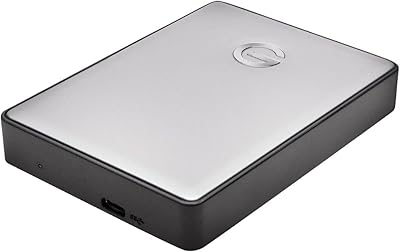
G-Technology 4TB G-DRIVE Mobile USB-C Portable External Hard Drive
88%
88%
Performance
94%
Portability
91%
Build Quality
89%
Compatibility
95%
Setup & Installation
More
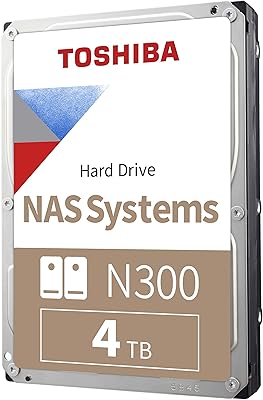
Toshiba N300 4TB NAS Internal Hard Drive
79%
83%
Reliability & Longevity
91%
RAID Compatibility
88%
NAS Compatibility
79%
Sequential Performance
71%
Noise & Vibration
More
Seagate BarraCuda 4TB Internal Hard Drive
87%
86%
Performance
90%
Reliability
93%
Setup & Installation
95%
Storage Capacity
72%
Data Transfer Speed
More
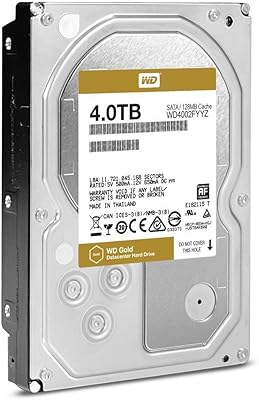
WD Gold 4TB Enterprise Hard Drive
86%
89%
Performance Under Load
93%
Reliability in 24/7 Environments
91%
RAID Compatibility
88%
Endurance and Lifespan
74%
Temperature Management
More
WD Green WD40EZRX 4TB Internal Hard Drive
74%
83%
Value for Money
91%
Noise Level
57%
Read & Write Speed
78%
Reliability & Longevity
88%
Power Efficiency
More
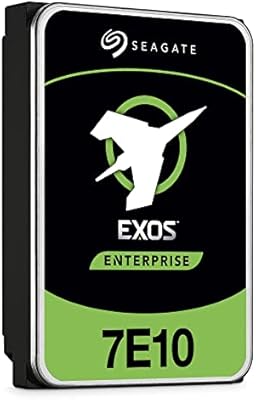
Seagate Exos 7E10 4TB Internal Hard Drive
75%
83%
Sustained Reliability
81%
Read/Write Performance
78%
Value for Money
89%
NAS Compatibility
61%
Vibration & Noise
More
WD Black 4TB Performance Desktop Hard Drive
88%
91%
Performance
88%
Reliability
93%
Speed
85%
Ease of Setup
94%
Storage Capacity
More
Buffalo DriveStation Axis Velocity 4TB Hard Drive
73%
83%
Transfer Speed
81%
Reliability & Longevity
86%
Ease of Setup
74%
Build Quality
62%
Noise Level
More
Seagate Expansion Portable 4TB External Hard Drive
86%
85%
Performance
93%
Ease of Use
91%
Portability
80%
Build Quality
95%
Compatibility (Windows/Mac)
More
WD 4TB Elements Portable External Hard Drive
87%
89%
Performance
94%
Portability/Size/Weight
95%
Ease of Setup
87%
Transfer Speed
92%
Value for Money
More

FAQ

In most cases, yes — it uses a standard SATA III interface and a 3.5-inch form factor, so it physically fits and connects without issue. That said, white-label drives like this one are typically not on the official compatibility lists that Synology and QNAP publish. Most users report it working fine, but if official certification matters for your setup, that is worth knowing upfront.

White-label means the drive is sold under a generic brand without disclosing the actual manufacturer. The hardware may originate from a well-known OEM, but there is no way to verify that independently. For low-stakes or redundant storage roles it is usually a fine gamble; for anything mission-critical, the lack of transparent sourcing is a genuine risk worth weighing.

No, and it is important to understand the distinction. MTBF is a statistical measure calculated across a large population of drives — it describes average failure rates at the group level, not a lifespan guarantee for any individual unit. Think of it as a signal that the design targets high-endurance use cases, not a warranty of personal longevity.

Technically yes — it is a standard SATA HDD and an OS will install on it without any issues. Practically speaking, using it as your main boot drive means dealing with the slower read times inherent to any spinning-platter mechanical drive. Most builders today boot from an SSD and use a drive like this for secondary bulk storage, which is where it genuinely earns its keep.

This is actually one of the stronger use cases for the WL4000 drive. The onboard RAFF vibration compensation actively counteracts the resonance that neighboring spinning drives create, which is a real problem in dense multi-drive enclosures. Users running it in RAID and NAS configurations specifically call this out as a practical advantage over cheaper drives that skip active vibration correction.

It is a reasonable fit for that job. DVR and surveillance workloads involve continuous sequential writes at modest data rates, and the drive is rated for 100% duty cycle and 24/7 operation. That said, always pair any single drive in a surveillance setup with a backup plan — no drive is immune to failure, branded or otherwise.

Name-brand drives at a comparable price point give you verified manufacturing provenance, established warranty programs, and inclusion on NAS and server compatibility lists. The White Label WL4000GSA6472E 4TB Hard Drive competes on raw specs and price, but trades away that support infrastructure. If documentation and after-sale support matter to you, branded alternatives have a clear edge.

It uses a standard SATA power connector, the same flat 15-pin connector found on virtually all modern desktop power supplies and most NAS enclosures. A SATA data cable is not typically included in the package, so have one on hand — they are inexpensive and widely available.

A handful of early failure reports do appear in the review history, but they do not appear to cluster into a clear pattern suggestive of a systemic defect. Early failures happen across all drive brands and can often trace back to shipping damage or early infant mortality — a known phenomenon in mechanical hard drives. Running a diagnostic tool like CrystalDiskInfo or smartmontools when the drive first arrives is always a smart precaution.

No bundled software or formal warranty documentation is included with this white-label drive. Warranty terms, if any, flow through the reseller rather than a direct manufacturer program, so check the specific seller policy before purchasing. This is one of the clearest practical differences between a white-label drive and a product from an established storage brand.