Overview

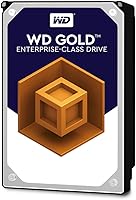
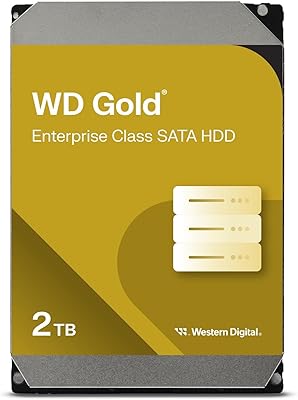
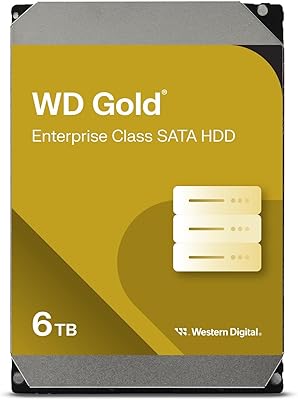
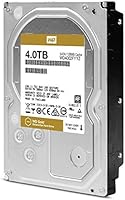
The WD Gold WD4002FYYZ 4TB Internal Hard Drive is not aimed at casual desktop users, and that becomes clear the moment you look past the spec sheet. This is an enterprise-tier drive built for environments where the disk cannot afford to stop spinning, and that priority shapes everything about its design. Rather than chasing benchmark numbers, this hard drive leans on long-term durability, the kind of engineering that matters when a server or RAID array runs nonstop for years on end. It sits at a higher price point than typical consumer drives, which reflects the heavier-duty components inside rather than marketing alone. Having been on the market since 2016, it has had plenty of time to prove itself in real deployments, not just lab tests.
Features & Benefits

At the core of this hard drive sits a 7200 RPM spindle, which keeps read and write speeds consistent rather than letting them dip under sustained load. A 128MB cache helps absorb bursty traffic, smoothing things out when multiple users or processes are hitting the disk at once. The SATA 6Gb/s interface means it drops into standard desktop and server motherboards without any special wiring or controller requirements. What really sets this WD Gold drive apart, though, is the 24/7/365 rating; most consumer disks are not built to run that way indefinitely. TLER support keeps it from getting kicked out of a RAID array during routine error recovery, and the 550TB-per-year workload rating points to real headroom for heavy, continuous use rather than occasional backups.

Best For

This enterprise-class disk makes the most sense for small businesses or home-lab setups running NAS systems that stay powered on around the clock. It is also a strong fit for multi-bay RAID arrays, where a single drive dropping out mid-rebuild can mean real data loss and wasted time. Anyone setting up a backup or archive server that writes large volumes of data regularly will appreciate the extra workload headroom built into the design. Because it works across Windows, Linux, and Mac without extra drivers, it slots easily into mixed IT environments. If raw sequential speed is your main concern, there are faster options out there, but for buyers who care more about long-haul reliability than chasing benchmark numbers, this is a sensible pick.

User Feedback

Owner reviews land in the 3.6-out-of-5 range across several hundred ratings, which is decent but not glowing, and it is worth being upfront about that instead of pretending every buyer loves it. Long-time NAS and home-server users frequently report years of uneventful operation, which for a storage drive is exactly the kind of praise that matters most. On the other side, a handful of buyers mention dead-on-arrival units or early failures, something that comes with bare drives in general and is not unique to this brand. A few owners also note that it runs warmer and louder than a typical desktop drive under heavy load, which is worth knowing before installing it in a quiet space. Compared with consumer-grade alternatives, though, most reviewers still rate it favorably for RAID stability over time.

Pros

  • Built for genuine 24/7/365 operation rather than occasional desktop use
  • TLER support keeps the drive from dropping out of a RAID array during recovery
  • 128MB cache smooths out performance under bursty, multi-user server traffic
  • Workload rating up to 550TB per year leaves real headroom for heavy tasks
  • Cross-platform support across Windows, Linux, and Mac simplifies mixed IT setups
  • Long-time NAS and server owners frequently report years of trouble-free use
  • A mature, proven design that has been refined since its 2016 release
  • Reviewers consistently rate it favorably for RAID stability against consumer drives

Cons

  • Priced noticeably higher than standard consumer-grade hard drives
  • Runs warmer and louder than a typical desktop drive under sustained load
  • Overkill for casual users who only need occasional, light storage
  • A handful of buyers report dead-on-arrival units or early failures
  • Star rating sits at a middling 3.6 out of 5 across reviews
  • Sequential speed is not the focus, so speed-hungry users may want alternatives
  • MTBF and workload figures are manufacturer estimates, not guaranteed outcomes
  • Bare drive format means no enclosure or accessories included

Ratings

The WD Gold WD4002FYYZ 4TB Internal Hard Drive has been on the market long enough to build a real track record, and the scores below reflect that history rather than a marketing sheet. Every category here is generated by AI after digging through verified user reviews from around the world, filtering out spam, bot activity, and incentivized feedback along the way. Both the strong points and the recurring complaints are shown openly, so you get a realistic picture before deciding if this hard drive fits your setup.
Reliability & Longevity
82%
18%
Long-time NAS and server owners frequently mention years of uninterrupted operation, which lines up with the drive's enterprise-grade engineering. People running it in backup servers and home labs report it just keeps working in the background without drama, which is really the whole point of a drive like this.
A small but noticeable share of buyers report dead-on-arrival units or early failures within the first few months. It is not an epidemic, but it is common enough across reviews that it is worth factoring into your decision, especially since bare drives ship without much physical protection.
RAID & NAS Compatibility
89%
TLER support gets singled out repeatedly by RAID users who have had other drives drop out of an array over a minor read error. For multi-bay NAS builds, this feature alone justifies the purchase for a lot of home-lab and small-business buyers.
A few users note that getting the most out of TLER requires a RAID controller or NAS firmware that actually respects the setting, which not every budget enclosure does well. It is less of a flaw in the drive and more a reminder to check your hardware first.
Sustained Performance Under Load
80%
20%
The 7200 RPM spindle paired with the 128MB cache keeps things responsive even when several users or processes are hitting the drive at once, which matters a lot in shared server environments. Reviewers running multi-user file shares describe it staying steady rather than choking under pressure.
It is not built for chasing the fastest sequential transfer speeds, so users editing large video files directly off this drive sometimes find faster consumer or SSD options more satisfying. Speed is consistent, not exceptional.
Value for Money
71%
29%
Buyers running 24/7 workloads consistently say the price feels justified once you account for the enterprise-grade duty cycle and TLER support, which cheaper consumer drives simply do not offer. For backup and archive servers, the cost-per-year of reliable uptime works out reasonable.
For anyone who just wants extra storage for casual desktop use, the premium over a standard consumer drive feels hard to justify. Several reviewers mention it only makes financial sense if you are actually using the workload capacity it is built for.
Build Quality
84%
The physical construction feels solid to most reviewers, with a sturdy chassis that matches what you would expect from an enterprise-class disk. People comparing it side-by-side with consumer drives note it feels more substantial in hand.
Being a bare drive, it ships without any protective enclosure or shock packaging beyond standard retail packaging, which a few buyers felt was thin for a drive in this price range. Careful handling during installation is recommended.
Noise & Heat Management
62%
38%
In well-ventilated server racks and NAS enclosures, owners report the noise and heat output stays manageable and within expected ranges for an enterprise drive running continuously. It is not louder than comparable workhorse drives in its class.
Several reviewers placing it in quiet home offices or tight desktop cases mention noticeable spinning noise and warmth under sustained load, more than a typical consumer drive produces. It is a real consideration if airflow or quiet operation matters to you.
Workload Capacity
86%
The 550TB-per-year workload rating gives genuine breathing room for backup and archive servers that write large amounts of data on a regular schedule. Users running daily backup jobs across multiple machines say they have not come close to feeling any strain.
This rating is a manufacturer estimate rather than a guarantee, so a handful of buyers caution against treating it as a hard ceiling. Pushing well beyond typical workloads without proper cooling could still shorten the drive's effective lifespan.
Cross-Platform Compatibility
88%
Working cleanly across Windows, Windows Server, Linux, and Mac OS makes it a convenient pick for mixed IT environments, and reviewers in small business settings appreciate not needing separate driver packages. Setup across different machines tends to go smoothly.
Mac users occasionally mention needing to reformat the drive before use, which is expected but catches a few first-time buyers off guard. It is a minor extra step rather than a real compatibility issue.
RAID-Specific Error Recovery (TLER)
85%
This feature is consistently called out as a key reason to choose this hard drive over a consumer alternative for array builds. It prevents the kind of false dropouts that can force a stressful, time-consuming RAID rebuild.
Outside of RAID setups, this feature offers no real benefit, so single-drive desktop users are essentially paying for a capability they will never use. It only pays off in multi-drive configurations.
Warranty & Support Experience
76%
24%
Most buyers describe the warranty process as straightforward when a unit does fail, with replacements processed without excessive back-and-forth. Having multi-year coverage on an enterprise drive gives some peace of mind for a higher-cost purchase.
A few reviewers mention the claims process can take longer than expected depending on the retailer versus going direct through Western Digital. Response times seem to vary, which adds some uncertainty if you need a fast replacement.
Overall User Satisfaction
74%
26%
The roughly 3.6-out-of-5 average across hundreds of reviews reflects a buyer base that is largely satisfied, especially among those using this WD Gold drive for its intended server and NAS purposes. Reviewers comparing it directly to consumer drives tend to come away preferring it for array stability.
The mixed rating also reflects real frustration from buyers who either got an early failure or expected desktop-level pricing for enterprise features. It is a solid drive for the right use case, but not universally loved across every type of buyer.

Suitable for:

The WD Gold WD4002FYYZ 4TB Internal Hard Drive makes the most sense for anyone running storage that genuinely cannot afford downtime. Home-lab enthusiasts and small businesses building NAS systems that stay on around the clock are a natural fit, since the drive is engineered for that kind of continuous duty cycle rather than occasional use. It also suits multi-bay RAID setups well, where TLER support helps the drive stay in the array during error recovery instead of getting dropped mid-rebuild. Anyone building a backup or archive server that writes large volumes of data on a regular basis will benefit from the higher workload ceiling. IT environments running a mix of Windows, Linux, and Mac machines will appreciate the broad compatibility without needing separate drivers. Overall, this is a buy for people who value steady, predictable performance over years rather than chasing the fastest benchmark numbers.
Not suitable for:

Casual users who just want extra storage for a personal desktop will likely find the WD Gold WD4002FYYZ 4TB Internal Hard Drive more drive than they actually need. It costs more than a standard consumer disk, and that premium is hard to justify if the drive will only spin up occasionally rather than running continuously. Gamers or creators chasing the fastest possible sequential speeds for video editing or large file transfers may also be better served by a drive tuned for raw throughput instead of endurance. Anyone sensitive to noise or heat should think twice, since enterprise drives like this one tend to run warmer and louder than typical desktop disks under sustained load. Buyers who have been burned by a dead-on-arrival hard drive before should also factor in the small but real chance of an early failure, which a handful of owners have reported. If quiet, light, occasional use is the goal, a cheaper consumer drive is probably the smarter call.

Specifications

  • Capacity: This drive offers 4TB of usable storage, suited for server and NAS workloads rather than light personal use.
  • Model Number: The exact model code is WD4002FYYZ, which is useful for confirming compatibility with RAID controllers and firmware updates.
  • Interface: It connects via SATA 6Gb/s (SATA-600), which matches standard ports on most desktop and server motherboards.
  • Cache: A 128MB cache buffer helps the drive handle bursty, multi-user read and write requests more smoothly.
  • Rotational Speed: The spindle runs at 7200 RPM, which keeps throughput consistent rather than tapering off under sustained load.
  • Form Factor: The drive uses a standard 3.5-inch form factor, fitting typical desktop bays and most NAS or server enclosures.
  • MTBF Rating: Western Digital rates this drive at up to 2.5 million hours mean time between failures, a manufacturer estimate rather than a guarantee.
  • Workload Rating: It carries a workload rating of up to 550TB per year, indicating headroom for heavier, continuous data activity.
  • Error Recovery: RAID-specific time-limited error recovery (TLER) is built in, preventing the drive from being dropped from an array during minor read errors.
  • Duty Cycle: The drive is designed for 24x7x365 operation, unlike consumer drives intended for intermittent use.
  • OS Compatibility: It works with Windows, Windows Server, Linux, and Mac OS without requiring special drivers.
  • Weight: The drive weighs 1.58 pounds, which is typical for a 3.5-inch enterprise hard disk.
  • Dimensions: Physical dimensions measure 5.79 x 4 x 1.03 inches, matching standard 3.5-inch drive bay slots.
  • Color: The drive housing is finished in gold, distinguishing it visually from WD's other consumer drive lines.
  • Installation Type: It is an internal hard drive intended for desktop, server, or NAS bay installation rather than external use.
  • Drive Format: It ships as a bare drive without an enclosure, cables, or mounting accessories included.

Related Reviews
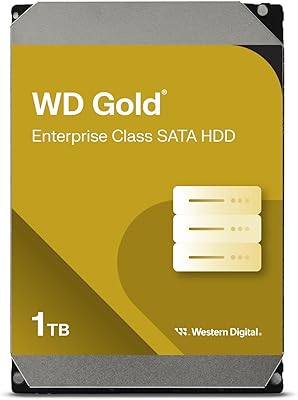
Western Digital 1TB WD Gold Enterprise Class Internal Hard Drive
84%
91%
Performance Under Load
88%
Reliability for 24/7 Operation
75%
Ease of Setup
90%
Data Transfer Speed
87%
Durability and Build Quality
More
Western Digital Gold 2TB Internal Hard Drive
80%
84%
Long-Term Reliability
91%
Workload Endurance
86%
RAID Performance
78%
Noise & Acoustics
61%
Value for Money
More
Western Digital WD Blue 4TB Hard Drive
79%
91%
Storage Capacity Value
83%
Noise & Acoustics
67%
Read & Write Performance
92%
Installation Ease
93%
Compatibility
More
Western Digital WD Gold 16TB Internal Hard Drive
79%
88%
Long-Term Reliability
84%
Sustained Performance
91%
Build & Engineering Quality
63%
Noise & Vibration
67%
Thermal Management
More
Western Digital WD Gold 8TB Hard Drive
76%
83%
Reliability & Endurance
74%
Performance
88%
RAID Compatibility
81%
NAS Compatibility
78%
Noise & Vibration
More
Western Digital 4TB WD Black Gaming Internal Hard Drive HDD
82%
92%
Performance (Speed)
89%
Reliability (Durability)
87%
Value for Money
74%
Ease of Setup
81%
Noise Level
More
Western Digital 4TB WD Red Plus NAS Internal Hard Drive
89%
91%
Performance
94%
Reliability
88%
Energy Efficiency
85%
Noise Levels
89%
Workload Handling
More
Western Digital 6TB WD Gold Enterprise Class Internal Hard Drive
88%
95%
Performance in Data-Intensive Tasks
93%
Reliability and Durability
88%
Vibration Protection Effectiveness
92%
Long-Term Stability (MTBF)
85%
Ease of Installation
More
WD Red Pro 4TB NAS Hard Drive
81%
93%
Reliability & Longevity
91%
RAID Compatibility
88%
NAS Firmware Optimization
86%
Vibration Management
82%
Sustained Throughput
More
Western Digital 12TB WD Gold Enterprise Class Internal Hard Drive
86%
88%
Performance under Load
93%
Storage Capacity
91%
Reliability
85%
Ease of Integration
90%
Endurance for Demanding Workloads
More

FAQ

Yes, this hard drive is actually designed with NAS and RAID use in mind, so it should integrate well with most consumer and prosumer NAS systems. Just double-check your NAS supports 3.5-inch SATA drives and has room for the 4TB capacity. It is built for continuous operation, which is exactly the kind of workload a home NAS puts out.

Honestly, yes, for most casual desktop use. This drive is optimized for 24/7 server-style workloads, and a standard consumer hard drive will do the job for typical desktop storage at a lower cost. It only really makes sense for a desktop if you are running heavy, continuous file operations or local server tasks.

Yes, it includes TLER (time-limited error recovery), which is specifically meant for RAID environments. Without TLER, a drive can get kicked out of an array over a minor read error, so this feature helps it stay in sync with the rest of your RAID setup. This makes it a solid match for multi-drive arrays.

Enterprise drives like this one tend to run a bit warmer and louder than typical desktop drives, especially under sustained load. It is not excessive, but if you are placing it in a quiet home office or a tight enclosure, good airflow is worth considering. Most NAS and server cases already account for this kind of heat output.

It works with Windows, Windows Server, Linux, and Mac OS, so it should fit into most home or business setups without compatibility headaches. Keep in mind that on Mac systems, you will likely need to reformat the drive to a compatible file system first.

Feedback is mixed but not concerning, sitting around 3.6 out of 5 stars across several hundred ratings. Many long-term NAS and server users report years of stable use, while a smaller number mention early failures or dead-on-arrival units, which happens occasionally with bare drives from any brand. Overall sentiment leans positive for RAID stability specifically.

Western Digital typically backs its Gold series drives with a multi-year limited warranty, though exact terms can vary by region and retailer, so it is worth checking the listing or WD's support page for your specific coverage period. Registering the drive after purchase is usually a good idea in case you need to file a claim later.

You can, but it is not really built for that purpose. This hard drive prioritizes uptime and reliability over raw sequential speed, so if your main goal is fast large-file transfers for video editing, a drive tuned for performance might serve you better. It will work fine as backup or archive storage alongside a faster primary drive.

Yes, this is actually one of its strongest use cases. The high workload rating and 24/7 duty cycle make it well-suited for backup or archive servers that write large volumes of data on a regular schedule. It is built to handle that kind of sustained activity better than a typical consumer drive.

A small percentage of buyers have reported dead-on-arrival drives, which is not unusual for bare hard drives shipped through any retailer. If that happens, your best bet is to use the retailer's return policy first, then fall back on the manufacturer warranty if needed. Testing the drive immediately after installation is a smart habit so you catch any issues early.