Overview

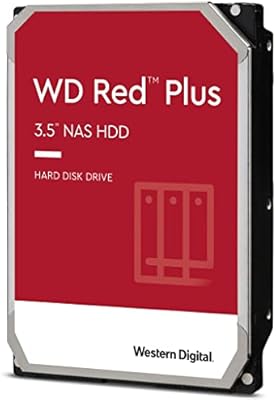
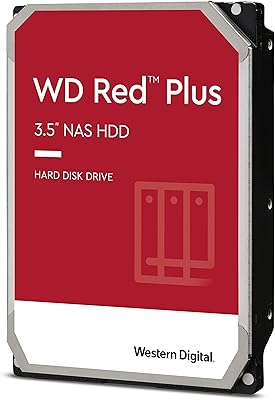
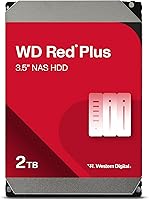
The WD Red Plus 2TB NAS Hard Drive entered the market in early 2021 as a purpose-built option for anyone running a home lab or small business storage setup — and it has held its ground well since. Western Digital's Red Plus line sits between the entry-level Red and the more demanding Red Pro, targeting prosumers and SMBs who need reliable always-on storage without paying enterprise prices. The 3.5-inch form factor and 5400 RPM spin speed are deliberate choices, not compromises. What really separates it from cheaper alternatives is its use of CMR recording technology, which matters enormously for RAID reliability and sustained write performance.
Features & Benefits

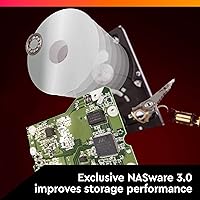
The most important thing to understand about this CMR hard drive is what sets it apart from SMR alternatives. With Conventional Magnetic Recording, tracks are written independently, meaning the drive handles heavy, sustained write loads without the performance hiccups SMR drives notoriously exhibit during RAID rebuilds. The NASware firmware is tuned to reduce vibration interference when multiple drives are stacked in the same enclosure — a real consideration in 4- or 8-bay systems. The 128 MB cache and SATA 6 Gb/s interface deliver solid real-world throughput for typical NAS workloads. The 180 TB/yr workload rating translates to roughly 500 GB of data movement per day, which comfortably covers most home and small office scenarios.

Best For

This NAS drive is a natural fit for anyone building or expanding a Synology, QNAP, or similar enclosure that runs around the clock. If you are setting up a RAID 1 or RAID 5 array for backup or file serving at home or in a small office, the combination of CMR reliability and NASware compatibility makes it a strong, low-drama choice. It also makes particular sense for people who previously used SMR-based drives in a NAS and ran into rebuild failures or sluggish performance under load. That said, if you need a single drive for a desktop workstation doing video editing, a 7200 RPM drive will serve you better — the 5400 RPM speed is a tradeoff made for heat and noise reduction, not raw throughput.

User Feedback

With over 7,000 ratings and a 4.6-star average, the WD Red Plus 2TB has earned genuine respect from buyers. The most consistent praise centers on long-term reliability — multiple reviewers mention running the drives for a year or two without a single failure, which is exactly what you want from always-on storage. Quiet operation also comes up repeatedly, especially in home setups where the NAS sits in a living space. On the critical side, a fair number of buyers flag the price-per-TB as a sticking point at this capacity — larger variants in the same line often offer better value. A handful of users also noted occasional compatibility hiccups with older NAS firmware versions, so checking your enclosure's compatibility list before buying is worth a few minutes.

Pros

  • CMR technology ensures stable, predictable write performance during RAID rebuilds — no nasty surprises.
  • NASware firmware reduces vibration interference in multi-drive enclosures, which pays off over months of continuous use.
  • Rated for up to 180 TB/yr workload, covering the realistic demands of most home and small office NAS setups.
  • Runs noticeably quiet and cool compared to 7200 RPM alternatives, which matters when the NAS sits nearby.
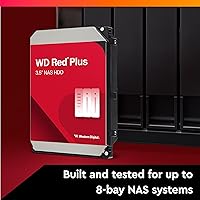
  • Compatible with up to 8-bay enclosures, giving room to grow as storage needs increase.
  • Thousands of long-term owners report multi-year operation without failure, a strong signal for always-on reliability.
  • Works across Mac and PC environments without additional configuration hassle.
  • Ranked among the top sellers in its category, reflecting sustained buyer confidence over several years.

Cons

  • Price-per-TB at the 2TB size is noticeably higher than stepping up to a 4TB or larger variant in the same line.
  • 5400 RPM spin speed means sequential throughput lags behind faster desktop drives when raw speed matters.
  • A handful of buyers have reported compatibility hiccups with older or less common NAS firmware versions.
  • The 2TB capacity feels limiting for anyone planning longer-term storage growth without swapping drives early.
  • No hardware encryption support, which may be a dealbreaker for compliance-sensitive small business deployments.
  • Overkill — and overpriced — for anyone who only needs occasional-use external or desktop storage.
  • Warranty and RMA experiences reported by some buyers have been inconsistent, adding risk to bulk purchases.

Ratings

The WD Red Plus 2TB NAS Hard Drive was evaluated by our AI rating system after analyzing thousands of verified global buyer reviews, actively filtering out incentivized, bot-generated, and outlier feedback to surface what real users consistently experience. Scores reflect both the genuine strengths this drive delivers in its intended environment and the honest pain points that surface in everyday NAS deployments. Nothing is smoothed over — strong categories and weak ones are scored transparently.
Long-Term Reliability
91%
Buyers who have run this CMR hard drive continuously for one to two or more years report strikingly few failures, which is the single most important metric for always-on NAS storage. In home lab and small office setups, owners frequently mention it just keeps running without needing attention, which is exactly what you want from a drive you rarely think about.
A small but consistent segment of reviewers reported early failures within the first year, and Western Digital's RMA process drew criticism for being slow or inconsistent in those cases. While statistically uncommon, a dead drive in a non-redundant single-bay NAS is a serious event, so the risk is not entirely negligible.
NAS Compatibility
88%
The NASware firmware makes this drive recognized and stable across the most popular enclosures from Synology, QNAP, Asustor, and others without manual configuration. Users building out multi-bay arrays report clean detection and smooth RAID initialization, with none of the firmware-level squabbling that can happen with generic desktop drives.
A handful of buyers running older NAS enclosures or less common brands encountered recognition issues or had to update enclosure firmware before the drive would behave correctly. Compatibility is excellent for mainstream setups but not quite universal, so checking the compatibility list beforehand is genuinely necessary rather than optional.
RAID Rebuild Performance
86%
This is where CMR recording technology earns its premium in practice — during RAID 5 or RAID 6 rebuilds, the WD Red Plus 2TB handles sustained writes without the dramatic slowdowns or stalled rebuilds that SMR-based drives are notorious for. Users who switched from older WD Red SMR drives specifically call this out as a night-and-day improvement.
Rebuild times are still slower than what a 7200 RPM CMR drive would achieve, and for large arrays at high fill levels, rebuilds can take several hours. That is not unexpected for a 5400 RPM drive, but users who prioritize rebuild speed over noise and heat may want to factor this in.
Noise & Heat
89%
Running at 5400 RPM keeps this NAS drive remarkably quiet during normal operation, and buyers who keep their NAS in a home office or living area specifically praise how unobtrusive it is. Heat output is similarly well-controlled, which also benefits the longevity of neighboring drives in densely packed enclosures.
Some users in very quiet environments do notice a faint seek noise during active read/write cycles, particularly in the early weeks of use before the drive settles. It is minor for most, but buyers with an open-air NAS in a bedroom have mentioned it is audible during overnight backup jobs.
Sequential Read Speed
72%
28%
For typical NAS workloads like streaming 1080p or 4K video to a few clients simultaneously, sequential read performance is entirely adequate. Most users running Plex or serving files across a local network will not hit a ceiling during normal household or small office usage patterns.
Raw sequential speeds are visibly slower than 7200 RPM alternatives, and users who tried using this drive for video editing off the NAS or as a working drive for large file transfers noticed the throughput ceiling quickly. The 5400 RPM limitation is a real bottleneck if speed-intensive workflows are part of the picture.
Random I/O Performance
61%
39%
For light multi-user access — a few people grabbing documents, syncing phones, or pulling files from a shared folder — the drive handles random I/O without visible hesitation in day-to-day use. The 128 MB cache helps buffer small bursty requests reasonably well.
Under heavier random access loads, such as multiple simultaneous users or running active database workloads directly off the NAS, latency climbs and performance becomes noticeably inconsistent. This is a fundamental mechanical HDD limitation, not a flaw specific to this drive, but it is a genuine constraint worth understanding upfront.
Value for Money
67%
33%
For buyers who need a confirmed CMR NAS drive with a solid compatibility track record, the price reflects a real engineering and reliability premium over budget alternatives. In that context, paying more for predictable behavior in a RAID array makes practical sense and most long-term owners feel the investment was justified.
At the 2TB capacity specifically, the price-per-TB is hard to defend when compared to the 4TB or 6TB variants in the same Red Plus family, which offer significantly better storage economics. Buyers who just need cheap bulk storage or are not running a RAID setup will find the value proposition weaker at this size.
Vibration Resistance
83%
NASware's vibration compensation is genuinely useful in 4-bay and 8-bay enclosures where mechanical drives sit close together and vibrate sympathetically. Users who previously experienced reliability degradation in dense enclosures report that these drives stay stable and do not aggravate each other during simultaneous access.
The vibration resistance is a firmware-level feature rather than hardware dampening, so in very densely packed enclosures running intensive parallel workloads, some residual vibration crosstalk can still affect performance. It is better than a standard desktop drive but not equivalent to purpose-built enterprise vibration isolation.
Workload Headroom
84%
The 180 TB/yr workload ceiling gives home NAS users and most small offices a comfortable safety margin — reaching 500 GB of daily transfers in a typical home backup or file-serving scenario is genuinely difficult, which means most buyers are operating well within spec throughout the drive's lifespan.
For small businesses with active surveillance, constant data ingestion, or heavy cross-user file collaboration, the workload ceiling can become a real consideration rather than a theoretical one. Users in those more demanding scenarios may find themselves needing the Red Pro tier instead.
Installation Experience
87%
Buyers consistently describe installation as plug-and-play in supported enclosures — slide it in, secure the screws, and the NAS detects it cleanly during the setup wizard. No jumper settings, no special formatting requirements, and no driver installation on either Mac or PC.
As with any internal drive, there is no external enclosure or cable included, and buyers new to NAS builds occasionally expect more out-of-box guidance. It is not a criticism of the drive itself, but first-time NAS builders may need to separately research partitioning and RAID initialization steps.
Power Consumption
81%
19%
The 5400 RPM design keeps power draw low compared to 7200 RPM alternatives, which adds up meaningfully in always-on NAS deployments where the drives never fully spin down. Buyers running multi-drive enclosures appreciate the lower heat and electricity cost over months of continuous operation.
Some users noted that the drive does not aggressively enter low-power or standby states in all NAS environments, meaning idle power savings can vary depending on enclosure firmware and OS power management settings. This is a configuration-dependent limitation rather than a hardware deficiency.
Packaging & Arrival Condition
76%
24%
The drive arrives in Western Digital's standard anti-static packaging, and the majority of buyers report receiving units in perfect physical condition with no cosmetic damage or rattling. For a mechanical drive, transit protection is handled adequately for standard shipping methods.
A small number of buyers reported receiving units that appeared to have been previously opened or repackaged, and a few noted minor dents to the outer casing on arrival — not affecting function but raising questions about handling in the supply chain. Buying from a reputable seller with clear return policies is advisable.
Firmware & Software Support
78%
22%
NASware firmware is mature and well-tested across several years of deployment, meaning most edge cases and multi-drive interaction quirks have been ironed out through iterative updates. Western Digital's WD Dashboard utility also allows health monitoring and diagnostics for users who want visibility into drive status.
Western Digital does not offer firmware update tools that are as user-friendly or transparent as some competitors, and buyers who encountered early firmware-related hiccups noted that identifying and resolving them required more technical effort than expected. Drive health monitoring requires third-party tools in many NAS operating systems.

Suitable for:

The WD Red Plus 2TB NAS Hard Drive is built for one job and does it well: running continuously inside a multi-bay NAS enclosure without complaint. It is an ideal choice for home lab enthusiasts populating a Synology or QNAP box for personal cloud storage, media serving, or automated backups. Small business owners who need a dependable shared storage solution without stepping into enterprise-grade pricing will find it fits the bill comfortably. If you are building or rebuilding a RAID 1 or RAID 5 array and want confidence that the drives will hold up during a rebuild without degrading performance, the CMR recording technology here is a meaningful advantage over budget alternatives. Anyone who has been burned by SMR drives stalling out under sustained write loads will immediately appreciate the difference in day-to-day reliability.
Not suitable for:

The WD Red Plus 2TB NAS Hard Drive is genuinely not the right tool if you are shopping for a single internal drive for a desktop PC or a dedicated media workstation. At 5400 RPM, sequential read and write speeds are modest compared to 7200 RPM alternatives, which matters when you are editing large video files or running an OS from a mechanical drive. The 2TB capacity also puts the price-per-TB at a noticeable premium compared to larger drives in the same family, so buyers who simply need bulk cheap storage for archiving will likely find better value elsewhere. It is also not suited for use cases that demand intensive random I/O performance, such as running virtual machines directly off the drive or hosting active databases without additional caching infrastructure.
Specifications

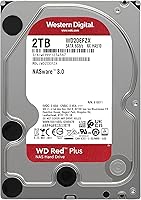
  • Capacity: This drive offers 2TB of usable storage, suited for moderate NAS workloads in home or small office environments.
  • Form Factor: The 3.5-inch form factor is standard for desktop NAS enclosures and most multi-bay systems from brands like Synology and QNAP.
  • Interface: It uses a SATA 6 Gb/s (SATA III) interface, ensuring compatibility with virtually all modern NAS enclosures and motherboards.
  • Rotational Speed: The drive spins at 5400 RPM, a deliberate choice that reduces heat output and noise during continuous 24/7 operation.
  • Cache: A 128 MB cache buffer helps smooth out burst read and write requests typical of multi-user NAS access patterns.
  • Recording Tech: Conventional Magnetic Recording (CMR) is used, which maintains consistent write performance under sustained or overlapping write loads unlike SMR drives.
  • Workload Rate: Rated for up to 180 TB per year, which translates to approximately 500 GB of data transfer per day under continuous operation.
  • Bay Support: The NASware firmware supports configurations of up to 8 bays, covering single-drive setups through mid-range multi-drive NAS enclosures.
  • Firmware: Western Digital's NASware firmware is tuned specifically to handle vibration compensation and error recovery in stacked multi-drive environments.
  • Dimensions: The drive measures 5.79 x 4 x 1.03 inches, fitting standard 3.5-inch drive bays without any adapter required.
  • Weight: At 15.9 ounces, the drive has a solid, standard mechanical HDD build with no unusual weight concerns for installation.
  • Platforms: Compatible with both Mac and PC operating systems, making it flexible for mixed-environment small office NAS deployments.
  • Installation: This is an internal hard drive designed for installation inside a NAS enclosure or desktop chassis — it is not a plug-and-play external device.
  • Use Case: Engineered specifically for 24/7 always-on NAS operation, distinguishing it from standard desktop drives that are not rated for continuous use.
  • Release Date: First made available in January 2021, the drive has accumulated several years of real-world reliability data from NAS users globally.

Related Reviews

WD Red Plus 12TB NAS Internal Hard Drive
83%
93%
Recording Technology
91%
RAID Compatibility
92%
NAS Compatibility
86%
Sustained Performance
61%
Noise & Vibration
More
WD Red Plus 6TB NAS Hard Drive
82%
89%
Reliability & Longevity
93%
NAS Compatibility
62%
Write Performance
91%
RAID Suitability
87%
Noise Level
More
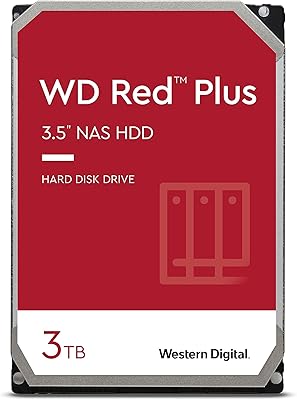
WD Red Plus 3TB NAS Hard Drive
78%
91%
Long-Term Reliability
93%
NAS Compatibility
87%
RAID Performance
67%
Sequential Read/Write Speed
48%
Random I/O Performance
More
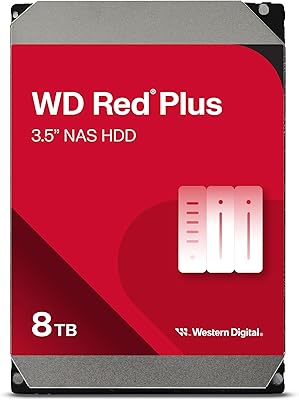
WD Red Plus 8TB NAS Hard Drive
82%
88%
Long-Term Reliability
93%
NAS Compatibility
91%
CMR Recording Technology
83%
Value for Money
86%
Noise & Vibration
More
Western Digital WD Red Plus 1TB NAS Hard Drive
84%
91%
Long-Term Reliability
93%
NAS Compatibility
88%
RAID Performance
83%
Noise & Vibration
77%
Heat Management
More
WD Red Plus 10TB NAS Hard Drive
80%
91%
Reliability & Endurance
93%
CMR Recording Integrity
84%
Read & Write Performance
88%
NAS Compatibility
74%
Noise & Vibration
More
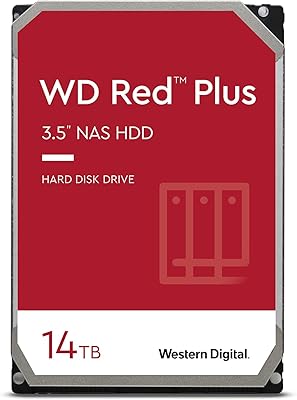
WD Red Plus 14TB NAS Hard Drive
82%
83%
Reliability & Longevity
91%
RAID Compatibility
67%
Value for Money
84%
Write Performance
93%
NAS Compatibility
More
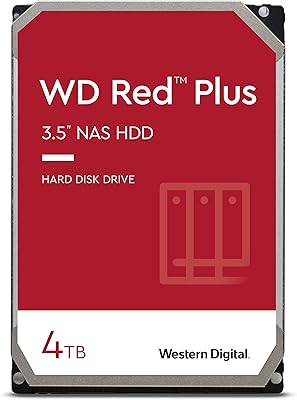
Western Digital 4TB WD Red Plus NAS Internal Hard Drive
89%
91%
Performance
94%
Reliability
88%
Energy Efficiency
85%
Noise Levels
89%
Workload Handling
More
WD Red 5TB NAS Hard Drive
84%
91%
Reliability for 24/7 Operation
77%
Performance (Speed)
89%
Energy Efficiency
85%
Ease of Integration
90%
Compatibility with NAS Systems
More
WD Red Pro 3TB NAS Hard Drive
86%
91%
Performance
88%
Reliability
92%
Compatibility with NAS Systems
65%
Noise Levels
89%
Ease of Setup
More

FAQ

Yes, the WD Red Plus 2TB NAS Hard Drive is confirmed CMR (Conventional Magnetic Recording). Western Digital caused significant controversy when it was discovered that some earlier WD Red drives quietly used SMR technology without disclosure. The Red Plus line was specifically repositioned to be transparently CMR across all capacities, so you are not getting an SMR drive here.

In most cases, yes — this NAS drive is on the official compatibility lists for a wide range of Synology and QNAP enclosures. That said, it is always worth cross-checking your specific enclosure model against Western Digital's compatibility list or your NAS manufacturer's HDD compatibility page before purchasing, especially if you are running older firmware on the enclosure.

The standard WD Red line uses SMR recording technology, which is fine for light, sequential workloads but can bog down during RAID rebuilds or heavy mixed writes. The Red Plus uses CMR, which handles those same workloads without the performance penalties. For any serious NAS setup running RAID, the Red Plus is the more dependable choice.

Absolutely — the drive works fine in single-bay setups too. It is optimized for multi-bay environments, but there is nothing stopping you from using it in a one-drive enclosure for personal cloud or backup use. You just might not need all the vibration-compensation features that NASware provides in that scenario.

Most owners describe it as quiet, especially compared to 7200 RPM alternatives. At 5400 RPM, the drive produces noticeably less noise and vibration during normal operation. If your NAS sits in a home office or living space, this is one of the calmer mechanical hard drive options available.

It depends heavily on what you are storing. For document backups, photo libraries, and light media collections, 2TB is workable. For large 4K video libraries or if you are consolidating storage from multiple machines, you will likely fill it faster than expected. Honestly, the larger capacity variants in the Red Plus line often offer better price-per-TB value, so it is worth comparing before committing to the 2TB.

It handles RAID 0, 1, 5, and 6 setups well. The CMR technology is particularly valuable in RAID 5 and RAID 6 configurations, where a drive rebuild can place sustained write pressure on the remaining drives for hours. An SMR drive in that situation can stall or fail the rebuild entirely — CMR handles it without breaking a sweat.

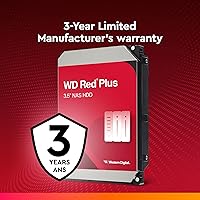
Western Digital covers the Red Plus line with a 3-year limited warranty. That is standard for NAS-class consumer drives. It is worth registering the drive on Western Digital's website after purchase to streamline any potential RMA process, as some buyers have reported smoother experiences when the drive is pre-registered.

It can manage light VM or database workloads if your NAS has enough RAM to handle caching, but it is not the ideal setup for demanding or latency-sensitive applications. The 5400 RPM speed limits random I/O performance, so if your use case involves frequent random read/write access — rather than large sequential transfers — an SSD or a faster mechanical drive would serve better.

Think of it this way: 180 TB per year works out to roughly 500 GB of data movement every single day of the year. For a typical home NAS handling backups, media streaming, and occasional file transfers, you are unlikely to come close to that ceiling. Even a busy small office setup would need to push data pretty aggressively to exceed it.