
Overview

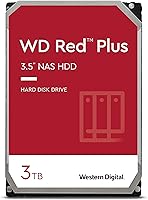
The WD Red Plus 3TB NAS Hard Drive has been a trusted option for home and small business NAS builds since its original release in 2012. Western Digital introduced the 'Plus' designation specifically to separate this CMR-based line from the newer WD Red drives, which use SMR (Shingled Magnetic Recording) technology. That difference matters more than it sounds: CMR recording writes data in non-overlapping tracks, making it far more stable and predictable in RAID configurations than SMR drives. Running at 5400 RPM, this NAS hard drive prioritizes endurance over raw throughput — a deliberate trade-off for something designed to spin around the clock. It is a workhorse, not a sprinter.

Features & Benefits

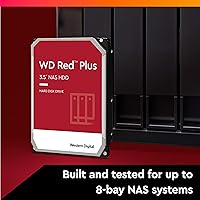
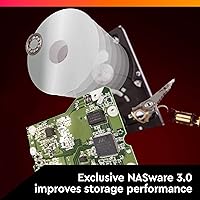
The firmware running under the hood — NASware 3.0 — is one of the more underrated aspects of this WD Red Plus drive. It is specifically tuned for continuous operation, with built-in vibration compensation that matters when you are stacking multiple drives in a single enclosure. The drive supports up to 8-bay NAS systems, which gives it real room to grow alongside a small business setup. Its 180 TB/yr workload rating is enough for typical backup schedules, media streaming, and light file-serving — not enterprise-grade, but solidly appropriate for its intended audience. A 64 MB cache and SATA 6 Gb/s interface handle sequential reads and writes without issue, and the 3-year warranty adds a reasonable safety net.

Best For

The Red Plus 3TB fits a fairly specific niche, and knowing whether you fall into it saves a lot of buyer's remorse. It is most at home in a Synology or QNAP enclosure used for personal media libraries, automated backups, or light file sharing across a household or small office. If you are building a RAID array — whether RAID 1 for simple mirroring or RAID 5 for parity-protected storage — this NAS hard drive's CMR technology is a genuine advantage over SMR drives, which can struggle under sustained write pressure. IT admins and prosumers who want dependability without paying for enterprise-class drives will find this sits comfortably within a practical mid-range budget. It is not for high-transaction workloads or demanding random I/O scenarios.

User Feedback

With over 24,000 ratings and a strong average score, this WD Red Plus drive has earned its reputation the slow way — through years of actual use in real NAS setups. Reviewers consistently highlight quiet operation and low heat output as standout traits, which makes sense for a drive you will barely notice once installed. Long-term owners frequently report multi-year service without failure. That said, criticism does exist: some buyers received units with WD Red labeling during the CMR/SMR rebrand transition, causing genuine confusion at checkout. A small number of early failure reports also surface — not unusual for mechanical drives at this scale of adoption. The honest consensus is that this NAS hard drive delivers on reliability, but speed benchmarks are simply not where it competes.

Pros

  • CMR technology makes this WD Red Plus drive a reliable choice for RAID arrays, avoiding the write performance pitfalls of SMR alternatives.
  • NASware 3.0 firmware is specifically tuned for 24/7 operation, including built-in vibration compensation for multi-drive enclosures.
  • Quiet operation is consistently praised by long-term users — you will rarely notice it running.
  • Low heat output during continuous use helps protect both the drive and surrounding components in tight enclosures.
  • Supports up to 8-bay NAS systems, giving growing home or small business setups real room to scale.
  • The 180 TB/yr workload rating comfortably covers typical NAS tasks like scheduled backups and media streaming.
  • Tens of thousands of reviews over many years point to strong long-term durability in always-on environments.
  • A 3-year limited warranty provides meaningful coverage for a drive intended to run continuously.
  • Broad compatibility with popular NAS platforms like Synology and QNAP reduces setup headaches.

Cons

  • At 5400 RPM, this NAS hard drive is noticeably slower than 7200 RPM alternatives when random I/O performance matters.
  • The WD Red versus WD Red Plus labeling confusion during the CMR/SMR transition caused real frustration for buyers who received mismatched packaging.
  • 3TB is a relatively modest capacity in today's market, and higher-density drives may offer better long-term value for storage-heavy users.
  • Early failure reports exist in the review pool — not alarming at this sales volume, but worth noting for mission-critical deployments.
  • Not suited for desktop or direct-attached storage use cases where NAS-specific firmware offers no advantage.
  • The workload rating of 180 TB/yr can feel limiting for heavier professional or multi-user NAS environments.
  • Some buyers report that verifying the correct CMR model number requires extra diligence at checkout, which should not be necessary.

Ratings

The scores below were generated by AI after analyzing tens of thousands of verified global user reviews for the WD Red Plus 3TB NAS Hard Drive, with automated filtering applied to remove incentivized, duplicate, and bot-generated submissions. The result is an honest, balanced picture of where this NAS hard drive genuinely excels and where real buyers have run into friction. Both strengths and documented pain points are transparently reflected in every category score.

Long-Term Reliability
91%
Years of user data tell a consistent story: this NAS hard drive keeps running long after cheaper alternatives have been retired. Many owners report multi-year continuous operation in always-on home and office NAS setups without a single failure, which is exactly the reassurance you want from a drive storing irreplaceable data.
A pattern of early-failure reports does exist within the review pool — not alarming given the volume of units sold, but worth noting for anyone deploying this drive in a mission-critical environment without a backup redundancy plan in place.
NAS Compatibility
93%
Broad compatibility with leading NAS platforms including Synology, QNAP, and Netgear is one of this drive's clearest strengths. NASware 3.0 firmware means the drive arrives pre-tuned for the kinds of enclosures it will actually live in, reducing setup friction considerably for first-time NAS builders.
Compatibility with very old or budget-tier NAS enclosures is occasionally hit-or-miss, and a handful of users report needing firmware updates on their enclosure before the drive is fully recognized. It is not a universal plug-and-play experience across every device on the market.
RAID Performance
87%
The CMR recording technology is the defining advantage here for RAID users. Unlike SMR drives that can throttle dramatically during a RAID rebuild — sometimes taking days and stressing every drive in the array — this NAS hard drive handles rebuild operations with the stability that multi-bay setups demand.
While CMR keeps RAID rebuilds stable, the 5400 RPM speed means those rebuilds still take longer in absolute terms than they would with a 7200 RPM alternative. Users running large RAID 5 or RAID 6 arrays with full 3TB drives should budget extra time for initial builds and periodic checks.
Sequential Read/Write Speed
67%
33%
For the sequential tasks a NAS drive is actually designed for — transferring large video files, writing nightly backups, or reading a Plex media library — throughput is adequate and consistent. Users streaming 4K content to multiple devices simultaneously generally report no meaningful bottlenecks attributable to the drive itself.
At 5400 RPM with a 64 MB cache, raw sequential speed is modest by modern standards. Anyone comparing benchmark numbers against desktop or enterprise drives will find this NAS hard drive underwhelming on paper, and in practice it is noticeably slower than 7200 RPM alternatives for large, sustained data migrations.
Random I/O Performance
48%
52%
For light random access workloads — casual file browsing, occasional document retrieval, or low-traffic small business file sharing — the drive performs adequately and users rarely notice the limitation in everyday use.
Heavy random I/O is a genuine weak spot. Users who have tried to run virtual machines, busy databases, or multi-user applications directly off this NAS hard drive report sluggishness that reflects the fundamental limitations of a 5400 RPM mechanical drive. This is not the right tool for those workloads.
Noise & Vibration
88%
Quiet operation is one of the most frequently volunteered compliments from long-term owners. Running at 5400 RPM in a NASware-optimized state, the drive produces minimal acoustic noise and low vibration — a genuine quality-of-life benefit for home users whose NAS sits in a bedroom or home office.
In enclosures with poor vibration dampening or alongside five or more other spinning drives, some users do notice a faint hum under sustained load. It is rarely described as disruptive, but it is not completely silent in dense multi-drive configurations.
Thermal Performance
86%
Low operating temperatures are consistently mentioned across long-term user reviews, and this tracks with the physics of a 5400 RPM drive drawing less power than faster alternatives. In enclosures with moderate airflow, the drive stays cool even during sustained backup windows running several hours overnight.
In fanless or passively cooled enclosures with tight internal clearances, temperatures can creep higher than ideal under prolonged workloads. A small number of users in warm climates with poorly ventilated enclosures have flagged thermal throttling as an occasional concern.
Value for Money
74%
26%
For buyers who specifically need a CMR NAS drive, the Red Plus 3TB sits at a fair price point relative to what it delivers — dependable always-on operation, NAS firmware, and a 3-year warranty. The cost of a failed RAID rebuild on an SMR drive makes the CMR premium feel justified in hindsight for many users.
At 3TB, the price-per-terabyte ratio is less competitive than larger-capacity drives in the same product family. Buyers who do the math often find that stepping up to a 4TB or 6TB Red Plus offers meaningfully better storage value, making the 3TB a tough recommendation purely on efficiency grounds.
Packaging & Delivery Accuracy
59%
41%
The physical drive itself arrives well protected in the majority of cases, and Western Digital's standard retail packaging is sturdy enough to survive typical shipping conditions without issue.
The WD Red versus WD Red Plus labeling confusion during the CMR/SMR rebrand transition genuinely frustrated buyers. A non-trivial number of users received units in WD Red branded boxes and had to verify the model number manually to confirm they had the CMR version — a process that should not be necessary.
Firmware & Software
82%
18%
NASware 3.0 is a mature, well-tested firmware layer that handles the low-level adjustments — error recovery timing, vibration compensation, idle optimization — automatically and without user intervention. Most buyers set it up and never think about the firmware again, which is exactly how it should work.
There is no companion desktop software for drive health monitoring beyond what Western Digital's generic Dashboard application provides, and some users find that tool limited compared to third-party alternatives. The firmware itself is not user-upgradeable in a straightforward way, which limits post-purchase optimization options.
Warranty & Support
77%
23%
A 3-year limited warranty is a reasonable commitment from Western Digital for a drive designed to run continuously. Users who have gone through the RMA process generally report that replacements arrive without excessive friction, and the warranty period aligns well with the typical NAS deployment cycle for home users.
Some users have reported slower-than-expected response times from WD customer support during high-demand periods, and the warranty does not cover data recovery — a meaningful gap for anyone who loses a non-RAID drive. Third-party data recovery costs can be substantial if a drive fails outside a redundant array.
Build & Durability
83%
The physical construction feels solid and consistent with what you would expect from a Western Digital NAS product. Long-term users who have handled multiple units across different purchase batches rarely flag build quality as a concern, and the drive's track record since 2012 speaks to its material durability.
As a mechanical hard drive, it is inherently more vulnerable to physical shock during shipping or installation than a solid-state alternative. A handful of DOA reports in the review pool suggest that a small percentage of units do not survive transit intact, though this appears to be within normal statistical ranges for hard drives.
Scalability
81%
19%
Support for up to 8-bay NAS enclosures means this drive can grow with a storage setup over time. Users who start with a two-bay Synology and later upgrade to a larger enclosure can carry their existing drives forward without compatibility concerns, which adds genuine long-term value to the initial investment.
The 3TB capacity ceiling does become a scalability bottleneck as storage needs grow, and users who anticipate significant data growth within a few years may find themselves replacing these drives sooner than the hardware would otherwise require. Planning for higher-density drives from the outset can reduce that friction.

Suitable for:

The WD Red Plus 3TB NAS Hard Drive is purpose-built for anyone running a home or small business NAS enclosure who needs a drive they can install and largely forget about. If you are using a Synology, QNAP, or similar multi-bay system to store family photo archives, stream media around the house, or run nightly backups, this NAS hard drive is exactly the kind of dependable, low-drama component your setup needs. It is also a strong choice for IT administrators or prosumers building RAID 1 or RAID 5 arrays, because its CMR recording technology handles the sustained write operations those configurations demand — something SMR drives can genuinely struggle with under pressure. Small business owners who need always-on shared storage across a team, without the cost of enterprise hardware, will find the workload rating and multi-bay support align well with moderate day-to-day demands. The 3-year warranty adds a layer of confidence for anyone treating this as infrastructure rather than a casual purchase.

Not suitable for:

The WD Red Plus 3TB NAS Hard Drive is not the right tool if raw speed is anywhere near the top of your priorities. At 5400 RPM, this NAS hard drive will not impress anyone running a high-transaction database, a busy virtualization host, or any workload involving heavy random read and write operations — for those scenarios, you would be better served by a 7200 RPM NAS drive or a solid-state alternative. It is also not ideal for users who need substantially more than 3TB of storage in a single drive, as larger-capacity options in the same product line are available. Buyers who were burned by the WD Red SMR labeling confusion in earlier purchases should verify the model number (WD30EFRX) carefully before ordering, since packaging inconsistencies during the rebrand transition created real frustration. And if you are simply looking for a straightforward desktop storage drive, this one carries NAS-specific overhead and pricing that adds no practical benefit outside of an enclosure context.

Specifications

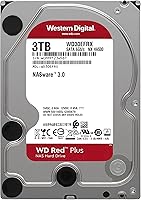
  • Capacity: This NAS hard drive offers 3TB of usable storage, suitable for personal media libraries, backups, and small business file sharing.
  • Recording Tech: It uses CMR (Conventional Magnetic Recording) technology, which writes data in non-overlapping tracks for stable and predictable performance in RAID configurations.
  • Rotational Speed: The drive spins at 5400 RPM, a deliberate choice that prioritizes thermal efficiency and long-term endurance over raw read/write speed.
  • Interface: It connects via a SATA 6 Gb/s interface, compatible with standard NAS enclosures and most modern motherboards.
  • Cache: A 64 MB cache buffer helps smooth out sequential data transfers typical of NAS workloads such as large file moves and backups.
  • Form Factor: The drive uses the standard 3.5-inch form factor, fitting the vast majority of desktop NAS enclosures on the market.
  • Bay Support: It is rated for use in NAS systems with up to 8 drive bays, making it suitable for both entry-level and mid-range multi-drive enclosures.
  • Workload Rate: The annual workload rating is 180 TB/yr, which comfortably covers typical home and small business tasks including scheduled backups and media streaming.
  • Firmware: NASware 3.0 firmware is pre-loaded to optimize the drive for continuous 24/7 operation, with built-in vibration compensation for multi-drive setups.
  • Installation: This is an internal hard drive intended for installation inside a compatible NAS enclosure or desktop chassis, not for external use.
  • Compatibility: The drive is compatible with PC and Mac environments when used through a NASware-supported NAS system or direct SATA connection.
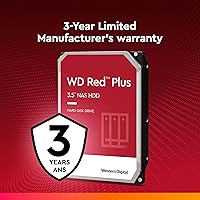
  • Warranty: Western Digital backs this NAS hard drive with a 3-year limited warranty covering manufacturing defects under normal operating conditions.
  • Weight: The drive weighs 13.1 ounces, which is standard for a 3.5-inch mechanical hard drive of this capacity.
  • Dimensions: Physical dimensions measure 5.7 x 4 x 1.03 inches, conforming to the universal 3.5-inch drive standard for enclosure compatibility.
  • Model Number: The official model number is WD30EFRX, which buyers should verify to confirm they are receiving the CMR version rather than an SMR-based WD Red drive.
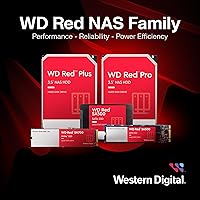
  • Product Line: This drive belongs to the WD Red Plus family, which Western Digital introduced specifically to distinguish CMR-based NAS drives from the SMR-based WD Red line.
  • First Available: The WD30EFRX model has been available since July 2012, giving it an unusually long track record of real-world NAS deployment.
  • Power Draw: At 5400 RPM with NASware optimization, this drive is designed for low idle and operating power consumption, reducing heat output in always-on environments.

Related Reviews
WD Red Plus 12TB NAS Hard Drive
88%
91%
Performance Under Load
95%
Storage Capacity
87%
Ease of Setup & Integration
90%
Error Recovery & Data Protection
88%
Reliability & Durability
More
WD Red Pro 3TB NAS Hard Drive
86%
91%
Performance
88%
Reliability
92%
Compatibility with NAS Systems
65%
Noise Levels
89%
Ease of Setup
More
WD Red Plus 6TB NAS Hard Drive
82%
89%
Reliability & Longevity
93%
NAS Compatibility
62%
Write Performance
91%
RAID Suitability
87%
Noise Level
More
WD Red Plus 2TB NAS Hard Drive
80%
91%
Long-Term Reliability
88%
NAS Compatibility
86%
RAID Rebuild Performance
89%
Noise & Heat
72%
Sequential Read Speed
More
WD Red Plus 8TB NAS Hard Drive
82%
88%
Long-Term Reliability
93%
NAS Compatibility
91%
CMR Recording Technology
83%
Value for Money
86%
Noise & Vibration
More
Western Digital WD Red Plus 1TB NAS Hard Drive
84%
91%
Long-Term Reliability
93%
NAS Compatibility
88%
RAID Performance
83%
Noise & Vibration
77%
Heat Management
More
WD Red Plus 10TB NAS Hard Drive
80%
91%
Reliability & Endurance
93%
CMR Recording Integrity
84%
Read & Write Performance
88%
NAS Compatibility
74%
Noise & Vibration
More
Western Digital 4TB WD Red Plus NAS Internal Hard Drive
89%
91%
Performance
94%
Reliability
88%
Energy Efficiency
85%
Noise Levels
89%
Workload Handling
More
WD Red Plus 14TB NAS Hard Drive
82%
83%
Reliability & Longevity
91%
RAID Compatibility
67%
Value for Money
84%
Write Performance
93%
NAS Compatibility
More
WD Red 5TB NAS Hard Drive
84%
91%
Reliability for 24/7 Operation
77%
Performance (Speed)
89%
Energy Efficiency
85%
Ease of Integration
90%
Compatibility with NAS Systems
More

FAQ

It matters quite a bit if you are using the drive in a RAID array. WD Red now refers to drives using SMR (Shingled Magnetic Recording), where data tracks overlap — this can cause slowdowns under sustained write pressure, which is exactly what RAID rebuilds create. The WD Red Plus 3TB NAS Hard Drive uses CMR (Conventional Magnetic Recording), where tracks do not overlap, making it far more predictable and stable for multi-drive NAS setups. If you are running RAID 1, 5, or 6, CMR is the safer choice.

Check the model number — the WD30EFRX is the CMR version. During the rebrand transition, some units shipped with WD Red labeling on the box despite being the Red Plus CMR variant, which caused a lot of understandable confusion. If your packaging says WD Red but the model number is WD30EFRX, you have the right drive. When in doubt, verify with Western Digital's official product compatibility database before installing.

Almost certainly yes. This NAS hard drive is listed on the compatibility matrices of most major NAS manufacturers including Synology and QNAP. That said, it is always worth checking your specific enclosure model against the manufacturer's hard drive compatibility list before purchasing, since some older or lower-powered enclosures have restrictions on which drives they support.

Physically it will fit and function, since it uses a standard SATA interface. However, it is not optimized for desktop use — the 5400 RPM speed and NASware firmware are tuned for always-on, low-vibration NAS environments. You would not get the best performance out of it in a typical desktop workload, and you would be paying a small premium over a comparably priced desktop drive for features you would not use.

Very quiet. One of the most consistent points of praise from long-term users is how little noise this NAS hard drive produces, even in multi-drive enclosures running around the clock. At 5400 RPM it generates less vibration and acoustic noise than faster 7200 RPM alternatives, which makes a real difference if your NAS lives in a home office or living space.

Think of it as the drive's annual stamina limit for data transfer. 180 TB per year works out to roughly 500 GB per day of sustained read and write activity. For a home user running nightly backups, streaming 4K video, and storing photos, you are unlikely to come anywhere close to that ceiling. Even a small business using the drive for file sharing and incremental backups should stay well within the rated limit under normal conditions.

It works perfectly well in single-bay enclosures too. The NASware firmware benefits apply regardless of how many drives are in the system. That said, the vibration compensation features become more relevant as you add more spinning drives to an enclosure, since mechanical vibration from neighboring drives can affect read/write accuracy.

Western Digital offers a 3-year limited warranty on this NAS hard drive, so a DOA or early failure should be covered. Contact WD's support team directly to initiate an RMA — the process is fairly straightforward. Keep your purchase receipt and note the serial number from the drive label before installing, as you will need those details for any warranty claim.

The 5400 RPM speed class runs cooler than 7200 RPM drives, and user feedback consistently mentions low operating temperatures as a positive. That said, any mechanical hard drive generates some heat during sustained use, and a completely fanless enclosure with poor airflow is not ideal for long-term drive health. If your NAS has passive cooling only, check the enclosure manufacturer's thermal guidelines for the drives they recommend.

For a single-user home NAS handling documents, photos, and a modest media library, 3TB is still functional. For 4K video collections, large RAID arrays, or growing small business data, it may feel limiting sooner than you expect. If budget allows, stepping up to a 4TB or 6TB drive in the same Red Plus family gives you more headroom without changing anything about the drive's reliability characteristics.