
Overview

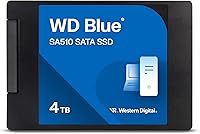
The WD Blue SA510 4TB SATA SSD is Western Digital's answer for users who need serious local storage without moving to NVMe pricing. Four terabytes in a 2.5-inch drive is still relatively uncommon, and this WD Blue drive sits in a sweet spot for people upgrading older laptops or desktops that lack an M.2 slot. SATA III has a real throughput ceiling — don't expect NVMe-like burst speeds — but for everyday computing, large file libraries, and HDD replacements, it holds up well. WD's SA510 series has earned a reputation for consistency, and this capacity tier brings that reliability to users who genuinely need bulk local storage.

Features & Benefits

Pull up to 560 MB/s sequential reads and 520 MB/s writes — fast enough to boot an operating system in seconds and move large RAW photo folders or video files without the frustrating wait you get from a mechanical drive. The 7mm slim profile means it drops into most laptop bays without a spacing adapter, which is a small but genuinely appreciated detail for first-time installers. Because it runs on SATA III 6 Gb/s, it works with virtually any system built in the last fifteen years. Western Digital also bundles a Dropbox cloud storage offer, a useful perk for anyone who wants an offsite backup running alongside their local library.

Best For

This SATA solid state drive makes the most sense for three types of buyers. Anyone still running a mechanical hard drive in a laptop or desktop will notice an immediate, dramatic difference — faster boots, snappier app launches, no more audible spinning. Photographers and videographers who accumulate large libraries locally will appreciate having 4TB of SSD speed without the steep premium of high-capacity NVMe options. And if your machine only has a 2.5-inch bay and no M.2 slot, the decision is essentially made for you — this is a strong pick in that scenario, even if cheaper no-name SATA alternatives exist.

User Feedback

With over 10,000 ratings and a 4.4-star average, the SA510 4TB has clearly found its audience. Most buyers highlight how straightforward installation is and how noticeably faster their systems feel compared to old spinning drives. Quiet operation comes up often too — nothing mechanical means nothing to hear. That said, some reviewers note that the price-per-gigabyte runs higher than budget SATA alternatives, which is a fair criticism. A handful of users with very old systems report BIOS detection quirks, worth verifying before buying. Since this drive launched in early 2023, long-term endurance data is still accumulating, so treat longevity assumptions with reasonable caution.

Pros

  • Massive 4TB capacity covers even heavy photo, video, and file storage needs without compromise.
  • Speeds up to 560 MB/s read make boot times and large file transfers noticeably faster than any spinning drive.
  • The 7mm slim profile fits most laptop bays without adapters or extra hardware.
  • Broad SATA III compatibility means it works in virtually any machine built in the last fifteen years.
  • This SATA solid state drive is completely silent — no moving parts, no vibration, no noise.
  • Western Digital's established track record gives buyers reasonable confidence in long-term reliability.
  • Simple installation process makes it accessible even for first-time upgraders.
  • Bundled Dropbox offer adds a useful cloud backup layer for everyday and creative users.
  • Ranked among the top drives in its category on Amazon, backed by over 10,000 verified ratings.
  • Lightweight at just over one ounce, making it easy to handle during installation.

Cons

  • Price per gigabyte runs higher than budget SATA alternatives from lesser-known brands.
  • SATA III throughput is a hard ceiling — performance cannot match even mid-range NVMe drives.
  • Long-term endurance data is limited given the relatively recent 2023 launch.
  • A small number of users report BIOS detection issues on very old SATA II systems.
  • No included mounting hardware or adapter in the box, which some desktop users may need separately.
  • High-capacity SSDs at this tier are still maturing, so buyer confidence relies partly on brand trust rather than deep durability history.
  • Not ideal as a primary drive for users whose systems support faster M.2 NVMe options.

Ratings

The WD Blue SA510 4TB SATA SSD earns a strong overall position in our analysis, which draws on thousands of verified global buyer reviews filtered by our AI system to remove incentivized, bot-generated, and outlier feedback. Scores reflect both what this WD Blue drive genuinely does well and where real users ran into limitations — no category has been softened to protect the brand. Whether the SA510 4TB is the right call for your setup depends heavily on your system's interface support and storage priorities, and the breakdown below is designed to help you make that call clearly.

Sequential Read Speed
83%
Users upgrading from mechanical drives consistently report a dramatic improvement in file transfer times and application launches. Moving large RAW photo batches or video project folders feels noticeably faster in daily use, and boot times drop sharply compared to spinning disks.
Against NVMe drives in the same price range, the SATA ceiling becomes obvious — power users copying large datasets back-to-back will see this drive plateau where an M.2 drive would keep climbing. It is a SATA limitation, not a flaw, but it matters for certain workloads.
Sequential Write Speed
81%
19%
Writing large files — video exports, disk images, bulk photo imports — feels smooth and consistent under normal workloads. For content creators using this as a working drive alongside a faster boot SSD, the 520 MB/s ceiling rarely becomes a bottleneck in practice.
Sustained write performance can dip during very long, continuous write sessions, which is common behavior for SATA SSDs using SLC caching. Users doing multi-hour video renders or large backup jobs may see speeds taper off once the cache is saturated.
Storage Capacity
94%
Four terabytes in a single 2.5-inch drive is a genuinely useful amount of space — enough for a full operating system, a large game library, thousands of RAW photos, and a video archive all at once. Buyers frequently mention that the capacity alone justified the purchase over smaller and cheaper alternatives.
The formatted usable space lands closer to 3.6TB after the OS and filesystem overhead, which surprises some buyers expecting the full 4TB to appear immediately. This is industry-standard behavior, not a defect, but it catches first-time SSD upgraders off guard.
Value for Money
67%
33%
For buyers who specifically need 4TB in a 2.5-inch SATA form factor from a reputable brand, the SA510 4TB offers a fair combination of speed, reliability, and warranty coverage that no-name alternatives struggle to match. The 5-year warranty adds tangible long-term value to the purchase.
Price per gigabyte runs noticeably higher than budget SATA competitors, and buyers who compare against high-capacity NVMe options may feel the value proposition weakens at this capacity tier. Users who do not need the WD brand assurance or warranty support can find cheaper SATA options that perform similarly.
Compatibility
78%
22%
The 2.5-inch SATA III form factor works across an enormous range of laptops and desktops, including machines well over a decade old. Most buyers report a straightforward drop-in replacement experience with no firmware or driver gymnastics required.
A small but consistent group of users with very old SATA II systems or certain budget motherboards report occasional BIOS detection issues on first boot. These cases appear rare, but they are real enough to warrant checking your motherboard's compatibility list before purchasing if your system predates 2010.
Installation Experience
91%
The drive's compact size, light weight, and standard 2.5-inch footprint make physical installation accessible even for first-timers. Hundreds of reviewers specifically mention how straightforward the swap was, often completing the process in under fifteen minutes with just a screwdriver.
Western Digital does not include mounting screws or a bracket in the box, which some desktop users need to secure the drive in a 3.5-inch cage. It is a minor omission but one that catches buyers off guard when they are mid-installation and realize they need extra hardware.
Build Quality
86%
The drive feels solid and well-constructed for a consumer-grade unit — no flex, no rattles, and a consistent finish that inspires confidence during handling. Being a solid-state device, there are no moving parts to fail mechanically, which users notice and appreciate.
The outer casing is plastic rather than metal, which some users perceive as less premium compared to higher-tier SSDs. It has no functional impact on performance or durability, but buyers coming from metal-bodied drives occasionally comment on the difference.
Noise & Vibration
97%
Complete silence during operation is one of the most frequently praised aspects among users coming from mechanical drives. Without any spinning platters or actuator arms, the drive produces zero audible noise and zero vibration even during heavy sustained read and write activity.
There is virtually nothing negative to report here — this is one category where SATA SSDs have a structural advantage over HDDs that is impossible to argue against. The only theoretical concern is that thermal throttling during extended use could reduce performance, though this is rarely reported at SATA speeds.
Thermal Performance
79%
21%
The SA510 4TB runs cooler than most NVMe drives because SATA's lower throughput generates less heat during operation. Laptop users in particular appreciate that it does not add to chassis warmth during long editing or transfer sessions.
Under very sustained workloads in enclosed laptop bays with poor airflow, some users have observed minor throttling behavior. This is uncommon at SATA speeds but worth noting for users who run the drive hard for extended periods in thermally constrained machines.
Long-Term Durability
72%
28%
Western Digital's 5-year warranty and the 3D NAND construction both point to a drive designed with endurance in mind. Users who have owned the drive since its 2023 launch report no reliability issues in day-to-day use, and WD's brand history in storage is a meaningful confidence signal.
The drive is only about two years old at this point, which means there is simply not enough long-term field data to make definitive claims about multi-year endurance. Buyers who rely on hard durability data from years of real-world usage will find the reliability picture still incomplete.
Software & Extras
62%
38%
The bundled Dropbox cloud storage offer is a practical perk for users who want an offsite backup layer running alongside their local drive. For content creators who already use cloud backup as part of their workflow, it adds genuine utility without extra cost.
Beyond the Dropbox offer, the software ecosystem is thin — WD's companion utilities are functional but not particularly refined or feature-rich compared to what some competitors bundle. Users expecting robust drive health monitoring or cloning tools out of the box may need to look for third-party alternatives.
Brand Trust & Support
88%
Western Digital's decades-long presence in the storage market gives buyers a level of accountability that lesser-known brands cannot offer. Support channels are established, warranty claims are handled through a clear process, and the brand's reputation is backed by a large global user base.
Some users report that WD's customer support response times can be slow during peak periods, and the warranty replacement process occasionally requires more back-and-forth than expected. It is not a dealbreaker, but it does temper the otherwise strong brand confidence slightly.
Form Factor Flexibility
74%
26%
The 2.5-inch, 7mm profile covers a wide range of compatible devices — slim laptops, standard desktops, and external SATA enclosures all accept this drive without modification. The physical versatility makes it a practical option for users who may repurpose the drive across different machines over its lifespan.
The 2.5-inch form factor is increasingly being phased out in favor of M.2 in modern systems, which limits how forward-compatible this drive is as users upgrade their hardware. Buyers buying into a new build today should confirm their chassis or laptop will still have a 2.5-inch bay in years to come.

Suitable for:

The WD Blue SA510 4TB SATA SSD is an excellent fit for anyone who needs a large, reliable internal drive and is working with a system that has a 2.5-inch SATA bay — whether that's an older laptop, a budget desktop, or a machine without an M.2 slot. If you're still running a mechanical hard drive and want a dramatic real-world improvement in everyday responsiveness, this WD Blue drive delivers that without requiring you to rebuild your whole setup. Photographers, videographers, and content creators who accumulate large local libraries will find the 4TB capacity genuinely useful — it's enough room to store thousands of RAW files or hours of high-resolution footage without constantly managing space. It also works well as a secondary data drive in a desktop that already has an NVMe boot drive, giving you fast, quiet bulk storage for media or archives. For anyone constrained to SATA and wanting the most capacity available from a proven brand, the SA510 4TB is a logical and well-supported choice.

Not suitable for:

The WD Blue SA510 4TB SATA SSD is not the right pick if your system supports NVMe and performance is a priority — modern M.2 SSDs can deliver three to five times the throughput, and at 4TB capacities, high-performance NVMe options are increasingly competitive. Buyers chasing the lowest possible price per gigabyte may also be disappointed, since no-name or lesser-known SATA drives at this capacity can undercut this drive on cost, even if they sacrifice brand confidence and support. If you own a very old system with only SATA II ports, you should verify compatibility before purchasing, as some users have reported detection inconsistencies in those edge cases. Gamers or power users running demanding workloads who need consistently fast random read and write performance will hit the ceiling of what SATA can offer fairly quickly. And if long-term endurance data matters to your decision, keep in mind that this drive has only been on the market since early 2023, so multi-year reliability patterns are still forming.

Specifications

  • Storage Capacity: This drive offers 4TB (approximately 4,000GB) of formatted storage for files, applications, media libraries, and operating systems.
  • Interface: It uses a SATA III 6 Gb/s interface, which is backward compatible with SATA II ports, though maximum speeds will be reduced on older connections.
  • Form Factor: The 2.5-inch form factor is the standard size used in most laptops and desktop drive bays designed for traditional hard drives.
  • Drive Height: At 7mm tall, the drive fits most modern slim laptops without requiring a height adapter or spacer bracket.
  • Sequential Read: Western Digital rates sequential read speeds at up to 560 MB/s under optimal conditions.
  • Sequential Write: Sequential write speeds reach up to 520 MB/s, suitable for large file transfers and content workflows.
  • Dimensions: The physical dimensions measure 3.95 x 2.75 x 0.28 inches, consistent with standard 2.5-inch drive sizing.
  • Weight: The drive weighs just 1.06 ounces, making it one of the lighter storage upgrades available in this capacity class.
  • Model Number: The official Western Digital model number for this 4TB variant is WDS400T3B0A.
  • Compatible Devices: It is designed for use in laptops, desktop PCs, and external enclosures that support a 2.5-inch SATA connection.
  • Drive Series: This drive belongs to the WD Blue SA510 lineup, Western Digital's mid-range SATA SSD family aimed at everyday and prosumer users.
  • Flash Type: The SA510 series uses 3D NAND flash memory, which provides improved density and endurance compared to older planar NAND designs.
  • Brand: Manufactured by Western Digital Technologies, Inc., a company with decades of experience in consumer and enterprise storage.
  • Launch Date: This drive was first made available in March 2023, making it a relatively recent addition to the WD Blue lineup.
  • Special Feature: Purchase includes access to a Dropbox cloud storage offer, providing an optional online backup layer for buyers who want offsite redundancy.
  • BSR Ranking: As of available data, this drive holds the #16 spot in the Internal Solid State Drives category on Amazon, reflecting strong sustained sales volume.
  • Operating Temp: Like most consumer SATA SSDs, the SA510 is rated for operation within a standard 0°C to 70°C temperature range.
  • Warranty: Western Digital typically covers the WD Blue SA510 series with a 5-year limited warranty, though buyers should confirm current terms at time of purchase.

Related Reviews
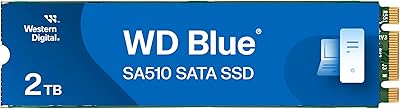
WD Blue SA510 2TB M.2 SSD

80%
78%
Read & Write Speed
83%
Value for Money
61%
Compatibility
88%
Installation Ease
84%
Reliability & Longevity
More
Western Digital WD Blue SA510 1TB SSD
83%
83%
Read & Write Speed
88%
Everyday Responsiveness
91%
Installation & Compatibility
86%
Value for Money
89%
Long-Term Reliability
More
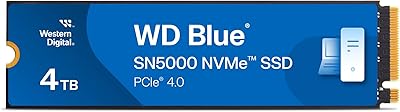
WD Blue SN5000 4TB NVMe SSD
87%
91%
Sequential Read Performance
88%
Sequential Write Performance
96%
Storage Capacity
67%
Thermal Management
93%
Endurance & Longevity
More
Western Digital 1TB WD Blue 3D NAND SATA SSD
91%
91%
Performance
93%
Reliability
89%
Speed
90%
Compatibility
85%
Power Efficiency
More
Crucial BX500 4TB SATA SSD
82%
91%
Value for Money
74%
Read/Write Performance
93%
Installation & Compatibility
67%
Endurance & Longevity
83%
Build Quality & Form Factor
More
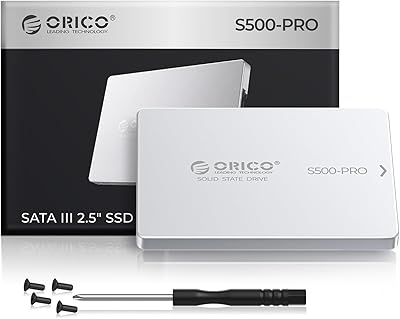
ORICO S500PRO 4TB SATA SSD
86%
91%
Performance
88%
Build Quality
90%
Value for Money
89%
Installation Ease
75%
Reliability Under Load
More
fanxiang S101 4TB Internal SSD
77%
91%
Value for Money
82%
Read Speed Performance
71%
Write Speed & Cache Behavior
67%
Long-term Reliability
93%
Ease of Installation
More
Transcend SSD230S 4TB SATA III SSD
88%
88%
Performance
92%
Value for Money
90%
Reliability
85%
Compatibility
91%
Ease of Installation
More
Samsung 870 QVO 4TB Internal SSD
84%
88%
Everyday Performance
61%
Sustained Write Speed
93%
Storage Capacity Value
94%
Installation Experience
86%
Long-Term Reliability
More
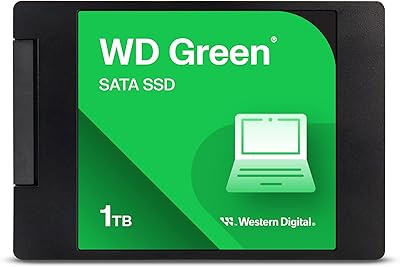
Western Digital WD Green 1TB Internal SSD
83%
91%
Real-World Speed Improvement
63%
Sustained Write Performance
94%
Ease of Installation
88%
Value for Money
82%
Long-Term Reliability
More

FAQ

Almost certainly yes, as long as your laptop has a 2.5-inch SATA drive bay, which most machines from the last fifteen-plus years do. You simply swap out the mechanical drive and install this one in its place. The 7mm height fits the vast majority of laptop bays without any adapter.

You will notice a real difference compared to a mechanical hard drive, but SATA III does have a throughput ceiling that NVMe blows past. If your machine only has a 2.5-inch SATA bay and no M.2 slot, then NVMe is not an option for you anyway, and this WD Blue drive is a strong choice within its class. If you do have an M.2 slot available, it is worth comparing NVMe options before committing.

Formatting and the way storage is measured will reduce the visible capacity somewhat — you can expect to see around 3.6 to 3.7TB of usable space once the drive is formatted, which is standard across the industry and not specific to this drive.

For most installations, a small Phillips-head screwdriver is all you need physically. If you are cloning an existing drive rather than doing a fresh install, you will want cloning software — there are free options available, and Western Digital offers its own migration tool as well.

Yes, 2.5-inch SATA enclosures are widely available and inexpensive, and this drive works fine in one. Just make sure the enclosure supports SATA III and, ideally, USB 3.0 or better so you do not bottleneck the drive's read and write speeds.

SATA SSDs generally run cooler than NVMe drives because they operate at lower performance levels, and this WD Blue drive is no exception. Under normal workloads — including long file transfers — it stays within safe operating temperatures without needing active cooling or thermal pads.

It handles both roles well. Many users install their OS on the SA510 4TB and use the remaining space for data, which is a practical setup given the generous capacity. Boot times are dramatically faster than a mechanical drive, and the drive handles everyday OS tasks without any issues.

Western Digital covers the WD Blue SA510 series with a 5-year limited warranty, which is a strong commitment for a consumer drive. If you experience a failure within that period, WD's support process handles replacement. That said, always keep backups — no warranty covers data recovery, only the hardware itself.

The price difference usually comes down to flash memory quality, firmware maturity, and after-sale support. Lesser-known drives can be fine, but they carry more uncertainty around long-term endurance and what happens if something goes wrong. Western Digital's standing in the storage industry and the 5-year warranty offer a level of accountability that no-name options typically cannot match.

It will work, but at reduced speeds — SATA II maxes out at around 300 MB/s, so you won't reach the drive's rated 560 MB/s reads. A handful of users have also reported occasional BIOS detection issues on very old systems, so it's worth checking your motherboard's compatibility list or firmware version before purchasing.