Overview

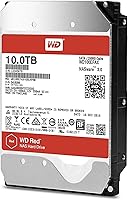
The Western Digital WD Red 10TB NAS Hard Drive sits in a well-established part of WD's lineup, designed specifically for the demands of always-on network-attached storage rather than desktop or external use. One thing worth clarifying upfront: this drive uses CMR recording technology, which matters because an earlier SMR controversy around the WD Red family made a lot of buyers understandably cautious. CMR handles the sustained, overlapping read/write activity that RAID arrays generate far better than SMR ever could. This is an older model predating the WD Red Plus, but that does not make it obsolete — it is a capable workhorse backed by a 3-year limited warranty that signals real confidence in long-term deployment.
Features & Benefits

Running at 5400 RPM, this NAS drive keeps heat and noise low — a genuine advantage when it is spinning inside an enclosure around the clock. The 256 MB cache provides enough headroom to handle bursts of sequential transfers common in file-serving and backup tasks without stuttering. On the firmware side, NASware is not just a label; it actively compensates for the vibration that stacks of spinning disks produce in multi-bay enclosures, and its error recovery settings are tuned to cooperate with RAID controllers rather than triggering unnecessary timeouts. The 180 TB/year workload rating comfortably covers the demands of most home and small office NAS deployments without being pushed to its limits.

Best For

This hard drive is a natural fit for anyone running a home or small office NAS — think Plex media servers, automated nightly backups, or centralized file sharing that needs to stay accessible around the clock. It particularly shines in RAID 1, 5, or 6 configurations where the NASware firmware's RAID-tuned error recovery actually earns its keep. If you already own a Synology or QNAP enclosure and need to expand capacity without gambling on compatibility, the WD Red 10TB has a long track record of working cleanly in both ecosystems. It is not the drive to reach for if peak throughput is the goal; it is the one to reach for if quiet, dependable storage is.

User Feedback

Owners of this NAS drive consistently point to long-term reliability as its standout quality — plenty of users report multi-year, trouble-free operation in always-on setups, and low noise and heat output earn regular praise too. On the downside, buyers coming from faster drives or comparing directly to WD Red Plus do flag the speed as underwhelming for heavier workloads. There are occasional DOA reports, as there are with any mechanical drive shipped in volume, but they represent a small fraction of an otherwise strong rating overall. One thing worth knowing: SMR confusion still surfaces in older reviews, but this specific model is confirmed CMR — that question is fully settled.

Pros

  • Confirmed CMR technology means no hidden SMR surprises affecting RAID rebuild times or sustained write performance.
  • NASware firmware handles multi-drive vibration and error recovery in a way generic desktop drives simply do not.
  • Runs noticeably quiet and cool in enclosed NAS towers, even after months of continuous operation.
  • Broad compatibility with Synology, QNAP, and other major NAS enclosures is well-documented by real users.
  • The 180 TB/year workload rating handles typical home and small office NAS demands with room to spare.
  • 256 MB cache smooths out the burst transfers that come with backup jobs and media streaming requests.
  • Three-year limited warranty provides meaningful peace of mind for always-on deployment scenarios.
  • 10 TB capacity hits a practical sweet spot for NAS users who want fewer drives and simpler arrays.
  • Long track record of multi-year reliability reported consistently across home NAS user communities.

Cons

  • Sequential transfer speeds lag behind WD Red Plus and enterprise alternatives, which matters under heavier workloads.
  • Labeled as an older version, so buyers should verify current pricing reflects that relative to newer Red Plus models.
  • Not suitable for workloads exceeding 180 TB/year — surveillance systems or high-traffic servers will push past its rating.
  • Occasional DOA units have been reported, so having a return plan ready before installation is a sensible precaution.
  • The lingering SMR controversy around the broader WD Red family still causes confusion, requiring buyers to verify the model number themselves.
  • No performance advantage over competitors at similar capacity — buyers chasing speed will need to look elsewhere.
  • This hard drive offers no built-in encryption or advanced security features, which some business deployments require.
  • Older firmware revisions may need updating on first use, adding a setup step that less experienced NAS users might overlook.

Ratings

The scores below reflect an AI-driven analysis of verified global user reviews for the Western Digital WD Red 10TB NAS Hard Drive, with spam, bot-generated feedback, and incentivized reviews actively filtered out before any scoring was applied. Ratings are distributed across the categories that NAS buyers care about most — from long-term reliability and noise levels to firmware behavior and value relative to newer alternatives. Both consistent strengths and recurring frustrations are reflected honestly in each score.

Long-Term Reliability
88%
The most frequently mentioned positive across multi-year ownership reviews is straightforward: this NAS drive just keeps running. Users operating home Plex servers and always-on backup arrays report years of continuous operation without incident, which is exactly the track record this class of drive needs to earn.
A small but consistent percentage of buyers report drives arriving dead on arrival or failing within the first few months. While this is not unusual for mechanical drives shipped at volume, it is a real risk that makes having a return window and a RAID safety net important before you rely on it fully.
Noise & Acoustics
91%
The 5400 RPM spin speed pays real dividends here — users in home office environments consistently describe this hard drive as barely perceptible during idle and only producing a soft, low seek noise during active transfers. In a closed NAS tower sitting across the room, most people report not hearing it at all.
In open-air or semi-enclosed workstation setups without a dedicated NAS enclosure, the seek noise is more noticeable. A handful of users also reported intermittent clicking during heavy sequential writes, which, while not necessarily a failure indicator, was unsettling enough to prompt warranty claims.
Heat Management
86%
Running cool is one of the clearest benefits of the 5400 RPM design, and users operating multi-drive arrays confirm that enclosure temperatures stay manageable even without aggressive fan configurations. NAS owners running four or more drives in a tight chassis particularly appreciate that this drive does not compound thermal load.
In poorly ventilated enclosures or densely packed eight-bay setups with minimal airflow, some users reported idle temperatures creeping higher than expected. This is partly an enclosure design issue, but the drive does generate more heat under sustained write loads than during idle, which is worth monitoring in tight builds.
RAID Compatibility
89%
NASware firmware earns genuine praise from users who have rebuilt arrays after a drive failure. The RAID-tuned error recovery settings prevent the drive from timing out and dropping out of an array during the extended read operations that rebuilds require, which is a specific and meaningful advantage over desktop drives pressed into NAS service.
A minority of users mixing this model with different WD Red revisions in the same array reported inconsistent behavior during RAID 5 rebuilds. Matched arrays — same model, same firmware — perform reliably, but mixing versions introduces variables that not all NAS firmware handles gracefully.
Sequential Read Speed
67%
33%
For the typical home NAS use case — streaming a Plex library to two or three simultaneous clients, or copying large backup archives over a gigabit network — the WD Red 10TB delivers throughput that saturates a standard home network connection without much trouble. It is not fast in absolute terms, but it is fast enough for its intended purpose.
Users who upgraded from this drive to WD Red Plus or who compared it directly to enterprise NAS drives noticed a meaningful speed gap under sustained sequential workloads. Video editors pulling large project files directly off the NAS, or anyone running a heavily loaded file server, will find this drive becomes a bottleneck faster than they expect.
CMR Recording Integrity
93%
Confirmation that this is a CMR drive matters enormously to buyers who followed the SMR controversy surrounding earlier WD Red models. Users specifically call out the WD100EFAX model number as a trustworthy purchase, and real-world sustained write performance under RAID workloads backs up that confidence — no unexpected slowdowns during array rebuilds or large sequential writes.
The damage done by WD's earlier SMR rollout still lingers as a trust issue for this product line, and some buyers remain skeptical regardless of the technical clarification. WD's initial lack of transparency about recording technology created lasting reputational friction that even a solid product struggles to fully overcome.
NAS Enclosure Compatibility
92%
Compatibility with Synology and QNAP enclosures is about as reliable as it gets for this drive. Users across dozens of enclosure models report clean detection, stable operation, and successful inclusion in manufacturer compatibility lists, which removes one of the more stressful variables from a NAS build or expansion.
A small number of users with older or less common NAS brands reported the drive not appearing reliably in certain enclosures, though these cases appear to be enclosure firmware issues rather than problems with the drive itself. Checking the specific NAS manufacturer compatibility list remains a recommended step before purchase.
Vibration Compensation
84%
In four-bay and eight-bay setups where multiple spinning drives generate compounding vibration, users report that this NAS drive holds up noticeably better than desktop alternatives pressed into the same role. The firmware-level vibration management helps maintain read/write stability when all bays are populated and active simultaneously.
In enclosures with weak tray dampening or loose drive mounting hardware, some users still noticed performance dips during simultaneous multi-drive access. The drive-level compensation has limits, and an enclosure with poor mechanical isolation can still undermine it under real-world high-load conditions.
Value vs. Newer Alternatives
71%
29%
When priced appropriately as an older model, this hard drive offers a reasonable cost-per-terabyte for buyers who do not need the extra performance headroom of the WD Red Plus. For light-to-moderate home NAS workloads, the functional difference between this and the Plus is small enough that the price gap can genuinely justify choosing it.
The value equation shifts unfavorably if pricing has not adjusted to reflect its older-generation status. Buyers comparing this against current-generation NAS drives at similar price points may find newer options offer better performance per dollar, and the fact that it is labeled an older version makes the price scrutiny even more important.
Workload Headroom
79%
21%
For the home user running nightly backups, a personal cloud, or a media server with moderate simultaneous access, the 180 TB/year workload rating is genuinely sufficient. Most home NAS setups transfer a fraction of that annually, leaving comfortable margin and reducing the likelihood of accelerated wear under normal use patterns.
Small business users with busier file servers, or anyone running a surveillance NAS with multiple high-resolution camera feeds, can push past this rating faster than the spec suggests. At that workload level, the drive starts to feel like the wrong tool, and stepping up to higher-rated enterprise NAS drives becomes a more sensible investment.
Packaging & Arrival Condition
74%
26%
The majority of buyers receive the drive in solid condition, and those purchasing directly from reputable sellers report packaging that adequately protects the drive during transit. WD's standard anti-static pouch and foam insert arrangement is reliable enough for typical shipping conditions.
DOA reports, while a minority, cluster disproportionately around third-party marketplace sellers where packaging quality and handling standards vary. Buying from a reputable fulfillment source and testing the drive immediately on arrival — before committing it to a RAID array — is a sensible precaution worth taking.
Warranty & Support Experience
76%
24%
The three-year limited warranty is standard for this class of NAS drive and provides a meaningful safety net for long-term deployments. Users who have gone through the WD RMA process generally describe it as functional, with replacement drives arriving within a reasonable timeframe once the return is approved.
Customer support quality varies depending on region, and some users report the RMA process feeling slow or bureaucratic compared to competitors. The warranty also does not cover data recovery, which means a failed drive under warranty still leaves the user responsible for whatever data was not backed up elsewhere.
Power Consumption
83%
Running four or more of these drives in an always-on NAS represents a real electricity cost over time, and the 5400 RPM design keeps idle and active power draw lower than faster NAS alternatives. Users running energy-conscious home setups specifically mention this drive as a good fit for minimizing the running costs of a 24/7 NAS.
Power consumption figures are not prominently disclosed, and users who have measured actual draw report that a fully populated multi-bay enclosure still consumes more than expected in aggregate. The per-drive efficiency is good, but it does not eliminate the need to account for total system power in always-on deployments.

Suitable for:

The Western Digital WD Red 10TB NAS Hard Drive is built for people who run a NAS as a serious part of their home or small office infrastructure — not as a novelty, but as the backbone of their storage setup. If you are maintaining a Plex media library, running scheduled backups from multiple machines, or sharing files across a household or small team around the clock, this hard drive fits that workload comfortably without generating excessive heat or noise in the process. It is particularly well-suited to multi-drive RAID arrays, where its NASware firmware cooperates with RAID controllers the way a purpose-built NAS drive should. Synology and QNAP users will find it drops in cleanly, with a long compatibility history across both ecosystems. The confirmed CMR recording technology also makes it a trustworthy choice for anyone who followed the earlier WD Red SMR controversy and wants certainty about what they are actually installing.
Not suitable for:

The Western Digital WD Red 10TB NAS Hard Drive is not the right tool if you need fast sequential throughput — video editors pulling large files directly off a NAS, or anyone running a heavily accessed surveillance system recording multiple 4K streams simultaneously, will likely find this drive a bottleneck before long. Its 5400 RPM design is a deliberate trade-off that favors thermal efficiency and longevity over speed, and that trade-off will frustrate workloads that demand sustained high transfer rates. Buyers comparing it against WD Red Plus or enterprise-grade NAS drives should know upfront that those options offer meaningfully better performance headroom. It is also not a fit for direct-attached or desktop use cases — without a NAS enclosure managing power cycles, error recovery, and vibration compensation, you lose the environmental context this drive is tuned for. Finally, anyone relying on a single drive with no RAID or backup strategy should reconsider the approach entirely, regardless of which drive they choose.
Specifications

  • Capacity: This drive offers 10 TB of formatted storage, suitable for large media libraries, multi-machine backups, and shared file archives in a NAS environment.
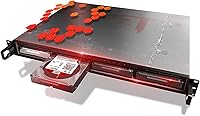
  • Form Factor: It uses a standard 3.5-inch form factor, fitting the drive bays found in the vast majority of consumer and prosumer NAS enclosures.
  • Interface: The SATA 6 Gb/s interface ensures broad compatibility with virtually every modern NAS enclosure on the market today.
  • Rotational Speed: Rated at 5400 RPM class, the drive prioritizes low heat output and quiet operation over raw sequential throughput.
  • Cache: A 256 MB onboard cache buffers read and write bursts, smoothing out the mixed-workload demands typical of file-serving and backup operations.
  • Recording Tech: This model uses Conventional Magnetic Recording (CMR), which handles overlapping and sustained write operations reliably in RAID configurations.
  • Workload Rate: The drive is rated for up to 180 TB of data transferred per year, comfortably covering the demands of most home and small office NAS deployments.
  • NAS Bay Support: NASware firmware supports NAS enclosures with up to 8 drive bays, covering both single-user home setups and small workgroup configurations.
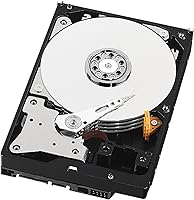
  • Firmware: WD NASware firmware includes multi-drive vibration compensation and RAID-optimized error recovery timing to prevent unnecessary array dropouts.
  • Warranty: Western Digital backs this drive with a 3-year limited warranty, reflecting standard coverage expectations for this class of NAS storage.
  • Dimensions: The drive measures 5.79 x 4 x 1.03 inches, conforming to the standard 3.5-inch hard drive footprint used across all major NAS brands.
  • Weight: At 1.43 pounds, the drive falls within the typical weight range for 3.5-inch mechanical hard drives of this capacity class.
  • Model Number: The official model designation is WD100EFAX, which can be used to verify compatibility with specific NAS enclosures on manufacturer compatibility lists.
  • Drive Type: This is an internal mechanical hard disk, designed for installation inside a NAS enclosure rather than use as a portable or external drive.
  • Manufacturer: Manufactured by Western Digital, one of the longest-established hard drive brands with a dedicated product line for network-attached storage applications.

Related Reviews
Western Digital WD Red Pro 10TB NAS Hard Drive
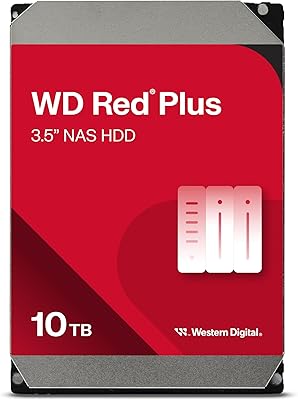
86%
92%
Performance
90%
Reliability in RAID Environments
88%
Data Transfer Speed
85%
Long-Term Durability
87%
Shock Resistance
More
WD Red Plus 10TB NAS Hard Drive
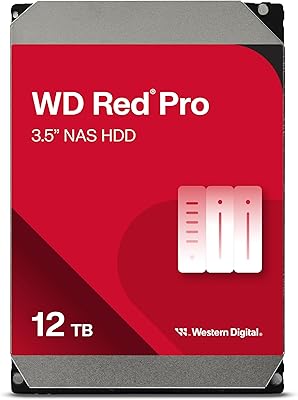
80%
91%
Reliability & Endurance
93%
CMR Recording Integrity
84%
Read & Write Performance
88%
NAS Compatibility
74%
Noise & Vibration
More
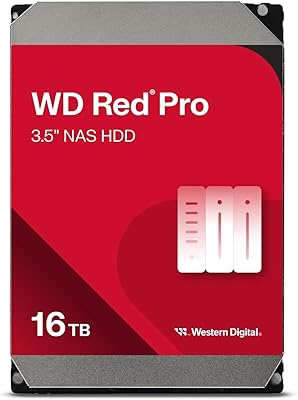
Western Digital WD Red Pro 16TB NAS Hard Drive
81%
88%
Long-Term Reliability
91%
RAID Performance
86%
Multi-User Throughput
67%
Value for Money
61%
Heat Management
More
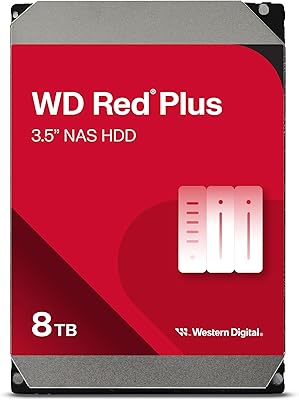
WD Red Plus 8TB NAS Hard Drive
82%
88%
Long-Term Reliability
93%
NAS Compatibility
91%
CMR Recording Technology
83%
Value for Money
86%
Noise & Vibration
More
Western Digital 12TB WD Red Pro NAS Hard Drive
86%
92%
Performance in RAID Environments
89%
Data Transfer Speed
94%
Reliability for 24/7 Operation
88%
Workload Capacity (550TB/year)
70%
Temperature Management
More
WD Red Pro 8TB NAS Internal Hard Drive
83%
88%
Long-Term Reliability
84%
Noise & Vibration
91%
RAID Compatibility
67%
Thermal Performance
72%
Value for Money
More
WD Red Plus 3TB NAS Hard Drive
78%
91%
Long-Term Reliability
93%
NAS Compatibility
87%
RAID Performance
67%
Sequential Read/Write Speed
48%
Random I/O Performance
More
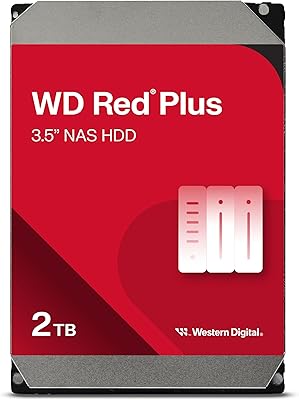
WD Red Plus 2TB NAS Hard Drive
80%
91%
Long-Term Reliability
88%
NAS Compatibility
86%
RAID Rebuild Performance
89%
Noise & Heat
72%
Sequential Read Speed
More
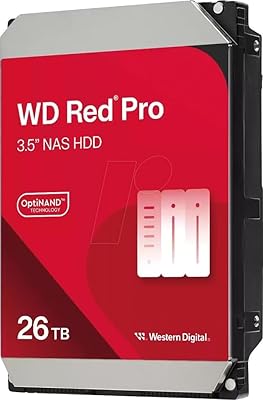
Western Digital 26TB WD Red Pro NAS HDD (WD260KFGX)
86%
98%
Storage Density
94%
Write Consistency (CMR)
62%
Acoustic Profile
88%
Thermal Management
91%
Vibration Resistance
More
Western Digital 14TB WD Red Pro NAS Hard Drive
88%
92%
Performance
89%
Reliability
88%
Workload Handling (300TB/yr)
85%
Ease of Installation
90%
Build Quality
More

FAQ

This specific model, the WD100EFAX, is confirmed CMR — Conventional Magnetic Recording. The SMR controversy affected a different subset of WD Red drives, and this one was not part of that group. If you want to be absolutely certain, you can cross-reference the model number on WD's official drive specification page before purchasing.

Almost certainly yes. The WD Red 10TB has a long and well-documented compatibility history with Synology enclosures across multiple generations. That said, it is always worth checking Synology's official compatibility list using the model number WD100EFAX before you buy, just to be thorough.

The WD Red Plus generally spins faster and offers better sustained throughput, so if your NAS workload is heavier — think high-bitrate video editing off the network or a busy Plex server with many simultaneous streams — the Plus is the stronger choice. That said, the WD Red 10TB is still a capable drive for typical home NAS use, and depending on current pricing, it can represent solid value for lighter workloads.

It works fine in a single-bay NAS. The firmware is tuned for multi-drive environments, but that does not mean it performs poorly in a single-drive setup — it just means you will not see all the vibration-compensation features in action. Single-bay users get the same capacity, CMR reliability, and quiet operation.

For the vast majority of home NAS users, 180 TB per year is a very comfortable ceiling. That works out to roughly 500 GB of data transferred per day — far more than most households or small offices move through a NAS in normal use. Unless you are running a heavy surveillance system or a production file server, you are unlikely to come close.

The Western Digital WD Red 10TB NAS Hard Drive runs quietly by mechanical hard drive standards. The 5400 RPM spin speed keeps acoustic output low, and most users report it is barely audible inside a closed NAS enclosure. During heavy access it may produce a soft seek noise, but it is not the kind of sound that will distract you in a home office.

Your NAS operating system — DSM on Synology, QTS on QNAP, etc. — will handle initialization and formatting automatically when you add the drive. It is worth checking WD's website to see if there is a firmware update available for the drive after installation, though this is an optional step that most home users skip without issue.

This NAS drive is designed and rated for RAID 5, 6, and RAID 1 — all are appropriate. The NASware firmware specifically adjusts error recovery behavior to work with RAID controllers, reducing the risk of a drive being dropped from an array during a long recovery operation. That said, RAID is not a backup strategy; always maintain a separate backup regardless of which RAID level you choose.

Western Digital's 3-year limited warranty covers manufacturing defects, and the standard process involves requesting an RMA through their support site. They typically offer advance replacement or standard return options depending on your region. Keep your purchase receipt, since you will need proof of purchase date to initiate a warranty claim.

Technically possible, but generally not recommended. Mixing drive models in a RAID array can introduce timing and performance mismatches that complicate rebuilds and may affect overall array stability. For best results, use matched drives — same model and capacity — especially in RAID 5 or 6 configurations where rebuild reliability really matters.