
Overview

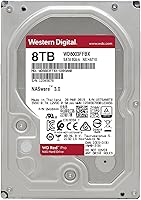
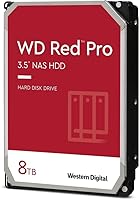
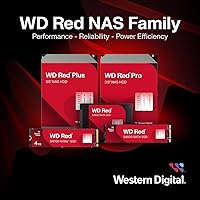
The WD Red Pro 8TB NAS Internal Hard Drive sits at the top of Western Digital's consumer NAS lineup, positioned above the Red Plus and aimed squarely at prosumer and small-business users who need dependable, always-on storage. Spinning at 7200 RPM, it moves noticeably faster than the 5400–5640 RPM drives common in this category, which translates to better throughput under real NAS workloads. Eight terabytes hits a practical sweet spot — enough headroom for media libraries, surveillance footage, or multi-machine backups without pushing into the expensive extreme-capacity tier. A 5-year limited warranty rounds out the package, signaling that WD built this drive for extended continuous operation. Just be clear-eyed: this is a mechanical hard drive, not flash storage.

Features & Benefits

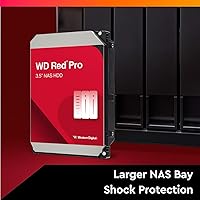
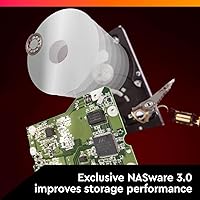
The most important thing to know about this NAS hard drive is that it uses CMR recording technology — not SMR. That distinction matters more than most spec sheets let on; SMR drives can throttle badly under the sustained write loads that RAID rebuilds or continuous backups generate, while CMR handles them without hesitation. NASware 3.0 firmware adds another layer of intelligence, handling error recovery in ways that prevent a struggling drive from stalling an entire RAID array. The 3D Active Balance Plus mechanism keeps vibration in check when multiple drives share tight bays, which directly affects long-term reliability. With 256MB of cache and a SATA 6 Gb/s interface, throughput stays consistent across the full 1–24 bay range this drive supports.

Best For

This drive is a natural fit for anyone running a Synology or QNAP system with four or more bays, whether that is a home lab that has outgrown budget drives or a small office with real uptime requirements. Plex users building a local media server will appreciate the 7200 RPM spin speed for sustained 4K reads across multiple simultaneous streams. IT professionals assembling RAID 5 or RAID 6 arrays should specifically note the CMR design — some competing drives at this capacity have quietly shifted to SMR, which causes problems in exactly these configurations. If you are upgrading older NAS drives and want something that will run reliably for years without babysitting, this NAS hard drive justifies its premium positioning in the market.

User Feedback

Across a large pool of long-term owners, the consistent positives are quiet operation and low vibration in populated bays — meaningful for anyone with a NAS unit in a living or working space. Multi-year reliability is another theme that shows up repeatedly, with many users reporting zero failures after two or three years of continuous use. Compared to the Seagate IronWolf at the same capacity, the WD Red Pro 8TB tends to edge ahead in noise and vibration feedback. On the downside, a small but notable share of buyers have experienced early failures; the five-year warranty and WD's responsive RMA process have generally softened that frustration. A few users in closed-chassis setups also flagged higher heat output, so adequate airflow is worth planning for.

Pros

  • CMR recording technology ensures stable, predictable write performance during long RAID rebuilds and continuous backup operations.
  • 7200 RPM spin speed delivers meaningfully better sustained throughput than the 5400 RPM drives that populate many competing NAS lineups.
  • NASware 3.0 firmware handles error recovery intelligently, preventing one struggling drive from stalling an entire RAID array.
  • 3D Active Balance Plus keeps vibration low in densely populated bays, which matters for both noise levels and long-term drive health.
  • The five-year limited warranty provides real peace of mind for always-on deployments where drive replacement carries business risk.
  • Supports NAS enclosures from single-bay home units all the way up to 24-bay rack systems, so it scales with your infrastructure.
  • Long-term owners consistently report quiet operation, making this drive a solid choice for home lab setups in living spaces.
  • WD's RMA process has earned positive marks from users who have actually needed to use it, reducing the stress of a warranty claim.
  • 256MB of cache helps smooth out the bursty write patterns common in multi-user NAS environments.

Cons

  • Heat output in tightly enclosed or poorly ventilated chassis is a recurring complaint that buyers should plan for before installing.
  • Early-failure reports exist in a small but notable share of reviews, which is a real risk even with warranty coverage as a fallback.
  • The premium price is hard to justify for light single-user workloads where a cheaper NAS drive would perform identically in practice.
  • No meaningful advantage over lower-tier WD NAS drives for simple two-bay home backup setups that rarely push sustained write loads.
  • Being a mechanical drive, random I/O performance is limited by physics — not a fit for latency-sensitive workloads regardless of RPM.
  • Heavier and larger than 2.5-inch alternatives, which limits compatibility with compact or portable enclosures.
  • Some buyers report the drive runs warmer than expected even in adequately ventilated setups, suggesting active cooling may be worth adding.

Ratings

The scores below reflect AI-driven analysis of verified global user reviews for the WD Red Pro 8TB NAS Internal Hard Drive, with spam, incentivized, and bot-generated feedback actively filtered out before scoring. Each category is weighted against real-world usage patterns from prosumer home lab setups to small-business multi-bay deployments. Both the strengths that make this drive compelling and the friction points that have frustrated real buyers are transparently reflected in every score.

Long-Term Reliability
88%
Multi-year ownership reviews are a consistent bright spot — buyers running this drive in always-on NAS arrays report stable operation over two, three, and even four years without incident. For workloads like continuous backup or surveillance recording, that kind of track record matters far more than any spec sheet.
A minority of buyers have experienced early-life failures, which is a real concern even if statistically uncommon. Early failure in a NAS array can mean downtime and a RAID rebuild, which is disruptive even when the warranty replacement process goes smoothly.
Noise & Vibration
84%
Owners in populated four- to eight-bay enclosures regularly comment on how composed this drive feels compared to cheaper alternatives. The 3D Active Balance Plus technology appears to make a tangible difference in real setups, with minimal chatter or resonance even when multiple drives are running simultaneously.
At 7200 RPM, this drive is inherently louder than 5400 RPM NAS drives under heavy sequential workloads, and a handful of buyers in quiet home environments noticed a low but audible hum during sustained reads or writes. It is not disruptive for most, but acoustics-sensitive users should be aware.
RAID Compatibility
91%
The CMR recording technology and NASware 3.0 firmware combine to make this drive a natural fit for RAID 5 and RAID 6 arrays. Users rebuilding arrays after a drive swap report clean, uneventful processes without the throttling or stalled rebuilds that SMR drives are notorious for causing.
There are no significant RAID-related complaints from technically informed buyers, though a small number of users in very large 16-plus bay arrays noted that error recovery cycles can temporarily reduce array throughput, which is expected behavior rather than a defect.
Thermal Performance
67%
33%
In well-ventilated NAS enclosures with active fan cooling, operating temperatures stay within safe ranges even during sustained workloads, and most buyers in those setups have nothing negative to say about heat. The drive handles continuous operation without thermal throttling when airflow is adequate.
Heat output is the most consistently raised concern among dissatisfied buyers, particularly those using compact or passively cooled enclosures. Several reviewers reported temperatures climbing higher than expected even in setups they considered adequately ventilated, suggesting this drive needs more active cooling than some comparable alternatives.
Value for Money
72%
28%
For users who genuinely need CMR reliability, 7200 RPM throughput, and a five-year warranty in a single package, the price premium over the Red Plus or base-tier NAS drives is defensible. Buyers who have experienced RAID failures with cheaper drives often describe this drive as a lesson-learned upgrade worth every dollar.
Buyers who overestimated their workload requirements frequently feel the premium is hard to justify in hindsight, particularly those running light home backup duties that a less expensive drive would handle equally well. At this price point, any early failure feels more frustrating than it might on a budget drive.
Sequential Throughput
83%
The 7200 RPM spin speed with a 256MB cache produces noticeably better sustained sequential performance than lower-RPM alternatives, which translates directly into smoother 4K Plex transcoding and faster large-file transfers across a network. Users migrating from 5400 RPM drives consistently report a perceptible improvement.
This is still a spinning hard disk, and no amount of cache or RPM closes the gap with SSD performance for random I/O workloads. Buyers expecting SSD-like responsiveness — for example, running virtual machines directly off the NAS — will find the limits of mechanical storage quickly.
Build Quality
86%
The physical construction inspires confidence for an internal drive in this class — the chassis feels solid, and long-term owners rarely report any mechanical degradation in how the drive sounds or behaves over years of continuous use. The 3D Active Balance Plus internals appear to contribute to consistent physical stability.
As with any mechanical hard drive, physical shock during installation or a NAS drop can damage the drive, and a small number of reviewers attributed early failures to transit damage rather than manufacturing defects. There is no external visual way to assess drive health after shipping.
NAS Firmware Integration
89%
NASware 3.0 works quietly in the background and earns its keep during error recovery scenarios — most users running Synology DSM or QNAP QTS report that the drive integrates cleanly with NAS health monitoring tools and behaves exactly as expected during SMART checks and scheduled disk scans.
Buyers using less mainstream NAS operating systems or custom Linux-based setups occasionally note that the NASware firmware features do not surface as clearly in third-party tools, though this does not affect actual drive reliability or performance in those environments.
Warranty & Support
82%
18%
The five-year limited warranty is one of the longer coverage periods available in the NAS drive segment, and buyers who have gone through the RMA process generally describe it as straightforward and reasonably fast. That kind of support track record adds genuine peace of mind for always-on business deployments.
A subset of buyers found the RMA initiation process more bureaucratic than expected, particularly around proof-of-purchase requirements and shipping logistics. Response times for international RMA claims have drawn more criticism than domestic US claims in the review data.
Compatibility Range
87%
Support for 1-to-24-bay enclosures and confirmed compatibility with Synology, QNAP, Netgear ReadyNAS, and other major NAS platforms means buyers rarely encounter setup surprises. Desktop PC installation works identically to any standard SATA drive with no driver setup required.
A small number of users with older or budget NAS enclosures reported that their hardware was not on WD's official compatibility list, creating uncertainty at setup even when the drive ultimately functioned correctly. Verifying compatibility before purchasing remains advisable for any enclosure older than five years.
Write Consistency
85%
CMR architecture means write performance stays predictable even during extended operations like full-array RAID rebuilds or overnight backup jobs that write continuously for hours. Users migrating from SMR-based drives frequently highlight this consistency as the single biggest improvement they noticed.
Write speeds under mixed random workloads — the kind generated by multiple users accessing different files simultaneously — are still constrained by mechanical limitations, and a handful of power users running VM storage workloads found the drive reached its practical throughput ceiling faster than expected.
Idle & Standby Behavior
78%
22%
The drive handles NAS-triggered spin-down and wake cycles reliably, and most buyers report no issues with drives failing to spin back up or taking unusually long to respond after idle periods. This matters in home NAS setups where energy efficiency and quiet overnight operation are priorities.
Some users noted that wake-from-sleep latency is perceptible on the first file access after a spin-down period, which is normal mechanical drive behavior but can feel sluggish compared to SSDs. A few reviewers also noted slightly higher-than-expected noise during the spin-up phase specifically.

Suitable for:

The WD Red Pro 8TB NAS Internal Hard Drive is purpose-built for users who take their storage seriously and need a drive that holds up under continuous, demanding workloads. It fits best in the hands of prosumers and small-business IT staff running multi-bay Synology, QNAP, or similar NAS enclosures where drives are expected to spin around the clock without interruption. Plex server operators and media professionals managing large local libraries will benefit from the 7200 RPM spin speed, which sustains the kind of sequential throughput that 4K transcoding and simultaneous multi-client access actually require. Anyone building or expanding a RAID 5 or RAID 6 array should pay particular attention to the CMR recording technology here — it is a genuinely important distinction when RAID rebuilds push drives hard for hours at a stretch. The five-year warranty also makes this a defensible choice for small offices where a failed drive means real downtime and real costs.

Not suitable for:

The WD Red Pro 8TB NAS Internal Hard Drive is not the right answer for every storage problem, and buyers should be honest with themselves about their actual needs before committing. If your NAS sits in a poorly ventilated enclosure or a cramped cabinet with limited airflow, the drive's heat output under load is a real consideration that can shorten its lifespan — and no amount of firmware can fix bad cooling. Users who only need single-drive or two-bay setups running light home backup tasks will likely find the premium price hard to justify versus the standard WD Red Plus, which is quieter under light loads and costs noticeably less. This is also not a replacement for solid-state storage in workloads that demand low latency or fast random I/O, such as database servers or virtual machine host storage; the performance gap between spinning disks and NVMe SSDs in those scenarios is too large to overlook. Finally, buyers on a tight budget who are comfortable managing a shorter warranty period should at least compare this drive directly against the Seagate IronWolf at the same capacity before deciding.

Specifications

  • Capacity: This drive provides 8TB of formatted storage capacity, suited for large media libraries, backup repositories, and multi-user file shares.
  • Rotational Speed: The spindle runs at 7200 RPM, delivering stronger sustained sequential throughput than the 5400–5640 RPM alternatives common in the NAS segment.
  • Interface: It connects via SATA 6 Gb/s (SATA-600), compatible with all modern NAS enclosures and desktop motherboards that use the standard SATA interface.
  • Cache: A 256MB DRAM cache buffer helps smooth out bursty write patterns typical in multi-user NAS and RAID environments.
  • Recording Tech: The drive uses CMR (Conventional Magnetic Recording), which handles sustained and random write workloads far more predictably than SMR-based alternatives.
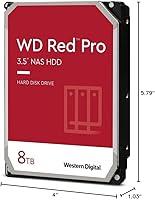
  • Form Factor: At 3.5 inches, it fits all standard NAS enclosures, desktop towers, and rack-mounted storage arrays that accept full-size hard drives.
  • Dimensions: Physical dimensions measure 5.79 x 4 x 1.03 inches, consistent with the standard 3.5-inch hard drive footprint.
  • Weight: The drive weighs 1.58 pounds, which is within the normal range for 3.5-inch mechanical hard drives of this capacity.
  • Bay Support: NASware 3.0 firmware certifies this drive for use in enclosures ranging from 1 to 24 bays, covering home lab and small-business rack deployments alike.
  • Firmware: NASware 3.0 includes intelligent error recovery controls that prevent a single drive from stalling a RAID array during error correction cycles.
  • Vibration Control: 3D Active Balance Plus technology reduces rotational vibration in multi-drive bays, helping protect both this drive and its neighbors over years of operation.
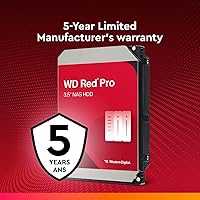
  • Warranty: Western Digital backs this drive with a 5-year limited warranty, which is among the longest coverage periods offered for consumer-grade NAS storage.
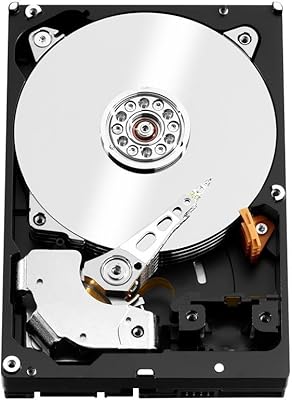
  • Drive Type: This is a mechanical hard disk drive (HDD), not an SSD, meaning it relies on spinning platters and a read/write head for data access.
  • Compatible Devices: It is designed primarily for NAS enclosures but also installs in desktop PCs used as home servers or direct-attached storage systems.
  • Color: The drive ships in WD's signature red color scheme, consistent with the Red series branding used across their NAS-focused product line.

Related Reviews
WD Red Pro 10TB NAS Hard Drive
82%
88%
RAID Reliability
91%
NAS Compatibility
83%
Sustained Throughput
86%
Acoustic Performance
69%
Long-Term Durability
More
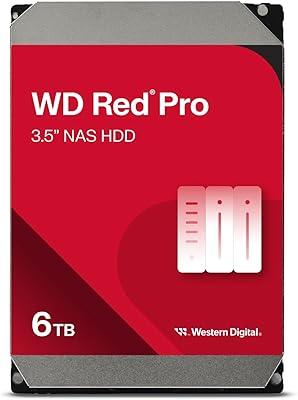
Western Digital WD Red Pro 6TB NAS Hard Drive
80%
88%
Long-Term Reliability
93%
RAID Compatibility
84%
Read & Write Performance
91%
NAS Platform Compatibility
67%
Value for Money
More
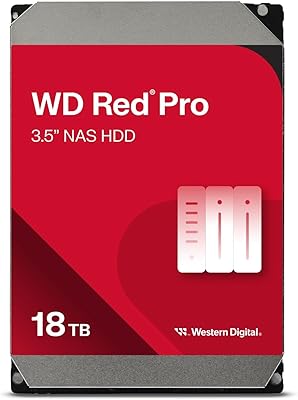
Western Digital 18TB WD Red Pro NAS Internal Hard Drive
87%
92%
Performance
90%
Reliability
88%
RAID Compatibility
89%
Build Quality
70%
Noise Level Under Load
More
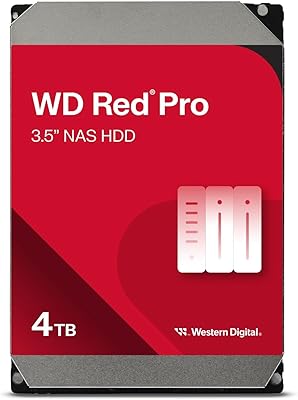
WD Red Pro 4TB NAS Hard Drive
81%
93%
Reliability & Longevity
91%
RAID Compatibility
88%
NAS Firmware Optimization
86%
Vibration Management
82%
Sustained Throughput
More
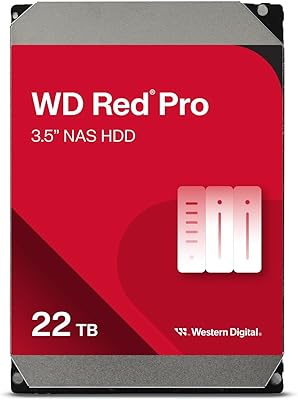
Western Digital 22TB WD Red Pro NAS Internal Hard Drive
89%
95%
Performance
90%
Reliability
88%
Ease of Setup
92%
Workload Capacity
87%
Noise Level
More
WD Red Pro 3TB NAS Hard Drive
86%
91%
Performance
88%
Reliability
92%
Compatibility with NAS Systems
65%
Noise Levels
89%
Ease of Setup
More
WD Red Plus 6TB NAS Hard Drive
82%
89%
Reliability & Longevity
93%
NAS Compatibility
62%
Write Performance
91%
RAID Suitability
87%
Noise Level
More
Western Digital 14TB WD Red Pro NAS Hard Drive
88%
92%
Performance
89%
Reliability
88%
Workload Handling (300TB/yr)
85%
Ease of Installation
90%
Build Quality
More
Western Digital WD Red Pro 10TB NAS Hard Drive
86%
92%
Performance
90%
Reliability in RAID Environments
88%
Data Transfer Speed
85%
Long-Term Durability
87%
Shock Resistance
More
WD Red Plus 8TB NAS Hard Drive
82%
88%
Long-Term Reliability
93%
NAS Compatibility
91%
CMR Recording Technology
83%
Value for Money
86%
Noise & Vibration
More

FAQ

The WD Red Pro 8TB NAS Internal Hard Drive uses CMR (Conventional Magnetic Recording) — this is confirmed and has not changed. The SMR controversy that hit WD a few years back primarily affected the standard Red line, not the Red Pro. If you are building a RAID array, CMR is what you want, and this drive delivers it.

Yes, in most cases it will work straight away. Both Synology and QNAP maintain compatibility lists, and this drive appears on them for a wide range of current and older enclosure models. That said, it is always worth checking your specific NAS model against the manufacturer's HDD compatibility page before purchasing, especially for older hardware.

Most long-term owners describe it as quiet in normal operation, with a low, steady hum rather than the clicking or rattling some cheaper drives produce. That said, 7200 RPM drives are inherently a bit louder than 5400 RPM alternatives under heavy load, so if near-silence is a priority in a bedroom or living room setup, it is worth keeping that in mind.

The two are closely matched, and honestly either is a solid choice. The WD Red Pro tends to get slightly better marks for vibration and noise in multi-drive bays, while the IronWolf has its own health-monitoring feature called IronWolf Health Management that some NAS users find useful. Price and your NAS brand's compatibility list are often the deciding factors between them.

You can absolutely use it in a desktop PC — it is a standard 3.5-inch SATA drive and will install just like any other hard drive. The NAS-specific firmware features simply will not do anything useful outside of a multi-drive enclosure, but they will not cause problems either. It is a fine choice for a home server or media PC running 24/7.

Under sustained workloads it runs warmer than a 5400 RPM drive, which is expected given the faster spin speed. In a well-ventilated NAS enclosure with active fan cooling this is not a problem. Where buyers have run into trouble is in tightly enclosed, passively cooled chassis — if that describes your setup, adding a fan or improving airflow is worth doing before installing this drive.

WD offers a 5-year limited warranty, and their RMA process has generally received positive feedback from users who have gone through it. You would contact WD support, get an RMA number, and ship the drive back for a replacement. Keep your purchase receipt, since proof-of-purchase is typically required to initiate a claim.

For most home Plex setups, 8TB is a comfortable starting point — it holds a substantial library of HD and 4K content. Whether it is enough long-term depends on how aggressively you add content. Many Plex users end up building multi-drive arrays over time, so buying a drive you can add alongside later is often smarter than waiting for a single larger drive.

No special drivers are needed. NASware 3.0 is firmware built into the drive itself, not software you install on a computer. Your NAS operating system (DSM, QTS, etc.) will recognize and manage the drive automatically. On a Windows or Linux PC it behaves like any standard SATA hard drive.

The Red Plus spins at lower RPM (5400–5640) and is rated for up to 8-bay enclosures, making it better suited for light home NAS use. This drive spins faster, carries a 24-bay rating, uses a larger cache, and is built for heavier continuous workloads. If your NAS runs around the clock, handles multiple simultaneous users, or lives in a RAID array that gets rebuilt periodically, the Red Pro is the more appropriate tool for the job.