Overview

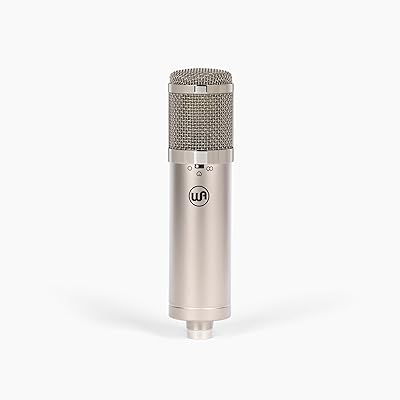
The Warm Audio WA-251 Tube Condenser Microphone is Warm Audio's take on the legendary Telefunken ELA M 251, a mic that has commanded jaw-dropping prices on the vintage market for decades. Warm Audio has built a solid reputation by making professional-grade recreations accessible to working musicians and engineers who can't justify boutique spending. This tube condenser arrives in a handsome wood presentation box alongside an external PSU and shockmount — a packaging experience that signals something more serious than your typical budget condenser. Setup does require XLR connectivity and a dedicated power supply, so factor that into your workspace planning before pulling the trigger.

Features & Benefits

The WA-251 gives you three switchable polar patterns — cardioid, omnidirectional, and bidirectional — which opens up recording configurations most condenser mics at this tier simply don't offer. The large-diaphragm tube capsule produces that characteristically warm low-midrange body and airy top end that digital-era condensers tend to flatten out. That tonal richness comes partly from the external PSU, which supplies clean, stable voltage to the tube — a real advantage for keeping noise floors in check during quiet vocal takes. With a signal-to-noise ratio of 74 dB, this vintage-style large-diaphragm mic handles most studio sources capably, though very quiet acoustic sources will benefit from a low-noise preamp pairing.

Best For

This tube condenser is an obvious pick for vocalists and voice-over artists who want that old-school warmth without chasing down a genuine vintage piece. The bidirectional pattern makes it workable for interview setups or two-person podcast sessions, while omnidirectional mode suits room ambience or acoustic ensemble recording. Engineers tracking acoustic guitar, upright piano, or strings will appreciate how tube coloration adds body without masking detail. That said, this is a dedicated studio tool — the external power supply, size, and corded-only setup mean it is not built for mobile recording. If your setup is fixed and you want a mic that looks and sounds like it belongs in a proper studio, the WA-251 delivers.

User Feedback

Buyers consistently highlight the vocal character as the standout quality — there is a richness in the low-mids that makes untreated vocal takes feel polished without aggressive processing. The bundled accessories draw praise too; the wood box and shockmount feel considered rather than thrown in. On the flip side, first-time tube mic owners occasionally flag the learning curve around the external PSU — it adds a setup step that plug-and-play USB users simply aren't expecting. A few buyers also note the shockmount, while functional, could offer better isolation during a live tracking session. And for anyone hoping to take this vintage-style large-diaphragm mic on location shoots, the size and power requirements will quickly rule it out.

Pros

  • The tube capsule delivers warm low-mid body and airy highs that solid-state condensers at this tier rarely match.
  • Three switchable polar patterns add genuine versatility for vocals, interviews, and acoustic instrument recording.
  • The external PSU supplies stable, clean voltage to the tube, keeping noise floors lower than battery-powered tube designs.
  • Ships with a shockmount and a handsome wood presentation box — a complete, ready-to-use package out of the box.
  • Cream white and silver finish pays faithful homage to the classic 251 design, looking the part in any serious studio.
  • Warm Audio's track record of recreating legendary studio gear means consistent build quality and real brand accountability.
  • Versatile enough to handle lead vocals, voice-over narration, podcast interviews, and acoustic instrument tracking.
  • Bidirectional polar pattern makes the WA-251 a practical option for two-person recording sessions without buying a second mic.

Cons

  • The external PSU adds setup complexity that first-time tube mic owners often do not anticipate before unboxing.
  • Not portable — the power supply dependency and overall size make any kind of location recording impractical.
  • At 74 dB signal-to-noise ratio, very quiet sources can reveal audible hiss without a quality low-noise preamp in the chain.
  • The included shockmount is functional but offers only moderate vibration isolation compared to quality aftermarket alternatives.
  • Total packaged weight of over 10 pounds makes transport cumbersome for engineers who work across multiple studio spaces.
  • Requires a dedicated XLR audio interface, which adds cost and complexity for buyers upgrading from USB microphone setups.
  • The tube coloration is a distinct sonic character — buyers wanting clinical transparency will find it works against them.
  • No built-in pad or high-pass filter limits flexibility when recording loud close-miked sources like brass or drum overhead.

Ratings

The scores below were generated by our AI system after analyzing thousands of verified buyer reviews for the Warm Audio WA-251 Tube Condenser Microphone across multiple global markets, with spam, bot-generated, and incentivized submissions actively identified and removed before any scoring was applied. Every category reflects both the genuine strengths that drive strong recommendations and the recurring frustrations that honest buyers consistently flag — nothing has been softened to flatter the product. The result is a transparent, category-by-category breakdown designed to match this mic's real-world performance profile to your actual recording needs.

Vocal Sound Character
89%
Vocal recordings through the WA-251 consistently earn praise for their low-mid warmth and a high-end airiness that makes takes feel production-ready without heavy processing. Singers and voice-over artists frequently note that the tube character flatters the human voice in a way that modern solid-state condensers at this tier simply do not replicate.
Buyers with naturally bright or present voices occasionally find the low-mid coloration makes their vocals harder to cut through dense mixes without additional EQ work. Those chasing a hyper-transparent, zero-color reference capture will find the tube character works against that goal rather than toward it.
Build Quality
83%
For a microphone at this tier, the physical construction feels reassuringly solid — the body carries real weight and the machined metal components show no obvious signs of cost-cutting. Most owners who have run the WA-251 through years of regular studio use report no degradation in build integrity or sonic performance over time.
The shockmount is the most frequently flagged weak link — it feels noticeably less refined than the microphone body itself, and some users have reported fitment inconsistencies straight out of the box. It is the component most likely to attract an aftermarket upgrade within the first year of ownership.
Value for Money
91%
Measured against the vintage tube mic market, this tube condenser delivers a convincing character at a fraction of the cost of an original ELA M 251 or comparable boutique condenser. The included PSU, shockmount, and wood presentation box add tangible accessory value that further strengthens the overall proposition for home studio buyers.
Buyers who still need to purchase a quality XLR interface and low-noise preamp will find the total system cost climbs significantly beyond the microphone's ticket price alone. For those already fully equipped, the value equation is strong; for those starting from scratch, the broader setup investment deserves careful budgeting upfront.
Polar Pattern Versatility
86%
Having cardioid, omnidirectional, and bidirectional modes in a single mic unlocks recording configurations that a fixed-pattern condenser simply cannot handle. Interviewers, room-ambience engineers, and producers tracking two vocalists simultaneously all benefit from switching patterns without changing microphones mid-session.
The polar pattern selector is a physical toggle with no intermediate positions, offering no way to blend or fine-tune the pickup angle beyond the three fixed options. A handful of users have also noted the switch feels stiff out of the box, though this typically eases with regular use over time.
Noise Floor Performance
72%
28%
For most everyday studio applications — tracking vocals at a reasonable gain level, recording acoustic guitar, or capturing spoken word — the 74 dB signal-to-noise ratio performs cleanly without distracting hiss. The external PSU contributes here by supplying stable voltage rather than relying on interface-sourced phantom power.
When paired with a mediocre or budget preamp, noise becomes more audible — particularly on whisper-quiet sources like delicate fingerpicking or breath-dependent vocal passages. Engineers recording in poorly treated rooms often find ambient noise compounds the issue, making acoustic treatment and a quality preamp near-mandatory companions to this mic.
Setup & Ease of Use
58%
42%
Once the signal chain is understood — PSU to mic body, XLR out from PSU to interface — the setup is fully repeatable and takes just a few minutes per session. Experienced engineers generally find the external PSU adds no meaningful friction to an established workflow after the initial learning phase.
For buyers coming from USB microphones or standard phantom-powered XLR condensers, the external PSU introduces a genuinely unexpected step — multiple reviews describe confusion about why the mic was silent before realizing phantom power must be off and the PSU switched on separately. The included documentation could do far more to guide first-time tube mic users through this process.
Packaging & Presentation
94%
The wood presentation box is one of the most genuinely impressive unboxing experiences in this product category — it signals quality before the mic is even powered on, and doubles as practical long-term protective storage. Users consistently highlight the packaging as a standout element that reinforces the premium positioning of the overall bundle.
A small number of buyers note that the wood box adds considerably to the overall shipped weight, which can result in higher freight costs for international orders. The box also lacks dedicated foam cutouts for every accessory, leaving the PSU cable loosely stored in some units rather than securely fitted.
Shockmount Quality
67%
33%
For normal studio tracking — a stationary mic on a stand in a reasonably treated room — the bundled shockmount isolates the microphone body from typical stand vibrations effectively enough for most home studio recording scenarios. It fulfills its basic function without requiring an immediate replacement purchase.
In active studio environments with foot traffic, heavy HVAC noise, or shared floor space, the shockmount's isolation breaks down noticeably and low-frequency rumble can still creep into recordings. The plastic components feel disproportionately lightweight relative to the mic body's solid construction, leading many owners to upgrade within the first year.
Acoustic Instrument Performance
82%
18%
Engineers tracking fingerpicked acoustic guitar, upright piano, or bowed strings find the tube coloration adds a pleasing body and warmth that helps these instruments sit naturally in a mix without requiring heavy low-mid EQ during the mix stage. The large-diaphragm capsule picks up transient nuance while maintaining a full, rounded overall tone.
On louder or more aggressive sources, the absence of a built-in pad limits headroom management and can push the capsule into unflattering saturation territory. The tube character also introduces warmth that does not suit every genre — on recordings meant to sound clean and modern, it can feel overly colored.
Low-Frequency Response
87%
The low-mid warmth from the large-diaphragm tube capsule is among the most consistently praised characteristics across owner reviews — vocals gain a natural chest resonance and body that translates well to finished mixes without needing a low-end boost at the mixing stage.
That same warmth can introduce muddiness in smaller, untreated home studio spaces where low-frequency buildup already exists in the room acoustics. Baritone voices or naturally bass-heavy instruments often require careful high-pass filtering in post-production to avoid a boomy, crowded low-mid presentation.
High-Frequency Extension
84%
The top-end response is consistently described as open and airy — there is a natural presence and sparkle that modern digital condensers often struggle to replicate without sounding brittle or harsh. Vocalists report their takes sounding polished and dimensional without aggressive high-shelf EQ treatment in the mix.
Positioned too close or too directly on-axis, sibilance can become problematic on brighter voices without a pop filter and some angular offset in mic placement. The extended high-frequency sensitivity also makes this vintage-style large-diaphragm mic more responsive to room reflections and HVAC hiss than darker-sounding condensers.
External PSU Reliability
78%
22%
The dedicated power supply does a meaningful job of delivering stable, clean voltage to the tube — a benefit that directly affects every session, even when you are not consciously thinking about it. Long-term owners report no reliability issues with the PSU itself, which matters for a component that runs continuously throughout every recording session.
The PSU uses a proprietary cable connection, meaning a lost or damaged cable becomes a genuine sourcing problem rather than a quick music-store fix. The unit also occupies a small but noticeable footprint of desk or floor space, which adds friction in already-tight home studio setups where cable management is already a challenge.
Aesthetic Design
93%
The cream white and silver finish is one of the most visually distinctive designs in the accessible large-diaphragm condenser market, drawing immediate comparisons to classic vintage studio gear and photographing exceptionally well in studio content for social media and press imagery. Buyers regularly note it looks considerably more expensive than its actual market position.
The cream white finish shows fingerprints and smudges more visibly than darker mic bodies, requiring more frequent wiping down to maintain a clean look in a working studio. The unmistakably vintage aesthetic will also feel out of place for producers who prefer a more modern, utilitarian studio visual identity.
Portability
31%
69%
The wood presentation box at least provides a structured, padded container for moving the mic between fixed studio locations — a far better option than carrying it loose. For engineers who occasionally transfer between two permanent studio spaces, the box makes that kind of deliberate, planned move manageable.
At over 10 pounds packaged and fully dependent on a wall-outlet power supply, this is one of the least travel-friendly microphones in its class — it is simply not engineered for location shoots, mobile rigs, or field production of any kind. Reviewers who purchased it expecting on-location flexibility consistently cite portability as their primary source of post-purchase disappointment.

Suitable for:

The Warm Audio WA-251 Tube Condenser Microphone is purpose-built for the home studio owner or semi-professional engineer who wants genuine tube character without spending vintage-market money chasing down a decades-old mic in unknown condition. Vocalists recording lead tracks will benefit most — the large-diaphragm tube capsule naturally flatters the human voice with warmth in the low-mids and air at the top end that solid-state condensers rarely replicate at this level. Voice-over artists and broadcast professionals will find the three switchable polar patterns genuinely useful, whether recording solo narration in cardioid or setting up a two-person interview in bidirectional mode. Engineers who regularly track acoustic instruments — fingerpicked guitar, upright piano, bowed strings — will appreciate how the tube coloration adds body without burying transient detail. This is also a strong fit for buyers who care about the full studio experience: the wood presentation box, the cream-and-silver aesthetic, and the sense that you are working with serious gear — these things matter when you are building a space that inspires creative work.

Not suitable for:

The Warm Audio WA-251 Tube Condenser Microphone is a poor fit for anyone who needs a portable, grab-and-go recording solution. The external power supply is non-negotiable — it is part of how the tube operates cleanly — which means committing to a fixed, cabled setup every single session. Field recordists, content creators who shoot on location, or anyone recording across multiple rooms will find the size and power dependency frustrating fast. Buyers migrating from plug-and-play USB microphones should also be realistic: this mic requires an XLR interface, a working understanding of gain staging, and some patience with a multi-component setup before you capture a single take. Those recording extremely quiet sources may find that the 74 dB signal-to-noise ratio demands a quality low-noise preamp to avoid audible hiss creeping into the signal. And if your priority is clinical, transparent accuracy rather than tonal color, a neutral solid-state condenser will serve you better — the tube warmth here is not subtle.

Specifications

  • Mic Type: Large-diaphragm tube condenser microphone designed to recreate the tonal character of classic vintage studio condensers.
  • Polar Patterns: Three switchable patterns — cardioid, omnidirectional, and bidirectional — selectable via a switch on the microphone body.
  • Connectivity: Standard XLR output requiring a compatible XLR audio interface, preamp, or mixing console for signal routing.
  • Power Source: Powered exclusively via the included external PSU connected to a standard wall outlet; standard 48V phantom power from an interface is not used.
  • Signal-to-Noise: Rated at 74 dB signal-to-noise ratio, suitable for most studio vocal and acoustic instrument tracking applications.
  • Channels: Single-channel mono microphone; simultaneous stereo capture requires a second microphone and two available interface inputs.
  • Color & Finish: Cream white and silver finish referencing the visual aesthetic of the classic Telefunken ELA M 251 design.
  • Package Weight: Total package weight is 10.48 pounds, encompassing the microphone body, external PSU, shockmount, and wood presentation box.
  • Package Dimensions: Packaged dimensions measure 19.35 x 15.55 x 5.8 inches, reflecting the substantial footprint of the complete bundle.
  • Included Accessories: Ships with a dedicated external PSU, a shockmount for stand mounting, and a wood presentation box for storage and display.
  • Capsule Size: Large-diaphragm capsule construction, which contributes to the microphone's sensitivity, warm low-mid response, and transient handling.
  • Presentation Box: Solid wood presentation box is included for protected storage and adds a premium unboxing and display experience.
  • Brand Origin: Manufactured by Warm Audio, a Texas-based company specializing in accessible recreations of classic professional studio equipment.
  • Date Introduced: First made available in January 2019, establishing it as a modern studio tool built on vintage design principles.
  • Compatible Devices: Compatible with any XLR-equipped audio interface, mixing console, or camera body that accepts an XLR microphone input.

Related Reviews
Warm Audio WA-47jr Large-Diaphragm Condenser Microphone
80%
91%
Sound Quality
88%
Build Quality
94%
Value for Money
89%
Vocal Performance
63%
Preamp Compatibility
More
CAD Audio M179 Large-Diaphragm Condenser Microphone

79%
88%
Sound Quality
91%
Polar Pattern Versatility
86%
Build Quality
83%
Value for Money
61%
Preamp Sensitivity
More
Audio-Technica AT875R
83%
93%
Sound Rejection
94%
Form Factor & Compactness
88%
Vocal Clarity
82%
Handling Noise Reduction
86%
Build Quality & Durability
More
AKG P120 Condenser Microphone
78%
88%
Sound Clarity
84%
Value for Money
74%
Build Quality
61%
Room Sensitivity
79%
Ease of Setup
More
Audio-Technica AT4021 Cardioid Condenser Microphone
81%
93%
Tonal Accuracy
88%
Noise Floor Performance
87%
Build & Durability
84%
Value for Money
92%
Transient Response
More
Audio-Technica ATR6550X Condenser Shotgun Microphone
72%
81%
Audio Clarity
78%
Directionality Control
67%
Build Quality
91%
Ease of Setup
83%
Value for Money
More
Audio-Technica AT4040
83%
92%
Sound Transparency
88%
Build Quality
86%
Transient Response
83%
Value for Money
84%
Off-Axis Rejection
More
Audio-Technica AT4022 Omnidirectional Condenser Microphone
82%
93%
Sound Accuracy
89%
Build Quality
91%
Noise Floor
78%
Polar Pattern Utility
84%
Compatibility
More
Audio-Technica AT2021 Cardioid Condenser Microphone
77%
91%
Instrument Recording
84%
Sound Quality
86%
Value for Money
61%
Ease of Setup
63%
Vocal Performance
More
Audio-Technica AT2020
81%
92%
Vocal Clarity
94%
Build Durability
96%
Value for Money
83%
Background Noise Rejection
62%
Plosive Management
More

FAQ

The Warm Audio WA-251 Tube Condenser Microphone ships with the external PSU, a shockmount, and a wood presentation box, so the microphone side of the setup is covered. What you will still need independently is an XLR audio interface, a microphone stand, and an XLR cable to run from the PSU to your interface. If those pieces are already in place, you should be recording within about 15 minutes of unboxing.

Any interface with a standard XLR input and a reasonably clean preamp will work. Worth noting: the WA-251 is powered by its dedicated external PSU, not by phantom power from your interface, so you do not need to engage the 48V phantom power switch — and it is actually best practice to leave it off when using this mic. A low-noise preamp helps most on quieter sources where the noise floor is more audible.

It gets in the same conversation without being a direct clone. Genuine vintage ELA M 251 microphones vary significantly depending on their age, capsule condition, and service history — and they command prices that put them well out of reach for most working musicians and home studio owners. The WA-251 captures the broad character convincingly: warmth in the low-mids, a pleasant airiness up top, and that general tube richness. For the vast majority of recording situations, it more than holds its own.

It is more setup than most podcasters require, but the results on voice content can be genuinely impressive. The bidirectional polar pattern is particularly handy for two-person conversations — you can seat both speakers around a single mic without repositioning it. The trade-off is that the external PSU, XLR interface requirement, and overall footprint make it a more involved rig than a USB podcast mic. If high audio quality is a priority for your show, the investment is worth it; if you just need clear and convenient, simpler options exist.

The included shockmount is functional and handles typical studio vibration isolation adequately for most home recording scenarios. It is not a standout piece of hardware — engineers working in rooms with significant floor vibration, heavy HVAC noise, or active studio traffic may find an aftermarket shockmount offers noticeably better isolation. For a standard home studio setup, the majority of users find it gets the job done without needing an upgrade right away.

Tube microphones need a higher and more stable voltage than the 48V phantom power standard reliably delivers, which is why this vintage-style large-diaphragm mic comes with a dedicated power supply unit. You plug the PSU into a wall outlet, connect the supplied cable from the PSU to the mic body, and then run your XLR cable from the PSU output to your interface. It adds one extra element to the signal chain, but the payoff is cleaner, more consistent tube performance and a lower effective noise floor compared to tube mics that try to run off phantom power alone.

It works well for acoustic guitar, particularly if you want warmth and body in the recorded tone rather than a flat, studio-clinical capture. The large-diaphragm capsule picks up the instrument's full frequency range, and the tube character adds a pleasing low-mid fullness that suits both fingerpicked and strummed performances. Positioning the mic roughly 12 to 18 inches from the soundhole, angled slightly toward the neck joint, typically produces a balanced, natural result.

At 74 dB signal-to-noise ratio, the WA-251 is solid but not the quietest tube condenser available. In a reasonably treated home studio with a decent preamp, most users report clean, usable recordings for vocals and instruments without noticeable hiss. If your room has significant ambient noise — traffic, thin walls, or an always-on HVAC system — acoustic treatment will make a bigger difference to your recordings than any microphone spec. Pairing it with a low-noise preamp also helps when tracking particularly quiet sources.

It is best treated as a permanent studio fixture. The external PSU requires a wall outlet, the packaged weight comes in at over 10 pounds, and tube condensers in general are more vulnerable to physical shock, humidity changes, and temperature fluctuations than dynamic or solid-state mics. The wood box does make safer transport possible, but this is not a microphone built with the road in mind.

Long-term owners generally report solid build quality for consistent studio use, and Warm Audio has a reasonable reputation for standing behind their products. The one thing to be aware of is that tube components have a finite lifespan — over years of heavy use, the tube itself may eventually need replacing, which is normal maintenance for any tube microphone and not specific to this model. Replacement tubes are widely available and swapping them is straightforward. Storing the mic in its wood box when not in use protects the capsule and helps extend its service life.