Overview

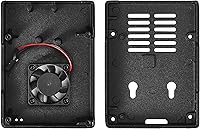
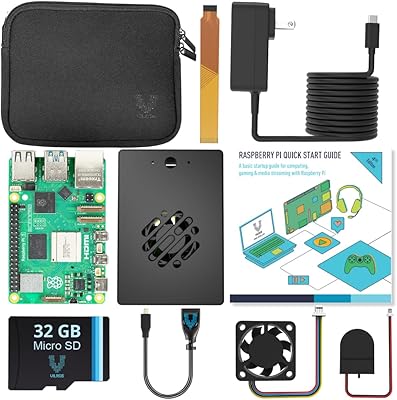
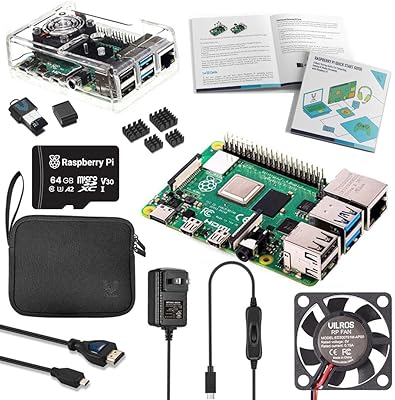
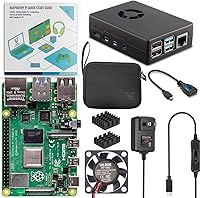
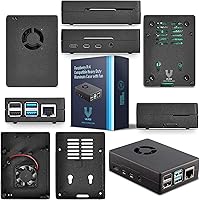
The Vilros Raspberry Pi 4 4GB Starter Kit is essentially a plug-and-play entry point into the world of single-board computers, designed for people who don't want to spend an afternoon hunting down compatible accessories. Vilros bundles the Pi 4 board with a purpose-built case and power supply, cutting out the guesswork that usually trips up newcomers. It sits in a practical middle ground — more complete than buying a bare board, yet not as specialized as a custom enthusiast build. The aluminum alloy fan-cooled case is the most immediately noticeable differentiator, giving this all-in-one Pi setup a more finished, durable look than typical plastic enclosures.
Features & Benefits

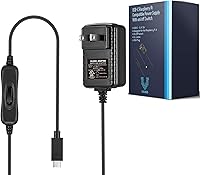
The quad-core Broadcom processor running at 1.5 GHz is a genuine step up from older Pi generations — fast enough for smooth web browsing, light office tasks, and running emulation software for classic consoles. The 4GB of RAM is what makes that last use case actually enjoyable; you're not constantly hitting memory limits the way you would on lower-spec configurations. The USB-C power supply includes a physical on/off switch, which sounds minor until you've unplugged a Pi one too many times. Dual-band Wi-Fi and Bluetooth 5.0 are built in, so no dongles required. The whole package weighs just over a pound and tucks neatly behind most monitors.

Best For

This Pi 4 starter kit is a strong fit for anyone picking up a Raspberry Pi for the first time — the bundled accessories mean you can focus on learning rather than compatibility research. Retro gaming fans will appreciate having enough headroom to run RetroPie or Recalbox without the board overheating mid-session, thanks to the case's active cooling design. Home lab regulars running Pi-hole, lightweight web servers, or network monitors will also find the thermal management worthwhile for 24/7 operation. Students wanting a cheap Linux desktop and makers working on sustained workloads like time-lapse photography or media streaming round out the target audience well.

User Feedback

With a 4.6-star rating across over 2,600 reviews, satisfaction with the Vilros bundle runs high. Most buyers call out the case build quality as a standout — it feels noticeably more solid than what you typically get with budget enclosures, and the fan keeps the board from throttling even under sustained loads. That said, the fan is audible. In a quiet room it produces a low hum that some users find distracting, and a handful have noted fan wear after a year or more of continuous use. One consistent surprise for less technical buyers: no microSD card is included and there is no pre-loaded operating system, so budget for that separately.

Pros

  • The heavy-duty aluminum alloy case feels genuinely premium and protects the board far better than typical plastic enclosures.
  • Built-in fan keeps the processor cool during sustained tasks like gaming emulation and media streaming.
  • A dedicated on/off switch on the power supply is a small but practical feature that daily users genuinely appreciate.
  • Gigabit Ethernet, dual-band Wi-Fi, and Bluetooth 5.0 are all included — no extra adapters needed.
  • The Vilros bundle eliminates the compatibility guesswork that trips up most first-time Pi buyers.
  • 4GB of RAM is enough headroom to run RetroPie, Pi-hole, and light desktop applications without constant slowdowns.
  • Compact and lightweight enough to mount behind a monitor or tuck into a media center shelf.
  • Strong community and software ecosystem means almost any project has well-documented setup guides available.
  • The power supply delivers stable output, avoiding the random reboots that plague cheap third-party USB-C adapters.
  • Over 2,600 verified buyers rate this all-in-one Pi setup at 4.6 stars, reflecting broad real-world satisfaction.

Cons

  • No microSD card is included, so the kit is not functional out of the box without an additional purchase.
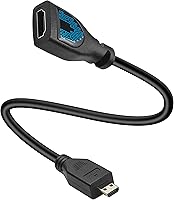
  • No micro-HDMI cable or adapter is bundled, which catches many first-time buyers off guard at setup time.
  • The case fan runs continuously at a fixed speed, producing a low hum that is noticeable in quiet environments.
  • Long-term users report fan wear and increased noise after twelve or more months of nonstop operation.
  • GPIO access is restricted by the enclosure design, making frequent prototyping and breadboard work awkward.
  • No operating system comes pre-installed, requiring beginners to research and flash an OS before anything works.
  • Experienced Pi builders who already own accessories will find limited additional value in the bundle pricing.
  • The power brick is bulky enough to block neighboring outlets on a standard power strip.
  • PlayStation 2 era emulation and other demanding workloads push the processor noticeably, revealing platform limits.
  • Buyers in regions outside the primary market should verify power supply voltage compatibility before ordering.

Ratings

The Vilros Raspberry Pi 4 4GB Starter Kit has been rated by our AI system after analyzing thousands of verified global user reviews, with spam, bot-generated, and incentivized feedback actively filtered out. Scores reflect the full picture — what buyers genuinely love and where real frustrations surface. Both strengths and pain points are weighted transparently so you can make an informed decision.
Build Quality
91%
The aluminum alloy case is the first thing buyers notice when they open the box — it feels dense and purposeful rather than like an afterthought. Users who have gone through multiple plastic Pi enclosures consistently describe this one as a step up, with tight tolerances and no flex.
A minority of long-term users report that the pre-installed case fan shows signs of wear after a year or more of nonstop operation, introducing a slight rattle. Replacing it requires disassembling the case, which is manageable but not trivial for first-timers.
Thermal Management
88%
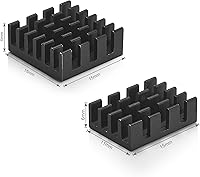
The combination of passive alloy heatsinking and an active fan keeps the board running cool even during sustained tasks like emulation or continuous media streaming. Users who pushed prior Pi setups into slowdowns due to heat say this bundle handles those same workloads without issue.
The fan is always on and not user-adjustable out of the box, meaning there is no quiet mode for light workloads. In a silent desk setup, the constant low hum becomes noticeable, and some users have resorted to third-party PWM controller mods to address it.
Ease of Setup
84%
Having the case, fan, and power supply already matched and included removes the most common stumbling block for Pi newcomers — compatibility guesswork. Most buyers report going from unboxing to a running system in under an hour, even without prior Linux experience.
The kit does not include a microSD card or a pre-loaded operating system, which catches a surprising number of first-time buyers off guard. There is also no HDMI cable in the box, so users need to source a micro-HDMI adapter or cable separately before they can see anything on screen.
Performance
86%
The quad-core processor at 1.5 GHz handles everyday desktop tasks, RetroPie emulation up to the PlayStation 1 and Nintendo 64 era, and Pi-hole ad blocking without breaking a sweat. The jump in responsiveness compared to older Pi 3 models is immediately obvious during general use.
Demanding tasks like PlayStation 2 emulation or running multiple browser tabs simultaneously can expose the processor limits. Users expecting PC-tier multitasking performance will hit a ceiling, and the 4GB RAM, while generous for a Pi, does not change the underlying architecture constraints.
Power Supply Quality
89%
The included USB-C adapter receives consistent praise for stable output, which matters more than it sounds — underpowered supplies cause random reboots and subtle performance issues that are hard to diagnose. The built-in on/off switch is a small addition that regular Pi users genuinely appreciate.
The power brick is slightly bulky and can block adjacent outlets on a standard power strip. A small number of international buyers have also noted the need to verify voltage compatibility for their region before use.
Value for Money
78%
22%
Buying the board, a quality aluminum case, and a reliable power supply separately often costs as much or more, making the bundle pricing reasonable for what is included. For newcomers who would otherwise waste money on an incompatible cheap case, the convenience premium is easy to justify.
Seasoned Pi builders who already own cases and power supplies will find little extra value here. The missing microSD card also means the out-of-pocket cost is not the full story — buyers still need to budget for storage and likely a micro-HDMI cable before the board is actually usable.
Cooling Noise Level
63%
37%
For projects tucked in a closet or running in a noisy workshop environment, the fan noise is a complete non-issue. Users running home servers or media centers in dedicated spaces report never thinking about it.
In a quiet bedroom or home office setting, the fan hum is consistently flagged as a distraction. Multiple reviewers specifically mention that it is the one thing they wish they had known before buying, with some going as far as swapping the fan for a quieter aftermarket unit.
Connectivity
92%
Dual-band Wi-Fi, Bluetooth 5.0, Gigabit Ethernet, and four USB ports cover the vast majority of use cases without needing a single dongle. The dual micro-HDMI outputs supporting 4K resolution add versatility that makes this board usable as a legitimate dual-monitor desktop.
The micro-HDMI standard rather than full-size HDMI is a minor inconvenience, as most users have standard HDMI cables lying around and need an adapter. Bluetooth range, while adequate for peripherals at a desk, drops off more quickly than a dedicated Bluetooth adapter in some user reports.
Compatibility & Software Ecosystem
87%
The Raspberry Pi 4 platform has years of community support behind it, meaning nearly any project — from home automation to retro gaming to network tools — has well-documented setup guides. Raspberry Pi OS and a broad range of Linux distributions all run without hardware-specific workarounds.
The lack of a pre-installed OS means total beginners need to do some reading before the board does anything useful. Windows is not a practical daily-driver option, and users expecting a Windows-like experience out of the box may find the initial learning curve steeper than anticipated.
Case Design & Aesthetics
83%
The all-black aluminum enclosure looks noticeably more professional than translucent plastic shells. Users who place the Pi in a visible spot on their desk or mount it behind a monitor appreciate that it does not look like a hobbyist breadboard project.
The case design does not offer easy access to the GPIO pins, which matters for electronics projects that require regular connection and disconnection of components. Makers who need frequent GPIO access will likely find the enclosure more of a hindrance than a help.
GPIO Accessibility
58%
42%
The GPIO header is technically exposed through a slot in the case, allowing basic connections. For projects that wire up permanently — like a dedicated Pi-hole server or a fixed media player — this is rarely a limiting factor.
The slot access is tight and not designed for regular prototyping use. Users doing hands-on electronics projects with frequent pin changes report that the case gets in the way enough that they either remove it or switch to an open-frame alternative, which defeats the thermal benefits.
Long-Term Durability
74%
26%
The aluminum body shows no signs of warping or cracking even after extended use, and the board itself is well-protected from accidental contact. Users running this kit as always-on home servers report reliable uptime across many months.
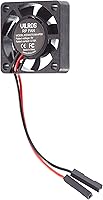
The fan is the weak link in long-term reliability. Several users with units running continuously for over a year report the fan developing noise or reduced airflow, requiring replacement. It is a standard small form-factor fan and not difficult to swap, but it is an extra maintenance step.
Documentation & Onboarding
71%
29%
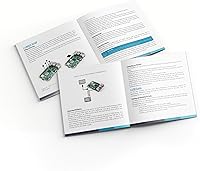
Vilros includes basic setup documentation, and the broader Raspberry Pi Foundation has extensive official guides that cover most beginner scenarios. The community around Pi hardware is large enough that almost any question has a forum answer somewhere.
The included documentation does not fully prepare a true beginner for the microSD and OS setup steps, which are required before anything works. Several reviewers explicitly mention feeling misled by how ready-to-go the marketing sounds versus the actual first-use experience.
Portability & Form Factor
85%
The compact, sub-pound package is easy to move between setups, and the solid aluminum case protects the board during transport better than plastic alternatives. Users who switch the Pi between a TV setup and a desktop setup regularly find this convenient.
The fan requires power to function properly, so truly portable or battery-powered use cases are complicated by the active cooling dependency. The package dimensions, while small, are bulkier than bare-board alternatives for users who need to embed the Pi in a tight custom enclosure.

Suitable for:

The Vilros Raspberry Pi 4 4GB Starter Kit is a strong match for anyone stepping into single-board computing for the first time and wanting a ready-to-go package rather than a parts-sourcing project. Newcomers benefit most here — the bundled aluminum case, fan, and stable power supply remove the compatibility guesswork that typically derails early Pi experiences. Retro gaming enthusiasts setting up RetroPie or Recalbox will appreciate that the thermal management keeps the board cool during long emulation sessions, which bare-board setups often struggle with. Home lab hobbyists running Pi-hole, lightweight personal servers, or network monitoring tools will also get strong mileage, since the case is built for continuous operation. Students and educators who need an affordable, functional Linux desktop environment will find the 4GB of RAM sufficient for day-to-day learning tasks and light development work. Anyone who values a polished, durable enclosure over a raw DIY aesthetic will find this all-in-one Pi setup particularly satisfying.
Not suitable for:

The Vilros Raspberry Pi 4 4GB Starter Kit is not the right choice for experienced Pi builders who already own a case, power supply, and accessories — they would essentially be paying a premium for duplicates. Electronics makers and prototypers who regularly connect and disconnect components from the GPIO pins will find the enclosed case more of an obstacle than an asset, since access is limited by design. Anyone who needs a truly silent setup — a bedroom media server, a quiet home office appliance, or a sleeping-area automation hub — should factor in the fan noise before committing, as it is a persistent low hum rather than an occasional burst. Buyers expecting a fully plug-and-play experience should know upfront that a microSD card, operating system, and micro-HDMI cable are all sold separately, meaning the real startup cost is higher than the box price alone. Finally, users who need Windows compatibility or the processing headroom of a modern x86 desktop will hit the platform ceiling quickly and should look at other hardware categories entirely.
Specifications

  • Processor: The board runs on a Broadcom BCM2711 quad-core processor clocked at 1.5 GHz, which handles everyday computing and emulation tasks comfortably.
  • RAM: 4GB of LPDDR4 memory is installed on the board, providing enough headroom for multitasking, light desktop use, and retro gaming emulation.
  • Case Material: The enclosure is constructed from heavy-duty aluminum alloy, which passively draws heat away from the board while providing robust physical protection.
  • Cooling System: A pre-installed active fan works alongside the aluminum alloy body to maintain stable operating temperatures during sustained or demanding workloads.
  • Power Supply: A USB-C power adapter designed specifically for the Raspberry Pi 4 is included, featuring a dedicated on/off switch for convenient power cycling.
  • Wireless: Dual-band 802.11ac Wi-Fi and Bluetooth 5.0 are built into the board, eliminating the need for external wireless adapters in most setups.
  • Ethernet: A Gigabit Ethernet port is onboard, offering wired network speeds suitable for home server, Pi-hole, and network monitoring applications.
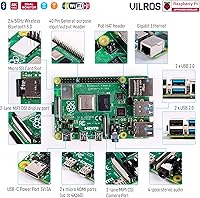
  • USB Ports: The board provides two USB 3.0 ports and two USB 2.0 ports, supporting simultaneous connection of peripherals such as keyboards, mice, and storage drives.
  • Display Output: Two micro-HDMI ports support video output up to 4K resolution, enabling dual-monitor desktop configurations if needed.
  • Storage: A microSD card slot serves as the primary storage interface; no card is included in the kit and must be purchased separately.
  • Operating System: No operating system is pre-installed; users select and flash their own OS, with Raspberry Pi OS being the most commonly used option.
  • Dimensions: The packaged unit measures approximately 7.32 x 6.34 x 2.28 inches, making it compact enough to mount behind a monitor or fit into a media shelf.
  • Weight: The complete package weighs approximately 1.01 pounds, keeping the kit portable and easy to relocate between setups.
  • Color: The aluminum case ships in black, giving the build a clean, professional appearance compared to typical translucent plastic Pi enclosures.
  • Brand: Manufactured and sold by Vilros, a brand focused on producing ready-to-use Raspberry Pi accessory bundles for hobbyists and newcomers.
  • Availability: This kit has been available since September 2019 and has accumulated a substantial verified review base reflecting long-term real-world use.
  • GPIO Access: The 40-pin GPIO header is accessible through an opening in the case, though the enclosure design limits convenience for frequent prototyping use.
  • Video Codec: The board supports hardware-accelerated decoding for H.265 and H.264 video formats, making it capable of smooth 4K media playback in compatible players.

Related Reviews

Vilros Raspberry Pi 5 Starter Kit 4GB
86%
94%
Build Quality
91%
Cooling Performance
88%
Ease of Setup
90%
Included Accessories
85%
Performance under Load
More
Vilros Raspberry Pi 4 Starter Kit 8GB
82%
93%
Out-of-Box Readiness
88%
Value for Money
84%
Thermal Management
86%
Accessory Completeness
89%
Power Supply Quality
More
Vilros Raspberry Pi 5 8GB Starter Kit
80%
93%
Ease of Setup
89%
Thermal Performance
91%
Build Quality
67%
Value for Money
88%
Cooling System Design
More
Vilros Raspberry Pi Zero 2 W Starter Kit
86%
91%
Value for Money
88%
Build Quality
85%
Setup & Installation
84%
Performance
90%
Accessories Included
More
SunFounder Raspberry Pi Pico Starter Kit
88%
88%
Build Quality
94%
Component Variety
90%
Ease of Setup
92%
Instruction Clarity
89%
Programming Language Support
More
CanaKit Raspberry Pi 4 4GB Basic Kit
82%
83%
Value for Money
92%
Power Supply Quality
91%
PiSwitch Convenience
74%
Thermal Management
79%
Board Performance
More
FREENOVE Super Starter Kit for Raspberry Pi Pico
85%
92%
Value for Money
88%
Ease of Use for Beginners
94%
Tutorial Quality
85%
Component Variety
90%
Project Range and Complexity
More
SunFounder Da Vinci Starter Kit for Raspberry Pi
86%
91%
Learning Experience
87%
Component Quality
94%
Video Tutorials
90%
Project Variety
85%
Compatibility
More
SunFounder Raspberry Pi Pico W Ultimate Starter Kit
81%
91%
Curriculum Quality
88%
Component Variety
78%
Beginner Accessibility
86%
IoT & Connectivity Features
84%
Value for Money
More
Raspberry Pi 5 8GB Starter Kit 64GB Edition
87%
88%
Performance
91%
Setup and Installation
83%
Cooling Efficiency
87%
Build Quality
92%
Value for Money
More

FAQ

Almost, but not quite. The Vilros Raspberry Pi 4 4GB Starter Kit includes the Pi 4 board, aluminum fan-cooled case, and USB-C power supply — which covers the core hardware. However, you will still need to buy a microSD card separately, flash an operating system onto it, and source a micro-HDMI cable or adapter to connect to a monitor. Budget for those three items before your first boot.
A 32GB card is a practical starting point for most use cases, including running Raspberry Pi OS with a full desktop environment. If you plan on using it as a retro gaming station with a large ROM library or as a media server, stepping up to 64GB or 128GB is worth the small extra cost. Use a reputable brand like SanDisk or Samsung — cheap no-name cards can cause mysterious performance issues.

Honestly, it depends on how sensitive you are to background noise. The fan produces a consistent low hum rather than an intermittent burst, so in a quiet room it is noticeable. Most users adapt to it quickly, but if you work in a very quiet environment or plan to use this in a bedroom, it is worth knowing upfront. Some users have installed PWM fan controllers to make it adjustable, though that requires a bit of extra tinkering.

Yes, and the Pi 4 with 4GB of RAM is well-suited for it. You can expect solid performance through PlayStation 1 and Nintendo 64 emulation, and many games from the Dreamcast era run acceptably too. The aluminum case with its active cooling is particularly helpful here since emulation pushes the processor harder than typical desktop tasks. Just remember to load your own ROM files, as none come pre-installed.

It handles always-on tasks like Pi-hole ad blocking and lightweight web serving reliably, and the thermally managed case is one reason this bundle appeals to home lab users. The main thing to watch over the long run is the fan — a small number of users report it developing wear noise after a year or more of continuous operation. Keeping a spare fan on hand is a reasonable precaution if uptime matters to you.

Raspberry Pi OS is the most straightforward starting point and has the best hardware support, but you are not limited to it. Ubuntu, Debian-based distributions, and various media center OSes like LibreELEC all run on the Pi 4. The Raspberry Pi Imager tool makes flashing any of these to a microSD card straightforward even for beginners.

Yes — the board has two micro-HDMI ports and supports dual-display output, including at 4K resolution on each port. You will need two micro-HDMI cables or adapters, since neither is included in the kit. Dual-monitor desktop use is genuinely functional for light tasks, though it does ask more of the processor than a single display setup.

Probably not for you. The premium in the bundle pricing is tied directly to the case and power supply, so if you already own reliable versions of both, you would be paying for duplicates. Buying just the bare Pi 4 board would be the more practical move in that situation.

The physical on/off switch on the power supply cuts power immediately, which works for a quick shutdown but is not the cleanest way to power down if the system is actively running. The safer habit is to shut down the operating system through software first — using the shutdown command in the terminal or the desktop menu — and then flip the switch once the board has finished powering down. This prevents potential microSD card corruption over time.

It is a good fit for students who are comfortable with some initial setup or have a parent or teacher helping them get started. The hardware itself is well-protected by the case, and Raspberry Pi OS includes beginner-friendly tools like Scratch and Python environments. The main hurdle for younger users is the initial OS setup — it is not a press-power-and-go experience, so a bit of adult guidance at the start goes a long way.