SunFounder Raspberry Pi Pico Starter Kit

Overview
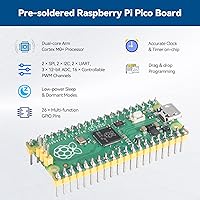
The SunFounder Raspberry Pi Pico Starter Kit is one of the more practical options in the crowded microcontroller learning space — not because it overpromises, but because it covers the basics without leaving you hunting for extra parts. SunFounder has built a solid reputation in the DIY electronics community over the years, and this Pico starter kit reflects that experience. The board arrives with headers pre-soldered, which sounds minor until you have watched a beginner melt a breadboard trying to do it themselves. Online tutorials, a component-filled box, and the Pico itself all arrive together at a mid-range price that keeps it honest against the competition.
Features & Benefits
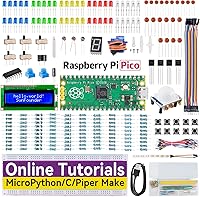
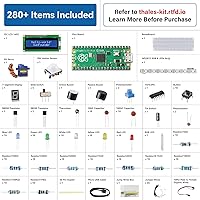
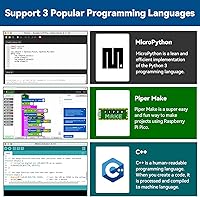
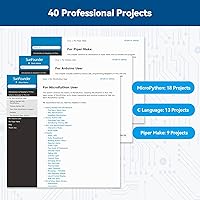
What sets this electronics learning bundle apart is the combination of breadth and structure. You get three programming lanes — MicroPython, C/C++, and Piper Make — the last being a Scratch-based visual option that meaningfully lowers the barrier for younger users. The 40 guided projects are sequenced intelligently, starting with blinking an LED and building toward Bluetooth communication, stepper motor control, and real-time clock projects. The component list is generous: a PIR motion sensor, WS2812 RGB LED strip, DHT11 temperature sensor, and an I2C LCD display are among the highlights. Tutorials live online, so they stay updatable in ways a printed manual never could.
Best For
This Pico starter kit suits a fairly specific buyer profile well. Students and self-directed learners will get the most out of it, especially those who prefer project-based learning over loose component bags with no guidance. It makes a strong gift for a tech-curious teenager — though younger beginners will lean on the Piper Make track, while older or more experienced users will gravitate toward MicroPython or C/C++. Hobbyists migrating from Arduino will appreciate the RP2040 dual-core processing power. One practical note: you will need a micro-USB cable and a computer to program the board, as neither comes in the box.
User Feedback
The SunFounder kit sits at a strong overall rating across a meaningful number of verified reviews, and the praise that comes up most consistently centers on tutorial quality and the sheer variety of components included. Buyers have shared real-world projects: home automation rigs, classroom electronics lessons, early robotics builds. On the flip side, a few reviewers have run into component quality issues — a defective sensor here and there — and complete coding newcomers sometimes find the C/C++ track less approachable than expected. Against comparable kits from Elegoo and Freenove, the SunFounder kit generally earns favorable comparisons, especially for the depth of its online documentation.
Pros
- Pre-soldered headers on the included Pico board eliminate a fiddly first step that trips up many beginners.
- Three programming language options let users choose a track that honestly matches their current skill level.
- 40 sequenced projects create a real learning arc rather than a bag of isolated, disconnected experiments.
- Online tutorials can be corrected and updated over time, which static printed manuals simply cannot offer.
- Bluetooth capability via the HC-05 module opens up wireless project possibilities without sourcing extra hardware.
- Component variety is impressive — a PIR sensor, servo motor, RTC module, and soil moisture sensor are all included.
- The SunFounder kit holds its own against comparable offerings from Elegoo and Freenove at a similar price point.
- Piper Make support meaningfully lowers the entry barrier for younger or non-technical learners.
- The RP2040 dual-core processor provides genuine headroom for intermediate projects beyond basic LED blinking.
Cons
- A micro-USB cable and a computer are not included, so out-of-box programming is not immediately possible.
- The C/C++ track carries a steep learning curve for users with little to no prior coding experience.
- Some buyers have reported receiving a defective component — typically a sensor — requiring a replacement request.
- The fully online tutorial format depends on a reliable internet connection, which not all learning environments have.
- The standard Pico lacks Wi-Fi; users needing wireless networking must upgrade to the Pico W separately.
- Piper Make has limited long-term depth and learners will quickly outgrow it as a standalone programming track.
- Managing 283 loose components can become disorganized fast without additional storage or labeling solutions.
- No offline backup of tutorials is provided, leaving users dependent on the documentation site remaining accessible.
Ratings
The SunFounder Raspberry Pi Pico Starter Kit has been scored by our AI system after analyzing verified buyer reviews from around the world, with spam, bot submissions, and incentivized feedback actively filtered out before any scores were calculated. The ratings below reflect a genuine cross-section of real user experience — from enthusiastic beginners picking up a soldering-free board for the first time to seasoned hobbyists stress-testing the kit for intermediate builds — and do not smooth over the friction points actual buyers encountered. Both the standout strengths and the recurring limitations of this electronics learning bundle are represented transparently.
Tutorial Quality
Component Variety
Value for Money
Out-of-Box Experience
Project Depth & Progression
Board Quality
Programming Flexibility
Online Documentation
Beginner Accessibility
Component Reliability
Sensor & Module Quality
Intermediate Headroom
Packaging & Organization
Customer Support
Suitable for:
The SunFounder Raspberry Pi Pico Starter Kit is a strong fit for anyone who wants a structured, hands-on introduction to microcontroller programming without having to assemble a parts list from scratch. Students from middle school through early college will find the tiered project structure genuinely useful — 40 projects that build on each other give a real sense of progression rather than a pile of disconnected experiments. The Piper Make track makes it accessible to younger learners around age 10 and up, while the MicroPython and C/C++ tracks give older or more technically inclined users real depth to grow into. Parents and educators hunting for a hardware kit that stays relevant beyond the first weekend will appreciate that the online tutorials are maintained and updatable, unlike a static printed guide. Hobbyists coming from Arduino who want to explore the RP2040 chip and MicroPython without sourcing sensors and modules separately will find this electronics learning bundle particularly convenient.
Not suitable for:
The SunFounder Raspberry Pi Pico Starter Kit is not the right pick for complete beginners who have zero coding background and expect to jump straight into C/C++ — that track assumes some familiarity with programming concepts, and the learning curve can feel steep without it. This Pico starter kit also will not satisfy advanced makers or engineers who already own a component library and just need the board itself, since paying for 280-plus parts you already have is poor value. The kit does not include a micro-USB cable or a computer, so buyers need to have both on hand before they can get started — a detail worth knowing before gifting it. Anyone specifically looking for built-in Wi-Fi should be aware that the standard Pico board does not include wireless networking; that requires the Pico W variant, which is not what ships in this bundle. If the primary goal is building a polished, consumer-grade finished product rather than learning, the form factor and component quality of certain included modules may feel limited.
Specifications
- Brand: SunFounder is a well-established manufacturer specializing in DIY electronics kits and single-board computer accessories.
- Included Board: The kit ships with a Raspberry Pi Pico board featuring an RP2040 chip and factory pre-soldered male headers.
- Processor: The RP2040 uses a dual-core ARM Cortex-M0+ architecture capable of running at up to 133 MHz.
- Storage: The Raspberry Pi Pico includes 16 MB of onboard flash memory for storing user programs and data.
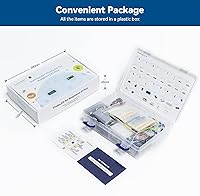
- Component Count: The kit contains 283 individual items spanning sensors, actuators, passive components, display modules, and communication modules.
- Project Count: Forty structured projects are provided, progressing from basic input/output exercises to Bluetooth and motor control builds.
- Languages: Supported programming environments include MicroPython, C/C++, and Piper Make, a visual block-based language based on Scratch.
- Connectivity: The board exposes GPIO and I2C interfaces natively; Bluetooth connectivity is provided through the bundled HC-05 module.
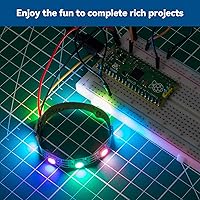
- Key Components: Notable included modules are an I2C LCD display, WS2812 RGB LED strip, servo motor, PIR sensor, DHT11 humidity sensor, DS1307 RTC, and ultrasonic distance sensor.
- Package Weight: The complete kit weighs 1.15 pounds as shipped.
- Package Dimensions: The retail box measures 9.8 × 8.58 × 2.36 inches.
- Recommended Age: SunFounder recommends this kit for learners aged 10 and up, depending on prior coding exposure.
- Tutorial Format: All tutorials are hosted online and include step-by-step written instructions, circuit diagrams, and working example code for each project.
- IDE Support: The C/C++ track is compatible with the Arduino IDE; MicroPython projects can be developed using Thonny or any compatible MicroPython editor.
- Header Status: Male headers on the Raspberry Pi Pico are pre-soldered at the factory, so no soldering tools or skills are required to begin.
Related Reviews
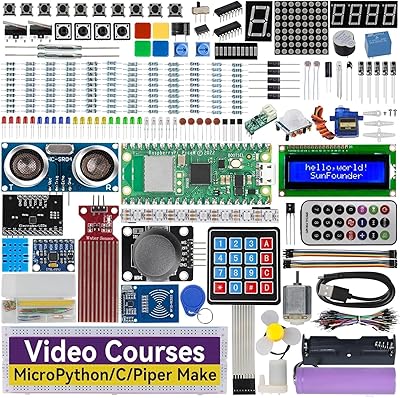
SunFounder Raspberry Pi Pico W Ultimate Starter Kit
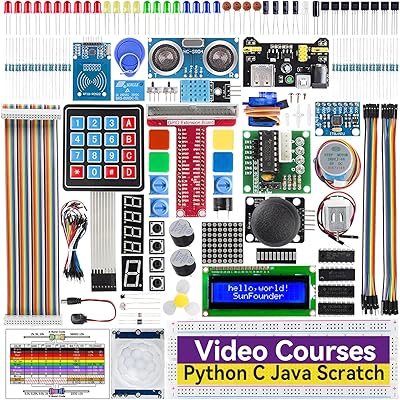
SunFounder Da Vinci Starter Kit for Raspberry Pi
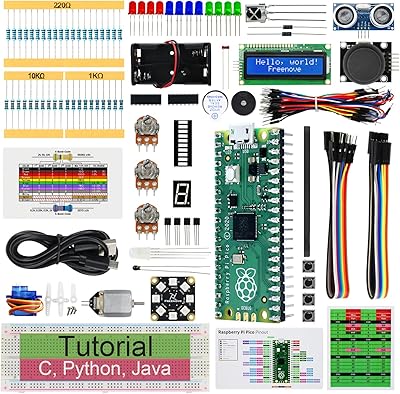
FREENOVE Super Starter Kit for Raspberry Pi Pico
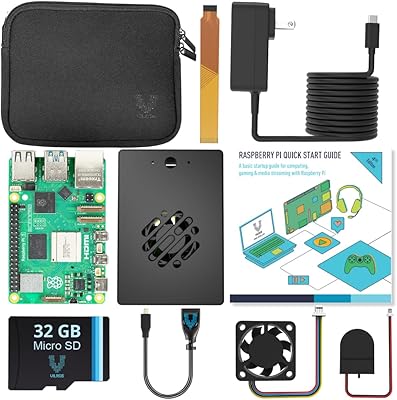
Vilros Raspberry Pi 5 4GB Starter Kit
Vilros Raspberry Pi 5 8GB Starter Kit
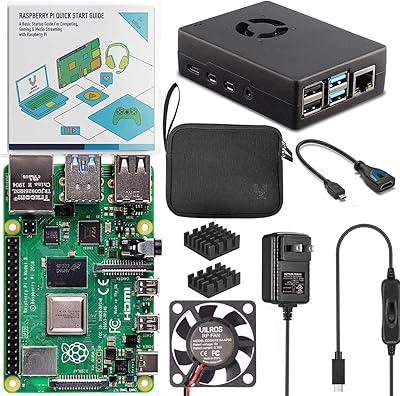
Vilros Raspberry Pi 4 4GB Starter Kit
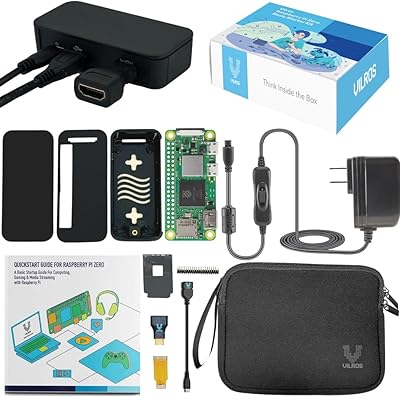
Vilros Pi Zero 2 W Starter Kit
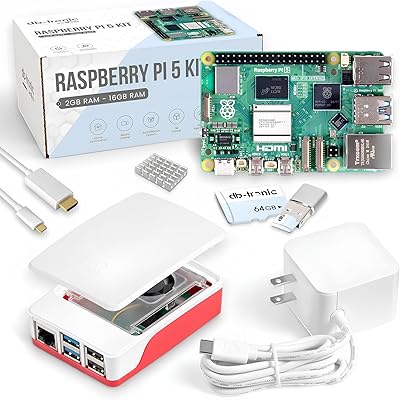
Raspberry Pi 5 8GB Starter Kit 64GB Edition
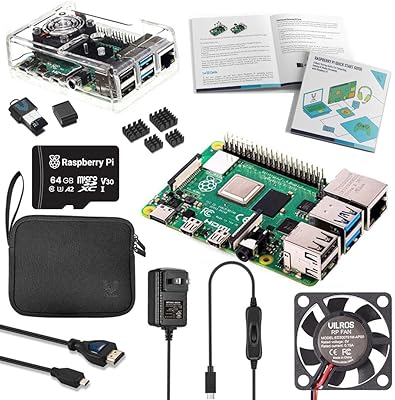
Vilros Raspberry Pi 4 Starter Kit 8GB