Overview

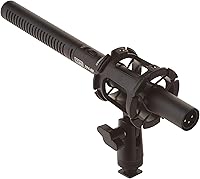
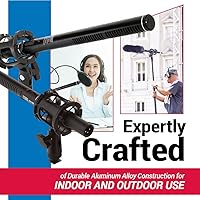
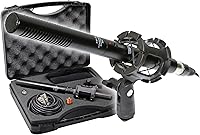
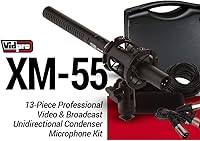
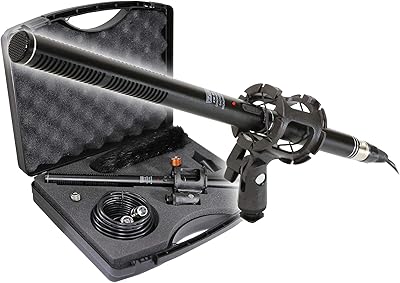
The VidPro XM-55 Shotgun Microphone Kit lands in a competitive space — it's squarely a beginner-to-intermediate option, not a replacement for dedicated broadcast gear. What makes it stand out at this price point isn't the mic alone; it's the 13-piece bundle that arrives ready to use without a separate trip to the accessories aisle. The aluminum alloy body feels more solid than you'd expect, and the fact that it runs on a single AA battery means you're never hunting for a charger on location. Whether you're shooting indoors or heading outside, this video microphone set covers both without any gear swap.
Features & Benefits

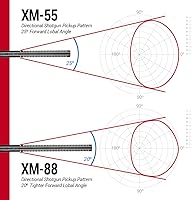
The XM-55 uses a super cardioid polar pattern, which means it's focused and directional — it grabs what's in front of it and pushes away noise coming from the sides. That's useful for interviews and run-and-gun video shoots where you can't control your environment. The frequency response runs from 100 Hz to 16 kHz, covering the vocal range cleanly without sounding boxy. A 74 dB signal-to-noise ratio is respectable for a starter mic — not audiophile territory, but clean enough for clear dialogue. You also get XLR, 3.5mm, and 6.3mm connectivity, plus mount adapters for camera shoes, boom poles, and standard tripods.

Best For

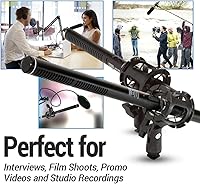
This shotgun mic kit is genuinely well-suited for content creators and students who are done tolerating the hollow, reverb-prone audio from their camera's built-in mic. If you're shooting YouTube videos, short films, or sit-down interviews in a reasonably quiet space, the XM-55 delivers noticeable improvement without a significant investment. The XLR output also means you can grow into a proper audio interface or field mixer later without buying a new microphone. That said, if you're working in loud, unpredictable environments or need broadcast-grade audio, this video microphone set will show its limits. For first-time upgraders, though, it's a solid starting point.

User Feedback

Most buyers are quick to praise the kit's completeness — everything arrives in a carry case and you can be recording within minutes of opening the box. The build quality gets decent marks for the price, though some users note the shock mount feels less robust than the mic itself over time. Wind noise reduction is a mixed bag; the included muff and shield help, but strong outdoor gusts can still bleed through. On the audio side, expectations matter — buyers who treat this as a step up from a built-in camera mic are generally satisfied, while those comparing it to higher-end mics tend to be more critical. Battery life rarely comes up as an issue.

Pros

  • The 13-piece kit delivers exceptional out-of-the-box value — everything you need to start recording is included.
  • Aluminum alloy construction feels noticeably more solid than competing kits at a similar price.
  • Super cardioid polar pattern does a respectable job rejecting side and rear noise during dialogue recording.
  • XLR, 3.5mm, and 6.3mm connectivity means it works with a wide range of cameras, recorders, and mixers.
  • Mount adapters cover camera shoe, boom pole, tripod, and mic stand — very few setups are left out.
  • Runs on a single AA battery, which is easy to source anywhere and keeps field use hassle-free.
  • The included carry case keeps everything organized and protected between shoots.
  • Both a wind muff and a windshield are included, giving you two layers of outdoor protection.
  • The shock mount helps reduce handling and vibration noise during handheld or boom-mounted recording.

Cons

  • Audio quality has a clear ceiling — seasoned listeners will notice limitations compared to higher-end mics.
  • The shock mount has drawn durability concerns from some users after extended or rough use.
  • Wind protection, while bundled, struggles in anything beyond a light breeze outdoors.
  • At 2.4 pounds for the full kit, it is not the lightest option for solo run-and-gun shooters.
  • Self-noise and audio transparency fall short of what voice-over artists or audio-focused creators need.
  • No low-cut filter or pad switch on the mic itself limits your ability to tailor audio in the field.
  • The 16 kHz frequency ceiling means some upper-register detail and air in audio recordings is lost.
  • Buyers who already own cables and mounts gain less value from the bundle and pay partly for redundant accessories.

Ratings

Our AI rating engine analyzed thousands of verified global purchases of the VidPro XM-55 Shotgun Microphone Kit, actively filtering out incentivized, duplicate, and bot-generated submissions to surface only authentic buyer experiences. The scores below reflect a transparent picture of where this video microphone set genuinely delivers and where real users have hit frustrating walls. Both the standout strengths and the recurring pain points are factored in equally.

Kit Value
91%
Buyers consistently describe the bundle as one of the most complete starter sets they've found without spending significantly more. Getting a shock mount, windshield, wind muff, hand grip, multiple cables, adapters, and a carry case all together removes the headache of sourcing accessories piecemeal — a real advantage for anyone setting up their first video rig.
For buyers who already own cables, mounts, or wind protection from a previous setup, much of the bundle becomes redundant, and the value proposition shrinks noticeably. In those cases, the mic itself is being evaluated more harshly against bare-mic competitors at the same price.
Audio Clarity
68%
32%
For dialogue-heavy content like interviews, talking-head YouTube videos, and short film scenes recorded indoors, the XM-55 captures speech with enough intelligibility to be genuinely useful. Voices come through clearly enough that most casual viewers won't notice anything amiss, especially after light audio processing in editing.
Seasoned listeners and audio engineers will quickly identify a ceiling in this mic's transparency and detail. High-frequency air and nuance in voices are noticeably compressed compared to mid-range competitors, and in side-by-side comparisons, the audio can sound slightly thin or colored in ways that are hard to correct in post.
Build Quality
74%
26%
The aluminum alloy mic body stands out positively at this price tier — it feels solid in hand and doesn't rattle or creak like cheaper plastic alternatives. Users who've used it across multiple shoots report the barrel itself holds up well to the bumps and minor drops that happen in run-and-gun production environments.
The shock mount is the weak link that comes up repeatedly in user reports. The elastic suspension bands and plastic housing show wear faster than expected with regular use, and some buyers have had to replace or reinforce it within months. The mount feels noticeably cheaper than the mic body it holds.
Wind Noise Rejection
61%
39%
Having both a foam windshield and a fur wind muff in the same kit is genuinely useful — most competitors at this price include only one or neither. In calm to lightly breezy outdoor conditions, using both layers together makes a real difference and saves buyers from having to immediately buy aftermarket wind protection.
In stronger winds or open outdoor environments, even the stacked wind protection falls short and low-frequency rumble bleeds through clearly in recordings. Users shooting outdoor documentary content or event coverage in unpredictable conditions have found the wind rejection insufficient for reliable results without repositioning or additional post-processing.
Directional Pickup
79%
21%
The super cardioid polar pattern does a solid job isolating a subject directly in front of the mic, which matters when you're shooting in a room with ambient noise like air conditioning, street sounds, or light crowd chatter. Multiple users noted it made a real improvement over omnidirectional built-in camera mics for single-subject interviews.
The off-axis rejection, while functional, isn't as tight as higher-end shotgun designs, meaning noisy environments still bleed in more than you'd want. Users conducting interviews in busy public spaces or open offices have reported that unwanted background noise is still audible even when the subject is well-positioned on-axis.
Ease of Setup
87%
Most buyers report being up and recording within a few minutes of opening the box, which is a meaningful advantage for users who don't want to spend hours reading manuals. The mount adapters are straightforward, the cable labeling is clear enough, and attaching the mic to a camera shoe or tripod is intuitive even for first-timers.
A small number of users found the shock mount assembly slightly confusing on first use, particularly threading the mic barrel into the elastic cradle without misaligning it. The instruction materials included are minimal, so buyers who prefer detailed setup guidance may feel a bit under-supported at the start.
Connectivity Range
83%
The included cable set covering XLR, 3.5mm, and 6.3mm connections handles the vast majority of recording scenarios a beginner or intermediate creator will encounter. Buyers appreciate not having to guess which cables to order separately — plugging into a DSLR, a field recorder, or a basic mixer is all covered right out of the box.
There is no TRRS or USB connectivity included, which means smartphone users and laptop-only creators are left without a native plug-and-play option. Buyers who want to record directly to a phone or a computer without an audio interface will need to source additional adapters not included in the kit.
Camera Compatibility
85%
The included camera shoe adapter and 3.5mm cable make it straightforward to mount directly on most popular DSLRs and mirrorless cameras from Canon, Sony, Nikon, and Panasonic. Users across a wide range of camera brands have reported a secure physical fit and functional audio input without needing additional components.
Cameras with automatic gain control (AGC) that can't be disabled may introduce pumping or noise artifacts regardless of the mic's own performance, and the kit provides no workaround for that. Buyers with older camera bodies that have noisy mic preamps may also find the limitation lies with the camera rather than the mic itself.
Portability
76%
24%
The carry case keeps all 13 pieces organized and reasonably protected during transport, which solo creators shooting on location genuinely appreciate. The mic itself is compact enough that it doesn't create significant front-end balance issues when mounted on a lighter mirrorless camera body.
At 2.4 pounds for the full kit, it's not the most lightweight solution for travel-heavy creators who are counting every ounce in a backpack. The carry case, while useful, is fairly basic in padding and protection — it's adequate for studio-to-car transport but not ideal for rougher travel conditions.
Battery Convenience
88%
Running on a single AA battery is one of the most practical design choices for field recording — you can buy replacements at any gas station or corner store anywhere in the world. Battery drain is low enough that most users report rarely thinking about it during typical shooting sessions, which removes one logistical worry from a busy shoot day.
There is no visual battery indicator on the mic body, so there's no way to check remaining charge without testing audio output directly. Users who forget to swap in a fresh battery before a long shoot have occasionally discovered mid-session signal degradation without warning, which can mean unusable footage.
Signal-to-Noise Ratio
66%
34%
At 74 dB, the self-noise floor is acceptable for recording dialogue in reasonably quiet conditions, and most buyers using it for YouTube content or short films haven't flagged background hiss as a serious problem. When used with a decent preamp or audio interface with clean gain, the noise floor becomes even less noticeable in practice.
In quieter recording environments or when listening back on quality headphones, a background hiss layer is perceptible, especially if the camera or recorder preamp is pushing the gain higher to compensate for the mic's sensitivity level. This is one of the clearest indicators that the XM-55 operates at a starter rather than professional tier.
Shock Mount Performance
58%
42%
When functioning as intended, the elastic suspension shock mount does reduce handling noise and low-frequency vibration transmission noticeably compared to a rigid hard mount. Users doing handheld boom work or mounting on a vibrating surface have found it helpful for keeping recordings cleaner during movement.
Durability is the persistent complaint — the elastic bands lose tension over time and the plastic housing has snapped for a number of users after moderate use. Several buyers have ended up purchasing a third-party replacement shock mount within the first few months, which adds cost and somewhat undermines the out-of-the-box appeal.
Indoor Recording Performance
78%
22%
In treated or naturally quiet indoor spaces — a home studio corner, a small meeting room, a bedroom with soft furnishings — the XM-55 captures clean, usable dialogue that clearly outperforms any built-in camera microphone. Buyers using it for interview-style content in controlled rooms have been consistently satisfied with the output.
In untreated rooms with hard surfaces, some low-level room reverb gets picked up along with the intended audio, and the mic is not forgiving enough to mask it naturally. Users recording in echoey spaces like kitchens, bathrooms, or large open-plan offices have noted that the room character bleeds into the recording more than they expected.
Beginner Friendliness
84%
The combination of a ready-to-use kit, broad connector coverage, and simple battery-powered operation makes this an accessible entry point for anyone recording video for the first time. There are no complex menu settings, phantom power requirements, or driver installs to navigate — plug it in, switch it on, and start recording.
The lack of any onboard controls like a low-cut filter, gain pad, or output level adjustment means beginners have fewer tools to troubleshoot audio problems directly on the mic. Users who later need more control over their signal will need to invest in an external preamp or recorder rather than being able to dial in adjustments at the source.

Suitable for:

The VidPro XM-55 Shotgun Microphone Kit is built for creators who are ready to leave their camera's built-in mic behind but aren't yet prepared to spend several hundred dollars on professional-grade audio gear. Student filmmakers, in particular, will appreciate getting a carry case, shock mount, windscreen, hand grip, and multiple cables all in one purchase — sourcing those separately would cost considerably more and take far more time. Vloggers and YouTube creators shooting sit-down content, talking-head videos, or simple interview setups in a reasonably quiet room will find the directional pickup genuinely useful for isolating a speaker's voice. The XLR output is a smart long-term play: it means you can plug into a basic audio interface or field recorder now and upgrade your recording chain later without replacing the mic. Anyone shooting on a DSLR, mirrorless camera, or even a compact camcorder will find the included mount adapters cover nearly every attachment scenario right out of the box.
Not suitable for:

The VidPro XM-55 Shotgun Microphone Kit is not the right call for anyone who needs broadcast-quality audio or is working in loud, unpredictable environments on a regular basis. Documentary filmmakers, event videographers, or news crews who need a mic that holds up under professional pressure will hit the ceiling of what this kit can deliver fairly quickly. The wind noise suppression, while functional in mild conditions, struggles in stronger outdoor gusts — so if most of your shoots happen outside without a controlled setup, you'll likely be disappointed. The signal-to-noise ratio and overall audio transparency, while acceptable for casual video content, won't satisfy audio engineers or anyone doing voice-over work where pristine, studio-grade clarity is expected. If you already own a collection of mounts and cables and just want to invest in a better transducer, the bundled accessories lose their value and the mic itself would face tougher scrutiny at this price.
Specifications

  • Polar Pattern: Super cardioid design provides tight, directional audio pickup with strong rejection of off-axis sound from the sides and rear.
  • Frequency Response: Captures audio across a 100 Hz to 16 kHz range, prioritizing clear and intelligible vocal reproduction for video and broadcast use.
  • Signal-to-Noise Ratio: Rated at 74 dB, delivering acceptably clean audio for dialogue recording at this price tier.
  • Audio Sensitivity: Sensitivity is rated at 45 dB, suitable for picking up a speaker at close to moderate distances in controlled conditions.
  • Power Source: Operates on a single AA alkaline battery, which is included in the kit and widely available for field replacement.
  • Body Material: The microphone body is constructed from aluminum alloy, offering a more durable and solid feel than plastic alternatives at this price level.
  • Dimensions: The microphone measures 8.86 x 0.98 x 0.98 inches, making it compact enough for camera-top mounting without significant front-heaviness.
  • Kit Weight: The full 13-piece kit weighs approximately 2.4 pounds, inclusive of all accessories and the carry case.
  • Connector Types: Includes cables and adapters supporting XLR, 3.5mm mini jack, and 6.3mm standard jack connections for broad device compatibility.
  • Mount Compatibility: Ships with adapters for camera shoe, 1/4-inch tripod thread, 3/8-inch boom pole, and 5/8-inch microphone stand mounts.
  • Channels: Records in mono (single channel), which is standard for shotgun microphones used in dialogue and interview capture.
  • Form Factor: Shotgun condenser microphone design, optimized for directional capture in video production and broadcast environments.
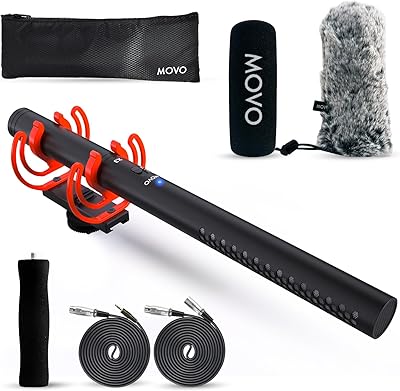
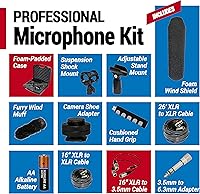
  • Kit Contents: The 13-piece set includes the microphone, suspension shock mount, adjustable stand mount, camera shoe adapter, wind muff, windshield, hand grip, two XLR-to-XLR cables, one XLR-to-3.5mm cable, a 3.5mm-to-6.3mm adapter, an AA battery, and a carry case.
  • Wind Protection: Both a foam windshield and a fur wind muff are included to reduce wind noise during outdoor recording sessions.
  • Shock Mounting: A suspension shock mount is included to isolate the microphone from handling vibration and mechanical noise transmitted through the stand or boom.

Related Reviews
VidPro XM-88
VidPro XM-88
83%
88%
Build Durability
92%
Sound Value
86%
Vocal Precision
91%
Power Versatility
84%
Case Protection
More
Rode NTG5 Shotgun Microphone Kit
88%
95%
Audio Clarity
92%
Portability & Weight
88%
Build Quality & Durability
90%
Ease of Use
93%
Microphone Performance
More
Comica VM20
Comica VM20
81%
83%
Audio Clarity
78%
Noise Rejection
88%
Build Quality
81%
Low-Cut Filter Performance
76%
Gain Control
More
Saramonic VMICMINI Mini Shotgun Microphone
76%
72%
Audio Quality
94%
Ease of Use
83%
Build Quality
88%
Value for Money
86%
Device Compatibility
More
Pixel M80 Shotgun Microphone
74%
74%
Audio Clarity
71%
Noise Rejection
38%
Wind Resistance
67%
Build Quality
83%
Value for Money
More
Rode VideoMic with Rycote Lyre
83%
92%
Vocal Clarity
94%
Vibration Isolation
89%
Build Durability
91%
Ease of Use
58%
Power Management
More
Comica VM40
Comica VM40
83%
88%
Audio Quality
93%
32-Bit Float Recording
82%
Wireless Performance
91%
Onboard Backup Recording
89%
Build Quality
More
Schoeps CMIT 5U Shotgun Microphone
77%
94%
Sound Quality
91%
Off-Axis Rejection
88%
Self-Noise Performance
89%
Build Quality
62%
Value for Money
More
Sony ECM674/9X Shotgun Microphone
71%
83%
Audio Directivity
78%
Build Quality
81%
Power Flexibility
74%
Signal-to-Noise Ratio
86%
Compatibility
More
Takstar SGC-600
Takstar SGC-600
76%
78%
Audio Clarity
74%
Noise Rejection
53%
Build Quality
84%
Sensitivity & Gain Control
61%
Wind Noise Handling
More

FAQ

Yes, the kit includes an XLR-to-3.5mm cable and a camera shoe adapter, so you can mount it and plug it straight into most DSLRs and mirrorless cameras that have a 3.5mm mic input. No extra gear required to get started.

Not necessarily. If your camera or recorder has an XLR input, you can connect directly. If you only have a 3.5mm input, the included XLR-to-3.5mm cable handles that too. An external audio interface or field mixer is optional and only needed if you want more control over gain and monitoring.

Most users report that a standard AA alkaline battery lasts many hours of continuous use — often well into double digits. Battery drain is low enough that it rarely becomes a concern during a typical shoot day, and since it takes a standard AA, replacements are easy to carry as backup.

It can work outdoors in mild conditions, especially with the included wind muff layered over the foam windshield. That said, if you regularly shoot in windy or noisy outdoor environments, you may find the wind rejection somewhat limited in stronger gusts. It performs better in sheltered outdoor spaces than in fully exposed, breezy locations.

Not directly out of the box. Smartphones typically use TRRS connections, and the included cables are designed for standard TRS 3.5mm and XLR devices. You would need a separate TRRS adapter or a mobile audio interface to use it with a phone, neither of which is included in the kit.

The suspension shock mount cradles the mic in elastic bands that absorb vibrations from the stand, boom, or camera rig — so rumbles and handling noise are less likely to bleed into your recordings. It threads onto standard mounts and attaches the mic with a simple screw-and-sleeve mechanism that most users get the hang of quickly.

It can work for casual podcasting, especially if you are recording dialogue in a quiet room. For serious voice-over work where pristine audio transparency is essential, this mic will show its limitations compared to dedicated large-diaphragm condensers. It is a better fit for on-camera dialogue than for studio-quality audio production.

The foam windshield is a rigid slip-on cover that blocks light puffs of air and minor breath pops. The fur wind muff (sometimes called a dead cat) goes over the foam and provides an additional layer of protection in moderate to breezy outdoor conditions. Using both together gives you the best outdoor wind rejection this mic can offer.

The aluminum alloy body holds up well in day-to-day use and feels noticeably sturdier than entry-level plastic mics. The shock mount has drawn some durability concerns from users after extended or rough handling, so it is worth treating it carefully rather than assuming it will take heavy abuse over a long period.

Yes — the kit includes a 3/8-inch adapter compatible with standard boom poles, and the shock mount helps absorb any pole-handling noise. It is a practical setup for interview-style shoots or short film productions where you need the mic closer to the subject without it appearing in the frame.