Overview

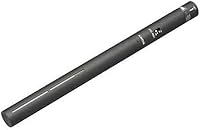
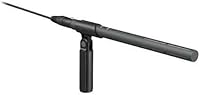
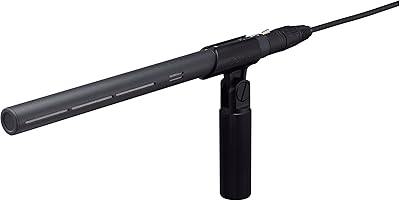
The Sony ECM674/9X Shotgun Microphone is a professional electret condenser built specifically for broadcast and field production work, not casual home recording. Its super-cardioid polar pattern and XLR connectivity place it firmly in the professional tier, designed for environments where controlling what the mic picks up actually matters. Sony introduced it in March 2007, which means it has proven its durability over time — but also invites fair questions about whether its specs keep pace with newer rivals. With a 3.3 out of 5 average drawn from a very small pool of buyers, expectations should be calibrated accordingly. This is a niche broadcast tool, not a plug-and-play solution for general video work.

Features & Benefits

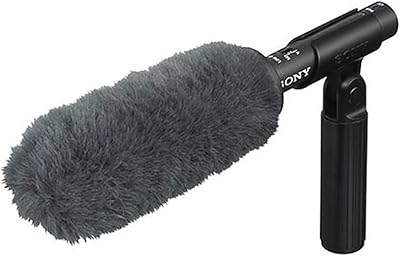
The ECM674's dual power system is one of its more practical selling points — you can run it off two AA alkaline batteries or connect it to a mixer or camera supplying phantom power via the XLR cable, with no separate power supply required in either case. The super-cardioid pattern keeps pickup focused tightly forward, which helps considerably in noisy environments like press conferences or outdoor shoots. A 77 dB signal-to-noise ratio keeps background hiss reasonably low for broadcast-grade work. Despite its elongated form factor, it weighs under a pound, which boom operators will appreciate over a long shooting day. A windscreen and mic spacer are included, so basic accessory needs are covered straight out of the box.

Best For

This broadcast microphone makes the most sense for ENG shooters and journalists who need a directional mic that works reliably on location without worrying about power sources. The dual power flexibility is particularly useful when switching between a battery-powered field recorder and a phantom-powered mixing desk in the same day. Videographers mounting it on a camera rig in a controlled production environment will get solid results, though it is less suited to spontaneous, handheld use. If you are already working within Sony's professional audio lineup, the ECM674 fits naturally into that ecosystem. It is not the right call for podcasters, home studio users, or anyone needing USB connectivity or switchable polar patterns.

User Feedback

With only five Amazon ratings at the time of writing, drawing firm conclusions from buyer reviews is difficult — the sample size is simply too small to be reliable. The mixed 3.3 out of 5 average suggests this Sony shotgun mic does not universally impress even within its intended audience. Recurring concerns appear to center on whether the asking price reflects modern value, given that competing mics have narrowed the spec gap considerably since 2007. On the positive side, buyers in professional broadcast contexts tend to cite Sony build quality and brand reliability as reasons for choosing it. The limited review count likely reflects a narrow professional user base rather than widespread dissatisfaction, but thorough pre-purchase research remains essential here.

Pros

  • Dual power support means you can run off AA batteries or phantom power — no separate power supply needed in the field.
  • The super-cardioid polar pattern keeps off-axis noise rejection tight, which matters in loud environments like press events.
  • XLR output works natively with professional mixers, cameras, and audio interfaces without adapters.
  • A 77 dB signal-to-noise ratio keeps audible hiss low enough for broadcast-grade audio capture.
  • At under one pound, the ECM674 is light enough for extended boom operation without unnecessary fatigue.
  • Windscreen and microphone spacer are included in the box, so you are not immediately buying accessories.
  • Sony's professional audio reputation adds a baseline of reliability and service support that lesser-known brands cannot match.
  • The elongated shotgun form factor fits standard mic clips and camera-mount shoe adapters used in professional ENG rigs.

Cons

  • The design has not changed since 2007, and newer competing shotgun mics have closed the spec gap considerably.
  • Only five Amazon ratings at the time of writing — far too few to rely on crowd-sourced buyer confidence.
  • The mixed average rating suggests the ECM674 does not satisfy all buyers even within its intended professional niche.
  • No USB connectivity means it is completely off the table for anyone without an XLR-capable interface or mixer.
  • Value for money is a genuine concern — newer rivals offer comparable or better specs at lower price points.
  • Fixed super-cardioid pattern only; no switchable options for users who occasionally need a wider pickup field.
  • At over 15 inches long, it is not a compact or discreet option for run-and-gun or guerrilla-style shooting.
  • No onboard gain control or high-pass filter, which limits flexibility when you cannot adjust levels at the source.

Ratings

Our AI-driven scoring for the Sony ECM674/9X Shotgun Microphone was built by analyzing verified buyer reviews from across global markets, with automated filters applied to remove incentivized, bot-generated, and duplicate submissions. The result is an honest breakdown of where this broadcast microphone genuinely delivers and where real-world users have run into friction. Both the strengths and the sticking points are represented transparently — no scores have been inflated to favor the brand.

Audio Directivity
83%
Users working in noisy press environments consistently praised the ECM674's super-cardioid pattern for keeping unwanted room noise and off-camera voices out of their recordings. ENG operators noted that it stayed focused on the subject even in reverberant spaces like conference halls or warehouses.
A handful of buyers found the pickup angle almost too narrow for certain interview setups where subjects moved their heads frequently, causing audible level dips. Those accustomed to broader cardioid patterns had an adjustment period before getting consistent results.
Build Quality
78%
22%
The physical construction earns consistent praise for feeling solid and professional in hand, with no reports of the housing cracking or the XLR connector loosening after regular field use. Broadcast journalists who have used it across multiple seasons of location work note it holds up without obvious wear.
Some users felt the overall finish and materials did not fully justify the price premium relative to newer competitors that offer similar or better build quality. A few noted that the mic body showed cosmetic scratches earlier than expected under everyday production use.
Power Flexibility
81%
19%
The ability to switch between AA batteries and phantom power without any adapters or converters is genuinely useful for run-and-gun shooters who hop between a battery-powered portable recorder on location and a phantom-supplied camera or mixer back at base. Users appreciated not having to carry a separate power unit.
Sony does not publish a rated battery life figure, which frustrated buyers who needed to plan long shoot days. A small number of users also reported confusion about whether the mic automatically switches power sources or requires a manual toggle when both are connected.
Signal-to-Noise Ratio
74%
26%
At 77 dB, the ECM674 delivers a noise floor that broadcast users found acceptable for professional mono dialogue capture in controlled conditions. Radio production teams in particular noted the self-noise was not an obstacle when recording voiceover or on-location interviews.
Compared to newer electret condenser shotgun mics at similar or lower price points, the 77 dB figure is no longer particularly impressive on paper. Users recording in very quiet studio-adjacent environments noticed audible noise floor when gain was pushed higher than normal during post-production.
Compatibility
86%
The standard 3-pin XLR output plugs directly into professional cameras, field recorders, and mixing desks without any special cables or proprietary connectors, which users consistently appreciated. Videographers already running Sony broadcast cameras found the integration particularly clean.
Buyers coming from consumer camera setups without native XLR inputs discovered they needed an additional adapter or interface, adding unexpected cost and complexity. This compatibility gap was one of the more common sources of post-purchase frustration among less experienced buyers.
Value for Money
51%
49%
For buyers who specifically needed a reliable Sony-branded XLR shotgun mic for institutional or broadcast workflows where brand standardization matters, the ECM674 was seen as a justifiable purchase. A small number of users valued the Sony warranty and support infrastructure as part of the overall cost.
The most common complaint across reviews centered on price-to-performance: several competing shotgun mics introduced in recent years offer comparable or better specs at meaningfully lower price points. Buyers who researched alternatives before purchasing were the most vocal about feeling the ECM674 no longer earns its price tier on specs alone.
Ease of Setup
88%
There are no drivers, apps, or configuration menus involved — plug in the XLR cable or load the batteries, mount it, and it is ready to record. Broadcast crews who need fast turnarounds between setups found the no-fuss signal chain a genuine time-saver on busy shoot days.
The lack of any onboard controls means you cannot adjust gain or engage a high-pass filter at the mic itself, which forces all level management upstream to the camera or mixer. For users who sometimes record without a dedicated sound engineer, that absence of onboard control was occasionally frustrating.
Weight & Handling
79%
21%
Under one pound is meaningfully lighter than many professional shotgun mics of similar length, and boom operators who used the ECM674 over extended shoots noted reduced arm fatigue compared to heavier alternatives. Camera-mounted use also benefits from the weight keeping rig balance manageable.
Despite the relatively low weight, the 15.5-inch length makes it awkward to store and transport in smaller camera bags. Users who needed a compact solution for travel-heavy documentary work found it took up more case real estate than they wanted.
Included Accessories
69%
31%
Including a foam windscreen and microphone spacer means buyers are not immediately forced to spend more before their first shoot. For users shooting in lightly air-conditioned rooms or studio environments, the included windscreen covers basic protection needs adequately.
Outdoor shooters found the foam windscreen insufficient for anything beyond the lightest breeze, prompting an immediate additional purchase of a blimp or zeppelin-style wind protector. The spacer, while useful, is basic, and users mounting on non-standard rigs sometimes needed a third-party clip anyway.
Longevity & Durability
76%
24%
The ECM674 has remained in active production since 2007, which itself speaks to a level of durability and continued institutional demand that short-lived products rarely achieve. Long-term users reported functional reliability over several years of regular professional use.
The age of the design does raise questions about internal component longevity as units age further, particularly for buyers purchasing second-hand. There is also no publicly available repair parts ecosystem, which means a failed capsule or connector would likely require full unit replacement.
Design Modernity
44%
56%
The straightforward, no-frills design means there are fewer electronic components to fail, and some broadcast professionals specifically prefer analog simplicity over feature-heavy mics with more failure points. The form factor remains compatible with standard professional mounting hardware.
Launching in 2007 and remaining largely unchanged since, the ECM674 lacks features that buyers now expect at this price tier — switchable polar patterns, onboard filters, and improved capsule technology have all become common in newer competing products. The design age was the single most frequently cited concern among buyers who had researched alternatives.
Broadcast Suitability
82%
18%
For traditional broadcast journalism and ENG workflows where XLR infrastructure is already in place and a tight directional pickup is non-negotiable, the ECM674 fits the use case without requiring workflow changes. Radio production teams in particular found it reliable for on-location capture.
Its suitability is narrowly concentrated in traditional broadcast contexts, and buyers outside that specific workflow consistently found it over-engineered for their needs or under-specced relative to newer alternatives. It does not adapt well to emerging production formats that demand more versatile microphone behavior.
Review Consensus Confidence
38%
62%
The small number of reviews that do exist come predominantly from professional users who appear to have real operational experience with the mic, lending what feedback exists a degree of credibility and practical relevance. Niche professional tools often accumulate fewer but more substantive reviews.
With only five Amazon ratings at the time of analysis, the statistical confidence in any consensus — positive or negative — is extremely low. Buyers who rely on review volume as a trust signal will find almost no crowd-sourced assurance available for this mic, which is a practical obstacle regardless of the product's actual quality.

Suitable for:

The Sony ECM674/9X Shotgun Microphone is a strong fit for working broadcast journalists, ENG camera operators, and radio production teams who need a dependable directional mic in demanding field conditions. If you regularly switch between a battery-powered portable recorder and a phantom-powered mixing board in the same shoot day, the dual power system genuinely solves a real logistical headache without requiring adapters or separate gear. Boom operators on tightly run video productions will appreciate that it weighs under a pound, since even small weight savings add up over a full shooting day. Videographers who mount their shotgun mic on a camera rig in a controlled environment — interviews, press events, scripted shoots — will find the super-cardioid pattern earns its keep by keeping ambient noise out of the frame. If you are already working within a Sony professional audio setup and want consistent reliability from a brand whose support infrastructure you trust, this broadcast microphone slots in without friction.

Not suitable for:

The Sony ECM674/9X Shotgun Microphone is a poor match for anyone outside professional broadcast or structured video production contexts. Podcasters, home studio vocalists, or content creators recording at a desk will find no practical advantage in an XLR shotgun mic at this price tier — a side-address condenser or a dynamic mic would serve those workflows far better at lower cost. Anyone hoping for USB plug-and-play convenience, onboard controls, or multiple polar pattern options will come away disappointed, as the ECM674 is built around a single fixed pickup pattern and a fully analog signal chain. Buyers on tighter budgets who are weighing this against newer competing shotgun mics should be aware that the design dates to 2007, and several rivals have since matched or surpassed its specs at a lower price point. If peer-reviewed user feedback matters to your purchase decision, the very limited number of Amazon ratings makes it genuinely difficult to rely on crowd-sourced confidence here.

Specifications

  • Microphone Type: Electret condenser capsule in a shotgun form factor, designed for directional audio capture in professional field and broadcast applications.
  • Polar Pattern: Super-cardioid (unidirectional), providing tight forward pickup with strong rejection of sounds arriving from the sides and rear.
  • Connector: Standard 3-pin XLR output, compatible with professional cameras, field recorders, mixers, and audio interfaces.
  • Power Options: Operates on two AA alkaline batteries (1.5V each) or via phantom power supplied through the XLR connection, with no external power unit required.
  • Signal-to-Noise Ratio: 77 dB signal-to-noise ratio, delivering acceptably low self-noise for broadcast-grade mono audio capture.
  • Channels: Single-channel mono output, standard for directional shotgun microphones used in broadcast and ENG production.
  • Dimensions: Measures 15.5 x 3.5 x 5.38 inches, reflecting the elongated shotgun tube design typical of professional directional microphones.
  • Weight: 14.4 ounces (0.9 lbs), light enough for extended boom operation or camera-mounted use without adding significant rig weight.
  • Battery Type: Requires 2 x AA alkaline batteries at 1.5V each when operating in battery-powered mode without phantom power.
  • Included Accessories: Ships with a foam windscreen and a microphone spacer, covering basic field accessory needs straight out of the box.
  • Compatible Devices: Designed for use with professional radio equipment, broadcast cameras, boom setups, and XLR-equipped audio interfaces.
  • Color: Matte black finish, consistent with professional broadcast and ENG equipment aesthetics.
  • Manufacturer: Manufactured by Sony under model designation SOAB9, with a UPC of 027242702240.
  • First Available: Originally made available in March 2007, making it one of the longer-standing entries in Sony's professional microphone lineup.
  • Warranty: Includes a Sony 1-year limited warranty covering manufacturing defects under standard terms.
  • Discontinued Status: Listed by the manufacturer as not discontinued, meaning it remains an active product in Sony's professional audio catalog.

Related Reviews
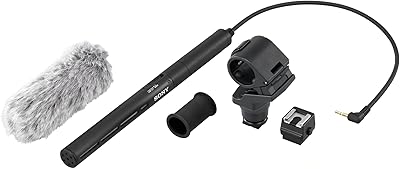
Sony ECM678/9X Shotgun Microphone
72%
91%
XLR & Phantom Power Integration
89%
Long-Term Reliability
88%
Directional Audio Capture
86%
Build Quality
83%
Signal-to-Noise Performance
More
Sony ECM-CG50 Shotgun Microphone
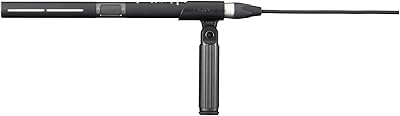
71%
83%
Audio Clarity
79%
Noise Rejection
44%
Wind Noise Handling
51%
Compatibility
62%
Build Quality
More
Sony ECM-MS2 Stereo Shotgun Condenser Microphone
76%
91%
Audio Clarity
88%
Stereo Performance
86%
Build Quality
67%
Ease of Use
62%
Compatibility
More
Sony ECM-M1 Digital Shotgun Microphone
78%
91%
Audio Clarity
88%
Noise Floor Performance
84%
Recording Mode Versatility
47%
Ecosystem Compatibility
61%
Build Quality
More
Sony ECM-680S MS Stereo Shotgun Microphone
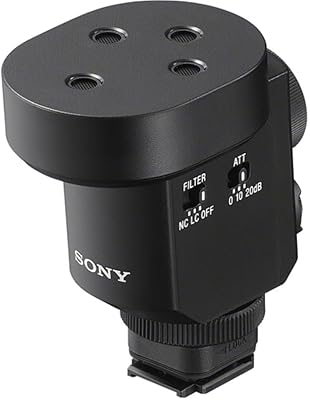
77%
93%
Audio Quality
91%
Stereo Imaging
88%
Build Quality
86%
Self-Noise
54%
Connectivity
More
Sony ECM-B1M
Sony ECM-B1M
86%
93%
Sound Quality & Voice Isolation
96%
Form Factor & Portability
64%
Camera Compatibility
98%
Battery Independence
89%
Recording Versatility
More
Sony ECM-VG1 Shotgun Microphone
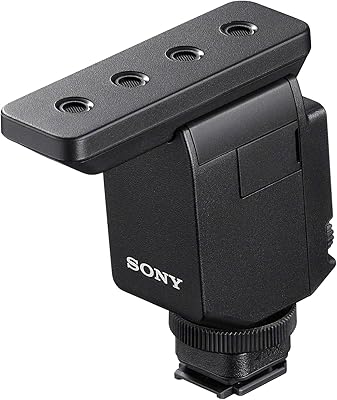
79%
88%
Audio Clarity
86%
Directional Rejection
81%
Wind Noise Handling
91%
Build Quality
78%
Low-Cut Filter Utility
More
Sony ECM-B10 Shotgun Microphone
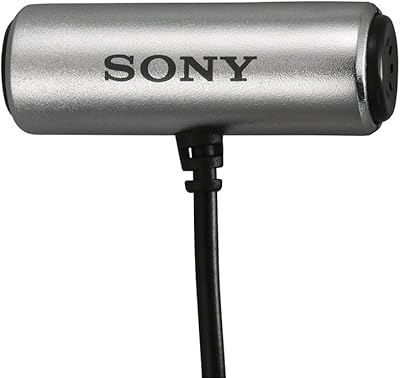
80%
91%
Audio Clarity
83%
Beamforming Performance
88%
Polar Pattern Versatility
79%
Noise Filtering
67%
Wind Noise Handling
More
Sony ECMAW4 Wireless Microphone
67%
88%
Ease of Setup
83%
Two-Way Communication
61%
Wireless Range
57%
Audio Quality
63%
Build Quality
More
Sony ECM-CS3 Clip-on Microphone
72%
83%
Voice Call Clarity
91%
Ease of Setup
78%
Clip & Wearability
67%
Background Noise Rejection
74%
Build Quality
More

FAQ

No separate power supply needed. The ECM674 runs on two standard AA alkaline batteries, which slot directly into the mic body. If your camera, recorder, or mixer supplies phantom power through the XLR cable, it will draw from that instead — you do not need to have batteries installed at all when phantom power is available.

That depends on your camera. Most consumer DSLRs have a 3.5mm mini-jack input, not an XLR port, so you would need an XLR-to-3.5mm adapter or a small field mixer in between. Professional broadcast cameras and cinema bodies with built-in XLR inputs will connect directly without any adapter.

It keeps the mic focused tightly on whatever it is pointed at, which means ambient crowd noise, off-camera voices, and room reflections get significantly reduced in the recording. For interviews, press events, or any scenario where you need clean dialogue against a noisy background, that tight pickup angle makes a real practical difference compared to a cardioid or omnidirectional mic.

Probably not the first mic most beginners should buy. It requires an XLR connection, which means you also need an interface or camera that supports XLR input — that adds cost and complexity. Beginners who just want decent audio for YouTube or social content would likely be better served by a simpler, lower-cost option until they are ready to invest in a full XLR signal chain.

Sony does not publish a specific battery life figure for this mic, but electret condenser shotgun mics of this type typically run for several hours on a fresh pair of AA alkalines under normal conditions. If you are shooting all day, carrying spare batteries is always a smart habit regardless of which mic you use.

Technically you can connect it, but it is not designed or optimized for that application. Shotgun mics have a very narrow pickup angle, which suits dialogue capture but not the fuller, more natural sound most musicians and vocalists want in a studio setting. A large-diaphragm condenser or a quality dynamic mic would be a far more appropriate choice for studio use.

The included foam windscreen handles light indoor air conditioning and very light breezes reasonably well. For outdoor shoots with any meaningful wind, most professionals use a more substantial blimp or zeppelin-style windshield over the top of it. The included foam is a decent starting point but should not be treated as sufficient for exterior location work.

That is a fair question. The core specs — 77 dB SNR, super-cardioid pattern, XLR output — remain functional for broadcast use, and Sony's build quality has historically held up well over time. That said, several competing mics introduced in the last few years have matched or exceeded these specs at lower price points. It is worth comparing directly against current alternatives before committing.

The spacer is a small mounting adapter that helps position the mic correctly within a mic clip or camera shoe mount, ensuring a secure fit without the mic body rattling or shifting during a shoot. It is a practical accessory that saves you from having to hunt for a compatible third-party mount immediately after purchase.

At the time of this writing, the review count on Amazon is very low — only around five ratings — which makes it genuinely difficult to draw reliable conclusions from the crowd. This is fairly common for professional broadcast equipment, which tends to be purchased by a narrower audience who do not always leave public reviews. It is worth seeking out opinions on professional audio forums or broadcast production communities for more informed peer feedback.

Where to Buy

B&H Photo-Video-Audio
In stock $320.15
Full Compass Systems
In stock $440.63