Overview

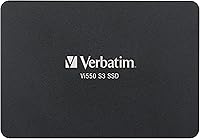
The Verbatim Vi550 4TB 2.5″ Internal SSD occupies a specific and honest niche: a high-capacity SATA drive built for buyers who need bulk storage without crossing into NVMe price territory. Verbatim has been in the storage space for decades, but this is not a performance-oriented brand in the enthusiast sense — and that is fine, because it is not trying to be. What it offers is 4TB of solid-state capacity in a 2.5-inch package at a price where the per-terabyte math becomes genuinely attractive. Nearly 6,000 Amazon ratings and a top-250 category rank show it resonates with real buyers. The included installation guide makes it clear this targets everyday upgraders, not power users.
Features & Benefits

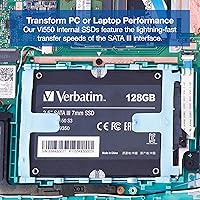
On paper, this Verbatim SSD hits the standard SATA III ceiling: sequential reads up to 550 MB/s and writes up to 500 MB/s, as measured by ATTO benchmarks — which favor clean sequential access patterns. Real-world mixed workloads will come in lower, so calibrate expectations accordingly. The underlying 3D NAND flash is a genuine improvement over older planar designs, delivering better cell density and more consistent endurance over the drive's lifespan. The 2.5-inch chassis fits most laptops and desktops natively, and with a basic adapter it slots into NAS bays or external enclosures without issue. No moving parts means no vibration, no seek noise, and solid shock resistance. The 2-year limited warranty gets the job done but trails some rivals in this class that offer three years.

Best For

The Vi550 4TB makes most sense as a primary drive replacement in an older machine that shipped with a mechanical hard drive. Swapping in a SATA SSD of this capacity can genuinely transform the day-to-day feel of an aging laptop or desktop — faster boots, snappier file access — without requiring a motherboard that supports NVMe. It also works well as secondary storage for media libraries, game installs, or large file archives where raw throughput is not the priority. Console users with external enclosures will hit the SATA bandwidth ceiling regardless of which drive they choose, so the capacity-to-cost ratio matters more there. For home and small-office workflows that do not push sustained sequential writes, this SATA drive covers the ground it needs to cover.

User Feedback

With a 4.5-star average built on close to 5,800 ratings, this Verbatim SSD sits well above the noise floor for storage peripherals — that kind of consensus across a large sample is hard to dismiss. Buyers frequently highlight how easy the installation process is and how noticeably faster their systems feel afterward, which speaks to the drive's core promise. The value-per-terabyte angle comes up constantly as the deciding factor. On the critical side, some users report that sustained write speeds drop under heavy, continuous loads — common for drives in this class and not a dealbreaker for typical use, but worth knowing. A handful of comments flag questions about long-term endurance at high capacity fill levels. The 2-year warranty has drawn mild criticism from buyers accustomed to longer coverage elsewhere.

Pros

  • 4TB of solid-state storage at a competitive price per terabyte — genuinely difficult to match at this interface tier.
  • Boot times and application load speeds improve dramatically versus a mechanical hard drive, even over a SATA connection.
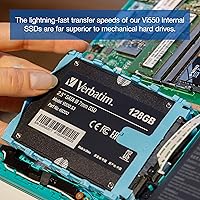
  • Universal 2.5-inch form factor fits most laptops and desktops natively, with NAS and enclosure support via a standard adapter.
  • 3D NAND flash delivers better cell density and endurance than older planar NAND designs at comparable price points.
  • No spinning platters means completely silent operation and strong resilience to physical shock and vibration.
  • Nearly 6,000 Amazon ratings averaging 4.5 stars provides a solid confidence baseline for a budget-tier storage purchase.
  • Lightweight at just 1.6 ounces, adding negligible mass to portable or compact system builds.
  • Includes an installation guide, lowering the barrier for users who have never swapped an internal drive before.

Cons

  • Sustained write speeds can drop under heavy, continuous workloads — a well-documented limitation of NAND drives in this class.
  • Advertised speeds are derived from ATTO benchmarks; real-world mixed-use performance will land noticeably lower.
  • The 2-year limited warranty is shorter than what several competing drives at this price tier offer.
  • SATA III throughput will bottleneck demanding use cases — not a good fit if your system supports and benefits from NVMe.
  • Long-term endurance at high capacity fill levels has not been widely stress-tested by independent reviewers.
  • Verbatim lacks the enthusiast-community reputation of top-tier SSD brands, with limited third-party benchmark coverage available.
  • No publicly disclosed TBW endurance rating makes objective lifespan comparison against rival drives more difficult.
  • Desktop tower users may need a 3.5-inch bay adapter to mount this drive properly, and none is included in the box.

Ratings

The Verbatim Vi550 4TB 2.5″ Internal SSD scores below are generated by our AI engine after analyzing thousands of verified purchase reviews collected from global marketplaces, with active filtering applied to remove spam, bot-generated content, and incentivized submissions. The resulting scorecard reflects a balanced, unvarnished picture of this drive — capturing both the genuine strengths that keep buyers recommending it and the real-world limitations that matter for specific use cases. Scores span performance, value, installation experience, long-term reliability, and more, giving you a complete picture of what this SATA drive actually delivers.
Value for Money
88%
Buyers consistently name price-per-terabyte as the primary reason they chose this drive over the competition, and it is hard to argue with their logic. Getting 4TB of solid-state storage at this price tier is genuinely difficult to match within the SATA segment, making it a sensible pick for capacity-hungry users on a controlled budget.
The value argument loses some weight for buyers whose systems support NVMe, where faster drives are available at only a modest price premium for smaller capacities. At high fill levels, the cost advantage also diminishes if sustained write performance throttles below what the workload actually requires.
Storage Capacity
93%
4TB of solid-state storage in a 2.5-inch SATA package is a meaningful achievement at this price point, and reviews reflect genuine appreciation for the available headroom. Whether filling it with a media library, game backups, or years of archived project files, the capacity holds up in real daily use without feeling constrained.
A recurring note among buyers is that operating consistently above 85 to 90 percent capacity noticeably affects write performance and long-term endurance — a well-documented NAND limitation. Users planning to keep the drive nearly full long-term are advised to leave meaningful headroom to avoid those degradation effects in practice.
Sequential Read Speed
74%
26%
For the majority of everyday computing tasks — launching apps, booting the OS, or moving large media files — the SATA III sequential read ceiling of up to 550 MB/s is more than adequate. Buyers upgrading from mechanical hard drives consistently report dramatic speed improvements and rarely feel limited by the interface ceiling in typical daily use.
The 550 MB/s read figure comes from ATTO benchmark testing under ideal sequential conditions; real-world mixed workloads involving smaller files and random access patterns produce noticeably lower actual throughput. Buyers with sustained large-file transfer needs — video editing pipelines, archive moves — will feel the SATA ceiling more acutely than casual everyday users.
Sustained Write Performance
62%
38%
For typical home and office use — copying documents, downloading software, or running occasional large backups — the write speeds are sufficient and rarely cause noticeable slowdowns in practice. Users who do not push the drive with continuous heavy writes rarely encounter throttling as a problem in their day-to-day operation.
Under prolonged continuous write loads — long video captures, large dataset migrations, or filling the drive in a single session — speeds are reported to drop significantly once the SLC write cache is exhausted, a behavior common to budget NAND designs at this tier. Buyers with consistently write-heavy workflows cite this as a genuine operational bottleneck.
Installation & Setup
91%
This is among the most praised aspects across the entire review pool — buyers with no technical background report completing the hardware swap in under 30 minutes using just a screwdriver. The included installation guide is a thoughtful addition that meaningfully reduces anxiety for first-time drive upgraders who might otherwise find the process daunting.
The guide covers only the physical hardware swap — cloning an existing drive or performing a fresh OS install requires separate third-party tools and a process that the included documentation does not address in any detail. Buyers who expected a more complete out-of-the-box software bundle occasionally feel underprepared for that second phase of the setup.
Real-World Speed Boost
83%
Among buyers upgrading from a spinning hard drive, the day-to-day speed improvement is consistently described as dramatic — machines that took two minutes to boot now launch in under 20 seconds, and sluggish app loading effectively disappears. This real-world responsiveness gain is the most tangible and widely reported benefit across the drive's core audience.
Buyers replacing an existing SATA SSD with this one notice little to no perceptible speed difference in daily use, since both devices operate within the same interface tier. For those expecting NVMe-level responsiveness, real-world gains are genuine compared to an HDD but do not translate to noticeably faster results in demanding or sustained workloads.
Build Quality
77%
23%
The solid-state design eliminates the fragility of spinning disks entirely — no read heads to crash, no platters to warp — making this a considerably more durable choice for laptops used on the move. Users who commute with their machines or work in less controlled environments appreciate the resilience that comes with having no moving parts.
The drive's plastic casing feels functional rather than premium, and does not inspire the same tactile confidence as the metal-housed competitors found at higher price points — though this is entirely expected for the budget segment. A subset of buyers note the shell feels so lightweight it reads as insubstantial, even if internal performance is not affected by it.
Thermal Management
69%
31%
Under light to moderate daily workloads — web browsing, document editing, media playback — the drive runs cool enough that thermal throttling is a non-issue for most users. The complete absence of noise compared to a mechanical hard drive is a noticeable quality-of-life improvement, particularly for users working in quiet home or office environments.
During sustained sequential write operations — especially inside compact laptops with limited internal airflow — some users report the drive running noticeably warm, which likely contributes to the performance throttling observed under heavy continuous loads. No onboard thermal sensor data is publicly available, making independent temperature monitoring more difficult for users who want that visibility.
Long-Term Endurance
66%
34%
The 3D NAND flash technology provides a meaningful endurance improvement over older planar NAND designs, and buyers running standard home or office workloads generally report no early failure issues within the first year or two of ownership. For typical everyday use patterns, the durability picture looks reasonable across the broader review base.
Verbatim does not publish a TBW (terabytes written) endurance rating for this drive, making objective lifespan comparison against rivals that do disclose this figure essentially impossible. A recurring thread among technically engaged reviewers raises concerns about reliability under sustained high-fill-level use, and without independent stress-test data those questions remain open.
Device Compatibility
86%
The 2.5-inch SATA form factor is among the most broadly supported drive formats in consumer computing, fitting natively into most laptops and desktops built over the past 15 years, as well as NAS enclosures and USB external caddies with a standard adapter. Buyers across a wide variety of machines report zero compatibility issues straight out of the box.
Ultra-thin laptops, recent MacBook models, and newer desktops that offer only M.2 slots physically cannot accommodate this drive, narrowing its compatible device pool considerably. Buyers on Apple Silicon Macs or systems that have fully transitioned to NVMe-only internal storage will find no compatible bay available regardless of any adapter solution.
Warranty Coverage
57%
43%
The 2-year limited warranty from Verbatim Americas covers the window during which most manufacturing defects are statistically most likely to surface, and buyers who filed claims generally report reasonably serviceable response times. For casual users with modest expectations of after-sale support, the coverage functions adequately within its defined scope.
Two years sits noticeably below what several competing drives at this price tier offer — three-year coverage is increasingly the category norm, and some brands extend further still. Buyers planning to run the same hardware for four or five years will find themselves well outside warranty long before the drive reaches the end of its expected service life.
Packaging & Accessories
79%
21%
The inclusion of a printed installation guide distinguishes this drive from bare-bones competitors that ship with no supporting materials whatsoever. First-time upgraders specifically mention the guide as a meaningful confidence builder, with several reviewers crediting it as the reason they felt comfortable completing the drive swap independently.
A vocal subset of buyers report that the packaging provides minimal physical cushioning, and a few received units with scuffed or slightly dented casings attributed to transit handling. No mounting bracket, adapter hardware, or data migration software is bundled in the box — additions that would meaningfully strengthen the overall out-of-box experience at this price point.
Brand Credibility
72%
28%
Verbatim has a decades-long history in consumer storage media and is not an unknown brand, giving buyers a reasonable confidence baseline compared to no-name alternatives flooding the budget market. The strong rating and high review volume across major retail platforms suggest that real-world short-to-medium-term reliability holds up for the clear majority of buyers.
Verbatim does not carry the SSD-specific credibility of established specialists like Samsung, WD, or Crucial, and independent benchmark coverage of this particular drive is thin compared to those brands. Buyers seeking extensive third-party testing data and a proven track record specifically within solid-state storage will find the supporting evidence here comparatively limited.

Suitable for:

The Verbatim Vi550 4TB 2.5″ Internal SSD is well matched to anyone upgrading an older laptop or desktop that still runs on a mechanical hard drive — the jump from spinning disk to solid-state is dramatic enough in daily use that the SATA bandwidth ceiling rarely becomes a frustration. Users who need large-capacity solid-state storage for media libraries, photo archives, video collections, or sprawling game installs will find 4TB genuinely practical without the cost premium that NVMe drives command at this capacity. It also makes a sensible secondary drive in a desktop build, handling bulk storage while a faster NVMe handles the OS and active applications. Console enthusiasts using external enclosures, home office workers with modest daily workloads, and small businesses looking to refresh aging hardware on a tight budget all sit squarely in its sweet spot. For anyone whose machine tops out at SATA III anyway — which covers a wide range of laptops built over the last decade — there is no meaningful performance left on the table by choosing this drive over a pricier NVMe alternative.
Not suitable for:

The Verbatim Vi550 4TB 2.5″ Internal SSD is not the right call for anyone building a performance-first system from scratch or whose primary storage bottleneck is throughput rather than raw capacity. If your motherboard supports NVMe and your workload involves sustained large-file transfers, high-bitrate video editing, or compiling large codebases, the SATA III read ceiling will feel constrictive — modern NVMe drives can deliver three to five times that throughput in sequential access. Buyers who push drives hard with write-heavy operations such as continuous video capture, large database writes, or heavy virtualization may also encounter speed throttling that is common in this class but more disruptive at that intensity level. The 2-year warranty is worth factoring in if you plan to run the same machine beyond that window, since several competing drives in this category offer an additional year of coverage. If peak performance and long-term warranty security are the primary criteria, the budget is better spent on a drive designed around those priorities.
Specifications

  • Storage Capacity: This drive provides 4TB of solid-state storage, placing it among the higher-capacity options available in the 2.5-inch SATA SSD segment.
  • Interface: The drive uses a SATA III (6 Gb/s) interface, which is backward compatible with SATA II and SATA I ports at correspondingly reduced speeds.
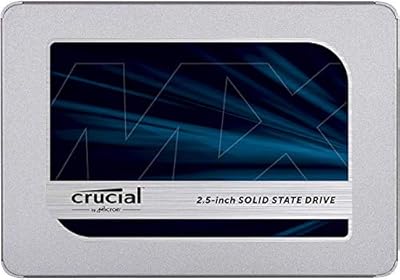
  • Form Factor: At 2.5 inches, this drive matches the standard size used by most laptop hard drives and is a common secondary drive format in desktop systems.
  • Sequential Read: Maximum sequential read speed is rated at up to 550 MB/s, as measured under ATTO benchmark conditions using sequential, compressible data patterns.
  • Sequential Write: Maximum sequential write speed is rated at up to 500 MB/s, measured under the same ATTO benchmark methodology.
  • Flash Technology: Storage cells use 3D NAND flash, which stacks memory layers vertically to achieve higher density and improved endurance compared to traditional planar NAND designs.
  • Warranty: Verbatim Americas provides a 2-year limited warranty covering manufacturing defects from the original date of purchase.
  • Weight: The drive weighs 1.6 ounces, adding negligible mass to any laptop or compact desktop build.
  • Compatibility: Officially compatible with desktop and laptop computers; it also functions in NAS bays and USB external enclosures with an appropriate 2.5-inch SATA adapter.
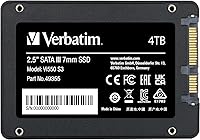
  • Model Number: This drive carries model number 49355 and is produced by Verbatim Americas, LLC under the Vi550 product series.
  • Installation Type: Designed as an internal drive, it is intended for permanent installation inside a compatible device's 2.5-inch SATA drive bay.
  • Shock Resistance: The absence of moving parts provides inherent shock resistance, protecting stored data from physical impacts that would damage a traditional mechanical hard drive.
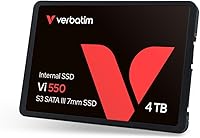
  • Color: The drive features a black casing and is sold as a single internal unit without an external enclosure.
  • Product Series: This drive belongs to Verbatim's Vi550 series of SATA III internal solid-state drives, positioned for mainstream storage upgrades.
  • Manufacturer: Produced by Verbatim Americas, LLC, a brand with a long history in consumer storage media.

Related Reviews

Verbatim 256GB Vi550 SATA III 2.5″ Internal SSD
86%
92%
Performance
88%
Value for Money
85%
Build Quality
90%
Ease of Installation
87%
Durability
More
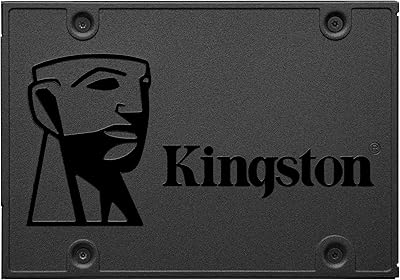
Kingston A400 240GB SATA SSD
79%
91%
Value for Money
93%
Boot Speed Impact
61%
Write Performance
83%
Long-term Reliability
54%
Workload Suitability
More
Crucial MX300 2TB Internal SSD
79%
78%
Read & Write Speed
91%
Storage Capacity
88%
Reliability & Longevity
63%
Value for Money
86%
Installation & Setup
More
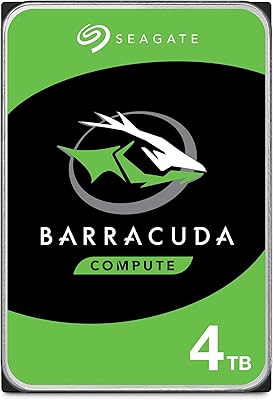
Seagate BarraCuda ST4000LM024 4TB Internal Hard Drive
70%
93%
Storage Density
84%
Value for Money
61%
Compatibility
67%
Sequential Read/Write Speed
48%
Random Access Performance
More
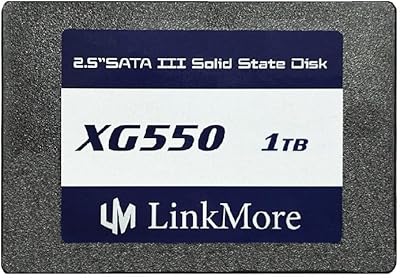
LinkMore XG550 1TB Internal SSD
78%
88%
Value for Money
93%
Installation Ease
87%
Boot Time Improvement
74%
Read/Write Performance
61%
Reliability & Longevity
More
Crucial MX500 500GB 3D NAND SATA 2.5 Inch Internal SSD
87%
92%
Read Speed
88%
Write Speed
91%
Reliability
78%
Compatibility with Older Systems
84%
Temperature Management
More
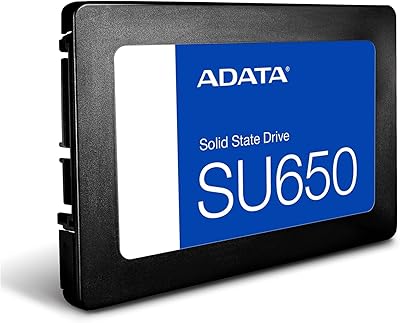
ADATA SU650 1TB 3D-NAND SATA 2.5 inch Internal SSD
86%
88%
Performance
92%
Value for Money
85%
Installation Ease
87%
Speed (Read/Write)
78%
Software Experience
More
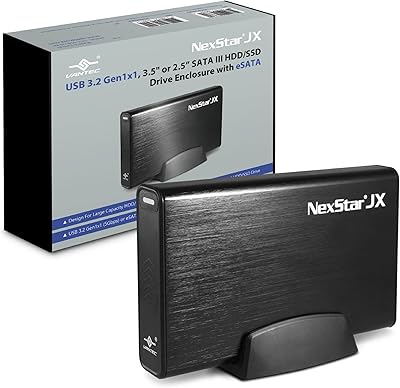
Vantec NexStar JX 3.5″ HDD Enclosure
76%
93%
Ease of Setup
78%
Transfer Speed — USB
86%
Transfer Speed — eSATA
74%
Thermal Management
67%
Build Quality
More
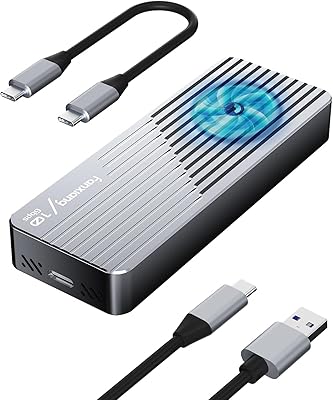
fanxiang MD85 M.2 NVMe SSD Enclosure
81%
83%
Transfer Speed Performance
88%
Thermal Management & Cooling
61%
Fan Noise Level
81%
Build Quality & Materials
86%
Protocol & Drive Compatibility
More
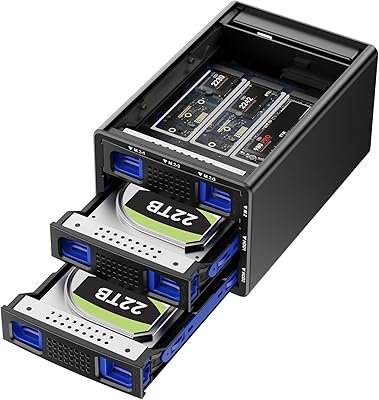
Cenmate 5-Bay Hybrid HDD/NVMe Enclosure
73%
83%
Build Quality
78%
Thermal Management
71%
Transfer Speed
69%
RAID Functionality
76%
Drive Compatibility
More

FAQ

Most laptops built over the last 15 years include a 2.5-inch SATA drive bay, so the odds are solid. The safest way to confirm is to look up your laptop model's spec sheet or open the drive bay and inspect the existing drive — if it is 2.5 inches and connects via a SATA interface, this one will drop right in. Keep in mind that ultra-thin or ultrabook models sometimes use soldered or M.2 storage, in which case a 2.5-inch internal SSD will not be an option.

For a basic laptop running an OS and a handful of apps, 4TB is well beyond what you will fill quickly. That said, storage needs have a way of expanding over time — accumulated photos, video files, game installations, and work archives add up fast. If you have already outgrown a 1TB or 2TB drive, stepping up makes practical sense; if you are sitting comfortably under 500GB used, a smaller capacity at a lower price might serve you just as well.

In raw sequential numbers, the gap is real — modern PCIe 3.0 NVMe drives routinely exceed 3,500 MB/s in reads, while SATA tops out around 550 MB/s. For everyday tasks like browsing, writing documents, or loading most games, you genuinely will not feel that difference in day-to-day use. The gap becomes more tangible during sustained large-file transfers or high-bitrate video work. If your machine only has a SATA slot, the comparison is academic anyway — NVMe simply will not work there.

The physical side is straightforward — a small Phillips-head screwdriver, a few minutes, and the ability to follow step-by-step directions. The Verbatim Vi550 4TB 2.5″ Internal SSD ships with an installation guide to walk you through the hardware swap. Beyond that, you will need to either clone your existing drive to the new one (free tools like Macrium Reflect handle this cleanly) or perform a fresh OS install, both of which have plenty of well-written free guides available online.
Yes — a 2.5-inch SATA-to-USB enclosure, widely available at low cost, turns this into a capable portable drive without any fuss. SATA speeds fall comfortably within what USB 3.0 and 3.1 connections can handle, so there is no real throughput bottleneck in that kind of setup. It is a practical option if you want a high-capacity external backup or a portable media archive.

The 550 MB/s read and 500 MB/s write figures come from ATTO benchmark testing, which uses sequential, highly compressible data — ideal conditions that present well on a spec sheet but do not reflect real mixed workloads. In everyday use with smaller files and random access patterns, actual throughput will be lower. That said, the improvement over a mechanical hard drive remains very significant and immediately noticeable for boot times, app launches, and general responsiveness.

It is on the shorter side for this category — several competing drives at a comparable price point offer three years of coverage, so it is worth factoring in. Two years does cover the window when manufacturing defects are most likely to surface. If you plan to run the same machine in heavy daily use for five or more years, a longer warranty would offer more peace of mind, but for typical home or office workloads the coverage is adequate.

Newer cases commonly include dedicated 2.5-inch drive bays or SATA mounting points alongside their 3.5-inch bays. If your case only has 3.5-inch bays, a simple metal bracket adapter — widely available for just a few dollars — lets you mount this drive securely without any tools beyond a screwdriver. Checking your case manual or looking inside before ordering is the best way to confirm what bay sizes are available.

For the PS4, yes — the internal bay accepts a 2.5-inch SATA drive as a direct replacement for the stock drive, and the Vi550 4TB fits and functions there without issue. On the PS5, the internal expansion slot requires an NVMe M.2 SSD, so this drive will not fit internally. You can still connect it via a USB external enclosure for storing and playing PS4 titles on a PS5, though native PS5 games stored on external USB drives cannot be launched from that location.

SSDs generally outlast mechanical drives under typical light-to-moderate workloads, and the 3D NAND technology used here carries better endurance characteristics than older planar NAND designs. One honest caveat: no TBW (terabytes written) endurance rating appears in the published product specifications, which makes a precise lifespan estimate harder to state compared to rivals that openly disclose that figure. For everyday home or office use, multi-year reliable operation is a reasonable expectation.