Overview

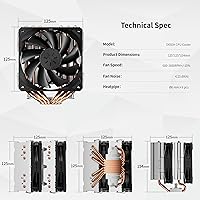
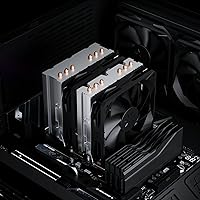
The upHere D6SEK Dual Tower CPU Air Cooler enters a segment packed with competitively priced options, yet it carves out a reasonable spot by offering six heat pipes and dual fans at a price that most builders won't lose sleep over. That combination is genuinely rare at this tier. Compatibility is another strong suit — it spans current AMD AM5 and Intel LGA 1700 sockets all the way back to older legacy platforms, which makes it useful for upgrades and fresh builds alike. Just keep the physical dimensions in mind: at 154mm tall and just under a kilogram, it needs a mid-tower or larger case to fit comfortably.

Features & Benefits

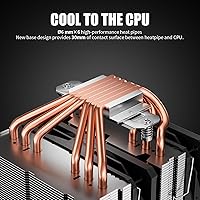
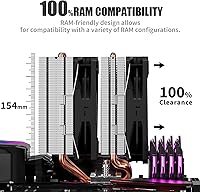
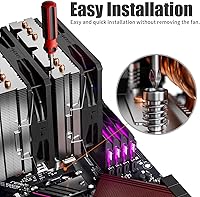
The six direct-contact heat pipes are the real workhorse here — they pull heat off the CPU base quickly and spread it across the aluminum fin stack, where twin 120mm fans handle the exhaust. Those fans run between 600 and 1600 RPM, and PWM fan curve control means your motherboard adjusts speed based on actual thermal demand rather than blasting at full tilt constantly. Noise stays at or below 25 dB(A) at peak, which is genuinely quiet for a cooler moving 68.2 CFM of air. The fans also clip on without requiring any disassembly, and the design maintains enough clearance that tall RAM heatspreaders won't get blocked during installation.

Best For

This dual-tower cooler makes the most sense for builders pairing it with a Ryzen 5 or Ryzen 7 processor, or an Intel 12th or 13th Gen chip on LGA 1700, where moderate workloads are the norm — gaming, everyday productivity, light content creation. It handles those scenarios comfortably. That said, don't expect it to tame a high-TDP processor under sustained all-core loads; this isn't built for aggressive overclocking or chips regularly pushing past 125W. Case fit matters too — the 154mm height rules out most ITX cases and some compact mATX builds, so verify your clearance. Mid-tower owners with adequate space will find it slots in without issue.

User Feedback

Buyers consistently highlight how straightforward the mounting process is, with most reporting a smooth experience even on their first cooler install. On the thermal side, users running mid-range Ryzen and Intel chips report solid temperatures under typical loads, though a recurring concern involves temps climbing more than expected during prolonged, intensive workloads. Fan noise is generally well-received at lower RPM settings, but a few verified buyers mention inconsistency between units after extended use. RAM clearance holds up for most configurations, though owners with particularly tall heatspreaders occasionally report a tighter fit than anticipated. Across the board, price-to-performance ratio stands out as the most frequently cited reason buyers feel satisfied with their purchase.

Pros

  • Six direct-contact heat pipes deliver noticeably better thermal performance than most stock coolers at this price level.
  • Dual 120mm PWM fans keep noise at or below 25 dB(A), making the system genuinely quiet during everyday use.
  • PWM speed control lets your motherboard ramp fans up only when temperatures actually demand it.
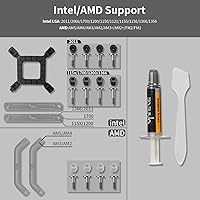
  • Broad socket support covers both current-gen AM5 and LGA 1700 as well as numerous legacy platforms.
  • Non-disassembly fan installation makes the mounting process straightforward, even for first-time builders.
  • The clearance design accommodates most tall RAM heatspreaders without requiring memory slot compromises.
  • At under a kilogram, the cooler is substantial enough to feel quality-built without straining motherboard mounts.
  • Buyers consistently report that out-of-box installation goes smoothly with the included hardware and instructions.
  • The value proposition is hard to argue with — dual-tower performance at a price most single-tower coolers charge.

Cons

  • Sustained all-core workloads on higher-TDP chips push this budget tower cooler noticeably closer to its thermal ceiling.
  • At 154mm tall, it physically cannot fit inside most ITX cases and some tighter mATX builds.
  • No ARGB or lighting option means it will look out of place in windowed builds with illuminated components.
  • A small number of buyers report fan bearing noise becoming more audible after extended months of use.
  • The plastic fan frames feel budget-grade and may not inspire confidence in long-term durability.
  • RAM clearance generally works, but owners with the tallest heatspreader kits may encounter a tighter fit than expected.
  • Thermal performance under prolonged heavy workloads is adequate but not competitive with mid-range premium alternatives.
  • The cooler ships without any thermal paste pre-applied, which is an extra step some buyers don't anticipate.

Ratings

The scores below for the upHere D6SEK Dual Tower CPU Air Cooler were produced by our AI rating engine after analyzing thousands of verified global buyer reviews, with spam, bot activity, and incentivized feedback actively filtered out. The results reflect a balanced picture — where this budget tower cooler genuinely over-delivers and where real-world buyers ran into friction. Both strengths and pain points are represented transparently so you can make a confident, informed decision.

Thermal Performance
72%
28%
Under typical gaming and productivity workloads on mid-range Ryzen and Intel chips, buyers consistently report temperatures that sit comfortably below throttling thresholds. The six direct-contact heat pipes make a noticeable difference compared to stock coolers, and users switching from single-tower alternatives often see meaningful idle and load temperature drops.
Sustained all-core workloads on higher-TDP processors expose the cooler's ceiling fairly quickly, with multiple buyers noting temperatures climbing more than expected during prolonged rendering or stress testing. It is not a cooler you want paired with a chip regularly pulling north of 120W.
Noise Level
81%
19%
At mid-range fan speeds during everyday use, the dual-tower cooler is genuinely quiet — most buyers mention they cannot hear it over typical room ambiance. PWM control keeps the fans from spinning up unnecessarily, which means a silent idle and a barely perceptible hum during light gaming.
A subset of buyers report that the fan bearings develop a faint high-pitched whine after several months of continuous use, suggesting unit-to-unit bearing consistency is not perfectly uniform. At maximum 1600 RPM the noise is still within spec, but it is noticeable in a quiet room.
Value for Money
91%
Buyers repeatedly call out the price-to-performance ratio as the single strongest argument for this dual-tower cooler, especially when comparing it against single-tower options at the same price. Getting six heat pipes and two PWM fans for what most competitors charge for a basic tower cooler is genuinely hard to argue with.
A small number of buyers who compared it directly to slightly pricier alternatives like the Thermalright Assassin X120 SE felt the thermal gap was noticeable enough to question whether saving a few dollars was worth it. The value case weakens if your CPU regularly runs demanding workloads.
Installation Ease
86%
The non-disassembly fan clip system and inclusive mounting hardware for both Intel and AMD sockets make this one of the easier dual-tower coolers to install, especially for first-time builders. The fact that you do not need to remove the motherboard is a genuine time-saver and reduces the risk of accidental damage during setup.
A handful of buyers found the backplate alignment fiddly on LGA 1700 boards specifically, requiring a second attempt to get the contact pressure even. Instructions are functional but lack detail for less experienced builders who might benefit from clearer torque guidance.
RAM Compatibility
74%
26%
The majority of buyers confirm that standard and moderately tall DDR4 and DDR5 heatspreaders fit without any interference, which is a legitimate concern with dual-tower designs. Users with G.Skill Ripjaws and similar mid-profile kits report zero clearance issues across a wide range of motherboards.
Owners running the tallest heatspreader kits — particularly some Corsair Dominator and G.Skill Trident Neo configurations — describe it as a tighter fit than the marketing suggests, with a few cases of the fan bracket grazing the top of the RAM. It works, but barely, on certain board and memory combinations.
Build Quality
69%
31%
The aluminum fin stack and copper heat pipes feel solid and well-assembled, and there is no flex or rattle coming from the heatsink body itself. For a budget-tier product, the overall structural integrity is better than some buyers expected when unboxing it.
The plastic fan frames are the weakest element — they feel noticeably cost-cut compared to the metal components they are clipped onto, and some buyers worry about long-term brittleness. The clip retention system, while functional, does not inspire the same confidence as screw-mounted fan designs.
Socket Compatibility
88%
The breadth of supported sockets is a genuine advantage, covering both current AM5 and LGA 1700 platforms alongside legacy options stretching back to AM2 and LGA 2011. Buyers repurposing older systems or planning future platform upgrades find this particularly useful.
While the compatibility list is long, a few buyers on niche HEDT platforms like X79 and X99 report that the mounting hardware requires more effort to align correctly. Documentation for legacy socket installations is thinner than for current-gen platforms.
Fan Airflow
77%
23%
At 68.2 CFM the fans move a meaningful volume of air through the fin array, and users report that case airflow benefits from the exhaust pushing warm air toward rear or top case fans. The balance between CFM and static pressure works well for the fin density of this cooler.
The airflow rating is respectable but not class-leading, and buyers comparing it directly to higher-static-pressure alternatives notice a difference when fins are slightly obstructed by dense RAM or tight case routing. The fans are optimized for quiet operation, which means raw airflow is not their strongest attribute.
Aesthetic Design
51%
49%
The clean, understated look of the aluminum fin stack suits builders who prefer a purely functional appearance without lighting distractions. Black fan frames give it a slightly more intentional look than all-white budget coolers.
There is no ARGB lighting whatsoever, which is a real limitation for builders with windowed side panels and illuminated components where visual consistency matters. The cooler looks plainly utilitarian next to RGB-equipped alternatives at a comparable price, and upHere offers no lighting upgrade path for this model.
Long-Term Reliability
67%
33%
Buyers who have run the upHere air cooler for over a year without incident describe it as performing consistently without degradation in cooling capacity. The aluminum fins show no signs of corrosion or fin damage under normal desktop conditions.
Fan bearing longevity is the most frequently raised long-term concern, with a pattern of buyers noting increased noise after six to twelve months of sustained use. It is not a universal failure, but it appears often enough to suggest the bearings are not rated for the same lifespan as premium cooler fans.
Overclocking Headroom
44%
56%
For mild overclocks on chips that respond to modest voltage and frequency adjustments — like a Ryzen 5 7600 with a small all-core boost — the cooler maintains acceptable temperatures with some thermal margin remaining. Casual overclockers pushing conservative profiles will find it workable.
Anyone planning to push a chip to its voltage and power limits will quickly find this budget tower cooler throttling or sitting at uncomfortable temperatures under sustained load. It simply lacks the heatsink mass and fin surface area needed to sustain heavy overclocking over extended sessions.
Packaging & Unboxing
79%
21%
Buyers generally find the packaging adequate and the contents well-organized, with mounting hardware sorted by platform and the fans pre-attached for easier initial inspection. Arrival damage is rarely reported, suggesting the box provides reasonable protection in transit.
The included documentation is sparse, and a few buyers note that identifying the correct hardware for their specific socket required cross-referencing online rather than relying on the printed guide. A clearer platform-specific installation sheet would meaningfully improve the experience for newer builders.
Weight & Pressure Balance
73%
27%
At 940g the cooler is heavy enough to maintain good contact pressure across the CPU lid without requiring excessive mounting force, and buyers on standard ATX boards report no motherboard flex issues during installation. The weight distribution between the two towers feels even.
A small number of buyers using thinner mATX boards mention mild concern about long-term mounting stress given the cooler weight, particularly in systems that are transported or moved regularly. This is not a widespread failure point, but it is worth considering for a LAN party or portable build.

Suitable for:

The upHere D6SEK Dual Tower CPU Air Cooler is a genuinely practical pick for builders who want a meaningful step up from a stock cooler without committing to a premium price. It fits best in mid-tower cases where there's enough vertical clearance for its 154mm height, and it covers an impressively wide range of sockets — making it equally useful for a fresh AM5 Ryzen 7 build or an older LGA 1700 system that needs quieter, more capable cooling. Gamers running titles at moderate CPU loads and home office users who prioritize low fan noise during long work sessions will find this dual-tower cooler hits a comfortable balance between thermal performance and acoustic comfort. It's also a solid choice for anyone repurposing older hardware on legacy Intel or AMD platforms, since the socket compatibility list stretches back several generations.

Not suitable for:

The upHere D6SEK Dual Tower CPU Air Cooler has clear boundaries, and pushing past them leads to disappointment. Builders planning to run high-TDP processors — think flagship Ryzen 9 or Core i9 chips under sustained all-core loads — will find the cooling capacity strained; this cooler isn't engineered for chips regularly exceeding 125W under real workloads. Serious overclockers chasing maximum performance headroom should look at purpose-built alternatives with beefier heatsink mass and higher-static-pressure fans. Compact build enthusiasts working with ITX cases or shallow mATX enclosures will also likely run into clearance issues given the 154mm height. Finally, buyers who want ARGB lighting to match an illuminated build aesthetic won't find that here — this budget tower cooler ships with no lighting whatsoever.

Specifications

  • Cooler Height: The cooler stands 154mm tall, which requires a mid-tower or full-tower case with sufficient CPU cooler clearance.
  • Dimensions: Overall dimensions measure 125mm wide by 125mm deep by 154mm tall, giving it a compact dual-tower footprint.
  • Net Weight: The cooler weighs 940g, which is substantial enough for solid contact pressure without being excessive for standard motherboard mounts.
  • Heat Pipes: Six 6mm direct-contact copper heat pipes transfer heat directly from the CPU integrated heat spreader to the aluminum fin array.
  • Fan Size: Two 120mm PWM fans are included, both connecting via 4-pin CPU fan headers for speed control.
  • Fan Speed Range: The fans operate between 600 and 1600 RPM with a tolerance of plus or minus 10%, allowing the system to run near-silently under light loads.
  • Noise Level: At maximum fan speed the cooler produces no more than 25 dB(A), keeping acoustic output low even under moderate thermal demand.
  • Airflow: Each fan moves up to 68.2 CFM of air through the fin stack, providing sufficient throughput for mainstream CPU cooling needs.
  • Static Pressure: The fans generate 1.55mm H2O of static pressure, adequate for pushing air through the densely packed aluminum fins.
  • Power Draw: Total system power consumption is rated at 1.68W at 12V DC, making it one of the least power-hungry components in any build.
  • Connector Type: A standard 4-pin PWM connector is used, compatible with virtually all modern desktop motherboards regardless of brand.
  • Fin Material: The heatsink fins are constructed from aluminum, chosen for its balance of thermal conductivity, weight, and cost-effectiveness.
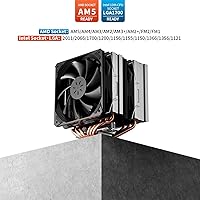
  • Intel Compatibility: Supported Intel sockets include LGA 2011, 2066, 1700, 1200, 1366, 1156, 1155, 1150, and 1121, covering multiple generations of mainstream and HEDT platforms.
  • AMD Compatibility: Supported AMD sockets include AM5, AM4, AM3, AM3+, AM2, AM2+, and FM2, spanning nearly a decade of AMD consumer platforms.
  • RAM Clearance: The cooler is designed with enough lateral clearance to avoid obstructing standard and most tall-heatspreader DDR4 and DDR5 memory modules.
  • Lighting: No ARGB or LED lighting is included; the cooler has a purely functional appearance with no illumination features.
  • Fan Installation: Fans are mounted using a tool-free clip system that does not require motherboard removal or significant disassembly during installation.
  • Package Weight: The full retail package including mounting hardware weighs approximately 2.4 lbs, reflecting the included bracket and accessory kit.

Related Reviews
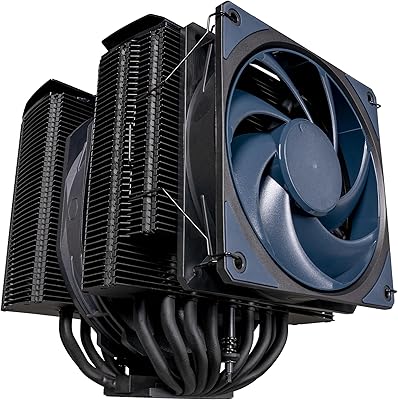
Cooler Master MasterAir MA824 Stealth CPU Cooler
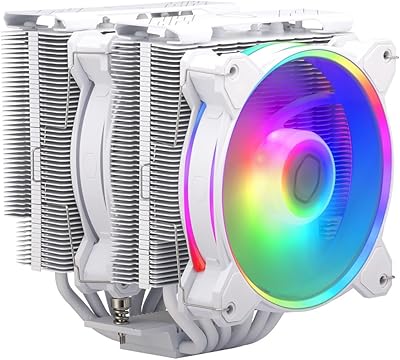
81%
88%
Thermal Performance
91%
Noise Level
93%
RAM Clearance
72%
Installation Experience
89%
Build Quality & Materials
More
Cooler Master Hyper 622 Halo Dual Tower CPU Cooler
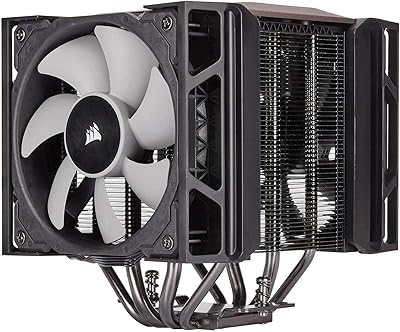
82%
83%
Thermal Performance
88%
Noise Level
89%
Ease of Installation
67%
RAM Clearance
86%
Build Quality
More
Corsair A115 High-Performance Tower CPU Air Cooler
87%
94%
Cooling Performance
88%
Ease of Installation
80%
Noise Level
92%
Compatibility with CPUs
90%
Build Quality
More
Noctua NH-D12L Low-Height CPU Cooler
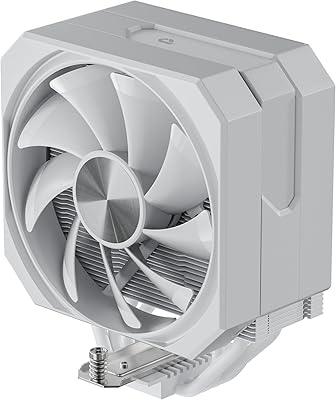
90%
83%
Thermal Performance
93%
Noise Level
96%
Case Compatibility
94%
RAM Clearance
91%
Installation Experience
More
upHere CPU Air Cooler with 120mm Fan and 4 Heat Pipes
85%
85%
Cooling Performance
92%
Noise Level
89%
Ease of Installation
88%
Build Quality
90%
Compatibility
More
Scythe Mugen 6 Dual Fan CPU Cooler
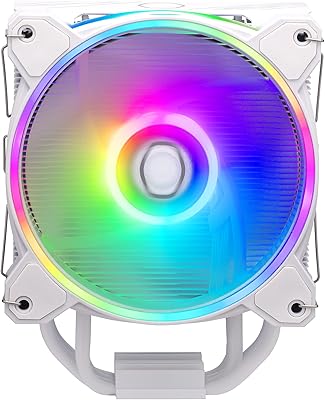
83%
88%
Thermal Performance
91%
Noise Level
86%
Build Quality
93%
Installation Experience
74%
RAM Compatibility
More
Cooler Master Hyper 212 Halo CPU Air Cooler
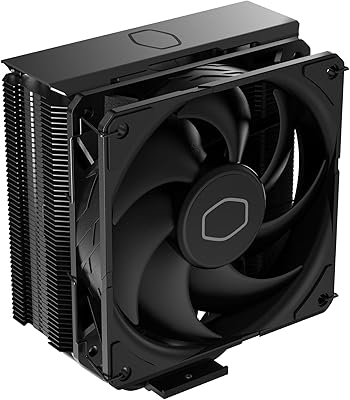
84%
88%
Cooling Performance
91%
Noise Level
85%
Ease of Installation
89%
Build Quality
80%
RGB Aesthetics
More
Cooler Master Hyper 212 Black CPU Cooler
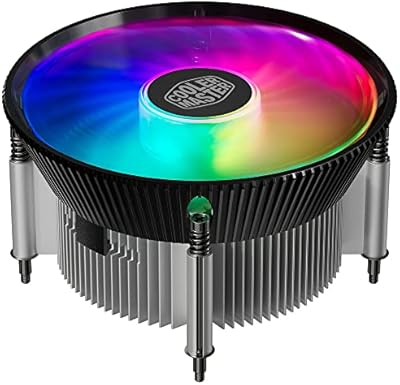
79%
83%
Thermal Performance
79%
Noise Level
93%
Value for Money
76%
Installation Experience
81%
Build Quality
More
Cooler Master i70C Low-Profile CPU Cooler
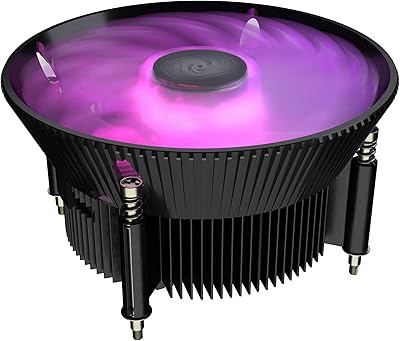
78%
72%
Thermal Performance
88%
Noise Level
93%
Form Factor & Fit
86%
Installation Ease
78%
ARGB Lighting
More
Cooler Master i71C RGB Low-Profile CPU Cooler
79%
67%
Thermal Performance
83%
Noise Level
74%
Build Quality
86%
Installation Ease
81%
RGB Lighting Quality
More

FAQ

It should fit in most standard mid-tower cases, but you need to confirm your case lists a CPU cooler clearance of at least 154mm. Compact mid-towers and slim cases often cap out around 140mm to 150mm, so it is worth double-checking your case specs before ordering.

Thermal paste is not pre-applied and is not included in the package, so you will need to have some on hand before installation. Any quality thermal compound from a reputable brand works fine — apply a small amount to the CPU lid before seating the cooler.

Yes, for a chip like the Ryzen 7 7700X running at stock settings or with modest power limits applied, this dual-tower cooler handles the load well under typical gaming and productivity workloads. Where it starts to struggle is sustained all-core rendering or workloads that push the chip to its full 105W TDP for extended periods.

Absolutely — both AM4 and AM5 are supported, so you can install it now on an older Ryzen build and transfer it to a new AM5 system down the road without needing a different cooler or bracket kit.

At lower fan speeds it is nearly inaudible in a closed case. Even at peak 1600 RPM the rated noise level is under 25 dB(A), which in practice is quiet enough that most people won't notice it over normal ambient room noise.

In most cases yes, but it depends on your specific motherboard layout and how close the first memory slot sits to the CPU socket. The cooler is designed with RAM clearance in mind, but a small number of buyers with the very tallest heatspreader kits report it is a tight fit on certain boards. Measuring your first slot clearance is a good idea if you have particularly tall memory.

Yes, LGA 1700 is fully supported, which covers both Alder Lake and Raptor Lake chips. The mounting hardware in the package accommodates the LGA 1700 socket directly.

Most buyers describe installation as straightforward, particularly because the fans clip on without tools and the backplate design does not require removing the motherboard. Mounting hardware is included for all supported sockets, and the process is comparable to other dual-tower coolers in this category.

Light overclocking on mid-range chips is generally fine, but this budget tower cooler is not the right tool for aggressive overclocking where you are pushing a high-TDP chip significantly beyond its rated power limits. If overclocking headroom is a priority, a heavier cooler with more fin surface area and higher airflow would serve you better.

The fans use a standard 120mm PWM form factor, so replacing one with any compatible 120mm PWM fan is possible. The clips are reusable, and the spacing accommodates most standard 120mm fans, giving you some flexibility if you want to swap in a preferred brand or a higher-static-pressure option later on.