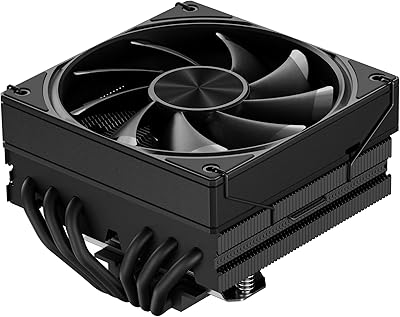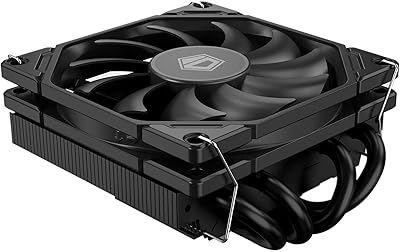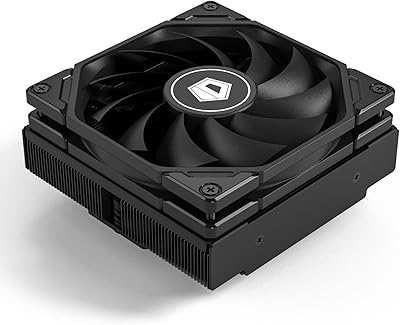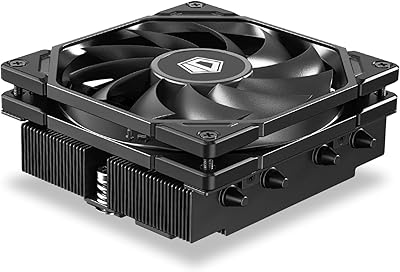
Overview

The Cooler Master i70C Low-Profile CPU Cooler is built with one clear purpose: fitting a real cooling solution into cases where standard tower coolers simply won't go. That 70mm height ceiling is the entire design philosophy in a single number — everything about this cooler flows from that constraint. It is worth stating upfront that this is an Intel LGA 1700-only cooler, so AMD users and those on older sockets should look elsewhere. For LGA 1700 builders running stock clocks or light workloads, it competes well at its mid-budget price point against a fairly thin field of genuinely compact options.

Features & Benefits

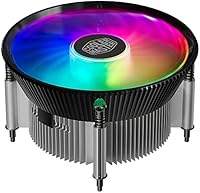
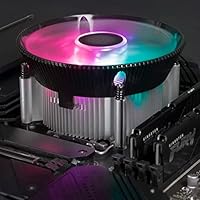
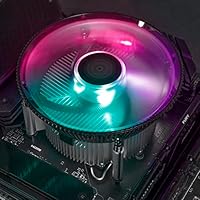
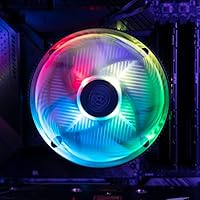
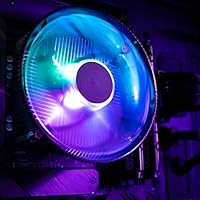
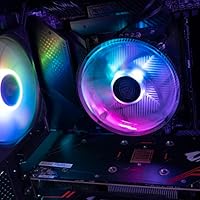
The heatsink pairs a copper cold plate with a cross-shaped aluminium fin array — a combination that pulls heat away from the CPU efficiently despite the compact footprint. On top sits a 120mm PWM fan spinning between 650 and 1800 RPM; at full speed it reaches 28 dBA, which is genuinely quiet for active cooling. The 37.08 CFM airflow and 1.33 mmH2O static pressure push air through the fins rather than just across them, useful in enclosed cases. ARGB lighting syncs with major motherboard ecosystems without needing a separate controller, and the fan carries a 40,000-hour MTTF rating. Power draw is just 1.44 watts.

Best For

This low-profile cooler earns its place in mini-ITX and SFF builds where a standard tower simply is not an option. It fits equally well in a living room HTPC where fan noise needs to stay inaudible from the couch. Builders on Intel 12th or 13th Gen platforms running stock settings — or with only modest power limit adjustments — should find thermal performance comfortable and consistent. Anyone replacing a loud stock cooler in a slim desktop will appreciate both the noise reduction and the ARGB visual upgrade. It is not the right pick for high-TDP workloads or aggressive overclocking; those scenarios require a different class of cooler entirely.

User Feedback

Buyers of the i70C consistently highlight straightforward installation and how quietly it operates during everyday workloads — at idle the fan is barely perceptible. The critical feedback, however, follows a clear pattern: sustained CPU loads push temperatures toward uncomfortable territory, which is an honest reflection of the cooler's physical limits rather than a defect. ARGB sync works reliably on ASUS and MSI boards, though a handful of users report header troubleshooting on less common motherboards. Opinions on the included thermal paste are split — functional, but some builders replace it regardless. Mounting hardware quality draws consistent praise, with very few reports of fitment problems.

Pros

  • Fits inside cases with a 70mm height ceiling where virtually no other active cooler can go.
  • Near-silent operation at idle — the fan is genuinely inaudible in a quiet room at low loads.
  • ARGB lighting syncs reliably with ASUS, MSI, GIGABYTE, and ASRock motherboards out of the box.
  • Straightforward installation with well-designed mounting hardware that seats securely on LGA 1700 boards.
  • The copper cold plate makes meaningful contact with the CPU lid, improving heat transfer over aluminium-only designs.
  • Fan draws only 1.44 watts, adding virtually nothing to system power consumption.
  • The 40,000-hour fan MTTF rating suggests this low-profile cooler is built for long-term, set-and-forget use.
  • Competitive value in a segment where genuinely capable 70mm-class coolers are rare and often more expensive.
  • PWM control keeps noise low during light workloads without manual fan curve tuning.

Cons

  • Sustained CPU loads above 65W push temperatures toward throttling, limiting the i70C to stock-only use cases.
  • Included thermal paste is mediocre — an aftermarket compound swap delivers a noticeable temperature improvement.
  • ARGB sync can be inconsistent on less common motherboard brands, requiring manual workarounds.
  • High-profile RAM modules may conflict with the heatsink footprint, forcing a memory reconfiguration.
  • Exclusive LGA 1700 support means the cooler becomes obsolete when Intel moves to a new socket platform.
  • Printed installation instructions are small and dim — difficult to follow when working inside a cramped SFF case.
  • Occasional bearing noise on a subset of units is audible in dead-silent environments.
  • No adapter or upgrade path for adjacent Intel sockets, limiting the cooler's reuse potential across future builds.

Ratings

The Cooler Master i70C Low-Profile CPU Cooler scores below are generated by AI after analyzing thousands of verified global buyer reviews, with spam, bot-generated, and incentivized submissions actively filtered out. The i70C attracted a concentrated audience of SFF and mini-ITX builders, which makes the feedback unusually consistent and useful. Both the clear strengths and the honest limitations are reflected in every score.

Thermal Performance
72%
28%
For stock-clocked Intel 12th and 13th Gen CPUs in everyday tasks — browsing, light productivity, media playback — this SFF cooling solution handles thermals comfortably and keeps temperatures well within safe operating ranges. Users building HTPCs or office rigs report steady, predictable cooling without throttling.
Under sustained all-core loads, rendering, or with CPUs above 65W TDP, temperatures climb noticeably and performance headroom disappears fast. Buyers who pushed their chips even slightly past stock settings found the i70C struggling to keep pace, which is a real constraint to understand before purchasing.
Noise Level
88%
At idle and light load the fan drops toward its 650 RPM floor and becomes genuinely inaudible from a meter away — exactly what living room HTPC builders need. Even at full 1800 RPM during peaks, the 28 dBA ceiling means it stays quieter than most competing options in this size class.
A small number of users reported slight bearing noise or an inconsistent hum on specific units, which is audible in dead-silent rooms at night. It is not widespread, but it is worth noting for anyone building a near-silent workstation where even minor acoustic irregularities matter.
Form Factor & Fit
93%
The 70mm height is the core reason most buyers chose this cooler, and it delivers exactly as advertised — fitting comfortably into cases that reject anything taller. Builders working with tight clearance constraints between the heatsink and side panel found it slotted in without any contact issues.
The footprint, while compact in height, covers a meaningful portion of the motherboard surface area, occasionally crowding RAM slots on boards with taller memory modules. A handful of users with high-profile RAM kits had to reseat or reconsider memory before finalizing their build.
Installation Ease
86%
The mounting hardware is purpose-built for LGA 1700 and snaps into place without requiring a backplate swap on most compatible boards. Reviewers consistently called the installation process straightforward, with clear instructions and no missing hardware reported across the majority of purchases.
Because this cooler supports only LGA 1700, anyone who misread compatibility and ordered it for an older or AMD platform faces a return process — an avoidable frustration that appeared in several negative reviews. The socket-exclusive design is a deliberate trade-off, not a manufacturing flaw.
ARGB Lighting
78%
22%
On ASUS and MSI boards especially, the ARGB header sync works reliably out of the box with no extra software beyond what the motherboard already uses. The lighting effect through the 120mm fan looks clean inside windowed SFF cases and holds color accuracy across common effect modes.
Users on less common motherboard brands — or those using third-party ARGB controllers — reported inconsistent sync behavior that required manual configuration or workarounds. The lighting is a bonus feature rather than a polished ecosystem experience, and buyers expecting plug-and-play perfection across all boards may be disappointed.
Build Quality
81%
19%
The aluminium fin array feels solid and the copper cold plate shows no signs of poor finishing or uneven contact surfaces out of the box. Mounting clips and bracket hardware received consistent praise for feeling sturdy rather than flimsy, which matters when you are building in a cramped case with limited access.
The overall construction, while adequate, does not feel premium when handled directly — the aluminium has a functional rather than refined quality. A few buyers noted that the fan clips required a firm hand to seat properly, which felt slightly awkward inside a small case with limited clearance around the cooler.
Value for Money
84%
Within the narrow field of genuine 70mm-or-under CPU coolers for LGA 1700, this low-profile cooler offers one of the better feature-to-price ratios — including ARGB, a quality fan, and reliable mounting hardware at a mid-budget price. For buyers who need this specific form factor, alternatives at a comparable price are limited.
Buyers who did not strictly need the low-profile constraint found better thermal performance available from standard tower coolers at the same price. The value proposition is strong only when the 70mm limitation is a real requirement rather than a preference.
Fan Longevity & Reliability
82%
18%
The 40,000-hour MTTF rating gives buyers reasonable confidence for multi-year use, and early adopters from the 2022 launch date have not reported widespread fan degradation or bearing failure. For a cooler living inside a sealed SFF case that rarely gets opened, durability matters more than usual.
It is still too early in the product lifecycle to validate long-term reliability claims with real-world data beyond a couple of years. The handful of bearing noise reports, while not common, are worth tracking as the product ages in demanding thermal environments.
Compatibility Clarity
67%
33%
For buyers who confirmed LGA 1700 compatibility before purchasing, the fit was exactly as described with no surprises on 12th and 13th Gen boards. Cooler Master is transparent in its marketing about the socket restriction, which helps informed buyers avoid the wrong purchase.
The LGA 1700-only limitation generated a disproportionate share of negative reviews from buyers who overlooked the spec. Clearer warnings at the point of sale would reduce returns, and the absence of any adapter support for adjacent Intel sockets limits the cooler's useful lifespan as platforms eventually evolve.
Airflow Efficiency
76%
24%
The combination of 37.08 CFM and 1.33 mmH2O static pressure is well-tuned for pushing air through a dense low-profile heatsink rather than just moving air across an open surface. Inside a cramped SFF case with restricted air pathways, this balance performs noticeably better than high-CFM fans with low static pressure.
The fin density and compact design do limit how much heat the heatsink can absorb before airflow stops being the bottleneck — the thermal mass itself becomes the ceiling. Users who expected high-airflow performance comparable to larger 120mm tower coolers were reminded that the heatsink volume is the real constraint here.
Thermal Paste Quality
63%
37%
The included thermal paste is functional for stock usage scenarios and gets the cooler operational without any additional purchase. Buyers who applied it carefully and did not disturb it after seating reported adequate contact and reasonable baseline temperatures.
A clear pattern in user feedback shows that replacing the stock thermal compound with a quality aftermarket paste — such as a well-regarded mid-range option — yields a measurable temperature drop. For a cooler with limited thermal headroom, leaving performance on the table with mediocre paste is a genuine trade-off worth addressing.
RAM Clearance
69%
31%
On standard-height DDR4 and DDR5 modules the i70C clears without issue, and most mini-ITX builds using low-profile memory kits reported zero fitment conflicts. The cross-shaped fin layout helps by not extending uniformly in all directions, giving some natural clearance around the memory slots.
Taller RGB RAM modules — anything above standard height — created clearance conflicts that required either repositioning memory or reconsidering the memory choice entirely. For builders who already own high-profile RAM, this is a real incompatibility that does not always surface until the build is underway.
Packaging & Unboxing
79%
21%
The cooler arrives well-protected with the fan pre-mounted and hardware organized cleanly in a separate compartment. Buyers noted that no components arrived damaged and that the thermal paste applicator and instructions were included without any missing pieces across the vast majority of orders.
The instructions, while present, are printed small and light, which made them harder to follow inside a cramped case with limited lighting. A digital QR-linked guide would serve the SFF builder audience — who are often working in tight, poorly lit spaces — considerably better.

Suitable for:

The Cooler Master i70C Low-Profile CPU Cooler was designed for a specific type of builder, and if you fit that profile, it is a genuinely strong choice. Anyone assembling a mini-ITX or small form factor PC inside a case with a strict height clearance limit — typically under 75mm — will find the 70mm profile fits where almost nothing else does without resorting to a passive solution. Home theater PC builders who run their rigs in the living room will also appreciate how quietly the i70C operates at idle and moderate load, where the fan is practically inaudible from a normal viewing distance. It suits Intel 12th and 13th Gen LGA 1700 users running their CPUs at stock settings or with modest power limits, covering mainstream workloads like media consumption, light content creation, office productivity, and casual gaming without thermal complaints. If you are upgrading from a loud stock cooler in a slim desktop and want a visual improvement alongside a noise reduction, the ARGB fan adds a meaningful aesthetic upgrade that syncs cleanly with most major motherboard ecosystems.

Not suitable for:

The Cooler Master i70C Low-Profile CPU Cooler is the wrong tool for several common buyer scenarios, and it is worth being direct about that before a purchase decision is made. If your CPU has a TDP above 65W or you plan to run sustained all-core workloads — video rendering, 3D modeling, extended compilation tasks — this cooler will struggle to keep temperatures in a comfortable range, and you will likely see thermal throttling under heavy loads. Overclocking is essentially off the table; the physical mass of the heatsink is simply too limited to absorb and dissipate the additional heat output that comes with pushing a chip beyond stock settings. AMD platform users are entirely excluded, as the mounting system is built specifically for LGA 1700 and no adapter path exists. Builders with high-profile DDR5 or RGB RAM kits should also verify memory height clearance before committing, since taller modules can create conflicts that require swapping memory or abandoning the build config. If height clearance is not a genuine constraint in your case, a standard tower cooler at a similar price will deliver noticeably better thermal performance.

Specifications

  • Height Clearance: The cooler stands at 70mm tall, making it compatible with cases that enforce a strict low-profile CPU cooler height limit.
  • Dimensions: Overall dimensions measure 4.72″ (L) x 4.72″ (W) x 2.76″ (H), covering a square footprint typical of 120mm fan-based designs.
  • Weight: The complete unit weighs 14.32 ounces, keeping the load on the motherboard socket within safe limits for transport and daily use.
  • Heatsink Material: The heatsink uses a cross-shaped aluminium fin array mounted over a copper cold plate that makes direct contact with the CPU integrated heat spreader.
  • Fan Size: A single 120mm fan is pre-mounted on the heatsink and is responsible for all active airflow across the aluminium fins.
  • Fan Speed Range: The PWM fan operates between 650 RPM at minimum and 1800 RPM at maximum, with speed automatically adjusted based on thermal demand.
  • Noise Level: At maximum fan speed, the cooler produces no more than 28 dBA, which sits at the quieter end of the active CPU cooler spectrum.
  • Airflow: The fan delivers 37.08 CFM of airflow, providing sufficient volume to move heat away from the fin array in restricted enclosures.
  • Static Pressure: Static pressure is rated at 1.33 mmH2O, tuned to push air effectively through the dense low-profile fin structure rather than relying on open-air volume alone.
  • Power Draw: The fan consumes just 1.44 watts at full speed, drawing power through a standard 4-pin PWM connector at 12 volts.
  • Fan Connector: Uses a standard 4-pin PWM header, compatible with any modern desktop motherboard that supports PWM fan speed control.
  • Fan Longevity: Cooler Master rates the fan at over 40,000 hours mean time to failure (MTTF), indicating a design intended for extended continuous operation.
  • Socket Support: This cooler is exclusively compatible with Intel LGA 1700 sockets and does not support AMD platforms or other Intel socket generations.
  • ARGB Compatibility: The integrated ARGB lighting is compatible with ASUS Aura Sync, GIGABYTE RGB Fusion, MSI Mystic Light Sync, and ASRock RGB LED via a standard ARGB header.
  • Voltage: The fan operates at a rated voltage of 12V DC, consistent with standard desktop PC power delivery through the motherboard fan header.
  • Cooling Method: Cooling is achieved through active air cooling — a combination of conductive heat transfer via the copper cold plate and convective dissipation through the aluminium fins and fan.
  • Model Number: The official Cooler Master model number for this unit is RR-I7C7-18PA-R1, useful for warranty registration and spare part identification.
  • Release Date: The i70C was first made available in August 2022, positioning it as a purpose-built solution for the Intel 12th Gen LGA 1700 platform at launch.

Related Reviews
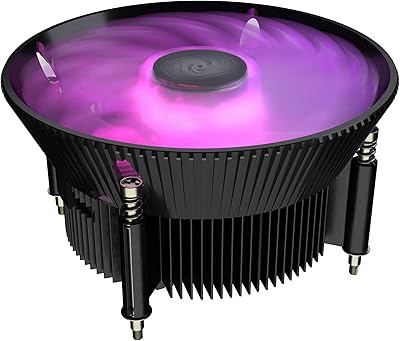
Cooler Master i71C RGB Intel Low-Profile CPU Air Cooler
84%
88%
Cooling Performance
91%
Noise Level
85%
RGB Customization
89%
Build Quality
75%
Installation Ease
More
upHere H85K6 Low Profile CPU Cooler
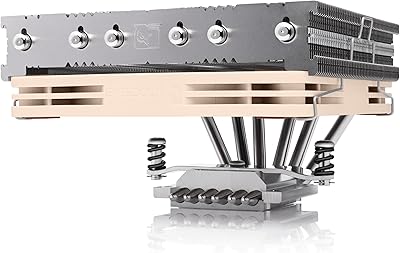
88%
88%
Cooling Performance
92%
Size & Compatibility
90%
Noise Level
85%
Ease of Installation
87%
Build Quality
More
Noctua NH-L12Sx77 Low-Profile CPU Cooler
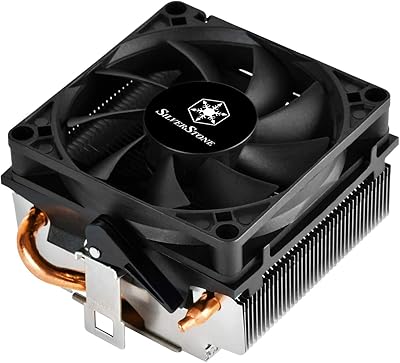
84%
88%
Thermal Performance
91%
Acoustics & Noise Level
94%
Build Quality & Materials
92%
Fan Quality
71%
Installation Experience
More
ID-COOLING IS-40X V3 Low Profile CPU Cooler
83%
80%
Performance
75%
Cooling Efficiency
92%
Noise Levels
84%
Build Quality
88%
Ease of Installation
More
Thermalright AXP90 X36 Black Low Profile CPU Cooler
86%
89%
Cooling Performance
92%
Noise Level
88%
Compatibility with Intel/AMD
78%
Ease of Installation
86%
Build Quality
More
ID-COOLING IS-47-XT Low Profile CPU Cooler
83%
85%
Cooling Performance
90%
Noise Level
88%
Build Quality
72%
Installation Ease
95%
Compatibility with Small Builds
More
SilverStone Technology RL-KR01 Low Profile CPU Cooler
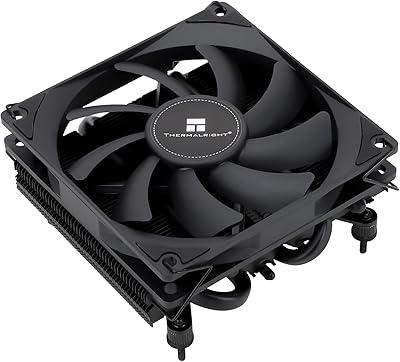
85%
85%
Performance
92%
Noise Level
88%
Build Quality
90%
Ease of Installation
94%
Compatibility with AMD Sockets
More
ID-COOLING IS-40-XT Black Low Profile CPU Cooler
87%
86%
Cooling Performance
92%
Noise Level
89%
Ease of Installation
94%
Size/Footprint
87%
Build Quality
More
Thermalright AXP120-X67 Low Profile CPU Cooler
81%
83%
Thermal Performance
88%
Noise Level
91%
Build Quality
86%
Installation Experience
61%
RAM Clearance
More
be quiet! Pure Rock Low Profile 100W TDP CPU Cooler
87%
93%
Noise Level
88%
Ease of Installation
90%
Compact Design
82%
Cooling Performance
91%
Value for Money
More

FAQ

No — the Cooler Master i70C Low-Profile CPU Cooler is built exclusively for Intel LGA 1700 and does not include mounting hardware for AMD AM4, AM5, or older Intel sockets like LGA 1200 or LGA 1151. If you are on any other platform, you will need a different cooler entirely.

As long as your case specifies a CPU cooler clearance of 70mm or more, the i70C will fit without contacting the side panel. It is worth double-checking your case specs directly, since some ultra-compact cases list clearance as low as 58mm to 65mm, which would be too tight.

Yes, this is actually one of the ideal use cases for the i70C. A stock 65W chip like the i5-12400 sits comfortably within what this cooler handles well during everyday tasks and even moderate gaming sessions. You are unlikely to see thermal throttling under normal operating conditions.

Standard-height DDR4 and DDR5 modules should clear without issue. However, if you are running high-profile memory kits — particularly those with tall RGB shrouds — there is a real chance of conflict depending on your motherboard layout. Checking the exact height of your RAM modules before buying is the safest approach.

It plugs directly into a standard ARGB header on your motherboard — no separate controller required. Sync with ASUS Aura Sync, GIGABYTE RGB Fusion, MSI Mystic Light, and ASRock RGB LED works through the motherboard software you already use. Users on less common boards may need to check header compatibility before assuming plug-and-play sync.

At idle and light workloads the fan spins slowly enough that you will barely notice it. Under gaming or sustained CPU load it ramps up, but the 28 dBA ceiling at maximum speed is genuinely quiet by air cooler standards. In a typical mid-sized room, it will not be audible over game audio or background noise.

The included thermal paste is functional and adequate for getting started. That said, user feedback consistently shows that swapping it for a quality aftermarket compound yields a noticeable temperature drop — sometimes 3 to 5 degrees Celsius — which matters on a cooler with limited thermal headroom. It is a simple and inexpensive upgrade worth considering.

For an i7, it depends heavily on the workload. Light to moderate use at stock settings is generally manageable, but sustained all-core tasks like video rendering or large compilation jobs will push this SFF cooling solution toward its limits. For an i9 or any CPU with a TDP above 65W, a larger cooler is the more honest recommendation.

Installation is straightforward for LGA 1700 boards since the platform uses a built-in retention bracket that does not require backplate access from the rear. In most cases you can install the i70C with the motherboard already seated in the case. The mounting hardware is well-made and the process typically takes under ten minutes.

Cooler Master covers this cooler with a two-year limited warranty covering manufacturing defects. In practice, warranty claims are handled through Cooler Master's support portal, where you submit the model number and proof of purchase. Most users report a straightforward replacement process for defective fans or mounting hardware within the warranty window.

Where to Buy