Overview

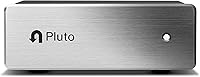
The U-Turn Audio Pluto 2 Phono Preamp is a dedicated moving magnet phono stage built by one of the more respected names in the American turntable revival. A phono preamp does something most people overlook: it boosts the tiny signal from a cartridge and applies RIAA equalization so records actually sound the way they were mastered. Without one — or with a poor one — you lose detail and pick up noise. This U-Turn stage sits in a practical mid-range sweet spot: more capable than the chip built into most budget decks, but not chasing audiophile-tier pricing. Assembled in Woburn, MA and housed in a compact aluminum enclosure, it is a focused device that does one thing well and does not apologize for the rest.
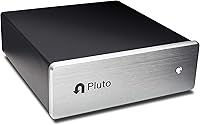
Features & Benefits

The active subsonic filter is one of the more underrated inclusions here. Rumble from a record groove — the kind sitting well below what you can consciously hear — can still cause woofers to pump needlessly and muddy the bass. Cutting that out means your speakers work less and your low end stays defined. Distortion measures below 0.005%, which in practice just means the background stays quiet; no hiss creeps in between tracks. RIAA accuracy within ±0.3 dB across the full audible range means tonal balance holds up — strings do not sound brighter than they should, kick drums do not bloat. WIMA film capacitors and precision resistors underpin that 90 dB signal-to-noise ratio, and standard 47 kΩ loading works with virtually any MM cartridge you would pair with it.

Best For

This phono preamp makes the most sense for anyone whose turntable came with a built-in stage they have started to outgrow. If you are running a mid-tier turntable into powered speakers or a receiver without a dedicated phono input, adding an external stage is the most direct way to hear what your cartridge is actually capable of. The Pluto 2 is particularly well suited for smaller listening rooms where desk space is limited — at under 1.5 inches tall, it tucks behind a deck without trouble. It is also a solid pick for anyone who does not want to manage loading settings or swap gain modes; you plug it in and leave it alone. Those running moving coil cartridges, though, will need to look elsewhere.

User Feedback

Buyers consistently highlight two things: noticeably quieter playback compared to their deck's onboard stage, and how little effort setup required. Plug in the RCA cables, connect power, done. The aluminum chassis also draws positive comments — it feels more substantial than the price point might suggest. On the critical side, more experienced listeners point out that the fixed loading and single gain setting leave no room to tune the preamp to a specific cartridge's character, which is a real limitation if your listening evolves. A minority of buyers note that MM-only compatibility became a dealbreaker after they later upgraded to an MC cartridge. The 3-year warranty and U-Turn's reputation for responsive lifetime support, however, come up repeatedly as reasons people feel confident in the long-term purchase.

Pros

  • Background noise drops noticeably compared to most built-in deck preamps, even on warped records.
  • The active subsonic filter keeps woofers from pumping on warped pressings without any user intervention.
  • RIAA accuracy within ±0.3 dB means tonal balance stays faithful — nothing sounds artificially boosted or rolled off.
  • Setup is genuinely plug-and-play; most users are listening within five minutes of unboxing.
  • The aluminum enclosure feels more substantial than competing plastic-bodied units at a similar price.
  • Standard 47 kΩ loading suits the vast majority of moving magnet cartridges without adjustment.
  • A 3-year warranty with lifetime support from U-Turn Audio is rare at this price tier.
  • Compact enough to disappear behind a turntable in even the most space-constrained setup.
  • Distortion stays below 0.005%, which translates to clean, composed playback on complex recordings.
  • Assembled in the USA, with quality-control standards that show in the consistency of reported experiences.

Cons

  • No support for moving coil cartridges — upgrading your stylus could mean replacing this stage entirely.
  • Fixed gain and loading settings offer zero flexibility as your cartridge collection or preferences evolve.
  • The subsonic filter cannot be toggled off, which frustrates users who want full low-frequency extension.
  • The power supply wall wart adds cable clutter that the unit's tidy form factor otherwise avoids.
  • No MC compatibility is rarely flagged prominently at point of sale, catching some buyers off guard.
  • Users in RF-dense urban environments occasionally encounter hum that requires repositioning to resolve.
  • RCA connectors can feel slightly loose on initial insertion before properly seating.
  • No visual indicator confirms the unit is powered on, which can cause brief confusion during setup.
  • Advanced listeners pairing the Pluto 2 with high-resolution speakers may sense a resolution ceiling versus pricier discrete designs.
  • No published upgrade or trade-in path exists, so the unit is a full replacement rather than a modular step.

Ratings

The U-Turn Audio Pluto 2 Phono Preamp scores below are generated by AI after analyzing verified buyer reviews from global marketplaces, with spam, incentivized, and bot-flagged submissions actively filtered out. Ratings reflect the honest consensus of real vinyl listeners across a range of setups and experience levels. Both the genuine strengths and the recurring frustrations are represented transparently so you can make an informed decision.
Audio Clarity
88%
Most buyers upgrading from a built-in deck preamp report a clearly quieter background and a cleaner midrange — vocals and acoustic instruments in particular come through with noticeably less haze. The low distortion floor is something listeners can actually perceive rather than just read on a spec sheet.
A small number of users with revealing speaker systems felt the top-end detail, while clean, lacked the last bit of air they expected. It is not a criticism of outright noise, more a ceiling on resolution that becomes apparent only in very transparent rigs.
Signal-to-Noise Performance
91%
At a 90 dB signal-to-noise ratio, the Pluto 2 keeps hiss and hum well out of the picture during quiet passages. Buyers running sensitive powered speakers — the type that expose every flaw in the chain — frequently praise how inaudible the noise floor remains even at high volume.
A handful of users in environments with heavy RF interference reported occasional ground-related hum that required repositioning the unit or adding a separate ground wire. This is not unique to this preamp, but worth noting for anyone in a particularly noisy electrical environment.
RIAA Equalization Accuracy
86%
Tonal balance stays consistent and faithful across the frequency range, which means records sound the way they were intended — bass is not bloated, highs are not artificially boosted. Buyers who had previously used cheaper stages often note that instruments feel better placed and less colored after switching.
Without adjustable RIAA curve options, users playing very old or obscure pressings that require non-standard equalization have no recourse. This is admittedly a niche concern, but it does come up among collectors who spin 78s or pre-1954 material alongside modern releases.
Subsonic Filter Effectiveness
84%
The active subsonic filter does real work cutting out the low-frequency rumble that plagues records with slight warps. Users with ported speaker designs particularly appreciate that their woofers no longer pump visibly on warped pressings, keeping bass response tighter and more articulate.
A few listeners who prefer keeping the full low-frequency extension intact — particularly those using sealed subwoofers — wished the filter could be toggled off. The fixed implementation is the right call for most users, but it removes a variable that some experienced listeners actively want to control.
Build Quality
83%
The compact aluminum enclosure feels noticeably more solid than competing units at a similar price. Buyers frequently mention that it does not feel like a plastic afterthought — corners are clean, the finish is even, and it sits stably without sliding around on a shelf or equipment rack.
The unit is not particularly heavy, and a few users noted that the RCA connectors felt slightly loose on first insertion before seating properly. Nothing that caused functional issues in reported cases, but it does affect the tactile first impression for buyers who expect tighter tolerances.
Ease of Setup
94%
Virtually every buyer comments on how straightforward installation is — connect the RCA inputs from the turntable, run RCA outputs to the amplifier or powered speakers, plug in the power supply, and you are done. No dip switches, no gain jumpers, no manual to decode.
Because there is literally nothing to configure, users who later want to experiment with cartridge loading or gain adjustments will hit a hard wall. The simplicity is a real benefit for most, but it means the unit offers no growth path for those who eventually want to fine-tune their signal chain.
Cartridge Compatibility
72%
28%
Standard 47 kΩ input impedance and 100 pF capacitance cover the overwhelming majority of moving magnet cartridges on the market, from budget Audiotechnica entries up through mid-tier Ortofon and Nagaoka options. Most buyers will never encounter a compatibility issue.
MM-only support is the single most cited dealbreaker in critical reviews. Users who later upgraded their cartridge to a moving coil design found themselves needing to replace the preamp entirely, which some felt they should have been warned about more prominently at point of purchase.
Value for Money
81%
19%
Relative to what buyers were getting from onboard preamps, the improvement in perceived audio quality is considered well worth the cost by the majority of reviewers. The inclusion of a 3-year warranty and lifetime support from U-Turn further strengthens the value case over cheaper alternatives.
Some buyers who researched further after purchase found competitors offering adjustable loading and MC compatibility at a comparable price point. For a strictly fixed-function MM stage, a portion of the audience feels the price requires the brand trust factor to fully justify.
Compact Form Factor
89%
At under 1.5 inches tall and roughly the footprint of a paperback, this U-Turn stage disappears easily behind a turntable or onto a crowded shelf. Users in apartments and small listening rooms appreciate not having to dedicate shelf space to yet another component box.
The small footprint, while an asset in tight spaces, also means the power supply cable can feel disproportionately bulky relative to the unit itself. A couple of users noted the wall wart adds visual clutter that the unit itself avoids, which feels like a minor design inconsistency.
RF and Interference Shielding
79%
21%
The aluminum enclosure does a reasonable job blocking radio frequency interference in typical home environments. Most users living in standard residential settings report no interference-related artifacts even when the unit is placed close to other electronics or near a Wi-Fi router.
Users in particularly RF-dense environments — urban apartments with many overlapping wireless signals, or setups near a PC tower — occasionally reported faint buzz that improved only when the preamp was relocated further from interference sources. Shielding is competent but not exceptional.
Warranty and Support
92%
A 3-year warranty with lifetime product support is genuinely uncommon in this category and comes up repeatedly in positive reviews. Multiple buyers specifically mention contacting U-Turn support and receiving knowledgeable, responsive replies, which builds long-term confidence in the purchase.
Lifetime support is only as valuable as the company remains operational and accessible, which some pragmatic buyers noted as a caveat. There are also no documented repair or upgrade paths published, so what support looks like years down the line remains somewhat undefined.
Low Distortion Performance
87%
With THD+N below 0.005%, distortion is simply not a factor in everyday listening. Users who had previously tolerated subtle harshness from budget stages describe the Pluto 2 as noticeably cleaner during complex orchestral passages and dense rock recordings where congestion tends to expose weaknesses.
The distortion spec is excellent for the price tier, but experienced listeners pairing this stage with high-resolution systems can still distinguish its sonic signature from more expensive discrete designs. The gap is not dramatic, but it exists and becomes relevant as the rest of the system improves.
Adjustability and Flexibility
43%
57%
For the target user — someone who wants a clean, reliable stage that works without intervention — the absence of adjustments is genuinely a feature. There is nothing to misconfigure, nothing to accidentally knock out of position, and no learning curve involved.
The fixed gain, fixed loading, and MM-only design make this a dead end for anyone whose setup evolves. No gain trim, no capacitance adjustment, no MC support, and no bypass switch on the subsonic filter means advanced users will outgrow the unit rather than adapt it.
Crosstalk Isolation
85%
At -89 dB of channel separation, stereo imaging is clean and instruments stay well-defined in the soundstage. Listeners who pay attention to spatial presentation report that the left-right distinction is precise, with no bleed that would collapse the stereo field on well-recorded material.
This is a specification most casual listeners will never consciously notice or test. It is a genuine strength of the design, but it is also one of the harder attributes to evaluate in a real living room setting, which means it carries less weight in practical buying decisions than other factors.

Suitable for:

The U-Turn Audio Pluto 2 Phono Preamp is the right call for vinyl listeners who have hit the ceiling of their turntable's built-in stage and want a meaningful, low-hassle upgrade. It fits naturally into setups where the deck feeds powered speakers or a receiver with no dedicated phono input — a very common situation for people returning to vinyl after years away. If your cartridge is a moving magnet design, which covers the vast majority of what ships on entry and mid-tier turntables, this U-Turn stage will work with it out of the box without any loading calculations or configuration. Smaller listening rooms benefit from the compact footprint, since it tucks behind a deck or onto a crowded shelf without demanding its own dedicated shelf space. Buyers who prioritize long-term peace of mind will also appreciate the brand's reputation for accessible customer support and a warranty that extends well beyond most competitors in this category.
Not suitable for:

The U-Turn Audio Pluto 2 Phono Preamp has a clearly defined scope, and buyers outside that scope will find real frustrations with it. Anyone running a moving coil cartridge — or planning to upgrade to one in the near future — needs to look elsewhere, full stop, since this phono preamp has no MC support and no workaround for that limitation. Listeners who want to experiment with cartridge loading, adjust input capacitance, or fine-tune gain to match a specific cartridge's output level will find the fixed design a hard wall rather than a starting point. More experienced hobbyists building a high-resolution system will likely outgrow the Pluto 2 as the rest of their chain improves, making it a potential interim purchase rather than a long-term anchor. If your goal is a single preamp that grows with an evolving, increasingly ambitious setup, a unit with adjustable parameters and MC compatibility would serve better from the start.
Specifications

  • Cartridge Type: Compatible exclusively with moving magnet (MM) cartridges; moving coil (MC) cartridges are not supported.
  • Input Impedance: Input impedance is fixed at 47 kΩ, which is the industry-standard loading value for MM cartridges.
  • Input Capacitance: Input capacitance is fixed at 100 pF, suitable for the majority of MM cartridges without modification.
  • Gain: Provides 40 dB of gain measured at 1 kHz, appropriate for bringing MM cartridge output up to line level.
  • Distortion: Total harmonic distortion plus noise (THD+N) measures below 0.005% (A-weighted), indicating a very low distortion floor.
  • Signal-to-Noise: Signal-to-noise ratio is rated at 90 dB (A-weighted), contributing to a quiet background during playback.
  • RIAA Accuracy: RIAA equalization accuracy is within ±0.3 dB from 20 Hz to 20 kHz, ensuring faithful tonal reproduction of vinyl recordings.
  • Crosstalk: Channel crosstalk is rated at -89 dB across the full 20 Hz to 20 kHz range, preserving left-right stereo separation.
  • Subsonic Filter: An active subsonic filter is built in to attenuate low-frequency rumble below the audible range without user configuration.
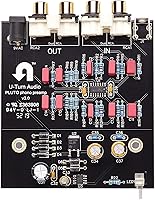
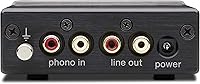
  • Connectors: Uses standard RCA connectors for both input (from turntable) and output (to amplifier, receiver, or powered speakers).
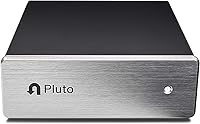
  • Enclosure: The chassis is machined from aluminum, providing passive RF shielding for the internal circuitry.
  • Dimensions: Physical dimensions measure 3.85 × 4.5 × 1.4 inches (H × W × D), making it one of the more compact units in its class.
  • Weight: The unit weighs 10 oz, light enough to sit unobtrusively behind a turntable without adding meaningful mass to a shelf.
  • Capacitors: WIMA film capacitors are used in the signal path, chosen for their low noise characteristics and long-term stability.
  • Resistors: Precision resistors are used throughout the circuit to maintain accuracy in gain and RIAA equalization over time.
  • Assembly: Designed and assembled in Woburn, Massachusetts, USA, with quality control managed directly by U-Turn Audio.
  • Warranty: Covered by a 3-year limited warranty and backed by U-Turn Audio's lifetime product support program.
  • Compatible Outputs: Designed to feed amplifiers, stereo receivers, and powered speakers via standard RCA line-level inputs.

Related Reviews

Schiit Mani 2 Phono Preamplifier
80%
93%
Sound Quality
91%
Cartridge Compatibility
94%
Value for Money
89%
RIAA Accuracy
86%
Subsonic Filter
More
Fosi Audio Box X2
Fosi Audio Box X2
87%
88%
Audio Warmth
92%
Gain Versatility
86%
Build Integrity
94%
Space Efficiency
89%
Tube Rolling Potential
More
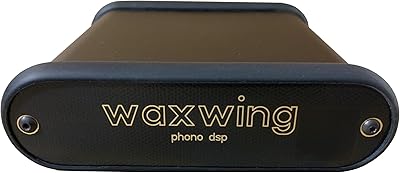
Parks Audio Waxwing Phono DSP Preamplifier
80%
91%
MAGIC Noise Reduction Effectiveness
88%
Cartridge Compatibility & Gain Flexibility
86%
App Control & User Interface
83%
EQ Preset Library for Vintage Formats
84%
SUPER MONO Mode
More
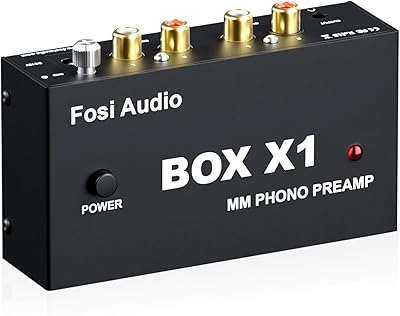
Fosi Audio Box X1 Phono Preamp
78%
83%
Noise Floor Performance
78%
RIAA Accuracy
71%
Build Quality
62%
Gain Level
68%
Headphone Output Quality
More
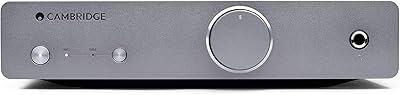
Cambridge Audio Alva Duo Phono Preamp
82%
88%
Audio Performance
83%
Cartridge Compatibility
86%
Noise Floor & Interference Rejection
81%
Headphone Amplifier
79%
Subsonic Filter Effectiveness
More
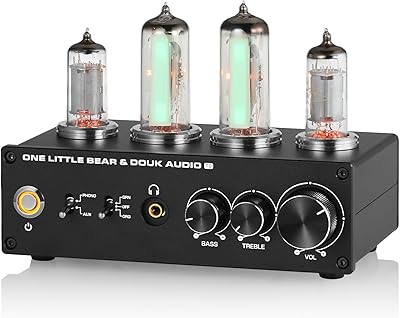
Douk Audio T9 Tube Phono Preamp
82%
83%
Sound Quality
78%
Phono Stage Accuracy
76%
Headphone Amplifier Performance
88%
Build Quality
81%
Tube Rolling Flexibility
More
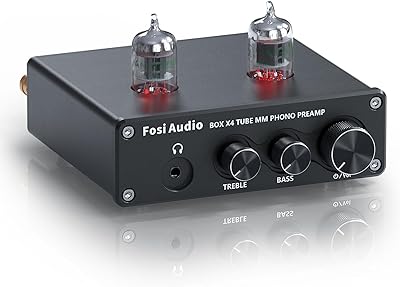
Fosi Audio BOX X4 Tube Phono Preamp
78%
81%
Sound Quality
67%
Noise Floor & Hiss
84%
Build Quality
89%
Value for Money
63%
Tube Quality (Stock)
More
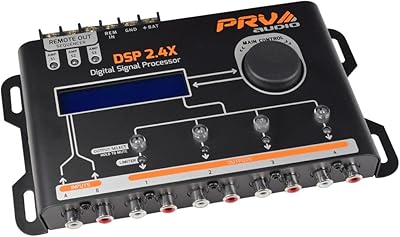
PRV AUDIO DSP 2.4X Car Audio Processor
86%
94%
Audio Performance
88%
Ease of Setup
90%
Customization Flexibility
85%
Build Quality
92%
User Interface
More
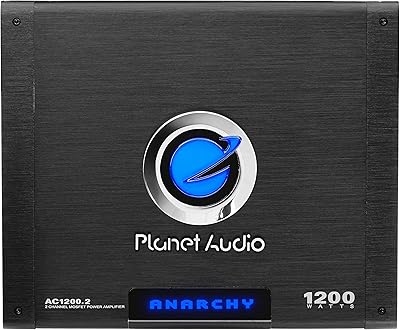
Planet Audio AC1200.2 2-Channel Car Amplifier
72%
84%
Value for Money
67%
Power Output
88%
Ease of Installation
71%
Sound Quality
58%
Thermal Performance
More
Douk Audio KN102 2-IN-1-OUT XLR Switcher
80%
83%
Build Quality
78%
Signal Integrity
94%
Ease of Setup
89%
Value for Money
76%
Switch Modes & Functionality
More

FAQ

Most built-in preamps on entry and mid-tier turntables use inexpensive components that introduce audible noise and compromise detail. An external stage like the Pluto 2 typically produces a noticeably quieter background and more accurate tonal balance. If your current setup sounds thin, hissy, or flat, an external preamp is usually the first upgrade worth making.

Yes, as long as you disable your turntable's built-in preamp first — most decks in that range have a phono/line switch for exactly this purpose. Once you have set the deck to phono output mode, simply run the RCA cables from the turntable into this U-Turn stage and from the stage into your speakers or receiver. The fixed 47 kΩ loading is compatible with AT cartridges and most other common MM designs.

No. The U-Turn Audio Pluto 2 Phono Preamp supports moving magnet cartridges only. MC cartridges output a significantly lower signal and require a different gain stage and typically lower input impedance. If you are planning to use or upgrade to an MC cartridge, you will need a dedicated MC-capable preamp.
Nothing at all. There are no dip switches, no gain adjustments, and no loading options to set. Connect your turntable's RCA output to the input, run the output RCA cables to your amplifier or powered speakers, plug in the power supply, and you are listening. The whole process typically takes under five minutes.

Almost certainly yes. The built-in active subsonic filter is specifically designed to cut the very low-frequency rumble that warped records generate. That rumble sits below what you can hear but causes woofers to move excessively and muddies the bass. With the subsonic filter in the circuit, most users find the woofer movement stops and low-end clarity improves.

No, the subsonic filter is always active and cannot be bypassed. For most listeners this is a non-issue since the filtered frequencies are largely inaudible. However, if you are using sealed subwoofers or have a specific preference for unfiltered low-frequency content, this fixed implementation will be a limitation you need to factor in.

It depends on the receiver. Vintage receivers from the 1970s and 1980s often had genuinely good phono stages that can compete with modern budget-to-mid-range external units. If your receiver is from that era and the phono stage is in good working condition, you may not need an external preamp at all. For receivers from the 1990s onward, or any modern unit with a budget built-in stage, the Pluto 2 will typically outperform it in noise and accuracy.

The unit comes with its own wall-mount power supply, so you do not need to source anything separately. It is worth keeping the supplied adapter since the unit is optimized for the voltage and quality of that specific supply — substituting a generic one can introduce noise in sensitive preamp circuits.

It serves a real function. Phono preamps handle extremely small signals from the cartridge, which makes them susceptible to radio frequency interference from nearby electronics, Wi-Fi routers, and power supplies. The aluminum enclosure provides passive shielding that reduces the likelihood of that interference reaching the circuit. The clean look is a bonus, but the material choice is grounded in practical engineering.

U-Turn Audio offers lifetime product support, meaning you can contact them for troubleshooting and repair guidance beyond the warranty period. While lifetime support does not guarantee free repairs indefinitely, the brand has a strong reputation for being accessible and technically knowledgeable. Given how simple and robust the circuit is, long-term reliability issues are uncommon in buyer-reported feedback.

Where to Buy