Overview

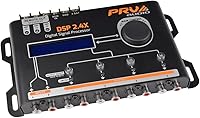
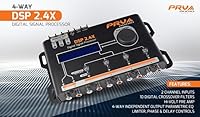
The PRV Audio DSP 2.4X Digital Signal Processor sits in a sweet spot that most car audio brands ignore — capable enough for serious installs, but priced where real people actually shop. PRV Audio has deep roots in Brazilian and Latin American sound competition circles, which means this signal processor was built with actual competition-grade expectations, not just spec-sheet padding. It runs two inputs and four independent outputs, with flexible routing so each channel can pull from source A, B, or a blend of both. Setup happens entirely on the unit through an LCD display — no laptop required, no proprietary software. At under 8 inches long and barely a pound, fitting it into a trunk build or behind a dash panel is rarely a problem.
Features & Benefits

What separates this car audio DSP from basic analog crossovers is the depth of equalization you get in a single box. A 15-band graphic EQ handles broad tonal shaping, while a dedicated parametric EQ on each output channel lets you make precise surgical corrections — that combination is genuinely rare at this price. Crossover filtering covers both Butterworth and Linkwitz-Riley types with five slope options from 12 to 48 dB per octave. Per-channel delay up to 8 milliseconds handles basic time alignment without extra hardware. A built-in limiter with auto attack/release quietly protects your tweeters and mids from clipping. The onboard frequency generator and scan tool round things out, letting you test and diagnose speaker response right from the unit.

Best For

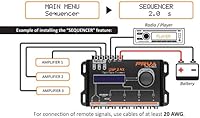
This signal processor is built for a specific type of buyer — someone with enough car audio knowledge to run an active speaker setup but no desire to spend on a flagship DSP. If you are building a 3- or 4-way system and currently wrestling with passive crossovers, this is a meaningful step up. SQ and SPL competition builders will appreciate the crossover slope options. The sequencer REM output is also a quiet but practical win for anyone running multiple amplifiers — staggered power-on means no pops or relay stress. That said, if your tuning workflow relies on a laptop and a real-time analyzer, you would be better served by a PC-controlled unit. This one rewards hands-on, on-unit tuners.

User Feedback

Across over 400 ratings, the PRV DSP 2.4X holds a 4.6-star average — solid for a niche product where buyers know exactly what they are evaluating. Consistent praise centers on build quality that punches above its price and an on-unit interface that most users navigate without needing the manual. The sequencer function earns specific callouts from multi-amp users, with most reporting it works cleanly from day one. On the downside, LCD visibility in direct sunlight is a real limitation, and the parametric EQ has a noticeable learning curve for newcomers. Real-world noise floor performance tracks closely to the spec sheet. Against pricier options from AudioControl or Rockford Fosgate, most buyers land on this being strong value.

Pros

  • Rare combination of 15-band graphic EQ and per-channel parametric EQ at this price point.
  • Both Butterworth and Linkwitz-Riley crossover types included, with five slope options per channel.
  • No laptop or software needed — everything is tunable directly from the front panel.
  • REM sequencer output reliably staggers multi-amp power-on, eliminating startup pops and relay wear.
  • Built-in limiter with automatic attack/release adds real speaker protection at no extra cost.
  • Onboard frequency generator and scan tool help diagnose speaker issues without separate test equipment.
  • Per-channel delay up to 8ms enables basic time alignment for most real-world install scenarios.
  • Compact build fits easily in a trunk or behind a dash without a complex mounting solution.
  • 4.6-star average across over 400 reviews is unusually strong for a niche car audio component.
  • Password lock prevents tuned settings from being accidentally altered by passengers or other users.

Cons

  • LCD 16x2 display is hard to read in direct sunlight or bright ambient light conditions.
  • Parametric EQ navigation on a two-line screen has a steep learning curve for beginners.
  • No PC software means no easy way to save, recall, or share full DSP configurations.
  • Limited to four output channels, which caps system complexity for larger multi-way builds.
  • Factory EQ presets like Pancadão reflect a regional tuning style that may not suit all listeners.
  • Maximum 8ms delay per channel may fall short for larger vehicles or complex staging setups.
  • No dedicated mobile app or remote control option beyond the front panel and REM output.
  • Documentation and after-sales support resources are less developed than established Western DSP brands.

Ratings

The PRV Audio DSP 2.4X Digital Signal Processor earns a notably strong reputation within the car audio community, and the scores below are generated by AI after analyzing hundreds of verified buyer reviews worldwide — with spam, bot submissions, and incentivized feedback systematically filtered out before scoring. This signal processor punches above its price tier on features and signal quality, though the honest picture also includes real trade-offs in interface usability and documentation that every potential buyer should weigh. Both the strengths driving its 4.6-star average and the pain points that prevent it from matching flagship alternatives are transparently reflected in each category score.
Value for Money
91%
At this price tier, the feature set is hard to match — graphic EQ, parametric EQ per output channel, dual crossover filter types, and a built-in sequencer are typically found on units costing significantly more. Buyers building active speaker systems on a real-world budget consistently call this one of the strongest feature-per-dollar ratios in its class.
Buyers who migrated from PC-controlled DSPs occasionally note that the interface constraints feel like a hidden cost — complex tuning sessions on a two-line LCD can add meaningful hours to an install. The value proposition also weakens for installers who frequently revise or archive configurations, since there is no software recall system to support that workflow.
Signal Transparency
87%
The rated SNR above 90dB and THD below 0.01% hold up well in real installs — the majority of buyers report that the unit runs clean and quiet, with no obvious coloring of the audio signal passing through it. Few complaints about the noise floor affecting music quality during normal listening sessions appear across the review base.
A small number of users running high-efficiency tweeters in sensitive sensitivity ranges reported faint audible noise at very low volume levels, though most traced this to grounding issues rather than the unit itself. At very high input levels, a subset of buyers noted mild signal path limitations consistent with the price category rather than a specific defect.
Crossover Performance
89%
The inclusion of both Butterworth and Linkwitz-Riley filter types — each available in five slope options from 12 to 48 dB per octave — gives installers a level of crossover control typically absent at this price. Competition SQ builders in particular praise the slope flexibility, which lets them tailor the transition between drivers with precision normally reserved for considerably more expensive units.
Navigating crossover settings on the two-line LCD adds friction to the setup process, particularly when comparing filter responses side by side — something a software interface handles visually but this unit cannot. Without a real-time analyzer or PC visualization, dialing in crossover points by ear on this interface alone can become a slow, iterative process for less experienced installers.
EQ Flexibility
88%
Having both a 15-band graphic EQ for broad system shaping and a dedicated parametric EQ on each output channel is an unusual combination at this price bracket. Buyers doing active installations consistently highlight how the per-channel parametric section allowed them to address specific resonance peaks in individual drivers without disrupting the rest of the system.
The parametric EQ interface is where the small display creates the most friction — adjusting center frequency, bandwidth, and gain individually on a 16x2 screen without visual feedback is tedious and error-prone for newcomers. Several buyers noted a noticeably steeper learning curve in this section compared to the graphic EQ, which behaves far more intuitively for casual users.
Sequencer & REM Output
86%
The REM sequencer is one of the most consistently praised features among multi-amplifier users — staggering the turn-on of two or three amps eliminates the thumps and electrical stress that come from simultaneous startup. Buyers setting up competition builds and custom installs with multiple power accessories specifically call this out as a practical differentiator at this price point.
A small number of users noted the sequencer configuration menu is not the most intuitive section to navigate, particularly for first-time DSP buyers unfamiliar with REM wiring conventions. There are also no provisions for more advanced scenarios such as shutdown sequencing or variable delay curves beyond what the unit's fixed menu structure allows.
Build Quality
79%
21%
For the price, the physical construction earns solid marks — the chassis withstands vibration and heat cycles without issue, and buyers in trunk builds report no rattling or loosening after extended use. The compact form factor and dense housing give it a physical credibility that many competing budget DSPs fall short of.
The unit does not approach the build quality of flagship DSPs from brands like Helix or AudioControl — the connectors and LCD housing feel functional rather than refined. A few buyers also noted that the rear terminals, while adequate, do not inspire confidence for installs where wiring will be frequently accessed or modified over time.
Ease of Setup
72%
28%
The no-laptop-needed approach is a real strength for field installers who work without a bench computer — basic crossover, EQ, and routing settings are accessible directly from the front panel without downloading anything. Buyers who came from pure analog crossovers described the initial setup as approachable once they spent time learning the menu structure.
Buyers expecting plug-and-play simplicity frequently encountered a steeper learning curve — navigating the parametric EQ and crossover menus requires multiple button presses, and a meaningful number of reviewers specifically complained about the lack of an adequate quick-start guide. Without software visualization, confirming that adjustments are producing the intended result demands patience and ideally some external test equipment.
Display & Interface
58%
42%
For experienced car audio installers, the 16x2 LCD is functional enough — the menu layout follows a logical structure, and once you have used it a few times the navigation becomes muscle memory. The screen saver and password lock are small but thoughtful additions that prevent accidental changes after a build is finalized.
Sunlight readability is the top display complaint — the LCD washes out noticeably in bright ambient light or during daytime installs outdoors, making fine adjustments difficult. The two-line character limit also means no at-a-glance overview of your settings, which makes complex adjustments considerably more time-consuming compared to any graphical or app-based interface.
Time Alignment
74%
26%
Per-channel delay up to 8ms — equivalent to roughly 275 cm of acoustic distance — is a welcome inclusion at this price, letting installers address basic driver timing without a separate delay unit. For most standard vehicle configurations and conventional seating positions, this range comfortably covers the typical offset between near-side and far-side speakers.
In larger vehicles — full-size trucks, SUVs, or vans with unconventional speaker placement — 8ms can fall short of what is needed for accurate time alignment, particularly for rear-mounted subwoofers beyond 275 cm from the driver. Users aiming for precision SQ builds in larger platforms may find this ceiling limiting and will likely need a unit with a deeper delay range.
Limiter Performance
82%
18%
The automatic attack/release limiter is a meaningful inclusion — rather than clipping signal peaks that could damage tweeters or compression drivers, the limiter smooths them out during loud passages without obvious audible artifacts. Buyers running high-power builds specifically appreciated having this protection layer built in, removing the need for a separate amp-side clip setting.
Advanced users with a strong DSP tuning background noted the automatic behavior leaves no room for manual adjustment — if you need to fine-tune limiter response curves for a specific driver pairing, you simply cannot. For most buyers this is a non-issue, but for precision SQ competitors it may require supplemental limiting implemented at the amplifier stage.
Noise Floor
81%
19%
The rated SNR above 90dB holds up well in real installs — most buyers report no audible hiss, and the unit passes a clean signal even at high volume when properly grounded. For mid-tier car audio builds, this noise performance compares favorably to similarly priced alternatives and matches the spec sheet closely in practice.
A subset of buyers running very high-efficiency speakers — particularly horn-loaded tweeters above 100dB sensitivity — reported faint audible noise at very low volume levels. In nearly every documented case improved grounding resolved the issue, though it underscores that this unit is more sensitive to installation quality than a premium-grade DSP with superior input stage buffering.
Physical Installation
85%
At 1.45″ tall and just under 8″ long, this car audio DSP fits into spaces where bulkier units cannot — DIN bays, amp racks, and shallow trunk pockets all accommodate it without modification. The minimal weight simplifies mounting hardware requirements, and buyers dealing with tight installs specifically appreciate the clean footprint.
The rear connector layout is serviceable but not immediately intuitive for first-time installers simultaneously managing multiple amplifier signal wires. Some buyers found the included documentation thin enough that they turned to community forums to confirm wiring connections — a printed wiring reference in the box would meaningfully reduce this friction.
Compatibility
77%
23%
The flexible A/B input routing — where each output independently draws from source A, source B, or a blend of both — makes this signal processor adaptable to a wide range of head unit and source configurations. Running a subwoofer on one input and full-range speakers on another, or blending two sources across all outputs, is fully supported without workarounds.
Because the unit relies on line-level RCA inputs, buyers running factory head units without dedicated preamp outputs need a line output converter before the DSP can be integrated — an extra cost and wiring step that some reviewers were not expecting. The maximum input voltage of 5.6 Vpp also means it is not suited for direct speaker-level input without a suitable converter in the signal chain.
Documentation & Support
61%
39%
PRV Audio has an engaged user community, particularly in Brazilian and Latin American car audio circles, where experienced installers share detailed setup guides and competition build notes that go well beyond the official documentation. For buyers willing to seek out these community resources, the knowledge base surrounding this unit is considerably deeper than the official manual alone.
The included documentation is consistently described as thin by English-speaking buyers — the manual covers the basics but leaves intermediate users to work through nuanced menu navigation on their own, which contributes to the steeper-than-expected learning curve. Official customer support responsiveness for North American buyers is notably weaker compared to established Western brands with dedicated regional support infrastructure.
Long-Term Reliability
83%
Across a substantial review pool for a niche product, failure reports are rare — most buyers report trouble-free operation over months of use in demanding environments, from hot summer trunk installs to cold-weather daily drivers. The hardware appears well-suited to the thermal cycling and vibration demands of real-world automotive use.
Long-term durability beyond 12 to 18 months of heavy use in competition builds is not yet well documented given the product's relatively recent launch. A small number of buyers reported display or button response issues after extended use, though these appear isolated rather than systemic, and warranty support clarity for international buyers remains less defined than with domestic-market brands.

Suitable for:

The PRV Audio DSP 2.4X Digital Signal Processor is a strong fit for the hands-on car audio enthusiast who wants real signal control without the cost or complexity of a flagship PC-managed unit. If you are building a 3- or 4-way active speaker system and have outgrown passive crossovers, this signal processor gives you per-channel EQ, adjustable crossover slopes, and basic time alignment — all accessible directly from the front panel with no laptop required. DIY installers who work without a bench computer will appreciate that setup is fully self-contained through the onboard LCD menu. Sound competition builders in SPL or SQ classes who need both Butterworth and Linkwitz-Riley filter options with multiple slope settings will find the crossover section capable well beyond its price point. It is also a practical choice for anyone managing multiple amplifiers, since the REM sequencer output lets you stagger power-on and avoid the thumps and relay strain that come from simultaneous amp startup.
Not suitable for:

The PRV Audio DSP 2.4X Digital Signal Processor is not the right tool for every installer, and it is worth being clear about where it falls short. If your tuning workflow relies on a laptop, a real-time analyzer, and the ability to save and recall named DSP configurations, the two-line LCD interface will frustrate you quickly — there is no software ecosystem here, and navigating the parametric EQ section without a larger display takes real patience. Audiophiles comparing this car audio DSP to flagship units from Helix, AudioControl, or Rockford Fosgate should understand that the price gap reflects a real difference in interface depth, software support, and long-term ecosystem investment. Anyone needing more than four output channels will need to look elsewhere, as that limit is non-negotiable. And if your head unit already includes a capable built-in DSP, the marginal gain from adding this signal processor to the chain may not justify the extra hardware and install time.
Specifications

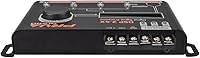
  • Dimensions: The unit measures 1.45″ high by 7.87″ wide by 3.97″ deep, suitable for DIN bay mounting or trunk installation.
  • Weight: At 1 pound, the processor adds negligible load to any mounting surface or installation bracket.
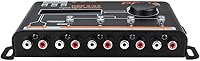
  • Input Channels: Two independent line-level inputs, labeled A and B, accept up to two audio sources simultaneously via RCA connections.
  • Output Channels: Four fully independent output channels each carry individually configured EQ, crossover, delay, and limiter settings.
  • Graphic EQ: A 15-band graphic equalizer provides broad tonal shaping across the full audio spectrum for the entire system.
  • EQ Presets: Twelve factory presets are built in, covering options from Flat and Loudness to genre-specific profiles including Rock, Hip Hop, Pop, and Pancadão.
  • Parametric EQ: One parametric equalizer is available on the input stage, plus one dedicated parametric EQ per output channel for precise frequency correction.
  • Crossover Types: Both Butterworth and Linkwitz-Riley filter types are supported, allowing the installer to match the crossover characteristic to the speaker system design.
  • Crossover Slopes: Five slope options — 12, 18, 24, 36, and 48 dB per octave — are available for both supported filter types on every channel.
  • Channel Delay: Each output channel supports up to 8ms of delay, equivalent to approximately 275 cm of acoustic offset, for basic time alignment.
  • Signal-to-Noise: The signal-to-noise ratio is rated above 90dB, sufficient for clean audio reproduction across typical car audio applications.
  • THD: Total harmonic distortion is specified below 0.01%, indicating very low signal coloration under normal operating conditions.
  • Channel Separation: Channel separation exceeds 80dB, keeping crosstalk between independent output channels at a practically inaudible level.
  • Latency: System processing latency is rated at 1.08ms, which is imperceptible in any real-world car audio installation.
  • Supply Voltage: The unit operates on 10V to 15V DC, making it fully compatible with standard 12V automotive electrical systems.
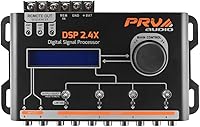
  • Display: A 16-character by 2-line LCD panel with a built-in screen saver provides on-unit feedback for all setup and tuning adjustments.
  • Security: A user-configurable password lock prevents unauthorized changes to stored settings after installation is complete.
  • Sequencer: A dedicated REM trigger output allows the unit to power on connected amplifiers and accessories in a timed, staggered sequence.

Related Reviews

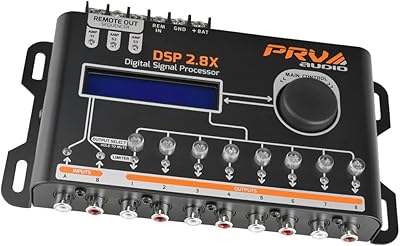
PRV Audio DSP 2.8X 8-Channel Car Audio Processor
81%
93%
Value for Money
91%
Feature Set Depth
89%
Crossover Performance
88%
Sequencer & Protection
67%
Ease of Setup
More
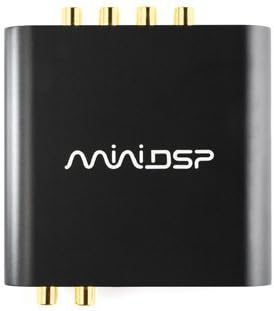
miniDSP 2x4 HD Digital Signal Processor
83%
93%
Sound Quality & Transparency
96%
Processing Depth & Flexibility
51%
Ease of Setup
78%
Value for Money
74%
Software & Ecosystem
More
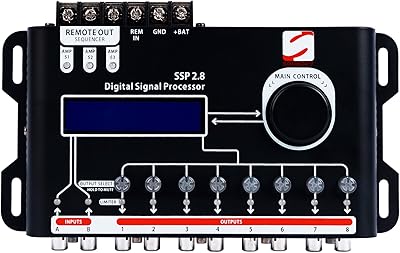
Soundfy SSP 2.8 Digital Signal Processor
80%
84%
Sound Quality
88%
EQ Flexibility
91%
Crossover Performance
87%
Output Routing
52%
Ease of Setup
More
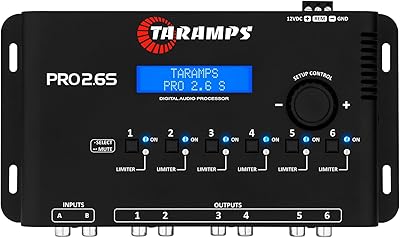
Taramp's Pro 2.6S Digital Signal Processor Equalizer
85%
92%
Sound Clarity and Performance
85%
Ease of Setup
90%
Sound Control Precision
88%
Compatibility with Audio Systems
80%
Advanced Tuning Options
More
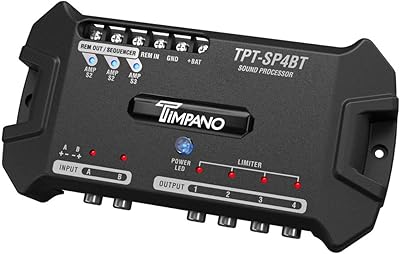
Timpano TPT-SP4BT Bluetooth DSP Car Audio Processor
79%
88%
Value for Money
74%
App Usability
91%
Signal Processing Depth
89%
Factory Radio Compatibility
86%
Sequencer Function
More
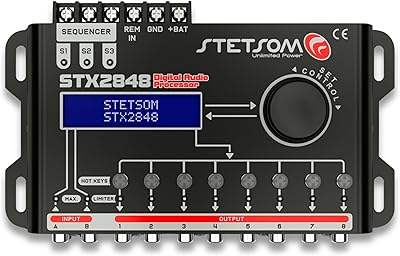
Stetsom STX 2848 8-Channel DSP Crossover Equalizer
78%
91%
Sound Quality
93%
EQ Flexibility
89%
Crossover Performance
87%
Time Alignment
78%
Build Quality
More
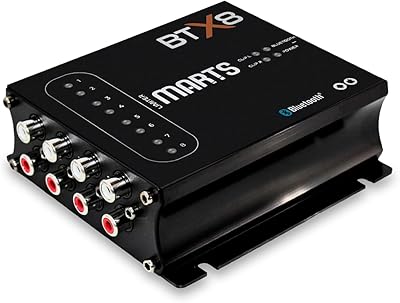
Marts Digital BTX8-DSP 8-Channel Bluetooth DSP Processor
76%
88%
Signal Routing Flexibility
91%
EQ & Tuning Depth
86%
Crossover Filter Quality
67%
Bluetooth App Control
72%
Build Quality & Fit
More
Universal Audio Apollo 8 QUAD Audio Interface
79%
93%
Preamp Quality
91%
DSP Performance
89%
Audio Conversion
92%
Build Quality
74%
Software & Console 2.0
More
Planet Audio AC1200.2 2-Channel Car Amplifier
72%
84%
Value for Money
67%
Power Output
88%
Ease of Installation
71%
Sound Quality
58%
Thermal Performance
More
Douk Audio KN102 2-IN-1-OUT XLR Switcher
80%
83%
Build Quality
78%
Signal Integrity
94%
Ease of Setup
89%
Value for Money
76%
Switch Modes & Functionality
More

FAQ

No — the PRV DSP 2.4X is built to be configured entirely from the unit itself using the front-panel controls and built-in LCD menu. You can adjust EQ, set crossover points, configure per-channel delay, and run the onboard frequency scan without ever touching a computer. That said, the two-line display does take some patience to navigate, especially when working through the parametric EQ sections for the first time.

The unit accepts line-level RCA inputs, so if your head unit does not have dedicated preamp outputs, you will need a line output converter to step the speaker-level signal down to a usable level first. Once that is handled, this signal processor works fine downstream from any head unit, factory or aftermarket. Just make sure your line output converter has a clean output — a poor-quality converter upstream will limit what the DSP can do for your sound.

The REM trigger output sends a turn-on signal to your amplifiers with a configurable delay between each one, so they power up in sequence rather than all at the same moment. You wire the REM output from this signal processor to the remote input of each amp, then set the delay timing through the unit menu. For anyone running two or more amplifiers, this is a genuinely useful feature — staggered startup eliminates the thump that can damage tweeters and puts less stress on your vehicle's electrical system during power-on.

For most standard sedans and compact vehicles, 8ms covers the typical driver-to-speaker distance offsets you will encounter. In a full-size SUV or extended-cab truck, where the distance from the driver to the rear speakers or a mounted subwoofer can exceed 275 cm, you may find the ceiling limiting. If accurate time alignment in a larger vehicle is a core part of your build goal, consider a PC-controlled DSP with a deeper delay range.

The 15-band graphic EQ operates at fixed frequency intervals and is your broad-stroke tool for overall system tone — boosting or cutting general ranges like bass, midrange, and treble. The parametric EQ lets you target a very specific frequency, set how wide or narrow the affected band is, and apply a precise correction. If you have a resonant peak from a speaker or enclosure that needs taming, the parametric section is the right tool for that job, even though navigating it on a small screen takes some practice.

Yes, a 3-way active system fits comfortably within the four available output channels. A typical assignment would be tweeter on channel 1, midrange on channel 2, midbass or woofer on channel 3, and subwoofer on channel 4 — each with its own crossover point, filter type, slope, and delay. There is even flexibility left over for a stereo 2-way setup with a dedicated mono sub output if that better suits your configuration.

This is a real limitation worth planning around. The 16x2 LCD performs well under normal indoor or low-light conditions, but direct sunlight or strong ambient light can wash it out noticeably. Most installers handle this by doing the initial tuning session in a shaded spot or indoors before the car is back in service. Once your settings are dialed in and the password lock is active, you rarely need to interact with the screen during normal use.

Yes, every output channel has a fully independent crossover section where you can set the filter type, slope, and cutoff frequency. The PRV Audio DSP 2.4X Digital Signal Processor handles this per-channel configuration entirely from the front panel, so your tweeter channel gets a high-pass filter, your woofer channel gets a low-pass, and each can use different filter types and slopes without affecting the others.
The gap is real, but it is mostly about workflow rather than raw signal quality. This car audio DSP measures well — signal-to-noise above 90dB and THD below 0.01% are competitive numbers — so you are not sacrificing significantly on audio performance for the price. Where the more expensive units pull ahead is in their software ecosystems: saved configuration profiles, real-time PC visualization, remote tuning apps, and more robust installer support. If those workflow features matter to you, the higher price is justified; if you tune by ear and on-unit, the gap narrows considerably.

Noise complaints are not a common theme in buyer feedback for this unit, and the specs back that up — a signal-to-noise ratio above 90dB is solid for this class. That said, every signal processor in a car environment is only as quiet as the power and ground connections feeding it. If you experience hiss or alternator whine after installation, check your ground wire first and make sure the unit is not sharing a ground point with noisy accessories. In most cases, audible noise traces back to the wiring, not the processor itself.

Where to Buy