Overview

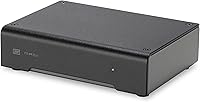
The Schiit Mani 2 Phono Preamplifier is one of those rare devices that earns its place in a serious vinyl setup without demanding a serious price. If you're new to turntables, a phono preamp takes the very low-level signal from your cartridge and boosts it to line level while applying RIAA equalization — the standardized curve that makes records actually sound right. Schiit Audio, based in Texas, has built a loyal following by making straightforward, well-engineered gear without the boutique markup. Released in 2022, the Mani 2 improved on the original with more flexibility and a lower noise floor. It's a compact, no-frills box that quietly outperforms what its price tag suggests.
Features & Benefits

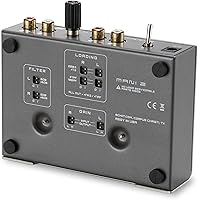
What sets the Mani 2 apart from most phono stages at this price point is sheer configurability. Four gain settings — 35, 45, 50, and 60 dB — mean this preamp handles everything from a standard moving magnet cartridge to a low-output moving coil without breaking a sweat. Loading options cover both impedance (47KΩ down to 38Ω) and capacitance (47pF to 200pF), so you can tune it to match your specific cartridge rather than just hoping for the best. There's also a passive subsonic filter with selectable 6 or 12 dB per octave slopes at 15 Hz — practical insurance if your records have a slight warp that otherwise rattles your woofers. All of this is designed and assembled in Texas.

Best For

This phono stage makes the most sense for vinyl listeners who've outgrown the preamp built into their turntable or receiver and want something that will keep pace as their setup improves. It's particularly well suited to anyone running a moving coil or moving iron cartridge, where adjustable gain and loading aren't optional — they're necessary. Users who collect older records or deal with warped pressings will find the subsonic filter genuinely useful, not just a spec-sheet novelty. One important caveat: the Mani 2 runs on 115VAC with a US plug, making it incompatible with 220–240V regions. International buyers should factor that in before purchasing.

User Feedback

Buyers consistently highlight the gain and loading flexibility as the reason they chose this preamp over alternatives — and the noise improvement over built-in phono stages gets mentioned almost as often. The subsonic filter earns praise too, especially from collectors who regularly spin older or warped vinyl. Where some users push back is on the DIP switch configuration: adjusting settings requires flipping tiny switches on the underside of the unit, which isn't difficult but does warrant a glance at the manual. A few buyers also note the absence of balanced outputs and no headphone jack — not dealbreakers at this tier, but worth knowing. Overall, the consensus is that this preamp punches well above its price class.

Pros

  • Covers MM, MC, and MI cartridges with four selectable gain settings up to 60 dB — rare at this price.
  • The passive subsonic filter is a practical, real-world fix for woofer-pumping caused by warped records.
  • Noticeable noise floor improvement over built-in phono stages on receivers and entry-level turntables.
  • Impedance and capacitance loading options let you match the preamp precisely to your cartridge's specs.
  • Designed and assembled in Texas — genuine domestic manufacturing without a boutique price premium.
  • Compact enough to fit on any shelf or equipment rack without dominating the space.
  • RIAA accuracy is strong, meaning tonal balance across records sounds proportionally correct and natural.
  • A strong long-term investment — this preamp will not become a bottleneck as the rest of your system improves.
  • Schiit's support reputation and analog-only signal path mean fewer failure points over the long haul.

Cons

  • Strictly 115VAC with a US plug — buyers in 220–240V countries cannot use it without a voltage converter.
  • DIP switch configuration on the underside is fiddly, especially for users who swap cartridges often.
  • No balanced XLR outputs, limiting integration with professional or semi-pro amplification setups.
  • No headphone output — this is a single-function preamp only, with no all-in-one convenience.
  • Settings have no visual indicators, so there is no quick way to confirm your current gain or loading at a glance.
  • Closely spaced rear RCA jacks can make cable management awkward with bulkier connector types.
  • The neutral, accurate sound profile may feel uninspiring to listeners who prefer a warmer sonic character.
  • Gains from upgrading are modest if the turntable or cartridge upstream is already a limiting factor.
  • The utilitarian exterior picks up fingerprints and fine scratches over time, which some buyers find underwhelming.

Ratings

The Schiit Mani 2 Phono Preamplifier has been scored across key performance and usability categories by our AI system, which analyzed verified global buyer reviews while actively filtering out incentivized, bot-generated, and duplicate feedback. The scores below reflect a balanced synthesis of real-world praise and genuine frustrations — nothing is inflated, and no recurring pain point has been glossed over.
Sound Quality
93%
Users consistently describe a noticeably cleaner, more open soundstage compared to the phono stages built into entry-level receivers or turntables. The low noise floor makes a tangible difference on quiet passages and late-night listening sessions, where background hiss from cheaper preamps becomes genuinely distracting.
A small number of experienced listeners feel the overall character trends slightly neutral-to-clinical, which may not satisfy those who prefer a warmer, more colored presentation. At the very highest end of audiophile expectations, some note that dedicated units costing significantly more do offer a perceptible step up in resolution.
Cartridge Compatibility
91%
The combination of four gain settings and four impedance loading options makes this preamp genuinely versatile across MM, MC, and MI cartridge types — a range that most rivals at this price simply do not cover. Users upgrading to low-output moving coil cartridges specifically cite this flexibility as the primary reason they chose the Mani 2 over cheaper alternatives.
Getting the configuration right does require some research into your specific cartridge's specs, which can feel intimidating for first-time users. There is no digital display or indicator confirming your current settings, so those who swap cartridges frequently may find the process slightly tedious over time.
Value for Money
94%
Among all the feedback patterns analyzed, value perception is where this preamp scores most consistently. Buyers running mid-tier cartridges report that the Mani 2 unlocked performance they did not realize their setup was capable of, which feels like a significant return on a modest investment.
A handful of buyers who purchased with very basic turntable setups found the upgrade less dramatic than expected, suggesting the preamp reveals quality upstream — if the cartridge or table is limiting, the gains are subtler. It is not a magic fix for an underpowered source.
RIAA Accuracy
89%
Technically oriented reviewers and measurements-focused buyers praise the RIAA curve accuracy, noting that tonal balance across the frequency spectrum holds up well against units costing considerably more. In practical terms, this means vocals and instruments sound proportionally correct rather than unnaturally bright or bass-heavy.
Most casual listeners will never consciously register RIAA accuracy as a factor, so this strength goes largely unappreciated unless you are comparing units side by side. Those accustomed to warmer-voiced preamps may initially perceive the Mani 2 as slightly thin, even though the frequency response is technically more correct.
Subsonic Filter
86%
Buyers with large collections of older pressings or second-hand records report that the passive subsonic filter — selectable between 6 and 12 dB per octave slopes at 15 Hz — made a real and immediate difference in controlling woofer excursion and low-frequency rumble. For anyone who has watched their speakers pump on a slightly warped record, this feature alone is worth the price of admission.
Users with well-maintained modern pressings on a well-isolated turntable will rarely need the filter at all, making it a feature they pay for without using. Some also note that engaging the steeper 12 dB slope, while effective, can slightly affect the very lowest audible bass content on recordings that push that range.
Noise Floor
88%
Moving from a receiver's integrated phono input to the Mani 2, many users describe an immediate and obvious drop in background noise — particularly when using sensitive speakers or listening at low volumes late at night. At high gain settings needed for low-output MC cartridges, the noise performance remains impressively controlled for a unit in this price tier.
At the maximum 60 dB gain setting, a small number of users with particularly sensitive speakers or high-efficiency horn setups report a faint residual hiss that becomes audible in quiet rooms. This is not unique to this unit — it is a physics reality at extreme gain levels — but worth knowing if your system leans toward high efficiency.
Build Quality
82%
18%
The enclosure feels purposeful and solid for its size and weight, consistent with Schiit's philosophy of spending the budget on internal components rather than flashy exteriors. Users who have handled the brand's other products note the same familiar, no-nonsense construction that suggests longevity over cosmetic appeal.
The chassis is undeniably utilitarian — there is no visual flair, and the matte black finish shows fingerprints and light scratches over time. A few buyers expected a more premium feel on the exterior given the unit's internal performance credentials, and found the industrial look underwhelming when placed in a visible part of their rack.
DIP Switch Configuration
61%
39%
Once you understand the layout, adjusting gain, loading, and filter settings via the DIP switches on the underside of the unit is a one-time task for most users who stick with a single cartridge. The configuration is stable and does not drift or require revisiting under normal circumstances.
Without the manual in hand, the DIP switch layout is not immediately intuitive, and the switches themselves are quite small — a real friction point for anyone with larger hands or limited dexterity. Users who regularly swap between cartridges find the process of flipping the unit and reconfiguring settings noticeably less convenient than competing units with external selectors or labeled dials.
Ease of Setup
74%
26%
For users sticking with a standard moving magnet cartridge at the default 47KΩ loading, setup is straightforward: connect the turntable, connect to the amplifier, and you are done. No software, no Bluetooth pairing, no firmware — just analog signal routing.
The learning curve rises sharply for users who need to adjust gain or loading for MC cartridges, as doing so requires understanding what those settings mean and then physically accessing the underside switches. First-time phono preamp buyers without a technical background consistently flag setup documentation as a weak point.
Compact Footprint
83%
At just under 8 inches wide and weighing around 2 pounds, this preamp slips easily onto a crowded equipment shelf or sits unobtrusively next to a turntable on a sideboard. Users in smaller listening rooms or apartment setups appreciate that it does not demand dedicated rack space.
The compact size does mean the rear panel connections are closely spaced, which can make cable management slightly awkward depending on the plug type used. Users with bulkier RCA connectors occasionally mention that adjacent plugs end up touching or angled uncomfortably.
Power Supply & Voltage Compatibility
55%
45%
For US, Canadian, and Mexican buyers, the 115VAC power requirement is a non-issue — the unit simply plugs in and works without any adapters or workarounds. The internal power supply design contributes to the unit's low noise performance, which is a meaningful engineering trade-off.
The 115VAC-only limitation is a hard exclusion for buyers in 220–240V countries, and no official step-down adapter solution is offered by the manufacturer. Several international buyers have reported discovering this constraint only after purchase, making it a recurring and avoidable frustration.
Output Options & Connectivity
63%
37%
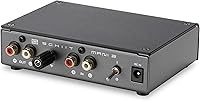
The standard RCA output connects cleanly to virtually any integrated amplifier or receiver with a line-level input, covering the vast majority of real-world use cases without any compatibility issues. The ground terminal is clearly labeled and easy to attach.
There are no balanced XLR outputs, which limits integration with professional or semi-professional gear that benefits from balanced connections. The absence of any headphone output also means this is strictly a preamp in the signal chain — users hoping for a more all-in-one solution will need to look elsewhere.
Long-Term Reliability
87%
Schiit's reputation for building durable, long-lasting gear is reflected in user feedback — owners who have used the original Mani for years without issue report similar confidence in the Mani 2. The all-analog, passive signal path has fewer failure points than digitally enhanced competitors.
As a relatively recent 2022 release, long-term reliability data is still accumulating, and multi-year ownership reports are less numerous than for the original model. A small number of users mention needing to contact Schiit support for units that arrived with channel imbalances, though post-warranty servicing is generally described as responsive.
Made in USA
78%
22%
For buyers who actively prioritize domestic manufacturing, Schiit's Texas design and assembly origin is a genuine differentiator at this price point. Several reviews specifically mention it as a factor in choosing this preamp over comparably priced alternatives from overseas-only manufacturers.
Buyers focused purely on performance-per-dollar rather than origin may find the domestic assembly story irrelevant to their decision. It is a meaningful attribute for a segment of the market, but it does not compensate for feature gaps that matter more to technically driven shoppers.

Suitable for:

The Schiit Mani 2 Phono Preamplifier is the right call for vinyl listeners who have outgrown the phono stage baked into their turntable or receiver and want a standalone unit that will keep pace as their system grows. It is especially well matched for anyone running — or planning to run — a moving coil or moving iron cartridge, where the ability to dial in the correct gain and impedance loading is not a luxury but a necessity for getting the best out of the cartridge. Budget-conscious audiophiles who want serious flexibility without stepping into boutique pricing will find this preamp covers a remarkable range of use cases. Collectors who regularly spin older or second-hand pressings will appreciate the built-in passive subsonic filter, which quietly handles the low-frequency rumble that warped records can introduce into a system. And for buyers who care where their audio gear is made, the Texas design and assembly origin is a genuine differentiator at this price point.
Not suitable for:

The Schiit Mani 2 Phono Preamplifier is a hard pass for anyone outside of North America unless they are willing to source a quality step-down voltage converter, since the unit is strictly 115VAC and will not function in 220–240V countries without one. Buyers looking for a more complete desktop audio hub will also be disappointed — this preamp has no headphone output, no Bluetooth, and no balanced XLR connectivity, so it is a single-purpose device in the signal chain. Listeners who prefer a warmer, more colored sound signature may find the Mani 2 sounds more neutral and clinical than they would like, and should audition alternatives that prioritize tonal character over technical accuracy. Anyone hoping to swap cartridges regularly may find the DIP switch configuration process — which involves flipping the unit and adjusting tiny switches — more cumbersome than products offering external dials or front-panel selectors. Finally, buyers running a very basic turntable and cartridge combo may notice modest gains; this preamp reveals quality upstream, so the source needs to be worthy of the upgrade.
Specifications

  • Manufacturer: Designed and assembled by Schiit Audio in Texas, USA.
  • Release Date: First made available in February 2022 as a redesigned successor to the original Mani.
  • Dimensions: The unit measures 7.95 x 5.94 x 4.57 inches, making it compact enough for most equipment shelves.
  • Weight: The Mani 2 weighs 2.12 pounds, light enough to sit unobtrusively on any surface without rack mounting.
  • Cartridge Types: Compatible with moving magnet (MM), moving coil (MC), and moving iron (MI) phono cartridges.
  • Gain Settings: Four selectable gain levels are available: 35 dB, 45 dB, 50 dB, and 60 dB, configurable via internal DIP switches.
  • Impedance Loading: Offers four impedance loading options — 47KΩ, 200Ω, 47Ω, and 38Ω — to match a wide range of cartridge specifications.
  • Capacitance Loading: Four capacitance settings are selectable: 47pF, 100pF, 150pF, and 200pF, for precise MM cartridge tuning.
  • Subsonic Filter: A purely passive subsonic filter operates at 15 Hz with two selectable slopes: 6 dB per octave or 12 dB per octave.
  • RIAA Equalization: The unit applies high-accuracy RIAA equalization to correct the frequency curve encoded in vinyl records during playback.
  • Noise Performance: The Mani 2 is engineered for a super-low noise floor, representing a measurable improvement over the original Mani design.
  • Power Input: Requires 115VAC power via a US plug and is not compatible with 220–240V electrical systems without an external converter.
  • Output Type: Provides standard RCA line-level outputs for connection to any integrated amplifier, preamplifier, or receiver with a line input.
  • Grounding: Includes a dedicated ground terminal on the rear panel for connecting the turntable's grounding wire to reduce hum.
  • Configuration Method: Gain, loading, and filter settings are adjusted via DIP switches located on the underside of the unit.
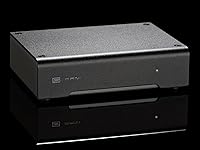
  • Color: Available in black with a matte finish consistent with Schiit's standard product aesthetic.
  • Voltage Regions: Suitable for use in the United States, Canada, and Mexico only; not compatible with European or other 220–240V markets.
  • Signal Path: Employs a fully analog, passive signal path with no digital processing stages in the audio chain.

Related Reviews
NAD PP 2e Phono Preamplifier
84%
88%
Sound Quality
86%
Noise Floor
84%
MM Cartridge Performance
91%
MC Cartridge Performance
77%
Build Quality
More
ART DJPRE II Phono Preamplifier
80%
88%
Signal Clarity & Noise Floor
91%
Value for Money
74%
Build Quality
93%
Variable Gain Control
86%
Cartridge Loading Flexibility
More
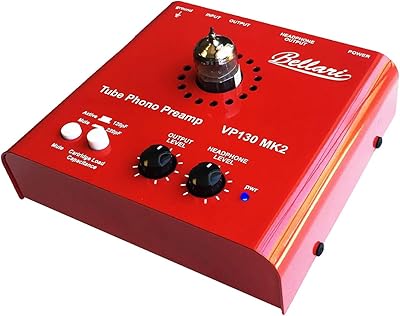
Bellari VP130 Tube Phono Preamplifier
73%
83%
Sound Character
54%
Noise Floor
72%
Headphone Output
74%
Build Quality
88%
Ease of Setup
More
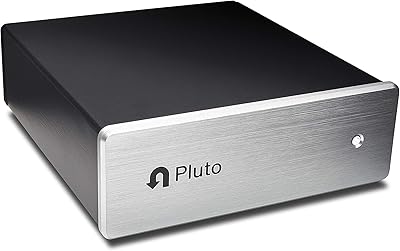
U-Turn Audio Pluto 2 Phono Preamp
82%
88%
Audio Clarity
91%
Signal-to-Noise Performance
86%
RIAA Equalization Accuracy
84%
Subsonic Filter Effectiveness
83%
Build Quality
More
Pro-Ject Phono Box E Phono Preamplifier
79%
83%
Sound Quality
88%
Noise Floor
74%
Build Quality
91%
Ease of Setup
86%
Value for Money
More
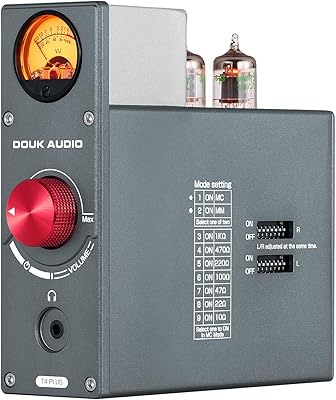
Douk Audio T4 Plus
Douk Audio T4 Plus
78%
78%
Sound Quality
81%
Phono Stage Performance
74%
Headphone Amplifier
88%
Value for Money
76%
Build Quality & Construction
More
Arylic BP50 Bluetooth Home Audio Preamplifier
71%
83%
Ease of Setup
61%
Bluetooth Reliability
72%
Sound Quality
88%
Feature Set
58%
App Experience
More
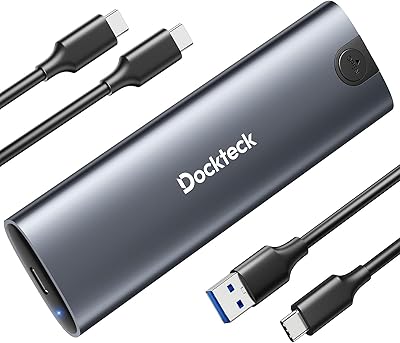
dockteck DH0002 M.2 NVMe/SATA SSD Enclosure

84%
88%
Transfer Speed (NVMe)
76%
SATA Drive Performance
83%
Build Quality
93%
Ease of Setup
79%
Thermal Management
More
Waxness Spa Choice Natural Honey Gel Hard Wax Beads 2.2 lb / 1 kg Pack of 2

85%
88%
Effectiveness for Coarse Hair Removal
91%
Gentleness on Sensitive Skin
84%
Ease of Use and Application
75%
Texture Consistency
90%
Pack Size and Value for Money
More
Nécessaire The Hand Cream, 2.2 fl oz
89%
91%
Hydration Effectiveness
94%
Absorption Speed
93%
Non-Greasy Formula
89%
Skin Sensitivity Compatibility
87%
Fragrance-Free Quality
More

FAQ

It depends on how serious you are about your vinyl setup. The phono stages built into entry-level turntables and budget receivers are functional, but they are usually designed to minimize cost rather than maximize audio quality. A dedicated unit like the Mani 2 typically offers a significantly lower noise floor and more accurate RIAA equalization, which translates to a noticeably cleaner, more detailed sound — especially at lower listening volumes or with sensitive speakers.

Yes, and this is one of the preamp's real strengths. The selectable gain settings go up to 60 dB, which covers most low-output MC cartridges, and the impedance loading options down to 38Ω let you match the preamp to your specific cartridge's requirements. Just check your cartridge's spec sheet for recommended gain and load impedance, then set the DIP switches accordingly.

Technically you can use it with a quality step-down voltage converter that brings 240V down to 115V, but the Schiit Mani 2 Phono Preamplifier is not officially supported outside of North America. If you go the converter route, make sure the converter is rated well above the unit's actual power draw to avoid noise or stability issues. Many UK buyers simply opt for a region-appropriate alternative to avoid the hassle.

You flip the unit over and adjust a set of small DIP switches on the underside — it is straightforward once you have the manual in front of you, but it is not the kind of thing you want to do freehand. The switches are labeled, but the labels are small. If you are setting it up for a single cartridge and leaving it, you will only need to do this once. If you swap cartridges regularly, the process gets tedious quickly compared to units with external selectors.

The subsonic filter cuts very low frequency energy — below 15 Hz — that is inaudible on its own but can cause your woofers to visibly pump and waste amplifier power, particularly on warped records. If you have ever seen your speaker cones moving heavily even when music sounds normal, that is likely subsonic energy at work. The 6 dB slope is a gentle cut suited to mild issues, while the 12 dB slope is more aggressive for more serious warp problems. If your records are flat and your turntable is well-isolated, you may not need it at all.

No — this preamp has no headphone output whatsoever. It is a single-purpose device: it takes the signal from your turntable and outputs it at line level to your amplifier or receiver. For headphone listening from vinyl, you would need a separate headphone amplifier downstream.

The Mani 2 is a meaningful step up rather than just a cosmetic refresh. The key additions are the selectable impedance and capacitance loading options, the subsonic filter (which the original lacked), and an improved noise floor. The original Mani was well-regarded for its price, but the Mani 2 is genuinely more versatile — particularly for anyone running a moving coil or moving iron cartridge that demands specific loading.

Like most solid-state analog gear, this preamp benefits from a brief warm-up period of around 15 to 30 minutes after being powered on cold. Most users leave it powered continuously or switch it on a few minutes before listening, which avoids any sonic inconsistency from a cold start. It does not have a standby mode, so it will draw power continuously if left on.

Most moving magnet cartridges specify a recommended capacitance load in their documentation, typically somewhere between 100pF and 200pF when accounting for the capacitance of your tonearm cable. A common starting point is 100pF or 150pF, but checking your cartridge's spec sheet and factoring in your cable's capacitance will give you the most accurate result. If you notice the highs sounding harsh or rolled off, adjusting capacitance is often the fix.

At the 35 dB and 45 dB gain settings used for standard MM cartridges, background noise is very low and unlikely to be audible in any typical listening environment. At the higher 60 dB setting needed for very low-output MC cartridges, a faint residual noise can become audible on high-efficiency speakers in a quiet room — but this is a physics reality at extreme gain levels and is not unique to this unit. For most setups and most cartridges, the noise performance is genuinely impressive for the price.

Where to Buy