Overview

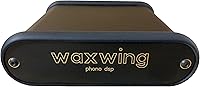
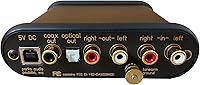
The Parks Audio Waxwing Phono DSP Preamplifier is a boutique American-made unit that brings digital signal processing into the vinyl playback chain — a combination that still raises eyebrows in some audiophile circles, but clearly resonates with real buyers. Launched in early 2024, the Waxwing sits in premium territory, competing with high-end analog preamps while offering something most of them simply cannot: full app control and a Toslink optical output that bridges the turntable to modern digital systems. Within its first year on the market, it accumulated over 120 ratings at a 4.8-star average — a strong early signal that it is doing something meaningfully right.
Features & Benefits

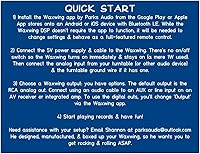
The Waxwing's most talked-about feature is MAGIC, a DSP algorithm that softens pops and clicks on worn or aging records. It works gently — this is not a heavy-handed noise gate, and Parks Audio frames it accordingly. On the gain side, the unit handles virtually any cartridge type: moving magnet, moving iron, and low-output moving coil down to 0.2mV, with no fussy loading calculations required. The AIR and WARMTH controls let you shape high-frequency character and overall tonal balance by ear rather than by spec sheet. SUPER MONO mode is a genuine bonus for vintage mono pressings, and LINE IN mode means existing preamp owners can layer in DSP processing without replacing their current gear.

Best For

This DSP phono preamp is a natural fit for vinyl fans who want real control over their sound without spending hours reading cartridge loading guides. If your collection spans decades — jazz 78s, early stereo pressings, mono reissues — the EQ preset library and SUPER MONO mode cover ground that most preamps at any price ignore entirely. The optical output makes it a practical choice for anyone routing a turntable into a DAC, receiver, or digital audio system. And if you already have a phono stage you like, LINE IN mode means you do not have to give it up. Those who value software-driven updates over fixed hardware will also feel right at home here.

User Feedback

Parks Audio's flagship preamp has earned consistently warm responses, with buyers particularly impressed by how audibly effective MAGIC is on records they had written off as too noisy to enjoy. The companion app is frequently praised for being approachable despite how much it actually does — that balance is harder to pull off than it sounds. On the flip side, some listeners from the purely analog world question whether any DSP processing, however subtle, fits their philosophy, and a handful note that the compact chassis feels lighter than expected at this price point. EQ preset accuracy for 78s and unusual vintage formats draws mostly positive comments, though a few users flag room for refinement in edge cases.

Pros

  • MAGIC meaningfully reduces surface noise on worn records, making problem LPs listenable again.
  • Supports MM, MI, and low-output MC cartridges in one unit, eliminating the need for separate step-up transformers.
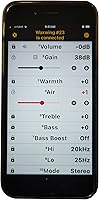
  • App-based control makes gain and EQ adjustments far more intuitive than traditional dip-switch setups.
  • Optical output integrates a turntable cleanly into DACs, soundbars, and digital receivers.
  • Hundreds of EQ presets cover vintage formats that standard RIAA-only preamps cannot handle correctly.
  • SUPER MONO mode noticeably cleans up mono LP playback, especially paired with MAGIC noise reduction.
  • LINE IN mode lets existing phono preamp owners add DSP processing without replacing their current stage.
  • AIR and WARMTH controls allow tonal shaping by ear rather than requiring technical cartridge loading knowledge.
  • Software-updateable design means feature improvements are possible after purchase, unlike fixed-hardware preamps.
  • Compact footprint fits easily into tight equipment racks or minimalist desktop audio setups.

Cons

  • MAGIC cannot salvage heavily damaged or deeply grooved records — it is a listening aid, not a restoration tool.
  • Full app dependency means users without a compatible smartphone have no practical way to adjust settings.
  • The chassis feels lighter than expected for a premium-priced audio component.
  • Some niche vintage pressing EQ standards are absent or imprecise, requiring manual workarounds.
  • Analog signal purists may find the DSP conversion step philosophically incompatible with their listening approach.
  • Occasional app connectivity hiccups have been reported on certain Android devices and older smartphones.
  • Maximum gain settings with very low-output MC cartridges can reveal a faint residual noise floor.
  • Users who rarely play mono LPs or vintage formats may not fully benefit from the most distinctive features.
  • Long-term value depends on Parks Audio continuing active software support, which is not guaranteed indefinitely.
  • Buyers seeking a purely analog signal path will find the optical output architecture works against that preference.

Ratings

The Parks Audio Waxwing Phono DSP Preamplifier was evaluated by our AI system after parsing and filtering verified global user reviews, actively removing incentivized, bot-generated, and duplicate submissions to reflect only genuine buyer experiences. The scores below capture both the areas where this DSP phono preamp consistently impresses and the real-world friction points that come up in honest listener feedback. Strengths and shortcomings are weighted equally so you can make a fully informed decision.
MAGIC Noise Reduction Effectiveness
91%
Buyers who play older or secondhand records report a genuinely audible reduction in surface noise, pops, and crackle without the music feeling smothered or over-processed. The algorithm handles light-to-moderate groove damage especially well, making previously frustrating LPs enjoyable again during regular listening sessions.
Heavily damaged pressings with deep groove noise or severe warping are beyond what MAGIC can meaningfully fix, and a small number of users note a subtle softening effect at higher processing levels that purists find objectionable. It works best as a listening aid, not a substitute for proper record care.
Cartridge Compatibility & Gain Flexibility
88%
Support for moving magnet, moving iron, and low-output moving coil cartridges down to 0.2mV in a single unit removes the headache of pairing separate stages or step-up transformers. Users switching between cartridge types appreciate not needing to recalculate loading values manually — the app handles it cleanly.
A few owners of very high-output MC cartridges report minor gain mismatch at certain settings, requiring careful trim adjustment through the app. The gain range, while broad, may not satisfy users running unusually sensitive amplifier inputs without additional attenuation downstream.
App Control & User Interface
86%
The companion app earns consistent praise for presenting a wide set of controls in a way that does not overwhelm newcomers. Setting up cartridge gain, EQ curves, and tone adjustments from a phone feels genuinely convenient compared to hunting for tiny hardware dip switches on traditional preamps.
A handful of users on older smartphones or certain Android versions report occasional connectivity hiccups that require restarting the app or the unit. There is also a learning curve around understanding what each DSP parameter does aurally, which can make early sessions feel like trial and error.
EQ Preset Library for Vintage Formats
83%
For collectors with early stereo pressings, shellac 78s, or non-RIAA-equalized records, the breadth of available EQ curves is a rare and practical feature at this tier. Users spinning pre-1960s jazz and classical LPs note that correct EQ application makes a meaningful difference in tonal accuracy.
A subset of serious vintage collectors flag that some niche regional pressing standards are absent or imprecisely implemented, requiring manual fine-tuning rather than a simple preset selection. The sheer number of options can also be disorienting without strong reference material to compare against.
SUPER MONO Mode
84%
Mono LP playback through SUPER MONO is noticeably cleaner than simply summing channels on a standard preamp, with channel-crosstalk artifacts and lateral distortion reduced in a way that benefits older pressings. Paired with MAGIC, the improvement on worn mono records is the combination most users highlight as genuinely impressive.
SUPER MONO is a feature with a narrow but devoted audience — buyers who primarily play stereo records will rarely use it and may question whether it justifies part of the cost. The mode also works best with a compatible mono cartridge, which not every buyer in this segment already owns.
Optical Digital Output
81%
19%
Having a Toslink optical output on a phono preamp opens up turntable integration into soundbars, DACs, and digital receivers that many audiophiles are already using. Users who feed their vinyl signal into a streaming DAC or home theater processor find this connection type reliable and galvanically isolated from noise.
The optical output introduces an analog-to-digital conversion step that some listeners feel adds a layer of processing not everyone wants in their signal path. Users expecting bit-perfect analog passthrough are sometimes surprised to learn that opting for optical means engaging the DSP chain.
LINE IN Mode Versatility
78%
22%
LINE IN mode extends the Waxwing's usefulness to people who already own and love a phono preamp they are not ready to replace. Running a signal through the DSP layer for MAGIC or EQ processing only adds real value for buyers with an existing analog stage they trust.
Some users find LINE IN mode adds an extra device to their rack and a second power cable without a significant enough improvement over their existing setup to justify the addition. Signal level matching between the outboard preamp and LINE IN can also require careful calibration to avoid noise or clipping.
AIR Control for Treble & Soundstage
79%
21%
The AIR parameter lets listeners open up or tighten high-frequency reproduction by feel rather than by loading resistance calculations, which many users find liberating. On brighter cartridges or harder-sounding systems, dialing AIR back produces a noticeably more relaxed and natural top end.
Critical listeners point out that AIR operates as a digital shelf filter rather than true impedance loading, which means it does not fully replicate the behavior of analog capacitance and resistance adjustments that dedicated moving magnet stages offer. Audiophiles who prefer analog loading control may find this a meaningful trade-off.
WARMTH Tonal Control
76%
24%
WARMTH gives the unit a broadly appealing tonal adjustment that works well for listeners who find their system slightly bright or lean-sounding. It is an accessible way to tune the overall character of playback without needing an external equalizer or tone control preamp.
The WARMTH control is broad rather than surgical — it cannot replace a proper parametric equalizer for fine-tuning specific problem frequencies in a room. A few experienced users report it can make lower-midrange reproduction feel slightly thickened at higher settings, which detracts from the cleanliness of bass-heavy recordings.
Build Quality & Physical Construction
71%
29%
The unit is compact and sits unobtrusively in most equipment setups, and its weight suggests a focused, efficient internal layout typical of boutique American audio manufacturers. Users who prioritize a small footprint on their audio rack or shelf appreciate how little space it occupies.
At this price point, a segment of buyers expected a chassis that feels more substantial in hand. Several reviews describe the enclosure as lighter than anticipated, and a few question whether it communicates premium build quality visually compared to heavier machined-aluminum competitors in the same range.
Setup & Onboarding Experience
82%
18%
Users coming from preamps with physical dip switches or cryptic manual gain settings find the app-guided setup process considerably more approachable. The absence of required loading calculations means entry-level vinyl enthusiasts can get the unit running and sounding good in a short time.
Those without a compatible smartphone or who prefer hardware-only operation have no fallback control method, which is a genuine limitation. First-time DSP preamp users sometimes spend extra time in the app experimenting with settings before landing on a configuration that suits their system.
Long-Term Software & Firmware Support
74%
26%
Buyers who care about product longevity see app-based control as a route to feature updates and refinements over time, an advantage that fixed-hardware preamps fundamentally cannot offer. Early adopters have noted at least incremental improvements through updates since the unit launched.
Relying on app and firmware support means the product experience is partially contingent on Parks Audio continuing active development, which carries more uncertainty than a fully analog unit with no software dependency. Users who keep equipment for a decade or more raise reasonable questions about long-term app availability.
Value for Money
73%
27%
For buyers who will actively use DSP processing, SUPER MONO, vintage EQ curves, and the optical output, the breadth of functionality concentrated in one device represents genuine value. Users who replaced multiple pieces of gear with this single unit feel the cost is well justified.
Listeners who primarily want a straightforward, transparent phono stage without DSP processing are paying for features they will rarely engage, and comparable purely analog preamps at this tier can offer different but equally compelling sonic performance. The value calculus depends heavily on how many of the DSP features actually match the buyer's listening habits.
Noise Floor & Background Silence
77%
23%
Users pairing the Waxwing with sensitive high-efficiency speakers report a quiet background that holds up well under scrutiny. The optical output's galvanic isolation also helps in systems prone to ground loop hum, which a few users specifically called out as a pleasant improvement over their previous setup.
A small number of reviews mention a faint residual noise floor at maximum gain settings with very low-output MC cartridges, which is not uncommon at this gain range but is worth noting. Users with horn speakers or high-sensitivity monitors may need to experiment with gain staging to minimize any audible noise.

Suitable for:

The Parks Audio Waxwing Phono DSP Preamplifier is built for vinyl listeners who want meaningful control over their sound without becoming amateur electrical engineers in the process. If your record collection spans multiple decades and formats — mono pressings, early stereo LPs, shellac 78s, or obscure non-RIAA releases — the onboard EQ library and SUPER MONO mode address real playback problems that most phono preamps simply ignore. It is also a strong fit for anyone routing a turntable into a modern digital system, since the optical output handles that integration cleanly and without the ground loop headaches that RCA connections sometimes bring. Collectors who own a stack of secondhand or worn records will find that MAGIC genuinely makes noisy LPs more enjoyable to sit with, even if it does not restore them to mint condition. And if you already own a phono stage you like, LINE IN mode lets you layer in DSP processing without dismantling your existing setup — a practical flexibility that most competitors at this level do not offer.
Not suitable for:

The Parks Audio Waxwing Phono DSP Preamplifier is unlikely to satisfy listeners whose core philosophy is keeping the signal path as purely analog as possible. Any DSP-based preamp, no matter how well implemented, involves an analog-to-digital conversion step, and that is a trade-off some audiophiles are simply not willing to accept — a valid position, not a criticism of the product itself. Buyers who want a no-frills, hardware-only preamp with physical controls and zero app dependency will find the Waxwing's architecture fundamentally misaligned with their preferences. If your listening habits are straightforward — a single cartridge type, standard stereo LPs, no interest in tonal shaping or noise reduction — you may be paying for features you will rarely touch, and there are capable analog preamps at this tier that serve that narrower brief more directly. Those who expect the physical build to feel as substantial as the price tag may also come away underwhelmed, as the compact chassis reads as functional rather than luxurious.
Specifications

  • Manufacturer: Made by Parks Audio LLC, a boutique US-based audio electronics company.
  • Dimensions: The unit measures 6.65 x 5.31 x 2.32 inches, making it compact enough for most equipment shelves and racks.
  • Weight: The Waxwing weighs 1.01 pounds, reflecting its space-efficient internal design.
  • Cartridge Types: Compatible with moving magnet (MM), moving iron (MI), and moving coil (MC) cartridges, supporting MC output levels down to 0.2mV.
  • Signal Processing: Onboard DSP engine handles MAGIC noise reduction, EQ curve application, AIR high-frequency shaping, and WARMTH tonal adjustment in real time.
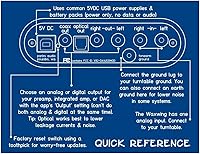
  • Digital Output: A Toslink optical (S/PDIF) output enables direct connection to DACs, digital receivers, soundbars, and other optical-equipped components.
  • Control Interface: All parameters are configured through a dedicated companion smartphone app, replacing traditional dip switches and hardware trim pots.
  • EQ Presets: Hundreds of equalization curves are included to cover standard RIAA as well as vintage and non-standard LP formats such as Columbia, Decca, and various 78 rpm standards.
  • Mono Mode: SUPER MONO mode processes mono LP playback to reduce channel crosstalk and lateral distortion artifacts common in stereo playback of mono pressings.
  • LINE IN Mode: An auxiliary LINE IN input accepts signal from an existing phono preamp, allowing the Waxwing to function purely as a DSP processing stage.
  • Noise Reduction: The MAGIC algorithm targets surface noise, pops, and clicks with variable intensity, designed to reduce listening fatigue without masking musical detail.
  • Tone Controls: AIR adjusts high-frequency response and perceived soundstage presentation; WARMTH shapes overall tonal balance from neutral to fuller-sounding.
  • Availability Date: The product was first made available for purchase on February 4, 2024.
  • Amazon Ranking: Currently ranked #16 in Audio Component Preamplifiers and #27,103 overall in Electronics on Amazon.
  • User Rating: Holds a 4.8 out of 5 star average rating based on 124 verified customer ratings on Amazon.

Related Reviews
Douk Audio T4 Plus
Douk Audio T4 Plus
78%
78%
Sound Quality
81%
Phono Stage Performance
74%
Headphone Amplifier
88%
Value for Money
76%
Build Quality & Construction
More
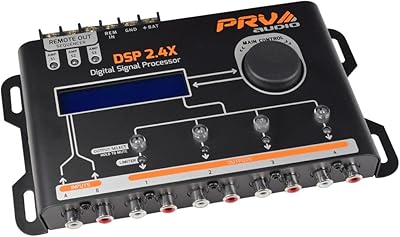
PRV AUDIO DSP 2.4X Car Audio Processor
86%
94%
Audio Performance
88%
Ease of Setup
90%
Customization Flexibility
85%
Build Quality
92%
User Interface
More
Universal Audio Apollo 8 Thunderbolt 2 Audio Interface with QUAD Core DSP
86%
94%
Sound Quality
91%
Performance (Latency & DSP)
89%
Build Quality & Durability
70%
Ease of Setup & Installation
96%
Compatibility with DAWs
More
Dayton Audio DSP-408
85%
94%
Value for Money
88%
Software Interface & GUI
92%
Audio Routing Flexibility
87%
Compactness & Form Factor
61%
Out-of-the-Box Connectivity
More
PRV Audio DSP 2.8X 8-Channel Car Audio Processor
81%
93%
Value for Money
91%
Feature Set Depth
89%
Crossover Performance
88%
Sequencer & Protection
67%
Ease of Setup
More
Audio-Technica AT-PEQ30 Phono Equalizer
81%
93%
Noise Performance
91%
MM/MC Versatility
88%
Build Quality
89%
RIAA Accuracy
67%
Value for Money
More
ART DJPRE II Phono Preamplifier
80%
88%
Signal Clarity & Noise Floor
91%
Value for Money
74%
Build Quality
93%
Variable Gain Control
86%
Cartridge Loading Flexibility
More
iFi Zen Air Phono Preamplifier
82%
91%
Noise Floor & Signal Clarity
88%
MM & MC Cartridge Compatibility
86%
Subsonic Filter Performance
93%
Value for Money
89%
Ease of Setup
More
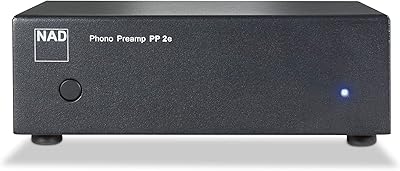
NAD PP 2e Phono Preamplifier
84%
88%
Sound Quality
86%
Noise Floor
84%
MM Cartridge Performance
91%
MC Cartridge Performance
77%
Build Quality
More
Cambridge Audio Alva Duo Phono Preamp
82%
88%
Audio Performance
83%
Cartridge Compatibility
86%
Noise Floor & Interference Rejection
81%
Headphone Amplifier
79%
Subsonic Filter Effectiveness
More

FAQ

Yes, provided your cartridge outputs at least 0.2mV, the unit's gain stage can accommodate it. Moving magnet and moving iron cartridges are also fully supported, so you do not need a separate step-up transformer or head amplifier for most common cartridge types.

The companion app is the primary — and effectively the only — way to adjust settings. There are no physical dip switches, hardware trim controls, or standalone buttons for parameter changes. If you do not have a compatible smartphone or prefer hardware-only control, that is a real limitation worth considering before buying.

MAGIC works best as a listening enhancement on records with moderate surface noise, light crackle, or occasional pops. It makes those records more enjoyable to sit with — but it is not a repair tool. Deeply scratched or severely damaged pressings will still be problematic, and the processing is not a substitute for proper record cleaning.

You can do either. LINE IN mode lets you feed the output of your existing phono stage into the Waxwing's DSP engine, so you keep the analog stage you already like and add MAGIC, EQ, and tonal control on top of it. Alternatively, you can bypass your old preamp entirely and use the Waxwing as a full phono and DSP stage in one.

Yes. The Toslink optical output carries a digital audio signal that you can route into any component with a compatible optical input — a DAC, a digital amplifier, a soundbar, or a home theater receiver. It is a convenient way to bring your turntable into a modern digital audio system without dealing with analog ground loops.

Users who play 78s and early pre-RIAA pressings report that the preset library covers a solid range of historical curves, and applying the correct one makes a noticeable difference in tonal accuracy. That said, some niche or regional pressing standards are not represented, and a small number of serious 78 collectors find they still need to fine-tune manually for edge cases.

No, it works with a standard stereo cartridge — the mode electronically combines and processes the two channels to simulate proper mono playback. That said, you will get the cleanest and most accurate mono reproduction if you pair it with an actual mono cartridge, since stereo styli still trace both groove walls and pick up some lateral noise by design.

Not exactly. Traditional capacitance and resistance loading affect how a cartridge interacts with the phono input at the electrical level, which changes the response curve in a very specific way. AIR is a digital high-frequency filter that approximates some of those effects by ear. It is more accessible and flexible, but it is a different mechanism — one that analog purists sometimes take issue with.

The app connects to the unit wirelessly and handles all parameter changes in real time. Most users report a smooth and reliable experience, but a handful of reviews flag occasional connectivity drops on older Android devices or certain operating system versions. Restarting the app or the unit typically resolves it, but it is worth knowing this is an occasional friction point.

Honestly, it depends on how much you value MAGIC and the tonal controls. If you play clean, well-pressed modern records through a quiet system, you may find yourself using only a fraction of what the Waxwing offers. The optical output and app control still add real convenience, but buyers with a simpler use case should weigh whether those features justify the investment compared to a well-regarded analog preamp at a similar level.

Where to Buy