Overview

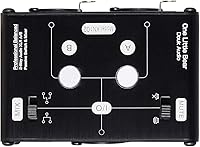
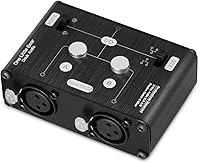
The Douk Audio KN102 2-IN-1-OUT XLR Switcher is a passive signal routing box that does exactly what it promises: connect two balanced XLR sources to a single destination and switch between them on demand. No power supply, no drivers, no setup ritual — just plug in your cables and go. Built around an all-aluminum enclosure, it sits comfortably on a desk or tucks into a gear bag without demanding much real estate. For home studio work, live sound, or quick A/B comparisons between two mics, this passive switch box fills a genuinely useful gap at a practical price point.
Features & Benefits

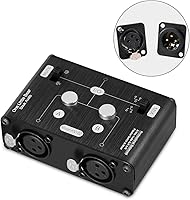
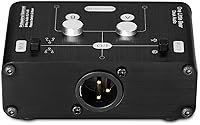
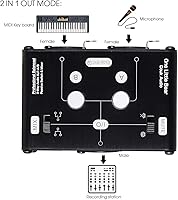
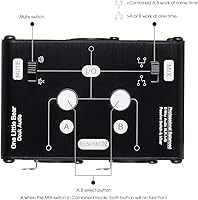
The KN102 gives you three operating modes: source A alone, source B alone, or a Mix setting that routes both inputs simultaneously to the output. There is also a one-key mute function that silences the signal without touching a cable — handy during live transitions. The gold-plated XLR connectors help maintain signal integrity, and the aluminum shell does a decent job blocking interference pickup. Worth noting on Mix mode: because this is a passive design, combining two sources can introduce a slight level drop depending on source impedance. That is not a flaw so much as a physics reality of passive mixing.

Best For

This XLR switcher earns its place in a few specific scenarios. Studio musicians who regularly compare two microphones — a large-diaphragm condenser against a dynamic, say — without re-patching cables will find it genuinely convenient. Podcasters and streamers can keep a backup mic connected and switch over instantly if the primary fails mid-session. Live sound techs routing two sources to a single channel will appreciate having a physical, no-latency toggle at their fingertips. If you need active buffering or gain control, look elsewhere — but for plug-and-play passive routing, this passive switch box is hard to argue with.

User Feedback

Sitting at 4.1 out of 5 across 165 ratings, the KN102 has earned a broadly positive reception. The most consistent praise centers on build quality for the price — buyers are frequently surprised by how solid the aluminum chassis feels in hand. Setup simplicity is another recurring highlight; there is nothing to configure, which is exactly what most buyers want. On the flip side, a handful of reviewers expected active switching behavior and were let down when Mix mode did not deliver full-level output from both sources. That is an impedance issue inherent to passive circuit design, not a product defect. Negative reviews are sparse and mostly reflect a mismatch between expectations and reality.

Pros

  • Zero configuration required — plug in two XLR sources and you are operational in under a minute.
  • The all-aluminum chassis feels substantially more durable than competing plastic units at a similar price point.
  • Gold-plated XLR connectors maintain clean contact and seat reliably even after repeated cable swaps.
  • A-only and B-only modes deliver clean, uncolored signal with no audible noise floor increase.
  • The one-key mute function lets you silence output instantly without touching a single cable.
  • Compact enough to sit on a crowded desk or disappear into a gear bag without taking up meaningful space.
  • No power supply needed — one less cable, one less point of failure in any setup.
  • The KN102 works reliably across a wide range of XLR-equipped gear, from condenser mics to DI boxes.
  • Physical switches are firm and deliberate, reducing the chance of accidentally bumping the unit into the wrong mode.

Cons

  • Mix mode produces a noticeable level drop due to passive impedance loading — not suitable for critical blending use cases.
  • No printed manual or quick-start guide is included, leaving first-time users to figure out modes by trial and error.
  • Switch labels are minimal; under live pressure, Mute and Mix positions can be confused without prior familiarity.
  • The matte finish picks up fingerprints and light surface scratches more readily than the photos suggest.
  • Toggle switches can feel slightly loose after months of daily heavy use, raising questions about long-term durability.
  • Adjacent XLR ports feel cramped when using thick or right-angle cables, limiting connector flexibility.
  • Passive shielding has real limits in electrically noisy environments like live stages with dimmer packs nearby.
  • No trim or attenuation control means you cannot compensate for level mismatches between the two input sources.

Ratings

Our scores for the Douk Audio KN102 2-IN-1-OUT XLR Switcher were generated by AI after analyzing verified buyer reviews from multiple global markets, with spam, bot-submitted, and incentivized feedback actively filtered out. The ratings reflect a balanced picture — genuine strengths are credited where earned, and real frustrations are documented without softening. Whether you are weighing this passive switch box as a studio utility or a live-sound backup tool, the scorecard below gives you an honest, ground-level view of what actual users experienced.
Build Quality
83%
The all-aluminum chassis consistently surprises buyers who expect plastic at this price tier. It feels dense and road-worthy in hand, and the XLR ports sit firmly in the shell without wobble — a detail that matters when you are swapping cables repeatedly during a recording session.
The toggle switches, while functional, lack the tactile snap of higher-end units. A few users noted the knobs feel slightly loose after extended daily use, suggesting the internal mounting could be more robust for heavy-rotation studio workflows.
Signal Integrity
78%
22%
Running balanced XLR signals through the KN102 in A or B mode, most users report no audible coloration or noise floor increase. The gold-plated connectors appear to do their job — particularly in longer cable runs where an unshielded passive box would typically invite interference.
Mix mode is where signal integrity becomes a genuine conversation. Combining two sources passively causes a measurable level drop due to impedance loading, which some users discovered mid-session rather than in advance. This is physics, not a defect, but it catches people off guard.
Ease of Setup
94%
There is genuinely nothing to configure. Plug in two XLR sources, connect your output, flip the switch — you are done. Podcasters and home studio owners repeatedly highlight this as a major selling point, especially compared to software-based routing solutions that require driver installs.
The lack of any documentation or labeling beyond the physical switches means first-time users occasionally have to experiment to understand which switch position corresponds to which mode. A printed quick-start card would eliminate this minor friction entirely.
Value for Money
89%
For a passive switcher with an aluminum build, gold-plated connectors, and three operating modes, the price-to-utility ratio strikes most buyers as genuinely fair. Studio musicians who previously re-patched cables manually to compare mics find this box pays for itself in convenience almost immediately.
The value equation weakens if you need active mixing or consistent output levels in Mix mode. Buyers who discover the passive limitations after purchase tend to feel they should have spent more on an active solution — a gap the product description could address more clearly upfront.
Switch Modes & Functionality
76%
24%
Having A-only, B-only, Mix, and Mute in a single compact unit covers the practical needs of most switching scenarios. Live engineers appreciate being able to mute a source instantly without touching a cable, and the A/B toggle is fast enough for real-time mic comparisons during a session.
The Mix mode, in practice, is more limited than it sounds on paper. The passive level drop when combining sources makes it unreliable for critical monitoring comparisons, and there is no gain trim to compensate. For users who bought this specifically to blend two sources, that is a significant limitation.
Portability & Size
91%
The compact footprint fits on a crowded desk without eating up patch bay real estate, and it slips into a gear bag with no fuss. Field recorders and mobile podcasters have noted it as an ideal travel companion — lightweight enough to forget it is in the bag until you need it.
The small size, while convenient, means the XLR connectors on adjacent ports can feel slightly cramped when using thick or right-angle XLR cables. It is a minor ergonomic issue, but worth knowing if your cable inventory runs toward bulkier connectors.
Noise & Interference Rejection
77%
23%
The aluminum enclosure provides meaningful shielding in typical home studio and stage environments. Users running the KN102 near computer setups or lighting rigs report no perceptible hum or RF pickup in A or B mode, which speaks well of the chassis design for a passive unit.
In electrically noisy environments — near dimmer packs on a live stage, for instance — a small number of users detected faint interference that a grounded active switcher would have rejected. The passive design has inherent shielding limits that become apparent only in demanding conditions.
Connector Quality
82%
18%
Gold-plated XLR connectors are not a marketing bullet point here — users who regularly swap cables notice that the connections seat cleanly and maintain contact without requiring wiggling or seating pressure. For a unit in this price range, that reliability is noteworthy.
The connectors, while solid initially, have drawn occasional comments about fit becoming slightly looser after months of repeated plug-and-unplug cycles. This is unlikely to affect occasional users but is worth monitoring if the box is part of a daily plug-and-play workflow.
Mute Function
81%
19%
The one-key mute is a practical inclusion that most competing units at this price omit entirely. Broadcasters and live performers especially value the ability to cut the signal cleanly between takes or transitions without the noise of physically yanking a cable.
The mute is an all-or-nothing cut — there is no fade or soft mute behavior. In live contexts where an abrupt signal cut could be audible in the house, this is a real limitation. A small number of users expected a more graceful transition and were caught out at inopportune moments.
Compatibility
86%
The KN102 plays well across a wide range of XLR-equipped gear — condenser and dynamic microphones, preamps, MIDI controllers with XLR outputs, and direct injection boxes all connect without issue. This broad compatibility makes it a flexible utility piece rather than a single-use accessory.
Compatibility becomes uncertain with low-impedance ribbon microphones, where the passive circuit can interact unfavorably with source impedance and cause subtle signal loss. This is a niche concern, but ribbon mic users should factor it in before purchasing.
Labeling & Usability
63%
37%
The physical switch labels are legible and the layout is intuitive once you have spent a few minutes with the unit. Most users figure out the mode logic quickly without needing to reference any documentation, which is a credit to the straightforward design.
The absence of a printed manual or even a basic diagram card is a recurring minor complaint. New users occasionally confuse the Mix and Mute positions under pressure, particularly in live settings where there is no time to experiment. Better labeling on the unit itself would help significantly.
Aesthetics & Finish
74%
26%
The matte black aluminum finish looks understated and professional in a studio rack or on a desktop rig. It does not draw attention to itself, which is exactly what most buyers want from a utility box — functional invisibility.
The finish shows fingerprints and light scratches more readily than expected, and a small number of buyers reported minor paint inconsistencies out of the box. None of these affect function, but for buyers who care about a clean, pristine look on their gear shelf, it is worth noting.
Passive Design Transparency
69%
31%
For users who understand passive audio routing, the zero-latency, no-coloration signal path is a deliberate and valuable feature. There are no op-amps, no power rails, and no added noise floor — the signal passes through as cleanly as the connectors and wiring allow.
The product listing does not sufficiently communicate the practical implications of passive design — particularly the Mix mode level drop — leaving a segment of buyers surprised post-purchase. This is less a hardware flaw and more a documentation and expectation-setting failure that contributes to some of the negative reviews.

Suitable for:

The Douk Audio KN102 2-IN-1-OUT XLR Switcher is a strong fit for anyone who regularly works with two XLR audio sources and needs a fast, reliable way to route them without re-patching cables every time. Home studio owners comparing microphones — a condenser against a dynamic, for instance — will find it immediately practical, eliminating the tedious swap-and-listen cycle that slows down mic selection sessions. Podcasters and streamers who keep a backup microphone on standby will appreciate having a physical toggle that works instantly and silently, no software involved. Live sound engineers who need to route two sources to a single input channel for quick A/B checks during soundcheck will also get real utility out of the KN102. Essentially, if your workflow is straightforward — switch between two sources, maybe mute one, and keep the signal balanced — this passive switch box handles it cleanly and without fuss.
Not suitable for:

The Douk Audio KN102 2-IN-1-OUT XLR Switcher is the wrong tool if you need active signal management, consistent output levels in Mix mode, or any form of gain control. Because it is entirely passive, combining two sources simultaneously causes an inherent impedance-related level drop — not a malfunction, just physics — which makes Mix mode unreliable for critical monitoring or live blending scenarios. Users working with ribbon microphones should be cautious, as the passive circuit can interact unfavorably with the low-impedance output of certain ribbons and introduce subtle signal loss. If your environment involves significant electromagnetic interference — near stage dimmers or dense live rig setups — the passive shielding has real limits that a grounded active unit would handle more robustly. Buyers expecting a compact mixer or a powered A/B box with buffer amplification will be disappointed; this is a switcher, not a signal processor, and the use case needs to match that scope precisely.

Specifications

  • Brand: Manufactured by Nobsound, sold under the Douk Audio brand.
  • Model: The model designation is KN102, 2-IN-1-OUT configuration.
  • Type: Fully passive XLR balanced audio switcher requiring no external power source.
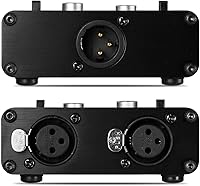
  • Configuration: Accepts two balanced XLR inputs and routes them to a single balanced XLR output.
  • Switch Modes: Operates in four modes: Source A only, Source B only, Mix (both sources simultaneously), and Mute.
  • Connector Type: All connectors are standard 3-pin XLR balanced, gold-plated for reduced signal attenuation.
  • Signal Type: Designed exclusively for balanced XLR audio signals; unbalanced sources are not natively supported.
  • Shell Material: Enclosure is constructed from aluminum alloy, providing passive EMI shielding and structural rigidity.
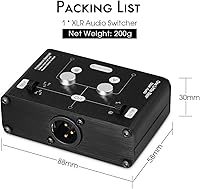
  • Dimensions: Unit measures 5.28 x 3.62 x 2.09 inches (approximately 134 x 92 x 53 mm).
  • Weight: Complete unit weighs 6.4 ounces (approximately 181 grams).
  • Power Requirement: Fully passive design; no power supply, batteries, or USB connection required.
  • Color: Available in matte black finish.
  • Compatible Devices: Compatible with microphones, MIDI keyboards, preamps, and other XLR-equipped recording or playback devices.
  • Noise Shielding: Aluminum enclosure provides passive shielding against electromagnetic interference in standard studio and stage environments.
  • Package Contents: Includes the KN102 switcher unit; no cables, manual, or power adapter are included in the box.
  • Manufacturer: Produced by Nobsound, a Chinese audio accessories brand known for budget-oriented studio utility hardware.
  • Release Date: First made available for purchase on June 24, 2019.
  • BSR Rank: Ranks at number 157 in the Audio and Video Selector Boxes category on Amazon at time of listing.

Related Reviews
Douk Audio OK013 Mini 2.1 Channel HiFi Stereo Amplifier

75%
83%
Value for Money
71%
Sound Output & Power
77%
Build Quality
88%
Ease of Installation
58%
Thermal Management
More
Head & Shoulders 2-in-1 Dandruff Shampoo and Conditioner Green Apple, 32.1 Fl Oz, 2 Pack
85%
90%
Dandruff Control Effectiveness
85%
Fragrance (Green Apple)
92%
Value for Money
87%
Moisturizing Properties
88%
Ease of Use (2-in-1)
More
Douk Audio A5
Douk Audio A5
81%
88%
Sound Clarity
93%
Value for Money
81%
Build Quality
86%
High-Pass Filter Usability
74%
Op-Amp Swapping Experience
More
Fosi Audio MC351
Fosi Audio MC351
81%
83%
Sound Quality
91%
Build Quality
88%
VU Meter
86%
Connectivity & Inputs
71%
Bluetooth Performance
More
1Mii RT5066Pro 2-in-1
73%
91%
Ease of Setup
78%
Audio Quality
63%
Wireless Range (Indoors)
82%
Latency & Audio Sync
86%
Connection Flexibility
More
Dayton Audio DC160-8 6.5-Inch Woofer
80%
93%
Value for Money
78%
Bass Extension
84%
Midbass Clarity
81%
Build Quality & Materials
76%
Unit-to-Unit Consistency
More
Acoustic Audio AA2170 Bluetooth 2.1 Speaker System
76%
83%
Bass Performance
88%
Value for Money
91%
Ease of Setup
79%
Connectivity Range
61%
Satellite Speaker Quality
More
JBL GX328 3.5-Inch Coaxial Car Speakers
74%
88%
Midrange Clarity
51%
Bass Performance
82%
High-Frequency Detail
91%
Installation Ease
73%
Compatibility
More
Acoustic Audio AA2400 2.1 Bluetooth Speaker System
74%
83%
Bass Performance
81%
Value for Money
88%
Connectivity Range
67%
Bluetooth Reliability
62%
Satellite Speaker Quality
More
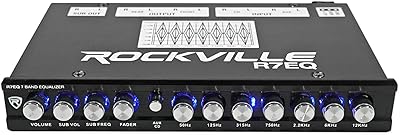
Rockville R7EQ 1/2 Din 7 Band Car Audio Equalizer
85%
89%
Bass Control
85%
Sound Clarity
72%
Ease of Setup
91%
LED Visibility
81%
Durability
More

FAQ

No, not at all. The KN102 is entirely passive, meaning there are no electronics inside that need powering. You just connect your XLR cables and the signal flows through mechanically. It is genuinely plug-and-play with zero setup.

In A-only or B-only mode, the signal passes through with no active processing, so there is no added coloration, latency, or noise floor increase under normal conditions. The gold-plated connectors help minimize resistance at the contact points. The only scenario where signal quality is affected is Mix mode, where combining two passive sources causes a level drop due to impedance interaction — but that is a physics limitation, not a flaw in the unit.

Technically yes, via Mix mode, but with an important caveat: because the design is passive, mixing two sources causes a measurable drop in output level. It is fine for casual monitoring or rough comparisons, but it is not reliable for production-quality blending. If you need true summing with consistent levels, an active mixer or combiner is a better fit.

The mute switch cuts the output signal entirely without requiring you to unplug anything. It is particularly useful for live performers or broadcasters who need to silence their feed between takes or during a transition. Think of it as a clean, instant kill switch for your signal chain.

It can work with ribbon mics, but caution is advised. Ribbon microphones typically have very low output impedance, and a passive switching circuit can interact with that in ways that cause subtle signal loss. If you are using a high-quality ribbon mic for critical recording, it is worth testing carefully or considering an active switcher instead.

Most users describe them as firm and deliberate — they do not wobble or feel flimsy, but they also do not have the premium snap of higher-end gear. For occasional studio use or moderate live applications, they are reliable. If you are switching sources dozens of times daily over a long period, some users have noted the switches can feel slightly less tight over time.

This specific unit is the 2-IN-1-OUT version, so it is designed to take two inputs and send them to one output. Douk Audio also makes a 1-IN-2-OUT version of the KN102 for splitting one source to two destinations. Make sure you are buying the correct configuration for your use case before ordering.

Yes, it works with both dynamic and condenser microphones without issue. Since the unit is passive, it does not supply phantom power — but it also does not block phantom power from passing through if your interface or preamp sends it. Just be aware that phantom power from the output side will reach both input connectors when connected, so avoid plugging in any phantom-sensitive gear on the input side.

None whatsoever. Because there is no digital processing or active circuitry involved, the switch is purely mechanical. The moment you flip to a different source, the signal is there — there is no buffer, no processing delay, nothing. This is one of the genuine advantages of a passive design for live or real-time applications.

For most people it clicks within a few minutes of hands-on use. The labeling on the unit itself is minimal, and there is no printed manual included, so you are essentially figuring it out by feel the first time. Once you have used it through one session, the layout becomes intuitive. A quick tip: connect a source and a monitor before your first use so you can hear which position corresponds to which mode rather than guessing.