Overview

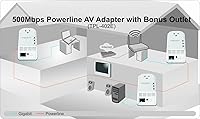
The TRENDnet TPL-402E 500 Mbps Powerline Adapter offers a straightforward answer to one of home networking's most persistent headaches: getting a reliable wired connection to a room where running cable through walls isn't practical. Powerline networking works by sending data signals through your existing electrical wiring — no drilling, no long cable runs snaking across floors. This TRENDnet unit sits in the mid-range of the powerline market, and one detail worth noting upfront is the built-in pass-through outlet, which means you don't sacrifice a wall socket just to plug it in. It's compliant with HomePlug AV and IEEE 1901 standards, so it plays well with other compatible adapters. Just keep in mind: the 500 Mbps figure is a theoretical ceiling, not a guaranteed real-world speed.
Features & Benefits

The most immediately useful thing about this powerline adapter is that it doesn't eat your outlet. The built-in socket lets you plug in another device right below it — a small but genuinely appreciated touch. Pairing is handled by a one-touch Sync button; no software, no browser-based setup, no frustration. There's also a Power Save mode that cuts energy consumption significantly when the connection goes idle, which matters if you're leaving units plugged in around the clock. On the security side, 128-bit AES encryption runs automatically over the electrical line, so your data isn't traveling unprotected. The unit supports a network of up to 16 adapters total, making it workable for multi-room or small office deployments.

Best For

If your home has a room where Wi-Fi just can't reach consistently — a basement, a far corner bedroom, or a home office separated by thick concrete walls — this powerline adapter is worth serious consideration. It's particularly well-suited for home office use, where a stable, low-latency connection matters more than peak wireless speed for video calls or VPN work. Gamers and streamers will also appreciate the wired consistency it provides over wireless alternatives. Renters who can't drill walls will find it a clean, non-destructive solution. It also makes a natural upgrade path for anyone still running an older 200 Mbps HomePlug unit who wants more headroom without switching to a different technology entirely.

User Feedback

With a 3.9-star average across 67 ratings, the TPL-402E lands in solid-but-not-exceptional territory. Buyers who praise it tend to focus on two things: setup simplicity and the practical value of keeping an outlet free. On the critical side, the most consistent complaint is that real-world speeds often fall far short of the 500 Mbps headline — and that gap widens considerably in older homes with aging or mixed-circuit electrical systems. A handful of longer-term owners have raised questions about sustained reliability and whether the units run warmer than expected over time. This adapter has been on the market since 2011, which speaks to a degree of proven durability, though it also means the underlying technology hasn't kept pace with newer standards.

Pros

  • No drilling or cable fishing required — plugs directly into any standard wall outlet.
  • The built-in pass-through socket means you never lose an outlet just to extend your network.
  • Pairing two units takes under five minutes with the one-touch Sync button — no software needed.
  • Automatic 128-bit AES encryption protects data over shared electrical lines without any configuration.
  • Power Save mode reduces idle energy draw significantly, useful for units left plugged in 24/7.
  • Compatible with other HomePlug AV and IEEE 1901 adapters, so it fits into mixed-brand setups.
  • Supports networks of up to 16 units, giving it room to grow across a larger home or small office.
  • In newer homes with modern wiring, this powerline adapter delivers a noticeably steadier connection than a typical Wi-Fi extender.

Cons

  • Real-world speeds routinely fall well short of 500 Mbps, especially across older or mixed electrical circuits.
  • Performance varies dramatically depending on home wiring quality — a factor buyers cannot test before purchasing.
  • Sold as a single unit, so getting a complete transmitter-and-receiver setup means buying two, raising the total cost.
  • At that combined price, newer powerline kits with more current technology become serious competitors.
  • Some users reported intermittent dropouts during peak household power use, requiring occasional reboots.
  • The TPL-402E runs noticeably warm during extended continuous operation, raising durability concerns for always-on use.
  • No management interface is available to monitor speeds, check connection status, or adjust encryption settings.
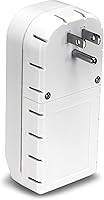
  • The unit's taller profile can be awkward in tight outlet locations, such as behind furniture or under desks.
  • Adding multiple units to the same network progressively reduces throughput for all connected devices.
  • Long-term reliability reports are mixed, with a subset of buyers experiencing failures after one to two years of constant use.

Ratings

The TRENDnet TPL-402E 500 Mbps Powerline Adapter has been scored across 12 categories by our AI system, which analyzed verified global buyer reviews while actively filtering out incentivized, bot-generated, and spam submissions. The scores below reflect an honest synthesis of real-world experiences — the genuine wins and the frustrations — so you can make an informed decision before buying.
Setup & Ease of Use
88%
Most buyers got up and running in under five minutes. The one-touch Sync button handles pairing without any software, app, or browser login — plug both units in, press the button, and the connection is live. That simplicity is consistently the top reason satisfied users recommend it.
A small number of users reported the Sync button failing to pair on the first attempt, requiring unplugging and retrying. Those with older or complex home electrical panels occasionally needed multiple tries before the units found each other reliably.
Real-World Speed Performance
58%
42%
In newer homes with modern wiring on the same electrical circuit, the TPL-402E can deliver genuinely usable throughput — enough for HD streaming, standard video calls, and light file transfers without noticeable lag or buffering interruptions.
The 500 Mbps figure is a theoretical ceiling, and most users never get close to it. In older homes or across different circuits, speeds frequently drop to 50–120 Mbps, and a few buyers on aging wiring reported figures low enough to question the upgrade over basic options.
Connection Stability
71%
29%
For users in newer construction with clean electrical lines, the connection holds steady for days at a time without needing a reset. Home office workers running VPNs or attending video calls reported that the wired link is far more consistent than a Wi-Fi extender in the same spot.
Stability is heavily dependent on electrical wiring quality, which varies enormously house to house. Several buyers reported intermittent dropouts — particularly during peak household power use — requiring periodic reboots to restore a stable link.
Pass-Through Outlet Design
84%
Having a built-in outlet on the front of the adapter is a practical feature that stands out from bare-plug competitors. Users in rooms with limited sockets — home offices, bedrooms with minimal wall outlets — specifically called this out as a deciding factor in their purchase.
The pass-through outlet works fine for standard plugs, but its placement can be awkward when a bulky power brick or angled adapter is needed. A handful of buyers noted the socket sits just low enough that certain plugs partially block access.
Compatibility & Standards
81%
19%
Compliance with both HomePlug AV and IEEE 1901 means the TPL-402E works alongside other brand-name powerline adapters on the same network. Users who already had a starter kit from a different manufacturer were able to add this unit without issues in most cases.
Mixing adapters from different brands, while technically supported, occasionally produced lower-than-expected speeds or pairing headaches. Buyers who mixed older HomePlug 1.0 devices with this unit found the network fell back to the lowest common denominator.
Network Scalability
76%
24%
Supporting up to 16 units on a single network gives this adapter meaningful room to grow. Small office users and people covering multi-floor homes found they could add units to additional rooms without starting over or buying into a new ecosystem.
Throughput per device degrades as more units are added to the network, and TRENDnet does not make that limitation especially clear at purchase. Buyers who expanded to four or more units in the same home noticed a meaningful speed drop across all connected nodes.
Power Efficiency
79%
21%
The automatic Power Save mode is a quietly useful feature for people who leave their network adapters plugged in around the clock. The unit steps down its power draw when no active data is being transferred, which adds up over weeks and months of continuous use.
Some users found the Power Save mode occasionally caused a brief reconnection delay when the network woke back up from an idle state. It is not a major disruption, but users running background sync tasks or smart-home devices noticed the occasional hiccup.
Security
83%
128-bit AES encryption runs automatically over the electrical line without any setup steps from the user. For buyers in apartments or shared buildings where electrical circuits sometimes overlap across units, this built-in protection offers meaningful peace of mind.
There is no dedicated management interface for reviewing or rotating encryption keys, which more security-conscious users found limiting. In a home environment this is rarely a concern, but IT-minded buyers noted the lack of granular control.
Build Quality & Durability
67%
33%
The adapter has a solid enough feel for a wall-plug unit, and the fact that it has been on the market since 2011 without a major redesign suggests it holds up reasonably well under everyday use. Long-term buyers reported no cracking or port degradation over normal use.
Several lower-rated reviews flagged that the units run noticeably warm after extended operation, which raised concerns about longevity for buyers leaving them plugged in permanently. A small number reported failures after one to two years of continuous use.
Value for Money
63%
37%
When the TPL-402E performs well — in the right home wiring conditions — buyers feel the price is justified by the convenience and the pass-through outlet. It costs less than a full mesh Wi-Fi upgrade and requires no router changes.
Given that this is a single adapter rather than a starter kit, buyers who need both a transmitter and receiver must purchase two units, which pushes the total cost higher. At that combined price point, newer competing kits with better real-world speeds become serious alternatives.
Wiring Compatibility
54%
46%
In homes built within the last 15 to 20 years with clean, standardized electrical circuits, the TPL-402E performs reasonably well as a plug-and-play solution. Users in such setups rarely needed any special configuration to get a working connection.
Older homes — particularly those with knob-and-tube wiring, aluminum wiring, or circuits spread across multiple breaker panels — presented serious performance problems for a notable share of buyers. Some reported speeds so degraded the adapter was effectively unusable.
Physical Form Factor
77%
23%
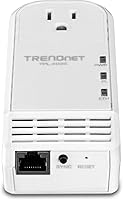
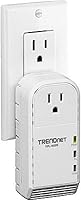
The compact wall-plug body keeps the adapter unobtrusive and does not extend far enough from the wall to block adjacent outlets on most standard outlet plates. The single Ethernet port is positioned conveniently and the cable connection feels secure.
The adapter is taller than many competing units, and in cramped outlet locations — behind furniture or under desks — its profile can be awkward. Some buyers wished for a rotating plug head to better accommodate tight installation spots.

Suitable for:

The TRENDnet TPL-402E 500 Mbps Powerline Adapter is a genuinely practical choice for anyone who needs a wired network connection in a room where running Ethernet through walls is not an option. Renters who cannot drill or modify their living space will appreciate that it requires zero permanent installation — just two outlets and an Ethernet cable. Home office workers who rely on stable, low-latency connections for video conferencing or VPN access will find it a more dependable alternative to a Wi-Fi extender, particularly in rooms where wireless signal drops unpredictably. Gamers and streamers who want to cut out the jitter and variability of wireless without committing to a full cable run will get real value here, provided their home wiring is reasonably modern. It also makes a clean, no-fuss upgrade for anyone still using an older 200 Mbps HomePlug adapter who wants more headroom without switching technologies entirely.
Not suitable for:

The TRENDnet TPL-402E 500 Mbps Powerline Adapter is not the right tool for everyone, and the biggest risk factor is something most buyers cannot easily verify before purchasing: the quality of their home's electrical wiring. Anyone living in an older home — particularly pre-1990s construction with aging circuits, aluminum wiring, or a split breaker panel — should approach this with real caution, as real-world speeds in those environments can drop to a fraction of what is advertised. Buyers who genuinely need high-throughput speeds for large file transfers, 4K streaming to multiple devices, or network-attached storage will likely find the actual performance disappointing compared to a properly run Ethernet cable. This is also a single adapter, not a kit, so buyers who need both a transmitter and receiver will need to purchase two units — at that combined cost, newer competing starter kits with updated technology start to look more compelling. Anyone expecting the 500 Mbps headline figure to reflect what they will actually see on a speed test should look elsewhere or reset expectations significantly before buying.
Specifications

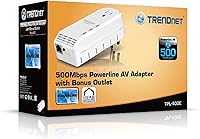
  • Brand & Model: Manufactured by TRENDnet under the model designation TPL-402E, first released in May 2011.
  • Data Rate: Theoretical maximum throughput of 500 Mbps over the home's existing electrical wiring — actual speeds vary based on wiring quality and circuit layout.
  • Standards: Compliant with both the HomePlug AV standard and the IEEE 1901 specification, ensuring broad interoperability with other certified powerline adapters.
  • Network Interface: Features one Gigabit Ethernet port for a direct wired connection to a computer, gaming console, smart TV, or other Ethernet-capable device.
  • Encryption: Automatically applies 128-bit AES encryption to all data transmitted across the electrical line, with no manual configuration required from the user.
  • Pass-Through Outlet: Includes a built-in electrical socket on the front of the unit so the wall outlet remains usable for other devices after installation.
  • Sync Button: Equipped with a one-touch Sync button that pairs adapters on the same network without requiring any software, drivers, or computer access.
  • Power Save Mode: Automatically reduces power consumption by up to 80% when no active network traffic is detected, lowering idle energy draw during off-hours.
  • Network Capacity: Supports a maximum of 16 units on a single powerline network — one transmitting unit and up to 15 additional receiving adapters.
  • Dimensions: The unit measures 2.17 x 4.80 x 2.36 inches (L x W x H), making it compact enough to fit standard wall outlet locations without blocking adjacent sockets in most cases.
  • Weight: Weighs 6.6 ounces, light enough that it stays securely seated in a wall outlet without requiring additional support or mounting.
  • Color & Finish: Comes in a plain white finish with a matte surface that blends into most interior wall outlet surroundings without drawing attention.
  • Compatibility: Works alongside other HomePlug AV and IEEE 1901 certified adapters from third-party brands, making it usable in mixed-brand powerline network setups.
  • Sold As: Sold as a single adapter unit — buyers who need both a transmitter and a receiver must purchase two units separately to create a complete link.
  • Market Rank: Ranked #1,058 in the Powerline Network Adapters category on Amazon, with an average customer rating of 3.9 out of 5 across 67 verified ratings.

Related Reviews

TRENDnet TPL-406E2K Powerline 500 Adapter Kit
78%
91%
Ease of Setup
67%
Real-World Speed
83%
Connection Stability
78%
Build Quality & Form Factor
74%
Value for Money
More
Actiontec PWR511K01 500Mbps Powerline Network Adapter Kit
67%
88%
Ease of Setup
61%
Real-World Speed Performance
74%
Connection Stability
53%
Build Quality & Durability
67%
Value for Money
More
TRENDnet TPL-423E2K Powerline 1300 AV2 Adapter Kit
75%
88%
Ease of Setup
63%
Real-World Data Speed
74%
Connection Stability
91%
Pass-Through Outlet
67%
Build Quality & Durability
More
TRENDnet TPL-410APK Powerline Wi-Fi Extender Kit
71%
91%
Ease of Setup
62%
Real-World Powerline Speed
67%
Wi-Fi Coverage & Signal Quality
88%
Wired Ethernet Ports
71%
Reliability & Connection Stability
More
NETGEAR XAVB2101 Powerline Network Adapter Kit
71%
91%
Ease of Setup
61%
Real-World Speed Performance
88%
Physical Design & Form Factor
72%
Network Stability
67%
Value for Money
More
ZyXEL PLA5215KIT Powerline Adapter Kit
71%
93%
Ease of Setup
58%
Real-World Data Speed
67%
Connection Stability
54%
Performance Consistency Across Homes
88%
AC Passthrough Outlet
More
NexusLink GPL-1200-KIT G.hn Powerline Adapter Kit
73%
91%
Ease of Setup
83%
Connection Stability
67%
Real-World Throughput
79%
Latency Performance
74%
Value for Money
More
TRENDnet TPL-430AP Powerline Wireless Access Point
75%
91%
Ease of Setup
64%
Powerline Throughput
78%
Wi-Fi Coverage & Signal Quality
88%
Wired Port Performance
74%
Build Quality & Durability
More
NETGEAR Powerline 500 XAVB5421
82%
88%
Performance for Streaming and Gaming
91%
Ease of Setup
62%
Connection Stability in Larger Homes
86%
Value for Money
89%
Extra Power Outlet Functionality
More
NETGEAR Powerline Adapter Kit PLP2000-100PAS
74%
91%
Ease of Setup
67%
Real-World Speed Performance
78%
Network Reliability & Stability
74%
Build Quality & Durability
88%
Pass-Through Outlet Design
More

FAQ

Yes — powerline networking always requires at least two adapters. One plugs in near your router and connects to it with an Ethernet cable, and the second plugs in the room where you need internet access. The TPL-402E is sold as a single unit, so if you are starting from scratch, you will need to purchase two.

Almost certainly not, and it is worth being upfront about that. The 500 Mbps figure is a theoretical maximum under ideal lab conditions. In a real home, most users see somewhere between 50 and 200 Mbps depending on the age of their electrical wiring, how many devices share the circuit, and whether both adapters are on the same breaker leg. Newer homes with modern wiring tend to do better; older homes can be a real mixed bag.

It might, but older homes are the most common source of disappointment with powerline adapters in general. Aging wiring, aluminum conductors, and electrical panels split across multiple circuits all introduce interference and signal loss. If your home falls into this category, there is a real chance performance will be noticeably lower than advertised, and in some cases the connection may be too unstable to be useful. It is worth checking your return policy before committing.

Potentially yes, as long as your existing adapter also supports the HomePlug AV or IEEE 1901 standard — both of which the TRENDnet TPL-402E 500 Mbps Powerline Adapter is certified for. That said, mixing brands sometimes results in the network falling back to the speed of the slower or older adapter. For the best and most predictable results, using a matched pair from the same brand and generation is generally recommended.
Yes, the built-in socket on the front of the unit is a standard three-prong grounded outlet. Keep in mind that very large or angled power adapters — the kind that extends outward several inches — may fit awkwardly depending on the wall location. Standard plugs and slim phone chargers work without issues.

No computer or app is needed. Plug both adapters into wall outlets, then press and hold the Sync button on one unit for a couple of seconds, and do the same on the second unit within two minutes. The adapters will find each other and establish the connection automatically. Most users have the whole thing up and running in under five minutes.

It is designed for continuous operation, and the built-in Power Save mode helps by stepping down energy use when the network link is idle. Some users have noted that the unit runs warmer than expected during extended use, so make sure it is plugged into an open outlet with adequate airflow around it — avoid enclosed power strips or tight spaces where heat can build up.

This is a reasonable concern in multi-unit buildings, and the adapter addresses it with automatic 128-bit AES encryption on all transmitted data. The encryption activates without any setup from your end, so your traffic is protected even if neighboring units share the same electrical system. That said, for very sensitive environments, a fully wired or dedicated fiber connection will always be the most secure option.

Yes — the powerline network this adapter belongs to supports up to 16 units in total. You can add additional adapters in other rooms over time without replacing your existing setup. Just keep in mind that adding more units does reduce the available throughput per device, so a six-unit network will generally be slower per node than a simple two-unit link.

That is a fair question. The HomePlug AV standard it uses has been largely superseded by newer HomePlug AV2 and G.hn technologies, which offer better real-world speeds and more consistent performance in challenging wiring environments. The longevity of the product speaks to its basic reliability, but buyers who prioritize maximum performance or future-proofing may be better served by a newer generation adapter. For basic network extension in a straightforward setup, it still gets the job done.