Overview

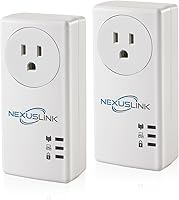
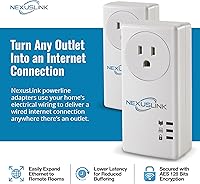
The NexusLink GPL-1200-KIT G.hn Powerline Adapter Kit takes a practical approach to a problem that frustrates a lot of households: getting a reliable wired connection to a room that is too far from the router to run cable. The kit ships with two wall-plug units — one connects to your router via Ethernet, the other plugs in near whatever device needs internet, and that is essentially the whole setup. It runs on the G.hn Wave 1 standard with MIMO Dual Phase technology, rated up to 1200 Mbps, which puts it squarely in mid-range territory alongside offerings from TP-Link and Devolo. Most people are up and running in under five minutes.
Features & Benefits

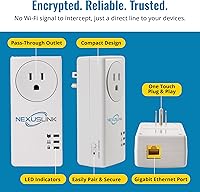
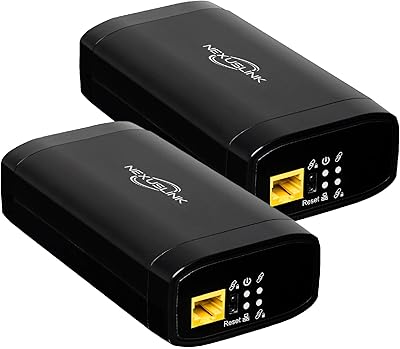
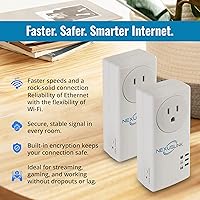
Each unit carries a single Gigabit Ethernet port, which is enough for a desktop, console, or smart TV without any speed bottleneck on the port side. Where this powerline kit distinguishes itself is in its error-correction approach — G.hn uses LDPC and FEC encoding to maintain throughput on electrical lines that carry interference from appliances or older wiring. The MIMO Dual Phase design is particularly useful in apartments where shared wiring can be chaotic. Built-in QoS prioritization keeps latency-sensitive traffic — gaming packets, video calls — moving ahead of background downloads. The compact wall-plug body means it does not block adjacent outlets or take up shelf space.

Best For

This powerline kit makes the most sense for gamers and streamers who have accepted that their bedroom or basement Wi-Fi just is not cutting it, but who do not want to hire someone to fish Ethernet through walls. Home office setups benefit just as much — video calls are noticeably more stable over a wired powerline connection than over a congested 2.4 GHz band. It is also a practical option for multi-floor homes where a mesh Wi-Fi system would cost considerably more. Apartment dwellers dealing with dozens of competing wireless networks will find the interference resistance especially valuable. One important caveat: both units need to be on the same circuit, so homes with split-phase electrical panels may run into problems.

User Feedback

Buyers of the G.hn adapter pair consistently highlight easy setup as the standout experience — most report having a working connection within minutes of opening the box. Connection stability in distant rooms is the other clear win, with many users noting a dramatic improvement over Wi-Fi. That said, the feedback has real rough edges. Real-world speeds frequently land well short of 1200 Mbps, particularly in homes with aging wiring. A handful of users ran into outright compatibility failures when adapters ended up on different electrical phases. Long-term durability is also a recurring question mark, with some owners reporting units becoming unreliable after a year or more of continuous use. Those needing higher sustained throughput may want to look at Wave 2 models instead.

Pros

  • Setup takes under five minutes with no software, drivers, or configuration required.
  • Connection stability in distant rooms is dramatically better than Wi-Fi for most households.
  • G.hn error correction handles electrical noise better than older HomePlug AV2 adapters.
  • Built-in QoS keeps gaming and video call traffic prioritized during busy household usage.
  • The compact wall-plug design does not sacrifice adjacent outlets or require shelf space.
  • The G.hn adapter pair supports expansion up to 16 devices on the same network.
  • MIMO Dual Phase technology makes this powerline kit more resilient in apartment environments.
  • A Gigabit Ethernet port on each unit means no bottleneck at the connection point itself.
  • Mid-range pricing gives buyers a genuine technology upgrade without overpaying for premium branding.
  • Works cleanly with all major router brands without any special configuration needed.

Cons

  • Real-world speeds rarely approach the 1200 Mbps ceiling, especially on older or shared wiring.
  • Both units must share the same electrical circuit — split-phase homes are a common compatibility trap.
  • No pass-through outlet means you lose that wall socket entirely when an adapter is plugged in.
  • Only one LAN port per unit; connecting a TV and console in the same room requires an extra switch.
  • Long-term durability feedback is inconsistent, with some units becoming unreliable after roughly a year.
  • Documentation offers almost no guidance for troubleshooting when the initial setup does not work.
  • Units can run warm under continuous use, which has contributed to durability concerns among some owners.
  • The G.hn ecosystem is narrower than HomePlug, making it harder to source compatible expansion units at retail.
  • Buyers with fiber internet and high bandwidth demands will hit the Wave 1 speed ceiling noticeably.
  • Appliance interference on busy circuits can cause occasional connection dips that a direct Ethernet cable would not experience.

Ratings

The NexusLink GPL-1200-KIT G.hn Powerline Adapter Kit has been scored by our AI system after processing verified buyer reviews from multiple global markets, with spam, bot-generated, and incentivized submissions actively filtered out before analysis. The scores below reflect what real users experienced across setup, daily reliability, and long-term ownership — strengths and frustrations weighted equally. No category has been softened to protect the product's image.
Ease of Setup
91%
The vast majority of buyers describe an almost frictionless first-time experience — plug one unit into a wall outlet near the router, connect an Ethernet cable, repeat at the destination device, and the connection is live. No software, no driver installation, no configuration menus. For non-technical users, this is a genuine relief.
A small share of users found the initial pairing did not work automatically and required pressing the sync button on both units simultaneously, which is not clearly explained in the included documentation. Edge cases involving older electrical panels added frustration for a minority of buyers.
Connection Stability
83%
Users consistently report that this powerline kit delivers a noticeably steadier connection than Wi-Fi in rooms far from the router — particularly in two-story homes where wireless signals degrade through floors and walls. Gamers cite fewer mid-session drops, and home office users appreciate fewer video call interruptions.
Stability is not guaranteed across all homes. Several buyers found the connection would periodically drop or slow down when large appliances — washing machines, microwaves — kicked on the same circuit. Homes with older or noisier electrical wiring showed more variance in day-to-day reliability.
Real-World Throughput
67%
33%
In well-wired homes on a single modern circuit, this powerline kit delivers enough bandwidth to handle 4K streaming, video calls, and online gaming simultaneously without obvious bottlenecks. For everyday internet tasks the performance uplift over a congested Wi-Fi connection is real and measurable.
The 1200 Mbps rating is a theoretical ceiling that very few buyers actually approach. Most real-world results fall somewhere between 200 and 500 Mbps depending on wiring quality and circuit load. Buyers with fiber internet plans expecting near-gigabit speeds through the adapters will be disappointed.
Latency Performance
79%
21%
Latency figures through the G.hn adapter pair are consistently lower than Wi-Fi alternatives at the same distance, which matters for online gaming and voice-over-IP calls. Competitive gamers in particular note that ping times feel comparable to a direct Ethernet run in most real-world conditions.
Latency can spike during periods of high electrical noise on the circuit. A portion of users noticed occasional lag bursts during heavy household appliance use — not deal-breaking for casual gaming, but potentially frustrating in ranked or latency-sensitive competitive titles.
Value for Money
74%
26%
At its price point, the G.hn adapter pair offers a meaningful technology step up from older HomePlug AV2 kits, and the two-unit bundle covers the most common use case without requiring additional purchases. For buyers who just need one wired connection in a distant room, the cost-to-benefit ratio is reasonable.
The value calculation gets shakier when you factor in that G.hn Wave 2 kits exist at a modest premium and offer substantially higher speed headroom. Buyers who research the category after purchasing sometimes feel they should have spent a little more for a future-proof standard.
Build Quality & Design
77%
23%
The wall-plug form factor is compact enough that it does not block adjacent outlets in most standard North American receptacles. The casing feels solid and the Ethernet port seats firmly without any wobble. The white finish is neutral enough to blend into most home environments without drawing attention.
A handful of long-term owners reported units running noticeably warm after extended continuous use, which raised durability concerns. The adapter also has no pass-through outlet, meaning you lose that socket entirely — a minor but real trade-off compared to some competing designs.
Long-Term Reliability
62%
38%
Many buyers have run this NexusLink set continuously for over a year without any hardware issues, using it as always-on infrastructure for home offices and media rooms. Units that were installed cleanly and left undisturbed tend to perform consistently over time.
Durability feedback beyond the 12 to 18 month mark is noticeably mixed. A recurring cluster of reviews describes one unit in the pair becoming unreliable or unresponsive after roughly a year of use. This pattern appears often enough across independent reviews to warrant caution for buyers expecting multi-year lifespans.
Compatibility
69%
31%
The G.hn standard offers broader cross-brand device compatibility than the older HomePlug ecosystem, and the kit works cleanly with all major router brands tested by reviewers. Expanding the network by adding more G.hn-compatible units is straightforward for those who need additional drops.
The single-circuit limitation is the biggest compatibility pitfall. Homes wired with two separate electrical phases — common in larger North American houses — will find the adapters fail to communicate if placed on different legs of the panel. This is a fundamental G.hn constraint, not a defect, but the packaging does not make it obvious.
Gaming Performance
78%
22%
For console and PC gamers stuck in rooms with poor wireless coverage, this powerline kit delivers a practical and affordable path to a wired connection. Reduced jitter and more consistent ping readings compared to Wi-Fi are the most frequently cited improvements among gaming-focused buyers.
Hardcore competitive gamers chasing the absolute lowest latency will find that a true direct Ethernet run still edges out powerline in consistency. During heavy household network usage, brief throughput dips can occur that a dedicated cable line would not experience.
Streaming Performance
81%
19%
4K streaming over this NexusLink set is stable for the overwhelming majority of users, with buffering events essentially eliminated compared to their previous Wi-Fi setup. Smart TV owners in particular appreciate the set-and-forget nature — once installed, streaming just works without needing to reconnect or troubleshoot.
Users on shared household connections with multiple simultaneous 4K streams may occasionally notice quality dips during peak usage. The QoS feature helps manage traffic prioritization, but it cannot compensate for genuinely constrained internet service speeds on the incoming line.
Documentation & Support
58%
42%
Setup is intuitive enough that most users never need to consult the manual at all. For the straightforward plug-and-play scenario the product was designed for, the minimal documentation is actually a non-issue since there is so little configuration required.
When something does go wrong — a pairing failure, a compatibility problem with the home's wiring — the included documentation offers very little troubleshooting guidance. NexusLink's online support resources are sparse compared to larger networking brands, leaving some users relying on community forums to solve edge-case issues.
Port Selection
63%
37%
The Gigabit Ethernet port handles the most common use case — connecting one device per adapter — without any speed limitation at the port level. For users who simply need a single wired drop in a distant room, the single-port design is perfectly adequate.
Anyone hoping to wire multiple devices from one adapter location will need an additional switch, which adds cost and complexity. Competing powerline adapters at similar price points sometimes include two LAN ports per unit, making this a notable gap for users with a TV and a console in the same entertainment cabinet.
Network Expandability
72%
28%
Support for up to 16 compatible G.hn devices on the same network gives this powerline kit room to grow as households add more wired connection points over time. For users building out a structured home network incrementally, that headroom is genuinely useful.
Expansion only works with compatible G.hn devices, and the ecosystem is narrower than the dominant HomePlug AV2 market. Mixing brands can introduce unpredictable performance variations, and sourcing additional G.hn units at retail requires more research than simply picking up any powerline adapter off a shelf.

Suitable for:

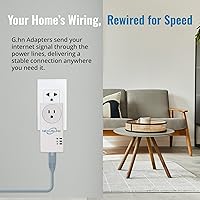
The NexusLink GPL-1200-KIT G.hn Powerline Adapter Kit is a strong match for anyone who needs a reliable wired internet connection in a room that is simply too far from the router to reach with a cable — without the expense or disruption of a professional Ethernet installation. Gamers and streamers will get the most obvious benefit: consistent low-latency connectivity in a bedroom or basement where Wi-Fi signal degrades through floors and walls. Home office workers who depend on stable video calls or VPN connections will also notice a real improvement over a congested wireless band. It works particularly well in apartments where the wireless spectrum is crowded with dozens of neighboring networks, since powerline bypasses the airwaves entirely. Households upgrading from older HomePlug AV2 adapters will find the G.hn standard delivers meaningfully better interference resistance and throughput consistency. If your home was built or rewired within the last two decades and sits on a single electrical circuit, this powerline kit is a practical, low-hassle solution that punches above its price tier.
Not suitable for:

The NexusLink GPL-1200-KIT G.hn Powerline Adapter Kit has some real limitations that make it the wrong choice for certain buyers, and it is worth understanding them before purchasing. The most important one is the single-circuit requirement: if your home has a split-phase electrical panel — common in larger North American houses — and the two adapters end up on different legs of that panel, they simply will not communicate. Buyers with very old wiring should also temper their expectations, since real-world throughput can fall well short of the 1200 Mbps rating on degraded or noisy circuits. If you have a high-speed fiber plan and genuinely need near-gigabit speeds delivered to a device, this Wave 1 kit is not the right tool — a Wave 2 adapter or a proper Ethernet run would serve you better. Anyone needing to connect multiple devices from a single adapter location will find the single LAN port limiting, requiring an extra switch to fill the gap. Finally, buyers who prioritize long-term hardware durability may want to weigh the mixed reliability feedback that surfaces beyond the 12 to 18 month mark before committing.
Specifications

  • Networking Standard: Uses the G.hn Wave 1 standard, which offers improved interference resistance compared to the older HomePlug AV2 protocol.
  • Max Data Rate: Rated at up to 1200 Mbps theoretical maximum; actual throughput varies based on home wiring quality and circuit conditions.
  • MIMO Technology: Incorporates MIMO Dual Phase technology to maintain more stable throughput across electrical lines that carry noise from appliances or shared circuits.
  • Error Correction: LDPC and FEC encoding are built into the G.hn standard to reduce packet loss on degraded or noisy electrical wiring.
  • LAN Port: Each unit includes one Gigabit Ethernet port, supporting full-speed wired connections to routers, computers, consoles, and smart TVs.
  • Units in Kit: Kit includes two wall-plug adapter units — one for the router end and one for the destination device end.
  • QoS Support: Quality of Service prioritization is built in, allowing latency-sensitive traffic such as gaming and video calls to be handled ahead of background transfers.
  • Max Devices: Up to 16 compatible G.hn powerline devices can be connected on the same electrical network simultaneously.
  • Form Factor: Compact wall-plug design mounts directly into a standard electrical outlet without requiring shelf space or additional mounting hardware.
  • PoE Support: Power over Ethernet is not supported on either unit in this kit.
  • Color: Both units ship in a neutral white finish suitable for most home and office environments.
  • Package Weight: The complete kit, including both adapter units and accessories, weighs 1.34 pounds.
  • Package Dimensions: The retail packaging measures 6.57 x 5.71 x 2.99 inches.
  • Compatible Devices: Works with desktops, laptops, game consoles, smart TVs, printers, smartphones via adapter, speakers, and tablets via adapter.
  • Brand & Manufacturer: Designed and sold by NexusLink, a networking hardware brand focused on G.hn and powerline connectivity solutions.
  • First Available: This kit has been available for purchase since February 2019 and maintains a consistent rank within the top powerline adapter listings.
  • UPC: The product UPC is 897384000937, corresponding to the two-unit GPL-1200-KIT configuration.
  • Electrical Requirement: Both adapter units must be on the same electrical circuit or phase for communication to function; split-phase installations may cause connectivity failures.

Related Reviews

Nexuslink G.hn Ethernet Over Coax Adapter Kit
86%
94%
Ease of Setup
91%
Performance for Gaming & Streaming
90%
Installation Simplicity
89%
Connection Stability
74%
Compatibility with Coaxial Systems
More
Comtrend PG-9182PT G.hn Powerline Adapter Kit
86%
96%
Setup & Installation
89%
Performance & Speed
87%
Reliability
85%
Build Quality
92%
Ease of Use
More
NETGEAR Powerline Adapter Kit PLP2000-100PAS
74%
91%
Ease of Setup
67%
Real-World Speed Performance
78%
Network Reliability & Stability
74%
Build Quality & Durability
88%
Pass-Through Outlet Design
More
Netgear 85Mbps Powerline Network Adapter Kit
85%
81%
Performance & Speed
94%
Ease of Setup
88%
Design & Build Quality
75%
Wi-Fi Signal Extension
82%
Connectivity Reliability
More
Zyxel PLA6456 Powerline Ethernet Adapter Kit
84%
88%
Performance
91%
Ease of Setup
79%
Connectivity Stability
83%
Speed Consistency
85%
Build Quality
More
Actiontec PWR514K01 Powerline Ethernet Adapter Kit
83%
88%
Setup & Installation
85%
Connection Stability
90%
Security & Encryption
82%
Data Transfer Speed
80%
Build Quality
More
Netgear XAVB5001 Powerline Network Adapter Kit
86%
84%
Overall Performance
92%
Ease of Setup
87%
Connection Stability
80%
Speed Consistency
88%
Build Quality
More
NETGEAR Powerline AV+ 200 Adapter Kit XAVB2501
82%
86%
Performance
92%
Ease of Setup
82%
Connectivity Reliability
78%
Speed Stability
88%
Value for Money
More
ZyXEL PLA5215KIT Powerline AV2 600 Mbps Adapter Kit
85%
88%
Performance
95%
Setup and Installation
87%
Reliability and Stability
80%
Wi-Fi Range Coverage
90%
Device Compatibility
More
NETGEAR Powerline AV 200 Mbps Nano Adapter Kit
83%
88%
Performance
93%
Ease of Setup
82%
Connectivity Stability
80%
Build Quality
85%
Design & Size
More

FAQ

It works through floors and walls because it runs through your home's electrical wiring rather than through the air. As long as both adapters are on the same electrical circuit, the signal travels through the wiring in your walls regardless of what floor you are on. Most buyers use it across two or even three floors without any issue.

It can work, but older wiring is the single biggest variable affecting performance. Homes with wiring from the 1970s or earlier tend to have more electrical noise on the lines, which pulls real-world speeds down noticeably. The G.hn standard's error correction helps compensate, but you should expect throughput closer to the lower end of the realistic range rather than anywhere near the 1200 Mbps ceiling.

Most North American homes have split-phase panels, meaning the electrical service is divided into two legs. The problem only occurs if each adapter ends up plugged into an outlet on a different leg. A simple test: if the adapters do not pair after following the setup steps, try moving one to an outlet on the same circuit as the other — if it starts working, that confirms a phase mismatch was the issue. An electrician can also tell you your panel layout in minutes.

Most users land somewhere between 200 and 500 Mbps in typical home conditions, which is more than enough for 4K streaming, video calls, and online gaming. The 1200 Mbps figure is a protocol ceiling you will not reach in practice — no powerline adapter on the market actually delivers its rated maximum in real homes. For most households the real-world speed is still a significant improvement over a congested Wi-Fi connection in the same location.

No, G.hn and HomePlug AV2 are separate, incompatible standards. They cannot communicate with each other, so you cannot mix the NexusLink GPL-1200-KIT G.hn Powerline Adapter Kit with older HomePlug hardware on the same network. If you want to expand, you need to add G.hn-compatible units.

No software, no app, no account. You plug one unit in near your router, connect it with an Ethernet cable, plug the other unit in at the destination, connect your device, and it is done. Most people are fully set up in under five minutes. The only time you might need to do anything extra is if the units do not pair automatically, in which case pressing the sync button on both units usually resolves it.

Each adapter only has a single Ethernet port, so you can connect one device directly per unit. If you need to wire a TV and a game console from the same adapter location, you would need to add an inexpensive network switch to split that single connection into multiple ports. It is a straightforward workaround but worth budgeting for if your setup requires it.

Feedback on longevity is genuinely mixed. Many buyers have run the G.hn adapter pair continuously for two or more years without problems. However, there is a recurring pattern in longer-term reviews of one unit in the pair becoming unreliable after roughly 12 to 18 months of constant use. Keeping the units in a location with decent airflow — so they do not overheat — appears to help with lifespan.

G.hn powerline adapters encrypt traffic using 128-bit AES encryption, so your data is not traveling unprotected through the wiring. In theory, if a neighbor in an apartment shared your electrical circuit, they could attempt to join your powerline network — but encryption and the private network key required for pairing prevent unauthorized access in practice.

If your internet plan tops out at around 300 to 500 Mbps and you are not running multiple simultaneous high-bandwidth streams, this powerline kit will cover your needs without overspending. If you have a gigabit fiber plan and genuinely need to push close to that speed wirelessly, or if you plan to keep the adapters for four or more years, the Wave 2 upgrade is worth the extra cost for the higher speed headroom it provides.