Overview

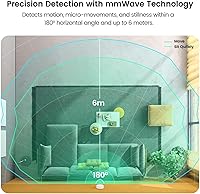
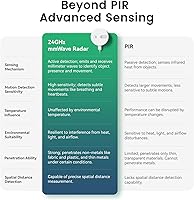
The TREATLIFE PS-W1 WiFi mmWave Presence Sensor takes a different approach than the motion detectors most people are used to. Standard PIR sensors respond to physical movement — walk into a room and the light turns on, sit still for a few minutes and it cuts out. This radar occupancy sensor uses 24GHz millimeter-wave technology to detect not just movement but actual human presence, including stationary occupancy. It connects directly over 2.4GHz Wi-Fi with no hub required, and works with both Alexa and Google Home. Worth noting upfront: SmartThings and IFTTT users will need to look elsewhere, as neither platform is supported.

Features & Benefits

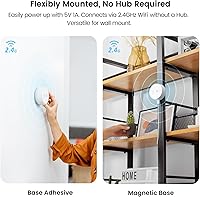
The mmWave sensor mounts on a wall or ceiling using a magnetic base that rotates a full 360° and folds up to 45°, so you can angle it precisely without fumbling with screws. It draws power from a standard USB port at 5V/1A — wired, always on, no batteries to swap. The 20-foot detection range covers most rooms comfortably. Beyond just detecting someone walking in, it picks up subtle micro-movements like breathing or typing, so lights stay on while you're sitting at a desk. Through the app, you get customizable automation rules and a rolling 30-day activity log, with smartphone alerts when motion is detected.

Best For

This mmWave sensor is a strong fit for anyone frustrated by lights switching off mid-activity — reading, working at a desk, or sitting in a home office. It also suits bathroom or utility room setups where privacy matters and a camera-based solution isn't appropriate. If your smart home runs on Alexa or Google Home, setup is fairly direct; the app handles automation without needing a separate hub. That said, if your ecosystem centers on SmartThings or you rely on IFTTT routines, this isn't the right pick. Since it's an indoor-only wired device, you'll need a USB power source within reach at your install location.

User Feedback

The TREATLIFE presence sensor holds a 3.8-star average, and that number reflects a genuinely split experience. Buyers who switched from older PIR sensors tend to appreciate the stationary detection accuracy — it's the core reason most people buy this type of device, and it generally delivers. Where things get messier is setup: some users report frustration with the companion app and occasional Wi-Fi pairing hiccups. False triggers near ceiling fans or moving curtains come up with some regularity, which aligns with known radar sensitivity trade-offs. On the support side, the 2-year warranty earns a few positive mentions, though opinions on customer service responsiveness are mixed.

Pros

  • Detects stationary occupancy accurately, solving the classic problem of lights switching off mid-activity.
  • No hub or bridge required — connects directly to 2.4GHz Wi-Fi right out of the box.
  • Wired USB power means zero battery replacements and consistent, always-on operation.
  • Flexible magnetic base with 360° rotation and 45° tilt makes precise aiming easy after install.
  • Works with both Alexa and Google Assistant for voice-integrated smart home routines.
  • 30-day activity log in the app gives useful historical data for monitoring or troubleshooting.
  • Smartphone alerts provide real-time motion notifications even when you are away from home.
  • Customizable IF/THEN automation modes let you tailor responses to specific rooms and schedules.
  • Compact and lightweight at under 4 ounces, making it unobtrusive in most room setups.
  • Two-year warranty with stated lifetime technical support adds reasonable peace of mind at this price tier.

Cons

  • App reliability has been flagged by multiple users, with pairing and connection stability causing early frustration.
  • False triggers near ceiling fans, moving curtains, or oscillating objects are a recurring complaint.
  • No SmartThings or IFTTT support limits compatibility for a significant portion of smart home users.
  • Initial Wi-Fi setup can be finicky, particularly for users with stricter router configurations.
  • Requires a USB power source at the install location, which restricts viable mounting spots.
  • The 20-foot detection range may not adequately cover larger open-plan rooms or wide hallways.
  • Sensitivity calibration options in the app are limited, making false trigger adjustments difficult.
  • Cloud-dependent functionality means the sensor may lose features if the TREATLIFE app or servers change.

Ratings

The scores below reflect AI-assisted analysis of verified global buyer reviews for the TREATLIFE PS-W1 WiFi mmWave Presence Sensor, with spam, bot-submitted, and incentivized feedback actively filtered out to keep the data honest. Real-world patterns — both where this radar occupancy sensor earns genuine praise and where it frustrates buyers — are transparently represented in each category score.

Presence Detection Accuracy
83%
The core capability — detecting stationary humans, not just movement — is where this mmWave sensor earns its strongest marks. Buyers who switched from PIR-based detectors consistently report that lights stay on reliably during reading, desk work, or sitting quietly in a room, which was the primary motivation for most purchases.
A recurring complaint involves false positives triggered by ceiling fans, oscillating desk fans, and moving curtains. In rooms with these objects, the radar can misread environmental motion as human presence, leading to frustration that requires careful sensor repositioning to resolve.
Wi-Fi Setup & Pairing
61%
39%
For users with straightforward home network configurations, the initial pairing process through the TREATLIFE app is generally manageable and completed without outside assistance. Once connected, the sensor tends to maintain a stable link without frequent dropouts under normal conditions.
A meaningful portion of buyers report significant friction during the initial 2.4GHz Wi-Fi pairing, particularly those with dual-band routers or custom network settings. Some users needed multiple attempts or router adjustments before the sensor successfully connected, which is a notable weak point for a hub-free device.
App Experience
57%
43%
The app provides a functional automation interface where users can configure IF/THEN rules for lighting or device triggers, and the 30-day activity log is a genuinely useful feature for reviewing occupancy patterns or investigating motion events remotely.
App stability is a genuine concern reflected across multiple buyer accounts — connectivity glitches, delayed notifications, and occasional UI bugs surface with enough regularity to affect confidence in daily reliability. Users expecting a polished, consumer-grade app experience similar to Philips Hue or similar brands may be disappointed.
Installation Flexibility
79%
21%
The magnetic base with 360° rotation and 45° fold gives buyers meaningful control over exactly where the sensor aims after mounting. Wall and ceiling placement are both supported, and the low weight means the magnetic attachment holds without issue on most surfaces.
The hard dependency on a nearby USB power source at the install location significantly limits where the sensor can actually go. In rooms without a convenient outlet or powered USB port close to the ideal mounting position, buyers are forced to run cables visibly along walls or compromise on placement.
Build Quality
71%
29%
The sensor feels solid and purposeful for a device in this price tier — nothing about the physical construction feels especially cheap or fragile in hand. The magnetic base mechanism clicks into place firmly and maintains its adjusted angle without creeping over time during normal indoor use.
The plastic housing, while functional, does not inspire strong confidence about long-term durability. A handful of buyers mention concerns about the finish showing wear, and the overall construction does not feel like it would survive any accidental drops or rough handling.
Voice Assistant Integration
77%
23%
Alexa and Google Assistant integration works as advertised for the majority of users, enabling presence-triggered smart home routines without significant setup complexity beyond the initial app linking. Buyers in established Alexa or Google Home ecosystems generally find the integration reliable for basic automations.
The integration is functional but not particularly deep — advanced conditional logic or multi-sensor coordination through Alexa or Google Home feels limited compared to what more open platforms offer. SmartThings and IFTTT users are simply locked out, which is a hard stop for a significant slice of the smart home market.
False Trigger Rate
54%
46%
In well-controlled environments — rooms without fans, moving fabrics, or swinging objects — the radar occupancy sensor performs with relatively low false trigger rates. Users who took time to position the sensor carefully and avoid problematic environmental factors report stable, predictable behavior.
In typical real-world living spaces with ceiling fans, vents, curtains, or houseplants near windows, false triggers are a persistent and commonly reported problem. The app does not currently offer granular sensitivity controls to help buyers tune out specific interference sources, which compounds the issue.
Power & Wiring Practicality
68%
32%
The wired USB power design means zero battery anxiety — once installed, the sensor runs continuously without any maintenance overhead. For buyers placing it near an entertainment unit, desk, or USB wall plate, this is a clean and practical solution.
The requirement for a 5V 1A USB power source at the mount location is a real logistical constraint that not all installation spots can easily accommodate. The included USB cable is functional but not especially long, which can force buyers to use an extension or reposition their planned mounting point.
Detection Range Coverage
72%
28%
The stated 20-foot detection range is adequate for most standard bedrooms, bathrooms, and home offices, and buyers using it in those contexts generally report it covers the intended zone without gaps near the edges of the room.
Open-plan living spaces, large great rooms, or L-shaped layouts often push beyond the 20-foot effective range, leading to dead zones where the sensor simply does not register occupancy. Buyers with larger rooms should plan for potential coverage limitations before purchasing a single unit.
Notification & Alerts
66%
34%
Smartphone push notifications for detected motion arrive promptly under stable Wi-Fi conditions, and having a 30-day log accessible in the app makes it easy to review historical activity at any point — useful for anyone tracking patterns in a home office or shared space.
Notification reliability degrades noticeably for some users during periods of app instability or when the sensor drops and re-pairs with Wi-Fi. A few buyers report delayed or missed alerts that undermine confidence in using the sensor for any time-sensitive monitoring purpose.
Automation Customization
69%
31%
The IF/THEN automation framework in the app covers practical scenarios like turning off lights after a room has been vacant for a set period, and the preset modes for energy saving or child monitoring give less technical users a usable starting point without manual rule building.
The automation system is relatively surface-level compared to what platforms like Home Assistant or SmartThings offer. Users who want complex multi-condition rules, cross-device logic, or integration with third-party services will quickly hit the ceiling of what the native app can support.
Value for Money
74%
26%
At its mid-range price point, the TREATLIFE presence sensor offers a genuine capability upgrade over budget PIR sensors, particularly the stationary detection that many buyers specifically need. For Alexa or Google Home households with modest automation goals, the price-to-function ratio is reasonable.
The app limitations, false trigger issues, and platform incompatibilities collectively weigh on the value equation for more demanding buyers. Users who need robust platform integration or polished app reliability may find that spending more on a better-supported alternative is ultimately the smarter long-term investment.
Privacy Considerations
88%
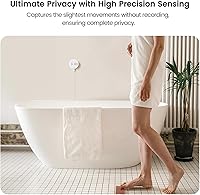
Using radar rather than a camera to determine occupancy resonates strongly with buyers who want smart home automation in sensitive spaces like bathrooms without any visual monitoring element. The absence of any imaging capability is a meaningful differentiator that multiple reviewers specifically cite as a reason for choosing it.
Some privacy-conscious buyers raise questions about cloud data storage for the activity log and what usage data the companion app transmits. TREATLIFE does not prominently address data handling practices in consumer-facing materials, which leaves a gap for users who think carefully about these issues.
Warranty & Support
63%
37%
The 2-year warranty is a reasonable coverage window for a device at this price level, and the stated lifetime technical support signals that TREATLIFE intends to stand behind the product beyond the typical 1-year baseline that many budget smart home brands offer.
Actual support experiences are inconsistent based on buyer feedback — response times vary, and some users report difficulty getting resolution on app-related or connectivity issues. The gap between what is promised on paper and the lived support experience tempers the value of the warranty for some buyers.

Suitable for:

The TREATLIFE PS-W1 WiFi mmWave Presence Sensor is best suited for homeowners who have been let down by traditional PIR motion detectors — specifically people whose lights keep shutting off while they're sitting still at a desk, reading, or using the bathroom. Unlike PIR sensors, this radar occupancy sensor continuously checks for human presence even when you're not moving, making it a practical upgrade for home offices, studies, and any room where low-activity occupancy is the norm. It plugs into any standard USB power source, so it works well in spaces where a nearby outlet or USB charger is already accessible. Alexa and Google Home users will find the integration fairly approachable, and the no-hub requirement keeps setup simple for people who are newer to smart home devices. The app-based automation rules add genuine utility for anyone who wants lights, HVAC, or other smart devices to respond intelligently to actual room occupancy rather than just movement.
Not suitable for:

The TREATLIFE PS-W1 WiFi mmWave Presence Sensor is not the right choice for anyone whose smart home relies on SmartThings or IFTTT, as neither platform is supported — and there is no indication that compatibility is coming. Because it requires a wired USB connection, it cannot be placed anywhere a power source is out of reach, which rules out many ceiling-center or remote wall locations without running additional cabling. The sensor is strictly for indoor dry environments, so garages, covered porches, or any space with humidity or moisture exposure are off the table. Users who prefer battery-operated wireless sensors for flexibility will find the tethered design limiting. If you are a more advanced home automation user expecting deep integration, local processing, or compatibility with open platforms like Home Assistant, this device will likely fall short of your expectations.
Specifications

  • Brand: Manufactured and sold by TREATLIFE, a brand focused on affordable Wi-Fi smart home devices.
  • Model: The model number is PS-W1, sold as a single-unit pack.
  • Radar Frequency: Uses 24GHz millimeter-wave (mmWave) radar technology for continuous human presence detection.
  • Detection Range: Covers a maximum detection area of 20 feet under typical indoor conditions.
  • Wi-Fi Connectivity: Connects directly to a 2.4GHz Wi-Fi network with no hub, bridge, or gateway required.
  • Power Source: Powered via USB at 5V 1A; a USB cable is included but a wall charger is not.
  • Mounting Options: Compatible with wall and ceiling installation using the included magnetic base.
  • Adjustability: The magnetic base supports 360° horizontal rotation and up to 45° vertical folding for precise aiming.
  • Dimensions: The sensor unit measures 3.94 x 3.35 x 1.38 inches.
  • Weight: The sensor weighs 3.84 ounces, making it lightweight and easy to reposition if needed.
  • App Features: The companion smartphone app provides a 30-day activity log, real-time alerts, and customizable IF/THEN automation rules.
  • Voice Assistants: Compatible with Amazon Alexa and Google Assistant for voice-controlled smart home integration.
  • Incompatible Platforms: Does not support SmartThings or IFTTT; users on those platforms cannot integrate this sensor.
  • Activity Log: The app retains up to 30 days of motion and presence event history for review at any time.
  • Indoor Use Only: Rated for dry indoor environments only; the sensor is neither waterproof nor moisture-resistant.
  • In-Box Contents: Package includes the presence sensor, magnetic base, USB charging cable, and a printed user manual.
  • Warranty: Covered by a 2-year quality warranty and backed by stated lifetime technical support from TREATLIFE.
  • Wi-Fi Range: The sensor communicates with a router up to approximately 263 feet away in open, unobstructed conditions.

Related Reviews

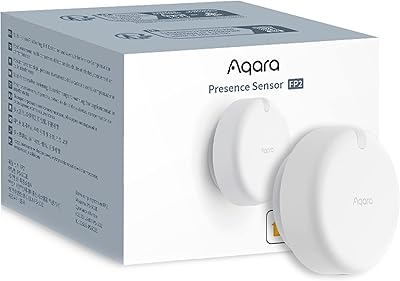
Aqara FP2 mmWave Presence Sensor
74%
91%
Presence Detection Accuracy
83%
Zone Configuration Flexibility
88%
Platform Compatibility
54%
Setup & App Experience
61%
Wi-Fi Connectivity Stability
More
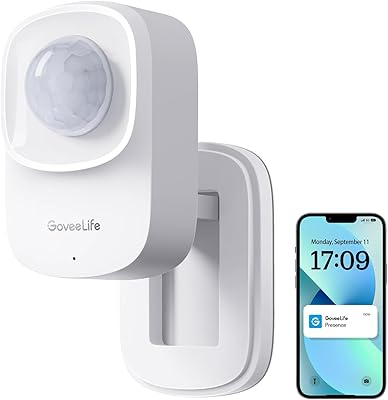
GoveeLife H5127 mmWave Presence Sensor
76%
88%
Presence Detection Accuracy
81%
False Positive Rate
71%
App & Automation Depth
74%
Installation & Mounting
66%
Ecosystem Compatibility
More
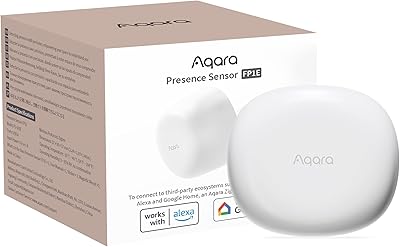
Aqara FP1E mmWave Presence Sensor
76%
88%
Presence Detection Accuracy
83%
False Alarm Reduction
77%
Setup & Installation
81%
Ecosystem Compatibility
52%
Hub Dependency & Total Cost
More
PHOVOLT DS-007 WiFi Door and Window Sensor
75%
88%
Ease of Setup
74%
App Reliability
83%
Notification Speed
71%
Alexa & Voice Assistant Integration
86%
Installation & Mounting
More
TREATLIFE 3K 5MP Indoor WiFi Security Camera
85%
88%
Image Quality
91%
Ease of Setup
85%
Motion Tracking Accuracy
82%
Night Vision Performance
90%
Voice Control Integration
More
SONOFF SNZB-06P Zigbee Presence Sensor
79%
88%
Presence Detection Accuracy
86%
Stationary Person Detection
71%
Platform Compatibility
67%
Hub Dependency & Setup
83%
Battery Life
More
RICHCHO W1 Wireless Outdoor Security Camera
74%
83%
Video Clarity
76%
Battery Life
79%
Night Vision
71%
AI Motion Detection
88%
Setup & Installation
More
LWOHSI LW103F Home Security System
74%
88%
Ease of Installation
79%
App Performance
83%
Siren Effectiveness
67%
Sensor Reliability
61%
Build Quality
More
OKN AX210 WiFi 6E PCIe Card
78%
91%
Value for Money
83%
Wireless Performance
74%
Installation Ease
61%
6GHz Band Access
71%
Bluetooth Performance
More
WAVLINK WN588HX3 WiFi 6 Outdoor Access Point
75%
83%
Outdoor Signal Range
91%
Build Quality & Weatherproofing
78%
Installation & Mounting
61%
Setup & Configuration Experience
86%
WiFi 6 Performance
More

FAQ

Yes, that is its primary advantage over a standard motion sensor. The mmWave radar picks up micro-movements — things like breathing, typing, or subtle shifts in posture — so it registers you as present even during low-activity tasks. Most users who set it up for a home office or reading nook report it handles stationary detection reliably.

No hub is needed. The TREATLIFE PS-W1 WiFi mmWave Presence Sensor connects directly to your 2.4GHz home Wi-Fi network and is managed through the TREATLIFE smartphone app. Just make sure your router broadcasts on 2.4GHz, as 5GHz-only networks will not work.
Yes, it integrates with both Amazon Alexa and Google Assistant. Once the sensor is linked through the app, you can use it to trigger Alexa or Google Home routines based on presence or vacancy. The setup process follows the standard third-party device linking flow for both platforms.

That is exactly the problem this type of radar sensor is designed to solve. Traditional PIR sensors detect heat movement and essentially time out when you go still. This mmWave sensor uses radar to continuously scan for presence, so it should prevent those unwanted shutoffs during passive activities.

It must be plugged in continuously via USB — there is no battery option. The USB cable is included, but you will need a USB wall charger or a powered USB port nearby at your intended install location. Plan your mounting spot with that power requirement in mind.

Unfortunately, no. This radar occupancy sensor does not support SmartThings or IFTTT as of its current firmware. If either of those platforms is central to your smart home setup, you would need a different sensor that explicitly lists compatibility with them.

The rated detection range is 20 feet, which is sufficient for most standard-sized rooms. Keep in mind that the 263-foot figure mentioned in some descriptions refers to the Wi-Fi communication distance between the sensor and your router in open air — it has nothing to do with how far the sensor can detect a person.

This is a real concern worth planning around. The mmWave radar is sensitive enough that moving objects like ceiling fans, oscillating desk fans, or billowing curtains can occasionally register as presence. Positioning the sensor so it is not aimed directly at those objects, or adjusting its angle, usually helps reduce false triggers.

It does not use a camera, so there is no visual monitoring involved whatsoever. The radar works through walls and surfaces but only outputs occupancy data — it cannot capture images or audio. Many buyers specifically choose it for bathrooms because it offers presence detection without any privacy trade-offs associated with camera-based systems.

TREATLIFE offers a 2-year warranty and states lifetime technical support. Feedback from buyers on this point is somewhat mixed: some report prompt and helpful responses, while others note slower turnaround. The warranty itself is a reasonable safety net for a product in this price range, and reaching out through the app or official TREATLIFE channels is the recommended path for support issues.