Overview

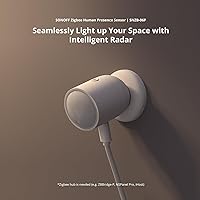
The SONOFF SNZB-06P Zigbee Presence Sensor takes a fundamentally different approach to occupancy detection than the passive infrared sensors most smart home setups rely on. Traditional PIR sensors need physical movement to register a person — sit still long enough and your lights cut out. This Zigbee radar sensor uses 5.8GHz microwave radar to pick up even subtle activity like breathing, meaning it knows you are still in the room. One critical thing to flag upfront: a Zigbee hub is required — this is not a standalone device. For mid-range money, you get a compact, unobtrusive unit with flexible mounting and genuine presence detection capability that most budget sensors simply cannot match.
Features & Benefits

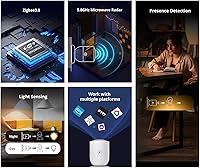
The core selling point here is the 5.8GHz cmWave radar, which does not just detect motion — it can register a person sitting quietly at a desk or reading on a couch. A built-in light sensor adds real practicality, stopping the sensor from triggering your lights during the day when they are not needed. Three sensitivity levels let you tune detection to suit smaller rooms or open-plan spaces, though real-world range tends to perform best under 3 meters rather than the stated 4. Zigbee 3.0 compatibility covers a solid range of hubs, and local scene execution means your automations keep running even if your router goes down — a genuinely useful reliability feature.

Best For

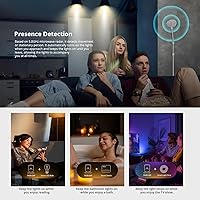
This presence sensor is most at home in setups where people stay still for long stretches — a home office, a reading nook, or a bedroom where lights shutting off mid-activity is genuinely disruptive. If you are already running a Zigbee ecosystem and want smarter, more reliable occupancy logic, the SNZB-06P slots in without much friction. Home Assistant and Zigbee2MQTT users in particular will appreciate the local control angle, since keeping automations off the cloud matters to that crowd. It is also a strong pick for energy-conscious households that want lights to respond to actual occupancy rather than just guessing. Not the right fit for anyone without an existing Zigbee hub.

User Feedback

Buyers who have switched from PIR-based sensors consistently highlight how well this Zigbee radar sensor holds detection when they are sitting still — that alone wins it a lot of goodwill. Battery life also draws positive mentions, which is notable given the radar hardware involved. On the downside, placement matters more than expected: wrong height or angle and detection becomes inconsistent. There is also a known quirk worth flagging — on certain platforms, the sensor registers as a basic motion detector rather than a true presence sensor, which can limit its usefulness in more nuanced automations. Setup is generally smooth on SONOFF's own ecosystem but can take more patience with third-party hubs.

Pros

  • Radar-based detection keeps lights on when you are sitting still — something basic PIR sensors routinely fail at.
  • The built-in ambient light sensor stops automations from firing unnecessarily during daylight hours.
  • Three sensitivity levels give you meaningful control over detection behavior without needing to dig into complex settings.
  • Local scene execution keeps your automations running even when your internet goes down.
  • Compatible with a broad range of Zigbee hubs, including Echo Plus 2nd Gen and Home Assistant setups.
  • Battery life holds up well relative to what you would expect from a radar-based device.
  • Compact and unobtrusive — easy to place without it becoming an eyesore in a living space.
  • Multiple mounting methods mean you can reposition it without leaving permanent marks.
  • Works with major platforms including Alexa, Google Home, SmartThings, and IFTTT.

Cons

  • A Zigbee hub is required — this sensor is completely non-functional without one.
  • Batteries are not included, which feels like an oversight given the price point.
  • On some platforms, the SNZB-06P registers as a basic motion sensor rather than a presence sensor, limiting its smarter capabilities.
  • Placement height and angle have a notable impact on detection reliability — getting it wrong means frustrating blind spots.
  • Real-world detection range often falls short of the 4-meter specification, especially in irregularly shaped rooms.
  • Setup with third-party hubs can require more technical effort than the packaging implies.
  • No USB or wired power option means ongoing battery replacement over time.
  • The presence-versus-motion label discrepancy across ecosystems is a known issue that SONOFF has not fully resolved.

Ratings

The SONOFF SNZB-06P Zigbee Presence Sensor scores below are generated by AI after analyzing verified global user reviews, with spam, incentivized, and bot-driven feedback actively filtered out. Ratings reflect the full spectrum of real buyer experiences — from standout strengths to recurring frustrations — so you can make an informed decision without wading through noise. Both what this Zigbee radar sensor does well and where it falls short are represented transparently in every category.
Presence Detection Accuracy
88%
The radar-based detection is where this sensor earns its keep. Users coming from PIR sensors consistently report that it correctly holds occupancy status while they are sitting still at a desk, watching TV, or reading — scenarios where cheaper alternatives would have already killed the lights.
Detection accuracy is sensitive to placement decisions. Users who mounted the sensor too low or at an awkward angle reported blind spots and occasional false negatives, meaning the sensor concluded a room was empty when it was not.
Stationary Person Detection
86%
Detecting a person who is not moving is the whole point of this class of device, and the SNZB-06P generally delivers. Buyers working long hours at a standing desk or sitting in a dim reading nook found that lights stayed on reliably without any need for manual overrides.
Very minor movements at the edge of the detection cone can still trip the sensor up. A small number of users noted occasional misses when seated far from the sensor or behind partial obstructions like a large monitor or sofa back.
Platform Compatibility
71%
29%
The sensor integrates with a genuinely wide range of ecosystems — Home Assistant, SmartThings, Alexa, and Google Home among them. For users already entrenched in one of these platforms, adding the sensor to existing automations is relatively straightforward once pairing is complete.
A known and persistent issue is that on several platforms the sensor registers as a basic motion detector rather than a true presence sensor, which strips away its key functionality in automation logic. This is not a fringe problem — it affects a meaningful share of users on non-SONOFF hubs.
Hub Dependency & Setup
67%
33%
Pairing with SONOFF's own hubs is fast and largely painless. Users who already owned a ZBDongle-E or NSPanel Pro reported getting the sensor online and into automations within minutes, which is a solid experience for a mid-range device.
Setup gets noticeably more involved on third-party hubs. Users on Home Assistant via Zigbee2MQTT sometimes needed to manually configure device profiles, and those expecting plug-and-play behavior were frequently disappointed. The hub-required dependency itself also catches buyers off guard.
Battery Life
83%
For a radar-based sensor that is actively scanning its environment, battery endurance is better than expected. Many users reported several months of reliable runtime on a standard set of alkaline batteries, which compares favorably to other mmWave devices in this category.
Battery life is not tracked or reported by the sensor in any meaningful way on all platforms, so some users only discovered a dead battery when automations stopped responding. Batteries are also not included in the box, which is a minor but recurring gripe.
Detection Range
69%
31%
In compact rooms — a small home office, a hallway, or a bathroom — the detection range is more than adequate. Users in these settings rarely hit the limits of the sensor, and coverage felt reliable without needing to fiddle with sensitivity settings.
The advertised 4-meter range is optimistic. Real-world testing puts reliable detection closer to 2.5 to 3 meters in typical room conditions. Buyers expecting whole-room coverage in larger living spaces or open-plan areas are likely to be underwhelmed.
Sensitivity Adjustment
78%
22%
Having three sensitivity tiers gives users a meaningful way to tune the sensor for their environment. Lowering sensitivity in a smaller room reduces false triggers noticeably, and users appreciated being able to dial in behavior without needing to write custom automation scripts.
Three levels is functional but coarse. Some users wanted finer granularity — particularly those with unusual room shapes or furniture arrangements — and found the jump between settings too large to land on exactly the right behavior.
Ambient Light Sensing
81%
19%
The built-in lux sensor adds real practical value by preventing automations from firing in already-lit rooms. Users running light-control scenes said this feature alone reduced wasted triggers significantly compared to sensors that have no awareness of ambient conditions.
The light sensor threshold is fixed and cannot be adjusted on most platforms. A handful of users found it activated lights at ambient light levels they considered unnecessary, with no simple way to calibrate the cutoff point without workarounds.
Build Quality & Design
76%
24%
The compact form factor and neutral gray finish mean it does not look out of place on a wall or shelf. Users praised how unobtrusive it is in living spaces, and the overall build feels solid enough for a battery-powered sensor in its price range.
The plastic casing feels functional rather than premium, and a few users noted the magnetic mount base can feel slightly loose over time. It is not a durability dealbreaker, but buyers expecting a high-end physical finish may find it underwhelming up close.
Mounting Flexibility
84%
The choice of magnetic, adhesive, or screw mounting is genuinely useful. Users who wanted to test placement before committing found the magnetic base ideal, and the ability to move the sensor without leaving marks was frequently mentioned as a practical advantage.
The 3M adhesive strip included is basic, and a small number of users reported it failing on textured or painted surfaces after a few weeks. The magnetic base, while convenient, does not lock securely in all orientations, which can cause the sensor to shift angle over time.
Local Automation Reliability
87%
The offline local scene execution is a meaningful reliability feature. Users in setups where internet outages are common — or who simply prefer keeping smart home logic off the cloud — found that their Zigbee device automations continued running without interruption even when connectivity dropped.
Local execution only applies to Zigbee-to-Zigbee scenes on the same hub. Any automation tied to cloud-dependent platforms like Alexa routines or Google Home scripts will still fail during an outage, which limits how useful this feature is for users heavily integrated into those ecosystems.
Value for Money
79%
21%
Relative to the technology involved — 5.8GHz radar, ambient light sensing, and broad platform support — the price sits at a reasonable point for what you get. Users who understood what they were buying generally felt the sensor delivered solid return on investment compared to basic PIR alternatives.
The value equation changes if you do not already own a Zigbee hub, since factoring in that additional cost pushes the effective price significantly higher. Buyers discovering the hub requirement after purchase frequently felt misled, which colored their overall value perception.
App & Ecosystem Integration
73%
27%
Within the SONOFF eWeLink ecosystem, integration is clean and the sensor surfaces its data in a usable way. Users running all-SONOFF setups found that setting up scenes and triggers through the app required minimal effort and worked reliably day to day.
Outside of the SONOFF ecosystem, the experience is patchier. Inconsistent entity naming across platforms and the motion-versus-presence labeling issue mean users on SmartThings or Home Assistant sometimes need to apply manual workarounds to get the behavior they expected out of the box.

Suitable for:

The SONOFF SNZB-06P Zigbee Presence Sensor is a strong fit for anyone who has already built out a Zigbee ecosystem and wants to add genuinely intelligent occupancy detection to their automations. It is particularly well-suited to home office workers, readers, or anyone who spends long periods sitting still in a room — the kind of person who is constantly frustrated by PIR-based lights switching off mid-task. If you run Home Assistant or Zigbee2MQTT and care about keeping automations local and offline-capable, this sensor checks a real box that most budget alternatives cannot. Energy-conscious households will also appreciate the built-in light sensor, which prevents unnecessary triggering during daylight hours without any extra configuration. The flexible mounting options — magnetic, adhesive, or screw — make it easy to position in almost any room without committing to a permanent install.
Not suitable for:

Buyers without an existing Zigbee hub should look elsewhere; this Zigbee radar sensor will not function at all without one, and that dependency adds cost and complexity that is easy to overlook at the point of purchase. If your smart home runs on Z-Wave, Wi-Fi, or a proprietary protocol, compatibility will be a problem. The stated 4-meter detection range should also be treated with some skepticism — real-world performance depends heavily on placement height, angle, and room layout, so buyers expecting full coverage of large open spaces may come away disappointed. Those who rely on platforms where the sensor registers only as a basic motion detector rather than a true presence sensor will find its core capability underutilized, and working around that limitation is not always straightforward. Finally, buyers looking for a plug-in powered sensor should note that this unit runs on alkaline batteries, which are not included in the box.

Specifications

  • Sensor Technology: Uses a 5.8GHz cmWave microwave radar to detect both movement and stationary occupants, including subtle activity like breathing.
  • Detection Range: Rated up to 4 meters (approximately 13 feet), though real-world performance varies based on placement height and room layout.
  • Sensitivity Levels: Offers three adjustable sensitivity settings to suit different room sizes and detection needs.
  • Protocol: Operates on Zigbee 3.0, requiring a compatible Zigbee hub to function.
  • Power Source: Powered by alkaline batteries, which are not included in the package.
  • Light Sensor: Includes a built-in ambient light detector that prevents presence-triggered automations from activating in already-lit environments.
  • Dimensions: Measures 1.73″ deep, 2.32″ wide, and 1.73″ tall — a compact footprint suitable for discreet placement.
  • Weight: Weighs 3.52 ounces, making it lightweight enough to mount with adhesive without surface stress.
  • Operating Temperature: Rated for use in environments ranging from -10 to 60 degrees Celsius, suitable for most indoor locations.
  • Mounting Options: Supports magnetic attachment, 3M adhesive, or screw mounting for flexible and reversible installation.
  • Compatible Hubs: Works with SONOFF NSPanel Pro, iHost, ZB Bridge Pro, ZBDongle-E, ZBDongle-P, and Amazon Echo Plus 2nd Gen, among others.
  • Platform Support: Integrates with Alexa, Google Home, SmartThings, Home Assistant, Alice, and IFTTT for broad ecosystem compatibility.
  • Local Execution: Supports local smart scene execution, meaning Zigbee device automations continue to run without an active internet connection.
  • Color: Available in Dim Gray, a neutral tone designed to blend into most wall and shelf environments.
  • Package Contents: Includes the sensor unit and mounting screws; batteries and a Zigbee hub are not included and must be purchased separately.
  • Material: Housing is constructed from PCV0-grade plastic, providing a lightweight and flame-retardant enclosure.
  • Voltage: Operates at 5 volts DC when powered via the supported battery configuration.
  • Item Model: Officially designated as model SNZB-06P by the manufacturer SONOFF.

Related Reviews

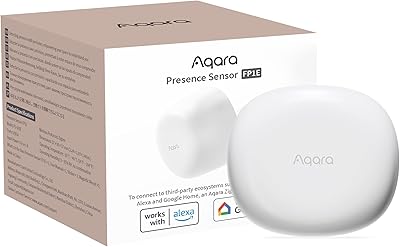
Aqara FP1E mmWave Presence Sensor
76%
88%
Presence Detection Accuracy
83%
False Alarm Reduction
77%
Setup & Installation
81%
Ecosystem Compatibility
52%
Hub Dependency & Total Cost
More
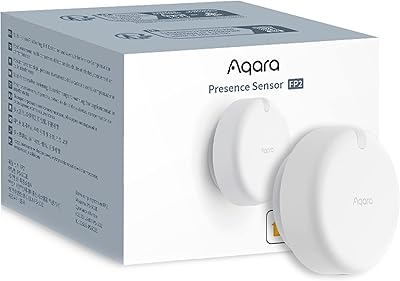
Aqara FP2 mmWave Presence Sensor
74%
91%
Presence Detection Accuracy
83%
Zone Configuration Flexibility
88%
Platform Compatibility
54%
Setup & App Experience
61%
Wi-Fi Connectivity Stability
More
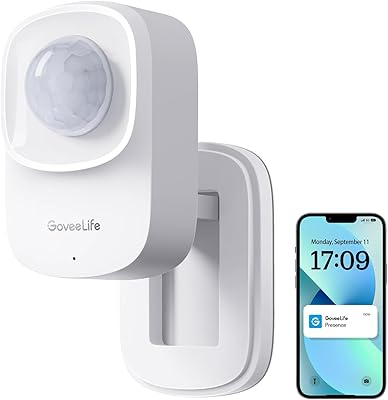
GoveeLife H5127 mmWave Presence Sensor
76%
88%
Presence Detection Accuracy
81%
False Positive Rate
71%
App & Automation Depth
74%
Installation & Mounting
66%
Ecosystem Compatibility
More
TREATLIFE PS-W1 WiFi mmWave Presence Sensor
70%
83%
Presence Detection Accuracy
61%
Wi-Fi Setup & Pairing
57%
App Experience
79%
Installation Flexibility
71%
Build Quality
More
Shaogax Wireless Motion Sensor Driveway Alarm System
71%
91%
Ease of Setup
83%
Wireless Range
88%
Alert Customization
58%
False Alert Rate
61%
Build Quality
More
Actpe Wireless Motion Sensor Driveway Chime
69%
93%
Ease of Setup
88%
Value for Money
76%
Detection Reliability
81%
Wireless Range
61%
Battery Life
More
Fibaro Motion Sensor HomeKit Multisensor
71%
83%
Motion Detection Accuracy
88%
HomeKit Integration
61%
Setup Experience
54%
Temperature Accuracy
57%
App Experience
More
Sennheiser Presence Grey UC
82%
88%
Microphone Quality
83%
Call Clarity & Audio Output
86%
Comfort & Wearability
74%
Dual Device Connectivity
91%
Battery Life
More
eufy Security Motion Sensor
85%
90%
Detection Accuracy
95%
Ease of Installation
93%
Battery Life
87%
Sensitivity Adjustment
89%
App & Notification System
More
Shelly BLU Motion Bluetooth Motion Sensor
74%
78%
Ease of Setup
81%
Motion Detection Accuracy
67%
Indoor Range
84%
Battery Life
76%
Lux Sensor Usefulness
More

FAQ

You will need a compatible Zigbee hub — the sensor cannot operate on its own. It does not connect directly to Wi-Fi or your phone. Make sure you have a supported hub like a SONOFF iHost, ZBDongle-E, or an Amazon Echo Plus 2nd Gen before purchasing. Batteries are also not included, so grab a set of alkaline batteries while you are at it.

Yes, that is the core advantage of radar-based detection over traditional motion sensors. The SONOFF SNZB-06P Zigbee Presence Sensor can pick up very subtle movement — including breathing — so it registers occupancy even when you are seated and still. That said, placement matters: mounting it at the right height and angle for your specific room makes a noticeable difference in reliability.
Yes, this presence sensor is compatible with Home Assistant, particularly through Zigbee2MQTT or ZHA (Zigbee Home Automation). One thing to be aware of is that on some integrations it may appear as a standard motion sensor rather than a dedicated presence sensor. Most experienced Home Assistant users can work around this, but it is worth knowing going in.

Battery life tends to be better than you might expect from a radar-based device. Many users report several months of use before needing a replacement, though this varies with how frequently the sensor is triggered and the sensitivity setting you use. Using a lower sensitivity level in a smaller room can help extend battery life.

The spec says up to 4 meters, but in practice most users find reliable detection closer to 2.5 to 3 meters, depending on the room and placement. Obstructions, walls, and the angle of the sensor all affect performance. Treat the 4-meter figure as a best-case ceiling rather than a guaranteed result in every setup.

Partially, yes. The local scene execution feature means that automations between Zigbee devices on the same hub can continue running even if your internet goes down. However, control through cloud-dependent platforms like Alexa or Google Home will not work during an outage.

Not necessarily — the magnetic and 3M adhesive mounting options mean you can place this Zigbee radar sensor without drilling anything. Magnetic mounting is especially handy if you want to experiment with positioning before committing. The screw option is there if you want a more permanent install.

It is a genuinely useful feature. Without it, the sensor would trigger your lights even in a bright room, which wastes energy and gets annoying quickly. With the light sensor active, automations only fire when the room is actually dark enough to need lighting. It works automatically without any extra configuration on most setups.

On some platforms and hub configurations, this presence sensor is recognized only as a standard motion sensor, which means it loses some of its smarter occupancy-detection behavior. The hardware itself is still capable, but the software layer does not expose full presence detection. If that distinction matters to your automations, check compatibility with your specific hub and integration before buying.

Absolutely — most Zigbee hubs support many devices on the same network, and you can add as many sensors as your hub allows. Each one operates independently, so you can configure different sensitivity levels and automations per room. Just make sure your hub has enough capacity and that your Zigbee mesh is strong enough to reach all the locations you have in mind.

Where to Buy