Overview

The GoveeLife H5127 mmWave Presence Sensor is a mid-range occupancy detector that pairs millimeter-wave radar with passive infrared technology to keep your smart home aware of who's actually in the room. Most motion sensors only notice you when you're moving — walk in, lights on; sit still for ten minutes, lights off. This one is different. The mmWave radar picks up even the faint micro-movements of someone sitting quietly at a desk or watching TV. It runs on a wired USB connection and requires a 2.4GHz Wi-Fi network, so it's always powered but cable management is something you'll need to think through. As GoveeLife's home automation line, it fits naturally alongside other Govee devices but isn't a fix-all for every smart home setup.
Features & Benefits

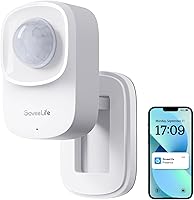
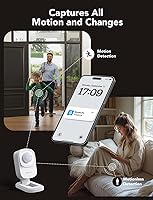
What sets this occupancy detector apart is the combination of two detection technologies working in tandem. The PIR sensor catches quick movement — someone walking into a room — while the mmWave radar holds detection even when that person stops moving entirely. On top of that, zone positioning lets you carve the detection area into specific zones rather than one wide sweep, which is genuinely useful in open-plan spaces. You can also build automations around how long someone has been present or how close they are to the sensor. The smart target exclusion feature helps filter out spinning fans or moving plants, and multi-person detection means the sensor can tell the difference between one occupant and several.

Best For

This presence sensor makes the most sense for people already using Govee or GoveeLife devices, since it slots into that ecosystem without friction. If you've ever been annoyed by lights cutting out while you're sitting still reading or working, this is exactly the kind of fix you've been looking for. It's also a reasonable option for small pet owners who've given up on traditional PIR sensors because the cat keeps triggering the lights. That said, it does need a constant power source and a 2.4GHz Wi-Fi connection — not a dealbreaker, but worth planning around. If you're a Home Assistant user, no native support exists here, and that's a hard stop for some buyers.

User Feedback

Buyers who've switched from basic PIR sensors tend to come away impressed with how well the Govee mmWave sensor handles stationary detection — that's the main thing people buy it for, and it largely delivers. The GoveeLife app gets decent marks for initial setup, though users report that building complex multi-condition automations can feel limiting compared to more open platforms. The wired setup draws consistent complaints; people don't love managing cables, especially for ceiling installs. A few users also note that the real-world detection range in typical rooms falls short of the advertised 26 feet. Long-term reliability looks mostly positive in early feedback, and firmware updates have been reasonably regular, though the Home Assistant gap remains a genuine frustration for the DIY crowd.

Pros

  • Stationary presence detection is genuinely accurate — it notices you even when you're sitting completely still.
  • Combining mmWave radar with PIR infrared dramatically cuts down on the false negatives that plague basic motion sensors.
  • Zone positioning gives you meaningful control over exactly which part of a room the sensor monitors.
  • Smart target exclusion reliably filters out fans, appliances, and small pets, reducing annoying false triggers.
  • Multi-person detection enables smarter automation logic based on how many people are actually in the space.
  • Automation triggers based on presence duration and distance go well beyond simple on/off detection.
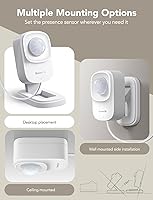
  • The magnetic base with 360-degree rotation and 120-degree fold makes positioning genuinely flexible.
  • Setup via the GoveeLife app is straightforward for standard use cases, with no hub required.
  • Works natively with Alexa, Google Home, and IFTTT without complicated configuration.
  • Firmware updates have been reasonably consistent, suggesting ongoing product support from GoveeLife.

Cons

  • Mandatory wired USB connection makes cable management a real challenge, especially for ceiling installs.
  • Strictly 2.4GHz Wi-Fi only — a growing problem for users with newer mesh or dual-band router setups.
  • No Home Assistant support whatsoever, which is a dealbreaker for a significant portion of the DIY smart home crowd.
  • Real-world detection range in a furnished room often falls well short of the advertised 26 feet.
  • The GoveeLife app becomes limiting quickly if you want complex, multi-condition automation logic.
  • Tightly coupled to the Govee ecosystem — works best alongside other GoveeLife devices, less useful in isolation.
  • No battery backup means the sensor goes completely offline during power interruptions.
  • Users outside the Alexa and Google Home ecosystems get little value from the multi-ecosystem marketing claims.

Ratings

The scores below reflect AI-synthesized analysis of verified global buyer reviews for the GoveeLife H5127 mmWave Presence Sensor, with spam, bot-submitted, and incentivized feedback actively filtered out before scoring. Each category is evaluated against real-world expectations for this product tier, not theoretical best-case performance. Both what this sensor genuinely gets right and where it falls short are represented transparently in the numbers.

Presence Detection Accuracy
88%
Users consistently praise how well the mmWave radar holds detection even when someone is sitting completely still — reading, working, or watching TV. This is the core job of the sensor, and for the majority of buyers it delivers reliably where cheaper PIR-only alternatives repeatedly fail.
A smaller subset of users report occasional false clearances in rooms with heavy furniture or unusual layouts that may disrupt radar coverage. Detection consistency at the edges of the sensor's practical range is less reliable than in close-range scenarios.
False Positive Rate
81%
19%
The smart target exclusion feature earns real appreciation from small pet owners who had essentially given up on automation sensors before trying this one. Spinning fans, oscillating appliances, and cats roaming the detection zone are filtered out in most real-world setups without manual tuning.
Larger pets — particularly medium to large dogs — still trip the sensor with enough regularity to frustrate some users. Running appliances with complex motion patterns occasionally generate spurious triggers even with exclusion features enabled.
App & Automation Depth
71%
29%
Initial setup through the GoveeLife app is smooth and quick for the majority of users, with most getting a basic working automation running within a few minutes of unboxing. Trigger options based on presence duration and distance go meaningfully beyond what basic motion sensor apps offer.
Users with more advanced needs hit the app's ceiling fairly quickly — complex multi-condition automations feel constrained compared to open platforms. Several buyers describe the automation editor as functional but unintuitive once you move past the most straightforward use cases.
Installation & Mounting
74%
26%
The magnetic base with 360-degree rotation and 120-degree fold genuinely simplifies repositioning after initial mount, which is a practical advantage during the trial-and-error phase of dialing in optimal sensor placement. Both the 3M adhesive and screw options work reliably on standard wall and ceiling surfaces.
Cable management is the most consistent complaint in this category — the mandatory USB cable becomes especially awkward for ceiling installations where routing the cord neatly requires effort and planning. A few buyers felt the included adhesive was not strong enough for long-term ceiling adhesion in warm rooms.
Ecosystem Compatibility
66%
34%
Integration with Alexa and Google Home works without friction for the large majority of users, and IFTTT support adds a reasonable layer of cross-platform flexibility for those who use it. Within the Govee and GoveeLife product family, pairing and co-automation are particularly smooth.
The complete absence of Home Assistant support is a genuine dealbreaker for a vocal and growing portion of the smart home buyer pool, not a minor edge case. Users outside the Alexa and Google Home ecosystems get very little practical value from the compatibility claims.
Detection Range
62%
38%
For typical bedroom or smaller living room setups — roughly 10 to 16 feet of real-world coverage — the sensor performs reliably and most buyers in those scenarios are satisfied with the practical range they experience day-to-day.
The advertised 26-foot maximum is consistently contradicted by real-world buyer reports, particularly in furnished rooms where sofas, shelving, and walls interrupt radar propagation. Users expecting to cover large open spaces with a single unit are frequently disappointed.
Build Quality & Design
79%
21%
The compact physical footprint and clean white finish help the sensor blend into modern interiors without drawing attention, and the unit feels solid given its size and price tier. The magnetic detachment mechanism is sturdy enough that accidental dislodging from vibration is not a reported issue.
At 6.4 oz the sensor is light, which is fine for wall mounting but can make ceiling adhesive installs feel slightly less confidence-inspiring over time. The overall plastic construction is functional but does not feel premium compared to some competing sensors at similar price points.
Wi-Fi Connectivity
67%
33%
On 2.4GHz networks the sensor connects reliably and maintains a stable connection without frequent drop-outs, which is important given that it depends on constant power and network access to function. Most users with a straightforward 2.4GHz setup report no ongoing connectivity headaches.
The hard 2.4GHz-only requirement creates real friction for users on newer mesh systems or routers that blend both bands under a single SSID. A noticeable number of buyers report struggling with initial pairing when their network setup does not cleanly separate the two bands.
Multi-Person Detection
76%
24%
The ability to differentiate between one occupant and multiple people in the same room opens up genuinely useful automation scenarios — adjusting lighting intensity or climate settings based on how many people are present, for example. Users who have configured these automations tend to be among the most satisfied buyers overall.
The feature works well in smaller, clearly bounded spaces but becomes less precise in larger or open-plan rooms where occupant positions overlap within the detection field. A handful of users note that the person-count readings can lag or miscount momentarily during transitions.
Static vs Motion Mode
83%
The selectable high and normal sensitivity modes give users a meaningful way to calibrate the sensor for their specific environment rather than accepting a one-size-fits-all default. High mode in particular is appreciated in bedrooms where even very subtle presence — a light sleeper barely moving — needs reliable detection.
Some users find the sensitivity distinction between modes less dramatic than expected, and a few report needing to experiment across multiple days before settling on a configuration that feels right for their specific room and usage pattern.
Reliability Over Time
77%
23%
Long-term feedback suggests the sensor maintains consistent detection performance after months of continuous operation, and GoveeLife has issued firmware updates since launch that have addressed some early accuracy and connectivity complaints. Buyers who have used it for six months or more generally remain positive.
There are isolated but recurring mentions of sensors requiring a reboot after firmware updates to restore full functionality. A small number of units have developed intermittent connectivity issues after extended periods, though these appear to represent a minority of the installed base.
Value for Money
78%
22%
At its price point, this occupancy detector offers a dual-technology detection system and zone-based automation that would cost significantly more from premium smart home brands. For buyers who need true presence detection rather than basic motion sensing, the functional jump over cheaper PIR-only sensors justifies the cost comfortably.
Users who are locked out by the lack of Home Assistant support, or who find the app automation ceiling too low, often feel the value proposition collapses for their specific use case. Those expecting the full 26-foot detection range may also feel shortchanged relative to the price paid.
Setup Experience
80%
20%
For users on a clean 2.4GHz network with an existing GoveeLife or Govee account, the out-of-box setup experience is genuinely quick — most report being fully operational within ten minutes. The included hardware kit covers both adhesive and screw mounting without requiring a separate trip to the hardware store.
Users on dual-band routers that do not separate SSIDs often hit a frustrating wall during Wi-Fi pairing that the app does not clearly explain or guide them through. First-time smart home users occasionally find the zone configuration interface confusing without referencing external guides.

Suitable for:

The GoveeLife H5127 mmWave Presence Sensor is a strong fit for smart home enthusiasts who've already built out a Govee or GoveeLife ecosystem and want to add genuinely reliable occupancy awareness to their automations. If you've ever had bedroom lights shut off while you were lying still reading, or had a living room fan keep cycling on and off because a standard PIR sensor couldn't tell you were sitting quietly on the couch, this sensor directly solves that frustration. It's also a practical pick for small pet owners who've essentially given up on cheaper motion sensors because a curious cat or a running hamster wheel keeps triggering things at 2am. Anyone comfortable planning around a wired, always-on USB setup and a 2.4GHz Wi-Fi network will find the installation straightforward, and the flexible magnetic mount makes ceiling or wall placement genuinely adaptable. Alexa and Google Home users in particular will appreciate how naturally it slots into existing routines without needing a hub.

Not suitable for:

The GoveeLife H5127 mmWave Presence Sensor is a hard pass for anyone running a Home Assistant setup — there is no native support, no workaround officially provided, and community integrations are unreliable at best. If you're on a 5GHz-only Wi-Fi network, you'll hit a wall immediately, since the sensor strictly requires 2.4GHz, which is an increasingly common pain point in newer router configurations. Renters or anyone who wants a clean, wire-free install should also think carefully; this sensor needs constant power via a USB cable, and hiding that cable tastefully on a ceiling mount takes real effort. Users expecting to rely on the full 26-foot detection range in a typical furnished room should temper their expectations, as real-world range often falls noticeably short of that spec. Finally, if you want deep, open-ended automation logic that goes far beyond what the GoveeLife app offers, this occupancy detector will likely feel limiting over time.
Specifications

  • Model Number: This sensor is identified by the part number H5127, manufactured under the GoveeLife brand.
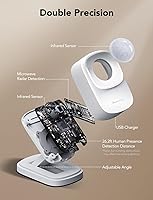
  • Detection Technology: It uses a dual-sensor system combining millimeter-wave radar for static presence and a passive infrared sensor for motion detection.
  • Wi-Fi Requirement: Connection requires a 2.4GHz Wi-Fi network; 5GHz bands are not supported.
  • Max Range: The sensor covers a maximum detection range of 26 feet under ideal, unobstructed conditions.
  • Power Source: The device runs on continuous corded power via USB, with a USB cable and adapter included in the box.
  • Dimensions: The sensor body measures 1.49″ deep, 1.65″ wide, and 2.53″ tall.
  • Weight: The unit weighs 0.18 kg (6.4 oz), making it light enough for flexible mounting without structural concerns.
  • Mounting Type: It features a magnetic base that supports both wall and ceiling mounting, with 360-degree rotation and 120-degree folding adjustment.
  • Compatible Ecosystems: The sensor integrates with Amazon Alexa, Google Home, and IFTTT; Home Assistant is explicitly not supported.
  • Multi-Person Detection: The sensor can detect and differentiate between single and multiple occupants simultaneously within its detection zone.
  • Zone Positioning: Users can configure specific detection sub-zones within the sensor's coverage area via the GoveeLife app.
  • Pet Immunity: A smart target exclusion feature filters out signals from small pets and moving appliances to reduce false positive triggers.
  • Operating Temperature: The sensor operates reliably between 32°F and 104°F, making it suitable for typical indoor environments only.
  • Lower Temp Rating: The device should not be exposed to temperatures below 14°F, even in storage or transit.
  • In the Box: Each unit ships with the presence sensor, a USB cable, a power adapter, a metal plate, a 3M adhesive sticker, two screw kits, and a user manual.
  • Battery: No battery is included or required; the sensor must remain connected to power at all times to function.
  • App Control: Setup and automation configuration are managed through the GoveeLife mobile app, available for both iOS and Android.
  • Automation Triggers: Automations can be built around occupancy state, duration of presence, and the distance between the occupant and the sensor.

Related Reviews

Aqara FP2 mmWave Presence Sensor
74%
91%
Presence Detection Accuracy
83%
Zone Configuration Flexibility
88%
Platform Compatibility
54%
Setup & App Experience
61%
Wi-Fi Connectivity Stability
More
Aqara FP1E mmWave Presence Sensor
76%
88%
Presence Detection Accuracy
83%
False Alarm Reduction
77%
Setup & Installation
81%
Ecosystem Compatibility
52%
Hub Dependency & Total Cost
More
TREATLIFE PS-W1 WiFi mmWave Presence Sensor
70%
83%
Presence Detection Accuracy
61%
Wi-Fi Setup & Pairing
57%
App Experience
79%
Installation Flexibility
71%
Build Quality
More
SONOFF SNZB-06P Zigbee Presence Sensor
79%
88%
Presence Detection Accuracy
86%
Stationary Person Detection
71%
Platform Compatibility
67%
Hub Dependency & Setup
83%
Battery Life
More
Shaogax Wireless Motion Sensor Driveway Alarm System
71%
91%
Ease of Setup
83%
Wireless Range
88%
Alert Customization
58%
False Alert Rate
61%
Build Quality
More
Actpe Wireless Motion Sensor Driveway Chime
69%
93%
Ease of Setup
88%
Value for Money
76%
Detection Reliability
81%
Wireless Range
61%
Battery Life
More
Fibaro Motion Sensor
86%
91%
Motion Detection Accuracy
85%
Battery Life
88%
HomeKit Integration
93%
Ease of Installation
89%
Design and Size
More
Shelly BLU Motion Bluetooth Motion Sensor
74%
78%
Ease of Setup
81%
Motion Detection Accuracy
67%
Indoor Range
84%
Battery Life
76%
Lux Sensor Usefulness
More
eufy Security Motion Sensor
85%
90%
Detection Accuracy
95%
Ease of Installation
93%
Battery Life
87%
Sensitivity Adjustment
89%
App & Notification System
More
Sennheiser Presence Grey UC
82%
88%
Microphone Quality
83%
Call Clarity & Audio Output
86%
Comfort & Wearability
74%
Dual Device Connectivity
91%
Battery Life
More

FAQ

Yes, that's exactly the point of the mmWave radar component. Unlike a standard motion sensor that needs you to wave an arm to reset, this occupancy detector uses radar to pick up the tiny micro-movements your body produces even when you're sitting still — things like breathing or small shifts in posture. It's a meaningful difference in everyday use.

Unfortunately, no. The GoveeLife H5127 mmWave Presence Sensor does not support Home Assistant, and there is no official integration available. If HA is central to your smart home setup, this sensor isn't the right fit and you'd want to look at alternatives that support local API or Matter protocols.
You'll need to make sure your phone is connected to the 2.4GHz band on your router when setting the sensor up through the GoveeLife app, since the sensor won't connect over 5GHz at all. Most routers let you split the two bands with separate network names — if yours combines them, you may need to temporarily force 2.4GHz during setup.

Technically yes, it works as a standalone sensor connected to your Wi-Fi and controlled through the GoveeLife app. That said, it's most useful when paired with other smart devices — lights, fans, switches — so you can actually act on the presence data. It integrates cleanly with Alexa and Google Home, so non-Govee devices in those ecosystems will work just fine.

The sensor uses a smart target exclusion algorithm that tries to distinguish human presence from the radar signatures of small animals and moving appliances. For smaller pets — cats, small dogs — it generally performs well. Very large dogs that move like humans in the radar field may still occasionally trigger it, so your mileage will depend on the size and behavior of your pet.

No, this sensor is entirely dependent on continuous power from the USB connection. If your power goes out, the sensor goes offline immediately and won't resume automations until power is restored and the device reconnects to Wi-Fi. There's no internal battery backup whatsoever.

In practice, most users find the real-world range is shorter than the advertised maximum, especially in furnished rooms where sofas, shelving, and walls absorb or deflect the radar signal. For a typical bedroom or living room, you should expect reliable detection somewhere in the 12-to-18-foot range rather than the full 26 feet. Mounting position and height will also affect actual coverage significantly.

The physical installation is pretty approachable — stick it to the wall with the included 3M adhesive or screw-mount it, plug it in, and run through the GoveeLife app setup. The tricky part is cable management, especially for ceiling mounts where you'll need to route the USB cable neatly. App pairing itself is straightforward for basic use; advanced zone configuration takes a bit more time to learn.

Yes, the multi-person detection feature combined with the GoveeLife app's automation settings lets you build triggers based on occupancy count. You can create a routine that behaves differently depending on whether one person or multiple people are detected. It's not as flexible as a fully open platform, but for common scenarios like this it covers the bases.

You have quite a bit of flexibility here. The magnetic base means you can detach and reattach the sensor easily to fine-tune its angle without removing the mount entirely. The 360-degree rotation and 120-degree folding range let you angle it precisely whether it's on a wall or ceiling, and you can readjust it any time without tools.

Where to Buy