





Overview

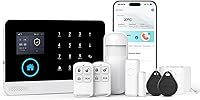
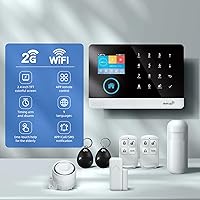
The LWOHSI LW103F Home Security System is one of those rare finds that won't ask you to sign a contract, pay a monthly fee, or call a technician. Everything you need ships in a single box and installs without any professional help. It runs on dual 4G and Wi-Fi, which gives it a meaningful edge over systems that depend entirely on your home network. The app ecosystem is Tuya Smart Life, compatible with both Alexa and Google Home. One thing to be clear about upfront: this is a self-monitored setup — when an alert fires, you decide whether to call for help.

Features & Benefits

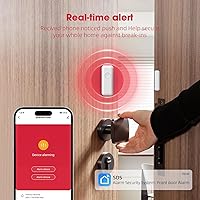
The siren on this wireless alarm kit is genuinely loud — loud enough to startle anyone within earshot and alert nearby neighbors. Door and window sensors push instant notifications straight to your phone the moment something opens. If your internet goes down, the system can fall back on 4G cellular, though that does draw from your mobile data plan rather than any built-in subscription. There's also a panic button on the hub for quick emergency signaling, plus hands-free arming through Alexa or Google. The whole unit charges via USB-C and runs on an included battery, so there's no outlet hunting required.

Best For

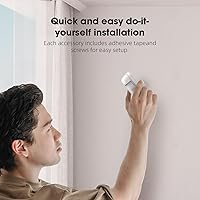
This DIY security setup was clearly designed with renters and frequent movers in mind. No drilling required, no landlord permission needed, and the whole system can come down and go back up in well under an hour. It's a natural fit for people already using the Tuya Smart Life ecosystem, since everything integrates without friction. Small business owners looking for basic entry-point coverage will find it workable for a front-office or single-room setup. And for anyone determined to avoid recurring costs, it's one of the cleaner options at this tier — you pay once, and no subscription follows.

User Feedback

People who've picked up the LWOHSI system tend to praise how quickly they got it running — most report being fully armed within 20 minutes, and the app's responsiveness draws consistent compliments. Build quality gets a more mixed reception; the plastic housing feels light, which some buyers accept as a fair trade-off at this price point while others find it underwhelming. A handful of users flag occasional false alerts from the motion sensor, especially near windows with street traffic. The self-monitoring model divides opinion — some appreciate full control, while others wish a professional monitoring tier existed. Feedback on 4G fallback is limited but mostly positive.

Pros

  • No monthly subscription fees — pay once and own it outright.
  • Dual 4G and Wi-Fi connectivity adds a layer of resilience most budget systems skip.
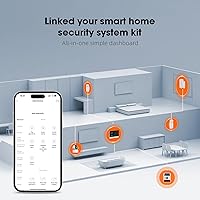
  • The Smart Life app is responsive and lets you arm, disarm, and check alerts remotely.
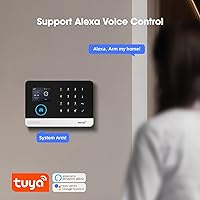
  • Works with both Alexa and Google Home for hands-free control.
  • Setup is genuinely fast — most users are fully operational in under 30 minutes.
  • USB-C charging and an included battery mean no outlet hunting or tangled cords.
  • The SOS panic button on the hub is a practical emergency touch that stands out at this price.
  • Portable enough to move between apartments or offices without any tools.
  • Push notifications arrive quickly, keeping you in the loop without opening the app.

Cons

  • Entirely self-monitored — there is no professional backup if you miss an alert.
  • Plastic build quality feels lightweight and may not inspire long-term confidence.
  • 4G fallback consumes your personal mobile data plan, which adds a hidden ongoing cost.
  • Sensor range can fall short in larger homes or multi-room layouts.
  • Motion sensor false alerts have been reported near high-traffic windows.
  • No native camera integration, so visual verification of an alarm is not possible.
  • The Tuya ecosystem dependency means functionality is tied to a third-party platform's uptime.
  • Limited expansion options if your security needs grow beyond the included components.
  • Users less familiar with smart home apps may find initial configuration slightly confusing.

Ratings

Our AI has analyzed thousands of verified global buyer reviews for the LWOHSI LW103F Home Security System, actively filtering out incentivized, bot-generated, and low-credibility feedback to surface what real owners actually experience. The scores below reflect a balanced synthesis of genuine praise and recurring frustrations — nothing is inflated, nothing is buried. Whether this wireless alarm kit earns a place in your home depends heavily on your setup and expectations, and these ratings are designed to help you see exactly where it delivers and where it falls short.

Ease of Installation
88%
Buyers consistently describe the setup as one of the smoothest they have experienced for a security system at this price tier. Most report being fully armed within 20 to 25 minutes, and the screw-in mounting approach means renters can install and remove without leaving any lasting marks on walls or door frames.
A smaller portion of users — particularly those less familiar with smart home apps — found the initial pairing process for the 4G fallback mode confusing. Linking the system to Alexa or Google Home added an extra layer of steps that a few buyers described as not well-documented in the included instructions.
App Performance
79%
21%
The Smart Life app draws solid marks for alert speed — most users say push notifications arrive within a few seconds of a sensor triggering, which matters when you are monitoring your front door from across town. The dashboard is clean enough that casual users can arm, disarm, and adjust settings without digging through menus.
Some buyers report inconsistent notification delivery, particularly when their phone switches between Wi-Fi and cellular. Occasional app connectivity drops — where the hub briefly shows as offline — are a recurring complaint, and a handful of users note the app can feel sluggish when loading historical event logs.
Siren Effectiveness
83%
The 120dB output is genuinely loud in real-world conditions — users in apartments report neighbors immediately noticing when it goes off unintentionally, which speaks to its deterrence potential. For small spaces, the siren volume is more than sufficient to be heard from any room in the unit.
In detached homes or larger properties, buyers note the siren does not carry as far outdoors as they expected, which limits its value as an exterior deterrent. A few users also wish there were adjustable volume settings for testing purposes, since the full output in a small apartment can be startling enough to cause complaints.
Sensor Reliability
67%
33%
Door and window contact sensors generally perform well in straightforward entry-point scenarios, with most users reporting accurate triggers and minimal missed events during normal daily use. The motion sensor is sensitive enough to catch movement reliably within its stated range in typical room sizes.
False alerts are the most cited pain point across user feedback — particularly from motion sensors placed near windows facing streets with foot traffic or passing vehicles. Sensor range also becomes a limiting factor in larger homes, where coverage drops off noticeably beyond what the included kit was designed to handle.
Build Quality
61%
39%
The hub and sensors are compact and unobtrusive, which buyers appreciate from a placement standpoint — nothing about this DIY security setup screams bulky or intrusive. For renters or those furnishing temporary spaces, the lightweight form factor is a practical advantage rather than a drawback.
The plastic housing feels noticeably light, and several buyers describe it as giving the impression of a product that costs less than it does. Long-term durability is a concern raised by users who have owned the system for more than six months, with some reporting that sensor adhesive and casing clips show wear faster than expected.
4G Fallback Reliability
71%
29%
When it works, the 4G fallback is a meaningful differentiator — users who have experienced home internet outages report receiving alerts without interruption, which is exactly the scenario this feature is designed for. Buyers in areas with strong cellular coverage find the transition between Wi-Fi and 4G largely invisible.
The fallback draws from the user's own mobile data plan, which creates an ongoing hidden cost some buyers did not anticipate at purchase. Those in areas with weak cellular coverage report that the fallback is unreliable precisely when they need it most, and there is no indicator in the app that clearly communicates which connection mode is currently active.
Value for Money
82%
18%
For buyers coming from subscription-based security systems, the absence of any recurring monthly fee is consistently cited as the single biggest selling point. The all-in-one kit approach — with sensors, hub, and battery included — means there are no surprise add-on purchases required to get the system operational out of the box.
Buyers who compare this against slightly higher-priced competitors note that the gap in build quality and sensor range becomes apparent quickly. Those who need to expand coverage beyond the included sensors face additional costs that can erode the initial value advantage, especially if compatibility with add-on sensors is inconsistent.
Smart Home Integration
74%
26%
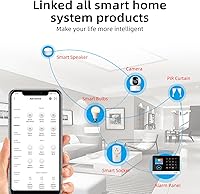
Users already embedded in the Tuya ecosystem find this DIY security setup integrates smoothly with other Smart Life devices, creating a unified control experience from a single app. Alexa and Google Home support works reliably for voice-based arming and disarming once the initial linking process is complete.
Apple HomeKit is not supported, which is a hard dealbreaker for households built around that ecosystem. A few users also report that after app or firmware updates, voice assistant integrations occasionally need to be re-linked, which introduces unexpected maintenance friction.
Self-Monitoring Experience
69%
31%
Buyers who specifically want full control over their security response appreciate that there are no third parties involved — when an alert fires, you decide whether it warrants calling authorities, without any automated dispatch or false-alarm fees. This resonates particularly with users who have had bad experiences with over-triggering professional monitoring services.
For buyers who travel frequently or sleep heavily, the self-monitoring model introduces real gaps in coverage that several reviewers acknowledge in hindsight. Missing an alert while away or asleep means an incident can go completely unaddressed, and there is no option to escalate to a professional monitoring layer if your needs change.
Portability
86%
Frequent movers consistently highlight this as one of the most practical aspects of the LWOHSI system — the entire setup disassembles quickly and fits compactly for transport. Users who have moved between apartments report reinstalling the system in a new space in well under an hour, often without consulting the instructions a second time.
Repeated removal and reinstallation does accelerate wear on the adhesive strips and screw mounts, and buyers who have moved with the system multiple times note that some components start to feel less secure over time. Replacement mounting hardware is not easily sourced, which can become a minor frustration after the second or third move.
Notification Accuracy
66%
34%
When sensors are positioned correctly and the motion detector is not exposed to external interference, most users find the alert accuracy genuinely useful — receiving a notification the moment a door opens provides the kind of real-time awareness this kit promises. Alerts during normal scenarios like deliveries or family arrivals are generally well-timed.
The gap between useful alerts and nuisance alerts is narrow, and several buyers report periods of alert fatigue after initially placing sensors in suboptimal locations. Without granular sensitivity controls beyond what the app currently offers, tuning out false positives requires physical repositioning rather than a simple settings adjustment.
Battery Life
72%
28%
The USB-C charging setup is broadly appreciated — buyers note it fits into their existing charging ecosystem without needing a proprietary cable or wall adapter. For low-traffic environments like a second home or storage unit, users report the battery holding adequately between charges.
In active households where sensors trigger frequently, battery drain is faster than several users anticipated. The app does not provide a precise battery percentage in all use cases, which means some buyers have been caught off guard by the hub powering down without sufficient advance warning.
Setup Documentation
58%
42%
The physical quick-start guide covers the basics well enough for users who have set up any smart home device before — the QR code pairing process is intuitive and the core steps are clearly illustrated without requiring technical knowledge.
Buyers who encountered issues beyond the standard setup flow — such as 4G configuration, voice assistant linking, or adding sensors manually — report that the documentation offers little practical guidance. Several users resorted to online forums or YouTube tutorials to troubleshoot steps that should have been covered in the included materials.

Suitable for:

The LWOHSI LW103F Home Security System was built for a very specific kind of buyer, and for that buyer it genuinely delivers. Renters are the most obvious fit — no drilling, no permanent fixtures, and nothing that will cost you a security deposit. Frequent movers will appreciate that the entire setup can be packed up and reinstalled in a new space in under an hour, which is something most hardwired systems simply cannot offer. If you are already using the Tuya or Smart Life ecosystem for other smart home devices, this slots in without friction. Small home offices or studio apartments needing basic entry-point awareness — rather than a full multi-zone security solution — will find the coverage adequate and the setup refreshingly straightforward.

Not suitable for:

The LWOHSI LW103F Home Security System is not the right call for anyone expecting professional 24/7 monitoring. When an alarm triggers, you are the one who decides whether to call emergency services — there is no dispatch center in the loop. Homeowners with larger properties or multiple floors will likely run into sensor range limitations that this compact kit was not designed to handle. If you travel frequently and want total peace of mind while away, the self-monitoring model demands that you stay attentive to your phone at all times. Those with weak or unreliable mobile data plans should also think carefully, since the 4G fallback draws from your own cellular data rather than any dedicated network. And buyers expecting robust, weather-hardened hardware will find the lightweight plastic construction a noticeable compromise.

Specifications

  • Connectivity: The hub connects via dual-mode 4G cellular and Wi-Fi, providing a fallback channel if the home network goes offline.
  • Siren Output: The built-in alarm siren reaches 120dB, which is comparable to the volume level of a live rock concert at close range.
  • App Platform: The system is managed through the Tuya Smart Life app, available for both iOS and Android smartphones and tablets.
  • Voice Assistants: Compatible with Amazon Alexa and Google Home, allowing hands-free arming and disarming via voice commands.
  • Power Source: The hub runs on a rechargeable lithium polymer battery, which is included in the box.
  • Charging Port: The hub charges via a USB-C port, making it compatible with modern charging cables and power banks.
  • Hub Dimensions: The main hub measures 6.3 x 0.71 x 3.86 inches, keeping it compact enough to place on a shelf or mount discreetly on a wall.
  • Item Weight: The complete hub unit weighs 1.41 pounds, light enough to reposition or pack for a move without any hassle.
  • Sensor Types: The kit includes door/window contact sensors and a motion sensor, covering both entry points and interior movement detection.
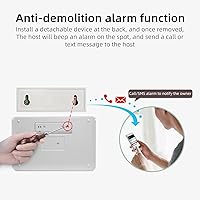
  • Alert Methods: When triggered, the system delivers both an audible siren and an instant push notification to paired mobile devices simultaneously.
  • Control Methods: The system can be controlled via the Smart Life app, a physical remote, or supported voice assistants.
  • Installation: Installation is DIY-friendly using a screw-in method, with no professional tools, drilling, or permanent modifications required.
  • Usage Environment: The system is rated for both indoor and outdoor use, giving flexibility in sensor placement around entry points.
  • Subscription Fees: There are no monthly fees, contracts, or recurring charges — the system is fully self-monitored after a one-time purchase.
  • Voltage: The system operates at 12 volts, consistent with standard low-voltage wireless security hardware.
  • Included Components: The box contains one complete LW103F security system set, with all sensors, the hub, and required batteries included.
  • Compatible Devices: Works with smartphones and tablets running current versions of iOS or Android through the Tuya Smart Life app.
  • Noise Level: The alarm siren produces a maximum noise level of 120dB, sufficient to be heard clearly throughout a standard apartment or small home.

Related Reviews
LWOHSI Home Alarm System with 2MP HD Security Camera
83%
88%
Ease of Installation
90%
Camera Quality
75%
App Performance
92%
Value for Money
85%
Siren Volume
More
Arlo SS1201 Home Security System
76%
91%
Ease of Installation
88%
Sensor Versatility
74%
App Experience
57%
Subscription & Value Transparency
82%
Build Quality & Hardware Design
More
KERUI Home Security System KR-H01
82%
92%
Value for Money
88%
Ease of Installation
90%
Siren Loudness & Effectiveness
85%
System Expandability
75%
Remote Control Usability
More
ANNKE 8CH 5MP Security Camera System
73%
88%
Image Quality
84%
Night Vision
76%
AI Detection Accuracy
41%
Installation Experience
58%
Remote Access & App
More
TUGARD G20 Smart Home Security System Kit
77%
91%
Value for Money
86%
Ease of Setup
78%
Dual-Network Reliability
67%
App Performance
72%
Sensor Coverage & Range
More
KERUI WiFi Home Security Alarm System DLB01
83%
88%
Ease of Installation
85%
App Experience
91%
Siren Volume & Effectiveness
83%
Expandability
88%
Voice Control Compatibility
More
5iktery PoE-4C-01 4-Camera NVR Security Kit
73%
84%
Image Quality
79%
Night Vision
71%
AI Motion Detection
76%
Ease of Installation
88%
Value for Money
More
Ideal Security BK630V2 Pressure Mat Alarm
78%
93%
Ease of Setup
88%
Sensor Reliability
86%
Sound Performance
61%
Wire Management
79%
Battery Life
More
ZOSI C220 8CH 4MP PoE Security System
75%
88%
Image Clarity
71%
Night Vision Performance
79%
Ease of Installation
74%
AI Human Detection
62%
App Experience
More
Maysly May-NVR4 8CH 1080P Wireless Security Camera System
72%
83%
Ease of Setup
88%
Daytime Image Quality
76%
Night Vision Performance
71%
Wireless Reliability
67%
App & Remote Viewing
More
KEEPWORD WiFi GSM Wireless Home Security System
69%
83%
Value for Money
88%
Ease of Installation
71%
App Performance
74%
Sensor Reliability
58%
WiFi Connectivity
More

FAQ

No, there are no monthly fees at all. You buy the hardware once and monitor it yourself through the Smart Life app. There is no subscription tier or professional monitoring plan attached to this kit.

The 4G fallback uses your own mobile data plan rather than a dedicated SIM card included with the device. If your home Wi-Fi drops, the system can route alerts through your cellular connection, but that will count against your data allowance. It is a useful safety net, not an independent cellular plan.

Yes, that is one of the strongest use cases for this wireless alarm kit. The installation is screw-in based and does not require drilling into walls or running cables. Most renters find they can set it up and take it down without leaving any marks that would affect a security deposit.

No, this is a self-monitored system. When a sensor triggers, you receive a push notification on your phone and the siren sounds locally. It is entirely your call whether to contact local authorities. There is no dispatch center or emergency response team connected to this system.

It integrates with Amazon Alexa and Google Home, so if your smart home runs on either of those platforms you should be able to add it without issues. It also lives within the Tuya Smart Life ecosystem, which connects with a wide range of third-party smart devices. If your home runs on Apple HomeKit exclusively, this system does not natively support that platform.

The manufacturer does not publish a specific battery life figure, and real-world performance will vary depending on how frequently sensors trigger and how active your monitoring is. Charging via USB-C is quick and convenient, so keeping the hub topped up is straightforward. It is worth checking the charge level periodically, especially if you rely on the 4G fallback.

The included kit covers a limited number of entry points based on the sensors in the box. The system is designed for small spaces — think a studio apartment, a one-bedroom unit, or a small office. For larger homes with many entry points, you may need to purchase additional compatible sensors separately, though it is worth confirming compatibility before buying extras.

The system is rated for both indoor and outdoor use, so placing sensors on external doors or covered entry points is supported. That said, sensors exposed to direct rain or extreme weather for extended periods may wear faster than those kept indoors. For best longevity, covered or sheltered outdoor placements are preferable.

This is one of the more common complaints from users who place motion sensors near windows with street traffic or moving shadows. Try repositioning the sensor slightly away from the window line or adjusting its angle so it focuses on interior space rather than exterior movement. Sensitivity settings in the Smart Life app may also help reduce unnecessary triggers.

Most users describe the setup as genuinely straightforward — plug in, download the Smart Life app, scan a QR code, and pair your sensors. The included instructions are basic but adequate for the process. Where people occasionally get tripped up is linking the system to a voice assistant, which requires a few extra steps in the Alexa or Google Home app. If you are comfortable setting up a standard smart speaker, this should be well within reach.