Overview

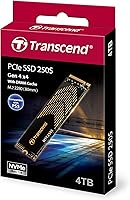
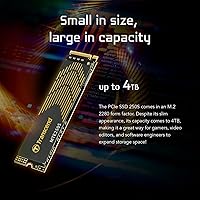
The Transcend MTE250S 4TB NVMe M.2 SSD occupies an interesting spot in the storage market — a high-capacity Gen4 drive from a brand that doesn't always get the spotlight it deserves. Transcend has been building reliable storage hardware out of Taiwan for decades, with roots in enterprise and industrial applications that inform their quality standards. What makes this drive stand out isn't just the speed — it's the 4TB capacity crammed into a standard M.2 2280 form factor, which is still genuinely uncommon at this size. The included graphene heatsink is a thoughtful touch that many competing bare drives skip. Just know going in: premium specs cost money, and this one doesn't pretend otherwise.

Features & Benefits

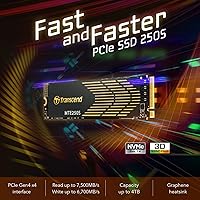
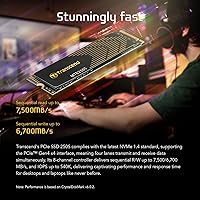
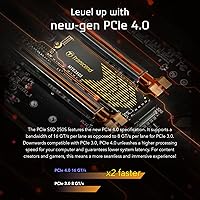
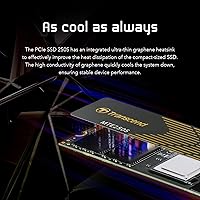
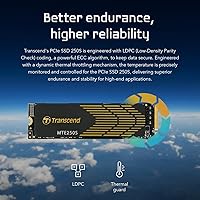
The headline numbers are hard to ignore: 7,500 MB/s sequential read and 6,700 MB/s write via a PCIe Gen4 x4 interface. In practice, that translates to near-instant large file transfers and noticeably faster application load times compared to Gen3 drives. The 8-channel controller pushes up to 540K random IOPS, which matters more than sequential speeds for everyday tasks like booting up or switching between apps. The graphene heatsink keeps thermals in check during sustained workloads — a real concern with fast drives in enclosed spaces. LDPC error correction and dynamic thermal throttling add a solid layer of data protection. It's also backward compatible with PCIe 3.0 systems, which extends its usability beyond just the latest hardware.

Best For

PS5 owners are probably the most obvious audience here — the MTE250S ships with a heatsink already attached, so there's no need to source a separate one for Sony's console. That said, the PS5 caps read speeds around 5,500 MB/s, so the full Gen4 performance headroom benefits PC users more directly. Video editors and content creators with large 4K or RAW footage libraries will appreciate the 4TB ceiling, which means fewer drives and less juggling. PC builders wanting a single-slot solution for both OS and storage will find it compelling too. Software developers running virtual machines or large build environments are another natural fit. If you're still on a Gen3 drive and use your machine heavily, the real-world speed difference will be immediately noticeable.

User Feedback

With over 2,200 ratings averaging 4.7 stars, the collective verdict on this 4TB NVMe SSD is clearly positive — and the praise isn't just noise. Buyers consistently point to easy installation and smooth PS5 detection as highlights, with most reporting the drive recognized without any BIOS fiddling. Thermal performance during long gaming sessions draws favorable comments too, with the graphene heatsink doing its job quietly. Where opinions diverge is on value — some buyers feel the price per terabyte is harder to justify given competitive Gen4 options that undercut it. A handful of users also note that sustained write speeds under heavy load fall below peak rated figures, which is expected behavior for most consumer SSDs, but worth knowing if your workloads involve continuous large writes.

Pros

  • 4TB in a single M.2 2280 slot is still genuinely rare and eliminates the need for multiple drives.
  • The graphene heatsink ships attached — no extra purchase needed for PS5 installation.
  • Gen4 sequential read speeds translate to fast large-file transfers and snappy application launches on compatible systems.
  • LDPC error correction adds a meaningful layer of data protection for long-term reliability.
  • Over 2,200 buyer ratings averaging 4.7 stars reflects unusually consistent real-world satisfaction.
  • PCIe 3.0 backward compatibility means the drive works in older systems, even if at reduced speeds.
  • Dynamic thermal throttling protects the drive during extended heavy workloads without user intervention.
  • Installation is straightforward — buyers repeatedly report immediate detection on both PC and PS5 with no configuration needed.
  • Transcend's enterprise-grade background gives this 4TB NVMe SSD credibility beyond typical consumer-tier storage brands.

Cons

  • The price per terabyte is higher than several competing Gen4 drives at this capacity range.
  • Sustained write speeds under continuous heavy load drop below the advertised peak figures.
  • PS5 users pay for Gen4 headroom the console's architecture cannot fully utilize.
  • No software bundle or companion app is included for drive health monitoring or warranty management.
  • Buyers on PCIe 3.0 systems will never access the full performance this drive is rated for.
  • At 4TB, the drive is overkill — and overpriced — for users with moderate storage needs.
  • Transcend's brand recognition is lower than Samsung or WD in some markets, which can make resale value less predictable.
  • The heatsink, while useful, adds marginal thickness that may cause clearance issues in very tight M.2 slots or some laptop configurations.

Ratings

The scores below for the Transcend MTE250S 4TB NVMe M.2 SSD were generated by AI after analyzing thousands of verified global buyer reviews, with spam, incentivized submissions, and bot activity actively filtered out. The results reflect a candid picture of where this drive genuinely excels and where real-world performance falls short of marketing claims — both sides of the story are represented here.

Read Performance
92%
Buyers migrating from Gen3 drives consistently describe the speed jump as immediately noticeable — large game installs that used to take minutes now feel nearly instant, and 4K timeline scrubbing in editing software is dramatically smoother. On Gen4-capable systems, this drive competes with the fastest consumer SSDs available.
The 7,500 MB/s ceiling is a benchmark figure rather than a sustained everyday reality, and users on PCIe 3.0 systems will never experience it at all. A small but consistent subset of reviewers noted that real-world read speeds in mixed workloads land closer to Gen3 top-end figures than the rated peak.
Write Performance
81%
19%
For sequential write tasks — exporting video projects, transferring large RAW photo archives, or installing multi-gigabyte game patches — the drive holds strong and noticeably outpaces older NVMe hardware. Content creators in particular praised the write speeds when handling uncompressed 4K footage.
Once the SLC write cache is exhausted during prolonged heavy transfers, sustained write speeds drop meaningfully below peak — a pattern common across consumer SSDs but still a point of frustration for users moving very large data sets in one go. This limitation is rarely disclosed upfront in marketing materials.
Thermal Management
88%
The pre-attached graphene heatsink draws consistent praise from PS5 users and PC builders alike, with most reporting that the drive stays cool even after hour-long gaming sessions or back-to-back large transfers. Buyers appreciated not having to source a separate thermal solution, particularly for PS5 compatibility.
In very compact PC cases with limited airflow, a small number of users reported that the drive still hit throttling temperatures during prolonged workloads, suggesting the thin graphene layer has its limits under extreme conditions. The heatsink also adds a marginal amount of thickness that caused minor clearance issues in a few slim laptop M.2 slots.
Capacity Value
74%
26%
Having 4TB in a single M.2 2280 slot is genuinely useful — PS5 users can keep 25 or more large modern titles installed simultaneously, and PC builders can consolidate their entire workflow onto one drive without compromise. The sheer convenience of a single high-capacity drive is a recurring theme in positive feedback.
The price per terabyte sits noticeably higher than several competing Gen4 drives, and cost-aware buyers who compared options before purchasing frequently flagged this in their reviews. For users who only need 1–2TB of fast storage, the value math tilts sharply against this drive.
PS5 Compatibility
89%
Detection rates on the PS5 are reportedly excellent — the vast majority of console buyers describe a plug-and-play experience with no troubleshooting required after a firmware update. The included heatsink meeting Sony's thermal spec out of the box removes a common friction point for console upgraders.
The PS5 cannot utilize the full Gen4 bandwidth this drive offers, capping reads well below the rated maximum, which means console buyers are paying partly for performance they cannot access. A handful of users also noted minor confusion during initial PS5 setup, though this appeared to be a firmware version issue rather than a drive defect.
Installation Ease
93%
Across both PC and PS5 contexts, installation feedback is overwhelmingly positive — buyers with minimal technical experience describe inserting and formatting the drive without any complications. The standard M.2 2280 form factor means it drops into virtually any compatible slot without adapters or modification.
A small number of PC users noted that their motherboard BIOS required a quick update before the drive was recognized, which can be a stumbling block for first-time builders. The heatsink, while thin, occasionally required minor repositioning to clear retention screws in some specific motherboard layouts.
Long-Term Reliability
86%
Transcend's enterprise heritage shows in the build approach — LDPC error correction and dynamic thermal throttling give buyers more confidence in long-term data integrity than budget drives without these protections. Users who have owned the drive for a year or more report no unexpected failures or degradation.
The brand does not publish its TBW (terabytes written) endurance rating as prominently as competitors like Samsung or WD, making direct longevity comparisons harder for technically minded buyers. Transcend's RMA and warranty service experience is rated more inconsistently than the hardware itself across different regions.
Value for Money
67%
33%
For buyers who specifically need both Gen4 speed and 4TB in a single M.2 slot, the MTE250S justifies its price by eliminating the need for multiple drives — the convenience premium is real and recognized in positive reviews. Heavy users who stress-tested the drive at length generally felt the build quality supported the cost.
Casual users and those comparing purely on price per gigabyte frequently express post-purchase regret when they realize comparable Gen4 drives offer similar day-to-day performance at lower cost. The premium feels hard to swallow unless your workload genuinely maxes out what this drive offers.
Random I/O Responsiveness
84%
The 8-channel controller's 540K IOPS ceiling translates well into snappy everyday responsiveness — OS boot times, app launches, and game level load screens all benefit noticeably. Power users running virtual machines or large development environments called out this responsiveness as a clear upgrade over mid-range drives.
In real-world mixed workloads involving simultaneous reads and writes, random IOPS figures dip from the rated peak, and the gains over a good Gen3 drive are less dramatic than the sequential speed numbers suggest. Buyers expecting a transformative leap in general desktop responsiveness may find the improvement more incremental than anticipated.
Software & Ecosystem
58%
42%
The drive requires no proprietary software to function, which some buyers actually prefer — there is nothing to install, no bloatware, and no mandatory account registration just to use the hardware. Firmware updates, when needed, are available through Transcend's support site.
Transcend does not bundle a robust health monitoring or data migration tool the way Samsung bundles Magician or WD bundles Dashboard, which is a real gap for users who want visibility into drive health over time. Several reviewers specifically mentioned wishing for cloning software to ease the transition from their old drive.
Build & Form Factor
91%
At under half an ounce, the drive barely registers in a system build, and the standard 2280 footprint means universal compatibility across desktops, laptops, and the PS5. The overall construction feels solid, and the graphene heatsink sits flush without adding awkward bulk.
The heatsink integration, while generally clean, does add a small amount of thickness versus a bare drive that may matter in particularly tight M.2 configurations. There is no visual indicator of drive activity built in, which some enthusiast builders noted as a minor cosmetic omission.
PCIe 3.0 Performance
71%
29%
On older systems limited to PCIe 3.0, the drive still performs respectably — it functions as a fast Gen3 NVMe SSD and will outperform SATA-based storage with no compatibility issues. Buyers who knew their system limitations and purchased accordingly reported satisfaction with the experience.
The value case for this drive weakens considerably on Gen3 systems, since the speed ceiling drops to levels achievable by drives costing significantly less. Buyers who did not check their motherboard specs before purchasing and discovered they were on PCIe 3.0 post-delivery were among the more critical voices in user feedback.
Brand Reputation
79%
21%
Transcend's decades-long track record in industrial and enterprise storage lends credibility that pure consumer brands cannot easily match, and technically informed buyers frequently cite this as a reason for their purchase decision. The 5-year warranty signals confidence in the hardware.
Among mainstream consumers, Transcend's name recognition still lags behind Samsung, WD, and Seagate, which can create hesitation at purchase and affects resale value if buyers later decide to upgrade. Some users noted that customer support response times varied significantly depending on their region.

Suitable for:

The Transcend MTE250S 4TB NVMe M.2 SSD is purpose-built for users who genuinely need both speed and massive local storage in a single compact drive. PS5 owners get the most immediately practical benefit — the included graphene heatsink means you can slot it straight into Sony's console without hunting down a compatible add-on, and 4TB of fast storage essentially eliminates the need to constantly manage which games stay installed. Video editors and cinematographers working with large 4K or RAW files will also find the high sequential write speeds meaningful during export and scrubbing workflows. PC builders consolidating OS, applications, and project files onto a single M.2 drive will appreciate not having to compromise on either capacity or performance. Software developers running resource-heavy virtual machines or maintaining large repositories will notice the responsiveness difference versus older Gen3 hardware. If you fall into any of these categories and want a drive you can install once and largely forget about, this one makes a strong case.

Not suitable for:

Budget-conscious buyers should look elsewhere — the Transcend MTE250S 4TB NVMe M.2 SSD carries a premium price that is hard to justify if your workloads are light or your system cannot fully utilize Gen4 bandwidth. Users with older motherboards limited to PCIe 3.0 will see the drive downclock to match, which means you are paying for Gen4 performance you will never fully access. Casual PC users who primarily browse, stream, or run office applications will find no practical difference between this and a much cheaper mid-range SSD — the speed advantage only surfaces under sustained, demanding workloads. PS5 users should also understand that the console itself caps read throughput well below this drive's ceiling, so the full Gen4 specification is essentially reserved headroom rather than a realized daily benefit on that platform. If your storage needs are below 2TB, the value equation tilts further against this drive, since competitive options at lower capacities offer similar Gen4 speeds at a noticeably lower cost per gigabyte.

Specifications

  • Capacity: The drive offers 4TB of usable flash storage, making it one of the larger single-chip M.2 options available in this form factor.
  • Interface: It uses a PCIe Gen4 x4 interface, transmitting data across four lanes simultaneously for maximum throughput on compatible systems.
  • Form Factor: The drive follows the M.2 2280 standard, measuring 0.87 x 0.15 x 3.15 inches and fitting the vast majority of modern motherboards and the PS5 expansion slot.
  • Sequential Read: Peak sequential read speed is rated at up to 7,500 MB/s under optimal conditions on a Gen4-capable host system.
  • Sequential Write: Peak sequential write speed reaches up to 6,700 MB/s, placing it among the faster consumer Gen4 drives at this capacity.
  • Random IOPS: The 8-channel controller delivers up to 540K random IOPS, supporting snappy response times across mixed read/write workloads.
  • Protocol: The drive complies with the NVMe 1.4 standard, which improves queue management and reduces latency compared to older NVMe revisions.
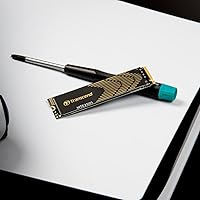
  • Heatsink: An ultra-thin graphene heatsink is pre-attached to the drive, leveraging graphene's high thermal conductivity to dissipate heat during sustained operation.
  • Error Correction: LDPC (Low-Density Parity Check) ECC is built into the controller to detect and correct data errors, protecting integrity over the drive's lifespan.
  • Thermal Control: A dynamic thermal throttling mechanism continuously monitors drive temperature and adjusts performance to prevent overheating under sustained loads.
  • Backward Compat.: The drive is fully backward compatible with PCIe 3.0 slots, operating at reduced speeds on older systems that do not support Gen4.
  • PS5 Support: The MTE250S is officially compatible with the PS5 expansion slot, and the pre-attached heatsink meets Sony's thermal requirements without modification.
  • Weight: The drive weighs approximately 0.353 ounces (10g), keeping system weight impact negligible even in compact builds.
  • Color: The drive has a black finish, with the graphene heatsink maintaining a low-profile appearance consistent with most modern PC aesthetics.
  • Flash Memory: The drive uses 4TB of NAND flash storage, with the specific NAND type managed by Transcend's 8-channel controller for balanced performance and endurance.
  • Manufacturer: Transcend Information is a Taiwanese storage company founded in 1988, with a background spanning consumer, industrial, and enterprise memory products.
  • Model Number: The official model identifier is TS4TMTE250S, used for warranty registration, firmware updates, and compatibility verification.
  • Release Date: This drive was first made available in February 2023, positioning it within the mature Gen4 NVMe product generation.

Related Reviews
ORICO IG740PRO 4TB M.2 NVMe SSD
79%
91%
Sequential Read Performance
88%
Endurance & Longevity
84%
Thermal Management
79%
Value for Money
74%
PS5 Compatibility
More
fanxiang S770 4TB NVMe M.2 SSD
84%
88%
Read Speed Performance
82%
Write Speed Consistency
93%
PS5 Compatibility
86%
Thermal Management
84%
Value for Money
More
fanxiang S660 4TB NVMe M.2 SSD
88%
92%
Performance
89%
Cooling Efficiency
91%
Ease of Installation
96%
Compatibility with PS5
87%
Build Quality
More
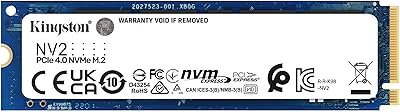
Kingston NV2 4TB M.2 NVMe SSD
83%
93%
Value for Money
82%
Read Performance
61%
Sustained Write Speed
96%
Installation Ease
89%
Compatibility
More
ORICO TCM2 M.2 NVMe SSD Enclosure
78%
83%
Transfer Speed
61%
Thermal Management
74%
Build Quality
91%
Ease of Installation
86%
Cable Bundle Quality
More
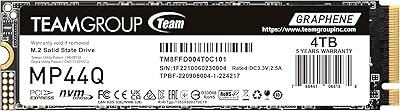
TEAMGROUP MP44Q 4TB NVMe SSD
80%
92%
Sequential Read Speed
78%
Sequential Write Speed
91%
Value for Money
74%
Thermal Management
81%
Compatibility
More
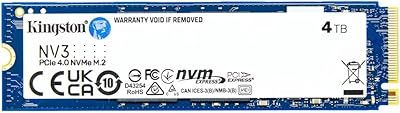
Kingston NV3 4TB NVMe SSD
80%
91%
Sequential Read Speed
63%
Sustained Write Performance
94%
Storage Capacity
88%
Value for Money
93%
Installation Ease
More
PNY CS2241 4TB NVMe SSD
85%
88%
Read Performance
83%
Write Performance
61%
Thermal Management
92%
Value for Money
94%
Installation Ease
More
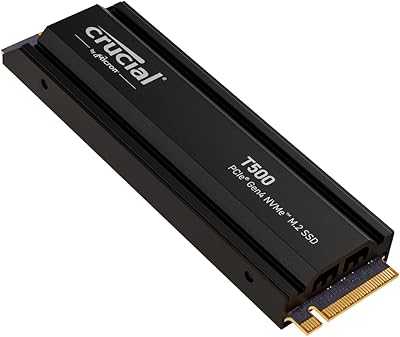
Crucial T500 4TB Gen4 NVMe M.2 SSD
89%
94%
Performance
87%
Cooling Efficiency
90%
Installation Process
92%
Reliability
95%
Compatibility with PS5
More
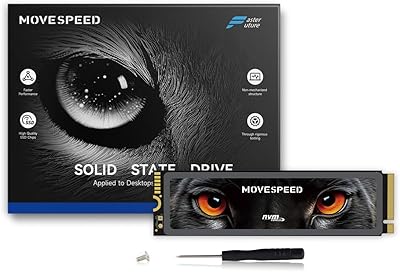
MOVE SPEED HB7450 4TB NVMe M.2 SSD
79%
91%
Read/Write Performance
93%
PS5 Compatibility
94%
Storage Capacity Value
83%
Thermal Management
78%
Build Quality
More

FAQ

Yes, and that is one of its practical advantages. The graphene heatsink comes pre-attached, so you can install it directly into the PS5 expansion bay without sourcing a compatible add-on heatsink. Just make sure your PS5 firmware is updated before installation, as Sony requires a software update to recognize expansion drives.

Peak sequential speeds are measured under controlled benchmark conditions, so real-world numbers will vary. For large sequential file transfers — like moving a folder of RAW photos or a game install — you will get close. For mixed everyday tasks like opening apps or loading files, random IOPS matter more than sequential speeds, and the MTE250S performs well there too.

Functionally it will work — the drive is backward compatible with PCIe 3.0 slots. However, you will be limited to Gen3 speeds, which means the drive will perform similarly to a good Gen3 NVMe SSD. At that point, the price premium is harder to justify, and you would likely be better served by a less expensive drive matched to your system's actual capability.

The combination of the graphene heatsink and dynamic thermal throttling keeps temperatures in check during extended workloads. Buyers who use it for long gaming sessions and sustained video exports generally report stable performance without noticeable slowdowns. That said, like most consumer SSDs, sustained write speeds will dip after the SLC cache fills — this is normal behavior, not a defect.

Not ideally. This is a consumer-grade drive optimized for desktop and gaming workloads, not continuous 24/7 operation in a NAS environment. For always-on storage, you would want a drive explicitly rated for enterprise or NAS duty cycles, with higher TBW endurance ratings and stronger warranty terms.

The drive's thermal throttling system kicks in before temperatures reach dangerous levels, reducing performance to keep heat under control. This protects both the drive hardware and your data. You are unlikely to experience data loss from heat under normal use — the graphene heatsink and throttling work together as a safety net.

On raw performance metrics, the MTE250S is competitive with top-tier Gen4 drives from Samsung and WD. Where it sometimes trails is in brand familiarity and the software ecosystem — Samsung ships with Magician and WD offers Dashboard for drive health monitoring, while Transcend's companion software is less feature-rich. If monitoring tools matter to you, factor that in.

Depends on your library size. Modern AAA games routinely hit 100–150GB each, so 4TB gives you room for 25–30 large titles plus save data and system files without managing storage constantly. If you only keep a handful of games installed at a time, a 2TB option would cost less and serve you just as well.

No cloning software or migration tools are bundled in the box. If you are replacing an existing drive, you will need a third-party tool like Macrium Reflect or manufacturer utilities from your old drive's brand. The only physical accessory included is the pre-attached graphene heatsink.

Transcend typically backs their MTE250S drives with a 5-year limited warranty, which is standard for premium NVMe SSDs in this tier. Their support reputation is generally solid for an enterprise-adjacent brand, though response times and regional service availability can vary. Always register your drive after purchase to make any future warranty claim straightforward.

Where to Buy