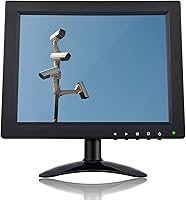
TPEKKA MON1008 10-inch Security CCTV Monitor
TPEKKA MON1008 10-inch Security CCTV Monitor — image 1
TPEKKA MON1008 10-inch Security CCTV Monitor — image 2
TPEKKA MON1008 10-inch Security CCTV Monitor — image 3
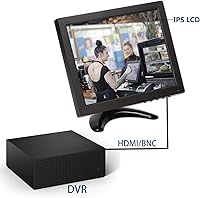
TPEKKA MON1008 10-inch Security CCTV Monitor — image 4
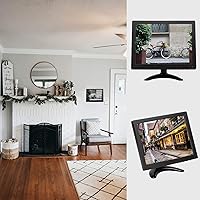
TPEKKA MON1008 10-inch Security CCTV Monitor — image 5
TPEKKA MON1008 10-inch Security CCTV Monitor — image 6
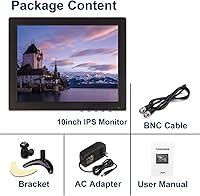
TPEKKA MON1008 10-inch Security CCTV Monitor — image 7
TPEKKA MON1008 10-inch Security CCTV Monitor — image 8
68%
32%

Overview

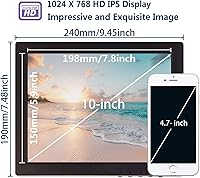
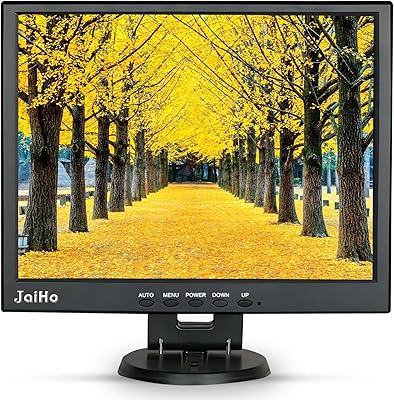
The TPEKKA MON1008 10-inch Security CCTV Monitor has been quietly filling a specific niche since its 2017 launch: a compact surveillance display for hobbyist projects, DIY security setups, and anyone who needs a small dedicated screen without overcomplicating the budget. It runs a 4:3 panel at 1024x768 resolution, which pairs naturally with older camera systems never designed for widescreen output. At just 2.4 lbs with a desktop stand already in the box, getting it up and running takes minutes. It is not trying to be a general-purpose monitor, and that narrow focus is both its greatest strength and its clearest limitation.

Features & Benefits

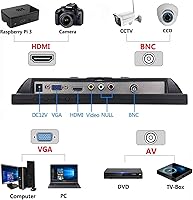
What separates this compact security monitor from other small screens at a similar price point is the breadth of input options. HDMI, VGA, BNC, and AV connections are all present, letting it communicate with a modern media player just as easily as a legacy analog camera or DVR output. The IPS panel is a meaningful choice at this size — colors and contrast hold up whether you're looking straight on or from a wide angle, with a rated 178-degree horizontal view. A 47-inch power cord adds real placement flexibility, and the glossy screen surface delivers punchy colors in dimmer environments, though it will fight you with reflections under direct overhead lighting.

Best For

This small surveillance screen is well suited to a handful of specific scenarios, and being clear about that upfront saves a lot of buyer disappointment. DIY home security builders running analog or composite feeds over BNC or AV will find the input lineup genuinely practical. Raspberry Pi enthusiasts regularly gravitate toward it as a tidy, multi-input display that works without driver headaches. FPV hobbyists have also found it useful as a lightweight ground-station screen. Where it falls short: anyone expecting a general desktop experience, working in a brightly lit room, or planning to run widescreen HDMI content will likely hit a wall with the 4:3 aspect ratio and the modest brightness output.

User Feedback

The TPEKKA 10-inch display carries a 3.4-star average, which reflects a genuinely divided buyer experience rather than an across-the-board failure. Buyers who matched it to the right use case — CCTV monitoring, Pi builds, and similar focused applications — often highlight the plug-and-play setup and the flexibility of having four input types in one small unit. The recurring complaints that weigh the rating down involve image consistency varying between units, brightness falling short in well-lit workspaces, and the plastic housing drawing skepticism about long-term durability. A handful of buyers also ran into frustration when using HDMI sources, finding that modern widescreen content doesn't translate well to the 4:3 frame.

Pros

  • Four input types — HDMI, VGA, BNC, and AV — make this compact security monitor compatible with a surprisingly wide range of devices.
  • The IPS panel provides consistent color and contrast across wide viewing angles, which matters in surveillance and monitoring setups.
  • At 2.4 lbs, this small surveillance screen is light enough to reposition or transport without hassle.
  • A desktop bracket is included in the box, so basic setups require no additional hardware.
  • The nearly 4-foot power cord gives useful placement flexibility without immediately needing an extension.
  • 75x75mm VESA mounting holes allow wall installation for permanent security camera setups.
  • Plug-and-play operation is consistently praised — most users report it simply works without configuration.
  • The 10-inch form factor fits neatly on a desk or workbench without consuming significant space.
  • Buyers using it specifically for CCTV or Raspberry Pi displays report noticeably better satisfaction than those using it generally.

Cons

  • The 4:3 aspect ratio creates letterboxing or distortion issues when connecting modern widescreen HDMI sources.
  • At 250 cd/m², screen brightness is too limited for use near windows or under strong overhead lighting.
  • The glossy panel surface compounds glare problems in any environment that isn't carefully light-controlled.
  • Several buyers have raised concerns about the plastic housing feeling fragile and potentially cracking over prolonged use.
  • Image quality consistency appears to vary between units, suggesting quality control is not tightly managed.
  • The 400:1 contrast ratio is underwhelming even by small-monitor standards, affecting depth and shadow detail.
  • No VESA bracket is included, so wall-mounting requires a separate purchase on top of the base cost.
  • At this screen size and resolution, fine detail in camera footage can be harder to read than on a larger display.
  • The product has been largely unchanged since 2017, meaning buyers are working with aging hardware design choices.

Ratings

Our AI rating system analyzed verified global buyer reviews for the TPEKKA MON1008 10-inch Security CCTV Monitor, actively filtering out incentivized, duplicate, and bot-generated submissions to surface what real users actually experienced. The scores below reflect a transparent mix of genuine praise and documented frustrations, weighted by use-case relevance and review depth. Whether this compact surveillance screen earns a place in your setup depends heavily on how closely your needs match its narrow but well-defined strengths.

Input Versatility
83%
Having HDMI, VGA, BNC, and AV composite all on one small monitor is genuinely uncommon at this screen size, and buyers consistently call it out as the standout feature. DIY security installers and hobbyists working with mixed legacy and modern equipment find it saves them from buying separate adapters or signal converters.
While the range of inputs is impressive on paper, some users report that switching between inputs is not always intuitive, with the menu controls feeling stiff or slow to respond. A few buyers also noted minor signal recognition delays when hot-swapping between sources.
Image Quality
61%
39%
For surveillance monitoring purposes — checking camera angles, verifying coverage, reviewing DVR output — the IPS panel does a decent job of rendering consistent color across the screen without the washed-out edges typical of cheaper TN panels. Users monitoring indoor cameras in low-light setups generally find the picture serviceable.
At 400:1 contrast and 250 cd/m² brightness, this small surveillance screen struggles to render deep blacks or fine shadow detail, which matters when reviewing nighttime footage. Inconsistency between units is a recurring complaint, with some buyers reporting noticeably softer or dimmer panels than others received.
Build Quality
54%
46%
The monitor is light and compact enough that it does not feel like a burden to move or reposition, and the included desktop stand holds it steadily on a flat surface without wobbling. For a static desk installation in a low-traffic environment, many users find it holds up reasonably well over months of use.
The plastic housing is the most polarizing aspect of the physical build — a number of buyers describe it as thin or prone to cosmetic cracking over time, particularly at the corners. Those using it in workshops, garages, or any setting where it might get bumped report it does not inspire confidence in long-term durability.
Ease of Setup
81%
19%
Plug-and-play performance is one of the most consistently praised aspects across the review pool. Raspberry Pi users in particular appreciate that the display comes up without any driver installation or resolution fiddling, which saves real time during project builds.
While most setups go smoothly, a subset of buyers ran into confusion around input selection or initial display scaling, especially when connecting widescreen sources over HDMI. The on-screen menu navigation is functional but not particularly user-friendly for first-time users.
Brightness & Glare
47%
53%
In a dimly lit security room, basement server setup, or evening workshop, the 250 cd/m² brightness level is workable and the IPS panel renders colors with reasonable punch. Users who deliberately place this screen away from direct light sources rarely flag brightness as a problem.
In any environment with ambient daylight, overhead fluorescent lighting, or a nearby window, the glossy panel becomes a mirror before it becomes a monitor. This is one of the most frequent complaints in negative reviews, and it significantly limits where the display can practically be installed.
Compatibility
76%
24%
The 12V operating voltage makes this compact security monitor unusually flexible for non-standard power environments — vehicle-based setups, field stations, and solar-powered security installations all benefit from this. Legacy device owners with VGA or composite outputs can connect without any signal conversion hardware.
The 4:3 aspect ratio creates genuine compatibility friction with any modern widescreen source, and buyers who did not account for this upfront often express frustration after setup. HDMI sources from laptops or streaming devices either letterbox or stretch, neither of which is acceptable for everyday use.
Value for Money
67%
33%
For a buyer whose use case matches the product's design intent — a dedicated CCTV feed display, a Pi project screen, or a compact DVR monitor — the overall package represents reasonable value given the input range and IPS panel included at this price tier.
Buyers who approached it as a general-purpose secondary monitor, or who received a unit with below-average panel quality, tend to feel the money was not well spent. The build quality concerns compound this feeling, making it harder to justify if longevity is a priority.
Size & Portability
78%
22%
At 2.4 lbs and roughly the footprint of a hardcover book, this small surveillance screen is easy to place on a crowded workbench, carry to a job site, or tuck into a rack or enclosure. FPV pilots and mobile operators specifically appreciate that it does not add significant weight or bulk to their kit.
The 10-inch size, while compact, means screen real estate is limited when monitoring multiple camera feeds split across the display simultaneously. Users who outgrow single-feed monitoring often find themselves shopping for a larger display sooner than expected.
Viewing Angle
74%
26%
The 178-degree viewing angle rating holds up in practice for security monitoring scenarios where the screen may be mounted off-center or viewed from across a room. Multiple people checking a feed from different positions in a small office can all see the image without significant color distortion.
While the horizontal angle is strong, some users note that vertical viewing angle performance is less impressive in real-world use, particularly when the monitor is mounted high on a wall and viewed from below. The glossy surface also introduces its own distortions that can undermine the wide-angle benefit in brighter settings.
VESA & Mounting
69%
31%
The presence of 75x75mm VESA mounting holes is a practical feature that gives permanent installation users real flexibility in choosing bracket styles for wall, arm, or rack mounting. Buyers setting up fixed security stations appreciate not being locked into desktop placement only.
The VESA bracket is not included, which means first-time buyers who did not read the fine print face an extra purchase before completing their install. At this screen size, the 75x75mm pattern also limits compatible bracket options compared to the more common 100x100mm standard.
Long-Term Reliability
52%
48%
Units that survive the first few months of use without issue tend to continue performing adequately in low-stress fixed installations, according to longer-term reviewers. For a dedicated single-purpose display that sits undisturbed on a shelf, reliability complaints are less frequent.
The volume of reviews mentioning early failures, panel inconsistency, or housing damage is high enough relative to the total review count to be a genuine concern. Buyers expecting several years of trouble-free operation in a busier environment should factor in the risk of early degradation.
Power Cord Length
72%
28%
A 47-inch cord is noticeably longer than the short cables often bundled with compact monitors, giving practical flexibility for positioning the display away from the nearest outlet without immediately needing an extension. Workshop and desk users mention this as a small but appreciated detail.
While 47 inches is generous for a desktop setup, wall-mounted installations or setups where the power source is not nearby can still run short. There is no option for a detachable or user-replaceable cord, which becomes a problem if the cable is damaged near the monitor end.

Suitable for:

The TPEKKA MON1008 10-inch Security CCTV Monitor is a practical pick for a fairly specific group of buyers who know exactly what they need from a small dedicated display. DIY home security enthusiasts building out an analog or mixed camera system will appreciate having BNC and AV inputs alongside HDMI and VGA in a single compact unit — that kind of input flexibility is genuinely rare at this screen size. Raspberry Pi hobbyists who need a tidy, self-contained display for projects will find it straightforward to set up without any driver fuss. FPV drone pilots looking for a lightweight portable monitor to check feeds at the field will find the 2.4-lb body and included stand convenient. It also works well for small workshops or offices that need a single dedicated feed on a desk without dedicating a full-sized monitor to the job.

Not suitable for:

Buyers expecting a versatile general-purpose monitor will likely walk away disappointed, and it is worth being upfront about that. The TPEKKA MON1008 10-inch Security CCTV Monitor uses a 4:3 aspect ratio, which means modern widescreen HDMI content from laptops, media players, or consoles will either appear letterboxed or stretched — neither is ideal for extended use. The brightness tops out at a modest 250 cd/m², which is workable in a dim room but struggles noticeably in a sunlit space or under bright overhead lighting. The glossy panel compounds that issue by reflecting ambient light rather than cutting through it. Anyone doing color-sensitive work, graphic design, or even casual media consumption on a daily basis would find the display frustrating over time. Long-term durability is also a question mark — the plastic housing has drawn enough critical comments to suggest it may not hold up well in demanding environments.

Specifications

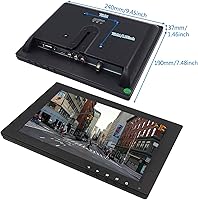
  • Screen Size: The display measures 10 inches diagonally, housed in a body that is 9.5 x 7.5 x 1.5 inches overall.
  • Panel Type: Uses an IPS (In-Plane Switching) panel, which provides more consistent color reproduction and contrast than older TN-type screens at this size.
  • Resolution: Native resolution is 1024x768 pixels (XGA), best suited to legacy camera systems and monitoring applications rather than high-definition content.
  • Aspect Ratio: The display uses a 4:3 aspect ratio, which aligns with older analog camera outputs but will letterbox or crop modern widescreen sources.
  • Brightness: Rated at 250 cd/m², which is adequate for dimly lit or controlled-light environments but limiting in bright rooms or near windows.
  • Contrast Ratio: The contrast ratio is 400:1, a modest figure that affects shadow detail and depth, particularly noticeable in dark surveillance footage.
  • Viewing Angle: Supports up to 178 degrees of horizontal and vertical viewing angle, allowing the screen to be read from nearly any position without significant color shift.
  • Video Inputs: Equipped with four input ports: HDMI, VGA, BNC, and AV (composite), covering both modern digital and legacy analog signal sources.
  • VESA Mounting: The rear of the unit includes 75x75mm VESA-compatible mounting holes for wall installation; the bracket itself is not included and must be purchased separately.
  • Power Cord: Ships with an approximately 47-inch (roughly 4-foot) power cable, providing reasonable reach for desk or wall placement without an extension.
  • Operating Voltage: Designed to run at 12 volts DC, which also makes it compatible with 12V power supplies commonly used in vehicle and field setups.
  • Weight: The monitor body weighs 2.4 lbs, making it light enough to reposition easily or transport for field use.
  • Screen Surface: The panel has a glossy surface finish, which produces richer colors in controlled lighting but reflects ambient light in brighter environments.
  • Included Accessories: A desktop bracket stand is included in the box, allowing immediate tabletop use without any additional mounting hardware.
  • Brand & Model: Manufactured by TPEKKA under model number MON1008, first made available in January 2017 and still actively sold.

Related Reviews
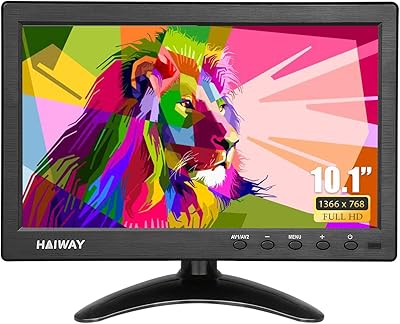
Haiway SM10.1 10.1-inch Security Monitor
72%
88%
Ease of Setup
91%
Input Connectivity
67%
Display Clarity
49%
Glare & Screen Surface
72%
Build Quality
More
Real HD LED-32A 32-inch Security Monitor
75%
88%
Image Clarity
91%
Connectivity & Compatibility
74%
Build Quality
86%
24/7 Continuous Operation
92%
Ease of Setup
More
Eyoyo EM101T 10-inch Touchscreen Monitor
75%
83%
Touch Responsiveness
78%
Image Quality
91%
Ease of Setup
76%
Build Quality
87%
Input Versatility
More
Cocar CCTVMON19 19-inch Security Monitor
70%
88%
BNC Connectivity
79%
Image Clarity
58%
Build Quality
72%
Value for Money
83%
Input & Port Variety
More
ZOSHING 17-inch Security Monitor
75%
88%
Ease of Setup
91%
Input Compatibility
67%
Image Clarity
61%
Brightness & Visibility
72%
Build Quality
More
JaiHo JH-LCD14 14-Inch Security LCD Monitor
67%
88%
Input Versatility
84%
Setup Ease
61%
Image Quality
53%
Brightness & Glare
58%
Build Quality
More
Haiway 13.3-inch Security Monitor
69%
91%
Input Versatility
88%
BNC Connectivity
86%
Ease of Setup
53%
Build Quality
61%
Image Quality
More
AISHICHEN 10.1-Inch IPS Mini Monitor
70%
78%
Value for Money
86%
Connectivity & Inputs
89%
Raspberry Pi Compatibility
73%
Display Clarity
61%
Build Quality
More
Moonka P10 10.5-inch Portable Monitor
73%
83%
Display Quality
61%
Brightness & Visibility
91%
Portability
54%
Stand & Stability
67%
Connectivity & Compatibility
More
Thinlerain T-101-1200 10.1-Inch Mini Monitor
67%
73%
Value for Money
58%
Display Quality
81%
Input Versatility
52%
Build Quality
54%
Brightness & Visibility
More

FAQ

Yes, that is actually one of its strongest use cases. The BNC and AV composite inputs are designed specifically for analog camera signals, so if your cameras output via BNC coax or RCA composite, you can connect them directly without any adapters or converters.

Absolutely. The HDMI input works with Raspberry Pi models that have a standard HDMI or micro-HDMI output (with the appropriate cable). Many Pi users specifically choose this compact security monitor because it is compact, draws only 12V, and requires no special drivers to get a picture.

It can, depending on how your source device handles aspect ratio output. Most modern laptops default to 16:9 widescreen output, which will either display with black bars on the sides or get stretched to fill the screen. Neither looks great for extended use, so if your primary source is a laptop or modern media device, this may frustrate you.

Honestly, no. At 250 cd/m², this small surveillance screen is fine in a dim workshop, a server room, or a low-light security station, but it struggles against direct sunlight or strong overhead lighting. The glossy panel makes glare worse in those conditions. It is designed for indoor, controlled-light environments.

No, the VESA mounting bracket is not included. The desktop stand is included, so you can use it on a table right away, but if you want to mount it on a wall, you will need to purchase a separate 75x75mm VESA bracket.

It runs on 12V DC, which means a standard 12-volt power adapter works fine for home use. That also makes it compatible with in-vehicle power setups, which is why some FPV pilots and mobile operators use it in the field. Just confirm the amperage of your power source is sufficient for the draw.

This is one of the more mixed areas in buyer feedback. The plastic housing is lightweight but has drawn some criticism for feeling less robust than the price might suggest. For a fixed desk or wall installation where it is rarely touched, it tends to hold up fine. If you are moving it around frequently or using it in a rougher environment, handle it with care.

Yes, and this is one of the use cases where it performs well. DVRs commonly output via BNC or AV composite, both of which are supported natively. Setup is usually straightforward — connect the cable, select the correct input, and the feed appears without any configuration needed.

There is no mention of built-in audio output in the product specifications, and this monitor is not marketed as an audio device. It is a display-only unit, so if your application requires audio monitoring alongside video, you would need a separate speaker or audio solution.

Technically yes, but it is not well suited to that role. The 4:3 aspect ratio, 1024x768 resolution, and modest brightness make day-to-day desktop use uncomfortable compared to modern monitors. It will work if you need a secondary display for a legacy application or a specific utility window, but anyone expecting a smooth everyday computing experience will find it limiting.