Overview

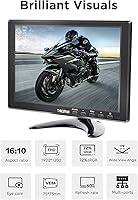
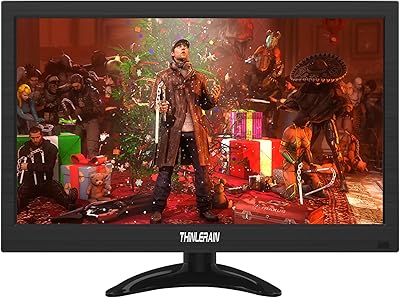
The Thinlerain T-101-1200 10.1-Inch Mini Monitor is a compact secondary display aimed at a narrow but genuine slice of the market — small, versatile, and built for utility over polish. It runs a 1920x1200 resolution on a 16:10 panel, giving you slightly more vertical real estate than standard widescreen, which is handy for terminal windows or stacked apps on a mini PC. Worth stating plainly: this is a TFT panel, not IPS, so color accuracy and off-axis viewing are limited — manage expectations accordingly. Thinlerain is not a well-known brand, and this compact display is priced and built to reflect that. Functional, not flashy.
Features & Benefits

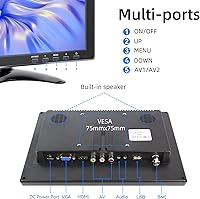
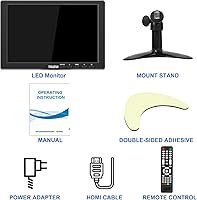
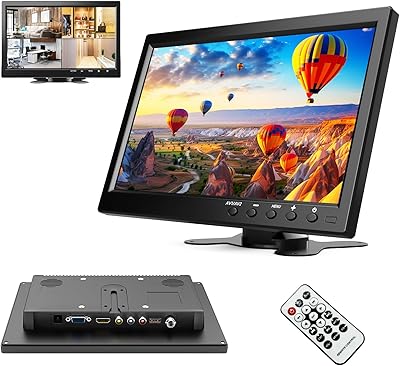
What this compact display does well for its size is pack in a surprisingly varied set of input options. HDMI, VGA, BNC, and AV on a 10-inch screen is genuinely uncommon — most tiny monitors stop at HDMI only. That range matters if you're connecting legacy hardware, a CCTV feed, or multiple device types. The built-in dual speakers are functional at best; fine for system alerts or low-volume audio, but nothing to rely on. A 75x75mm VESA mount opens up wall and arm placement, and combined with the included stand and remote control, setup is flexible without extra accessories. At 250 nits, brightness works indoors, but bright environments will wash it out.

Best For

This mini monitor is squarely aimed at a technically minded crowd. Raspberry Pi enthusiasts and mini PC builders will appreciate having a dedicated compact screen that doesn't take up much desk space and is easy to tuck beside a project setup. The BNC input makes it legitimately useful for analog CCTV or security monitoring — that's a niche, but a real one. It also works well as a kitchen or workshop display, mounted on the wall via VESA and used for recipes, music, or quick reference tasks. Retro gaming fans or anyone with older hardware needing VGA or AV output will find it one of the few modern options at this size. Casual mainstream users are probably better served elsewhere.

User Feedback

Buyers who have left reviews tend to fall into two camps. The praise comes mostly from Raspberry Pi users and mini PC hobbyists who specifically needed a small, multi-input display and found this one covers basic functionality well enough. The 16:10 aspect ratio gets a few positive mentions too — slightly less cramped vertically than standard widescreen for terminal or coding use. On the other side, some buyers note that the TFT panel colors look flat or washed out compared to product images, which isn't surprising given the panel type. The plastic build feels budget-grade in hand. The remote and speakers get mixed reactions — appreciated for existing, but rarely praised. A handful of users also flag HDMI compatibility quirks with certain devices.

Pros

  • Unusually wide input range — HDMI, VGA, BNC, and AV — for such a small screen size.
  • The 16:10 aspect ratio gives slightly more vertical space than standard widescreen, useful for coding or terminals.
  • 75x75mm VESA mount makes wall or arm mounting straightforward and flexible.
  • At 2.33 pounds, this mini monitor is light enough to reposition or travel with easily.
  • Included desktop stand and remote mean you can use it out of the box with no extra purchases.
  • Built-in dual speakers handle basic audio needs without requiring external equipment.
  • 1920x1200 resolution delivers sharp text at this screen size, which matters for productivity use.
  • Two-year warranty offers reasonable peace of mind for a budget-tier purchase.
  • BNC input support is genuinely rare at this size and serves CCTV and analog device users well.
  • The compact footprint makes it easy to fit into tight spaces where a standard monitor simply would not go.

Cons

  • TFT panel produces noticeably flat colors and limited off-axis viewing compared to IPS alternatives.
  • At 250 nits, brightness is insufficient for well-lit rooms or any setup near a window.
  • Full plastic construction feels cheap and may not hold up well under regular handling or mounting stress.
  • Built-in speakers are functional at best — low volume, thin sound, and not suitable for media use.
  • Thinlerain is a low-recognition brand with limited community support or driver documentation.
  • Some users have reported HDMI compatibility issues with specific devices, requiring troubleshooting.
  • The remote control, while included, adds little value in fixed desk or wall-mounted setups.
  • No IPS panel option is available in this product line, limiting upgrade paths within the brand.
  • 100-degree vertical viewing angle is restrictive and makes precise wall-mount positioning important.

Ratings

The scores below for the Thinlerain T-101-1200 10.1-Inch Mini Monitor were generated by AI after analyzing verified buyer reviews from multiple global markets, with spam, bot activity, and incentivized feedback actively filtered out. Ratings reflect the full picture — what real users genuinely praised and where they ran into frustration — so you can make a well-informed decision without second-guessing the data.
Value for Money
73%
27%
For buyers who specifically need a small multi-input display, the price-to-feature ratio is hard to argue with — HDMI, VGA, BNC, AV, a VESA mount, remote, and stand in one box at this size is genuinely difficult to find elsewhere. Raspberry Pi users and mini PC hobbyists consistently call it a fair deal for what it delivers.
Buyers expecting mainstream monitor quality at a budget price tend to feel short-changed once they see the TFT panel in person. The plastic build reinforces the sense that corners were cut, and some feel the overall package just barely justifies the cost rather than comfortably exceeding it.
Display Quality
58%
42%
The 1920x1200 resolution is a genuine strength — text is sharp and readable at 10.1 inches, which matters for terminal windows, coding references, or status dashboards. The 16:10 ratio also gives a little extra vertical breathing room that users running stacked layouts appreciate.
The TFT panel is the defining limitation here. Colors look flat and muted compared to any IPS screen, and the 100-degree vertical viewing angle means the image shifts noticeably if you are not looking straight on. Users who did not read the spec sheet carefully before buying tend to be the most disappointed.
Input Versatility
81%
19%
Having HDMI, VGA, BNC, and AV on a 10-inch monitor is uncommon enough that it becomes the main selling point for a specific set of buyers — particularly those managing older hardware, analog CCTV feeds, or mixed-device setups where adapters would otherwise be necessary.
The range of inputs sounds impressive on paper, but the USB port does not function as a video input, which confuses some buyers. A small number of users also report HDMI handshake issues with certain devices, requiring them to cycle power or try alternate cables before getting a stable signal.
Build Quality
52%
48%
The monitor is light and slim, which works in its favor for portable or wall-mounted use cases. The included stand holds it stable on a desk, and for a fixed kitchen or workshop installation the overall construction is adequate if handled gently.
Full plastic housing is the norm at this price tier, but it still disappoints users who pick it up and feel how much flex is in the chassis. The finish attracts fingerprints easily and the overall fit between panels is not tight — a few buyers noted minor gaps or creaking around the edges.
Brightness & Visibility
54%
46%
In a dim or average indoor setting — a study, a server room, or a kitchen with modest lighting — 250 nits is workable. Users who mount this in low-light environments generally have no complaints about readability during normal use.
Move this compact display anywhere near a window or into a well-lit workshop and the image becomes noticeably washed out. At 250 nits it simply cannot compete with ambient light, and there is no automatic brightness adjustment to compensate — users have to manage this manually through the on-screen menu.
Setup & Ease of Use
84%
Out-of-box experience is straightforward — the stand attaches easily, HDMI connection works without driver installation on most systems, and the on-screen menu is simple enough to navigate without consulting a manual. Most users report being up and running within a few minutes.
The on-screen display menu buttons are small and positioned on the rear edge, which can be awkward on a wall-mounted unit. A few users found the default display settings needed adjustment before the image looked acceptable, particularly contrast and sharpness levels.
Remote Control
63%
37%
Having a remote at all is appreciated, especially for wall-mounted setups where reaching the physical buttons would be inconvenient. It handles input switching, volume, and brightness adjustments reliably enough for everyday use in a fixed installation.
The remote feels cheap and the effective range is short — users sitting more than a few feet away report inconsistent response. It is also not backlit, which is a minor annoyance in dim rooms. Most buyers treat it as a backup rather than a primary control method.
Speaker Performance
41%
59%
The built-in dual speakers do cover basic audio needs — system alerts, low-volume background audio, and video playback at modest levels work without needing external equipment. For a kitchen display or a simple reference monitor, that is often all that is required.
Audio quality is thin and the maximum volume is low enough to be inaudible in noisy environments. Bass is essentially absent and clarity degrades at higher volumes. Anyone who actually cares about audio should plan on connecting external speakers or headphones from day one.
VESA Mounting
78%
22%
The 75x75mm VESA pattern works with a wide range of standard arms and wall brackets, and at 2.33 pounds the monitor is light enough that even basic mounts handle it comfortably. Kitchen and workshop users in particular praise how cleanly it installs and stays put.
The 100-degree vertical viewing angle creates a positioning challenge on wall mounts — the sweet spot is narrower than users expect, and getting the tilt angle right takes some trial and error. Wall-mount hardware is not included, so buyers need to factor that in separately.
Portability
76%
24%
Weighing just over 2 pounds and measuring under an inch thick, this mini monitor travels reasonably well for a secondary screen. Remote workers who carry it between locations find it fits in a laptop bag without much hassle.
There is no carrying case included, and the glossy plastic surface scratches easily in transit without protection. The power brick adds bulk to the travel kit, and the lack of a USB-C input means modern ultrabooks require an adapter for connection on the road.
Compatibility
67%
33%
Works plug-and-play with the majority of devices over HDMI — laptops, Raspberry Pi boards, mini PCs, and streaming sticks all connect without issue in most cases. The breadth of input types also means legacy hardware rarely requires adapters.
A recurring complaint involves HDMI compatibility with specific devices, particularly certain streaming sticks and older laptops, where the monitor fails to detect the signal or defaults to an incorrect resolution. It is not a widespread issue but it is consistent enough in user feedback to warrant caution.
Image Sharpness
74%
26%
At 1920x1200 on a 10.1-inch panel the pixel density is high enough that text-heavy content — code, spreadsheets, terminal output — looks crisp and well-defined. Users running this as a secondary information display consistently comment positively on text clarity.
The TFT panel's color rendering undermines sharpness perception in image and video content — even when the resolution is technically there, the flat palette makes photos and video look less detailed than they would on an IPS screen at the same resolution.
Warranty & Support
66%
34%
A two-year warranty is a reasonable commitment for a budget monitor and gives buyers some confidence in the purchase. Thinlerain does have customer support contact options and most straightforward defect claims appear to be handled without excessive friction.
Thinlerain is a low-profile brand with limited community presence, sparse documentation, and no widely available firmware updates. If you encounter an unusual compatibility issue or need technical guidance beyond basic setup, finding reliable support outside of the Amazon listing is difficult.

Suitable for:

The Thinlerain T-101-1200 10.1-Inch Mini Monitor makes the most sense for technically minded buyers who know exactly what they need from a small, multi-input display. Raspberry Pi hobbyists and mini PC builders are the clearest fit — this compact display fills a genuine gap for anyone running a small project that needs a dedicated screen without occupying half a desk. The BNC input also makes it a practical pick for basic CCTV or analog security monitoring, where screen size is secondary to input compatibility. Kitchen or workshop users who want a wall-mounted reference screen — recipes, music controls, a clock — will appreciate the VESA mount and remote combination. Anyone with legacy hardware requiring VGA or AV connectivity will find this one of the few modern compact options still offering those ports.
Not suitable for:

Buyers expecting mainstream monitor quality will likely walk away disappointed, and it is worth being direct about that. The TFT panel means colors are noticeably flatter and off-axis viewing degrades faster than any IPS alternative — if color accuracy or wide viewing angles matter to your setup, this compact display is the wrong tool. At 250 nits, it is also not suited for bright rooms, sunlit desks, or any environment with strong ambient light. The all-plastic build feels budget-grade, and anyone prioritizing build quality or longevity over pure function should look elsewhere. Creative professionals, photographers, or anyone doing color-sensitive work should avoid the 10.1-inch screen entirely — it simply is not built for that. Casual users wanting a simple secondary monitor for everyday computing would also be better served by a slightly larger IPS panel from a more established brand.

Specifications

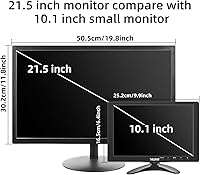
  • Screen Size: The display measures 10.1 inches diagonally, making it one of the smaller standalone monitors available for desktop or wall use.
  • Resolution: Native resolution is 1920x1200 pixels at a 16:10 aspect ratio, delivering sharp text and crisp detail at this screen size.
  • Panel Type: Uses a TFT LCD panel rather than IPS, which means color accuracy and off-axis viewing performance are more limited than IPS alternatives.
  • Brightness: Rated at 250 nits, which is adequate for dimly lit or typical indoor environments but insufficient for bright or sunlit rooms.
  • Viewing Angles: Horizontal viewing angle is 175° and vertical viewing angle is 100°, with the narrower vertical range requiring careful positioning for wall mounts.
  • Video Inputs: Accepts input via HDMI, VGA, BNC, AV, and USB, covering a wide range of both modern and legacy source devices.
  • VESA Mount: The rear panel features a 75x75mm VESA mount pattern, compatible with standard monitor arms and wall-mount brackets.
  • Built-in Audio: Two integrated speakers are included for basic audio output, eliminating the need for external speakers in low-demand listening situations.
  • Remote Control: A remote control is included in the box, allowing input switching and basic display adjustments without physical access to the monitor.
  • Included Stand: A desktop stand is included, allowing the monitor to be used on a flat surface immediately without purchasing additional accessories.
  • Dimensions: The unit measures 9.9 x 6.4 x 0.78 inches, keeping its footprint compact and suitable for tight desk spaces or wall installations.
  • Weight: At 2.33 pounds, this compact display is light enough for easy repositioning, travel, or mounting without heavy-duty hardware.
  • Housing Material: The entire enclosure is constructed from plastic, which keeps weight low but results in a budget-grade feel in hand.
  • Warranty: Thinlerain provides a 2-year manufacturer warranty, which is a reasonable coverage period for a monitor at this price tier.
  • Model Number: The official model identifier is T-101-1200, useful for referencing documentation, firmware, or contacting support.
  • Date Available: This monitor was first made available in March 2024, making it a relatively recent addition to the compact monitor market.

Related Reviews
ITMEIPC T-10 10.1-inch Android Tablet
69%
83%
Value for Money
67%
Display Quality
62%
Performance
71%
Battery Life
58%
Build Quality
More
ELECROW 10.1-inch Touchscreen Monitor
73%
91%
Ease of Setup
76%
Touch Responsiveness
78%
Display Quality
67%
Build Quality
88%
Compatibility
More
Haiway SM10.1 10.1-inch Security Monitor
72%
88%
Ease of Setup
91%
Input Connectivity
67%
Display Clarity
49%
Glare & Screen Surface
72%
Build Quality
More
AISHICHEN 10.1-Inch IPS Mini Monitor
70%
78%
Value for Money
86%
Connectivity & Inputs
89%
Raspberry Pi Compatibility
73%
Display Clarity
61%
Build Quality
More
Thinlerain HD1303 13.3-inch Small Monitor
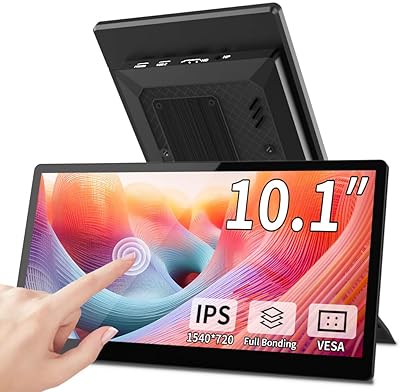
68%
91%
Input Versatility
88%
Setup & Ease of Use
83%
Value for Money
67%
Display Clarity
53%
Panel & Color Quality
More
Magedok T101F 10.1-inch Portable Touchscreen Monitor
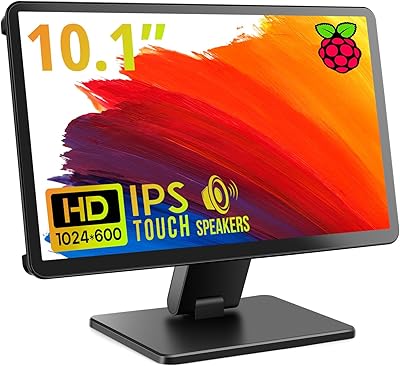
72%
88%
USB-C Connectivity
63%
Touch Accuracy
79%
Display Quality
84%
Aspect Ratio Fit
76%
Setup Experience
More
ROADOM 10.1-inch Raspberry Pi Touchscreen Monitor
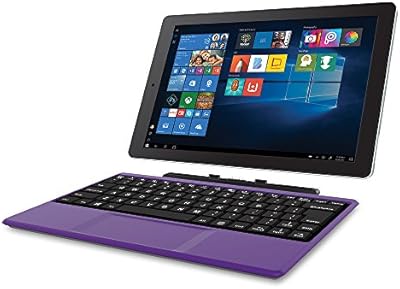
78%
91%
Ease of Setup
83%
Touch Responsiveness
72%
Display Quality
88%
Build & Enclosure
59%
Speaker Quality
More
RCA Cambio 10.1″ Windows 2-in-1 Tablet
62%
78%
Value for Money
47%
Performance
59%
Keyboard Quality
52%
Build Quality
54%
Battery Life
More
Thinlerain 17-inch HD170 Monitor
80%
89%
Value for Money
93%
Ease of Setup
65%
Display Quality
78%
Build Quality
55%
Sound Quality
More
podofo 10.1-inch Portable TFT LCD Monitor
72%
83%
Value for Money
61%
Image Quality
88%
Ease of Setup
91%
Input Versatility
54%
Build Quality
More

FAQ

Yes, in most cases. Connect via HDMI and the Raspberry Pi should detect it automatically. You may need to adjust the display resolution in the Pi config file if the output does not default to 1920x1200, but most users report it working without much fuss.

The resolution is genuinely 1920x1200, which is technically higher pixel count than standard 1080p due to the 16:10 aspect ratio. That said, it is a TFT panel, not IPS, so while the resolution is real, color reproduction and viewing angles are not on par with what most people think of as a quality HD display.

Yes, the back of the unit has a 75x75mm VESA mount pattern. Any standard VESA-compatible wall bracket or monitor arm that supports 75x75mm will work. Just make sure the arm or bracket is rated for light loads since the monitor weighs just over 2 pounds.

They are functional, but only just. Expect thin, low-volume audio suitable for system sounds or background music at low levels. If you are planning to watch video content or care about audio quality at all, connecting external speakers or headphones is a much better option.

Yes, it does include a BNC input, which is uncommon at this size. BNC is mainly used with analog CCTV cameras and some older broadcast or AV equipment. If you are running a basic security camera setup with analog output, this display can serve as a dedicated monitor for that feed without any adapters.

The panel is rated at 250 nits, which is on the lower end for modern displays. It works fine in a dim room or a typical indoor setup away from direct light, but near a window or in a bright workspace it will look washed out and hard to read. This is not the right screen for bright environments.

Thinlerain does not publish an official response time or input lag figure for this monitor. For casual retro gaming or legacy device use it should be fine, but if low latency matters — competitive gaming, for instance — the lack of specs here is a red flag and you should look for a monitor with published response time data.

VGA is standard for older PCs, laptops, and some industrial equipment. The AV input accepts composite video, which covers retro gaming consoles, older camcorders, and DVD players. Both are useful for anyone working with hardware that predates HDMI — it is one of the more practical aspects of this compact display for legacy device users.

It is adequate for a fixed, low-traffic installation, but do not expect the rigidity of a metal-framed monitor. The housing is entirely plastic, so it flexes a bit under pressure. For a kitchen or workshop mount where it mostly sits still and gets tapped occasionally, it should hold up fine. Just avoid setups where it will take regular physical knocks.

It is genuinely handy for switching inputs or adjusting volume and brightness without reaching behind the screen, especially in wall-mounted setups. That said, user feedback suggests it is basic and the range is short. Think of it as a convenience feature rather than a polished accessory — it works, but it is not the reason to buy this screen.